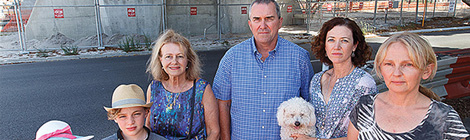
MAYLANDS residents are concerned the upgraded Seventh Avenue railway bridge will clog surrounding streets with trucks and increased traffic.
The new $9.3 million bridge is expected to open in May, and will replace the rickety 1913 timber bridge which carried just 3500 vehicles a day. The old bridge had an eight-tonne load limit, which will not apply to the new bridge.
The Seventh Avenue Street Alliance, formed in December, is circulating a petition calling on Bayswater council to make their street a cul-de-sac.
Alliance member Dave Cockford says 250 signatures have already been collected. “Seventh Avenue is classified as a local access road, not a distributor road,” he says. “But this bridge looks like something that belongs on a freeway and locals are worried that thousands of cars and trucks will soon be trying to access Beaufort Street along their suburban streets.
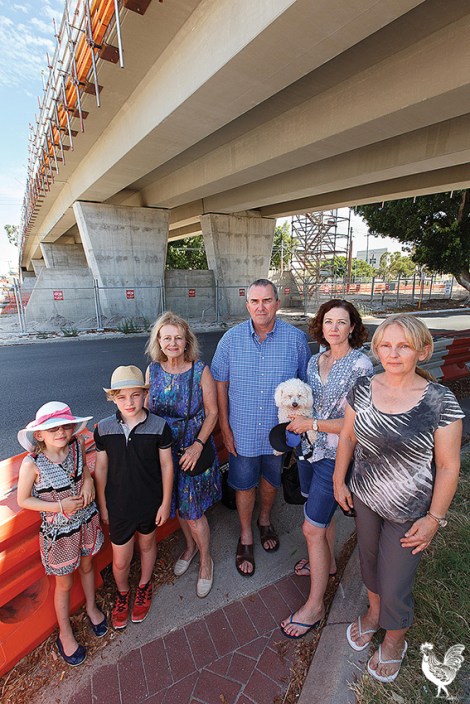
“No-one seems to know how the traffic from the Seventh Avenue bridge will be diverted onto nearby distributor roads such as Central Ave, Grand Promenade and Railway Parade.”
Mr Cockford adds he would like to see a global traffic management plan for the whole area.
Mayor Sylvan Albert says the new bridge will not result in more traffic.
“Advice from Main Roads traffic modellers indicates that after construction traffic flows will revert back to previous volumes,” he says. “The city has undertaken traffic counts in Seventh Avenue and will continue to closely monitor traffic conditions to determine any necessary traffic management intervention.”
Maylands Labor MP Lisa Baker held a street-corner meeting with residents before Christmas and supports traffic-calming measures. The replacement bridge will span more than 80 metres and include footpaths, accommodation for four rail lines, bridge guard rails and increased capacity. The Third Avenue bridge in Mount Lawley will be demolished as soon as the Seventh Avenue bridge is complete, and should take eight months to complete.
by STEPHEN POLLOCK


 Perth Voice Interactive
Leave a comment