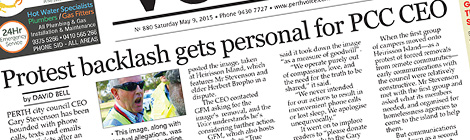
PERTH city council CEO Gary Stevenson has been hounded with phone calls, texts and emails from activists after an image of him arguing wth an Aboriginal activist on Heirisson Island was circulated online, accompanied by defamatory text.
The text included defamatory allegations about Mr Stevenson’s handling of the Heirisson Island campers and his phone number. It was shared hundreds of times.
The Global Freedom Movement website posted the image, taken at Heirisson Island, which features Mr Stevenson and elder Herbert Bropho in a dispute.
The CEO contacted GFM asking for the image’s removal, and the Voice understands he’s considering further action.
GFM, which also hosts articles such as “True adventures of a psychic warrior” along with conspiracy theories about vaccines, fluoride and ancient aliens visiting Earth, said it took down the image “as a measure of goodwill”.
“We operate purely out of compassion, love, and the need for the truth to be shared,” it said.
“We never intended for our actions to result in inconvenient phone calls or lost sleep. We apologise unequivocally.”
It went on to implore readers to “please donate generously to the Gary Stevenson Tiny Violin CEO Sleep Enhancement Campaign”.
When the first group of campers moved onto Heirisson Island—as a protest of forced removals from remote communities—early communications with the council were relatively constructive. Mr Stevenson met with the first group and asked what its members needed, and organised for homelessness agencies to come to the island to help them.
But communications broke down as a second and then third wave of campers—including the Brophos—moved in, who refused to move. Complaints from the public intensified and the council moved to confiscate equipment to prevent camping.
Mr Bropho’s sister Bella has engaged barrister Stephen Walker to challenge the PCC’s confiscations and is asking the council to let the campers stay.
In a letter to Mr Stevenson, Mr Walker cites federal court rulings arguing Noongar people have the right to “occupy, use and enjoy lands in the Perth metropolitan area for a number of purposes,” including maintaining and protecting sites, passing on knowledge and customs, and using natural resources for “social, cultural, religious, spiritual, customary and traditional purposes”.
The PCC is also facing a public question time query about whether the state’s Aboriginal Heritage Act of 1972 overrides its own by-laws, a question to be addressed at the next council meeting.
by DAVID BELL

 Perth Voice Interactive
Leave a comment