Benvenuto!
THE Italo-Australian Welfare and Cultural Centre was established to help Italian migrants settle into their new home, and to maintain their cultural heritage.
These days the centre also runs a social welfare arm for women and youths, including counseling, along with aged care, support services for people with diabetes and Italian language classes in schools.
“[We] provide over 80 teachers of Italian who teach in about 70 primary schools throughout the state, involving over 22,000 students,” managing director Sarina Sirna says.
The IAWCC’s long-running annual Italian Festival kicked off last Saturday with Italian day at the races, and despite appalling weather there was a good turn-out.
Monday June 1 is Italian film night with biopic Marina, the life and times of Italian singer/songwriter Rocco Granata, whose 1959 hit Marina was one of the biggest sellers at the time and has been sung by a swag of performers since then.
Wednesday May 27 the winners of the annual cake and wine competitions will be announced, along with the winners of the school competition and community awards.
A Mass celebrating the foundation of the Italian Republic at the Sacred Heart Church in Highgate starts at 10.15am on Sunday May 31, and the glittering Italian National Gala Ball is later that evening at the Pan Pacific Perth Hotel.
EXPO MILANO
2015 has kicked off in Italy with the theme Feeding the Planet, Energy for Life, and it’s energising the children of Italians worldwide to think about fruit and vegetables.
The expo’s mascot is a colourful character consisting of fruit and vegetables from around the globe: local kids were invited by the Italo-Australian Welfare and Cultural Centre to take part in its annual student competition, which this year was based on the expo.

“Each [student] was asked to produce some aspect of the theme,” IAWCC director Sarina Sirna says. Students were encouraged to visit the expo via its website to see the pavilions set up by a swag of countries participating.
“[And] to be mindful of the production of the food we eat including the fact that certain foods come from different countries, their sustainability—and the future of our world,” Ms Sirna says. Winners will be announced at a presentation ceremony Saturday May 30.
A ring for Re
DURING the gloomy days of the 1930s’ great depression John and Maria took a gamble, pawning Maria’s engagement ring to get the cash to open The Re Store, in what is now Northbridge.
It was the sort of go-getter attitude that led to WA’s Italian immigrants stamping a lasting legacy on their adopted home, including an obsession for great coffee.
When the Re Store opened in 1936, “skips”—British-heritage Australians—were in the main tea drinkers. Coffee was either a nasty instant powder or a bottled “syrup”, both of which were dire. As for Australian food, if veg wasn’t boiled to a bland soft pulp it simply couldn’t be trusted.
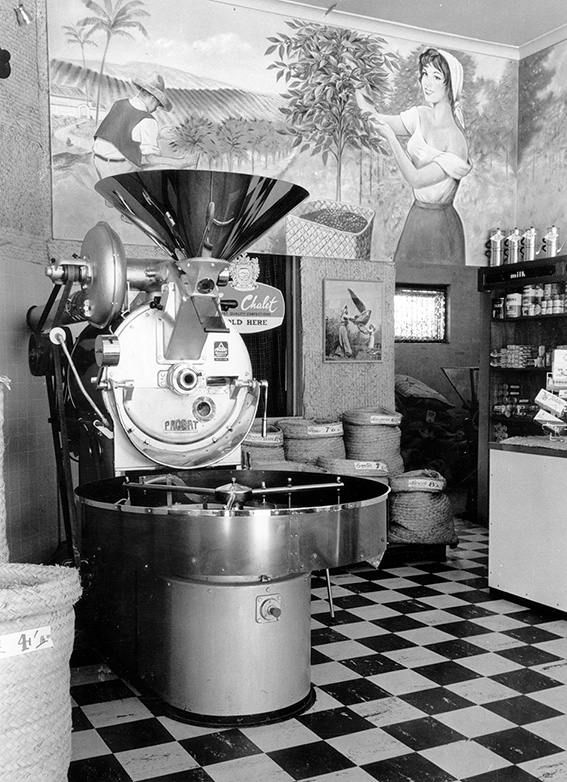
But a growing migrant population was hungry for the flavours of the old country, so John and Maria began roasting coffee beans under their own Braziliano Coffee label, putting them 50 years ahead of today’s self-blend-everywhere-you-look cafe society.
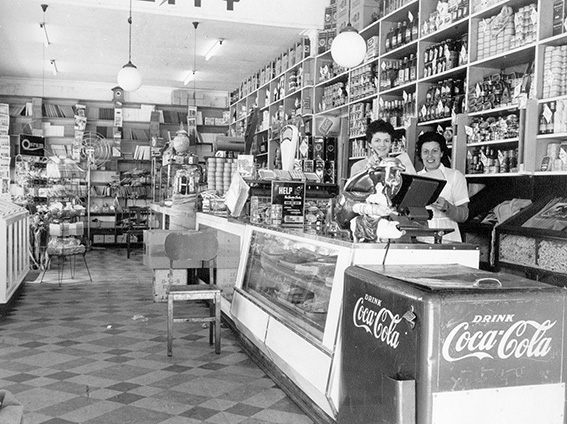
In the 1960s, with a new generation of the Re family entering the business, the store continued to import victuals still unheard of to most Australians, including a variety of dried sausage and salamis and a huge range of cheeses.
It’s hard to imagine a time Baci chocolates weren’t on shop shelves, but it was a romantic gesture during young newly-weds Aurora Re and Danilo Berti’s honeymoon cruise that led to its delicious prominence. “My father-in-law brought [Aurora] a chocolate each day, because baci means a kiss,” Fiona Berti told the Voice. “She brought one home to her dad [Mr Re] and he wrote to Baci and got the agency in WA. [We] are now are the Australian agents.”
The new century’s prominence of TV cooking programs and a plethora of cooking magazines is doing the Re Store no end of good, as wanna-be cooks rush in for the latest in previously unheard of ingredients.
“Food is in trend as much as fashion is these days,” Ms Berti says.
“We know when something features on TV, the phone starts ringing and people come in.”
These days there are two Re Stores—Northbridge and Leederville—run by separate branches of the family, while a third clan run European Foods on Aberdeen Street.
Along with a wide range of gourmet food, the Leederville store focuses on unusual varieties of wine and spirits: “That you can’t get elsewhere,” Ms Berti says.
“We are driven a lot more by fresh hot meals, home made pasta and salad, and our famous continental rolls.”
Fifty years ago Perth’s Italian community was viewed askance by an Anglo-skewed lens but, in no small part thanks to food, that’s changed.
And Maria’s pawned ring? They got it back.
How’s that for an Italian love story.
Italian fine bubbly finally finds its place
“I would like to wet my mouth with the Prosecco with its apple bouquet,” Italian poet Aureliano Acanti wrote in 1754.
Western Australians have a lot to thank the Italian diaspora for: good coffee, garlic, capsicum, pasta to name a few. Squid was just for bait until it appeared on Italian restaurant menus.
And 250 years after Acanti waxed lyrical about Italy’s answer to champagne, Prosecco has become the “must-have” drink for hip young things—and their parents.
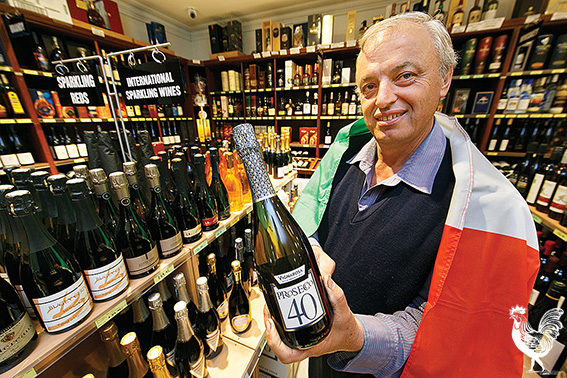
At La Vigna wine store on Walcott Street, in Menora the sparkling wine is going gangbusters, says owner Michael Tamburri: “It’s taken over all the sparkling [wines], and is high up there.”
In the 1960s Prosecco was a sweet beverage, but as technology improved so did the wine,“ [with] brut to extra dry, which is the most popular,” Mr Tamburri says.
Second fermentation in the bottle means a good drop can be produced cheaper than its French counterpart.
But Mr Tamburri warns against Prosecco priced too cheaply, which he says is made from grapes from the flats and “is lowering the profile of good quality Prosecco”. True Prosecco comes from the hills of northern Italy, where the town bearing its name can be found.
by JENNY D’ANGER

 Perth Voice Interactive
Leave a comment