IT’S been 15 years since the belltower opened on Perth’s foreshore, its planning, expense and construction plagued with grumbles.
A chief criticism these days—that the belltower is too short and unimpressive—must grate with former Liberal premier Richard Court, who’d wanted a much bigger tower.
An editorial in the West Australian newspaper on October 20, 1998, however picked up on narky public sentiment and an unrelenting campaign by the Labor opposition.
The paper urged the then-premier to “think again about the size of the proposed belltower—a structure as high as the Statue of Liberty seems grandiose for the Perth riverfront and would be out of scale with the city”.
The cost also drew fire: ”Will they ring the bells each time a long-suffering patient died waiting for admission to our crowded hospitals?” Freda Hatton of Yanchep wrote in a letter to the editor, one of many that flooded Perth’s papers of the day.
Eventually, a scaled down 82-metre version was erected, opening December 10, 2000. There were grumbles for and agin it, but about as much as any new project garners.
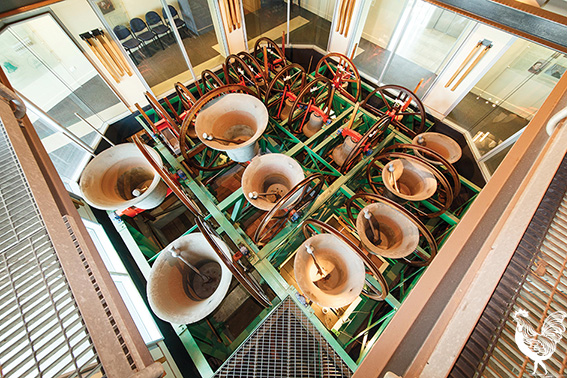
As for the bells inside the tower, their history reaches back far longer. Called the St Martin-in-the-Fields bells, they date back to at least the 13th century. They’ve been recast a couple of times over the centuries (melted down and some new metal added), but have rung out to signal the end of the Battle of Trafalgar, and again at Lord Nelson’s funeral. Their Australian link was being rung to announce the return of Captain Cook to England after charting Terra Australis.
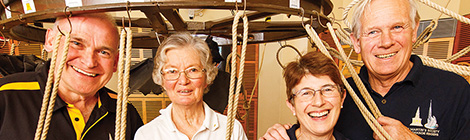
Bellringer and Heritage Perth chief Richard Offen has his own history with the bells: back when he used to live in the UK he rang them at their original home at St Martin-in-the-Fields.
Having been a bellringer since the age of eight, he recalls “I used to ring them virtually every Sunday in the 1970s”. Before they were restored, he recalls them as “dismal, they were bloody hard work and they sounded dreadful”.
They were destined for recasting but local bell enthusiast Laith Reynolds caught wind of it and negotiated instead for their repair, and that they should be gifted to WA for Australia’s bicentennial. In return, an equivalent weight of WA copper and tin was gifted to St Martin-in-the-Fields.
When Mr Offen came to visit Australia, he toured Perth to see where his old bells wound up, and ended up living here himself.
He says these days the tower’s reputation has recovered, despite early days when it “really did suffer from distorted public opinion, which was fueled by one or two sections of the press who mounted a very aggressive campaign about it”.
Now, “it’s one of the few iconic millennial projects in the world that came in on time, on budget and is still in place,” Mr Offen says. He compares it favourably to London’s Millennial Dome which cost $700 million and “was a total damp squib”.
“It is genuinely unique in the world,” he says. “People pooh-pooh it here. Say what you like about it. You walk into a tourist information bureau or a travel agent in England or America and ask for a brochure on WA, nine out of 10 times what’s on the cover? It’s that building.”
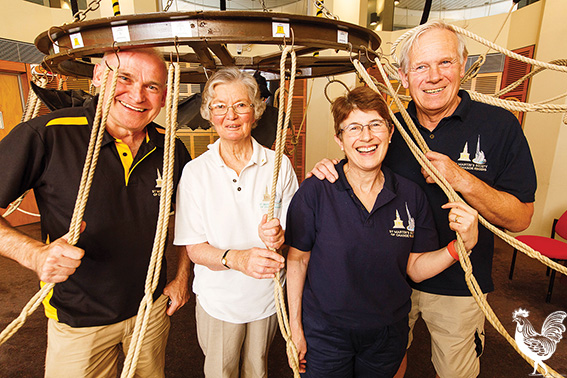
It’s also had an effect that the average punter might not realise, in the boost it’s given the art of bellringing in Perth.
Before the tower was built, Mr Offen says Perth, “was really a campanological backwater”. Now, “as a result of that tower where there is unlimited practice time in near perfect condition… one of the bellringing groups in the UK nominated us as one of the top 10 bellringers in the world.”
The Belltower officially turns 15 on December 10 and there’s half-price entry on the day.
by DAVID BELL

 Perth Voice Interactive
Leave a comment