THE more visually pleasing a street tree is, the pricier it will be to axe, dictates a new Stirling council rule aimed at combating developers’ penchant for cutting them down.
The council at its last meeting decided to start monetarily valuing trees’ “visual amenity”.
The new policy also compels developers to lodge a bond for planting and/or protecting verge trees, and forbids residents from axing or pruning trees for lousy reasons such as it’s “too large” or drops “nuisance” leaf litter.
The stricter policy aims to “address the increased impact of development” by protecting and maintaining mature trees and ensuring more are planted to meet a canopy coverage target of 18 per cent. It’s currently 12.7.
A council report states: “Where an existing healthy street tree is prematurely removed, reasonable costs associated with the loss should be borne by the initiator of the removal.”
As part of the Helliwell method of putting a price on the a tree’s amenity, a tree’s value will vary depending on visual aspects, such as its size, life expectancy and suitability to a setting.
Stirling parks and reserves manager Ian Hunter says the average valuation of a street tree is about $5500 — a “lower than normal figure due…to the large number of newly planted trees in recent years”.
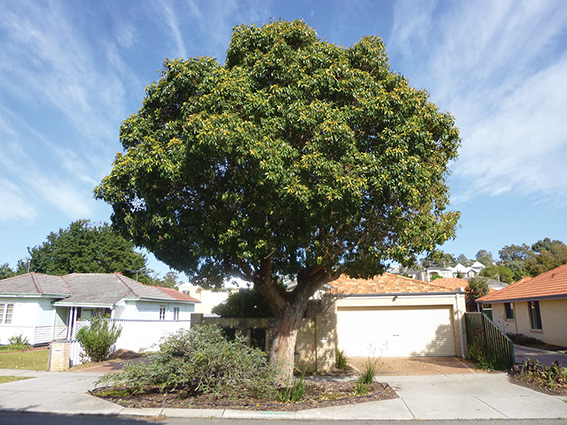
As a guide, a healthy mature street in a well-treed street, not under power lines, such as the tree pictured, would be valued at $12,000. This tree would have a projected life expectancy of more than 40 years.
To remove this tree, a developer would have to pay 90 per cent of the removal cost, the tree valuation ($12,000) and tree replacement.
The new “street and reserve trees policy” also introduces a refundable “verge bond”, ranging from $1500 to $8000, paid by developers before construction begins.
If a tree is axed or damaged, the bond will be fully or partially retained. A $6000 bond would apply to the pictured tree, and if a developer pruned or damaged it, the council would keep $2500.
The council’s annual report states aerial mapping of vegetation changes across the city in 2014/15 found about 3500 “significant canopy trees” had been lost from private and council-managed land.
In that year, the council planted 63,600 trees and shrubs as part of its “million trees initiative”.
The Helliwell system was founded in the UK and has been extensively used in court cases and insurance claims.
Branka Radanovich, from the Bayswater Urban Tree Network, wants her council to adopt a similar policy and valuing system. Bayswater councillor Chris Cornish says his council’s fledgling “environment asset working group”, aims to improve Bayswater’s flora management. A review on that council’s efforts to increase its tree canopy is expected in a report later this year.
by EMMIE DOWLING

 Perth Voice Interactive
Leave a comment