THE little Brookman and Moir Street precinct in inner Perth is the last of its kind, a surviving couple of rows of 58 workers’ houses built back in 1897-98 during the gold rush.
The federation Queen Anne-style houses remain in remarkable nick, though as the Voice reported in recent years one nearly fell into ruin, its owner prosecuted by Vincent city council and copping big fines.
That house’s descent into disrepair was keenly felt by neighbours, who’d long worked to keep their own properties in good condition and had a sense of ownership about the neighbourhood. That house has since changed hands and the new owner’s breathed new life into it.
The precinct’s now been recognised with a WA heritage award, dedicated to past and present owners who kept the homes in good condition and the council’s heritage team who worked with owners (and pounced on the recalcitrant who let his place fall into disrepair).
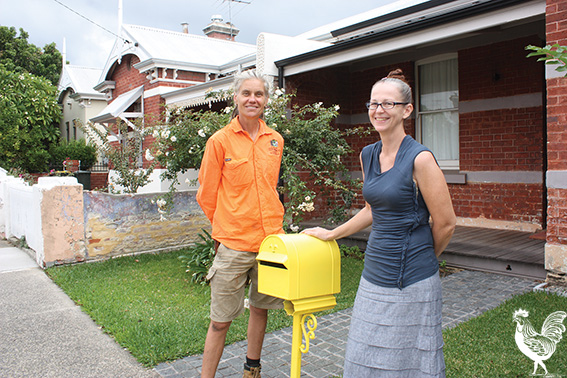
In awarding the gong for conservation or adaptive reuse the WA heritage council commented: “This is an inspirational story of how individuals can work together, by sharing knowledge and encourage others to restore and adapt their 1890s workers cottages, thus returning this significant streetscape to its original state.”
The award’s a big hairy deal: the precinct is actually a co-winner with the widely celebrated Old Treasury building, and both are now shortlisted for the UNESCO Asia-Pacific Award for cultural heritage conservation.
Bliss Brosnan lives on Brookman Street. She rented there back in the early ‘90s and loved the area enough to buy in 1999.
“I absolutely love it: the sense of community, the fact that nobody’s going to tear it down and change it all, we’ll never be built out, we’ll always have our yards, and we have an eclectic group of people,” she beams.
“You see stand-alone heritage properties where owners feel quite alone, it is quite a battle.”
But in this precinct, whenever someone’s renovating neighbours always pop their head over the fence with a bit of advice on the right colour paint, and whenever a place gets brought back into good repair Ms Brosnan says “it’s a sense of achievement for the whole neighbourhood”.
The precinct was built as a workers’ estate by Colonial Finance Corporation in the midst of the gold boom when there was high demand for housing and was built over two or three years in the late 1890s. The modest-scale houses and and smaller blocks were designed for tradesmen, and it’s the last example of a whole neighbourhood of intact working class rental accommodation from the era.
The Perth city council rate book from the times shows listings for occupations such as miner, baker, civil servant, engine driver, painter, lamplighter and barman, and the surnames suggested many occupants hailed from migrant families. Even through the 1960s, occupations included a mechanic, stone worker and wood cutter, but the demographics have changed over the years: a more recent snapshot shows the streets are home to two lecturers, a teacher, a programmer, two journalists, a teacher, a solicitor, a grocer, a housewife and a labourer.
by DAVID BELL

 Perth Voice Interactive
Leave a comment