
MARCH is Women’s History Month, and although the women about to be profiled are not historical, they are certainly making history. This is the first in a series of articles about some of the 2024 inductees to the Western Australian Women’s Hall of Fame.
LORRAINE HAMMOND is an associate professor at the School of Education at Edith Cowan University.
That’s what the Melville resident describes as her “day job”. However, she has also worked around the country from Fitzroy Crossing, through Canberra, and down in Tasmania, implementing a new approach in teaching literacy to young children.
It is significant work.
“Being literate has a huge impact on your life chances,” Prof Hammond says.
“Your capacity to economic success, social success, to be able to engage with other people, your employment, your wellbeing,” she lists.
Previously, Prof Hammond says, young Australians were taught to read using the ‘whole language’ method which “really wasn’t considered to be evidence based”.
“When you went to school, you would have been encouraged to read from the beginning and you would have been given books that had lots of pictures,” she said.
“You would have been encouraged to look at the first letter and guess, and if you got really stuck then you might read at the end of the sentence and go back and try and figure out what the word is.”
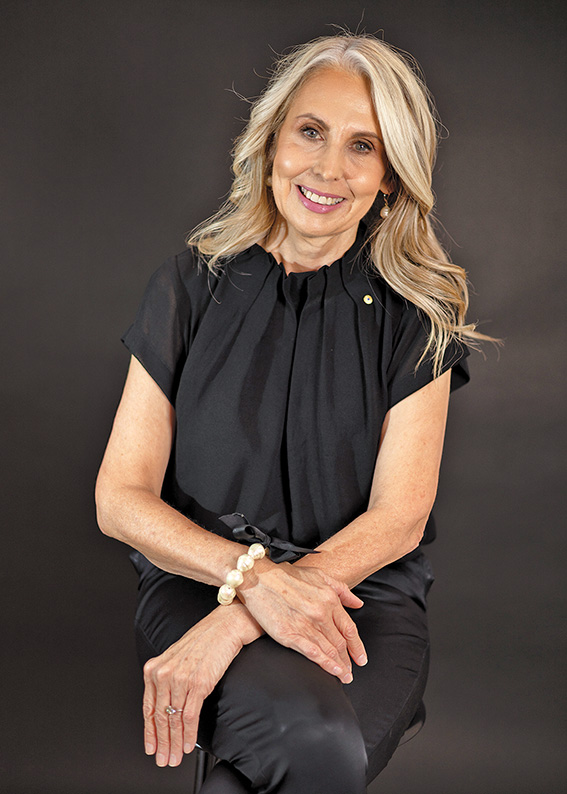
The whole language method assumes reading is a natural ability in children, which Dr Hammond says “isn’t terribly effective”.
“The human brain is not designed for reading as such, it’s designed for talking,” she said.
“That assumes that talking is the same as reading, and they’re different.”
Prof Hammond has advocated for evidence-based teaching – which incorporates “phonemic awareness, phonics, and comprehension” – and which requires explicit instruction, instead of assuming the child will learn to read naturally.
“We help children become aware that the words that you speak comprise of sounds and those sounds match up to letters,” Dr Hammond said.
“If you learn to apply that code, and you do it enough, then your brain starts to starts to automatise the process of reading.
“Suddenly you can read anything new and you can read words we’ve never been taught before, because your brain has got the hang of this system.”
Explicit instruction is important to Australian children because the English language is notoriously difficult to learn, Dr Hammond says.
Languages
Unlike more sensible languages such as Spanish, which has 28 letters and 28 corresponding sounds, English has 26 letters and 44 sounds that has been built throughout history and which is difficult to learn without explicit instruction.
“The French came in and gave a layer of language to English, and then there’s the Anglo Saxon layer and then there’s the Greek layer,” Dr Hammond said.
“It’s really complicated.”
Dr Hammond has worked extensively on the Department of Education’s Kimberley Schools Project, which she says has had a large impact on Indigenous children living in remote communities such as Fitzroy Crossing and Halls Creek.

“There are some children in remote communities who are now better off than their parents,” she said.
“The significance of that is of course, these young people can now consider going on into high school and they will have to access to go on to university or TAFE, because they’re literate.
“The reason that’s changed is because we have changed the way we teach reading.”
Dr Hammond was inducted into the Western Australian Women’s Hall of Fame last week for her services to education. It follows an Order of Australia during the 2019 Australia Day honours for her contribution to tertiary education.
Dr Hammond says she is “very proud” to accept the induction, which she shares with the teachers who chose to take “a big leap of faith” for better student outcomes.
“The way you’re taught to read was incredibly popular,” she said, “but it wasn’t the right way to teach reading.
“So many teachers have said ‘Okay, we’ll do what this research says’, and then their children have done really well.
“I share recognition with them because they got on board and made a big difference to children’s lives.”
by KATHERINE KRAAYVANGER
 Perth Voice Interactive
Leave a comment