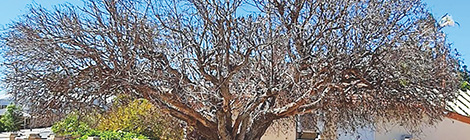
LOCALS noticing a massive die-off of trees around Voiceland have raised fears WA is in the grip of a drought and have called for more government action.
Driving their fears is that many native trees and bushes appear to be affected far more than usual, and they fear climate change means it’s only going to get worse.
Inglewood resident June Winsome-Smith asked the Voice to look into the deaths after noticing the “unprecedented” loss of trees around her suburb.
Ms Winsome-Smith says she’s been on to her local councillors who’ve also noticed the city’s increasingly brown streets.
Bayswater deputy mayor Elli Petersen-Pik said he’d put forward several motions to council encouraging measures to increase tree survival.
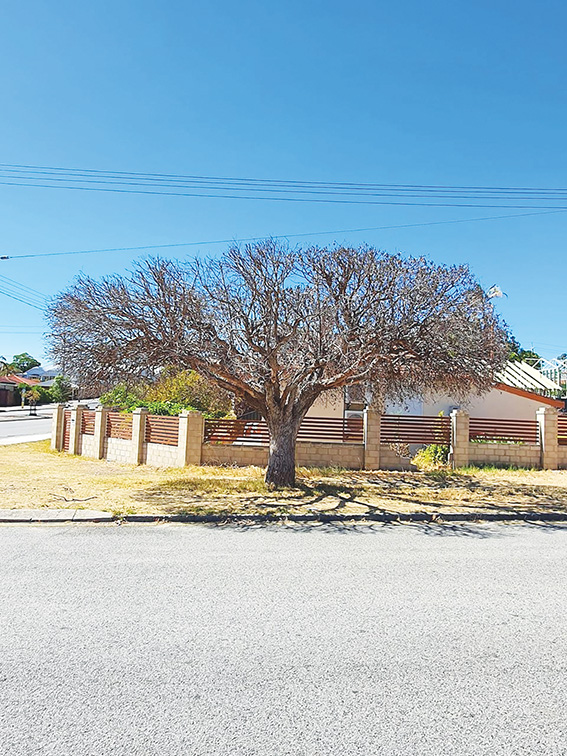
“Everywhere I go around our city, I see dead or struggling young and mature trees,” Cr Petersen-Pik said.
Back in 2020 Bayswater’s tree canopy was one of the worst in the country, sitting at 10.9 per cent (“Greyswater,” Perth Voice, November 21, 2020).
Cr Petersen-Pik said he’d suggested extra watering and increased budgets, saying the loss of trees was not only costing the environment; he says the lost trees over 2022 alone were estimated to be worth $417,000.
“Each tree that dies is a significant loss to the city,”
“The City spent $233,815 on tree removals in 2022/23.”
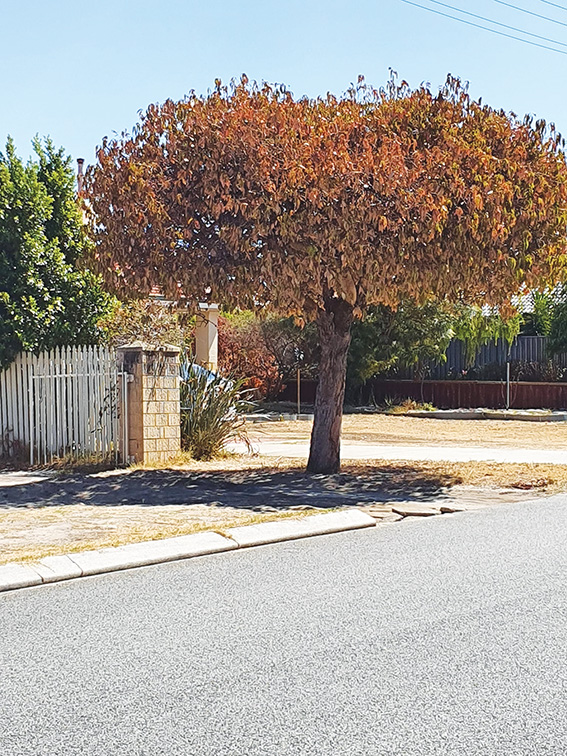
Cr Petersen-Pik said he’s not aware that the city’s tree care regime has changed in response to climate change; “I’m still advocating for us to look into improving it.”
WA Parks ambassador Simon Cherriman said the issue goes beyond just Bayswater’s borders.
“In the Perth Hills I’m seeing very mature trees that have obviously weathered lots of dry conditions over their lifetime of several hundred years, just deciding they’re going to give up,” Mr Cherriman said.
Weathered
He says research suggests heat is responsible, not just the lack of rainwater.
“Lots of trees and shrubs are all dying at the same time, which seems to be after these prolonged days of 40 degree heat with no respite,” he told the Voice.
Heat absorbent surfaces such as bitumen, concrete and even natural rock outcrops in the bush are capable of maintaining heat for long periods and have also contributed to mass tree and shrub death.
But Mr Cherriman said the community should not to lose hope, urging gardeners to choose “the right locally native plants which are adapted to these long hot summer periods”.
He suggested Australian species such as Eucalypts with a heat-reflecting wax coat on their leaves.
“They’re more likely to have some kind of drought resistance,” Mr Cherriman said.
According to a drought statement from the Australian Bureau of Meteorology in April, for the 11-month period since last May, rainfall hit record lows across much of WA’s central west and southwest districts, with predictions it will remain below average through the traditionally wetter months.
Rainfall levels are similar to some of the driest periods across the last century and have parallels with the brutal Federation Drought, labelled by the bureau “one of Australia’s worst droughts”.
The seven-year dry peaked in 1902 and saw loss of livestock, land degradation, and hammered wheat crops.
“The national wheat crop was all but lost, with close to the lowest yields of the century,” the bureau noted in a drought fact Sheed.
The BoM said declaring a drought was a matter for state governments.
However, Department of Primary Industries and Regional Development media adviser Megan Broad said in lieu of declaring a drought, the government was taking a “hands-up” approach to long periods of record-low rainfall, including “significant investment in initiatives, projects and scientific research that builds climate resilience on farms and in regional communities”.
Ms Broad said the previous practice of declaring a drought had not existed in Australia for more than 20 years.
A Perth and Peel Urban Greening Strategy recognising the importance of enhancing tree canopy, was introduced by the Cook government on February 9 this year. The strategy recommends a tree canopy measurement program, education campaigns and identifying under-used state government land that could be greened up.
by OLIVIA MINTY
 Perth Voice Interactive
Leave a comment