IT WAS so weird and dark it polarised audiences and critics on its initial release.
Most of us are familiar with the iconic Twin Peaks TV show from the early 1990s, but shortly after it finished, director David Lynch made Twin Peaks: Fire Walk with Me, a movie prequel to the series.
Charting the last seven days of Laura Palmer’s life before she was brutally murdered, it was much darker than the TV show and lacked the quirky humour and lightness of touch that made it palatable to the mainstream.
Predictably, the cryptic movie was a box-office bomb in the US, but over the years it has been re-appraised and is now widely regarded as one of Lynch’s best works.
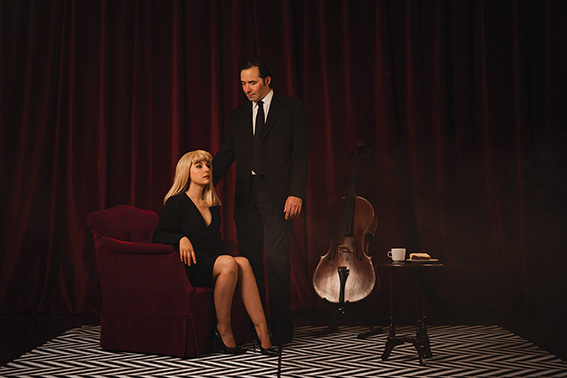
To mark the 30th anniversary of its release, avant-garde ensemble Decibel are paying tribute to the film’s soundtrack by reworking some of its classic themes and playing new pieces inspired by the series.
“The soundtrack to this film, and the entire early Twin Peaks TV season, was a part of our early days as academics at WAAPA,” says Decibel musical director Cat Hope.
“It was playing as house music in the theatre and out of people’s bedrooms, we were all watching David Lynch films and talking about them into the late hours at the Moon Cafe where we used to congregate.”
The iconic soundtracks to the TV series and movie were composed by the late Angelo Badalamenti, an American film composer best known for his collaborations with Lynch on films like Blue Velvet, The Straight Story and Mulholland Drive.
Who can forget the dreamy, synth-laden Twin Peaks theme tune, which was so popular it charted in the UK?
Or Laura Palmer’s Theme, which starts with an ominous synth motif before slowly building to a gushing ballad on the grand piano, like a pastiche of the melodramatic music used in daytime soaps.
On top of all this we had Julee Cruise’s ethereal vocals, hinting at a loss of innocence and something pure amongst the darkness.
“Film music is a complex form – the music becomes imbued with the atmosphere of the film, and carries that with it every time you listen, even without the film,” Hope says.
“This is very atmospheric music – the thick synth pads, slowly unfolding arpeggios, reverb drenched vocals, lazy, doodly solos, weird chord changes.
“And then contrasting moments such as the dirty, grinding loops of the nightclub scenes, slippery bass solos, spoken word and found sound effects.”
Decibel are the perfect group to tackle David Lynch and his music.
Formed in Perth in 2009, the six-piece ensemble combine acoustic and electronic instruments to create left-field chamber music.
Since founding, they’ve commissioned more than 100 new works and performed interpretations of classic tracks by artists and composers including Ennio Morricone, Lalo Schifrin, Scott Walker and Low.
“Our concert will feature arrangements of Badalamenti tracks, but also new works by WA composers Rachael Dease and Rebecca E Smith, Matt Warren from Tasmania and a work by Twin Peaks-die hard James Rushford from Melbourne,” says Hope, who plays the flute, bass and “electronics”.
So what is Hope’s favourite musical track from the Twin Peaks movie and TV show?
“Tough question! I’ll go with Questions in a World of Blue with Julee Cruise, because it sums up so much about the entire range of the soundtrack, and the ongoing paradox within the film/series,” she says.
“Cruise’s singing in the Badalamenti soundtracks was a huge inspiration for my own songwriting back in the day.”
And where better to hold the Twin Peaks Was 30 concert than at the home of all-things weird, PICA, which will be draped in red velvet and bathed in atmospheric light as the audience is guided through the modern art gallery during the performance.
Twin Peaks Was 30 is at PICA from May 9-11. Tix at pica.org.au.
by STEPHEN POLLOCK
 Perth Voice Interactive
Leave a comment