
SURVIVORS of WA’s forced adoption era are awaiting the outcome of a Cook government inquiry due later this year, but say the state simply needs more support services now.
Forced adoption survivor Jen McCrae is credited with getting the Upper House Environment and Public Affairs Committee’s inquiry into the practice up and running, but says WA falls short compared to adoption services provided in the eastern states, such as Sydney’s dedicated hub Wattle Place.
Ms McCrae told the Voice the lack of support contributed further to the lifetime of distress felt by many WA survivors.
In 2010, WA was the first state to apologise for the trauma caused by forced adoption, but Ms McRae says in the interim the government has only implemented two out of the 20 recommendations from a Senate inquiry held in 2012.
“The 2018 review of the 1994 Adoption Act remains incomplete and as such no longer holds validity with which to address current issues owing to the six-year delay. Why the delay?” Ms McCrae wrote in her submission to the state inquiry.
She also criticised the “astonishing apathy and purposeful disinterest” of politicians since she started her crusade.

Stolen
In 2021, Ms McCrae and two supporters wrote to then-health minister Roger Cook requesting an inquiry, but his reply mistook them as members of the Stolen Generation.
She requested an apology but says the minister never responded.
Former child protection and women’s rights minister Simone McGurk also rejected an inquiry when asked by then-Opposition leader Mia Davies in November 2022 because she didn’t think “it will do anything” for the survivors.
Adoption Support WA ARMS coordinator Lynne Devine says there needs to be more community awareness and education about forced adoptions, which she said was a long-running and unethical practice.
Trained psychologists and councillors who understood and recognised what the severance did to people were fundamental to survivors’ wellbeing.
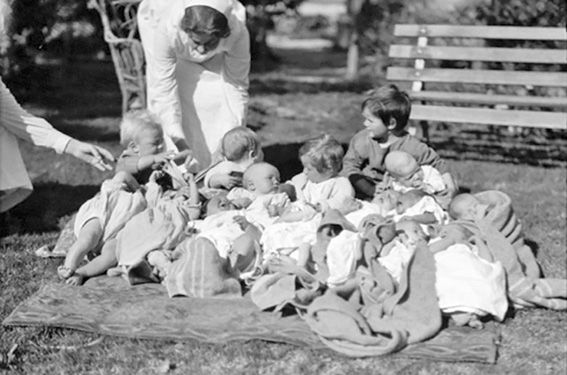
Forced adoption was a common practice – starting in the late 1920s but reaching a peak between the 1940s and 1980s, particularly targeting unwed mothers to sign over their babies through shaming and coercions.
A large number were born in WA, illegally separated during the second stage of birth known as “the clean break” which according to Ms Devine “destroyed my life”.
Australian government statistics puts the number of forced adoptions at 150,000 country-wide, but author Kate Inglis estimated in her 1984 book Living Mistakes: Mothers who Consented to Adoption, that another 100,000 hadn’t made it onto the books.
Ms Devine said it was no surprise babies were spirited away at the first opportunity, as the aim was to “annihilate a child’s origin”.
Ms McCrae said institutions such as King Edward Memorial Hospital, Ngala and Hillcrest in North Fremantle where the forced adoptions took place subjected the mothers “institutional coercive control”, which could involve being sedated with Largactil.
Straightjacket
Forced adoption survivor Anne Haylock describes it as a “chemical straitjacket,” but like many forced adoption survivors, she’s faced years of difficulties getting access to her own medical records to find out what exposure she might have faced.
Ms Haylock told the Voice forced adoption created “a false identity” which was a common feeling among the survivors, who are subsequently more susceptible to depression and anxiety.
Apologies from King Edward’s Memorial Hospital and Ngala Kensington were deemed “insensitive” and “inadequate” by many of the survivors.
A Department of Communities spokesperson said apart from the inquiry where survivors got to tell their stories, there were a number of organisations available in Perth such as Adoption Research and Counselling Services, Adoption Support for Families and Children, Forced Adoption Support Service, and ARMS.
But Ms McRae says often these services have a focus that’s not relevant to a survivor’s needs; ASFC promotes the adoption of children, FASS is part of Relationships Australia and provides limited information on available help other than noting small grants they could access to start groups.
The inquiry is set to be released in the second half of 2024 by the Cook government. Its purpose is to examine the lived experiences of forced adoption survivors and the role of the state government, health services and private institutions in the forced adoption era.
Distress
It will also identify what measures are currently available to assist persons experiencing distress, their effectiveness, and how the survivors may be supported further.
Ms Devine is hoping the Upper House committee won’t try to understate the ongoing impact of forced adoptions and fears that if survivors don’t get genuine answers, it will hold many back from progressing in their lives.
“I fear they will stay the same,” she said.
by SIENNA DALY
 Perth Voice Interactive
Leave a comment