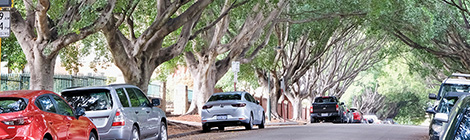
A RECENT study shows that urban trees shape how we connect or how we fail to connect to the places where we live.
A team of researchers at the UWA School of Biological Sciences and the School of Psychological Science recently published a study, indicating that local trees affect people’s attachment to the places they call home.
Co-author Cristina E Ramalho said that with Perth having the lowest tree coverage among all Australian capital cities, the team wanted to understand how people’s connection with where they lived was influenced by trees.
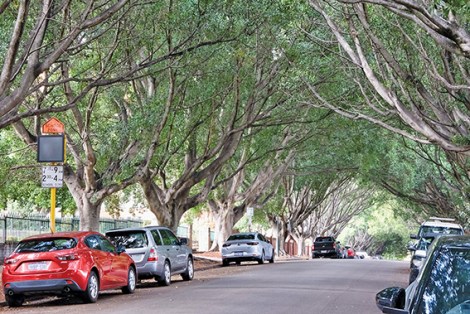
Decline
“This study is timely, given the widespread decline of trees, due to drought and warming, and also considering the state government is currently seeking public input on their Perth and Peel Urban Greening Strategy,” Dr Ramalho said.
The study involved 638 respondents from the Perth metropolitan area, with survey responses including:
● “Even though plane trees are not native to Australia, I love the immense shade and coolness they provide in Perth’s hot, relentless summers.”
● “My favourite trees are callistemons and grevilleas; they’re native, colourful, and provide food for birds and insects.”
● “On the corner of Lawley Crescent and Clifton Crescent, there is a large magnolia tree my grandmother walked by daily on her way to school. It provides a lovely memory of her whenever I pass it.”
However, some opinions against urban trees are also noted:
● “I do NOT like GUM TREES. They constantly drop leaves, which accumulate in my garden. I have to continually rake, only to find a new batch shortly after.”
● “[A Eucalypt] was planted too close to our driveway, causing its roots to be disruptive.”
● “We removed about six native gums from our property years ago when one fell on the house.”
Key points from the study included that residents were much more satisfied with the benefits of trees than dissatisfied with any negatives.
Focusing on reducing issues caused by trees such as protruding roots or falling leaves was less effective than improving tree benefits like shading and aesthetic reasons for promoting place attachment.
Losing mature trees causes significant distress.
With increasing urban infill leading to canopy loss in Perth, it’s crucial to have policies to protect established trees on private property.
This ensures that higher-density living doesn’t cause emotional distress or a loss of connection to the place.
A final key point was residents feeling like they had control over trees within their surrounding areas was strongly linked to place attachment, highlighting the need for local governments to involve residents and communities in decisions about local urban trees.
“This study offers scientific evidence highlighting four key areas for governments to consider: retaining and protecting mature trees, increasing overall canopy cover on streetscapes with native trees, diversifying tree species across neighbourhoods, and protecting healthy trees on residents’ front verges,” Dr Ramalho said.
“These actions create greater place attachment and are likely to deliver psychological and well-being benefits to local residents.”
Dr Ramalho said the study connected with today’s research looking into the health benefits of green spaces: “Previous studies have shown that people who are attached to where they live, feel more relaxed, have better social relationships, and are more satisfied with their life. Overall, they experience greater well-being, facilitated through the benefits of having trees around them.”
by JENS KIRSCH

 Perth Voice Interactive
Leave a comment