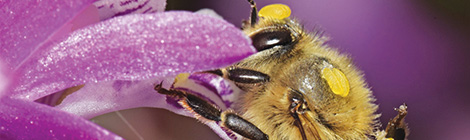
SPRING has sprung in WA and while bees are busy making honey for WA’s booming export market, a report by Curtin University researchers has found they’re under-pollinating an endangered orchid.
Apis Mellifera were introduced during colonisation and the research has found they’re not as efficient as their native cousins in pollination.
Study lead and research associate Daniella Scaccabarozzi said “with the introduced bees, we saw pollen removal but not good pollination efficiency… taking pollen, which was meant for native bees, and leading to wastage.

“Therefore, orchids and other flora are not being able to reproduce.”
WA’s native honeybees have the most effective pollination efficiency.
Dr Scaccabarozzi said a healthy environment was also vital for pollination.
“Maintaining the habitat and keeping it connected is very important,” she said.
“This issue of pollination deficit is more severe when the habitat was fragmented by infrastructure and roads, leading to native bees to be lower in population.”

This was noticeable in King’s Park, one of the areas featured in the study.
Wildflowers are a key natural drawcard for WA tourism, with more than 12,000 different species – many unique – drawing in thousands of overseas visitors.
The ABC recently reported Mullewa in WA’s mid-west was having one of its best blooms on record, seeing at least 200 tourists per day.
Local bee expert Mark Woodcock said bee swarms are also common this time of year due to wildflowers.
“If one tree doesn’t perform well with nectar or pollen, another one will.
“There are plenty of food sources available for feral urban hives.”
Mr Woodcock said if people found swarms or feral hives this spring or summer, they should contact the WA Apiarist Society at waas.org.au to find a local beekeeper who can take it away.
by TILLY KITCHEN
 Perth Voice Interactive
Leave a comment