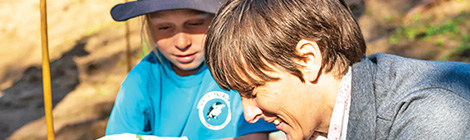
JAPANESE botany could be front and centre of a plan to transform Perth’s verges into mini forests.
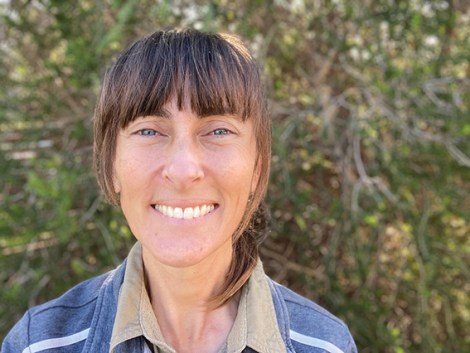
Murdoch University research fellow Grey Coupland is an expert in Miyawaki forest revegetation and will be keynote speaker at an Urban Bushland information night in White Gum Valley next month.
The Miyawaki method, which was developed in Japan by botanist Akira Miyawaki, is based on the remnant patches of sacred forest around Japanese temples, and recognised as a solution to urban greening efforts in Australia.
An “intensive” revegetation process, it comprises three key components, according to Dr Coupland.
Botanical
The first and “most important” step is to plant native species, tailored specifically by an intensive botanical survey of nearby vegetation to identify which plants are most suitable to the location.
“The aim is to identify what would have been growing on the site before the site was cleared.”
Secondly, the vegetation’s soil is subject to “intensive remediation” to reinvigorate as it is “often devoid of life” after urban development.
Finally, the native shrubs are planted at a high density, with around 30 different locally native species in a space between three and five square metres.
It’s an “ideal solution” for the environmental impacts of Perth’s urban sprawl, Dr Coupland says.
“We have really poor housing development design where we’re clearing vast swathes of landscape putting the houses in at really high density with very little space for green.
“All these things are making cities more difficult for humans to live with the organisms we share the planet with.”
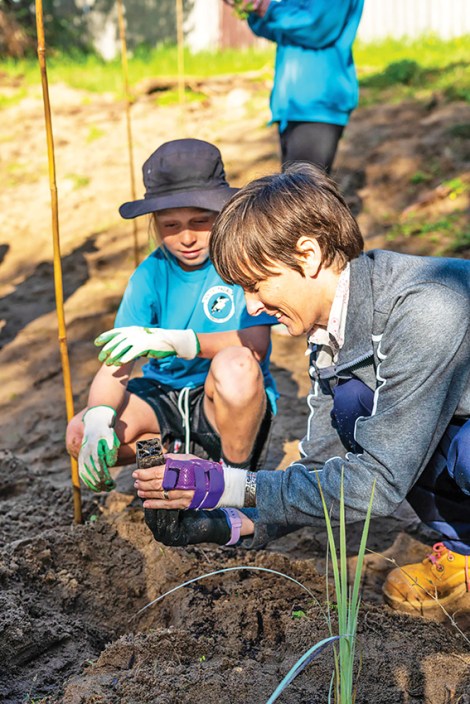
With a maturation rate of between 10 and 20 years, the Miyawaki method has a “remarkable” capacity to boost Perth’s urban vegetation which is under threat from both climate change, lack of regulation, infill, and the widespread effects of the polyphagous shot-hole borer.
“It’s potentially a very good option for urban areas where we need to increase canopy cover quickly,” Dr Coupland said.
“If you get a mature forest quickly, you can provide habitat quickly, so the biodiversity in the area can increase as well.
“We also need to consider not removing the native vegetation that we’ve got in place, and stop clear felling all the areas of land, because keeping the original vegetation should be the first priority.”
Valley Verges member David Broun says the Miyawaki method touted by Dr Coupland directly addresses the need for fauna habitat in a city with such a large urban sprawl like Perth.
“We have cleared large areas of land to for houses and development and a lot of the species of birds and animals that used to live here have a greatly reduced habitat,” Mr Broun said.
“By growing these pocket forests, we’re providing more habitat for those birds and insects to live.”
Benefits
There are a range of additional benefits to increased urban woodland, according to Mr Broun, which will be discussed at the Urban Bushland talk.
“In Perth, we have quite a high rate of things like roads, car parks, houses, and buildings attract and retain heat from the sun, which makes our urban environment much hotter than it otherwise would be,” he said.
“When we grow these areas of bush, we’re providing shade and reducing what’s called the urban heat island effect, making our suburbs quite dramatically cooler.
“By increasing areas of bushland and urban areas and having access to nature, we’re also making that easier for everyone as a whole range of social and mental health benefits.”
The Urban Bush talk featuring Dr Coupland will be happening at Sullivan Hall in White Gum Valley on Thursday, October 3 at 6.30pm.
by KATHERINE KRAAYVANGER
 Perth Voice Interactive
Leave a comment