• Turning the cameras
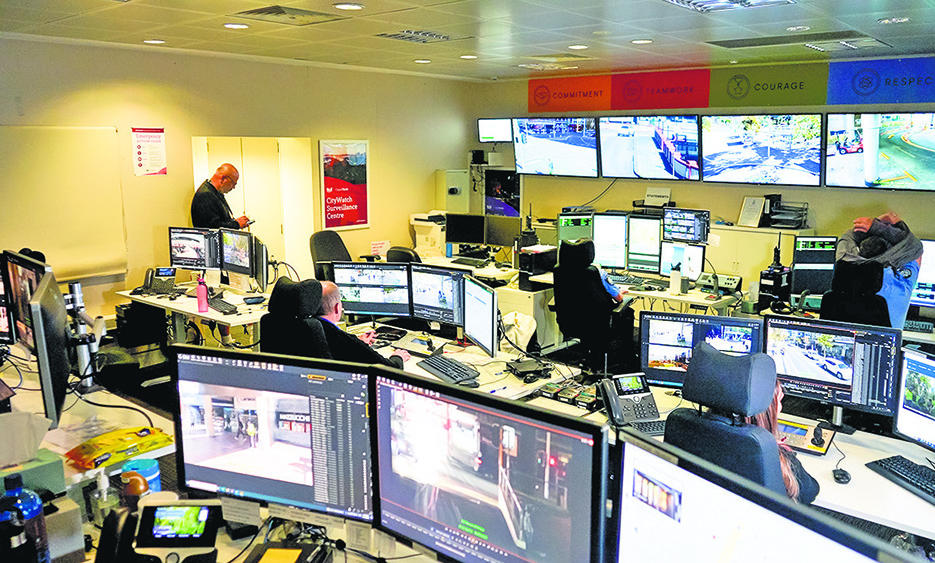
    • Inside the largely-unknown City of Perth surveillance centre.

    Spotlight on safety centre

    IT has 700 cameras, is staffed by security experts and police, takes calls 24-7, and costs the council millions a year to run, but less than 15 per cent of Perth’s residents know the City’s surveillance centre exists.

    This week lord mayor Basil Zempilas launched a publicity campaign trying to raise awareness of the City’s 24-7 security service. 

    Mr Zempilas has been keen on bringing more residents into Perth, but a staff report on his population plan said that safety would have to be improved to attract more people.

    Aggression

    The report said student accommodation providers “fear that students may fall victim to physical and verbal aggression, potentially damaging the reputation of future universities. 

    “They recommend increasing police presence beyond the core retail area. 

    “Additionally, a high-end developer noted that, despite the high land prices allowing for high-end residential development, the area was not reflective of a luxurious price point due to safety and security concerns.”

    At the June 20 council briefing Mr Zempilas said that at a consultation session with East Perth residents, it emerged that many had never heard of the hotline.

    He said they need people to report issues so they know what’s going on and can work with police on making the city safer, and they’ve stuck their branded “See it, say it” hotline on bollards throughout the city.

    Mr Zempilas said, “call 9461 3333 to let us know about something that might have made you feel unsafe. It might be antisocial behaviour, you might want to request a welfare check on someone you’ve passed in the street or you might simply have seen someone spill their milkshake and it needs to be cleaned up.” 

    He said 000 was still the go-to number for issues more serious than spilt milkshakes.

    The renewed campaign and pledge to act on tips comes two months after the hotline was criticised for ineffectiveness by a city shop manager at the April 26 council meeting. 

    “The city has become a frightening place to work,” 

    De Williams, a clothes retailer who was formerly based in Leederville, told councillors. 

    “I have been a manager for Hurly Burly for two years, and my staff now feel unsafe working on Barrack Street.

    “On a daily basis customers are either violent, or steal.”

    She said they used to be able to call the surveillance centre phone number (after finding the regular police line was putting them on hold for too long) and either a ranger or police would attend. But Ms Williams had observed a recent shift, and “now they say the police won’t allow them to call on a store’s behalf”. 

    Mr Zempilas promised to look into it and make sure security staff were still working closely with police. 

    by DAVID BELL

  • Love of a family
    Leslie Hornung.

    “WE haven’t really told our parents yet that this is happening.” 

    It’s now just a few weeks out from the premiere of a new short documentary What We Do for Family featuring producer Leslie Hornung donating sperm to start a family with his close friend Alex and childhood friend Sam. 

    “That discussion is probably going to happen before the event,” Hornung says. “I don’t know. It’s so tricky.”

    But from early on in the process he knew it was a story worth sharing with the public, and it was an easy choice for him to bring it to filmmaker Jennifer Piper.

    “The story was just too lovely, too interesting, and too close to my heart,” Piper says, and she quickly got on board to direct the doco. 

    “Because I am a firm believer, and a voracious, ferocious advocate for the idea of ‘found family’ and the importance of chosen family.

    “And then when I met Alex and Sam I got to witness this whole huge, huge amount of love that these people have in their home and also within this chosen family unit.”

    Alex Kershaw and Sam Kershaw.

    The decision to donate was also an easy ‘yes’ for Hornung. He’s gay and for a long time didn’t know if he wanted kids. “I knew at one point in my life, I had this idea of ‘at [age] 28 or 26, I’d have a great job and career, and be ready, and have a partner, and have kids. I’m like 34 now, and none of that’s happened. So, in my mind, I was like: When am I gonna do this? So it just made sense.”

    Both were also keen to tell a story about a queer family that wasn’t a tragedy. 

    This story isn’t finished yet. They’re still in the midst of the many months of screening, counselling, and filling out forms that’s required before becoming a donor, and the film highlights the extra lengths queer families have to go through to have children. The vagaries of fertility treatments are also unknowns on the road ahead. 

    But both says this story already has a happy ending either way. 

    “Whether or not this child comes into being, these people are family,” Piper says. “And that’s kind of cool. They just love each other so much.”

    “We’ve become closer and closer” through the process, Hornung says. “And I think there’s something special about being a chosen family.”

    Their short documentary What we Do for Family came about through the City of Vincent film project to tell local stories, and 

    it premieres at Revelation Perth International Film Festival at the Get Your Shorts On event at Luna Leederville on July 16 at 7pm. 

  • Pride pinch

    HYDE PARK’S annual Pride Fairday may be on the move, with Perth council keen to pinch the event from neighbouring Vincent.

    Pride has two major events – the evening Pride Parade in Northbridge and the daytime Fairday in Hyde Park.

    Perth council spent $210,000 funding Pride Parade in 2022 and it brought in 30,500 people.

    Over the boundary, Vincent council funded the Fairday for just $20,000, helping bring in 37,000 people.

    PrideWA’s now asking Perth council to increase its 2023 funding to $350,000. The overall cost of the parade is $600,000.

    Perth council’s funding assessment panel says if PrideWA wants that much money it should bring Fairday “within the city boundaries”, and has recommended the same $210,000 funding as last year.

    The assessment panel was also unhappy that signs acknowledging the council’s contribution weren’t displayed along the parade route last yhear.

    This week PrideWA president Michael Felix dropped a bombshell on a Perth council briefing and revealed a citywards move was being contemplated for the future.

    “We are keen to explore how we can incorporate Pride Fairday within the city boundaries for 2024 and into the future,” Mr Felix told councillors at their June 20 briefing, one week before they’re due to vote on this year’s Pride funding. 

    Mr Felix said the move to the city was being considered as part of a plan to grow the whole Pride festival into a destination event to bring in more people from overseas.

    Lord mayor Basil Zempilas was beaming at the news: “I’m certain my fellow councillors’ and staff members’ ears pricked up when we heard you say – at the risk 

    of tipping Vincent off – that the opportunity to bring Pride Fairday into the City of Perth was one that you were keen to explore.”

    A couple hours later at the June 20 Vincent council meeting, mayor Emma Cole reported the solemn news to councillors. 

    “I would be desperately sad if this was lost from the City of Vincent,” mayor Emma Cole said. “I believe its home is at Hyde Park.”

    The parade generates about $4 million of local economic activity, and the Fairday generates about $1 million. Ms Cole said she’d heard from PrideWA that the economic activity generated from the Fairday was a key appeal for Perth council wanting to bring them over.

    “Which is a little disheartening when we have a $250,000 [events funding] budget and the City of Perth has a $3 million budget,” Ms Cole said.

    She proposed increasing their contribution to the 2023 Fairday from $20,000 to $25,000, which was endorsed by councillors.

    by DAVID BELL

  • Forest taking bud
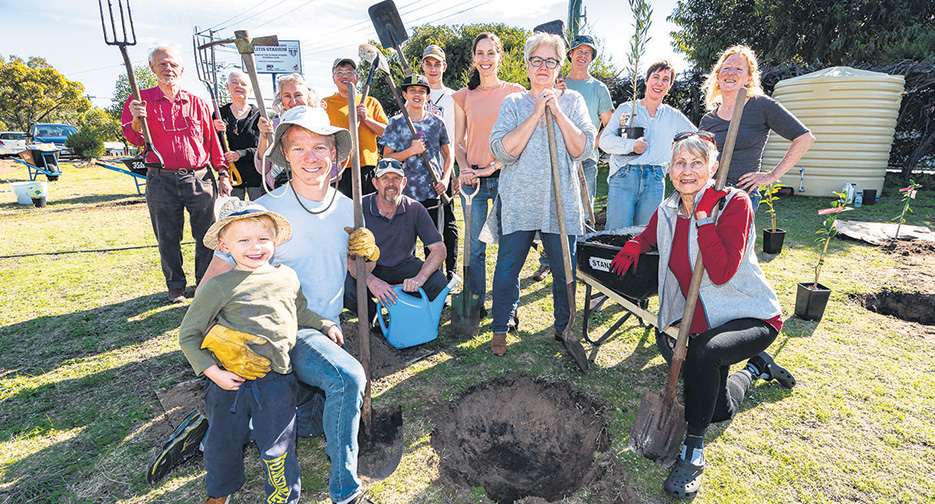
    Transition Town Vincent members and councillors digging in for a future food forest. Photo by Steve Worner.

    A FUTURE fund of fresh fruit for locals has been started near Litis Stadium, with volunteers from Transition Town Vincent holding a planting day for their “Community Food Forest”.

    The sustainability-minded group got a $2000 environmental grant from Vincent council to launch the project, which will one day provide fresh citrus, figs, olives, and native bush species for the picking.

    They held their first planting day on June 18. 

    The food forest has been a community project from even before it officially started: It’s fed by compost made from our FOGO bins. 

    Mayor Emma Cole put a shovel in at the June 18 planting, and said in a media release about the project: “It was lovely to join many volunteers in planting the first batch of food plants with a hearty mix of biochar and FOGO compost from our residents’ green top bins.

    “The food forest will bring more greenery to the area and will be a great space for the community to enjoy and eventually harvest.”

    Long-time TTV member Chris Cutress said, “We hope to demonstrate that by mixing FOGO compost and biochar with the in-situ soil, we can give the plants the best healthy start in their new location.

    “We laid cardboard around the trees to suppress weeds and covered the cardboard with a thick layer of mulch from Vincent’s free mulch pile.

    “People volunteered their time where they could, including digging holes, mixing compost and biochar, watering, making morning teas, taking photographs and spreading mulch.  We even had a three-year-old getting his hands dirty planting the trees.”

    They plan to add more trees as species become available. 

    “Many of the food plants we want to have at the food forest are not available in nurseries at the moment, so we will be purchasing more plants and holding another planting day later in the year.”

    TTV also want volunteers to maintain and monitor the trees; http://www.facebook.com/ttvincent/

  • Recurring nightmare

    CAUGHT between a hopeful home builder and a street of North Perth neighbours opposing the house plans, Vincent councillors have deferred their decision and called for a more neighbour-friendly re-design.

    Emotions ran high in the council chamber both this week and last, with distress evident both from the Barbas family who want to build their two-storey Auckland Street house, and from neighbours who oppose its bulk and how close it’ll be built to their properties and the street front (“’Dream home’ nightmare,” Voice, June 17, 2023).

    Such passionate disputes over new builds have been common in Vincent in recent years as its legacy big blocks are subdivided and bulkier houses replace old cottages. 

    The Auckland Street home doesn’t follow the usual guidelines about being set back far enough from the streetline or from neighbouring properties.

    Council planning staff say the plans are reasonable because the block is so awkwardly shaped that the usual guidelines would make the land very difficult to build on.

    One cause of conflict is that subdivisions are approved from afar by the WA Planning Commission, but then local councils are left to decide which houses to approve on these oddly shaped blocks.

    With three re-designs already done at a mounting cost to the Barbas family, councillors voted to send them back for a another rejig and are hoping for one that’ll be more amenable to the neighbours. 

    “These processes can be incredibly hard,” mayor Emma Cole said, adding she’d faced a similar situation.

    “When my neighbour built their home, and I faced a one-and-a-half storey stairwell window overlooking my home and garden… I felt quite distressed by that.

    “But my neighbour and I are now on good terms and we’ve moved forward, and I think you can overcome these things.

    “I’d just like to encourage perseverance.”

    by DAVID BELL

  • Letters 24.6.23

    In defence of the humble trolley

    GOD bless Cr Joe Ferrante for his concern about rogue shopping trolleys. I live in Community Housing and there are usually a few around the place. 

    I’ve often taken them to the front verge and dialled Trolley Tracker (1800 641 497, 8am – 6pm, 7 days a week).

    My irritation abated when I came to realise that many people who live here can’t afford cars. The trolley is how they get their groceries home. 

    Also, if they are working in the garden, they are often not robust enough to carry potting mix etc, so the trolley is invaluable as a gardening aid. 

    I figure Coles can probably spare a few, what with annual profits of over a billion dollars after tax. 

    Hey, they could even think about free shuttle busses for their loyal customers around the burbs. 

    Levying fines on an already hard-pressed society is just another way for councils to squeeze out some more revenue. 

    It’s not the supermarkets’ fault anyway. Lazybum shoppers can’t be bothered doing the two-minute return walk to the trolley racks around the carpark, selfishly preferring to abandon them in empty parking spaces, which can be very frustrating when shopping carparks are full. 

    If trolleys are abandoned at bus stops, it means someone has needed it to get their heavy shopping at least that far home. 

    Chill Cr Ferrante. Do a nude calendar (you spunk!) and donate the proceeds to a new City of Stirling local shopping shuttle service for ratepayers. Onya. 

    CJ
    Inglewood

  • Hidden depths
    • Blueback is another great production by the Spare Parts Puppet Theatre.

    IF YOU’RE already starting to plan activities for your hyperactive kids during the July school holidays, make sure you check out Blueback by the Spare Parts Puppet Theatre.

    Based on Tim Winton’s beloved 1997 short novel about preserving the WA coastline and its marine life, there’s an important message lurking beneath all the fun and colourful puppets.

    There’s no better time to see the show after Winton was made an officer of the Order of Australia earlier this month for “distinguished service to literature as an author and novelist, to conservation, and to environmental advocacy”.

    Adapted by playwright Peta Murray, Blueback follows Abel Jackson, a young boy who forms a deep respect for the ocean and its teeming marine life, and strikes up a lifelong friendship with a giant groper he calls Blueback. 

    When this precious world is threatened by change and development, Abel must find the courage to stand up for what he believes in and protect what makes life worth living. 

    It’s a fantastic production with beautifully crafted puppet fish, crabs, eels, abalone, coral, and the ‘king’ of the reef – the majestic and playful Blueback himself.

    Blueback is a ‘love letter’ to our unique natural world and an achingly beautiful story about our connection to environment and to each other, told with humour and tenderness,” says Spare Parts artistic director Philip Mitchell.

    “It captures the mystery and majesty of the sea and the wonder of a boy on the cusp of becoming a man, prepared to defend the world he lives in and loves.

    Blueback stands as a timeless piece; its message is just as relevant today as it was when Winton wrote it many years ago.

    Blueback aims to foster a deep connection and appreciation for our marine environment, urging audiences to cherish and safeguard this invaluable resource for future generations.”

    Founded in 1981 in Fremantle, Spare Parts Puppet Theatre is one of the longest running theatre companies in WA.

    They has won numerous awards and hold seasons in Perth, tour across the country and around the globe, and are Australia’s leader in the development of emerging puppet artists.

    Blueback is at the Ellie Eaton Theatre, Claremont Showground from July 1 – July 15.

    The production is suitable for all ages, but especially those five-plus.

    The 50-minute shows are scheduled daily at 10am and 1pm, with twilight shows at 6.30pm on July 7 and 14. Tix at sppt.com.au or call 9335 5044.

  • What’ s the score? 
    • Dreadlocked violin virtuoso Rupert Guenther is part of a new wave of classical musicians who like to improvise.

    A LENGTHY piece of improvised music about imaginary letters sent back in time to a composer in the 18th century sounds like something off a prog-rock album by Rick Wakeman.

    But it’s actually a new classical sonata, New Letters To Esterhazy, improvised by Perth-based composer-violinist Rupert Guenther, who happens to have a cool set of dreadlocks.

    He’s part of a new wave of classical musicians who are ditching traditional music scores in favour of improvisation and creative flights of fancy.

    Commissioned by ABC Classical FM, New Letters To Esterhazy was based on imaginary letters Guenther wrote to Austrian composer Joseph Haydn in the 18th century Austro-Hungarian court of Esterhazy.

    The sonata is a bitter-sweet piece that has moments of great elation and hope as well as profound sadness and despair.

    “When ABC Classic FM commissioned and then recorded the works, they could hardly believe what they were hearing – it was classical music, but all improvised out of thin air,” Guenther says. “There were no second takes or over-dubs or corrections, they weren’t needed – the whole story of the sonatas stood complete. The album is a gorgeous record of an artist at their work.”

    Guenther is set to premiere the new work at Government House in Perth on the first date of his Australian tour. 

    “The great intimacy of the music in New Letters To Esterhazy is especially poignant for me, having lived and studied in Austria, and played concerts in the same concert room Haydn gave his performances in at what was once the Austro-Hungarian Court of Esterhazy,” he says.

    “It is the special feeling of these historic places, the physical presence of earlier times in the cobbled streets and old buildings, and the way of making music full of nuance which has rubbed off on me in my music during my earlier time living and performing in Europe.”

    The concert will finish with three new short contemplative works – Hakone Maple drawing on the ancient tradition of Japanese shakuhachi flute music, So Many Stars an Arabic-influenced composition, and Wandjina a short work about the mythological Wandjina and its relationship with Australia’s ancient culture and desert landscape.

    Trained as a virtuoso concert violinist in Vienna, Guenther has 25 albums under his belt and has performed improvised music – inspired by nature and the cosmos – at famous venues around the world including Tate Britain, Docklands Museum and the National Gallery of Victoria.

    Formerly a member of the Vienna Chamber Opera, he has been sideman to the stars including late Beatles producer Sir George Martin, Olivia-Newton John, Demis Roussos, John Farnham, Anthony Warlow and Hollywood singer-songwriter Lisbeth Scott.

    New Letters To Esterhazy was one of five albums of the artist’s improvisations commissioned and recorded by ABC Classic FM.

    “The art of classical improvisation might seem new or unknown in some people’s minds, but back in those times it was very much a normal way of making music which sat easily alongside the composed scores,” Guenther says. “It has become a lost art until now, but in reality what I am doing is no different from a painter who is painting his pictures, giving life to his own thoughts and inspirations onto a blank canvas.”

    Guenther will perform New Letters To Esterhazy at Government House on Friday June 30 7pm. Tix on Ticketek (search for “New Letters To Esterhazy”)

    by STEPHEN POLLOCK

  • Leafy retreat

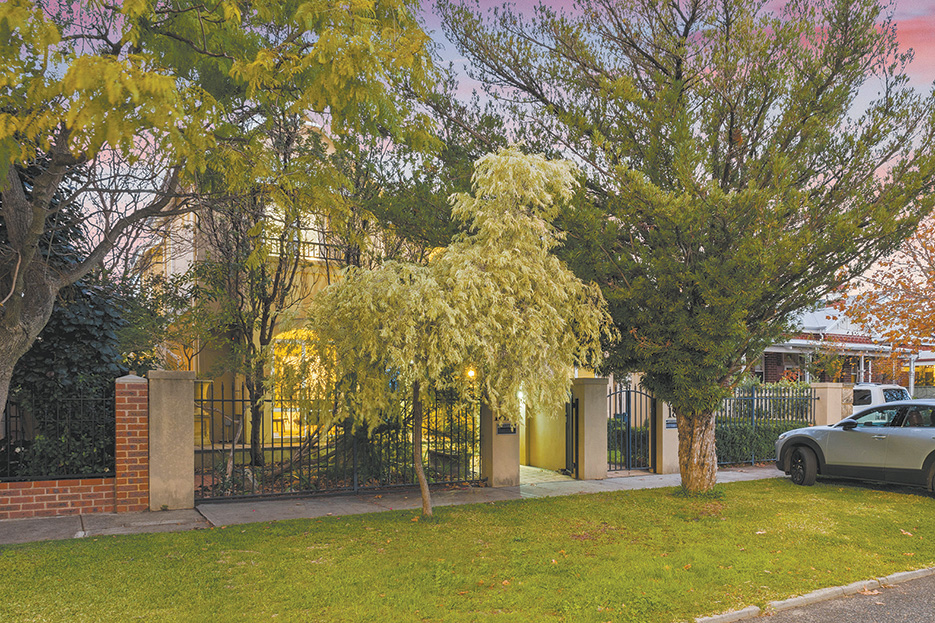
    INNER-CITY elegance is probably the best way to describe this house in Mt Lawley.

    Situated on the North Perth border, it’s pretty close to Hyde Park, reflected in the lovely facade nestled behind a clutch of leafy trees.

    It has the air of a London abode with the two-storey cream building peeking through the lush foliage.

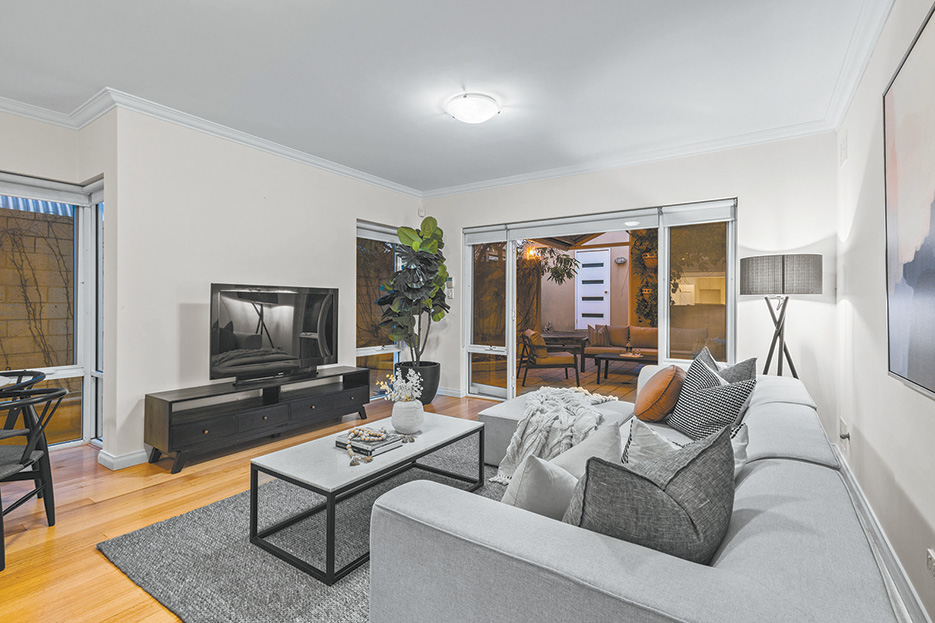
    Inside is just as stylish, especially the open plan lounge/dining/kitchen area which has Tasmanian Oak floorboards and a mix of oyster lights and downlights.

    The kitchen has masses of storage space, stainless steel appliances and sleek granite benchtops.

    There’s a breakfast bar, and a dining table off to the side for more formal meals.

    The Voice really likes the lounge, which has views of the rear courtyard through the sliding glass doors.

    The courtyard is almost completely enclosed, giving you an extra living space all-year round (you can’t beat sitting with a coffee and a book while listening to the rain pelt off the roof).

    The roof sheeting is clear, so you’ll still get plenty of natural light. The ground floor has plenty of space including an extra room, currently being used as home office, a laundry, extra toilet and a large storeroom/workshop.

    A cute set of carpeted stairs lead up to the first floor, where you’ll find all the bedrooms.

    They’re also carpeted with the spacious king-sized main featuring double built-in robes and a nice ensuite.

    The other two queen-sized bedrooms also have built-in robes and share a family bathroom.

    There’s even a cute balcony up here, and a spa bath for added luxury.

    I’m sure the new owners will enjoy plenty of long soaks during the winter months.

    The carpets make the bedrooms nice and snug and you have good noise separation from the living spaces on the ground floor. This three bedroom two bathroom home includes ducted reverse cycle air-conditioning (zoned), Tasmanian Oak timber floors (freshly polished), powder room (three WCs in total), and a double garage accessible from a sealed right of way.

    Situated on a 280sqm green-titled block on Hyde Street, you are metres from Hyde Street Reserve and Hyde Park, and it’s a short walk to the Mount Lawley and Highgate Beaufort Street precinct.

    This is a stylish and deceptively big inner-city home with lots of panache.

    From the $1.2m’s
    18A Hyde Street, Mt Lawley
    Beaucott Property 9272 2488
    Agent Carlos Lehn 0478 927 017

  • Underground power bill up to $9k

    UNDERGROUNDING power in Vincent is looking to cost homeowners somewhere between $3,000 to $9,000 per property.

    The numbers presented to Vincent council this week are still early estimates given by Western Power, subject to vary by about 30 per cent. 

    Western Power is subsidising just over half the cost, putting in about $89m since they needed to replace old power poles in most parts of Vincent soon anyway, but the portion paid by ratepayers will still be about $80m.

    Based on previous projects, the upper estimate for costs is likely to be just this side of acceptable to a majority of ratepayers: When the cost went above $10,000 public support fell away for a planned rollout in the Moir and Brookman precincts in 2015.

    The council is planning to take out hefty loans so up to 70 per cent of ratepayers can pay their contribution across a four-year instalment plan instead of being hit up front. 

    Former councillor Dudley Maier, a long-time advocate for Vincent to sink powerlines, has raised concerns about the council’s plan delaying the rollout in some suburbs.

    “Three areas will be delayed by over three years,” Mr Maier said at the May council meeting.

    Patches of West Perth, Leederville, East Perth, Mount Hawthorn, Joondanna, Osborne Park, and North Perth will be last in line, with construction not starting til 2030 and scheduled to finish in 2031.

    by DAVID BELL