• E-scooter scheme locks in two firms
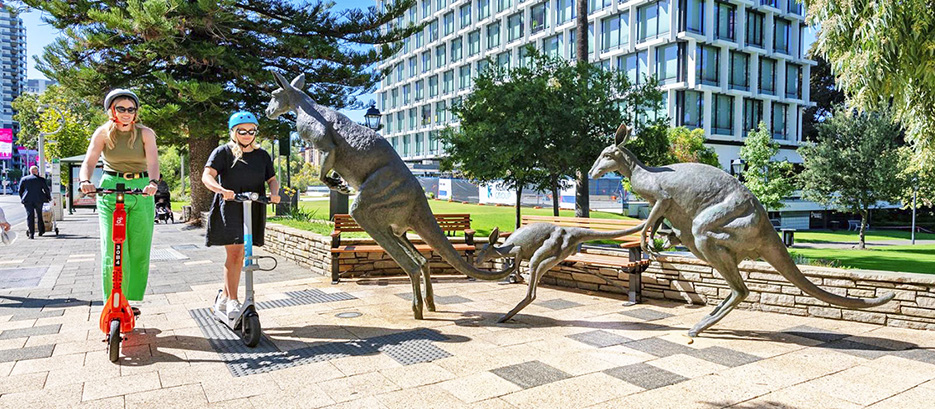
    • The orange Neuron scooters and grey Bird scooters launch this week.

    PERTH council launches its e-scooter hire scheme trial this week, but there’ll be no sharing between council borders as originally planned.

    Originally the plan was for the “Inner City Group” councils Perth, South Perth, Subiaco, Victoria Park and Vincent to share a scooter share program, but Perth’s scooters will be programmed to grind to a halt at the border. 

    The dream was that someone could hire a scooter to take from North Perth to the CBD or scoot over to UWA or Subiaco, cutting down on traffic going in and out of the city.

    But Perth was the quickest off the starting block and decided to go it alone, a decision dubbed “disappointing” by one Vincent councillor who was hoping for seamless inner-city scootering (“Wheels fall off e-scooter plan,” Voice, November 26, 2022).

    Network

    For there to be any hope of figuring out an inter-shire network in the future, Vincent will now be locked into going with one of the two providers Perth council’s using: Bird Co. and Neuron Mobility.

    Perth council went with two providers, because “having two competing companies as part of the scheme will ensure e-scooter users within the City are getting the best value for money,” lord mayor Basil Zempilas said in an announcement of the two year e-scooter trial.

    But a two-provider system has proved controversial in other areas.

    Stirling council recently completed a one-year trial with Neuron e-scooters. 

    At their March 7 meeting, when deciding whether to extend the trial, Stirling staff urged councillors not to switch over to a multi-operator system.

    They advised it made the complaints more difficult to handle since often complainants didn’t know which company a scooter belonged to, said it would mean people had to sign up for a separate app and account for each different brand they wanted to hire, and warned that people whose accounts were banned for abusing the share scheme would get a second chance for mischief by just using another brand. 

    For now they’re sticking with Neuron, extending the trial for another year until they figure out a permanent plan. 

    Both Bird and Neuron are “dockless” e-scooters, as opposed to a stricter scheme where scooters are locked into docks until the user makes an account and hires them. Such dockless scooters in other cities have sometimes seen scooters picked up and dumped by vandals, or parked haphazardly by careless users.

    Perth council hopes to cut down on poor parking by requiring users to be in a recognised “parking zone”, before the scooter will let them log out of their account. The honour system’s still in place to not leave them tipped over after logging out.

    The 500 scooters are up for hire from March 18 and cost $1 to start the trip and then 45 cents per kilometre.

    by DAVID BELL

  • Luck of the Irish
    A memory of a past St Pat’s Day parade before three years of unlucky cancellations, in one case just a day before.

    AFTER an unlucky run of three cancelled festivals, Perth’s Irish community is gearing up to celebrate at the St Patrick’s Day festival and parade in Leederville today (Saturday March 18).

    In 2020 the St Patrick’s Day festival was one of the first big public events to be cancelled just days after WA recorded its first person-to-person transmission of Covid-19. 

    “We had a really good build-up to the 2020 festival, and we were good to go,” St Patrick’s Day Wa committee chair Olan Healy told the Voice.

    “We had marquees up and ready to go.”

    But the day before the festival, organisers met with representatives from their major sponsor Vincent council, and concluded it had to be called off. A day later premier Mark McGowan declared a state of emergency.

    In early 2021 coronavirus had disappeared in WA and it looked like the festival could go ahead. But sporadic outbreaks and short lockdowns of varying strictness meant organisers had to cancel a month out.

    “And in 2022 we cancelled it two weeks before,” Mr Healy recalls, as lingering restrictions on event numbers would’ve capped crowds at just 500.

    “We weren’t allowed to have people on the street, we weren’t allowed to have the big parade, we had to shorten everything.”

    The silver lining in the long wait is that they’re able to return in full force.

    “And it’s great to have it back in full… it’s great to have it back the way it was.

    “This year, thankfully, we had a clear run for the event. We’re over the moon. We haven’t had any obstacles, and we’re very excited… we’ve had a great response from the Irish community and the Australian community, and it’s all go.”

    Vincent mayor Emma Cole said it’d been an unlucky run but the council was glad to back their return, saying in an announcement for the 2023 event: “We are very excited to welcome our community back to Leederville for this vibrant festival after a three year pause due to Covid-19.

    “For many of us who have missed a return to the Emerald Isle to reconnect with family and friends, this day is very special and a chance to connect with the Irish community.

    “It is an opportunity to embrace Irish traditions and culture and to enjoy time with family and friends.”

    The parade kicks off March 18 at 10am coming from Newcastle Street and heading up Oxford Street to the festival grounds at Leederville Oval, for food, fun and tunes til 6pm.

    There’ll be “loads of Guinness – reasonably priced as well, and we’ll have a huge kid’s zone,” Mr Healy says, adding that kid-friendly activities are a big focus this year as the festival welcomes many youngsters marking their first festival.

    “There’s so many kids this year who’ll see the parade for the first time, because they weren’t born when the last one was on.”

    by DAVID BELL

  • Stirling CEO to retire

    AFTER 16 years as City of Stirling CEO, Stuart Jardine had announced he’ll finish up at the end of his current contract on April 4, 2024. 

    Mr Jardine has spent 25 years at Perth councils, and another 21 years in UK local governments.

    “I look back with immense pride and fulfillment on what we have achieved for our community,” Mr Jardine said.

    “I believe now is the right time for me to step down and hand the baton over to a new era of leadership for the City of Stirling.”

    Mr Jardine’s contract was due to run until April 2023, but in May 2022 the council decided to add an extra year to get him through to 2024.

    It was an unusual move that attracted some scrutiny from the public gallery, given it bypassed the usual requirement for the council to publicly advertise a CEO’s job if one person occupied the job for more than 10 years.

    But mayor Mark Irwin said the council had “independent legal advice” that a one-year extension was ok.

    Mr Irwin said they wanted to keep the seasoned Mr Jardine around to see them through the transition out of the Covid-19 era. 

    The council will start the search for a new CEO shortly.

  • Sheesh…that didn’t go well
    Shesh Besh’s shisha bar beside its restaurant operated for more than three years.

    AN unauthorised shisha bar in Leederville operated for three years despite multiple shutdown notices from Vincent council, the latest sign of an ongoing weakness in enforcing planning rules.

    This week the council voted to refuse a long-overdue application to operate from Shesh Besh, an indoors middle eastern restaurant beside a hangar-style shisha patio which opened at 209 Oxford Street in December 2019.

    Vincent staff first sent the operators a letter in July 2020 advising them they couldn’t sell shisha without council approval. To get a shisha bar or any other smoking area approved usually involves convincing the council the smoke won’t be a nuisance to neighbours.

    Despite that letter Shesh Besh kept the bar operating. 

    Orders

    Over the next two years a couple more complaints rolled in and Vincent sent off a couple more orders to shut down.

    Shesh Besh’s owner, a group called “MKZD Investments Pty Ltd”, finally lodged a development application in May 2022, but kept operating in the meantime. 

    In November 2022 Vincent initiated a prosecution over the unauthorised use, an action that’s still ongoing as the council finally considered and then refused the retrospective approval request at its March 14 meeting.

    Unluckily for Shesh Besh, they would have had a better chance getting the shisha bar approved if they’d lodged an application back when they opened. Since then the council’s approved a policy that makes it much harder to open any smoking premises that could affect neighbours. 

    The council’s also rejected two other shisha bars on the grounds they’d affect neighbours.

    At the March 14 meeting Vincent councillors heard from Libby Jardine who heads up the Cancer Council’s Tobacco Issues Committee.

    Ms Jardine urged the council to shut Shesh Besh’s shisha bar down, saying “the proposal will detrimentally impact on the amenity of the surrounding area.

    “Water pipe or shisha emissions can harm non-smokers the same way second hand cigarette smoking does,” Ms Jardine said, adding “the proposal has not demonstrated that the risk of emissions could be appropriately mitigated.”

    As the application was rejected, mayor Emma Cole said: “This is a consistent position that the city has taken recently on shisha bars, and now we do have the Local Planning Policy in place… and it basically takes a view that these issues do affect amenity. We’ve had residents contact us very concerned by second hand smoke and the amenity issued cause to their property.”

    Enforcement queried

    THERE’S been a few notable cases of businesses operating without council approval recently, prompting concerns from a couple of councillors about whether planning enforcement has teeth.

    Another Shisha bar, the now-closed Petra Lounge at 624 Beaufort Street, opened without approval in late 2021.  Amid a flurry of complaints from neighbours it operated for five months in defiance of a council order to shut down (“Shisha bids snuffed,” Voice, September 24, 2022).

    Approval

    At last month’s ordinary meeting councillors also heard a commercial carpark at 192 Stirling Street operated for six years without approval. Its operators only got a five-year approval in 2012 as the council didn’t really want a carpark taking up a block long term and stifling some better development opportunity.

    The approval expired in 2017 and no one noticed until the issue came to council in February 2023, when it was realised the owners hadn’t maintained the landscaping and gardens; a condition of approval to make the site look a bit less crappy than a bare carpark.  

    At February’s meeting Cr Ross Ioppolo said it was concerning the council’s admin had not noticed the carpark was still there after the time limit expired, and that the owner hadn’t stuck to their landscaping commitment. 

    “My concern is that in many, many development applications that we’re asked to consider in this chamber, that council and administration regularly recommend conditions,” usually mitigations intended to lessen a development’s impact, like landscaping, noise-proofing or public art components.

    “What can administration put in place to proactively ensure that non-compliant behaviour… [does not] go unchecked?”

    Council staff told him they had no compliance system back then. They have one now, but face staff shortages which hampers their ability to pursue non-compliance.

    Councillors voted to let the carpark stay open (since the policy against carparks on vacant lots expired years ago), and were assured the compliance team would check in and make sure the owner does the landscaping they were supposed to do back in 2012. 

    by DAVID BELL

  • Stories in harmony
    Some of the 25 students who contributed to the book, sharing their stories with Filomena Piffaretti and John Forrest Secondary College principal Denise Robinson.

    STUDENTS from John Forrest Secondary College have shared their stories of migration for a book released this Harmony Week, March 15 – 21.

    JFSC, which has students from around 50 countries, has been involved in Harmony Day for a few years now, and last year produced a cookbook of students’ family recipes from 15 countries.

    This year Bayswater council teamed up with them to produce the Origin Stories book telling the tales of how they or their parents got to Australia, and Bayswater mayor Filomena Piffaretti shared her own family story of her mum and dad coming here from Italy and waiting two years to be reunited with their mothers. 

    “As the daughter of Italian migrants, I appreciate the struggles faced by those who move overseas, and I applaud their courage and resilience,” Cr Piffaretti said.

    A free digital version is at bayswater.wa.gov.au/harmony-week

    While the boat bumped along, my father waited and prayed that he would get to Australia. The war and the killing in Iraq made it a terrible place to live and a difficult place to survive. Growing up, his life had been difficult and his level of education wasn’t very good. On the boat, my dad felt glad he was taking this risk. He didn’t know it at the time, but he was taking this dangerous journey not only for himself, but for his future family, too. Malak, born in Australia, whose dad is from Iraq

    Indonesia is small and crowded, filled with noise and people. It sounds like cars honking, people bargaining and talking at once and calling for taxis. Indonesia smells like fuel, pandan, incense and durian. My mother moved to Australia because she wanted a better education and to learn English.  She also wanted to explore Australia. Once here, she missed her family and her hometown very much. She also missed the food and the people. I miss Indonesia a lot, too. I miss the food, my family, the people and the places I used to go to.
    Jessica, born in Indonesia

    My Dad was seven years old and my Mum was nine when they arrived in Australia from Italy. Australia was seen as the land of opportunity, so both my grandfathers (nonnos) migrated by ship in the 1950s in the hopes of a better life. They arrived in Australia without any formal qualifications and spoke very little English. They both found work and eventually saved enough money to bring their own families over. It was two years before my grandmothers (nonnas) would make the difficult month-long journey across the ocean with their children, to finally be reunited with their beloved husbands. I will always be grateful for the warm welcome my grandparents received upon migrating to Australia.
    Filomena Piffaretti, born in Australia, whose parents are from Italy.

  • Landmark made way for an off-ramp
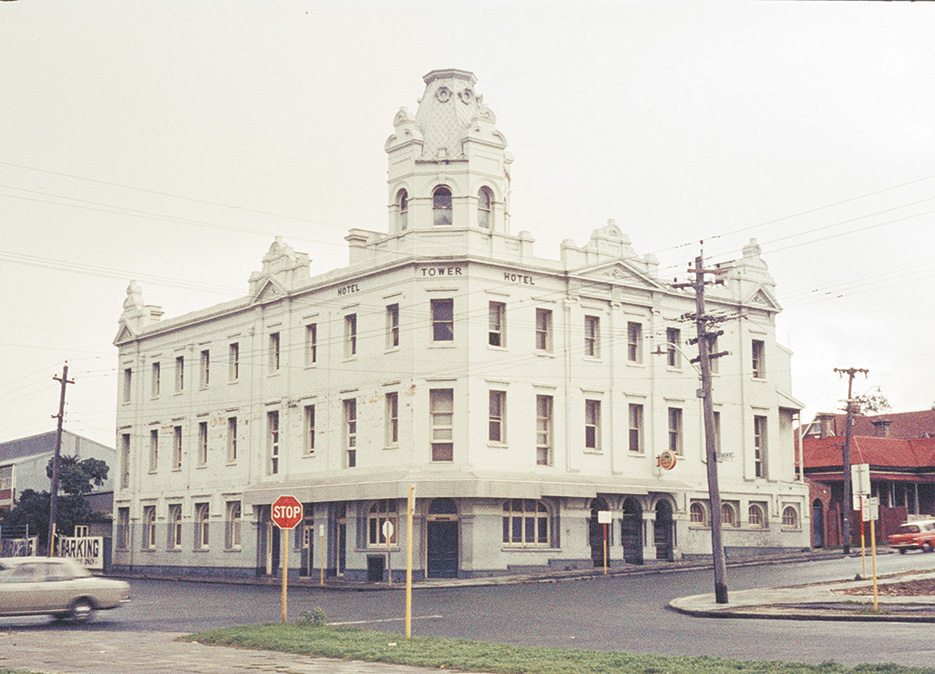
    The Tower Hotel, c1965-1969. Photo: SLWA 144275PD

    THIS week’s story from the Vincent Local History Centre tells of the Tower Hotel, once a grand landmark of West Perth that was demolished to make way for a freeway offramp.

    THE Tower Hotel, originally known as the Club Hotel, was a three-storey landmark which stood on the corner of Charles and Duke Streets in West Perth from 1898-1973.

    An impressive building in its day, it was designed by prominent Perth architect and World War I Lieutenant General Sir Joseph John Talbot Hobbs for John Charles Chipper in 1896.

    Mr Chipper, born in Perth in 1847, was the son of the first paid police constable in Perth.   

    He was previously the owner of the John Bull Inn (later named the Criterion Hotel) from the early 1870s. 

    Mr Chipper opened the Club Hotel, also known as Chipper’s Club Hotel, in May 1898.

    Advertised as “the finest residential hotel in Perth”, he was the proprietor until 1899.  

    Renamed

    It was renamed the Tower Hotel in 1912 and was run by a succession of different publicans and their families.

    The majority of the publicans stayed on for only a year or two in most instances.   

    Like many of Perth’s old pubs, the Tower Hotel offered accommodation, not just cold beer. 

    In the late 1920s, permanent guests paid 35 shillings a week and temporary lodgers paid £2 a week for one of the hotel’s 26 rooms including its “excellent table, hot baths and free garage”. (The West Australian, 30 November 1928).

    The Keane family were among the more longer-term publicans to run the hotel with Patrick Joseph Keane being the proprietor from 1928-1939.  

    In 1937, the hotel underwent extensive renovations, including reconstruction of the main saloon, public bars and bottle department.  

    Mr Keane died two years later in 1939 and his wife Dorothy Keane became the licensee from 1939-1949.  

    During World War II, there was a shortage of accommodation for US servicemen in Perth.

    Hotels including the Tower Hotel were asked by the government to make available more rooms for accommodation.  

    Ms Keane’s licence was renewed with the condition that she “do something” about making use of the 20 vacant rooms for servicemen in her hotel. (The West Australian, 5 December 1944) 

    In 1950, the hotel was updated and repaired. As per advertisements, it continued to offer lodging, as per advertisements for housemaids and cooks.   

    The hotel was demolished in 1973 to make way for the Mitchell Freeway construction. 

    If you have any photographs or information about the former hotel which you’d like to share, contact the City of Vincent Local History Centre at local.history@vincent. wa.gov.au or 9273 6534.

  • Having a Go
    Adults and children enjoy a game of Go at Fremantle Library.

    A ground-breaking  initiative to tackle social isolation in Fremantle has more possibilities than the number of atoms in the observable universe.

    I’m talking about the ancient board game Go, with City of Fremantle the first local government to hold Go sessions where people socialise and exercise their brains at the same time.

    Go originated in China more than 4000 years ago and is believed to be the oldest board game still played to this day.

    The rules are simple – one player has white stones and the other black. They take turns placing them on a grid, attempting to surround more territory than their opponent.

    Mind-bender

    But as the board is larger than the one used in chess, the number of legal positions is mind-bendingly huge (about 2.1 × 10170) and expert games can last six hours or more.

    But don’t worry,  beginners use a smaller board and ease their way into the abstract strategy.

    Dr Silvia Lozeva, an academic in anthropology, social development and political science at UWA, is a Go expert and came up with the idea to hold the sessions at Fremantle Library.

    “There are many benefits from learning to play the game, both socially and neurologically, but the main advantage is creating an inter-cultural link between East and West, in a way only comparable to bringing the spices to the western world,” she says.

    “My focus is to provide as many meaningful ways of preventing social isolation and foster a sense of community as possible, and the game has provided an excellent tool and a bridge between times, cultures and places.”

    Although chess is back en vogue after the hit Netflix series The Queen’s Gambit, over the years Go has featured in Hollywood movies including Beautiful Mind starring Russell Crowe, and director Darren Aronofsky’s cult-classic Pi. 

    The board game recently made headlines with the AlphaGo challenge, where human players pitted their wits against AI. Dr Lozeva is so fascinated by Go she gave a TEDx talk in Perth on it and published articles in the journal The Conversation about the board game. She recently founded Institute 361, which facilitates Go sessions in schools, workplaces and communities, including sessions designed for people on the autism spectrum.

    Aside from the social benefits, the game is known to develop patience, resilience and long term strategic thinking, which can be useful in all walks of life including the business world.

    “With its simple rules and possible moves to explore, it takes minutes to learn and much more to master,” Dr Lozeva says.

    The next Give Go a Go session is at Fremantle Library on High Street on Tuesday (March 14) at 3.30pm. Weekly sessions will be held until the end of June. To register go to eventbrite.com.

    by STEPHEN POLLOCK

  • What’s New: Pepper Shoes

    Trendy, Local Shopping in George St

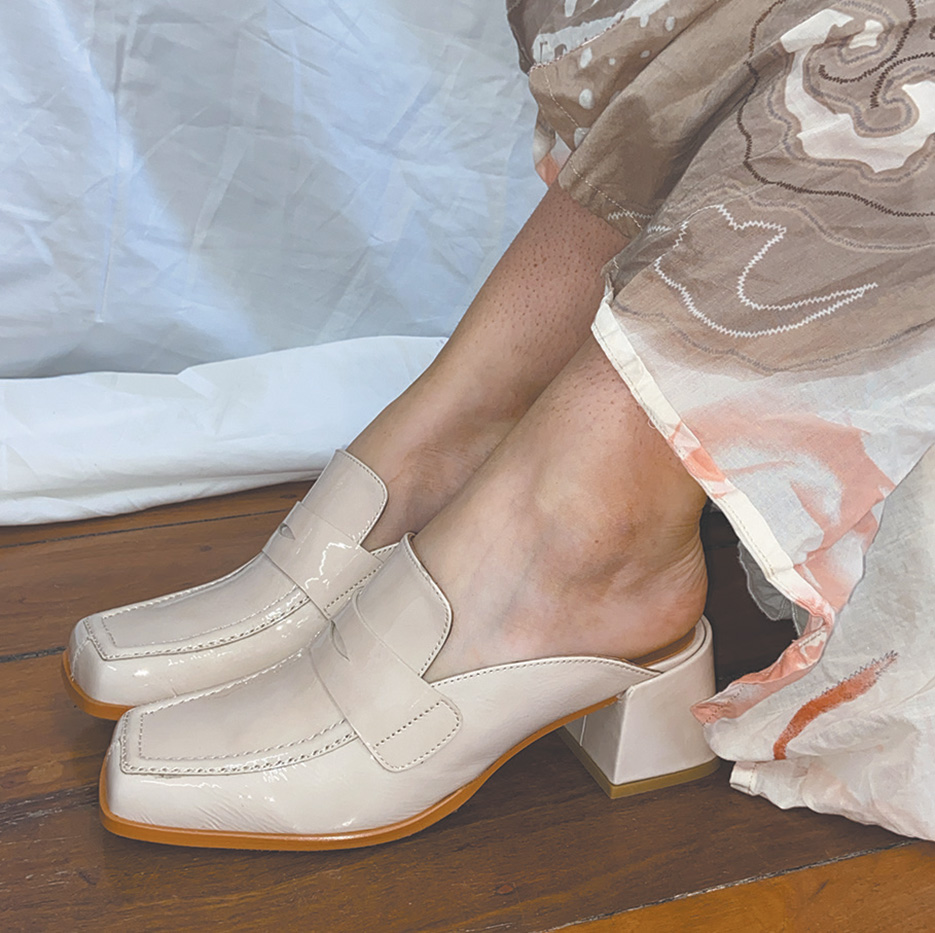
    Pepper Shoes – Unique and beautiful shoes and accessories from around the world.

    PEPPER SHOES is the latest fantastic shop to open on George Street in East Fremantle and owner Camille Gribble has a very personal connection to the area.

    She grew up in Freo and would ride her bike up and down George Street aft er school to get out of doing homework!

    Thankfully she knuckled down and went on to have a highly successful career – specialising in footwear in the fashion industry, where she spent decades in retail and wholesale across the globe.

    Three years ago, Camille and her husband took over the family business Pepper Shoes, which had been successfully run by her sister for nine years and had outlets in Floreat, Innaloo and Warwick.

    Over the years Camille had helped out in the shop and was very familiar with the business.

    Aft er covid subsided, she decided to open a new Pepper Shoes in the picturesque George Street, where she knows the local market. It opened its doors five weeks ago.

    “George Street is such a gorgeous setting and just seemed the perfect spot for a friendly, local shoe shop where we can get to know people and become part of the social fabric,” Camille says.

    Pepper Shoes has a wide variety of stylish ladies footwear with everything from summer sandals to everyday chic, winter boots and sneakers. They also stock a lovely range of accessories including wallets and handbags.

    “We’re all about quality shoes at affordable prices,” Camille says.

    “Our shoes are comfortable and stylish and I have used my decades of experience in the retail sector to secure some fantastic footwear at great prices from European countries like Turkey and Spain.

    “As an independent store, we pride ourselves on customer service. Most of our staff have been with us for many years and have invaluable experience.

    “We’re not pushy and want people to feel comfortable trying on shoes and finding out what they want.”

    Aft er a decade living in Singapore, Camille is delighted to be back in her hometown of Fremantle. 

    She says George Street is predominantly known for its cafes, restaurants and small bars, but is hoping Pepper Shoes will kickstart a retail trend with more shops opening up.

    “It’s just the perfect setting to do a bit of shopping at your favourite local store and then meet your friends for lunch at one of the gorgeous cafes,” she says.

    “I’m delighted to open Pepper Shoes in my hometown and can’t wait to meet the locals and become part of the George Street community.”

    Pepper Shoes is at 81 George Street in East Fremantle. Get down in person or they have an online shop on their 

    peppershoes.com.au

  • Frank review 

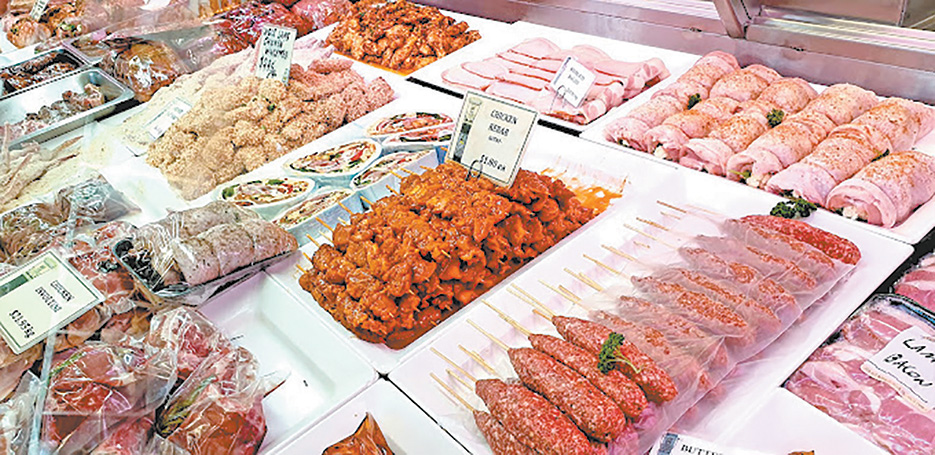
    IT’S almost like a meaty work of art when you walk into a good butcher’s shop.

    Colourful kebabs, dainty meatballs, exotic sausages and glossy cuts of meats all rub shoulders in a sort of pretty abattoir run by Picasso.

    Situated on Bulwer Street, just up from Hyde Park, Frank Torre Quality Butcher has to be one of the prettiest around.

    It not only looks good; it has a massive range of produce in a sprawling and spacious shop.

    If you don’t know what you want, it can be a bit overwhelming as you are confronted with an intimidating wall of meat, including everything from beef and chicken to goat and rabbit.

    I usually pop in to get my weekly batch of sausages and chicken schnitzels (rolls and sausage are a Saturday morning tradition in our house and you can’t go past Frank’s quality snags) 

    Today I wanted something for dinner and saw they sold quail on their website, so I asked the bloke behind the till about them.

    Unfortunately they only had frozen ones as they didn’t sell quickly enough to keep fresh.

    Some of the steaks looked particularly inviting, but I decided to get the Mediterranean-style lamb roll ($39.95 per kg) as it was something I wouldn’t normally buy.

    The roll was perfect for a mid-week, hassle-free roast and paired up nicely with some salad and potatoes.

    I also got a nice batch of veal schnitzels ($25.95 per kg) to take home for dinner. Veal wasn’t that readily available when I was growing up in the UK, so I have fond childhood memories of eating it on family holidays in Italy.

    On Tuesday lunchtime, the shop was pretty quiet and I had a nice chat with the bloke behind the counter about red meat.

    Giant tomahawk steaks are in vogue right now and you’ll find them more and more on restaurant menus to share or as a standalone Fred Flintstone-treat, but the butcher I spoke to reckons you can’t go past a nice porterhouse or rump, noting a lot of food trends are just American razzmatazz.

    I’m more of a T-bone guy and think they taste amazing when done on the barbie.

    After just over an hour in the oven, the lamb roll was ready.

    The string came off no probs and it was easy to slice into portions for the family.

    The succulent lamb was top notch and went well with the halloumi and spinach stuffing. 

    They hadn’t overdone it with the halloumi (otherwise it would be too salty) and the spinach provided a refreshing antidote to the Cypriot cheese.

    The lamb itself was gorgeous – not fatty or stringy – and you could tell it came from a top quality butcher and farm. It was a great hassle-free roast for during the week. If the lamb was great, the veal schnitzels were next level with a lovely light Parmesan and breadcrumb coating.

    Pan-fried with just a little olive oil, the delicious flavour from the veal really shone through.

    In these times of extreme mortgage stress, people may shy away from the local butcher, thinking it’s far more expensive than the supermarket, but I saw lots of great offers at Frank Torre’s and your regular weekly stuff – sausages and schnitzels – weren’t too pricey and were of superior quality. The Voice’s trip to Frank Torre Quality Butcher was a success and it’s a great destination for your weekly meat shop and the odd speciality item.

    Frank Torre Quality Butcher
    318-322 Bulwer Street, Perth
    facebook.com/FrankTorreButchers

    by STEPHEN POLLOCK

  • Dark and entertaining look at Richard III
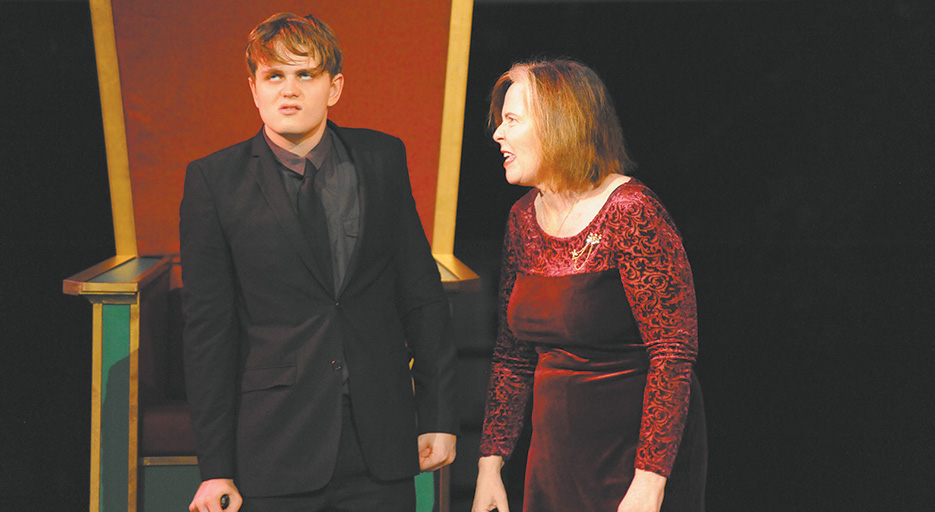
    Richard III (Alex Comstock) argues and insults Queen Margaret (Katherine de Vere) in New Fortune Theatre’s production of William Shakespeare’s Richard III at UWA.  Photo by Michael McAllan.

    by RAHUL K GAIROLA: NEW Fortune Theatre’s production of William Shakespeare’s Richard III is a dark yet entertaining tour de force that yokes the great bard into a contemporary context.

    The production assembles a talented cast from The Graduate Dramatic Society of WA to deliver a contemporary take on Shakespeare’s most reviled villain, Richard III of Gloucester.

    The play is directed by Dr Melissa Merchant and performed in an outdoor arena surrounded by the University of Western Australia’s limestone arches and leafy trees.

    Juxtaposed with this serene background are maniacal royals who demonstrate in their own ways how absolute power corrupts absolutely.

    In drawing parallels to today’s British royal family just weeks before the May 8 coronation of King Charles III and adding a modern flavour to her rendition, Merchant makes clear to the audience that Richard III’s narrative and metaphors are as significant today as when it was first staged circa 1595.

    Given this is Shakespeare’s second longest play, it is particularly challenging to pull off a powerful production.

    The company accomplishes this by embodying the characters and their various emotions and motives, particularly through their individual, varying lusts for power. 

    The parallels to the contemporary Windsors is uncanny – these include brothers against each other, the death of a monarch and subsequent passing of the crown, family feuds, an unpopular sister-in-law, gossip, backstabbing, and hollow appeals to an adoring and scornful public.

    What I noticed throughout the production, was how deftly the various actors portrayed the villainous aspects of human nature which often render people to be more like cruel monsters.

    It is this common thread, monstrous characterisations, that stands out as a major, unifying theme throughout the production. 

    Various characters home in on Richard III’s disability as an outward manifestation of the ostensible evil within him.

    However, Merchant wished to complicate this contention.

    “In this production, we’ve tried to show a Richard whose evil nature doesn’t come from having disability; rather, it comes from being the youngest brother and feeling overlooked and undervalued,” Merchant says.

    “It’s the people around Richard that link his evil actions with his outward disability, calling him a ‘hunch-backed toad,’ ‘lump of foul deformity,’ and ‘elvish-mark’d, abortive, rooting hog.’”

    Richard, portrayed by Alex Comstock, hobbles while using a cane and adopts a bent posture.

    His adversaries and hostile family members openly deride him, commenting that his figure “infects” the eyes.

    This stigmatisation of disability signals the larger, reprehensible tendency of both Elizabethan and contemporary societies to make sweeping judgements of humans through the visual register.

    As if capitalising on this tendency, Comstock does a brilliant job at conveying Richard’s inner turmoil through his facial expression: “Facial expressions are absolutely a part of Richard’s toolbox that he uses to manipulate other people,” Comstock says. 

    “In his opening monologue, Richard says he can ‘frame his face to all occasions.’ And distinct, decided facial expressions play a big part in portraying which version of Richard he is pretending to be at that time.

    “We finally see this honesty and this vulnerability on his face, and we understand that this is the true Richard underneath everything.”

    Such expressions crescendo when Richard has a lengthy altercation with Queen Margaret, played by Katherine De Vere.

    In terms of the language in this play, De Vere says, “I think the Bard had very specific people in mind, when composing his insults, and his insults are so magnificently creative. Even in our times, there’s still a great deal of negative language used to describe older women. Shakespeare is quite gender-democratic though, he insults Richard and other men with even greater gusto!”

    Richard III is on until Saturday March 18 at New Fortune Theatre on the UWA campus.