• Exotic charm


    PROPERTIES like this don’t come on the market very often.

    Situated on a whopping 1600sqm block overlooking the Swan River in Maylands, this home really is a bit special.

    The massive first floor balcony is a joy to behold – it overlooks Baigup Wetlands with lush vegetation in all directions and the blue river peeping through the treetops and palms.

    Combined with the roman-style pillars and beautiful wood ceiling in the balcony, it feels like you are in an exotic tropical outpost deep in the jungle.

    It really is an amazing spot to entertain friends and family, and relax after a hard day at work.

    You would instantly feel like you are getting away from it all and the stress would fall away.

    The rest of this four bedroom three bathroom home doesn’t disappoint and matches the amazing views from the balcony.

    It has a heated undercover swimming pool, tennis court, manicured gardens, games room and multiple terraces.

    I like how the pool is under-cover, so it can be used all-year round. 

    The amazing kitchen is another highlight – subtle natural wood finishes and white stone benchtops almost blend into the green landscape outside.

    Preparing meals here won’t be a travail as you look out the window and enjoy those marvellous treetop vistas.

    The kitchen is part of a spacious open plan lounge/dining area on the first floor, where again you can enjoy all those marvellous views.

    There’s a massive second living area on the ground floor, which the owners have made into a lounge/piano and games room, with enough space for a large snooker table.

    Usually homes on a massive undivided block are a bit old fashioned and need upgrading, but this abode is modern and has everything a 21st century family would need including renovated bathrooms and an open plan setup.

    If you want to go down the redevelopment route the block is zoned R20.

    The home includes ducted reverse cycle air-conditioning (zoned), landscaped gardens with mature and established fruit trees, ducted vacuuming, downstairs office and retreat or fourth bedroom, and a luxurious main ensuite bedroom with walk-in wardrobe and panoramic views.

    Parking won’t be an issue with a double carport.

    Situated on the highly desirable Stone Street in Maylands – there is only the foreshore between you and the river – you are close to Riverside Gardens, and not far from Optus Stadium and the city.

    There’s also some great cycle paths down by the river to enjoy with the family.

    This is a one-off home in a fantastic location in Maylands.

    High $1 millions
    37 Stone Street, Maylands
    Beaucott Property 9272 2488
    Agent Paul Owen 0411 601 420 
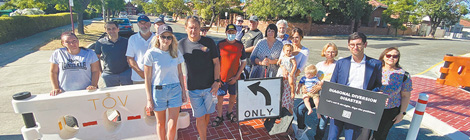
  • Diversion disaster
    • Petitioners want this trial barrier at Leake Street and Alma Road removed, saying it’s only made surrounding streets and laneways more dangerous.

    A ROADBLOCK intended to calm traffic has proven massively controversial in a North Perth neighbourhood.

    Already a huge petition is building, calling for the obstacle’s removal just weeks after Vincent council installed it.

    The trial barrier diagonally blocks off Leake Street and Alma Road, forcing traffic going along either road to take a turn and find some other way around. 

    A small number of residents nearby supported the plan, hoping it’d calm traffic in their street, and some thought it might encourage people to walk or ride if they only had a short trip to make. But most of the neighbourhood was dead against it. 

    “It’s moving more traffic towards the primary school and the old people’s home,” at a time when the primary school doesn’t have a crosswalk attendant due to a shortage, resident Nuccia Merlo tells us.

    “It’s added a lot of confusion,” fellow resident Laurie says. 

    “The biggest issue is it hasn’t achieved what it’s supposed to; to deliver traffic onto distributor roads.” 

    It’s just shifted the traffic into quiet streets. 

    The alternative routes can get pretty convoluted. Many people who used to drive up Alma Road to get to the Fitzgerald Street shopping strip now have up to four extra corners to take in a diversion that’s just shy of one kilometre. 

    In the first few days some cars avoided the diagonal barrier by driving over the footpath. Hefty plastic barriers were put in place to stop that. Other drivers have opted to navigate North Perth’s narrow alleyways instead. 

    The diagonal roadblock was a subject of staunch disagreement when Vincent’s councillors narrowly approved it last August, with mayor Emma Cole and Crs Alex Castle and Ashley Wallace voting against the plan but outnumbered by the majority.

    At the time, 85 people responded to consultation about the idea, with 77 per cent opposed. The council’s traffic experts also reckoned it was a bad idea and would likely divert traffic onto less-capable streets.

    But Crs Susan Gontaszewski, Ron Alexander, Dan Loden, Suzanne Warner, Jonathan Hallett, and Ross Ioppolo approved a six-month trial of the diagonal diversion, largely to try something out to respond to a longstanding request from Alma/Leake residents dating back to 2018 when they’d asked for some relief from cars.

    The Voice heard from a couple of residents on the street who supported the trial. One asked not to be named due to angry comments about the roadblock (and its supporters) on suburban Facebook groups, but the resident said “this has been a dangerous intersection with drivers ignoring stop signs and, because of the dogleg structure, driving down the wrong side of Alma Road,” plus a lot of heavy trucks using the smallish Alma Road.

    The resident said the diagonal block had indeed calm traffic at the intersection, but acknowledged it was inconvenient to some in the area. 

    The trial cost was estimated at $35,000 to $60,000. We asked Vincent council if the cost had been tallied yet, and if there was any traffic data that showed where cars were being redirected to, but CEO David MacClennan says those numbers aren’t yet known.

    An online petition started by residents Leon Firios and Melanie Buters now has 420 signatures calling on the council to remove the diversion, and they’re planning to present a petition in person at the next council meeting.

    It’ll probably cost about $15,000 to remove, but a lot of locals were sceptical that this was really a “trial” since the concrete looked pretty permanent. 

    by DAVID BELL

  • Is history too raunchy for us?
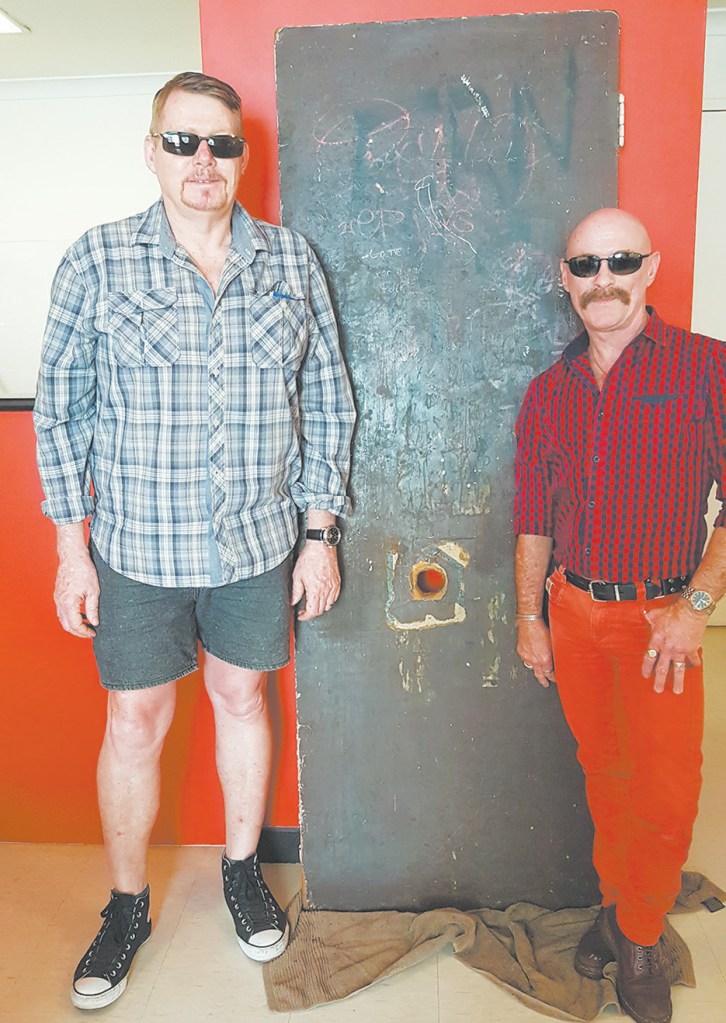
    • Neil Buckley and Michael Middleton with the glory hole after retrieving it from a Gosnells train station toilet before it was demolished.

    IN late 2018 a local story of an old toilet stall door featuring a “glory hole” drilled for men to have sex through, went global when local gay activists donated it to the WA Museum (‘WA’s glorious history’, Voice, December 8, 2018).

    “I had a friend call me, he was over in San Francisco,” one of the door’s donors, Neil Buckley, recalls. “He rang me and said ‘your picture’s in the San Francisco gay newspaper’.”

    Four years later the door hasn’t yet featured in a display; Mr Buckley is returning to the museum this week for a panel discussion: ‘The Door’ and queer sexuality in public space.

    “I’m a bit shocked the museum has put the door back into the closet,” Mr Buckley told us this week.

    Apart from a couple of local conservative politicians calling the door too crass to display, the international reaction was positive, with many publications praising the museum’s thoughtful and mature approach in accepting the door as a part of local history. 

    “They did get a lot of international, good publicity… [but] they’re having a ‘country town’ approach by just storing it,” Mr Buckley says. 

    “Perhaps they’re not ready to take the leap into being a modern museum, and they’re just afraid…

    “Is it just gay sexuality they’re afraid to show? Is it sexuality in general?”

    The panel will address a growing issue in recent LGBTQI+ history; the desexualising of their identities to make them more palatable to the dominant culture.

    Mr Buckley says a lot out of gay history is left out if you can’t refer to sex; it’s what gives the door its historical and political potency. 

    “The glory hole’s really a symptom of all the homophobic laws and discriminations that were going on: So glory holes were created by straight people.

    “That’s why we have glory holes, because of the discrimination, and the public outings. This is where people had to go to have community. 

    “It wasn’t only about sticking your dick through a glory hole – people would go to meet and have conversations about life, about queer life.”

    A lot of veteran LGBTQI+ folk have commented in recent years that even Pride parades are becoming pretty prudish.

    Mr Buckley recently returned from Sydney WorldPride, where he attended as Mother Gretta Amyletta, a Sister of Perpetual Indulgence, an order of gay activist nuns that evokes the countercultural rights movement of the ‘70s and ‘80s compared to today’s corporate-heavy Pride parades. 

    “The Pride parade is quite boring now,” Mr Buckley says. 

    “There is a sanitisation going on. I’ve sort of got the feeling it’s the gay mums and dads out in the suburbs who’ve never been to a protest” who are driving the move away from the risque. 

    “What they need to realise is, for the people who fought for their legal rights, this is our history.

    “If we don’t talk about our history it will be lost. So much of our history has been lost because we haven’t been able to talk about it, [and] our history is to do with sexuality.”

    If you got your Voice super early you might still be able to get a ticket to the panel discussion on March 9 at the WA Museum at 6.30pm. Mr Buckley will be speaking alongside Graham Grundy from the 

    Gay and Lesbian Archives of WA, researcher on Indigenous education, identity politics and queer identities Braden Hill, artist and social history curator Jo Darbyshire, and facilitator and history academic Lauren Butterly.

    But beyond the talk, Mr Buckley says he’s considering a push to find the door an alternative spot for exhibition if the WA Museum doesn’t plan to put it on display any time soon.

    Mr Buckley says it would be a shame if the door leaves WA, but it’s important that these histories are displayed in public before they’re forgotten from living memory.

    “I’m thinking about asking, if they won’t show it, whether they’d give it to MONA or the Sydney Powerhouse Museum.”

    by DAVID BELL

  • It’s International Women’s Day…

    … and they have no home

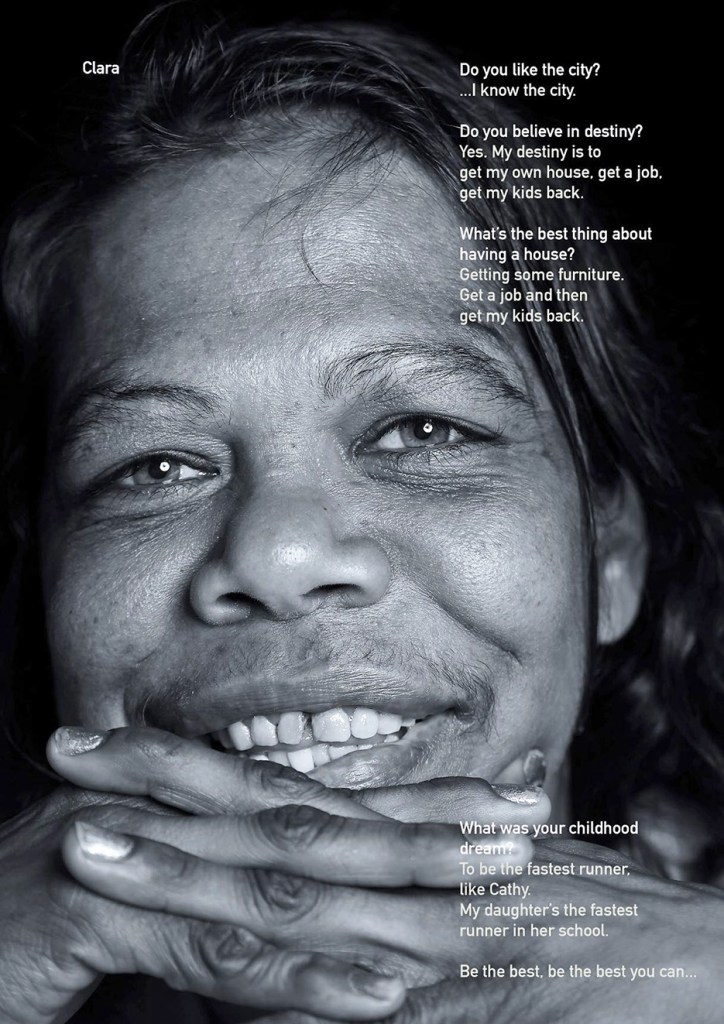
    PORTRAITS of homeless Western Australians were hung in federal Parliament this week, a call to Canberra’s politicians to act on growing numbers of women experiencing homelessness.

    The Eye Contact exhibition was organised by five WA Rotary Clubs in hopes of putting a face to the issue, focusing on the surge of women over 55 who are becoming homeless at a high rate due to disrupted careers, discriminatory superannuation rules and unaffordable rentals.

    Graham Peden of the Rotary Club of Perth says the organisation does a lot of good fundraising work “often by cooking and selling sausages”, and Rotary WA runs a homeless hub to coordinate projects supporting domestic violence victims, providing food and clothing, and helping develop tiny homes for older women.

    But homelessness is a big problem and they had to look beyond a sausage sizzle to reach those with the power to solve it.

    “Sufficient funding to buy/create homes for the homeless can only be made available by a combination of both State and Federal Governments because we are talking about a lot of money to solve the homelessness problem,” Mr Peden told us via email.

    “There are three basic ingredients required: Money, land and the will of our population wishing to do something about the homelessness problem and Australians should lobby their MPs to advise them that a solution to the homelessness problem is important.”

    by DAVID BELL

  • Powered up and powering on
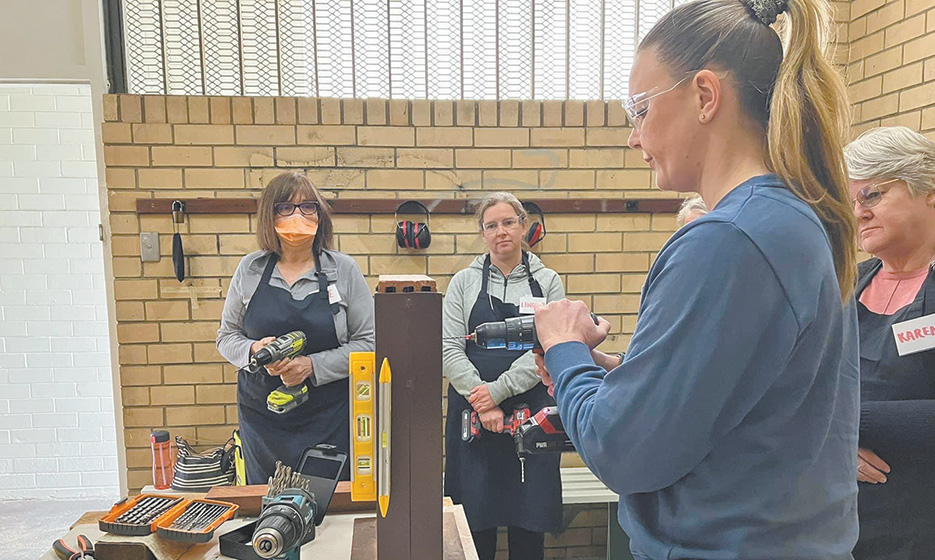
    Tool skill volunteer teacher Bridget Bell’s (above) introduced some members to their first power tools.

    BAYSWATER Women’s Hub marked Women’s Shed Week by celebrating all the projects, builds, repairs and repaintings its members have accomplished this year.

    The BWH is home to a tool library and a women’s workshop. Over the past year or so they’ve transformed the old kiosk, changerooms and bunker at Maylands’ Shearn Memorial Park from a dusty cobwebby shell into the first dedicated space for a women’s shed in WA.

    In that time members have learned home handyman skills, repaired furniture and learned how to start a terrarium. One member has picked up a power tool for the first time, and another has rebuilt an old bookshelf into a herb garden on wheels. 

    Bridget Bell is one of the hub’s tool skills volunteer teachers. 

    “Teaching a willing audience is the most rewarding feeling,” she says.

    “The ladies come in eager to learn and leave with a sense of accomplishment. I wish I could say it was my teaching; realistically the women are like sponges, quick to absorb any information that is shared.”

    Hub chair Michelle Slater says “as a 100 per cent volunteer-run organisation, we are so incredibly proud of the accomplishments of the workshop, and the impact that the programs they delivered have had in the community”.

    Women’s Workshop co-chair Renee Cabassi says they’ve got big plans in line this year, to “expand our range of workshops to include tool maintenance, a chopping board workshop, furniture upcycling, plumbing, jewellery making, watercolour painting and more”.

    The not-for-profit group’s currently looking to build up member numbers at their Central Ave hub. 

    They have currently got a reduced-cost pilot membership of $60 for 12 months and are looking for women of all ages and from any area to join their ranks.

  • Bigamy common in days gone by
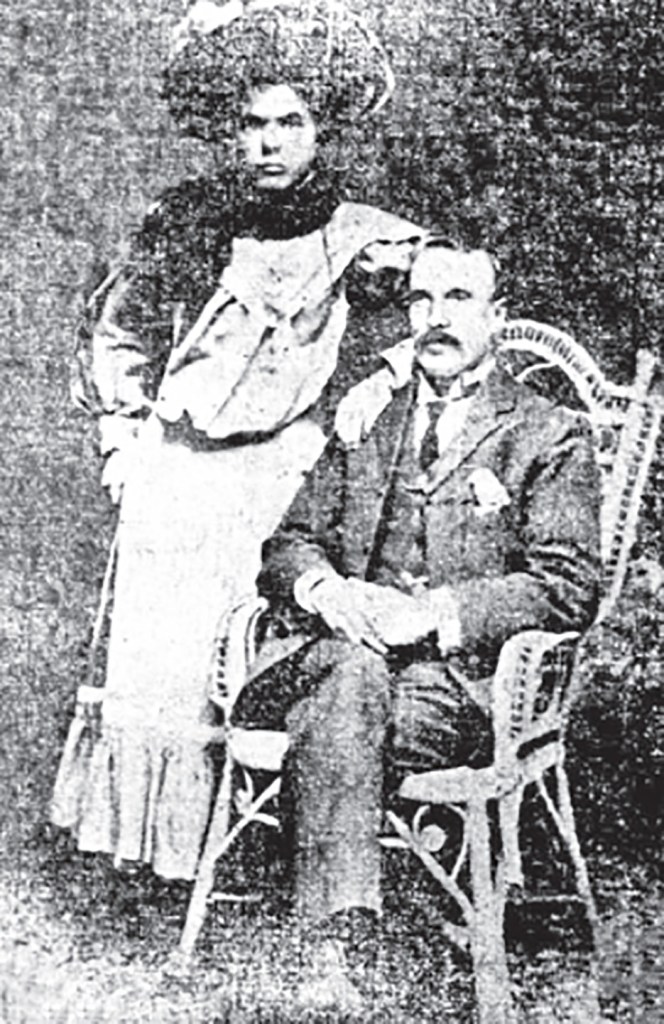
    Ethel Harris & Alfred Wilson Smart, The Sunday Tines, March 12, 1911

    THIS week from the archives at the Vincent Local History Centre: A look back at bigamy, a now-rare crime that was once a commonly reported malfeasance in the newspapers of olde.

    A PERTH man was recently charged with bigamy, which is the act of going through a marriage ceremony despite being already married.  

    Bigamy is a crime in Australia and carries a penalty of up to five years’ imprisonment. 

    While bigamy cases are rare today, old newspapers before no-fault divorce was introduced in the 1970s were filled with stories of men and women charged with or accused of bigamy.

    In 1911, one of the most scandalous bigamy cases in Western Australia took place in Cowle Street, West Perth.  

    At the centre of the case was Alexander Alfred Smart.  

    Smart, who went by several aliases including Alfred Wilson, worked as a carrier or carter at the Hoskins and Co. foundry on Murray Street, Perth. 

    He came to Perth from Victoria in the late 1890s, like many ‘othersiders’ lured by the prospect of gold.  

    He left behind a wife and five children, who he sent money to and occasionally visited in Eltham, Victoria.  

    In 1910, he was living with Ethel Harris in Cowle Street where they were known to locals as Mr and Mrs Wilson.  

    Harris was born in Ballarat and moved to Boulder in Western Australia with her family in the early 1900s. 

    Around the age of 20, she met Smart in Perth who wrote to her father asking for Ethel’s hand in marriage.  

    While there was no official record of a marriage having taken place, the couple lived as husband and wife. 

    Harris was described by her West Perth neighbours as a ‘quiet, respectable woman who kept to herself’.

    Unbeknown to Harris, Smart was also dating a young woman named Mary Pemberthy, who he promised to marry when she turned 21.  

    Pemberthy married Alfred William Smyth (an alias for Smart) at St John’s Church in West Perth on 15 March 1910.  

    The Cowle Street neighbours later testified that they last saw Harris right before the wedding in March 1910. 

    After their wedding, Smart and Pemberthy lived together in the cottage in Cowle Street where he had formerly resided with Harris.  

    Smart told his neighbours that Harris had moved to the eastern states.     

    Months later, the suspicious neighbours together with Harris’ family in Boulder raised their concerns about her disappearance with the police. 

    Smart was questioned and subsequently charged with bigamy for his marriage to Pemberthy. 

    He was sentenced to two years in prison with hard labour in Fremantle Gaol.  

    While imprisoned, police began a more intensive search for Harris’ body assisted by several local Aboriginal trackers. 

    They eventually located skeletal remains of a woman resembling Harris who had been bludgeoned to death at the foundry where Smart worked and buried under the forge.  

    Smart was charged with murder but pleaded his innocence. 

    His trial in March 1911 attracted large crowds scandalised by the bigamy-murder plot and by his calm, unruffled demeanour in the witness box. 

    Smart was found guilty and executed at Fremantle Prison on 7 March 1911.

  • Gem of a voice
    Jewel Owusu is making waves for all the right reasons.

    EX-WA singer Jewel Owusu is making waves for all the right reasons.

    Since making the move from Perth to Melbourne in August last year, Owusu has featured on radio station Triple R, turned up on several Apple Music playlists, opened for ARIA nominated performer Vera Blue in Federation Square last month and performed at several festivals including Holler Fest. 

    Holler Fest is a mixed-genre festival showcasing female and non-binary talent and regularly sells out. 

    In January, Owusu returned to Perth to headline a performance at Scarborough’s local music hot spot, El Grotto. 

    At just 21, the Notre Dame university communications and media graduate has been releasing music for just three years, but is already attracting a solid offering.

    After releasing her first single at the height of the first Covid-19 lockdown in July 2020, she has continued to write, record, and produce her own music whilst finishing her studies. 

    While still in Perth she also performed at many of its most popular venues such as the Sewing Room, Mojos and Beerporium. 

    Local creative collective Pilerats described her as an exciting talent that combines “textures of pop, indie, hip-hop, R&B and beyond to create something uniquely Jewel”.

    Owusu’s previous release came in at number 5 on the AMRAP metro charts and her discography has caught the attention of Apple Music, Spotify, Triple J, MTV, community, and commercial radio.

    However, she has not quite yet grasped the magnitude of her talents. 

    “It’s so weird that people actually listen to my music,” she laughed. 

    “It still baffles me.”

    Her latest single American Honey was aired on MTV, marking her as an up-and-coming talent. 

    Owusu said she is heavily influenced by the art she encounters in day-to-day life, such as other music, movies and even Pinterest. 

    “I find it hard to describe what I’m making because I feel like it’s just dependent on what day of the week it is.”

  • Ex-mayor named as Freeman of City
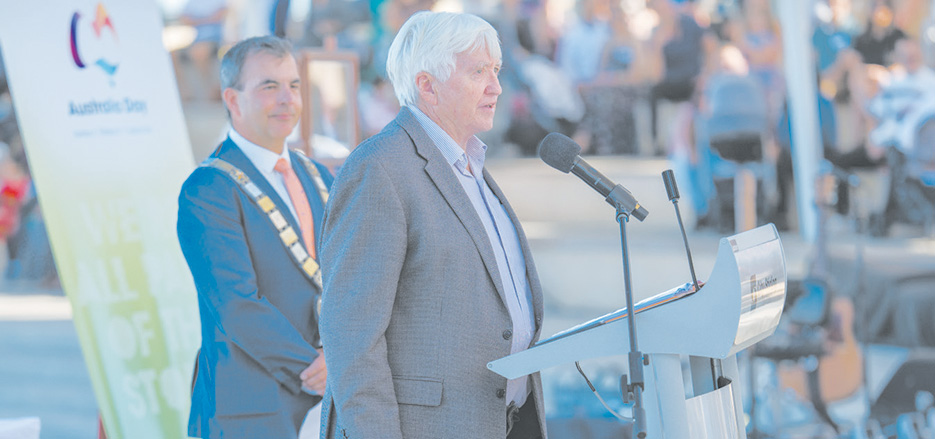
    The 10th Freeman of the City of Stirling David Boothman (right) with current mayor Mark Irwin.

    FORMER Stirling mayor David Boothman has been named the 10th Honorary Freeman of the City.

    The award is bestowed on citizens in recognition of service to the city, and current mayor Mark Irwin said that across Mr Boothman’s 27 years on council he’d served on almost every committee.

    Mr Boothman was recognised for his efforts on safety and crime prevention, getting more waste out of landfill and into recycling, and his work building bridges with the Indigenous community.

    At the special council meeting to bestow the freeman title on February 20, Mr Boothman gave a speech recalling his early days as Balga Ward councillor in 1994: “The RAC described Balga as the burglary capital of Australia”, he said.

    “I hadn’t been long on council, and I recognised that the police force was changing strategy and they were going to a more strategic focus, and issues like community policing were sort of going on the backburner a little bit,” the former police officer said.

    “So what that meant was that if you had a burglary, if you had a person coming into your house and whatnot, the likelihood of you actually getting police officers to attend was becoming more and more rare.

    “And so I was proud when council supported when I moved a motion for council to adopt its own security, which was unanimously supported, and we did that in-house,” one of the measures he credits with improving the suburb and surrounds.

    There are only two other living freemen: former mayor Tony Vallelonga, awarded in 2009, and Rodney Constantine, a long-term council staffer who was awarded in 2007.

    by DAVID BELL

  • Gritty champ  
    • 13-year-old Ava Rodgers has already won several triathlons.

    13-YEAR-OLD Fremantle athlete Ava Rodgers already has a trophy cabinet bursting at the seams, but she’s aiming to hit new heights at the triathlon national championships this month.

    Rodgers was selected for the School Sport triathlon state team after a bumper athletic season that included winning the Rockingham Foreshore Triathlon in the 12-13 age category, taking home gold in the U14 WA open water 500m swim race at Coogee Beach, smashing the 500m open swim record for the Fremantle Port Swim Club, and winning silver in the the 4 x 400m State Little Athletics Relay Championships.

    It’s Rodgers’ first year competing in the 12-13 age group of the State Triathlete of the Year, but she’s top of the leaderboard and will be hard to catch with only two races to go. Rodgers says she first got into triathlons after watching her dad compete in them. 

    “I was attracted to triathlons because I run at least three times a week and swim four to five times a week and I’m quite good in competing in both sports separately, so I thought why not bring it all together and do a triathlon and I realised that I loved it!” says Rodgers, who is a member of the Fremantle Port Swim club and Fremantle Triathlon club.

    She says her favourite part of the triathlon is cycling.

    “It is very technical, having to know what gears to change at what specific time, to know how to draft off other riders in a draft legal race. 

    “I don’t have much time to bike train so I rely on my fitness from running to get me through at the moment.

    “The toughest leg for me would be the run leg. While the swim leg is really physical (particularly around the buoys) the last run leg is challenging mentally and physically.

    “Having to run straight after swimming and riding is tough on your body. It’s also mentally tough, your body is telling you to give up and if you listen your form starts to drop and you’ve already lost.”

    In 2021 and 2022 she was selected for the WA cross country state team in her age group.

    So what goes through Rodgers’ mind when she’s competing in these gruelling events?

    “I usually have a chorus of a song stuck in my head on repeat.  I also think about what has been recently going on in my life like what tests I have coming up. 

    But mostly I think about how I can make my parents, teachers, coaches, and friends proud by pushing through to the finish line.”

    The Methodist Ladies’ College student just turned 13 and when she’s not  busy training she likes to do what most young teens do – hang out with friends and watch movies – but she’s also keen to get other young folk into sport.

    “I like to finish off my homework and study so I can have some free time to post on my social media channels. I like to use those platforms to inspire and encourage girls to stay in sport, because drop out rates are huge for girls at my age. Sport is so important for our future careers.” 

    The School Sport triathlon national championships will be held in Devonport, Tasmania from March 13-16.

    by STEPHEN POLLOCK 

  • Brotherly love

    NORTHBRIDGE on a Friday night.

    James Street had its trademark mix of chaotic energy, excitement and sleazy danger, all neon-lit and ready to go off like a cheap firework.

    For people of a certain vintage, like myself, it felt exhilarating and slightly disorientating, like a kamikaze pilot pushing forward on his stick and preparing for the final descent.

    Along with my wife and another couple, we walked up to Northbridge piazza, where we remembered a nice Italian restaurant, but it had long since closed and it was mostly Asian eateries, fast food and the odd sex shop.

    I imagine the old-school leisurely Italian meal is still popular in the burbs, but in the CBD more exotic, quick-fire cuisine is en vogue.

    After walking back towards William Street, we ended up going to Bangkok Brothers, which seemed to strike a nice balance between fast food and formal dining.

    The name sounds like a dodgy comedy act from the 1970s, but it’s actually a sprawling venue with a swish bar, funky murals, live music and plenty of tables and booths.

    I liked the setup – it was modern and airy with plenty of room and you didn’t feel hemmed in. There was a nice buzz and it felt like a fun spot to have a few drinks and a casual meal on a Friday night.

    My heart sank when I saw the menu was one of those gaudy jobs with photos of the food.

    It’s always a bit of a red flag and reminds me of that Bill Hicks’ sketch about the waitress at a truckers stop in the deep south of America – “We got ourselves a reader!”

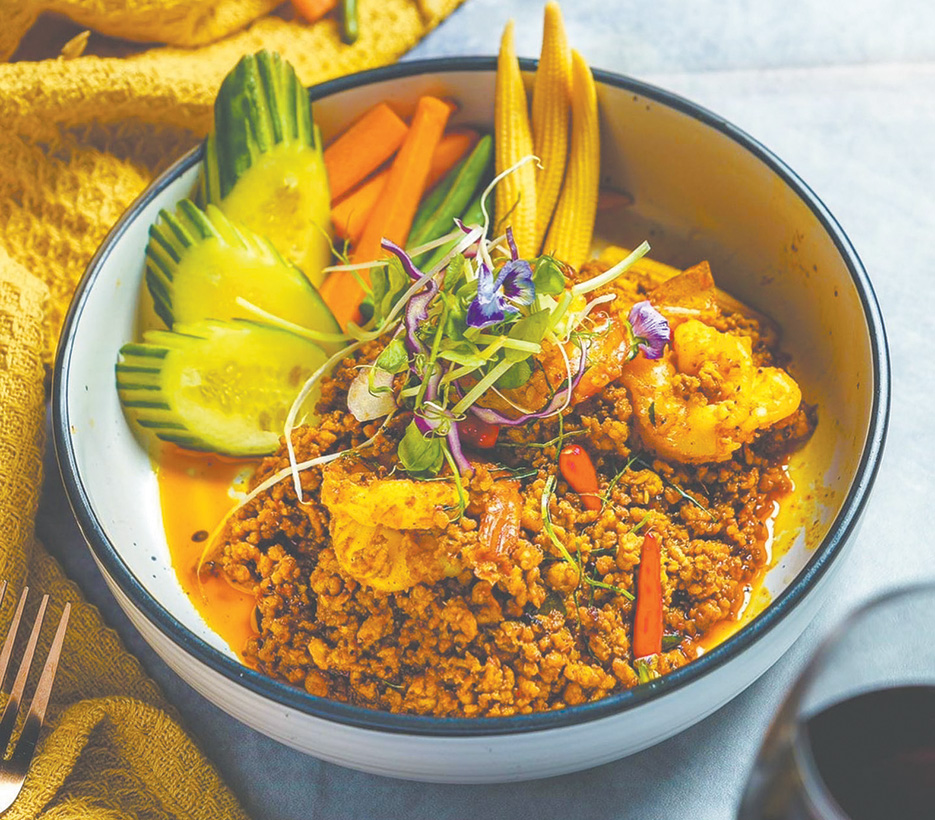
    There was a huge array of Thai dishes including entree, soups, salads, vegan dishes, noodles, rice and curry, as well as somtum, khao neow and whole fish dishes like steamed barramundi.

    Basically it had all the bases covered and putting aside my menu snobbery, the photos actually looked very appetising and helped you visualise some of the unfamiliar dishes.

    Bangkok Brothers were big on automation – you ordered using a QR code and I spotted at least one robot waiter on wheels delivering food. With staggering advancements in AI, it made me ponder how long before chefs are replaced by robots that can cook and dynamically adjust the heat of the pan and level of seasoning. A sort of cross between R2-D2 and Gordon Ramsay.

    It wasn’t long before the waitress (human) was along with my chicken massaman ($22.90).

    The star of the dish was the sauce: thick and creamy with that classic mix of coconut milk and Thai spices. It was punctuated with potato, baby carrot and a smattering of cashew nuts and fried onion. It was so tasty I could have just eaten that on its own. 

    The Maryland chicken didn’t quite reach the same heights: it was very enjoyable but could have been a bit more tender to raise the dish to the next level.

    It was a similar story with my wife’s Thai Green curry ($19.90) with the sauce – green chilli paste, coconut milk, kaffir lime leave, red chilli and basil – being the standout.

    “The thick, moreish sauce is amazing and just the right spice level, but the chicken is a wee bit over and could have been more tender.”

    The portion sizes were big and great value for money. 

    My friend Alan got the slow cooked wagyu beef version of the massaman curry ($24.90) and this time the meat was spot on and super tender.

    We all shared a Thai fried rice ($19.90 vegetable) which had some refreshing sliced cucumber and cherry tomatoes with a subtle oyster sauce dressing.

    The only big letdown was the wings zap entree (four for $11.90): desiccated and too spicy, the fried marinated chicken did nothing for me.

    If you’re on a night out in Northbridge and fancy a fun, well-priced and very enjoyable Thai meal, then Bangkok Brothers is a great shout.

    Bangkok Brothers
    91 James St, Northbridge
    bangkokbrothers.com.au

    by STEPHEN POLLOCK