
• Endless battle   
    • An Afghan child battles the relentless storm in Aziz Hazara’s Bow Echo, showing at John Curtin Gallery.

    AFTER years of relentless suicide bombings in his hometown of Kabul in Afghanistan, Aziz Hazara decided to honour the city’s resilient children in his exhibition Bow Echo at John Curtin Gallery.

    Originally born in Wardak in Afghanistan, Hazara now divides his time between Ghent in Belgium and Afghanistan’s capital city Kabul, where suicide bombings have occurred with horrifying regularity during the past two decades.

    In 2021 Afghanistan continued to be the country worst impacted by suicide attacks with 65 per cent of all civilian global casualties from suicide bombings occurring there, according to Action on Armed Violence.

    The highest-casualty suicide attack in 2021 was in Afghanistan, carried out by members of the Islamic State at Kabul’s Hamid Karzai international airport, as thousands of Afghans attempted to board evacuation flights while the Taliban seized control of the country.

    The suicide bombing claimed the lives of at least 149 civilians and injured 185 more. A total of 395 people were killed or injured.

    Bow Echo has been inspired by my own experience of the recurring horrors of suicide bomb attacks that have unsettled the city of Kabul,” said Hazara. 

    “They are a sort of ‘horror game’ and, since 2001, have taken place in different parts of the city, becoming an integral part of its recent history.

    “The question of how best to represent this history and its effect on the lives of individuals has been one of the most persistent questions during the making of this work. Very often, the idea of representation becomes a dilemma.”

    Made in collaboration with community and friends from the high hills of Kabul Province, the film Bow Echo follows five boys struggling to summit a large rock, battered by high winds.

    They want to play a plastic children’s bugle to raise awareness of their community’s suffering and repression, which includes the murder of kids.

    As people around the world play their shiny metal bugles, like at Anzac Day in Australia, the children’s plastic bugles are barely heard above the howling wind. The title of the exhibition Bow Echo refers to an endless string of thunderstorms that travel in a straight line; perhaps a metaphor for the never-ending wave of suicide bombings in Kabul.

    Afghanistan has been rocked by dozens of suicide bombings since the Taliban seized power in 2021, mostly claimed by Isis-K, a local extremist offshoot of the Islamic State group.

    The Taliban tend to underplay casualty figures in such incidents.

    A multi-disciplinary artist, Hazara works in mediums including photography, video, sound, language programming, text and multimedia installations to explore themes like identity, memory and conflict.

    As part of Bow Echo, Curtin art professor Kit Messham-Muir will give a talk ‘Crossing the Wire: The problem with Western War Art’ on Wednesday (March 15) between 12.30pm-1.30pm. The talk/discussion is part of the lunchtime John Curtin Gallery Speaker Series.

    Premiered at the Sydney Biennale, Bow Echo will be on display at John Curtin Gallery until April 16 as part of the However vast the Darkness series, which features work from nine artists in celebration of the Gallery’s 25-year partnership with Perth Festival. 

    by STEPHEN POLLOCK

  • Killer views

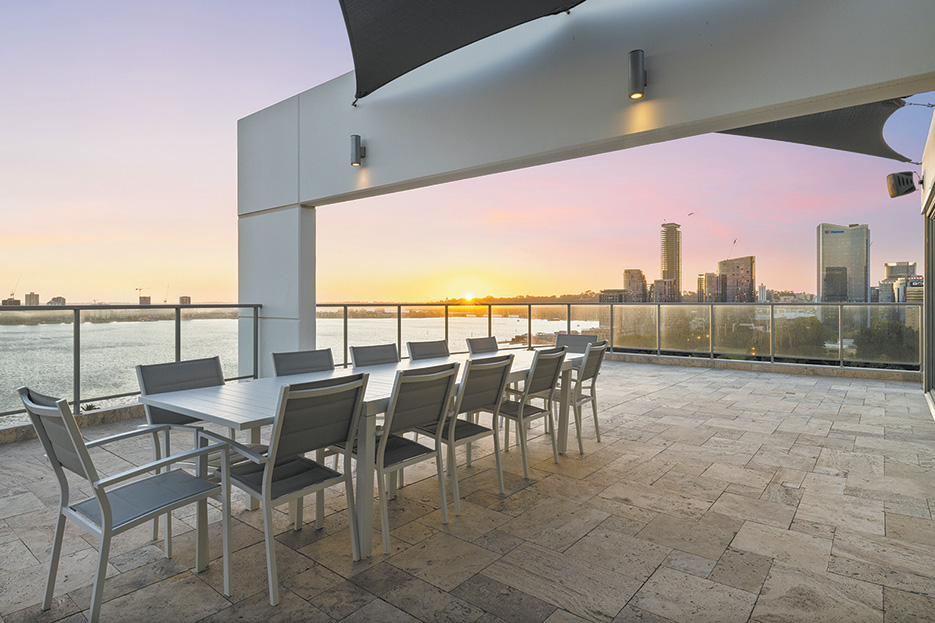
    THIS Perth penthouse has an amazing wraparound-balcony that is bigger than most apartments.

    It’s so big, the 12-seater table out there looks tiny with seemingly acres of space around it. The views aren’t too bad either with stunning panoramas of the Swan River, Kings Park, Elizabeth Quay and beyond.

    With about 212sqm of space, an outdoor kitchen and those killer views, it’s the ultimate entertainer’s balcony and I imagine you would be enjoying endless parties out here.

    But what’s the rest of this three bedroom three bathroom penthouse like?

    The open plan lounge/dining/kitchen area is super spacious with light spotted gum floorboards and high ceilings enhancing the sense of space and airiness.

    There’s heaps of room for a massive lounge setting and dining table, and the floor-to-ceiling windows ensure you can enjoy those amazing views all-year round as the seasons wax and wane.

    The Voice likes the classy, almost minimalist feel to this apartment, and there are no uncouth displays of wealth like Roman-style columns and statues.

    It’s especially evident in the kitchen where the subtle black-and-white colour scheme mingles with speckled granite benchtops.

    There’s masses of storage and benchtop space, meaning whipping up meals for dinner parties would be a cinch.

    A lovely touch is the bar in the corner of the room. It’s been cleverly designed so it blends in with the decor and doesn’t stand out like some man cave experiment gone wrong.

    The bathrooms continue the same high standards with large stylish tiles and chic fittings. 

    All three bedrooms are ensuite, have great views and direct balcony access, with the main featuring walk-in robes.

    This 274sqm apartment includes a huge laundry with full city views, linen storage and fold-out ironing board, powder room, ducted reverse-cycle air-conditioning, a 10sqm storeroom in the basement and three parking spaces including a secure double lock-up garage.

    Part of the Altair West apartment complex, you have access to resort-style facilities including two swimming pools heated all year round (including a 25-metre lap pool) a fully-equipped gym, sauna and spa, table-tennis and full-size snooker tables, two resident lounges, library and meeting rooms.

    There’s even a communal herb, fruit and vegetable garden and a workshop/craft room.

    Situated on Terrace Road, just back from the river and overlooking Langley Park, all the city attractions are within walking distance including Optus Stadium, Elizabeth Quay, Northbridge and the ferry to South Perth.

    This is a great penthouse with an unbelievable balcony.

    Low three millions
    Altair Penthouse West
    132 Terrace Road, Perth
    Harcourts City Central
    Agent Brian Lynn 0407 932 583

  • Snippy state cuts Perth out of the picture
    No local council representatives from either the Victoria Park or Perth council side at the March 1 causeway sod turning. Photo via facebook.com/RitaSaffiotiMLA

    THE City of Perth logo is to be stripped from signs advertising the construction of a new pedestrian bridge beside the causeway with lord mayor Basil Zempilas blaming increasing frostiness between the McGowan government and his council.

    At the February 28 council meeting Mr Zempilas said the McGowan state government has shown an emerging pattern of “contempt” towards the council, excluding City of Perth representatives from key press events celebrating joint projects.

    In the last year the state government has held a spate of good-news press conferences and photo shoots announcing landmark projects that are part of the Perth City Deal, a “tripartite” funding arrangement between local, state, and federal governments. 

    Perth council hasn’t been invited to key events such as the 2022 announcement of a site for an Aboriginal Cultural Centre, last week’s sod turning ceremony at the ECU City site, and now the March 1 sod turning ceremony to start the Causeway bridge. 

    The council didn’t have a direct hand in funding the cultural centre or ECU City projects, but Mr Zempilas says they’ve definitely pulled their weight for the Causeway bridge: “The City is a financial contributor to the CBD transport plan,” with the federal and state governments each contributing $72.5m and the council putting in $12m. 

    Mr Zempilas also noted that of the state government’s contribution, $35.5m was from the Perth Parking Levy which the council heavily contributes to.

    “And we’re told today that Main Roads has been requested to remove the City logo from the project signs already erected” around the Causeway bridge construction site. 

    Transport minister Rita Saffioti was asked about the lack of local government presence at the sod-turning ceremony.

    “We’ve got protocols in relation to events, whether they be sod-turning, and the protocols rest around funding contributions in normal cases, or where a city or council’s done more than its fair share in preparing for the project,” Ms Saffioti said.

    But Mr Zempilas argues; “the City of Perth as a partner within the Perth City Deal should, according to the protocol that is attached to it, should be invited to all events.

    “I want to be clear: It’s not about me or fellow elected members not being invited, that is hardly relevant or important,” Mr Zempilas said. 

    “This is about the ratepayers of the City of Perth and the money they pay to enable these projects to happen being recognised for their financial contribution.”

    There’s been a few public disagreements between the McGowan government and 

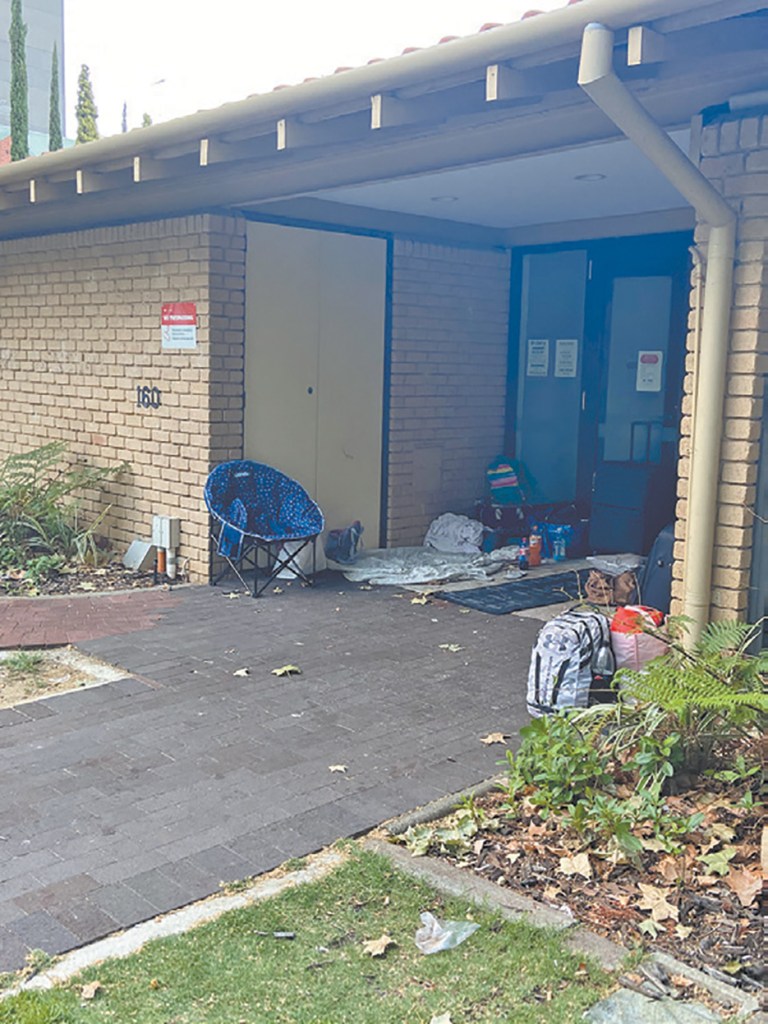
    the Zempilas council lineup, with Mr Zempilas frustrated over the lack of state-provided homelessness services, and the state government’s anger over the council’s reluctance to help fund a pool at the WACA.

    “A pattern seems to be emerging where there is a level of contempt for the City of Perth,” Mr Zempilas said. “And on behalf of the ratepayers of the City of Perth we note it, we don’t accept it, and we’ll continue to make sure that the city and its ratepayers are well represented and their contribution is well acknowledged.”

    by DAVID BELL

  • Not a Stirling job
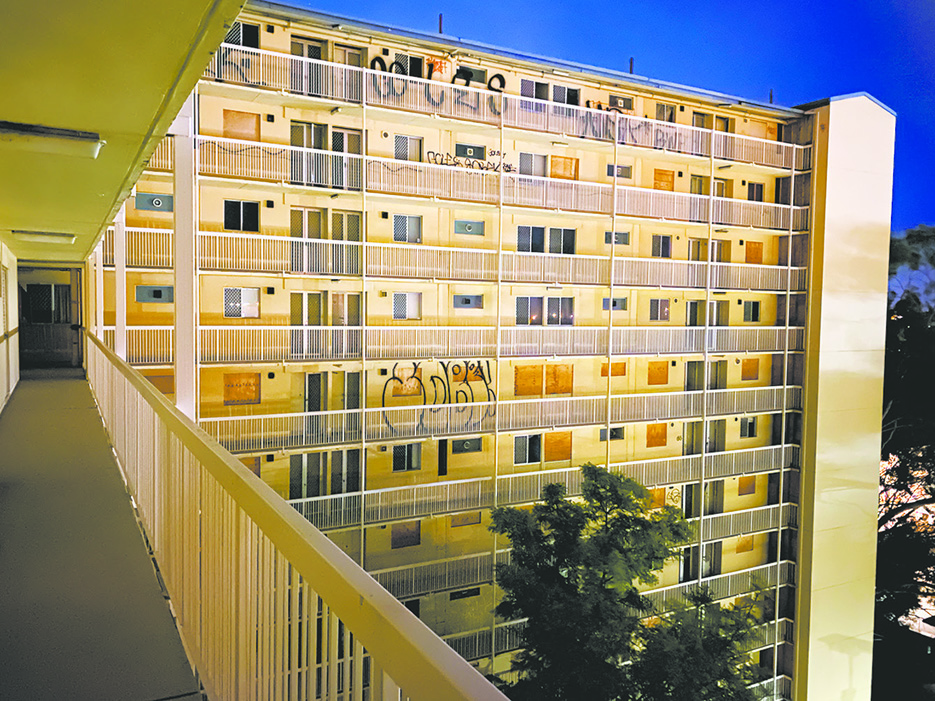
    Stirling Towers, still empty, still no construction date announced. Photo by http://www.streetkidindustries.com
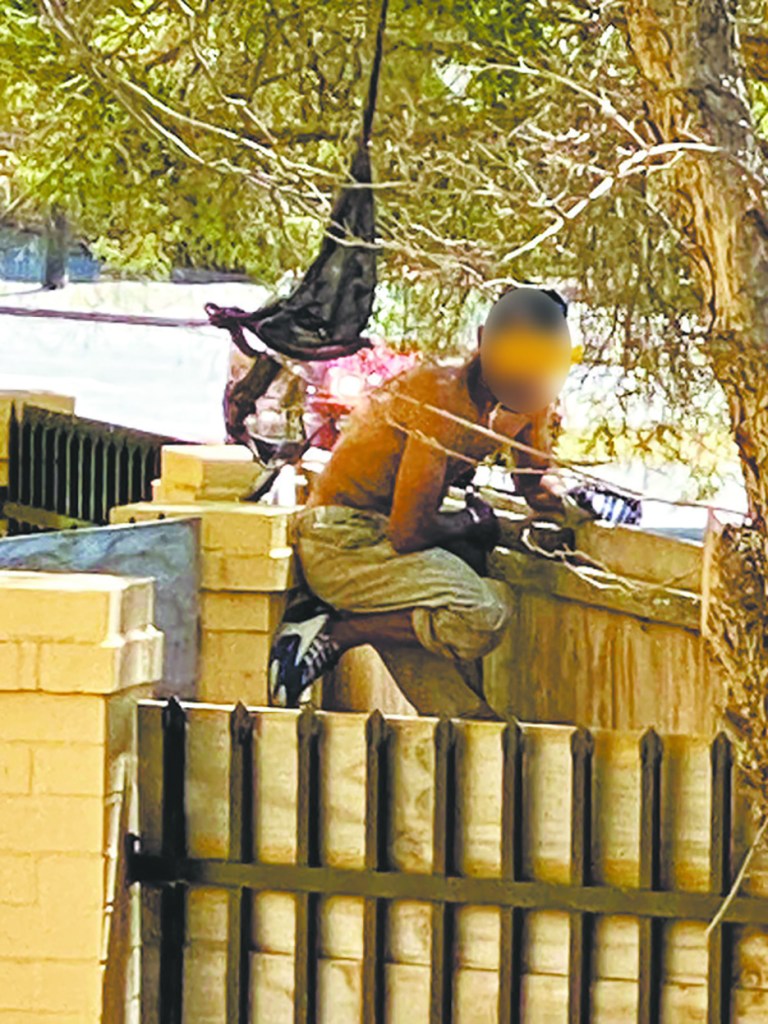
    People are finding ways over the fence. Photo by Raymond Clarke.

    SMITH STREET residents have informally marked the start of the eighth year of the Stirling Towers lying empty.

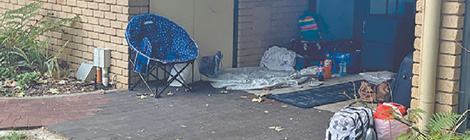
    Nearby resident Raymond Clarke told the Voice he was annoyed the derelict former public housing towers now hosted rats, bats, squatters, vandals, and interlopers who snuck in to look around. 

    Even the security measures intended to keep out troublemakers have proved frustrating: In 2021 “site sentry” surveillance stations were installed to deter squatters and explorers. They detect motion and have CCTV and speakers hooked up to an off-site security guard monitoring the feed, blaring alarms when interlopers are spotted. 

    “They just go off all the time,” Mr Clarke says.

    The Voice heard from an ‘urban explorer’ who’d previously snuck into the building that site sentries aren’t much of a deterrent. 

    “The thing is, you can have the best cameras in the world, but what’s the response time?”

    The explorer said from experience it takes between “15 minutes to 49 minutes” for security staff to respond – plenty of time to get in and out.

    A series of plans have come in the years since 2014 when the Department of Communities first announced the building would be demolished and replaced.

    An initial design was approved in 2016 and the state government sought a contractor to demolish the building later that year. It never went ahead, but an artistically painted fence went up around the site instead. 

    Another plan reared its head in 2018, with the DoC starting negotiations with a contractor to draw up plans for an “integrated community” building featuring a mix of social housing and market-priced units. The contractor pulled out. 

    “I’ve got a stack of brochures now,” Mr Clarke chuckles, with government pamphlets claiming “’this is imminent!’ There’s been a number of things imminent now for ages.

    “Can’t they knock it down now and then decide what to do in 15 years?”

    In August 2022 the state government announced it had shortlisted three possible partners for a ‘build-to-rent’ project on the site, where the government would keep ownership of the site but the builder would get a long-term deal to rent out the units.

    State MP for Perth John Carey, also minister for housing, told us: “I’m committed to getting this site redeveloped,” both to get more social housing back online and to bring some relief for locals dealing with the derelict site.

    “We’ve shortlisted three proponents, and we’re working through their detailed proposals.”

    He said it’s cheaper to get the demolition done as a package deal with whoever builds the new project then send in the dozers now. 

    “That seems a simple proposition, but as is the case with other housing developments, you tie  the demolition into the redevelopment, and that’s a cost saving overall.”

    by DAVID BELL

  • Council to extend Safe Night Space
    The Safe Night Space has succeeded but some women wait long hours to get let in at 7pm.

    THE Safe Night Space for women in East Perth has been granted another six months’ funding from Perth council to keep operating until November 30.

    A split council also voted to look into continuing the service in other locations after it vacates the Rod Evans Centre, a proposal that was described by Cr Brent Fleeton as a “horrible decision” in a statement he then withdrew.

    The SNS was due to close in May but several women staying there told us they’d have nowhere to go, as few other women-specific shelters had a similar low barrier to entry.

    The council will spend around $724,000 for the six-month extension, funding service provider Ruah to operate the shelter in hopes that by November the state government will have opened more shelters.

    Councillor Sandi Anghie moved an amendment requesting council staff “investigate the feasibility of continuing this service or a version of this service at another location” and report back to council.

    Cr Anghie said “there’s a need for a gender-specific location of this kind… the program has already demonstrated its impact.” Cr Anghie’s motion was supported by Crs Viktor Ko, Liam Gobbert, Di Bain, and Clyde Bevan.

    Lord mayor Basil Zempilas voted against that plan along with Crs Fleeton, Catherine Lezer, and Rebecca Gordon.

    Cr Fleeton said “what you’ve done here is basically written a blank cheque on behalf of ratepayers that we are going to stay in service delivery in this area, where it was supposed to be a short-term trial… why would the state government now do anything in this space knowing the majority of people in this room, who’s in control of the budget, are happy with potentially continuing this service?

    “I just think this was a horrible decision that some people in this room have made not fully thinking about it,” Cr Fleeton said, before Mr Zempilas reminded him it was just a feasibility investigation, and suggested he might like to leave comments like ‘horrible decision’ out of the chamber.

    “Alright,” Cr Fleeton said. “The ratepayers will say that, and I’ll withdraw it.”

    The Rod Evans Centre used to be a community centre used by seniors and boardgame enthusiasts before the previous council closed it down in 2017. It was empty for four years before the SNS trial, and the council now wants it to be a community centre again.

    A council report said having the shelter there also seemed to deter use of the nearby playground. The council’s Citywatch security service fielded 53 calls over issues at the SNS in the first 18 months.

    by DAVID BELL

  • Preachy movies flicked from parks
    A still from a 2015 tutorial produced by the church showing members how to choose a park.

    FILM fans lured by signs promising a free movie and a sausage sizzle in local parks have instead been confronted by evangelical flicks followed by a sermon and recruitment ceremony.

    In recent weeks the film offerings have popped up at Gibbney Reserve in Maylands, McKenzie Reserve in Embleton, and Mills Avenue Park in Bayswater. There’s no named organisation, just a mobile number.

    Turns out the preachy picture shows are being organised by the Potter’s House, an international Pentecostal church which has had its US incarnation criticised for being overly-controlling of members (including some American ex-members saying their pastor banned them from watching movies).

    Several suburban Facebook groups and local Reddit boards have seen posters drop by in recent weeks either wondering what the films are all about or warning would-be movie-goers what they’re in for.

    About 98 per cent of commenters disapproved of the church’s tactics, with some furious over the vague signage. 

    One Maylands local who attended the Gibbney Reserve filming told the Voice: “I think they should have to be transparent about it”.

    The movie-goer, who asked not to be named, said: “What further annoyed me: At Gibbney Reserve the sign was set up right near where the drop-off is at Maylands Peninsular Primary School. They put up a sign saying ‘free movie and sausage sizzle’ while times are tough and a lot of people are looking for free entertainment, and surely lots of parents with young children are seeing that and thinking that looks like a good activity”.

    The attendee says the movie was about down-and-out sinners being born again and the preaching featured in-depth tales about Jesus’ crucifixion. The details wouldn’t be too out of place in a passion play but was “just a bit graphic” for a free movie event in a public park.

    We asked Potter’s House about their tactics but didn’t hear back before deadline. 

    However a tutorial video posted by the church in 2015 outlines the tactics used for their “outreach” events.

    “When choosing a park we look for an area that’s got a kid’s playground, that’s often important, because it brings the parents in,” the presenter advised.

    Bayswater CEO Jeremy Edwards said the church had approval for the events under the City’s community events guidelines.

    Using the spaces is free and there’s little red tape for events under 100 people, but the Gibbney Reserve movie on February 25 sizzled a little too much.

    The council said it attracted more people than Potters House had applied for; subsequently permits were revoked for a further seven events.

    by DAVID BELL

  • Levelling the field
    • Researcher Siddier Chambers with Bayswater mayor Filomena Piffaretti.

    A LINEUP of formidable local women gather for a panel discussion in Bayswater for International Women’s Day.

    Keynote speaker is 2023 Bayswater Community Citizen of the Year Sue Fletcher, a medical researcher who developed three drugs to treat Duchenne Muscular Dystrophy.

    She’s joined by a panel discussion on breakthroughs and barriers women have faced in various industries, with social researcher Siddier Chambers, Bayswater’s first mayor Filomena Piffaretti, senior Noongar woman and education emeritus professor Colleen Hayward, and musician Jessica Herbert, Bayswater’s ‘Outstanding Women in Leadership’ winner for 2023.

    Cr Piffaretti said: “I’m thrilled to be part of such a diverse panel for this event, and to have the opportunity to listen to these incredibly accomplished women share their unique experiences, as well as share my own.”

    She was the first female Bayswater mayor in a field that’s been pretty blokey long after state and federal levels of government started to even out their numbers, and leads the first Bayswater council lineup with more women than men.

    “I believe good decisions are made when a diversity of views are represented. 

    “Diversity plays a key role in achieving equity. When we talk about equity, we acknowledge each person’s circumstances are different. By acknowledging these differences, we can make decisions that help level the playing field,” Cr Piffaretti said.

    They’re also inviting presentations on how to uplift local women and girls and the council’s donating $7,000 to get the ideas off the ground. 

    It’s free at the council civic centre on March 9 at 2pm, register via eventbrite.

  • un-Paralelled
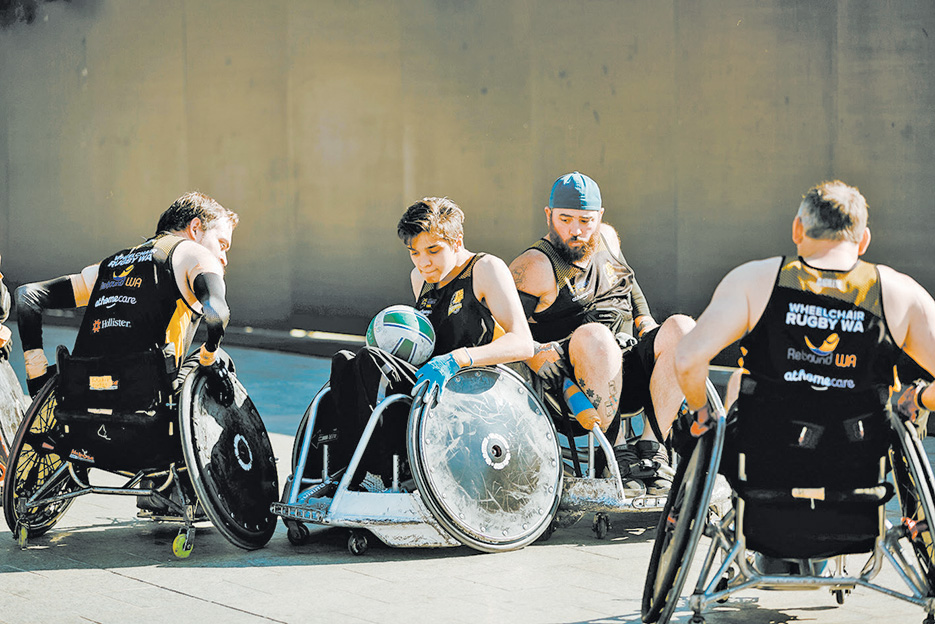
    Para athletes will be holding wheelchair basketball exhibition matches at Yagan Square as part of Rebound WA

    THE Rebound WA Para Sport Festival returns to Yagan Square Friday March 10.

    Athletes from a bevy of professional and amateur sports organisations will be along, featuring exhibition matches of wheelchair football and basketball.

    The public can also try out goal ball, archery, lawn bowls and wheelchair basketball.

    Rebound WA CEO Simon Mead said: “For the second year, Rebound WA is proud to invite Western Australians to explore Para sport and witness the power of sport to break down barriers and bring people together.

    “Our goal is for attendees to leave with a greater appreciation for adaptive recreation and sport options for those with physical and vision disabilities. 

    “We hope that attendees with disabilities will find ways to get active and that all attendees will be inspired to support Para sports in their own communities.”

    It’s free and runs from 4pm to 7pm.

  • Cat lovers love containment

    OUR story about Perth ratepayer Adin Lang’s attempts to get the City moving on cat containment laws, and particularly local government minister John Carey’s letter in response that said stray moggies weren’t a big problem at Kings Park, certainly put the cat amongst the pigeons. We couldn’t fit all the letters and submissions we received last week, but here’s a couple from big-hitters in the wildlife world.

    ROZ ROBINSON is the CEO of Cat Haven, Perth’s most well-known cat shelter, which each years takes in around 7,000 homeless moggies.

    THERE is currently a lot of dialogue concerning cat containment amongst various councils and I would like to add Cat Haven’s position to these discussions.

    This position statement relates to domestic and unowned cats and does not cover such cats as feral cats, barn cats or colony cats as these are outside of Cat Haven’s jurisdiction.

    Cat Haven is WA’s leading and only open admission cat shelter currently taking in around 7000 cats a year.

    Cat Haven advocates for and espouses responsible cat ownership in the form of:

    • De-sexing of all cats by no later than the age of four months to prevent the oversupply of cats;

    • Cats kept indoors for the duration of their lives;

    • Escape-proof cat enclosures being constructed adjacent to the family home;

    • Free-standing cat enclosures placed outside, preferably on grass and taking into consideration weather conditions; and,

    • Escape-proof fencing improvements (such as Oscillat) which prevents cats from escaping their own backyards.

    If any of these methods are used, physical and psychological enrichment must be proved to ensure best welfare practices.

    Roaming cats have a life of expectancy of 3 -5 years (compared with 15 years + for contained cats) and roaming usually occurs when cats are undesexed and are seeking mates. The risks to cats which wander include, but not limited to:

    • Serious injury or death from motor vehicle accidents. In the event of serious injury, this may lead to owners electing to euthanise their cat due to financial constraints of vet work;

    • Cat fights which can lead to costly abscess treatment by a vet, FIV and FELK. As above, this may lead to euthanasia or surrender to a shelter;

    • Skin cancer on ears and nose of cats with white faces. White cats themselves are five times more prone to skin cancer than the general cat population. This leads to serious pain and costly treatment such as ear removal. In the case of cancer of the nose, there is little which can be done once the cancer has reached a certain stage;

    • Trapping/baiting of cats by disgruntled neighbours or cat haters;

    • Poisoning from plants toxic to cats found in gardens;

    • Cats trapped in lethal traps; or,

    • Mishaps such as getting into roof cavities of buildings or between houses and fences – where rescue is very difficult or near impossible.

    Complaints from the public regarding wandering cats include:

    • Defecating in children’s sand pits/gardens;

    • Perceived/actual risk of toxoplasmosis;

     • Waking sleeping dogs causing them to bark – it is believed one barking dog can affect 150 people within its vicinity;

    • Distressing owned and contained cats by “hanging around” and thus leading to behaviour issues with the owned cat;

    • Undesexed tom cats spraying on property including cars;

    • Damage to property including cars;

    • Endangering nocturnal wildlife; and,

    • Cats fighting and disturbing people and babies sleep

    Background

    Years ago it was common to see dogs wandering the streets without any restrictions. 

    Laws have changed, and now it is law that all dogs be contained to properties unless outside, in which case they must be on a leash. 

    There are some places where dogs can remain off-leash, such as dog specific beaches and parks, but still must always be under the control of the owner at all times.

    Excessive barking dogs are a common complaint for neighbours and dog owners receive infringement notices for not picking up their dog’s faeces.

    For years, cats have been allowed to wander, deemed “impossible” to stop from wandering and cruel to contain them. Especially from people who have had cats “all their lives”.

    There is now a groundswell that the laws which are applied to dogs should be applied to cats.

    Cat Haven believes that cat containment should happen at the youngest age possible. 

    We also believe it is possible to adapt an older cat into being an indoor only cat – but it will require more work and commitment on the part of the owner. 

    But contained cats need to be provided with stimulation and enrichment which can easily be done by owners.

    Cats can be trained to walk on a leash and harness, which helps provide enrichment.

    If council by-laws and/or the Cat Act are to be amended to include cat containment, then a grandfather clause needs to apply to ensure that no cats are surrendered to shelters or euthanised due to owners not being able to afford cat enclosures, enrichment tools etc. Nor should those owners of roaming cats be fined but re-educated as to the benefits of cat containment.

    Cat Haven believes the best way to encourage cat containment is by constantly education cat owners on the many benefits of contained cats. As we move to higher and higher inner city and suburb housing, many cats are indoor-only cats.

    This education needs to come from all stakeholders including state and local government and the veterinary profession.

    As a cat welfare organisation, we believe that cat containment provides a safer and more secure for all cats.

  • Upsetting the Balance  


    Dr MIKE BAMFORD’S principle area of work is in population ecology of vertebrates (amphibians, reptiles, birds and mammals) and he has been an environmental consultant since 1987. Dr Bamford was chairman of Birdlife Australia WA and on its national council.

    IN Australia, there are only three domestic animals that owners are not required by law to keep on their own property, or under control. 

    These are the honey bee, homing pigeon and domestic cat.

    The reason for this is obvious for the first two species, but why does the domestic cat get free rein? 

    Perhaps it was once considered to be useful in the control of rats and mice (it usually isn’t), and it certainly is an animal that can be hard to restrain, but the tradition of ‘sharing’ your cat with the neighbourhood is increasingly coming under question. 

    One of the key reasons for this is the impact your cat has on wildlife.

    It is against the law for you togo out and kill wildlife, as with very few exceptions native wildlife are protected. You can, however, at least presently, allow your cat to wander uncontrolled. 

    No matter how domestic, the domestic cat is a predator and it effectively can’t help itself. 

    The law doesn’t hold cat owners responsible for the protected wildlife the cat may kill; that would be hard to prosecute. The question of legal liability, however, is academic, as in a conservation sense the real concern is the consequences of what cats get up to. 

    They are only doing what they do; predation is part of nature. Untold animals get eaten, naturally, by other animals every day.

    Predation

    Ecosystems wouldn’t function without predation. Without predation, we would soon be knee-deep in insects, spiders, lizards, birds and all sorts of wildlife. 

    In a sense, the balance of nature relies on predation happening. 

    So while many of us may not like the idea of cats eating native wildlife, it is really a question of what that consumption is doing, rather than the consumption itself, that is important. 

    We talk of the balance of nature, and part of that balance involves the ability of the population of a species being eaten to survive; for predation to be balanced by reproduction and immigration. 

    For a bird like the splendid fairy-wren, it doesn’t really matterif some of its number are eaten bydomestic cats or the native collared sparrowhawk; what matters is whether the wren population produce enough young to replace those that are lost. 

    And if it can’t produce enough young, can other wrens move in from nearby to replace them. 

    We need to think like that when examining the risk that domestic cats pose to wildlife in the suburbs. 

    Scientist talk of the ‘predator-prey’ relationship, and when the subject is the domestic cat and urban wildlife, there are some important things to consider in order to understand why domestic cats can ‘tip the balance’. 

    There are a lot of domestic cats. 

    Predators are usually uncommon as they need a lot of prey to support them. A predator that eats all its prey is itself doomed. Domestic cats are not uncommon. They occur at impossibly high densities.

    They also do not rely on native wildlife for the bulk of their food as they are fed by their humans. 

    They are over-abundant as a predator, and even if only some wandering domestic cats eat native wildlife, that should be cause for concern. 

    In urban landscapes, some species are especially vulnerable to predation. 

    Very few native species flourish in the suburbs, and those that survive at all are often confined to small bushland areas. 

    In such areas, they may be in small numbers and are likely to be at least partly isolated from other groups of their own species.

    This makes them vulnerable to local extinction. 

    Such local extinction can be the result of many factors, but predation is one of them. 

    Predation by domestic cats has been linked to local extinctions on several occasions. 

    Extinction

    This pattern of local extinction has already happened across much of Perth, even in the larger bushland reserves. 

    Birds like the robins, fairy-wrens, scrubwrens, thornbills and shrike-thrushes have disappeared from many urban reserves, and may still be declining. 

    Small mammals like the honey possum, western pygmy-possum, grey-bellied dunnart and noodji (a fluffy, pale-grey native mouse) have gone. 

    It is not until you get to large tracts of woodland north of Muchea before you can encounter any of these.

    The absence of these species is striking for people who are aware they should be present, but of most concern is that for many people there is no awareness of what has been lost. Or why.

    A keen bird-watcher recently commented that domestic cats could have no impact, because species sensitive to predation by cats were not present in suburban reserves. 

    The irony of this statement appeared to be lost on him.