• What’s the barrier?

    Shark attack survivor questions slow response

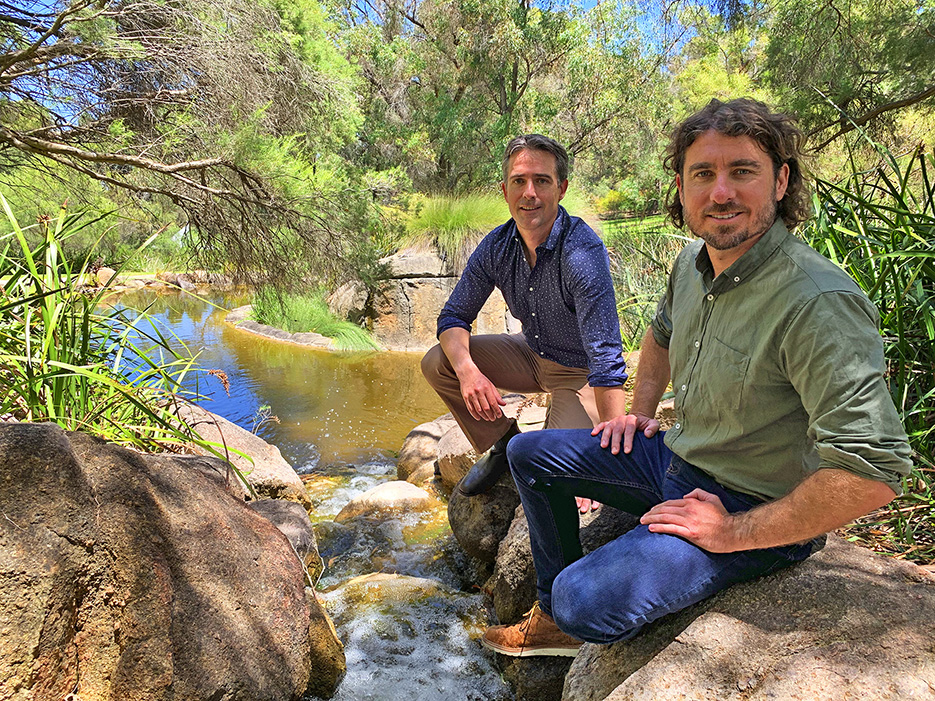
    THE survivor of a shark attack at Blackwall Reach two years ago says he’s disappointed a shark barrier still hasn’t been installed in the river, though Melville council says it’s still working on the project.

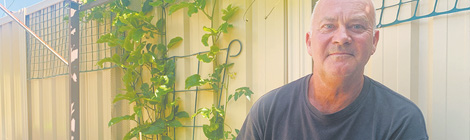
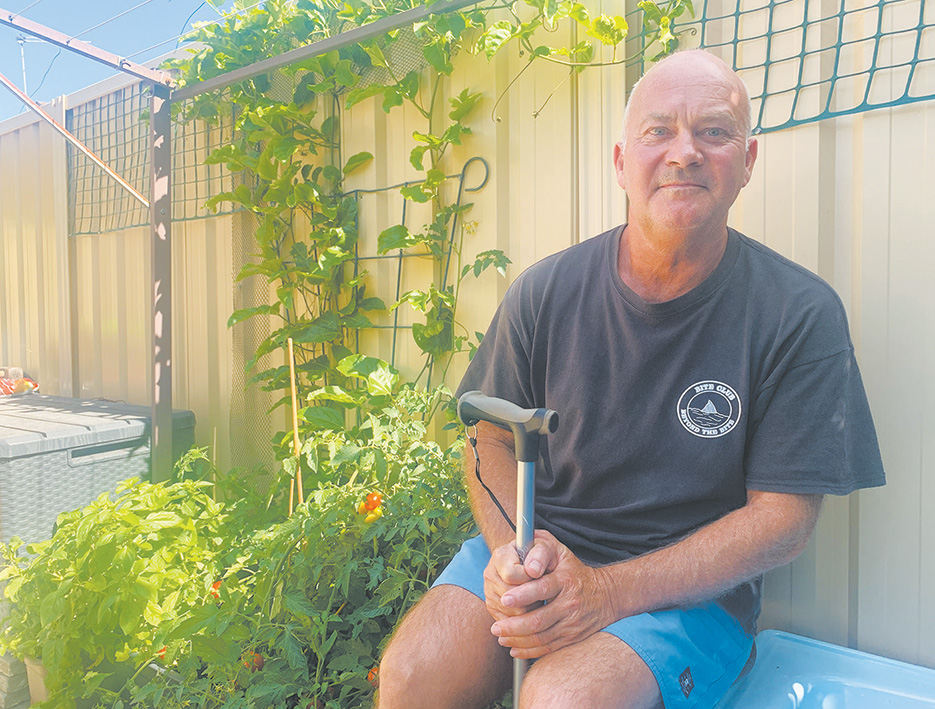
    Cameron Wrathall was 100 metres from shore on January 14, 2021 when he was attacked by a three-metre bull shark. Mr Wrathall’s injuries were so severe his heart stopped, and even after lifesaving surgery he lost feeling and function in his leg. He now gets around with help from a cane.

    Mr Wrathall said soon after the attack he spoke with a council staffer who said they were considering barriers at the Bicton Baths jettg and Deep Water Point.

    “I think when the incident happened, there was obviously a strong reaction in response, but I get the impression that it’s something that’s on the backburner, or maybe upon further investigation is something that been put aside.”

    Mr Wrathall said he tried putting a call through to the staffer again, but was told they weren’t available and he didn’t pursue the matter. 

    But now he’d like to see the initiative followed through.

    “I believe when the incident occurred a lot of people stopped swimming in the river; in my talks with people here, many have indicated that it’s just something that they think twice about now and don’t do.

    “And that’s unfortunate, because it is a beautiful part of Perth and it is lovely.

    “It’s a very rare occurrence that something like this would happen, but that being said, the impacts are significant.

    “It can be a death or it can be a significant injury – I’m left with lifelong effects that will never go away.

    “It’s something I wouldn’t like to see happen to anyone else.”

    Mr Wrathall said he’d also like to see more awareness about the potential dangers of boaties and fishers dumping their leftovers in the river once they’ve cleaned their fish, saying it could attract the sharks closer to shore and swimmers.

    “I’ve swum through it plenty of times. It stinks, and you know youre swimming through waste,” he said.

    Melville mayor George Gear confirmed the council was still looking at a shark barrier or repellent technology at Bicton Baths jetty.

    “The City is not considering shark nets as they present entanglement risks to humans and marine life,” Mr Gear said.

    “The shark barriers that we are investigating are made of recyclable materials and are flexible enough to allow small marine life to pass through, but rigid enough to prevent the entry of large marine animals, such as sharks.

    “While we acknowledge shark attacks are rare, the barrier could provide peace of mind for swimmers and encourage the community to swim and be active in the river.”

    Mr Gear said the barrier would need approval from several state government departments.

    “There would also need to be support from local traditional owners and the wider community before going to council for approval,” he said.

    He said depending on approvals works could start next summer when there were low tides, calm weather and little rain.

    by STEVE GRANT
  • Gone fishing
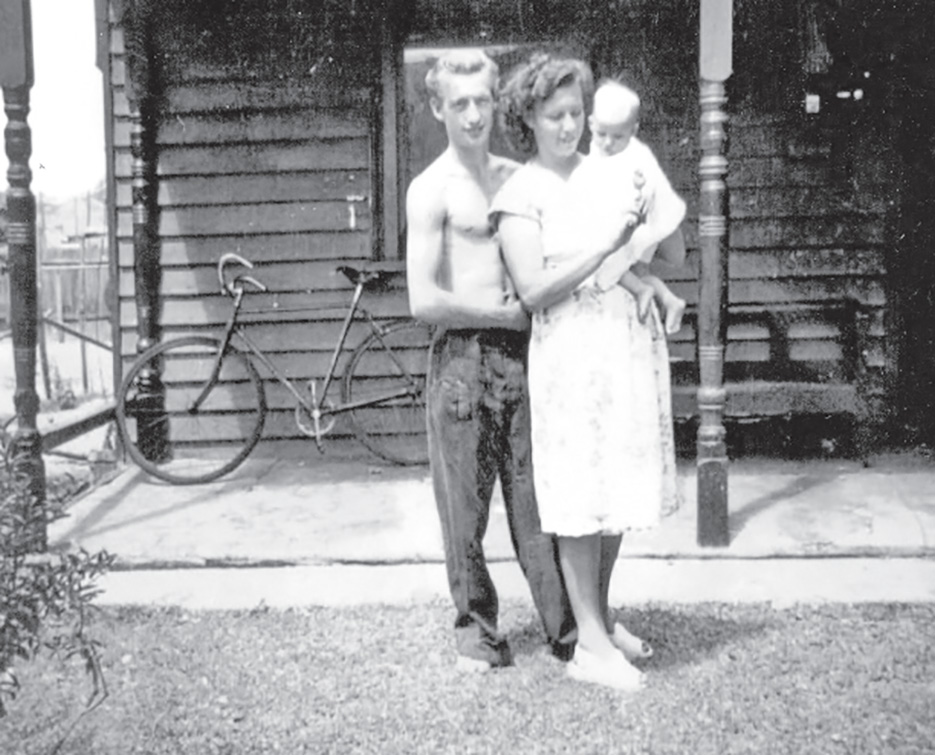
    Ray and Kath Fern with baby Kay at 33 Woodstock Street, Mount Hawthorn 1950. (COV PHO5643)

    WITH school holidays wrapping up this week, the City of Vincent Local History Centre finishes its series of summer tales with a story about how local kids holidayed in times past. 

    DURING summer school holidays in an earlier era, kids made their own fun ranging further afield than many parents would feel comfortable with today.

    Ramon ‘Ray’ Fern grew up on Woodstock Street in the ‘wilds’ of Mount Hawthorn in the 1930s and 1940s.  

    A few years back, Mr Fern’s memoirs were recorded by his granddaughter Coby Ellen O’Keefe.  

    When Ms O’Keefe set out to write her grandfather’s story, his initial response was, “why would you want to do that for? I haven’t done nothing”.

    Ms O’Keefe persevered and wrote a funny and warm account of her grandfather’s life, highlighting how differently kids lived in the suburbs during the Depression and war eras without romanticising the hardships. 

    From backyard bonfires, to catching gilgies in Lake Monger and roping wild brumbies in Wanneroo, Mr Fern’s childhood stories reflect a time when kids had less ‘stuff’ but more freedom to roam. 

    Below is a snippet of Ms O’Keefe’s account:

    (In the) school holidays, the gang of mates would take off for a camping trip to Trigg Island.

    Back in those days, the tide used to come up the beach and cut off a section of the beach, so it became its own island. 

    It was an island surrounded by reef, so it was perfect for their favourite pastime, fishing.  

    Nelly would pack up about half a dozen tins of baked beans and camp pie and send her boys off knowing they’d fish each day and supplement their food supply. 

    The tins and other supplies were packed into sugar bags. No one owned knapsacks or backpacks then – sugar bags were all they had. 

    Then the boys would jump on the bus that took them as far north along the coast as they could get. 

    Scarborough was the last stop. From there, they would walk up the beach to Trigg and wade their way over to the cave on the island that became their home for the school holidays.

    Grandad laughs as he remembers their rationing skills, as they used to eat all their beans and camp pies in the first couple of days. 

    It was no problem though. It just meant that fishing changed from pastime to their lifeline. 

    Grandad recalls: “There were actually fish to catch, not like now.”

    The boys could throw a line and catch a feast. They could even wander on to the reef and drop their line in the rock pools and be sure to catch some decent rock cod.

    Each rock pool they came to, they would also stick their leg deep down into it and if they were lucky, an eight-legged creature would wrap itself around their foot. If they pulled their leg out quick enough, they would have octopus for lunch.

    Sadly, Mr Fern passed away in 2019 shortly after Ms O’Keefe completed her story and shared it as part of the City of Vincent Local History Awards. 

    It was a small comfort to the family that Coby was able to record her grandfather’s memories so they were not lost.

    Read more of Mr Fern’s child memories at the City of Vincent Local History Centre or online at https://librarycatalogue.vincent. wa.gov.au/client/en_GB/search/asset/961/0

    If you’d like to record your family’s stories, visit the City of Vincent Local History Centre from Monday to Friday, 9am to 1pm.  

  • Peeling back the colonial gloss
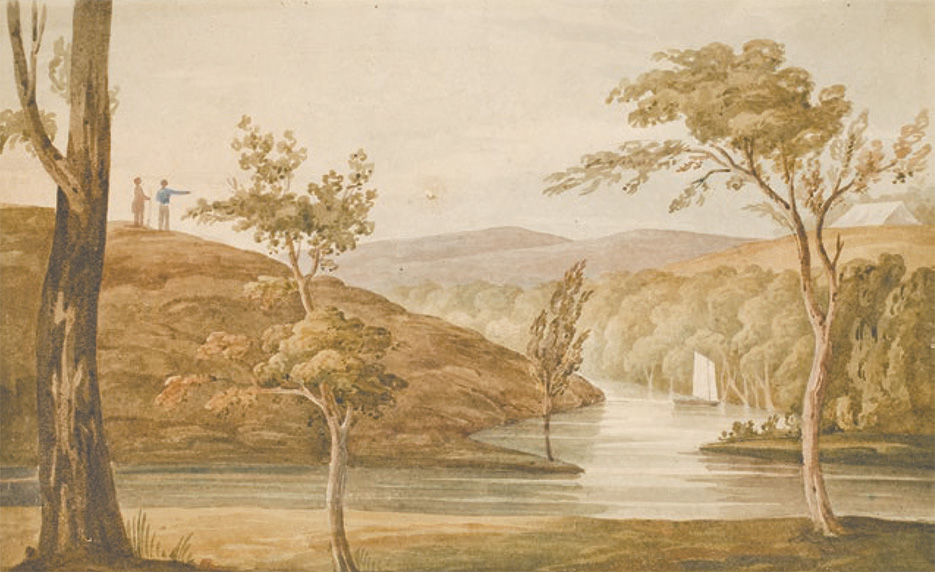
    The 19th century ‘selfie’: James Stirling brought accomplished watercolour artist Frederick Garling to explore the Swan River in 1827.
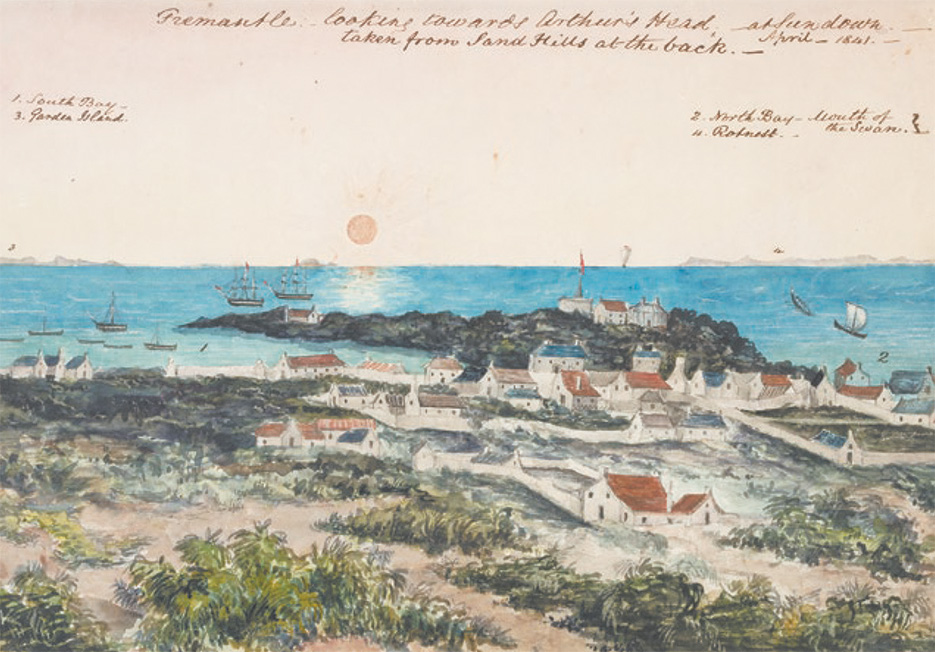
    As the settlers ‘settled’, they became more interested in the planned towns, such as this 1840s painting of Fremantle by John Wollaston.
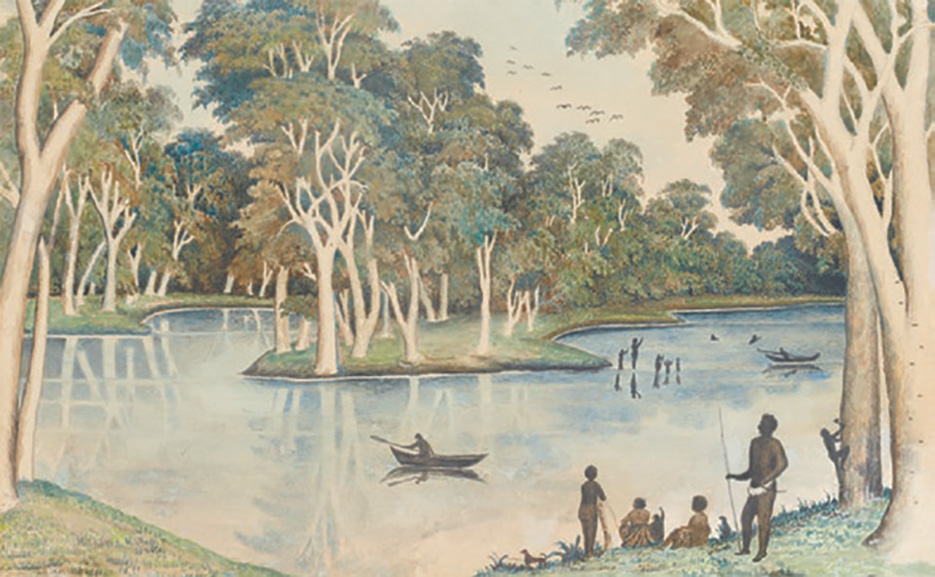
    Noongars didn’t paddle canoes or wear western-style dresses before colonisation, but that didn’t stop Frederick Clause adding them to this ‘eye-witness’ scene.

    THERE’S a certain irony when one of the first books to scratch away the nostalgic gloss of WA colonial art to expose the Indigenous dispossession they reveal is published by an organisation with an indelible link to the state’s controversial ‘founding father’.

    Artist and author Philippa O’Brien’s No Stone Without a Name explores how artists expressed European concepts of land ownership in the early days of the Swan River Colony, often distorting the scene to evoke a more familiar sense of place.

    Yet the relentless “shadow presence” of the Noongar custodians throughout those works tells of a more complex relationship with the same country, even when they are sometimes treated as little more than scenery.

    Ellenbrook

    No Stone is the inaugural publication of the new publishing arm of the Ellenbrook Cultural Foundation, a not-for-profit launched in 2002 to provide artistic and cultural experiences for that community.

    Ellen’s Brook, from which the suburb’s name derives, was named by Captain James Stirling as he explored the Swan River in 1827; a trip he used to build an argument for the Colonial Office to approve the establishment of a new colony.

    We even have Stirling’s ‘selfie’ of the moment, a watercolour by accompanying artist Frederick Garling showing the explorer standing above the brook’s entrance to the Swan and pointing out grassy plains he mistakenly thought would be widespread.

    While Stirling was later mocked for his over-enthusiastic description of the Swan and its fertility, O’Brien argues the contribution of artists like Garling shouldn’t be overlooked for their role in encouraging later settlers.

    “It is an image of nature and innocence, a picture of a place where people could feel at home, physically and culturally, in the visual language of Romanticism that the English understood,” she writes.

    “Garling’s sensitive and persuasive paintings made as real a contribution to the colonial vision as Stirling’s effusive words.”

    Stirling’s surgeon Frederick Clause also took the trip upstream and took the whitewash a step further with his own watercolour sketch, adding a peaceful Whadjuk family canoeing the river (they didn’t), clothed and cheerfully waving to each other.

    In reality Stirling’s party only encountered the men of the area, whose angry gestures made it clear they wanted the interlopers to sod off.

    That didn’t stop Clause’s image being further re-worked back in England by publisher William Huggins, who used it to counter the “savage” cartoons lampooning Stirling in the London press.  

    Through a stunning, rare and extensive collection of artworks, O’Brien follows the colonists as they then set about to transform the landscape.

    Landscape

    “As the settlers felt more settled, landscape paintings became more concerned with aspects of colonial life such as city planning and the documentation of social and economic development, as recorded by John Blundell who spent four years in the colony, travelling widely and reflecting the settlers’ interests and their prevailing racist attitudes, as well as several highly significant events.”

    No Stone isn’t simply a 

    woke retelling of history, but a meticulous cataloguing of some of our state’s most important pieces of colonial art with a modern explanation of their context – one in which those often distant figures have finally been noticed.

    No Stone Without a Name by Philippa O’Brien Ellenbrook Cultural Foundation
    RRP: $120 from
    http://www.ellenbrookarts.com.au and selected bookstores

    by STEVE GRANT

  • Final treat 


    LAST day of the school holidays.

    After eight weeks of ice cream, beach and video games, it felt like the Fall of Saigon in my house with Bamm-Bamm and Pebbles desperately needing to get back into some kind of routine.

    But before they were hoisted onto the roof and bundled into the Catholic chopper, we went for one final holiday treat at Rotana Garden Cafe in Maylands.

    Specialising in Middle Eastern cuisine, the cafe is situated on Eighth Avenue, just down from the Guildford Road intersection, and has a nice alfresco overlooking the street.

    But with the mercury nudging 38 celsius and not a breath of wind, we gave the alfresco a miss and sought refuge inside.

    The casual dining area had a Middle Eastern flavour and was decked out like a courtyard with faux stone walls, vines and Turkish-style furniture.

    A nice touch was the large array of colourful lanterns dangling from the roof as you walked in.

    It created an authentic air without feeling forced or like you were in one of those fake towns in Disneyland.

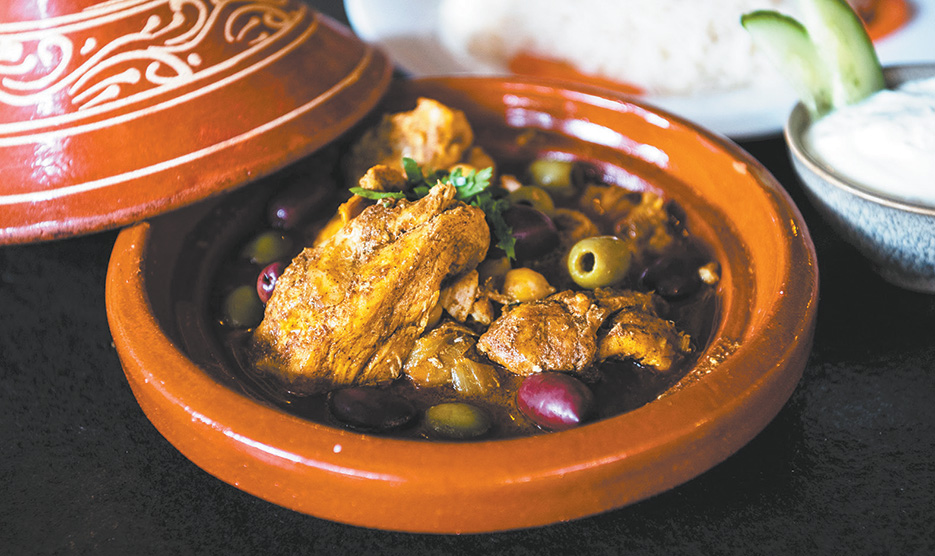
    The menu was extensive with a wide range of dishes including chicken tajine, chicken shawarma, fattoush salad, cold and hot mezza, and of course plenty of grilled skewer dishes with meat, chicken or kafta.

    If you’re not into exotic fare they also do chicken and beef burgers, wraps and a meat box.

    On a nuclear hot Tuesday lunchtime, we were the only people in the restaurant, but the lady behind the counter turned on the air con so we were nice and cool. Sounds like a given, but plenty of operators would leave it off to save money and make you sweat.

    Not long after ordering, the lady was back with my vegan plate with flatbread ($27.99).

    They don’t skimp on the portions in Rotana and my oval plate was overflowing with stuffed vine leaves, falafel, hummus, baba ghanouj and fattoush salad. It was a colourful affair, almost like a modern, slightly messy art installation, and very appetising.

    The fattoush salad was top notch with a refreshing and vibrant mix of veggies including crunchy red cabbage and green capsicum. 

    It had tons of fresh mint, conjuring up that trademark bright and lively flavour. Very enjoyable.

    Stuffed vine leaves are one of my favourites and these were lovely with a nice balance of flavours and soft moist rice.

    The falafel had a crunchy coating and had been deep fried, giving them the appearance of tiny doughnuts.

    I was a bit reluctant at first, half expecting them to be desiccated and lacking in flavour, but the insides were super moist and tasted delicious when dunked 

    in the baba ghanouj (a sort of dip/appetiser made from finely chopped roasted eggplant, olive oil, lemon juice and tahini). 

    Rounding the dish off were some sliced tomatoes, iceberg lettuce and a basket filled with flatbread. A very filling and enjoyable vegan encounter.

    Across the table, my kids were sharing a shish tawouk ($24.99) with two chicken skewers, rice, garlic sauce, chilli bread and Lebanese salad.

    Young kids always surprise you and they actually liked the fragrant rice and salad the best, while dipping the chilli bread into the tahini-style dip came a close second.

    I had a taste of the chicken and it while it had a nice chargrilled tang and subtle marinade, the flesh inside was ever so slightly over and could have been more tender. 

    As my kids chugged down a thick strawberry and vanilla milkshake (both $6.50) R&B songs were pumping away in the background.

    I hate modern R&B, but that didn’t bother me and the kids were nodding their heads in time like demented chickens.

    But the song Billionaire shouldn’t have been on the playlist as it features the repeated lyric “I wanna be a billionaire so f****** bad.” Not the best when you are eating a meal with your kids. I felt like a prude, but it’s not very family friendly.

    At the rear of the cafe, Rotana also has a shisha lounge, where despite the desert-like heat, some men were puffing away on pipes and sweating like Prince Andrew.

    If you’re after a casual, filling and very tasty Middle Eastern meal then give Rotana Garden Cafe a whirl.

    Rotana Garden Cafe
    42 Eighth Ave, Maylands
    rotanagarden.com.au

    by STEPHEN POLLOCK

  • Life gaol  
    Rampage Electra is written and directed by Hassibullah Kushkak.

    SEE RAMPAGE ELECTRA AT THE WA MADE FILM FESTIVAL on FEBRUARY 24. TICKETS HERE

    Fremantle Prison has seen some horrors down the years and that continues when it takes centre stage in the gripping action thriller Rampage Electra.

    Written and directed by Hassibullah Kushkaki, the film was shot extensively in WA with locations ranging from East Perth to Lancelin dunes and the 23,000sqm AMCAP Warehouse in Welshpool.

    Rampage Electra stars Mikayla Levy as Hannah Electra, who has been expelled from five schools and labelled “dangerous”. She can’t really work out why, until she unearths a dark family secret that changes her life forever.

    Kushkaki thought the gritty, old prison cells at Fremantle jail would be the perfect setting for a twisted psychiatric ward, so in late June he filmed for three days at the world heritage site.

    “I had four scheduled tour meetings with Fremantle Prison where I was able to scout locations for specific scenes and work on the daily orchestration,” he says.

    “The process of receiving permission was very thorough. We presented a clear plan on how we were going to orchestrate the three days of filming.

    “Over the course of three days we captured 30 minutes of actual run time. We averaged 10 pages per day which was a very ambitious attempt.”

    Rampage Electra is Kushkaki’s debut feature film and will premiere at the WA Made Film Festival in Perth on February 24.

    It’s a far cry from 2019 when Kushkaki, then in his late twenties, arrived in Australia on a work and holiday visa and was picking cherries in Taggerty, Victoria.

    He was into moviemaking in his youth, but concedes he lacked the discipline at that age to do “professional films”, but that all changed when he got a student VISA and enrolled in film school at TAFE in Perth, where he quickly teamed up with James Dudefield, director of photography on Rampage Electra.

    “We filmed 15 short films in that first 15 weeks and by the end of the semester we decided to book the Luna Cinemas and have our own little premiere,” Kushkaki says.

    “Fast forward three years and we produced 28 short films, hosted three screenings at the Luna Cinemas and have our first feature coming up.” 

    Born in Germany, Kushkaki grew up in Tucson, Arizona and spent most of his twenties in South Florida. His grandparents have been living in Perth since the 1980s and his parents moved here just over a decade ago to take care of his great grandmother, who has since sadly passed away. 

    He says his first big cinema experience was going to see Titanic aged about nine, and growing up he was really into comedies like Zoolander, Super Trooper, Hot Fuzz and Nacho Libre.

    But when he watched the intense epic drama There Will Be Blood, starring Daniel Day-Lewis, it “changed his life forever” and sent him on a darker cinematic path.

    He says playing around with samurai swords and blood splatters on a previous short film inspired the fast pacing and action in Rampage Electra: “That was one of the first moments where the team simultaneously felt a certain level of tempo that we were creating. That was an inspiring moment where I knew which style to commit to for our first feature length film.”

    Rampage Electra is just one of the great home-grown movies showing at the WA Made Film Festival from February 17-26 at Palace Cinemas Raine Square in Perth.

    Now in its fourth year, the festival is the biggest celebration of local screen culture with 14 feature and 57 short films made in WA, one web series, two masterclasses, multiple filmmaker discussion panels and 17 smartphone films made exclusively for the festival. 

    Highlights include the Perth premiere of Sweet As, by Nyul Nyul and Yawuru writer and director Jub Clerc, a highly-regarded WA filmmaker.

    Sweet As is the first Western Australian feature film to be written and directed by a female Indigenous person, which is just incredible,” says festival director Matthew Eeles. “We couldn’t think of a better film, by a better filmmaker, to open this year’s festival.”

    The festival will also host the world premieres of Arnold Luke Carter’s whimsical feature film Sun Moon & Thalia, Sanja Katic’s complete web series Love Me Lex, and Lincoln James Cook’s observational political doco Elect Lincoln. As well as masterclasses by two of WA’s most successful and respected screen practitioners, actor Myles Pollard (Wolverine, Drift), and writer and director Ben Young (Hounds of Love, Where All Light Tends to Go).

    For more info and tickets see wamadefilmfestival.com.au

    by STEPHEN POLLOCK

  • ‘The Talk’  
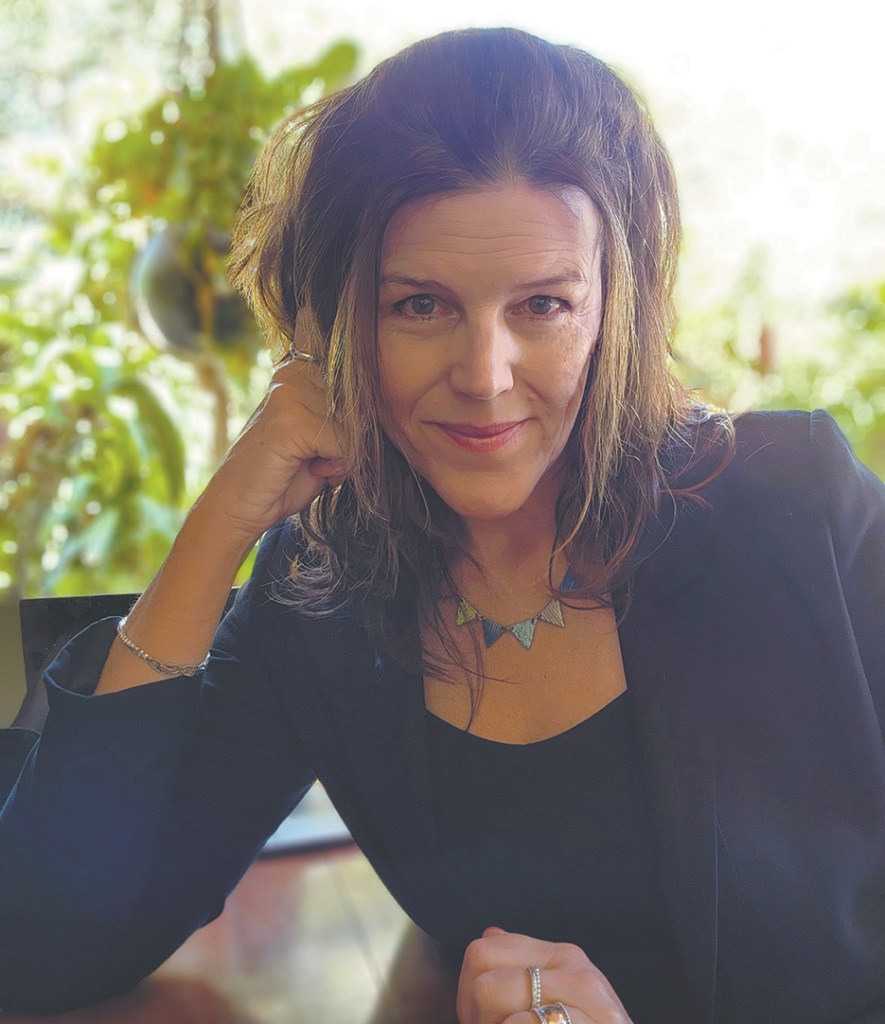
    East Fremantle sexologist Michaela Southby.

    FOR many parents, broaching the “birds and the bees” with their children has always been a very awkward conversation.

    But now with more and more kids identifying as gender neutral or LGBTQI+ the playing field just got a lot bigger and more complex, especially for parents of an older generation or with certain religious beliefs or both.

    Throw in the rise and availability of all kinds of nasty online porn – often used by teens as an informal means of sex education –  and you may be questioning if it’s even worth having “The Talk” anymore and if it has become woefully naive and outdated.

    Thankfully people like East Fremantle’s Michaela Southby are here to guide you through the modern sex-ed landscape and how to broach these sensitive topics with your kids.

    She’s a sexuality educator and runs courses specifically targeted at helping parents talk to their kids about issues like puberty, online safety, gender identity, pornography and consent.

    “Discomfort with sexual or gender non-conformity isn’t just a generational thing, it’s often tied to religion, culture, personal fears and shame that apply to all ages,” Southby says.

    “So working with adults to help them reflect on this, and their experiences and inherited values, and how they want to parent, 

    is equally powerful for their development as it is for the kids they care for. The beauty of beauty of sex ed done well is that kids learn about all types of diversity.”

    Southby says that for LGBTQI+ folk, fear of rejection is a huge issue.

    “Your primary job as a carer is to stay present. ‘OK I’m here. I don’t know how to respond, but I’m with you’” she says.  

    “We have to remember that sexuality is a non-optional part of being human. And seven billion people are not going to express that in the same way. Sometimes adults need help to unlearn some automatic habits or traditions that might now be unhelpful, and this starts with self-awareness.”

    And then there’s the whole minefield of boys watching misogynistic, degrading porn online and thinking that is the normal way to treat woman. Or teenage boys secretly filming being intimate with their partner and then releasing it online as revenge porn.

    “I always address the legal aspects of porn also – sharing or showing others intimate images. People are shocked to learn a ten year old in WA can be charged for sending an intimate image without consent,” Southby says.

    “Our best line of defence is to acknowledge our kid may see it, and to ensure we are approachable to talk. This again shows the power of embracing a holistic approach to Relationships and Sexuality Education, as it’s called today.  If we show our kids as soon as possible that we can talk about anything, then when they see porn, we are ready.”  

    Southby says she was inspired to become a sexologist and registered counsellor so she could do better with her three kids, as she suffered acute embarrassment as a youth when she didn’t know what to do in certain situations and lied to cover up her shame.

    “I studied forensic sexology over a decade ago and as a sexuality counsellor met so many adults that just don’t have the knowledge or language around this. I could see the cycle of shame and ignorance continuing, despite us living in this hypersexualised cultural context,” she says.

    “So I started to think systemically and saw that bringing sex ed to parents in a therapeutic manner would enable them to grow too, as we upskill them to help their kids.”

    But what about parents who argue that talking about sex education with their kids will rob them of their innocence or encourage sexual exploration?

    “Bountiful global research shows quite the opposite!  Relationships and Sexuality Education is the most empowering thing you can do for your child 

    (and especially if they are more vulnerable anyway). We know it leads to stronger self-esteem and body image; and lower rates of STI’s and unplanned pregnancy,” Southby says.

    “The other issue is parents deciding when is the right time to talk about certain topics. We have to meet our children where they are at. If they’re asking a question they need an answer even if that answer is ‘Oh that’s a good question let me think about it. What do you think?’

    “That buys you some time without shutting them down, helps you understand what they already know, and builds your relationship as an askable parent.”

    Southby’s Sex Ed for Parents “helping you to help your kids” is on every Thursday, February 16 to March 16 10am-11:30am at The Meeting Place, 245 South Terrace in South Fremantle. Tix at eventbrite.com.au/cc/the-meeting-place-160739

  • Family cracker

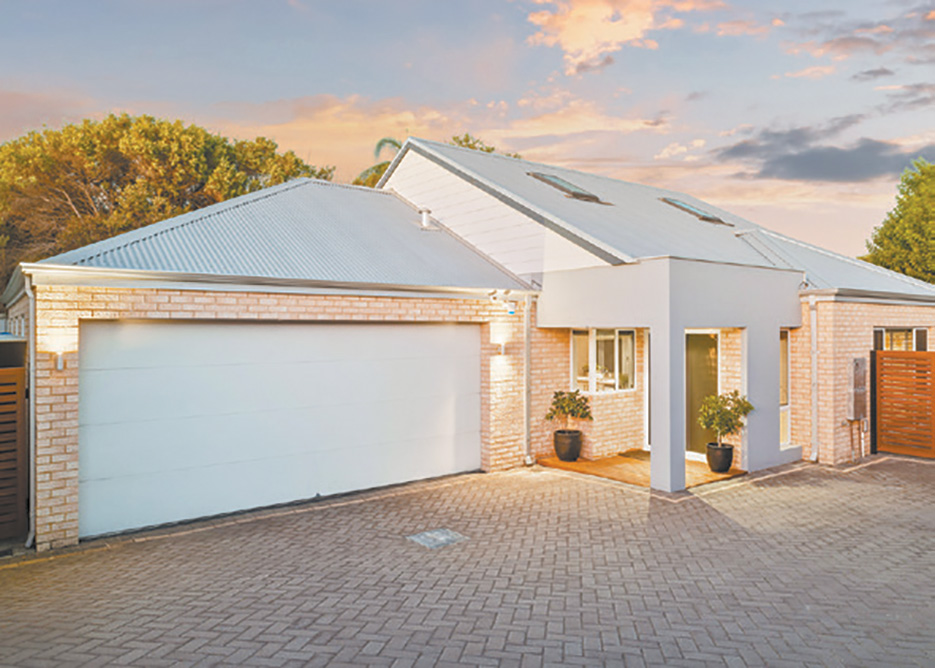
    IF I was to give this Morley house a name it would be Mr Flexible or Ms Flexible or just Flexible, if it’s gender neutral.

    That’s because this four bedroom three bathroom home has effectively got two main ensuite bedrooms – one on the ground floor and one on the first.

    On the first floor, half the space is devoted to a bedroom and the other half to a second living area/retreat.

    But it you don’t need this bedroom, it would make a fantastic games room or home office/study.

    This property isn’t just flexible, it’s very stylish and modern too.

    The open plan living/dining/kitchen area is massive and features some tasteful wooden floorboards.

    The colour scheme is a clever variation on a theme – not all pristine white but with some cream and darker shades mingling to great effect.

    The Voice really likes the kitchen in the corner – the mosaic splashback is a stylish touch with the blueish tiles contrasting nicely with the white cupboards and drawers, benchtops and stainless steel appliances.

    A great feature is the giant walk-in pantry where everything is at your fingertips with absolutely masses of drawers, shelves and even a wine rack.

    Another highlight is the outdoor entertaining area at the back.

    Open the French glass doors and walk onto the deck, which has stylish downlights and an insulated roof, ensuring you can you use the area all year round.

    The backyard is low maintenance; mostly paved with a cream colorbond fence, reticulated garden beds and a little patch of lawn around the side, where the owners have put in a climbing frame for the kids.

    The bedrooms and bathrooms are all spacious and well appointed, and the bedroom on the first floor feels absolutely massive.

    The two additional bedrooms have built-in robes and share a large family bathroom complete with double vanities and bath.

    The home includes a family-sized laundry, floor-to-ceiling tiled bathrooms, double garage with electric door, split system AC to the living area, and security alarm and CCTV.

    Situated on a 436sqm block (not including driveway) on Hewton Street, you are close to lots of parks, Morley Sport and Recreation Centre, Bayswater Waves, the Galleria, Coventry Village Shopping Centre, as well as a good range of primary schools.

    This massive family home has great flexibility and style.

    Buyers over $749,000
    22A Hewton Street, Morley
    Beaucott Property 9272 2488
    Agent Carlos Lehn 0478 927 017  

  • Kings Park push for cat laws
    Jewel of the city or a cat hunting ground; Bruce Webber and Adin Lang want strong cat laws in Perth to protect bushland like Kings Park. Photo by Steve Grant.

    PERTH council will be asked to look at how it can prevent cats from straying into Kings Park from its residential areas when its electors meet for their annual gathering this coming Tuesday.

    Fremantle councillor Adin Lang had plans to make his city’s cat controls some of the toughest in the state by banning them from all council-owned land including footpaths, but the laws were knocked back by the McGowan government in November last year.

    Local government minister John Carey’s office told Cr Lang a better approach would be through the state’s Cat Act, but he says the best they could offer him was a “future review” of the legislation and he can’t even score a meeting.

    So Cr Lang is hoping to co-opt the capital city into increasing pressure on the state government to act, by dint of being a ratepayer himself.

    He motion will ask the council to look at ways of prohibiting cats from “certain natural areas, parks and [the] Swan River foreshore”.

    Because Kings Park is state-owned the city has no jurisdiction and would have to find other ways to keep domestic cats out, while he’s hoping the public’s love of its giant mountain top garden will attract some community support for the issue.

    “While I acknowledge there’s less wildlife and less cats in the CBD, Kigns Park has no mechanism to stop cats entering and killing the wildlife – turning the jewel of our city into a hunting ground,” Cr Lang said.

    Heading back to work after a photo shoot for the Voice, Cr Lang said he spotted a roaming cat directly across from the park in Crawley.

    “They’re definitely going in there.

    “Prohibited areas have kickstarted the conversation around responsible ownership, revealing widespread support for change.

    Clear message

    “WA local government has done the consultation and the message is clear – our communities want more action.”

    Cr Lang says Mr Carey could be responsible for “one of the biggest environmental policy reforms in the history of WA, saying a change to the act could protect the hundreds of reserves dotted around the state.

    “We (local government) want to work with him on that, however the current timeline will see meaningful change happening toward the end of the decade.

    “In the meantime, pet cats are killing 390 million animals each year.

    “Our lord mayor can also show environmental leadership by supporting Cat Prohibited Areas across Perth parks and the Swan River foreshore.”

    WA Feral Cat Working Group spokesperson Bruce Webber has backed Cr Lang’s plan, saying the state’s cat control legislation is a “dinosaur”.

    Dr Webber says pet cats are covered by the Cat Act, feral cats out in the bush by the Biosecurity and Agriculture Management Act, but stray cats slipped under the radar.

    “More challenging are stray cats, which no one really owns; they might have a few houses where people look after them occasionally and everyone thinks they belong to someone else and they might do a tour every week or so.”

    Dr Webber says WAFCWG is lobbying to have the terminology changed so there’d be just two definitions; cats that are owned and cats that are not owned, with the latter to be removed from the environment.

    He says although the death toll from feral cats has been estimated at over a billion kills a year, pets and strays operating in cities put morer pressure on wildlife because of their greater numbers – around 50 times more kills per hectare.

    “In terms of hunting effectiveness, all cats are amazing killers,” Dr Webber said.

    “People say ‘my cat doesn’t kill’ and that’s simply not true; even well-fed cats will hunt.”

    He says research also shows that pet cats only bring about 15 per cent of their kills home, meaning owners are often not appreciating the effect their moggies are having.

    He’s also pushing the point that contained moggies actually live four years longer than their wandering mates, as they don’t face dogs, cars, snakes – or another grumpy feline. It’s also better for human health, as studies show stray cats are more likely to suffer from toxoplasmosis, which can be harmful to people, and particularly pregnant mothers.

    “Toxo is more prevalent than we are aware of and has not been well studied; but a mother could lose her baby,” Dr Webber said.

    He also points out that the only other domesticated animals whose footlose ways are tolerated are honeybees and some homing pigeons.

    “For everything else, there is a clear expectation that those animals will be contained.”

    Dr Webber says over the last three to five years, scientists have been producing important data on the effect of cats on native wildlife, which has fundamentally changed the debate. Where once politicians feared electoral backlash for acting on cats, inertia was the bigger culprit these days.

    Established suburbs

    He says WA should look to the ACT which now has whole suburbs where cats are banned, others where they have to be contained, and a third tier amongst the more established suburbs where owners of older cats who’ve always roamed can apply to continue.

    But he says research shows that older cats go through a transition, but most are then fine with being contained, while it’s not much of an issue for younger cats who know no differently.

    “When you are containing a cat, you have think about its welfare,” Dr Webber says.

    “You have to consider their health and wellbeing, and it’s very easy to create an interesting environment for them,” he said, noting the growth of outdoor “catios”.

  • Markets set to return this year
    The old markets before the Covid cancellation. Photo by Danika Zuks.

    AFTER a three-year Covid-induced hiatus the Mount Hawthorn Hawkers Market is in line to return in 2023. 

    The markets started in 2014 and used to run every Friday during the warmer months, getting more than 500 people a week out to Axford Park.

    In March 2020 the market operators Heart Inspired Events announced they were ending the season early “due to the recent escalating health concerns surrounding the coronavirus”.

    The old markets were usually fed by a rotation of foodtrucks but now the council wants the hawkers markets to showcase Vincent’s local eateries.

    Vincent mayor Emma Cole announced they were seeking a new operator via tender this week.

    “We would really like to see the popular hawkers market returning to Friday nights as soon as possible,” Ms Cole said.

    “Covid-19 pressed pause on this annual event for a few years, but we are keen to see it make a comeback.”

    EOIs close February 17. 

  • Parking pushed
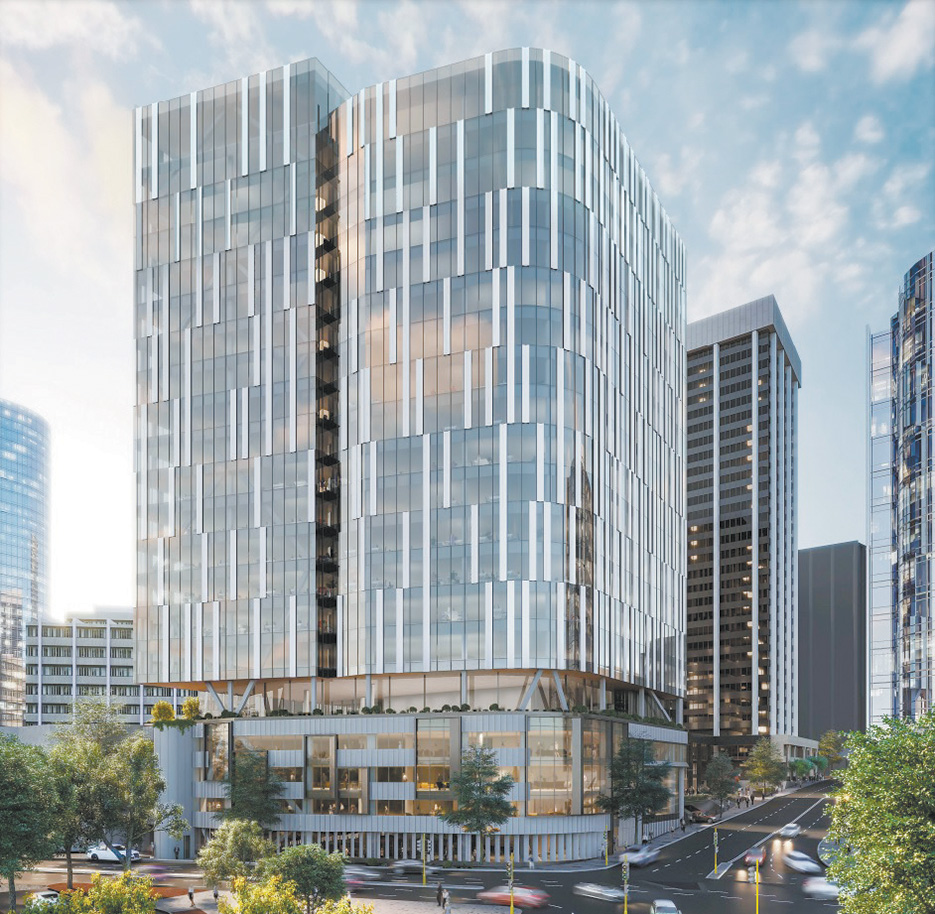
    Element Advisory’s design for owner The Trust Company Ltd

    THE quest to pack Perth with parked cars rolls on with another CBD development winning approval to install more bays than the rules usually allow.

    The Perth Parking Policy, a joint manual by the state government and Perth city council birthed in 1999, has tried to limit the number of car bays in new buildings in order to cut down on traffic and encourage city-goers to walk or take public transport. 

    But it’s common for big developers to run roughshod over the policy, convincing various planning bodies to give them leeway by arguing their project won’t be viable with too few carbays because their swank inner-city residents or suited CBD-office workers won’t want to take the bus or ride a bike. 

    The latest project to beg for extra bays is The Trust Company Ltd’s $174 million, 21-storey office tower planned for Lot 5 St Georges Terrace. The tower is one of four being developed on the site, which stretches along Mill Street from Mounts Bay Road to St Georges Terrace.

    Under the Perth Parking Policy the whole site should have a maximum of 175 tenant bays, but the developer initially asked for government approval to have 225.

    The Department of Transport objected. A round of negotiations saw the developer lower their request from 225 to 224 (one bay was removed to install a fire control room).

    The DoT’s still not happy with the car-heavy design and submitted an objection.

    But the state’s Development Assessment Panel approved the design with a slight compromise of 219 bays at its January 23 meeting.

    The 21-level tower supersedes a previously-approved 33-storey design. That’s not going ahead due to market conditions and a lack of prospective tenants for such a big building.

    This project is also taller than the usual height limits allowed by the Parliament House Precinct planning rules of 1983, which were intended to 

    “maintain the visual prominence of Parliament House and the aesthetic quality of development in the area” and “to protect views between Parliament Hill and other important city elements” according to a WA Planning Commission report.

    Those rules would limit buildings on this site to 18m, while this plan measures in at 91m. 

    But the 1983 rules have been ignored so often, and other bigger buildings have been put up nearby, that it doesn’t matter anymore. The WAPC report says: “The impact on Parliament House vistas to the river has been substantially compromised by existing development and the proposed development will therefore have negligible impact on remaining view corridors.”

    by DAVID BELL