• ‘Art’ banned as AI debate rages

    ‘ARTWORK’ by artificial intelligence will be banned from sale at this year’s Supanova Comic Con in Perth.

    The backlash is part of a widespread resistance from artists whose works have been fed into computers without their knowledge or permission, only to see recognisable variants popping up across the internet.

    “Nothing has ever brought us together like this before,” Ginger Meggs and former Perth Voice cartoonist Jason Chatfield told us. 

    Now based in New York, he’s president of the US-based National Cartoonists Society, which recently declared “[we] oppose the commercial use of AI-generated images that have been trained on copyrighted works, and will not allow any artificially created art to be submitted for consideration for membership, nor any category of awards”.

    Mr Chatfield has been keeping tabs on AI art for a few years now.

    “I am not a luddite, and I have no illusions about new technologies affecting the way our industry works‚ some developments have been great, others not-so-great, but I feel this new technology creates something of an existential crisis for the NCS members’ ability to make income as creators.”

    AI image generators took off in the last months of 2022 with tech giants launching publicly-available previews of systems like Dall-e 2, MidJourney and Stable Diffusion. 

    The AIs have been “trained” on billions of images scraped from the web, including artists’ original works from their online portfolios, and the AIs use that training to synthesise a picture according to a few words provided by the user. 

    It means a user can name a scene and ask it to be rendered in the style of a certain artist, and the image it spits out can be a pretty plausible fake (if uncanny and usually soulless).

    AI image generators are predicted to be a huge money-maker for their owners once the previews have been turned into commercial products, but there’s no compensation for the artists who unwillingly made it possible.

    That’s prompted organisations like Supanova, which runs the Comic Con in June, to declare the organisation “has the utmost Australian Cartoonists Association, David Blumenstein, says “[I’m] hearing from artists who believe they’re already experiencing work slowdown as a result”.

    Mr Blumenstein has played around with Midjourney where you can see what images other users are requesting, and says “people are definitely using it for commercial purposes already: making logos, concept art, images for NFTs, cheap book covers for Amazon e-books. 

    “I think this is likely to affect mostly early career artists for now – some of those $100, $200 jobs that keep us going in lean times or start off a career won’t be coming in – but more senior people who do things like animation concept design, advertising storyboards or internal comms illustrations at a corporate should probably be worried too, because I suspect anyone hiring artists to do ‘internal’ work – which the public never sees – will consider using AI instead if they can get away with it.”

    Beyond missing out on the profit, Mr Chatfield says the way the technology’s being used poses a massive risk to artists’ reputations.

    Soon after launch, the AI’s fakes quickly started creeping into internet search results for the artist’s names, appearing side-by-side with their genuine pieces. 

    “There’s nothing else we’ve seen in art, including pastiche, appropriation, homage… that has had this damaging an effect on an artists’ legacy.

    “Many images that come up when you Google the more famous artists’ names are now not their creations, but an AI-generation simulacrum.

    Legacy

    “This, in my opinion, is the most important aspect: The artist’s ability to control their legacy; The body of work they leave behind.”

    Some NCS members are exploring a class action against the AI companies. 

    Mr Chatfield is organising alongside other arts organisations ahead of an AI ethics symposium in February, “to establish how we will coordinate to lobby the government to establish a code of ethics for using the copyright of creators to generate commercial art”. 

    So far the AI industry’s response to these concerns hasn’t brought much satisfaction to artists. 

    Midjourney founder David Holz was asked if he sought consent from artists in a Forbes interview in September 2022, and answered: “No. There isn’t really a way to get a hundred million images and know where they’re coming from.”

    Stable Diffusion recently announced they’d let artists ‘opt out’ of having their work included in training future versions, though the older versions will remain useable for those determined to create fakes of unwilling artists’ work.

    Mr Chatfield says there’s ways this technology could be used ethically. “An opt-in clause, for a start,” he says, to get artist’s permission before their work is used. “Opt-out is much harder, nay, impossible, since you can’t ‘untrain’ the AI once the artist’s style has been sucked into the vortex.”

    Mr Blumenstein agrees, saying there’s “no reason AI can’t be seamlessly integrated into the workflow of anyone who wants to use it, but the artist (and the writer, and the musician, [etc]) should see a piece of the profit, and have the choice of opting ‘in’ to this stuff rather than having to opt out after the fact.”

    “More than anything I think we need to help our clients understand exactly how much work and consideration goes into creating commercial art, which is something the Australian Cartoonists Association is working on.”

    by DAVID BELL

  • Lest we forget

    Missed deadline almost cancels Anzac march

    A FORGOTTEN application form and a lost email threatened to scupper next April’s Anzac Day parade, but a last-minute decision by Perth council to cough up funding will see it go ahead.

    The ad-hoc approval sparked concerns from councillor Rebecca Gordon that Perth was reverting to the kind of on-the-fly decisions that’d seen the former council lineup sharply criticised in the state government’s 2020 inquiry. 

    Despite her concerns the vote was still unanimous to handover $98,000 in cash and $51,600 worth of in-house services to the RSLWA without a proper application and the usual vetting process.

    For years the RSLWA has relied on Perth council funding for its Anzac Day events, with the cost of mandatory vehicle barriers and other expenses steadily rising and putting pressure on their finances.

    But this year the RSLWA didn’t apply in time. 

    The council had two rounds of events sponsorship this year from a $1 million pot; one in July and one in November. 

    Would-be event holders had their exhaustive multi-page applications pored over in great detail by a three-person panel before being sent to councillors for a decision. 

    The council even conducted background credit checks on at least one applicant to ensure they were solid operators. 

    At the final council meeting for 2022 a staff member explained the RSLWA’s absence from the list of applicants to councillors: “The applicants were contacted via email 

    and it appears that there was some issue at their end, so an application was not received” from RSLWA.

    RSLWA sent a later letter to the council in early December pleading for $98,400 in cash, plus $51,600 in waived costs and in-kind services. They needed a decision fast to get planning.

    The last-minute informal application rang alarm bells for Cr Gordon. 

    “It’s really poor governance to be given an agenda item two-and-a-half hours before a meeting when we’ve got a 1500-page agenda, and it’s a high-risk area,” Cr Gordon said.

    “The City of Perth has come under criticism for grants and sponsorship before, and we’re proposing to give $140,000 on the back of a half-page letter?

    “I’m supportive of the organisation, but I just think… it just makes a mockery of our normal processes. Why do we bother going through applications [and] having an assessment panel?

    “I’d like to move that we defer it so they can have time to submit the proper documentation and we can consider it at the next ordinary council meeting.”

    But with the next meeting not until February councillors were told the matter couldn’t wait, and no one seconded Cr Gordon’s deferral. 

    CEO Michelle Reynolds told them: “The timing is very regrettable… but they need to now enter into agreements with some of their providers, so they themselves can’t afford to take too much time.”

    Lord mayor Basil Zempilas said while the deal was less than ideal, at least the parade would go ahead.

    “I heard what Cr Gordon said about risk – but in my view the greater risk in fact would be to us as an organisation not to be supportive of the Anzac Day march in 2023,” he said.

    There’s no money in the events bucket left so councillors unanimously voted to pull the money out of the operating budget’s surplus. 

    by DAVID BELL

  • ‘No plan’ for bushland

    PERTH has “literally no plan” to protect its native vegetation after the McGowan government quietly axed a mapping project under the cover of Christmas, says Greens MLC Brad Pettitt.

    The Strategic Assessment of the Perth and Peel Region was supposed to outline which areas of remaining bush would be protected and what would be available for development, but the government says it was suspended in 2018 because of its “scale, complexity and deliverability”.

    Dr Pettitt says that’s left the metropolitan area vulnerable to over-clearing and could further endanger black cockatoos.

    “There’s no plan for where urban sprawl ends, and there’s no plan for actually developing in a way that ensures we create wildlife corridors, connectivity, all those things that I think our suburbs do terribly,” he said.

    Dr Pettitt said the planning process for SAPPR was initiated by the Gallop government and gathered steam under Colin Barnet.

    “Now the government on December 22 quietly walked away from it after $7 million and eight years.”

    Dr Pettitt said the Swan Coastal Plain was one of 35 global biodiversity hotspots.

    “It’s one of the most extraordinary, most biodiverse places that we are literally bulldozing into obliviou, and all the species that’s in it; it’s a crime,” Dr Pettitt said.

    But the McGowan government says many of the issues which prompted the creation of SAPPR had been addressed by the Perth and Peel @ 3.5 Million planning document which was adopted in 2017.

    It says the planning under the state’s native vegetation policy can be done regionally, with conservation and restoration plans to “reverse” the city’s declining environmental values.

    “It is vitally important that we balance the need for land availability with managing environmental impacts in Perth and the Peel region,” premier Mark McGowan said.

    Planning minister Rita Saffioti said the work done under SAPPR had fed into the Perth and Peel @ 3.5 million framework.

    by STEVE GRANT

  • Older Nashos feel left behind
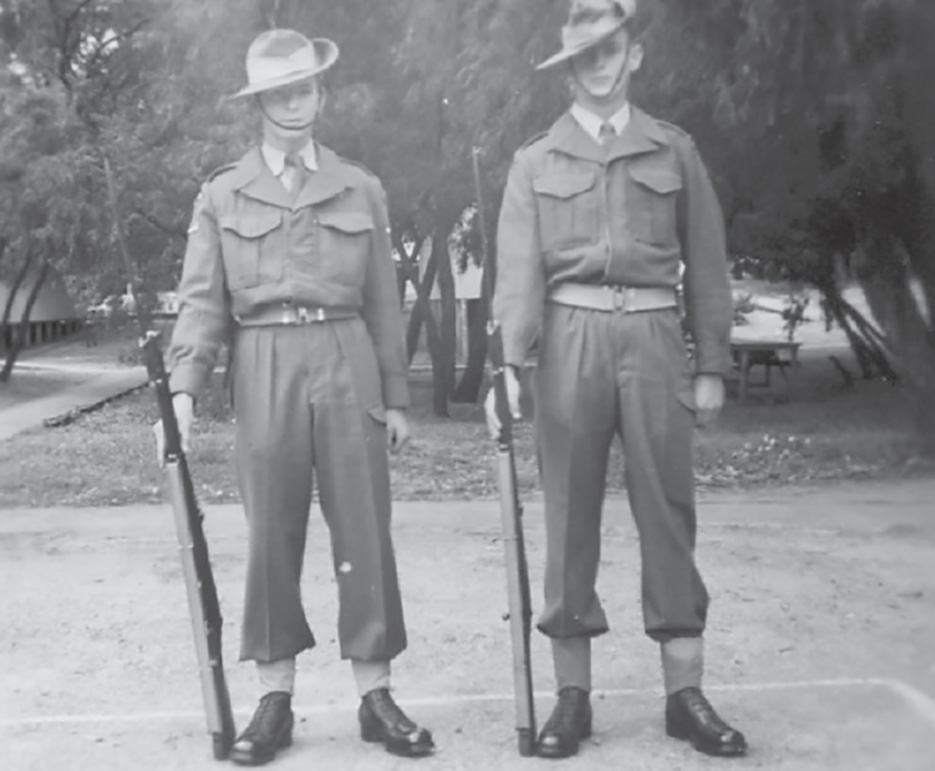
    Sid Breeden and his Nasho mate Vern Boys looking spick and span at the barracks in Swanbourne. Photos courtesy Sid Breeden.

    A GROUP of elderly conscripts say they feel abandoned by their younger comrades who’ve excluded them from a campaign to get extended medical coverage for those who did national service.

    Nasho Fair Go is lobbying the Albanese government to issue “gold cards” to cover all the medical needs of those who were conscripted in the 1960s and ‘70s but never saw combat. Under the current system they have to prove ailments are directly related to their army training, which can be difficult given the decades that have passed since their birthday came up in the ballot (“Nashos call for a fair go,” Herald, December 17, 2022).

    But when 84-year-old Sid Breeden and a few mates contacted the organisation, he claims they were given the cold shoulder because they were part of an earlier national service scheme from the 1950s.

    “The Fair Go campaign shows an insensitive self-importance by completely ignoring Nashos from the first scheme, which was true conscription; call-up for all males over age 18 with compulsory transfer from Nashos into the 

    [army reserve] with five years’ obligation on the reserve list,” Mr Breeden said.

    “Not did it recognise RAAF and navy Nashos who did not serve overseas.”

    Mr Breeden said the first scheme ran from 1951-59 and because it was a true call-up and not a ballot, 227,000 young men were forced into rigorous army training – almost four times as many as the later scheme.

    “Many of our first scheme veterans have passed away, leaving survivors well into our 80s and 90s, and we would welcome gold card assistance together with help from the younger second scheme Nashos,” he said.

    “Always in mind is whether government delay is to save costs by awaiting natural attrition.”

    Mr Breeden feels the younger Nashos’ attitude might be because the two groups come from different generations.

    “The first consisted of the ‘Silent Generation’ with the second being the ‘Baby Boomers’.

    “I can’t recall any of our lot seriously whinging about the years of interruption to our civilian lives, even though hanging over heads for five years was that … if the Korean War rekindled it was likely the [army reserve] would be deployed overseas.”

    But Mr Breeden agrees with one of Nasho Fair Go’s main points, that often it’s only as bodies age that injuries sustained during training can develop, while the nature of army life meant they often weren’t recorded anyway.

    “Such is life, but a gold card will help alleviate our laissez-faire bravado of those days and ignorance of future health implications.”

    Cedric Bell, who’s been a member of the National Servicemen’s Association of Australia (which covers both groups of Nashos) is taking part in the Fair Go campaign.

    He says there is a difference between the two groups, as the 60s recruits were called up to bolster the regular army forces going to Vietnam, while they were also expected to be full-time soldiers-in-training.

    “The other differences is the ‘50s Nashos could chose between the three forces; army, navy and airforce and although they were held in reserve, Australia was not at war,” Mr Bell said.

    “The understanding and advice I received when I contacted the president of the NSAA WA was there was no way Nashos could get a gold card because they did not serve in a theatre of war – which we all understand – and that the FGFN was wasting their time.

     “Taking the above into account, that is why [Fair Go For Nashos] was formed to try and get the gold card for those who were conscripted and completed their service ready for deployment for Vietnam and for whatever reason were not deployed to a theatre of war. 

    “As one can appreciate the training we received was very demanding, as it had to be, as we progressed through basic and core training in readiness for deployment to Vietnam.”

    by STEVE GRANT

  • The little pool that made a big splash
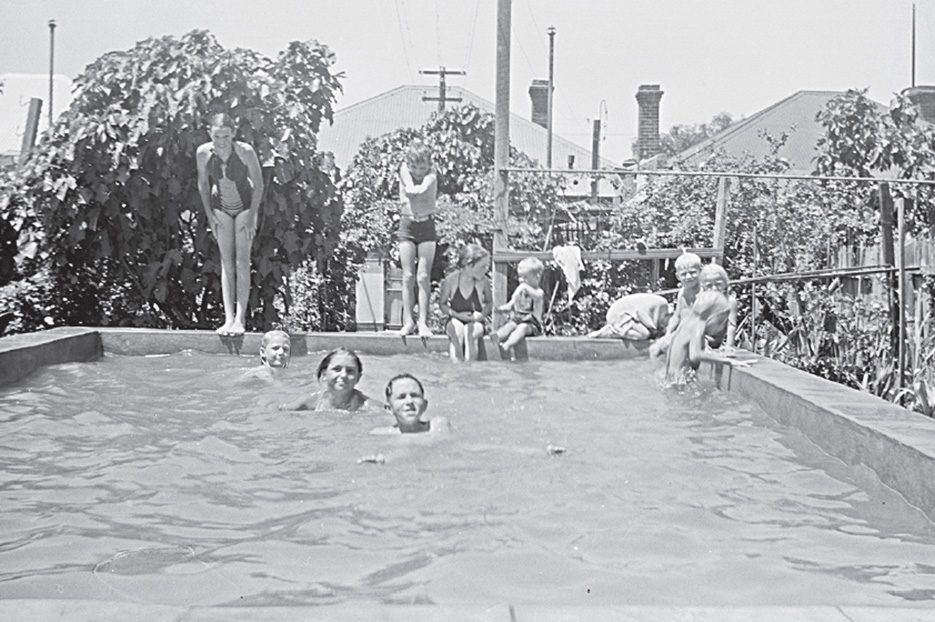
    Children in the pool at 14 Marmion Street North Perth, c 1950s. Photos courtesy of Gail Dorter.

    FROM playing street cricket to camping on the coast, the City of Vincent Local History Centre will be featuring local memories of summers past in its suburbs throughout January. This week’s story takes us to a time when backyard swimming pools were as rare as hen’s teeth.  

    TODAY, there are about 1200 backyard pools in Vincent.

    During the 1940s and 1950s, the outdoor dunny and chicken coop were far more common in suburban backyards.     

    Local resident Gail Dorter, who grew up on Marmion Street in North Perth in the 1940s and 1950s, recalls the novelty and popularity of her family’s backyard pool.  

    The concrete pool was built by her grandparents at the rear of the family property at 14 Marmion Street North Perth in the 1930s.  

    “Part of our backyard was cemented and fenced off from the main area, which wonder of wonders, contained a swimming pool,” recalled Ms Dorter.

    “The first privately owned swimming pool in the state by a lot of years. It was built in late 1930 by my grandmother, who as family legend has it, went and saw a movie with a swimming pool around which the stars were lounging and decided to have one.

    “The pool was 24 foot by 12 foot, built on a sloping ground so the deep end, which was about 7 foot, and was raised a foot or so out of the ground.  

    “There was a sump at the deep end and a four inch pipe curved over the cement side and across the pool a few inches.  

    “This delivered the freezing cold water with which the pool was filled. The energy for both actions was supplied by a pump in a shed behind the pool. And what a pump – we called it ‘Greedyguts’.

    “(In those days), there was very little vehicular traffic around, so the entire suburb was very quiet – until we started Greedyguts that is. 

    “It could be heard several streets away, and soon a string of hopeful kids in bathers and toting towels would appear at the front door asking for a swim.  

    “While there was no lack of volunteers to swim in the pool, it was a different story when the time came to clean it. 

    “Without chlorination or filtration, the water quickly became dirty, then green, and finally would form a sort of horrible scum on the surface.  

    “Initially we would simply part the scum or do bommies to splash it out, but when it got so bad that you had to hose yourself down after a swim, then we knew it was time to empty and refill the pool. 

    “On would go Greedyguts and the sprinklers would flow… We were the most popular children in North Perth when the pool was full, but we were to be avoided at all costs if it was not.

    “When I look at the crystal clear water in my pool today, I can’t help but wonder why we never contracted any of the dreadful diseases the authorities warn us about, for not only did we swim in it, but for many years we kept a long necked swamp tortoise in it and a duck called Lucy regularly did what ducks do in it. I am sure we were made of tougher stuff back then.”

    You can read more of Gail’s childhood Memories of Marmion Street 1945-1965 at the Local History Centre or online at https://librarycatalogue.vincent. wa.gov.au/client/en_GB/search/asset/2401/0

  • Ballsy show
    Michael Shafar

    EVEN in his darkest hour, Michael Shafar still saw the funny side to losing a bollock to testicular cancer – “I finally feel comfortable in skinny jeans”.

    Diagnosed in 2017, the Aussie comic underwent chemotherapy and several rounds of surgery. He got the all clear, but relapsed in 2020 and had more chemo and went under the knife again.

    With all that medical drama and Covid to boot, many would have crawled under a rock and hid away from life.

    But like all good comics, Shafar used personal trauma to his advantage and started tackling bigger and more edgy topics in his stand-up.

    “Cancer did change my approach to comedy,” he says.

    “I was talking about it on stage and I realised it was really fun talking about a dark topic like cancer because it created tension in the crowd.

    “That’s why I now quite deliberately talk about controversial topics like abortion, Kanye West and which religion is correct.

    “It’s fun watching crowds think: ‘How is he going to pull a laugh out of this?’”.

    A few years back, Shafar quit his job as a lawyer to pursue his dream of being a stand-up (he’s jokingly promised to pay back all the money his “Jewish mother” spent on his education).

    But she needn’t worry, his edgy shows have gone down well with audiences and he’s appeared on national TV shows including The Project, Studio 10, Comedy Bites and RAW Comedy.

    His latest critically-acclaimed show 110% is not afraid to tackle some big issues including racism, climate change, anti-semitism and also the more prosaic – How do you teach a baby boomer to use an Apple TV remote? There’s also a bizarre story about how he went “viral” in China as part of a fake anti-vax scandal (if you Google “prosthetic arm anti-vaxxer” he’s one of the top results).

    “I mostly just read the opinions of idiots on the internet and respond to that in my show,” Shafar says. “When the trailer for the new Little Mermaid movie came out people on the internet completely lost their minds that the mermaid was black.

    “They were like: ‘This makes no sense from an evolutionary perspective! You need to be exposed to sunlight to develop black skin, and she’s at the bottom of the ocean! How is she black?!’ I was like: ‘How is she a mermaid?’ I don’t think Charles Darwin was consulted on the plot.”

    With a law degree under his belt, Shafar is clearly a bit of a clever clogs, so does he think comedy can be funny and educational at the same time?

    “I do think that comedy can educate and impact people’s beliefs to some degree,” he says.

    “I guess that’s why people care so much about what comedians say on stage and why so many comedians get in trouble or ‘cancelled’ over their jokes. But, let’s be honest, most comedians are absolute trainwrecks of human beings and none of what they say should carry any weight. Listen to Joe Rogan for entertainment, not for the news.”

    Inspired by fellow comics on the Aussie comedy circuit like Daniel Muggleton and Daniel Connell, as well as legends of the craft like Jerry Seinfeld, Shafar has received good reviews for walking a tightrope between edgy and offensive. But forget about the critical praise – all that matters is his oncologist laughed at his gags.

    “After watching my show he had to rush off (probably to save a life or something) and I assumed he didn’t like the show,” Shafar says. “But, the next day he sent me an email that just said: ‘Great show, Michael. You were well worth the chemo.’ So that’s a pretty good review.”

    Shafar is performing 110% in WA as part of the Fringe World festival in Perth from January 20 – February 5. Tix at fringeworld.com.au

    by STEPHEN POLLOCK

  • WA’s given up its wrecks says guru
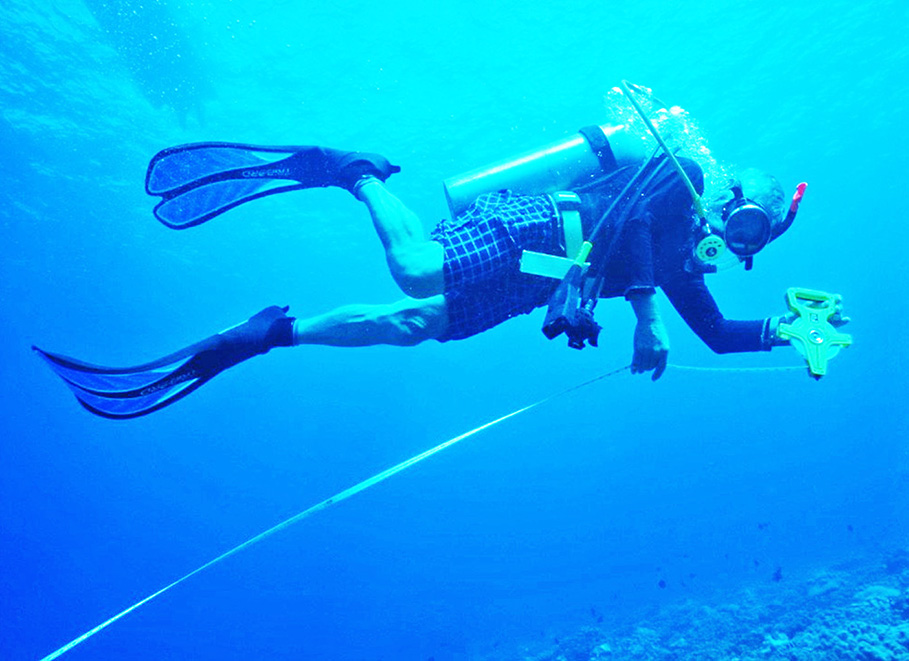
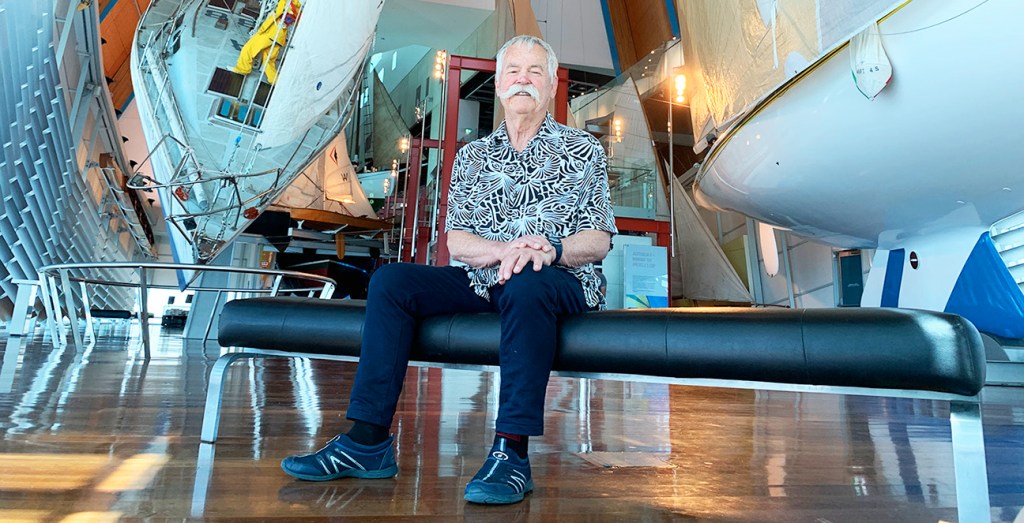
    Retirement from running the WA Maritime Museum hasn’t dimmed Graeme Henderson’s love of a dive – or for finding a shipwreck full of treasure.

    THEY’RE specks on a map, islands almost overlooked in the Age of Discovery, but legend shrouds them and they could hold the secret to a long-lost treasure.

    When author and shipwreck hunter Graeme Henderson visited the Cocos (Keeling) and Christmas islands in 2015/16 with fellow members of Wreck Check and a representative from the Cultural Heritage Agency of the Netherlands, it was primarily to look for signs of missing Dutch ships Fortuyn and Aagtekerke, presumed sunk in the 16th century.

    The search produced just a few tantalising clues, but the islands gave up such a wealth of stories that Henderson and colleagues Robert de Hoop and Andrew Viduka decided to compile them into a book.

    Misadventures in Nature’s Paradise is the inaugural publication of the UWA Oceans Institute Monograph Series.

    Henderson says writing a book about two islands where few people lived or visited, initially seemed an odd choice.

    “But there are so many people going by, and the stories of those people going by, it was quite fascinating,” he says.

    Another aspect that captured his imagination, and which the book sets out to settle, is how the Cocos (Keeling) Islands got their name and came to be British, then Australian, territories.

    Henderson says it comes down to a bit of a muddle about maps.

    In 1646 British cartographer Robert Dudley produced a map with “Killing Island” roughly where the most northerly of the three islands lies, having updated it from an earlier version which named it “Riling Island”.

    “Now, the question of where did he get the word riling from stuck in my mind and I kicked it around and kicked it around and then found that riling is a early Dutch word,” Henderson says.

    He realised that both riling and killing were Dutch words denoting channels and tidal flows, and points to a 1612 Dutch map with three unnamed islands in roughly the right spot to attribute that country with their discovery.

    A later map-maker muddied things by reinterpreting Killing as “Keeling”, the name of a British sea captain who’d sailed across the Indian Ocean in 1609. 

    “And everyone believed that, including the Dutch,” Henderson says.

    “Of course, the Dutch weren’t really interested in it because there weren’t any people there and therefore there weren’t any spices to be had or cheap labor to be acquired, all those sorts of things.”

    The only problem is, says Henderson, no one on board Keeling’s fleet ever mentioned spotting three uncharted islands along the way (to this day Wikipedia still credits Keeling with the discovery).

    How the islands actually came to be British territory was pure stuff-up.

    Former WA Maritime Museum director turned author and shipwreck hunter Graeme Henderson.

    In March 1857 Captain Stephen Fremantle arrived aboard the HMS Juno and proudly annexed them, not realising he’d misread his orders and was some 1540 nautical miles from his intended destination: Coco Island in the Bay of Bengal. Ironically, the first of the Clunies-Ross clan who became synonymous with the Cocos (Keeling) Islands hadn’t been able to pique British interest when he suggested they be incorporated into the British Empire some 30 years earlier.

    Nature’s Island also expands on the argument that the fictional island of Lilliput from satirist Jonathan Swift’s Gulliver’s Travels was actually influenced by the Cocos (Keeling) Islands, while a story relayed to one of the surviving members 

    of Ferdinand Magellan’s global circumnavigation of tiny humans living on an island near Indonesia (homo floresiensis or “the Hobbit”, anyone?) may have been the inspiration for the Lilliputians.

    “I find it’s just amazing that no one else has picked up on this,” Henderson says.

    “Maybe I’ve made some dreadful mistake, but he shows a bit of Tasmania, and people therefore presume that he means Tasmania, but he refers to capes on Western Australia.”

    But of course the big question still remains: where are those missing Dutch ships and their chests full of silver coins?

    Henderson believes the coast off Western Australia has given up all it has and that shipwreck hunters should turn their attention to the deep waters off Christmas Island.

    The book argues that by the time the Fortuyn and Aagtekerke disappeared, the Dutch had altered the route taken in the disastrous Batavia

    by STEVE GRANT

  • Flicking the bean

    A FRANK exploration of masturbation, a jazzy take on mental health and a heavyhearted look at happiness are three of the shows heading our way for the 2023 Perth Fringe World.

    When soprano Phoebe Deklerk was growing up, nudity was normal at home and her mother actively encouraged her to “flick your bean” from a young age so she could pass on tips about orgasms to future lovers.

    “I didn’t understand at that age that that was one of the big truths of sexual enjoyment and, frankly, I wish I’d started earlier,” Deklerk says.

    While she’s ready to spill her beans in the new comedy show Cumming of Age, Deklerk says it’s just plain weird that any mention of onanism usually turns grown people into sniggering school kids.

    “Let’s face it. We all have tried things, down there, but we don’t really talk about it.

    “That needs to change.

    “If BDSM is being glamorised by companies like Honey Birdette, and movies like 50 Shades of Grey, why can’t masturbation be glamorous too?”

    Cumming of Age is her second Fringe show, the first based on her side hustle as a funeral singer, although since moving to Perth post-Covid she’s also made a name in Leonard Cohen tribute band Came So Far For Beauty.

    Cumming of Age is at The Ellington Jazz Club on February 19 at 5pm. Tickets from fringeworld.com.au/whats_on/cumming-of-age-fw2023.

    Tash York has had two year’s break from Fringe World and thanks to Covid they probably aren’t going to make the highlight reel.

    But as a young queer girl who grew up in suburban Brisbane, York has formulated a lot of her humour and storytelling from past trauma and Happy Hour follows that path. Past shows Winefulness and These Things Take Wine York spoke about her relationship with alcohol, however Happy Hour endeavours to unpack what it really means to pursue happiness…that doesn’t just involve more wine, cats or chicken nuggets.

    Happy Hour is playing at The Gold Digger in The Pleasure Garden, Russell Square from January 31 at 7.30pm. Tickets from fringeworld.com.au

    Karen Lee Roberts brings a lot of lived experience to the show Chameleon, a warts-and-all cabaret about mental health.

    “Battling bi-polar disorder for over 20 years has not stopped me from performing the stories I am passionate about, and Chameleon, about mental wellness, is one of the most important of them,” she says.

    True to the show’s name, Lee Roberts plays a range of characters; Alexandra with her sweaty palms, Barbara and her cigar smoking, Phillip who refuses the fois gras and Stephanie with her boob job.

    Lee Roberts performed on London’s West End in the musical Hair, while Usher has performed with some of Australia’s most renowned musicians.

    Chameleon plays January 21, 22, 24 and 25 at DADAA, 29 Adelaide Street, Fremantle. 

    Tickets from fringeworld.com. au/whats_on/chameleon-fw2023

  • The little white whale who stole a town’s heart

    THE heartwarming story of how a community once notorious for its slaughter of whales opened its heart to a couple of researchers to help speed their recovery is one of four Blue Yarns at the Oceanlife Festival.

    Albany was home to Australia’s last commercial whaling station and the site of bitter clashes between whalers and greenies in the years before its closure in 1978.

    Southern right whale numbers were severely depleted by industrial whaling early in the 20th century, but the Cheynes Beach Whaling Company continued taking around 1000 sperm and humpbacks until its closure.

    While the humpbacks’ recovery saw them taken off the federal government’s threatened species list in February this year, Southern right whales haven’t enjoyed the same success, which piqued the interest of UWA biological sciences masters students Katy Fannei and Max Fabry.

    As part of their studies, they travelled to Albany in 2020 to investigate whether the growing whale watching industry was affecting the animals’ behaviour. With no funding they had to rely on gazing out from tourist lookouts, but bad storms that year meant not a single whale swam into King George Sound.

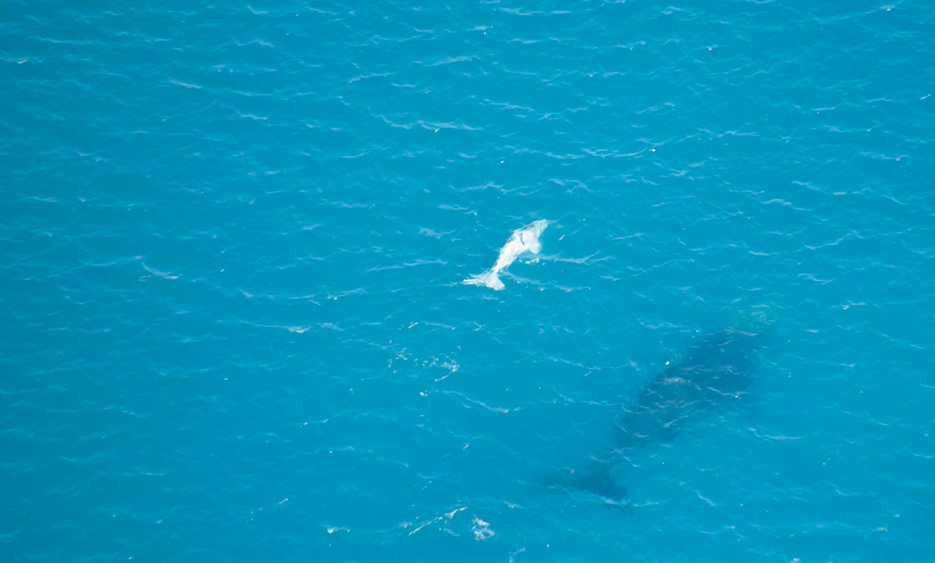
    Around the same time, local amateur pilot David Ellett was taking his family for a scenic flight around the coastline when they spotted a rare white Southern right whale calf and posted the footage on a local whale watching Facebook page.

    Ms Fannei spotted the post and eagerly contacted the Elletts. After earning an invitation to dinner and sharing their passion for the whales, the pair’s research suddenly took a dramatic turn.

    “At dinner is where it started evolving because David had the idea to get the two amateur flying clubs in Albany involved,” Ms Fannei told the Herald.

    The idea took off and in 2021 there were 14 volunteer pilots signed up.

    Ms Fannei said it changed everything.

    Sanctuary

    “In 2020 we were only looking at Albany with one big bay and a beach nearby, to being able to cover 450 kilometres of coastline.

    “Our research changed from looking at the vessel impact, to where they were aggregating and what are their numbers.”

    They are now filling important gaps in our limited understanding of Southern right whales, and their data is helping shape the border of a proposed marine sanctuary stretching from Bremer Bay to the South Australian border.

    “All we know from that area is just based on an annual census by the WA Museum which they’ve been doing for 32 years, and they fly by during peak season once a year,” Ms Fannei said.

    “Based on that, we have the population and recovery numbers, but we don’t know anything about outside the peak season.”

    While knowledge about the whales was growing, so was Albany’s love for their research, and this year a local transport company (the owner’s dad was one of the pilots) donated a 4WD and a limitless fuel card, allowing Mr Fabry to employ drones to help document the whales.

    “That was really important as it helps to start putting together a photo catalogue,” Mr Fabry said.

    “We want to build that over the years which will improve our understanding of their behaviour and how many whales there are.”

    The research led Mr Ellett’s wife Lisa-Maree to create the not-for-profit Little White Whale Project, the name inspired by the calf that brought the community together.

    Mr Fabry said it was wonderful seeing the community come together for the project, but he’s not entirely surprised.

    “Albany is tightly linked to whales and they are invested in the next step of the recovery of the Southern right whale.”

    Ms Fannei says they hope their research can help authorities understand more about what makes a good aggregation point for the whales and what has to be done to protect those areas.

    She says coastal development could play a part, as it appears fewer whales are visiting the sound each year as Albany grows, while climate change can also play a part as a bad year in feeding grounds could mean they have less energy for their annual migration.

    She says they’re not sure if they’ve spotted the little white calf, as they aren’t albinos as many suspect, but naturally start “greying out” as they grow.

    But she says following the launch of the Little White Whale Project, it seemed luck was on their side, as they spotted nine white calves this year, which she says is a “very, very rare and exciting” occurrence.

    For more information go to http://www.littlewhitewhaleproject.org

    by STEVE GRANT

  • Ease back in

    ARE you on a diet yet?

    If like this plump Chook you seriously over-indulged during the festive period, then going out for a big meal is probably low on your list of priorities right now.

    So instead of a five-course feast, the Voice decided to kick off the new year with a light lunch at Le Bakehouse in Leederville.

    Situated at the edge of Leederville Village, opposite The Good Grocer IGA and The Avenue car park, it’s easy to get parked beside this busy little bakery.

    In terms of choice, it has all your needs covered with everything from fresh bread to cakes, tarts, baguettes, wraps, hot pies and sausage rolls.

    Its attractive display of sundries drew in a lot of people on a hot Tuesday lunchtime.

    The price point was good with Le Bakehouse occupying the middle zone between budget and fine patisserie (for instance, you could get full cakes for well under $20).

    In some western suburbs bakeries you need to sell one of your kidneys to buy a pavlova.

    I went for a pesto chicken wrap ($11) and roast beef baguette ($8.80). I also got a carrot cake ($14.90) to take home for the visiting mother-in-law from Victoria (always be one step ahead of the game).

    You could get the roast beef with the traditional crunchy French-style baguette, but I went for the soft roll instead.

    The baked on-site bread was top notch – super light and fresh with no stodginess or lots of gnawing to get this bad boy down.

    It was top quality roast beef and wasn’t dried-out like the poor quality stuff you get in other bakeries.

    Toppings included mustard, tomato, mild cheese and lettuce, with the mustard particularly creamy and complementing the beef well.

    All-in-all a top sarnie to kick off the new year.

    The chicken pesto wrap didn’t quite hit the same heights. There was plenty of tender chicken, lettuce, sun-dried tomato and shredded carrot, but it needed some more pesto or a drizzle of mayo to make it a bit more moist.

    The ingredients were all great and the wrap was super soft and large, so great value for money, but it just need a little flavour boost.

    Sounds like a given, but it was tightly wrapped and held together really well. I’ve had plenty where the filling spills out everywhere, leaving embarrassing stains on your denims.

    The staff at the busy Bakehouse could have been a bit flat and suffering from a new year hangover, but they were super friendly and smiley, and we had a good laugh as one of the ladies behind the till nearly splatted the other in the face with the cake I was buying. 

    On arriving home, the carrot cream cheese cake seemed to pacify the mother-in law, who was struggling with the rising summer temperatures.

    Like some modern day Julius Caesar, she gave the cake a ceremonial thumbs up and washed it down with her 15th cup of tea that day.

    “There’s plenty of sweet carrot in there and it’s nice and light,” she said. “A solid carrot cake that compares well with most I’ve had in Victoria.”

    The inter-state approval was enough for me and I sat back in my chair, having bought myself another few precious minutes of peace and quiet.

    Le Bakehouse Leederville Leederville Village
    5/139 Oxford St, West Leederville
    9443 1225

    by STEPHEN POLLOCK