
• Dark times
    • Jacob Watton pits his wits against Alexa, a smart home device, in his Fringe World show.

    IT all started when choreographer Jacob Watton was living with his IT-mad brother and the “chalk and cheese” siblings clashed over the use of in-home technology.

    In every room there was an Alexa smart home device – which can turn on lights using voice commands and is up for a chat – but arty Jacob was left fumbling about in the dark as he couldn’t get the soothing and ultimately infuriating female voice to do anything particularly useful.

    “All of our lights and TVs were all connected into her system, so if you wanted to watch tv or turn on a light you had to ask Alexa,” Jacob says.

    “Nine times out of ten I would say this didn’t work for me.

    “My brother and I are like chalk and cheese, very different: I work as an artist making dance things and my brother works as an IT professional making tech things.”

    But out of this tech stand-off, Jacob got the idea for his latest show Alexa, Turn on the Lights a begrudging duet between him and Alexa, who often has a slightly superior air.

    Part TED talk, part therapy, and with lots of funny audience interaction, the intimate show has proved a hit with audiences and will feature at the Fringe World festival in Perth.

    Jacob says there’s a random element to the performance, because you’re never quite sure what side of bed Alexa got out of that morning.

    “Sometimes what she says is funny and heart-warming and sometimes its deeply problematic and that’s where the humour comes from in the show,” he says. 

    “I think the show is funny on many levels but I think the funniest moments are always when Alexa pulls off a joke. That always brings the house down.

    “The show is interactive in multiple ways and audiences get to choose how they interact with her. One of my favourite moments in the show is a moment where Alexa has a conversation with the audience on her own.”

    A professional dancer, choreographer and theatre performer from Queensland, Jacob has a first class honours in dance performance from Queensland University of Technology, where he first started to incorporate technology into his performance.

    This culminated in the show 1:1 – a duet with a robot camera that he performed at the world’s biggest art and technology festival Ars Electronica in Austria.

    Jacob grew up performing in musicals and plays, and now collaborates regularly with Queensland-based art makers including RAVA Productions, Prying Eye Productions and Phluxus2 Dance Collective.

    He toyed with the idea of dancing in Alexa, Turn on the Lights but felt it would detract from the core of the show.

    “From my point of view this makes the work not so much a theatre show (even though it is) but a workshop space, a space where the audience, Alexa and I go on a journey together,” he says.

    ”I don’t always know where we are going but that is the charm of the show I think – how interactive and connected it is.”

    Alexa, Turn on the Lights is at the WA Museum Boola Bardip from February 2-5 and 9-12 as part of Fringe World. Tix at fringeworld.com.au

    By STEPHEN POLLOCK
  • English as she is spoke

    SHEILA ROBBSHAW is, in her own words, a “cantankerous old bat who likes to sound off about things”. As a retired journo from an era when grammar was drummed into you, she’s finding some of today’s writing sadly lacking.

    THERE is a lovely story about an English teacher who asked her class who could describe in one sentence the content of the lesson just completed.

    One child got up and said, “Yes, miss. You mustn’t use a preposition to end a sentence with”. Sadly, there are too many people today who won’t see the joke.  

    How our standards have slipped. 

    Remember the days when, for example, radio and TV newsreaders spoke beautifully and absolutely correctly – they would practise the pronunciation of difficult words and always got them right.

    Recently, we have had “porting a ship”(?)  and the River Thames pronounced as “Thaymes”. 

    No excuse for that. 

    Then we have the Americanisms that have crept in.

    If the word was meant to be pronounced “prosess,” it would be spelt that way.  

    If “progress” was meant to be “proggress”, it would gave a double G”.

    Same as “labratory” – rats may well still be used in some labs, but that is not the derivation of the word laboratory.

    Why “add-ress,” when address has served us well for centuries?

    I can’t work out where “aluminum” came from – perhaps someone who had difficulty reading long words?  

    I understand that languages evolve and change.

    If you try reading Chaucer, you will see how far we have come!  

    “Apartments” and “the movies” have become part of our nomenclature and no-one bats an eyelid – but somehow, misuse of words is aggravating – and I use that word on purpose.

    Of course, it should be “irritating;” aggravating” means to make worse!  

    Many years ago, I attended a meeting at my children’s school, a meeting called to introduce parents to the wonders of what was then termed “outcomes based education”.

    Confident illiterates

    At the end of the talk, one father got up and made the statement that the system was likely to turn out confident illiterates.

    How right he was! (I wonder if his question was prompted by his far-sighted mother-in-law, who just happened to be  a teacher at the school?)

    Sadly, our standard of English, both written and verbal, has dropped alarmingly.

    Teachers say that children have difficulty with creative writing – everything is visual, they have no imaginations.  

    The new phone lingo doesn’t assist much either  – things like dunno, gonna, wanna, y’all are creeping into the mainstream.

    “Wot u doin 2nite” somehow does not inspire one with confidence. Perhaps we won’t get onto the subject of spelling…

    Why do we turn adjectives into verbs? My least favourite is “premiered” – there is no such word – “fronted” is not a word either, certainly not in the context in which it is used.

    I heard a story once about a lawyer confusing a judge when he referred to a collective noun.

    A bit nonplussed, the judge asked the lawyer to clarify.  

    Apparently, what he was referring to was a plural.

    See what I mean about slipping standards? Is grammar still taught in schools? If not, it should be.  

    Another pet hate of mine – and there are a few: one cannot qualify an absolute – i.e. very dead, a little bit pregnant or absolutely unique.

    And you persuade to and convince that!

    Tautology? Return back – two twins – close proximity – first and foremost? 

    We all do it, but why use superfluous words?

    What about “your” and “you’re”? “Your in trouble” – your what is I trouble? 

    Are kids actually taught the difference? Do they know what  an apostrophe or a contraction is?

    Or how about “draw” when what is meant is a drawer?   

    This seems an appropriate place to slot in “for free”.  Something is either free or for nothing. Why, why, why do so many people insist on the phrase?  

    Confusion reigns supreme about licence/license and practice and practise.

    In each case, the first is a noun and the other is a verb – so “He has a licence, therefore is licensed to practise law in a law practice”.

    We have a local firm of “practicing accountants”. I hope they have by now practiced enough to be qualified to practise accounting – and that their maths is better than their spelling.

    To assist, think of the words advice and advise – they will point you in the direction of the correct spelling.  

    People in the UK are far more comfortable/familiar with French phrases that have become part of English than we are in Australia.

    It did take me a while, however, to  work out (it was in a letter to the editor) what a calder sack was.

    In case you are puzzled too – what was meant was a cul de sac.  

    How about, like, seeing what we can, like, do, like, to stop the overuse of words like – well, like, like?  

    Superfluous

    There seems to be a move to discard punctuation – “commas are superfluous”.

    Are they really?

    Take the book title as an example, “Eats shoots and leaves” takes on an entirely different complexion when punctuated – “Eats, shoots and leaves”.

    Think of something like court transcript where evidence has to be accurate, and where the judicious use of punctuation is essential in indicating the nuances of speech, and thus conveying the manner in which something was said – not just a string of words.  

    English is such a beautiful language, it is a tragedy that grammar and spelling are no longer considered important.

    We have a wealth of wonderful literature – are writers  a dying breed?

    Will well-written books become a thing of the past?  That simply doesn’t bear thinking about.

  • Nod to Bali

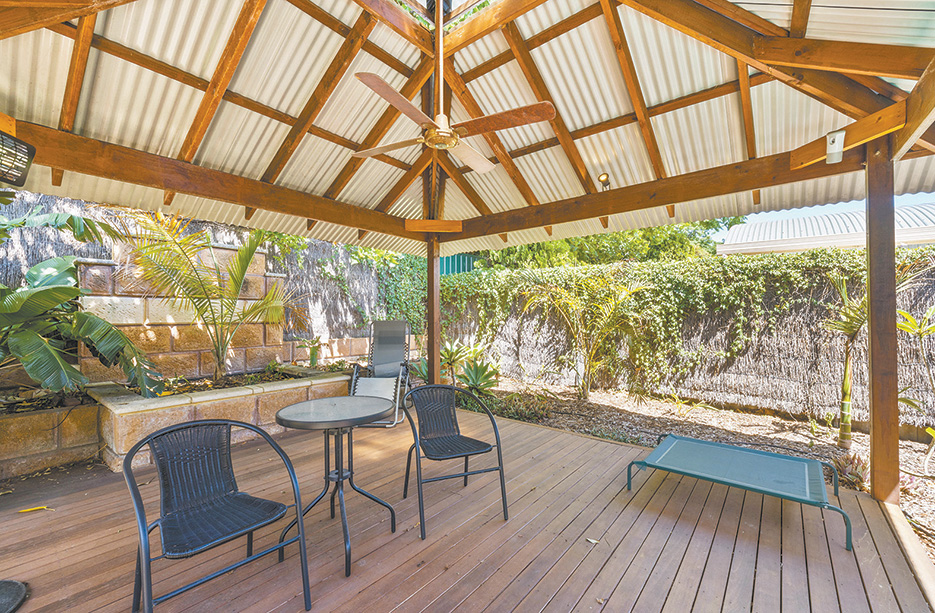
    WITH its brushwood fence and backyard cabana, there’s a little nod to Bali in this Maylands villa.

    Situated on Peninsula Road, just a few streets back from the Swan River, this three bedroom one bathroom home has a lovely open plan, where you can enjoy views of the tropical ferns and palms in the back garden.

    The open plan is extremely spacious and has that breezy, airy feel perfect for the summer months.

    Classy wooden floorboards complement the neutral colour scheme, and there’s plenty of space for a couch, dining table and computer desk.

    The Voice really likes the kitchen, which is framed by a lovely archway and has white benchtops.

    The large subway tiles give the kitchen a sleek contemporary look and there’s plenty of cupboards and drawers for storage.

    The bathroom continues the modern theme and is very stylish with a large shower and darkish cupboards contrasting with the white porcelain vanity. The back yard is a real ode to Bali with that brushwood fence, cabana-style shelter and tropical palms.

    It’s lovely spot to relax with a glass of vino at night during the hotter months.

    Two of the bedrooms have built-in robes and share a bathroom and laundry. There is also a single garage with shoppers entry.

    The home is close to the river and Maylands Yacht Club, and not far from all the cafes, restaurants and small bars on Eighth Avenue and the bustling Beaufort Street strip.

    This is a stylish and spacious villa with a Balinese air.

    EOI From $459,000
    3/187 Peninsula Road, Maylands
    Beaucott Property 9272 2488
    Agent Paul Owen 0411 601 420

  • Nashos call for a fair go
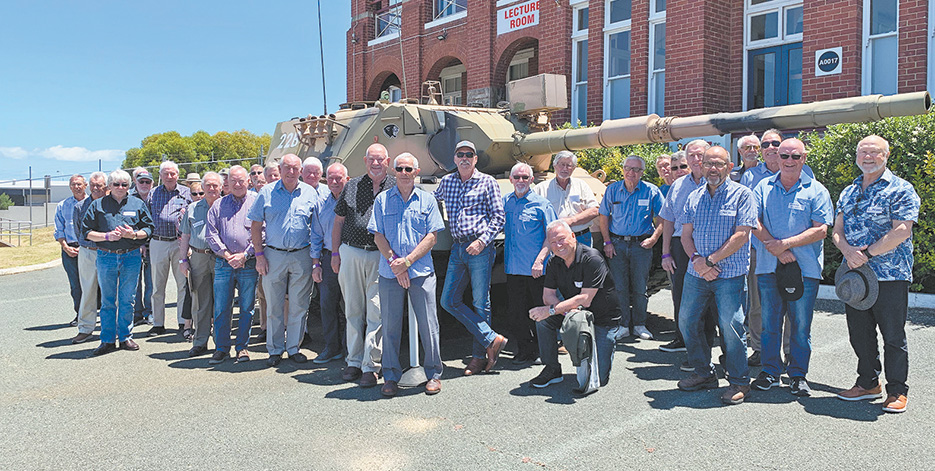
    • The Nashos gather at the Fremantle Army Museum to plan their campaign – just before being confined to barracks by police. Photo by Steve Grant.

    WITH a full-blown drama playing out next door, around 35 former national servicemen and their wives gathered at the Fremantle Army Museum last Friday to train up for a new battle.

    As police bailed up an alleged armed robber on the roof of the Naval Store and confined the Nashos (as they’re known) to the barracks in case he jumped the fence, they joked that the last place he’d want to find himself would be amongst a troop of grumpy old conscripts trained to kill.

    But these Nashos, amongst the 63,735 Australian men called up for mandatory national service through the dreaded “Birthday Ballot” between 1964 and 1972, never fired a shot in anger – and that’s at the heart of their grievance.

    Despite undergoing rigorous and often demeaning army training, and living under the cloud of being sent to the front lines of the Vietnam War at any time, their lack of active combat denies them a veteran’s “gold card” which would cover all their medical expenses.

    Veterans

    The 48,000 Nashos who remained at home or were deployed as peacekeepers in places like New Guinea or Malaya only qualify for a white card which covers about 20 ailments directly related to their service.

    With age now aggravating old injuries, hearing loss and mental scars, they launched a national campaign in September called Nasho Fair Go to try and get access to the gold card.

    David Butterfield heads up the WA branch of the group and said the Nashos were fed up with arbitrary decisions about what qualified under the white card and delays in getting applications approved that have in some cases stretched into years.

    He said army training was tough on their bodies, but the Nashos were made to feel like malingerers if they sought help at the base’s medical post and their attempts at self-care are now coming back to haunt them.

    “I remember when I first went in Puckapunyal, we used to a lot of marching and running in the old bloody hobnail boots,” Mr Butterfield said.

    “I don’t know, I might have one foot bigger than the other, but around the achilles area it was just red raw.

    “Now, in city life I’d have maybe not taken a day off, but maybe put on some other footwear of something.

    “But they’d just maybe give you a bandage and that was about it.”

    Sitting around a table with Mr Butterfield and fellow Nashos Horace Misko, Chris Dawson and Cedric Bell, they all agree that being prepped up for Vietnam – the unpopular and undeclared war – took its toll, as did the demeaning taunts of their training officers.

    Mr Misko was conscripted in 1972 as Vietnam wound down.

    “But I’m in an infantry unit; I’m in the section of a platoon with 10 blokes and I’ve got an M16 machine gun.

    “I’ve got the firepower, but I’m also the biggest target, and the number 2 on the gun, his job was to pick up the bandanas of ammo and change the barrel with a pair of asbestos gloves, because the barrel was so hot.”

    Federal campaign coordinator Geoff Parkes met with federal veterans affairs minister Matt Keogh on September 7 armed with a petition containing 25,000 signatures and says he got a sympathetic hearing.

    “There are many cases where National Servicemen stationed in Australia were subjected to verbal abuse an mental bullying that would not be tolerated today,” Mr Parkes said.

    “Further, young men were forced, subject to imprisonment, to serve their country for ideals they did not support. And the community rallied against this injustice.

    “In short, our medical and psychologicval welfare has been neglected for years by successive governments.

    “We are upset that we are not taken seriously and urge government to address this matter with a generosity of spirit and compassion for a generation of men who were powerless to resist the law of the land,” Mr Parkes said.

    A 34-year-old man was later charged with armed robbery.

  • A fortunate, inspiring life
    Wendy Jenkins was a scion of WA’s literary family. Photo courtesy Fremantle Press.

    THE respected Fremantle author and editor who ‘discovered’ Australian classic This Fortunate Life and mentored a generation of WA literati died last week aged 70.

    Wendy Jenkins had been an editor at Fremantle Press for 40 years before retiring in 2020, and the authors she nurtured included double Miles Franklin Award winner Kim Scott and multiple nominee Joan London, “living treasure” Dave Warner, poet John Kinsella and a host of other award-winning writers.

    Fremantle Press released a statement saying Ms Jenkins’ sudden death had left staff with “heavy hearts”.

    “We were proud to call Wendy our friend and collegaue, and admired immensely her unsurpassable grasp of language, her quick wit, keen eye, finely tuned ear and her wicked sense of humour,” the statement said.

    “Wendy, a fourth-generation resident of Fremantle, began working the Press first as a writer, publishing her debut poetry collection Out of Water into Light in 1979.

    “Wendy went on to publish a second poetry collection, Rogue Equations, and four books for younger readers: Killer Boots, Hot News, The Big Game and Gunna Burn.”

    At the time the publisher was known as Fremantle Arts Centre Press and operated from the heritage-listed building on Ord Street, where Ms Jenkins had been given a job as an assistant in the gallery.

    She picked up some work assessing manuscripts for the press, one of the first being Albert Facey’s life story, which he’d titled This Fortunate Life.

    Although Facey had only planned to print 20 copies for family and friends, Ms Jenkins later told colleague Georgia Richter the hairs stood up on the back of her neck as she read his extraordinary tale of abandonment and redemption.

    New to the job, she later recalled that she didn’t initially cotton on to the work it would take to get the memoir into bookshops, but press boss Ray Coffey and other staff soon picked up her enthusiasm: “we had hooked onto a whale and it would be quite a ride,” she wrote.

    The book became one of the Press’s most successful, selling more than a million copies and finding its way onto school booklists.

    “In the 80s and 90s, Wendy played a significant role in variously identifying, nurturing and editing some of the most important Western Australian writers. Some of these were part of the writing community that she moved in and helped to foster,” Ms Richter wrote on Ms Jenkins’ retirement.

    Devoted

    “In recent years, Wendy has devoted more time to assessing the hundreds of manuscripts that come through the door every year (we estimate she must have assessed more than 10,000 manuscripts across 40 years!).

    “She is a superb reader who can see the promise in a writer.”

    Ms Richter said Ms Jenkins had felt a huge sense of responsility as a custodian of stories and always worked for the good of cultural literacy and the development of WA writers.”

    In 2018 Ms Jenkins was awarded an AM in the Australia Day honours for her services to literature.

    At the time she said: “Editing has been at the centre of my working life, and I have been privileged to be present at the emergence and unfolding of some of this state’s, and this nation’s, most defining voices, stories and talents. It has been work of quiet passion, from which I have gained more than I have given.”

    Ms Jenkins is survived by her sister Lois and brother John.

  • Ex-mayor’s son fined for demo
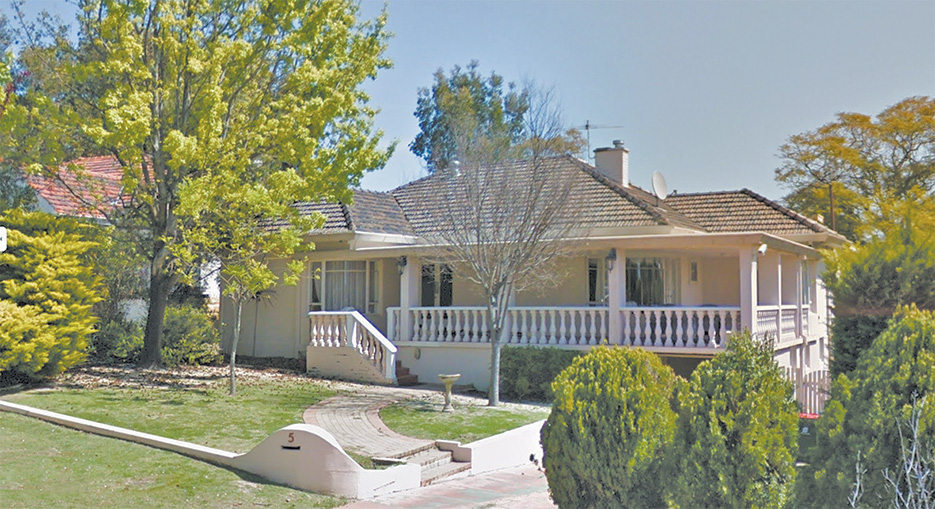
    5 Dene Street before the unauthorised demolition works.

    AN UNAUTHORISED demolition of a heritage-protected Mount Lawley house has seen the son of a former Stirling mayor fined $8,000.

    The Building Services Board issued a $4,000 fine to building company Riviera Homes and another $4,000 fine to company owner John Philip Italiano, son of former mayor Giovanni Italiano.

    Number 5 Dene Street sits in Stirling council’s heritage protection area, and Mr Italiano had approvals to undertake some limited renovations that were supposed to comply with the rules around maintaining heritage character.

    But Stirling council issued a disciplinary complaint with the state building department after discovering the works had gone far beyond what was allowed.

    A release from the Building Services Board states the home was “mostly demolished despite requirements to keep key parts.

    Slab left

    “The approval required sections of the original house to be retained, including the roof structure, front facade, a verandah and particular walls. 

    “However, site inspections and other evidence later revealed most of the original building was demolished, with only the slab and part of the front facade kept,” the board said.

    The BSB says other unapproved works on the site included a below-ground swimming pool, a loft, changes to the roof, walls, windows and stairwells, and new areas added to the floor plan without approval.

    The fines were issued over the company and Mr Italiano’s conduct breaching WA’s builder registration laws. The BSB says Stirling council’s still “in discussions” with Mr Italiano as to whether all the unauthorised works will be approved retrospectively. 

    Building and Energy Department executive director Saj Abdoolakhan said a builder 

  • Kids never get board
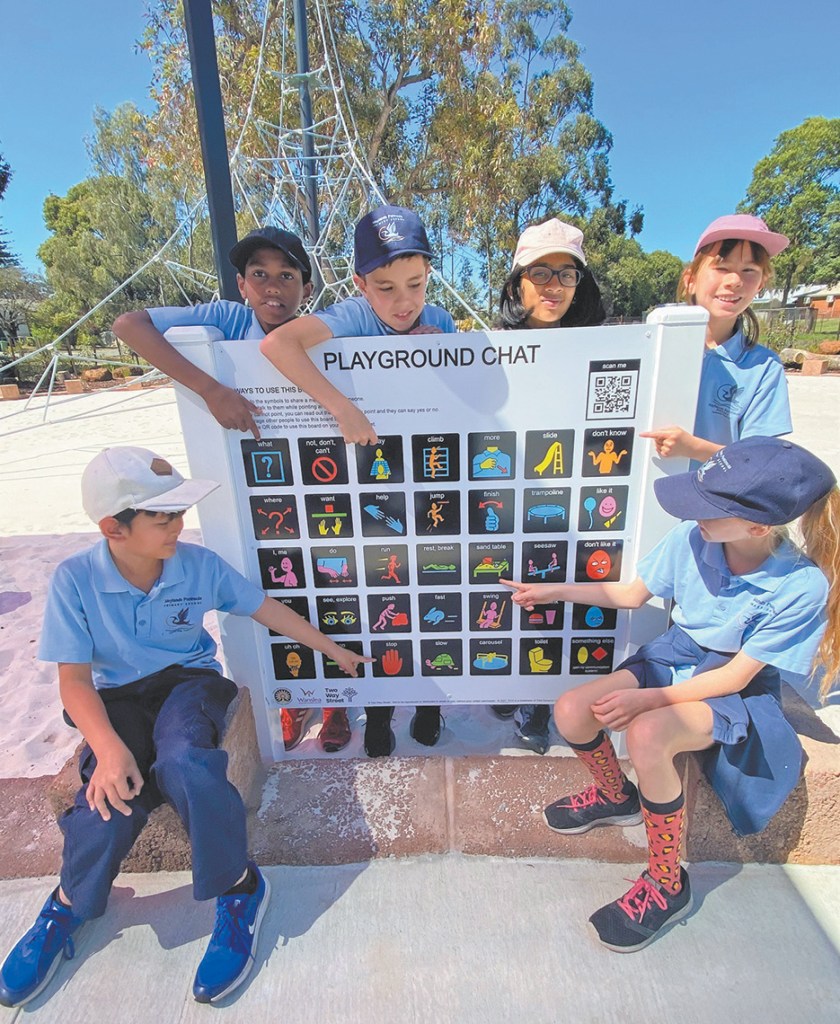
    Maylands Peninsula Primary School students testing out the communication board at Gibney Reserve.

    A COMMUNICATION board installed at Maylands’ Gibney Reserve is a Perth first, letting kids communicate no matter their language abilities – or even if they don’t speak at all. 

    Communication boards are more commonly seen in hospitals and rehab settings, helping people communicate via pointing to symbols if their voice is injured, if they’re on a ventilator, or if they don’t have a common language with staff. 

    The boards have also proven effective in helping kids who don’t speak to develop communication and socialising skills.

    Socialising

    Bayswater council won federal government funding to help upgrade Gibney Reserve in line with its plan to make play spaces more accessible and inclusive.

    Bayswater mayor Filomena Piffaretti said via press release: “We all know children learn through play, so I am delighted the City has been able to enrich the interactions between children and their caregivers when they visit their local park.

    “This communications board will assist children with disabilities and people who are non-verbal to communicate with their friends and family while enjoying the space. 

    “Using the symbols and icons on the board, children can point or gesture to emotions that describe how they are feeling, or to different playground elements and lead their parent or caregiver in the type of play they want.”

    The park’s upgrades include a new sheltered, accessible bbq area, picnic spot, and other playground upgrades based on feedback from nearby Maylands Peninsula Primary School students who wanted more of a nature-play adventure-style playground.

    “Local residents told us they wanted the playground to be accessible to everyone, so the communications board is one of a range of new additions including a basket swing, harness swing and wheelchair accessible carousel,” Cr Piffaretti said. “These complement an interactive sand table that will allow children to experience sensory play.”

    Bardon Park in Maylands is the next to benefit from the accessible playground movement, with council endorsing Cr Catherine Ehrhardt’s motion to install a wheelchair-accessible swing there at its December meeting.

    by DAVID BELL

  • Family inspired
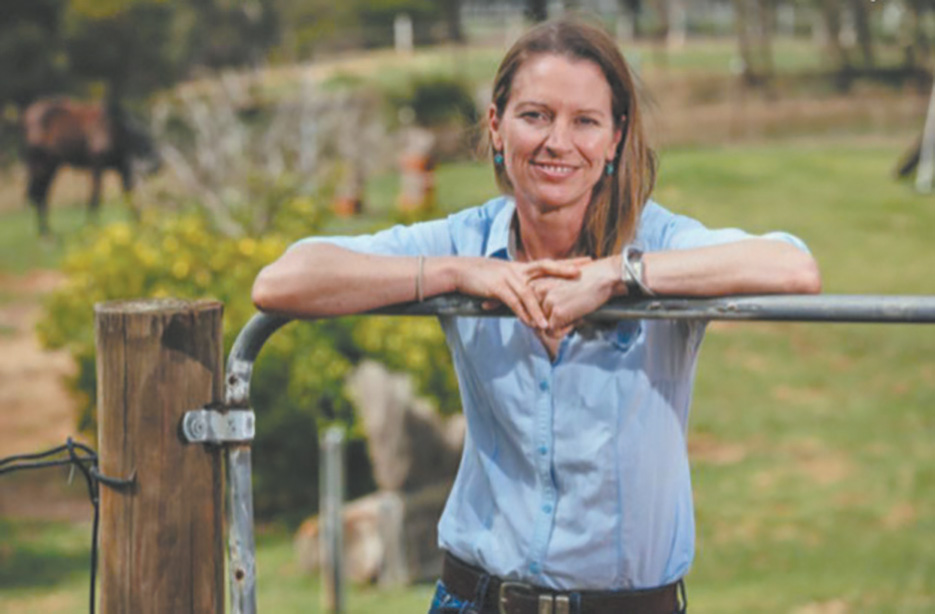
    Portland Jones

    WRITER, horse trainer and literature lecturer Portland Jones will immerse herself in the historical surrounds of Peninsula Farm as a writer in residence.

    Dr Jones will use the time to work on her third novel, which harks back to 1860s Perth. 

    Her first novel Seeing the Elephant was praised as a sensitive and lyrical Vietnam War-era examination of learned helplessness, which was explored through the relationship between a Vietnamese translator and an Australian soldier sent to the Vietnamese highlands to recruit and train the local hill tribes for the war effort. 

    Her second novel 

    Only Birds Above follows a blacksmith who served in the 10th Light Horse Regiment in World War 1 and explores the impact of war across generations. 

    For her third novel Things of Whim and Bone, Dr Jones has looked deep into her family’s history for inspiration. 

    Her 15-day residency at Peninsula Farm is part of the third year of the Inspire Writers in Residence program run over summer by the National Trust 

    WA and the state culture department.

    NTWA CEO Julian Donaldson says “connecting artists with heritage is an important way to take a new look at the shared stories that bind us and connect generations”.

    Things of Whim and Bone

    by PORTLAND JONES

    FOR an historical novelist your own family is a rich seam to mine for stories. 

    My great-great grandfather John Kirk arrived in WA as a convict in 1865 aboard the Vimeira. 

    My name, Portland, he gave to his first-born daughter and was the port in England from which the Vimeira sailed. 

    I’ve always felt a connection with John because he was a blacksmith and worked with horses, as I do. 

    The Vimeira’s manifest also records that he was literate and had lost a toe in an accident – another connection, as I have similarly lost a thumb. 

    The novel I am currently working on, Things of Whim and Bone, is partly set in Perth in the 1860s. 

    The opportunity to immerse myself in the history of the Peninsula Farm building is very exciting. 

    In the 1950s and ‘60s the farm was used to keep and train racehorses and this, to me, feels like another significant connection. 

    I am fascinated by the stories that are not always privileged by official histories, by the stories of women and those of the original custodians of the land, the Whadjuk Noongar people. 

    I’m also interested in the mighty Derbarl Yerrigan, which flows past the farm, it is both constant and ever changing and reminds me that against the backdrop of nature our own lives are insignificant. 

  • Cultivating knowledge
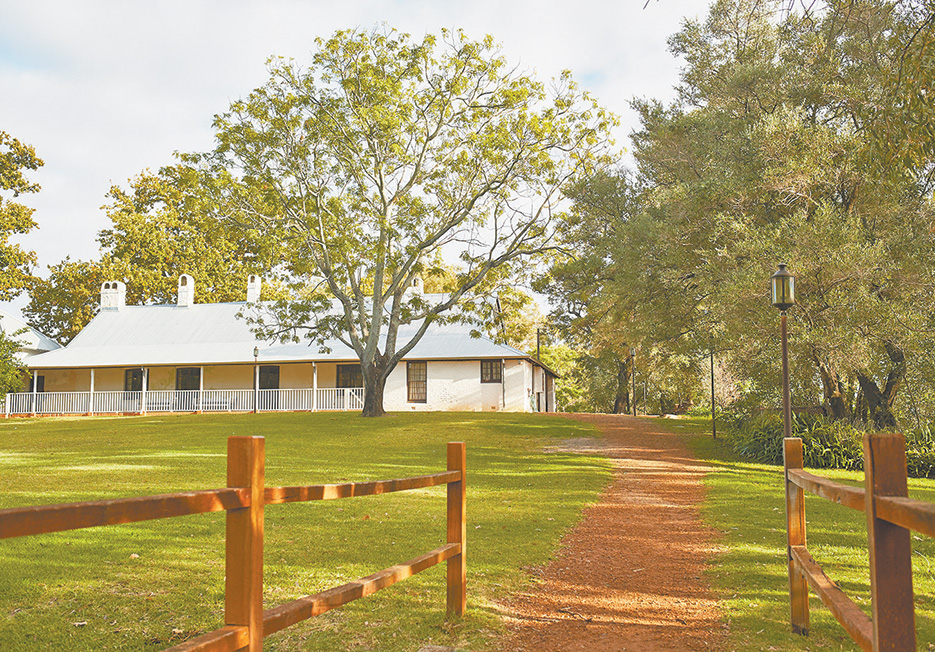
    WESTERN AUSTRALIA – May 10: The National Trust, Peninsula Farm, Maylands WA. (Photo by Sabine Albers)

    STORIES, photos, documents, memories and meanings are sought to tell the history of Maylands’ Peninsula Farm, stretching back to when the area was known as Wu-rut by its traditional Whadjuk Noongar owners.

    The property’s been vested with the National Trust since 1977. Ahead of the 2029 bicentenary of colonisation, the National Trust WA has brought in social impact consultants KOTA to compile a cultural landscape plan for Peninsula Farm. 

    The plan aims to integrate the land’s many histories and meanings across the centuries, from its long Aboriginal history when it was known to the Whadjuk Noongar as Wu-rut or Woorat, to the 1830s colonial era farming by Joseph Hardy, the surrounding peninsula’s industrial transformation in the early 1900s, and its modern-era rebirth as a heritage site.

  • Year in food 


    From the deep-fried to the delicious, low-cost to special occasion, the Voice food reviews had a bit of everything this year.

    Here’s a round-up of some notable eateries we visited (not necessarily the best or most sophisticated cuisine, but places that left an impression on this slightly over-weight, misanthropic foodie). 

    The Chook’s search for the best continental roll in Perth took a lip-smacking detour when we stumbled upon the best meatball sub at DELI’S CONTINENTAL in Inglewood.

    With the bread flash baked to order, huge meatballs, a divine tomato sauce and a generous amount of salsa verde drizzled on top, it was sheer bliss.

    Like something you’d expect from a top deli in New York. 

    The Voice always loves a hidden gem, so we really enjoyed our visit to LEELEE LUCKY’S in the leafy burbs of Mt Lawley.

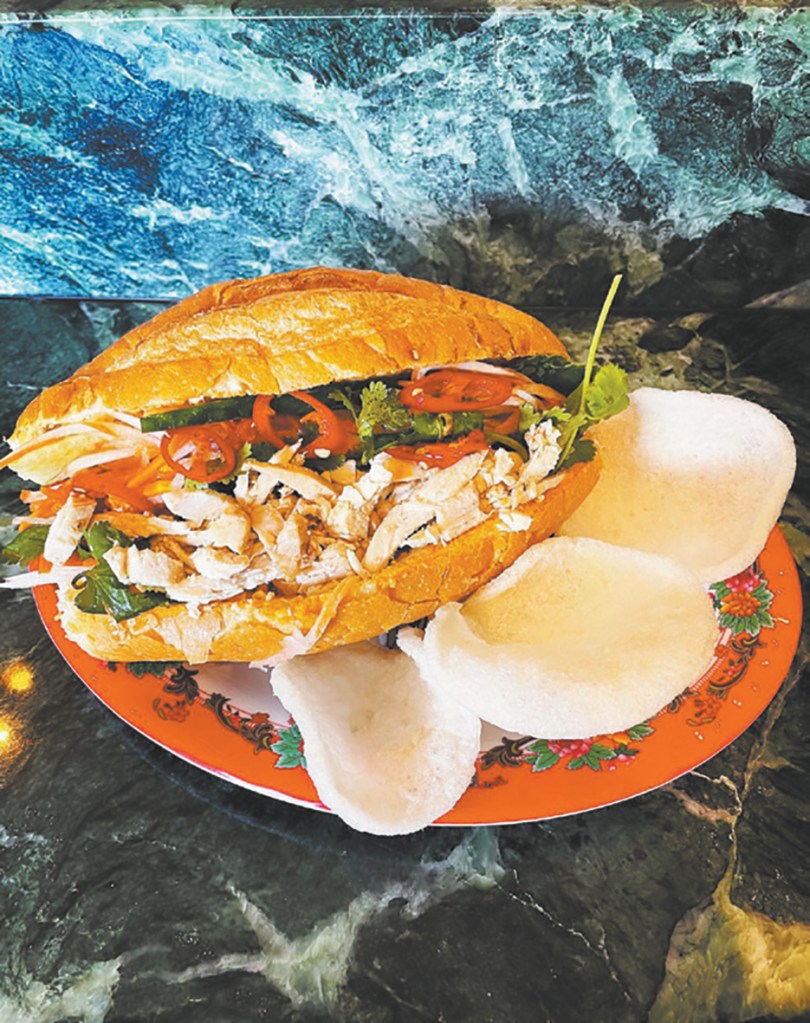
    A cute Asian cafe that did a roaring trade in banh mi and also offered a few hot meals like beef pho. It was a little kitsch and had a nice family-run air.

    We enjoyed the heart-warming backstory too: the owner’s parents were some of the first Vietnamese boat people to arrive in Australia in 1977, after spending two years in a refugee camp in Malaysia. 

    On arrival her mother traded her wedding ring for a wok and spatula, and borrowed money for cooking oil, then opened a market stall using surplus food provided by the UN Refugee Agency.

    In terms of character and places that are part of the cultural fabric of Perth, THE KOSHER PROVIDORE in Menora is hard to beat.

    For years it’s been serving up freshly-made boiled bagels (regard as the best in WA) to Perth’s Jewish community and beyond.

    A no-frills mini-mart with a butchers, groceries and frozen goods, it’s a ramshackled delight and the staff are all good value, including the “The Bagel King” himself, a youngish dude always up for a laugh on the store’s Facebook page.

    If you’re after something affordable yet different, then LOLA’S DINER in East Vic Park is worth a visit.

    Serving up traditional Filipino cuisine, you can get everything from garlic rice and grilled chicken to comfort food like beef patties with eggs and gravy.

    Run by brothers Al and Ken Craigie, Lola’s diner is a nod to their Filipino heritage, and they originally started up the cafe with their mother Estrella.

    One of my most enjoyable brunch/lunches was at FINLAY AND SONS in Inglewood.

    A really strong menu that just didn’t rely on the old favourites like eggs benny and the big brekkie, with dishes like kedgeree, leek and parmesan fritters, and even some Brussels sprouts.

    A casual cafe with top food, I can see why it’s remained popular with Inglewood denizens for some time.

    Our search for the best continental roll in Perth, took us to CHARLIE’S FRESH FOOD MARKET in the hinterlands of Morley.

    A huge deli/supermarket that started out life as a humble mom- and-pop store in 1967 on Walter Road, it now has a massive range of deli goods as well as everyday items, meaning you can do all your shopping in one go.

    When we visited, their continental rolls were going down a storm with everyone from tradies to office workers coming in for their lunchtime fix.

    Well worth making the trip north to have a gander.

    If you’re heading into the CBD, then check out LONG CHIM in the basement of the Treasury Building on the corner of Barrack Sreet and St Georges Terrace.

    They do top-notch Asian cuisine in a casual, fun setting and they have some great lunch offers during the week.

    There’s also an outdoor area with parasols that looks like a great spot for a Sunday session.

    Another hidden gem was the deli/cafe LA MORTAZZA in North Perth. Situated at the bottom of a modern apartment block, Italian techno was blaring as I walked in and the friendly staff were having a lively chat with a local in Italian.

    The place had a nice buzz and plenty of cured meats, cheese and pastsa dishes.

    The Voice enjoyed one of their tasty continental rolls and took home a superior meatball pasta for dinner.

    By STEPHEN POLLOCK