• Two years as a Nasho

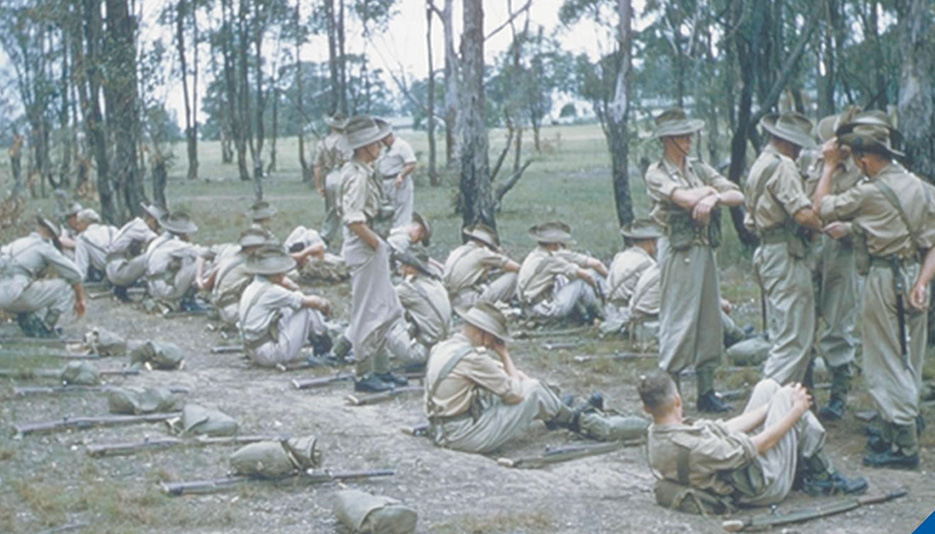
    DAVID BUTTERFIELD was conscripted as an infantry gunner when he was called up for National Service in 1966. In this week’s THINKING ALLOWED he recalls what that time was like, and why today Nasho’s who trained up for combat, but never went overseas, believe their medical needs have been ignored too long.

    WHEN my birthdate marble was drawn out of the barrel to go into the army for two years, it didn’t really come as a shock – there was no why me? It was just bad luck 

    It seemed that around every 20 years or so there was a war, and it was now my turn to serve in one.

    It didn’t really dawn on me at the time that I was one of only 7 per cent of eligible 20-year-old men (1 in 14) conscripted for army service with a big chance of going off to fight a war in South East Asia.

    Looking back, I can’t recall any of my mates being called up – just me.

    I knew training would be tough but other than discipline I didn’t know much else about what was in store for me. 

    My father was strong on discipline so I didn’t think that part of the game would be a problem. 

    I’d be in the army to help protect Australia from being invaded by communists.

    Girls, cars, going to the footy and ballroom dancing were all I ever thought about as a skinny, pimple faced 20 year old. 

    2 RTB Puckapunyal (Recruit Training Battalion)

    ONE day I was behind the counter selling postage stamps as a postal officer in the Postmaster General’s Department, the next day at dawn, along with a plane load of other guys I was in Puckapunyal and about to learn to become a soldier.

    Once I was attached to a platoon with another 40 guys, given my serial number 5714464 and a hut to live in, training got underway at 0600 Mon to Sat, (0700 Sundays) marching, marching and more marching (drill work), salute training, lot’s of PT training, spit polishing boots, dress/hut/rifle inspections, learning how to strip and fire weapons, bayonet practice, forced marching (running/marching fully kitted out), throwing hand grenades, picket duty, mess duty, a 20 mile march, (I nearly froze to death) and so on.

    That’s what you did in recruit training. 

    During that time our training NCOs would constantly verbally abuse us for being the worst platoon they’d ever had.

    One event I’ll never forget was a fellow recruit, being forced to dry shave on parade in front of the rest of the platoon because the corporal wasn’t satisfied with his morning shave. 

    Another time the company (about 200 of us) was on parade, our company sergeant major felt the need to remind us that unless otherwise directed, only two people were allowed on his parade ground – himself and Jesus, and that Jesus had to get permission from him to use it.

    From memory I think he got into trouble for that one. 

    Once three of us off duty, in civilian clothes on a Sunday, came out of the dry canteen having a bit of a laugh about something or other and were set up upon by a big beefy major who abused the shit out of us for nothing at all – just a great big bully that could say what he liked to three recruits who could do nothing but just cop it .

    At times you felt that you were in gaol and being punished for a crime you hadn’t committed.

    I was always homesick and longing to see my girlfriend family, and friends – I missed everything about my now former life. 

    Ten weeks’ training and despite being the worst platoon of all time, we graduated. We then moved off to corps training, with the majority going into infantry (not necessarily by choice).

    Artillery

    Corps Training (four weeks)

    My corps was artillery, and I was sent to the School of Artillery at North Head near Manly. 

    In the dim light of morning when the train arrived in Sydney and we bussed out to the School, I thought I’d died and gone to heaven. 

    The location was superb. 

    Beautiful red-brick buildings overlooking Sydney and the harbour. 

    Everything was immaculate because us gunners, (equivalent to private) had to keep it that way.

    Its nickname was Bullshit Castle – if it didn’t move, you polished it, if it did you saluted it. 

    More and more drill marching, inspections, polishing your room floor twice daily and so on. 

    Intermingled with training on the 105mm field gun (howitzer).

    THE location being close to Manly and a ferry boat ride to Sydney made life quite pleasant. 

    We also had more leisure time if we weren’t on extra duties. 

    I do recall a propaganda chat when we were shown a map of the world with the communist countries coloured in red and how quickly since 1917 the map got redder and redder as it moved closer to Australia. 

    The “domino theory”; if we don’t stop them here (Vietnam), they’ll be on our doorstep before we know it. That was never going to happen and of course it never did.

    12th Field Regiment, Holsworthy near Liverpool. 

    Life in the regiment was a bit of everything, the usual previously mentioned stuff but where training stepped up to go fight a war that was never officially declared a war. 

    A lot of field gun firing exercises on the Holsworthy Range, lots of guard duty (two hours on four hours off from 8pm to 8am the next day).

    I recall a duty officer once, full of booze, calling out the guard for inspection late in the night as a bit of fun for him – unlike the guys trying to get a bit of sleep while not actually on guard.

    Holsworthy barracks were mainly fibro type huts, they were old and cold – without our mosquito nets we would have been eaten alive. 

    At weekends, if you didn’t have extra duties, we might go into Sydney or the local RSL Club in Liverpool for our fun. 

    That is the West and South Aussie boys – most Victorians drove back home, and the NSW boys went home every night let alone weekends – it was a day job for them.

    In April 1967 I was picked to undergo jungle training at Canungra in Queensland – a place you go to before being sent to Vietnam. 

    Tough joint

    A tough joint this place, two days off in three weeks.

    Lots of physical and weapon training, obstacle courses, muscle-toughening courses; it was full on. 

    Exercises out in the rainforest with the leeches, snakes and unfriendly vegetation.

    I passed the training and went back to Holsworthy.

    On parade it was ‘who’s been to Canungra?’ 

    Hands went up – ‘you, you and you pack your bags for a week’s pre-embarkation leave and then off to Vietnam’ – I didn’t get picked.

    Soon it became ‘who’s been to Canungra and would like to go to Vietnam?’ 

    My hand never went up!

    Maybe I was a gutless wonder, but I’m still around today so I don’t care.

    Many of the guys I was with at 12th Field went to Vietnam and I know of two that were killed at Fire Support Base, Coral, just after the communists Tet offensive in 1968.

    I had other mates who went to Malaya; I really wanted to join them but was knocked back.

    It came at a time I was getting very depressed.

    I’d received my ‘Dear John’ letter, which most West Aussies received at some stage. 

    As well, a couple of former mates decided I was a good target for bullying – an uncalled for, an unnecessary and unpleasant experience.

    The only time I’d been bullied and towards the end of my service

    School of Artillery again

    The last three months of service I volunteered to go back to the school as a driver.

    Ten hours’ training in how to drive trucks and Land Rovers.

    Close calls

    I had so many close calls mainly through dodgy brakes. 

    Running off the road following a tyre deflation in convoy and rolling the bofors gun I was towing, as well as tossing around all the guys in the back was the scariest event. 

    I ran over unexploded artillery ordinance at night when towing field guns for night firing exercises.

    So army life in Australia was not without its dangers.

    Many Nashos, who didn’t go to Vietnam had injuries that they may have since died from or which they suffer from today. Others died from different causes

    Then the end – Exit interview question: “Would you like to sign on”. Answer: “No thanks!”

    The Politics

    Australia should never have been involved in this unpopular war – people power made a huge contribution in bringing it to an end

    The only other time men were conscripted to fight in a war was in WWII and they weren’t sent overseas to fight until 1943.

    Every 1 in 14 eligible young men were conscripted; for the rest it was business as usual.

    They had their jobs, probable promotions, their tertiary studies, their friends and loved ones and their sweethearts.

    We had to start again and adjust to civilian life – two years behind the 8-ball.
  • Backyard coup
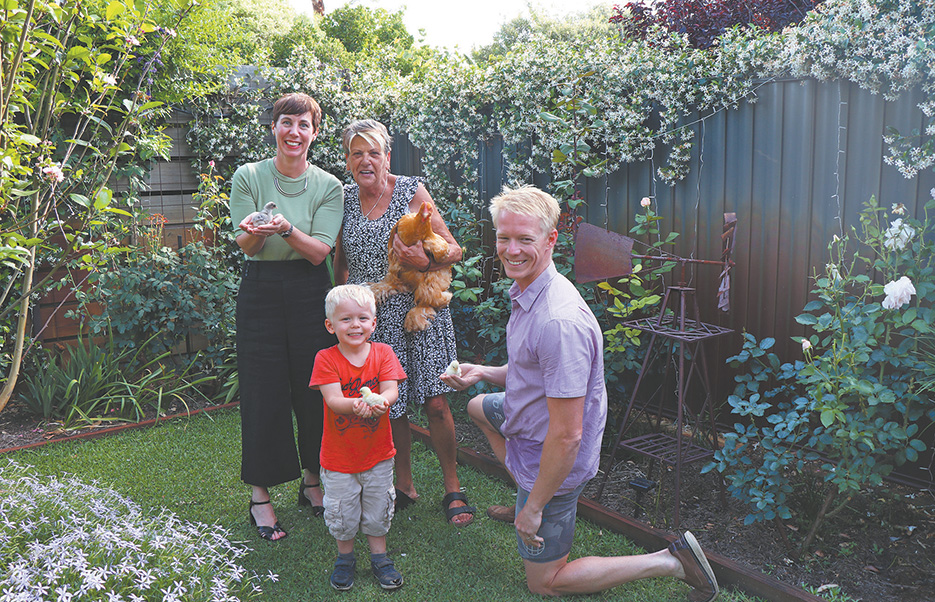
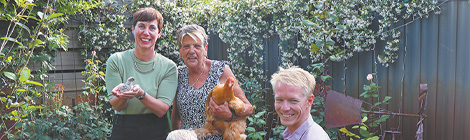
    Mayor Emma Cole, Dee Watts with Dylan, Cr Dan Loden and his son Ethan.

    CHICKENS, bees and pigeons will soon be legal in Vincent.

    Until now backyard poultry has been banned in the southern half of Vincent, and nearly-impossible to keep in the northern half given setback rules meant most blocks could never fit a chook.

    Twelve-year-old Piper from Leederville spoke at her first council meeting on December 13 and told councillors: “I want the bylaw for chickens to pass because I want to be able to raise those chickens from chicks and to be able to have that responsibility when I get older… I would also like to be able to have eggs from those chickens and be able to collect them every day after school and be able to cook with them.”

    It’s been a years-long process to get the Animal Local Law changed, requiring lengthy public advertising and liaising with the WA government. 

    Mayor Emma Cole said a lot of Vincent folk are interested in sustainable living and a few have “probably secretly been harbouring chickens in their backyard wondering whether there’ll be an inspection coming their way.

    “Welcome to the chickens and goodbye to the prohibited-chicken-area zone. It’s about time, and we’re very excited to reach this point.

    “Giving people more autonomy to have chickens and bees fits with our sustainability ethos in Vincent.

    “Chickens are becoming increasingly popular in our inner city suburbs, with people wanting to raise chickens to take on the vegetable scraps and in turn, lay fresh eggs each day. Beehives and DIY bee homes are also on the rise, as people understand the positive impact that bees have on our local biodiversity and the health benefits of honey.”

    Now up to six chickens or pigeons will be allowed in enclosed pens, as long as residents ensure there’s no public health nuisance. Beekeepers can have two hives on a property of 400sqm or less, and up to four hives on bigger properties.

    The new rules require a final sign-off by a parliamentary committee before they’re officially in force, but Ms Cole said “if some chickens appear over Christmas, I don’t know that there’ll be too much care about that”.

    by DAVID BELL

  • Celsius rejected
    Celsius arged a taller, more slender building was a better outcome than something bulky, but failed to convince Vincent council and the JDAP which rejected the application.

    CELSIUS Property Group’s 13-storey apartment proposal for North Perth has been unanimously rejected by the Joint Development Assessment Panel.

    CPG’s 373 Fitzgerald Street project, with two towers measuring 13 and 11 storeys, was opposed by a heavy majority of people living nearby.

    Vincent council’s planning staff also opposed the plan, saying it was way out of line with the council’s own usual maximum height of six storeys in that area, and its bulk and scale would make for “a significant negative impact” in amenity to nearby homes.

    But the decision rested with the state government’s JDAP, where state-appointed members can outvote elected councils and have discretion to overrule local planning laws if they think it’ll make for a good outcome.

    CPG director Andrew Peirce argued at the JDAP meeting their tower design was a better outcome than something shorter and squatter that might be closer to the usual height limit, but the JDAP voted 5-0 to reject the designs. 

    Vincent mayor Emma Cole attended the JDAP meeting to speak against the development, saying that compared to the council’s 2018 policy this development requested too much height, would provide too much overshadowing of neighbours, and offered too little in the way of setbacks from the edge of the block.

    After the decision Ms Cole told the Voice: “The issue was really that the extent of discretion sought was really significant, and well beyond what we’d entertain in the [planning] scheme,” and had it been approved the decision would undermine the council’s local planning framework.

    North Perth resident Neil Stacey lives across the laneway from the would-be apartment block, and was one of many locals who opposed the plans. After two years of this development looming, he says this week “people are elated. We’ve had people bloody jumping for joy.

    Community power

    “I think people were a bit wary of the process. But to the credit of the council and the planning department and JDAP, they really, I think, made the right decision.

    “The public are not anti-development… we just want a quality build in the correct zoning, that’s all we ask.” 

    Ashlee La Fontaine, who organised October’s public meeting opposing the plans, said the outcome “reflected the power of a community uniting to voice their concerns about a development that was non-conforming in height, bulk, scale, setback, as well as traffic and parking.”

    Resident Emily Bird said “we can safely say that over 70 per cent of the North Perth community – including myself – are delighted with this result.

    “We do know the battle is not yet over but there is a determined and cohesive mood within the community to continue fighting for our much-loved suburb to retain its diversity, character and history whilst being open to appropriate and sensitive change in response to increasing population needs.”

    Celsius’ managing director Richard Pappas said: “We are disappointed in the decision which we feel has resulted in a very significant missed opportunity to deliver a landmark mixed- use development providing considerable housing choice and significant high quality retail into the North Perth town centre. 

    “We appreciate the tremendous effort of our team and would like to thank the hundreds of supporters of our proposal.”

    All up 163 submissions supported the project, and 304 were opposed.  The proportion of opponents grew the closer people lived to the site, as Ms Fontaine pointed out: “70 per cent of 

    the submissions received from residents within North Perth objected to the development. Within a 200m radius of the site, three quarters of submissions objected.”

    There’s no word yet on what Celsius’ future plans are for the block. 

    by DAVID BELL

  • No joy for leashed cats

    WHILE the new animal rules are a win for the birds and the bees, the new law is bad news for cat-lovers who walk leashed cats in local parks.

    Under these changes cats will be banned altogether from Britannia Road Reserve, Smiths Lake, Robertson Park, Banks Reserve, and Hyde Park.

    Cat-ally Sam Fitzpatrick wrote to Vincent: “I am concerned about the overreach of local government wanting to fine people who want to walk their cat on a lead in Hyde Park.

    “I find this change in local laws an egregious change in policy and this demonstrates that the city does not understand the city’s planning implications of increased housing density attributable for such needs to safely walk a cat in public open space given the shift toward smaller dwellings and no backyards for cat exercise. 

    “Not only does this affect the health and well-being of the city’s cats but their owner’s mental health.”

    But a peculiarity of state law makes it tricky to ban free-roaming cats but allow them on a leash in those areas. 

    The WA Cat Act, which empowers the council to enforce its cat rules, doesn’t distinguish between a free-roaming cat and one on a leash the same way the WA Dog Act does. 

    Any council policy allowing leashed cats but banning freewheeling felines would risk getting rejected by parliament for being incompatible with state law.

    by DAVID BELL

  • Oz Day breakthrough

    A RULE requiring councils to hold citizenship ceremonies on Australia Day has been quashed.

    On December 13 Vincent council unanimously voted to write to the new federal Labor government asking for the former Liberal government’s rule requiring all councils to hold citizenship ceremonies on January 26 be quashed.

    Vincent mayor Emma Cole noted increasing discomfort among local Indigenous representatives about January 26; the Noongar Choir no longer attends, and this year they haven’t found  a traditional owner to deliver a Welcome to Country.

    Vincent’s unsent letter would have joined Victorian councils Darebin and Yarra who had been lobbying Labor since May to undo the rule, which was brought in after Fremantle council moved its ceremonies off January 26 in 2017.

    Ms Cole said at the council meeting they didn’t expect a swift answer, as the federal government would be prioritising an Indigenous Voice to Parliament group before addressing Australia Day.

    But by December 16 Labor’s citizenship minister Andrew Giles proclaimed the old rule would be stricken. 

    Mr Giles issued a statement announcing “a pragmatic change in line with the government’s commitment to efficient processing of citizenship applications and timely ceremonies for new citizens”.

    The statement didn’t mention the controversy around January 26, instead saying “a number of councils have indicated they will move to no longer hold a citizenship ceremony on Australia Day due to higher operational costs involved in hosting ceremonies on a public holiday”.

    The ceremonies must run on any day between January 23 to January 29.  Council can hold others during the year as long as they comply with that rule.

    Ms Cole says it’s “a welcome change, and we appreciate that they’ve given local governments the ability to make that choice, have that flexibility, and reflect the wishes of our elders’ group and our Reconciliation Action Plan group,” who’d both supported the motion.

    Vincent’s now looking at instead holding its citizenship ceremony on the evening of Friday January 27 in 2023, and hoping it’ll be easier to find a traditional owner to hold the Welcome to Country on that date.

    by DAVID BELL

  • Gelato with a Christmas flavour
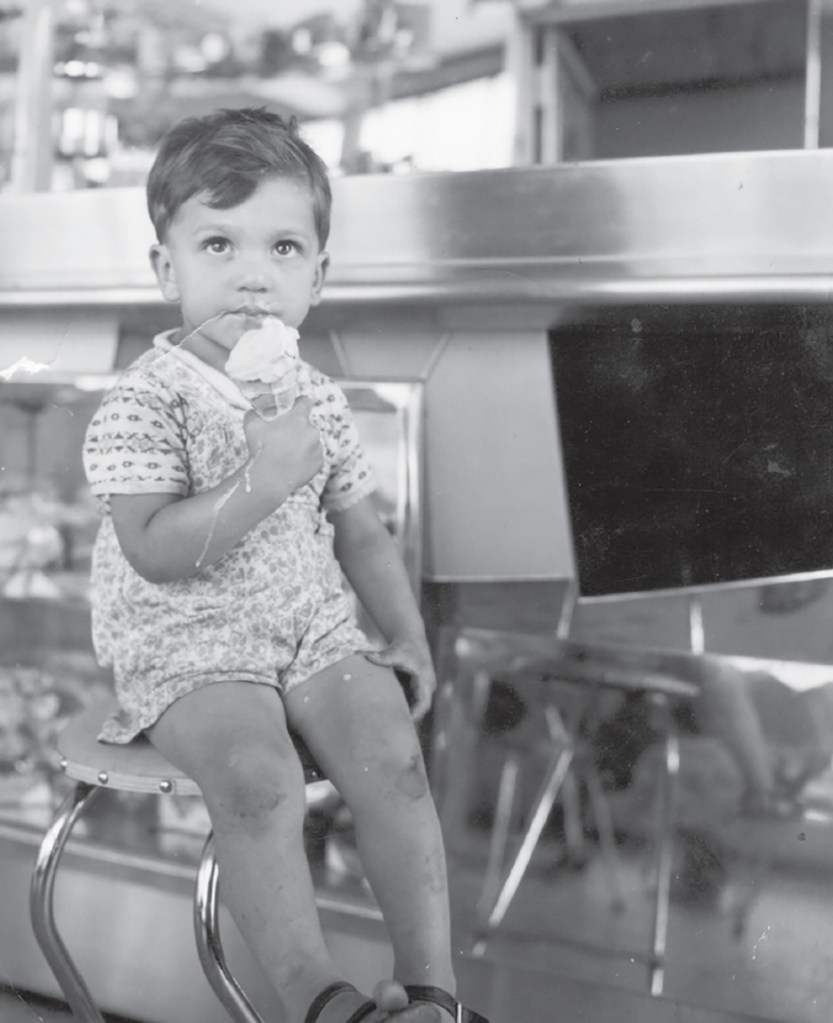
    Frank Pisconeri eating ice cream at Pisconeri’s café bar, Lake & Newcastle Streets Perth, 1950s.

    FROM the archives of Vincent Local History Centre, this week we have a tale of how migrants made their mark on Christmas traditions across the 20th century.

    THE Australian Christmas fare has come a long way from the northern hemisphere winter traditions of roast meats and plum puddings.  

    While some people cling steadfast to the tradition of brandy and pudding at Christmas, migrants from around the world have brought different Christmas food traditions to our Christmas tables.  

    Post-war Italian migrants introduced us to the Italian Christmas sweet bread called panettone (translates to big bread), which is now everywhere in local supermarkets from early November to January.  

    Not so long ago, it was only available in Perth in Italian migrant homes or imported by speciality Italian grocers such as the Re Store or Pisconeri Brothers. 

    Pisconeri Wholesalers, currently in Mt Hawthorn, had its roots in an old family business based in Lake and Newcastle Streets, Perth from the early 1950s.  

    Established by two Calabrian-born migrants and their wives and families, it was originally a grocery store that expanded into a cafe serving coffee and traditional Italian ice cream and frozen granita. 

    The cafe was open seven days a week and quickly became a major drawcard for many Italian migrants who lived and worked in the area in the 1950s and 1960s.  

    Men would gather at the bar in the evenings to socialise, drink coffee and play cards.

    Italian families would frequent the cafe for ice cream and coffee on Sunday mornings after mass at St Brigid’s church.  

    In the 1950s, the Pisconeri family turned their hand to making ice cream or gelato which they sold under the label of Crest Ice Cream from their wholesale shop on Lake Street across the road from their retail store. 

    The late Maria Pisconeri, one of the original proprietors, recalled: “We sold gelati, coffee and cakes. My husband and brother-in-law went to get the machines – they were Italian machines. We used to make gelati and had a factory where we made cones, confetti and roasted coffee. There was no other bar like it – the only other one was in Fremantle. We were so busy with so many people.”

    At Christmas time, the Pisconeri family business promoted their ice creams with free giveaways to locals dispensed by Santa (local 6IX radio announcer John Fryer) on the back of a ute outside their shop and factory.   

    Albert Pisconeri, son of the original owners who is still involved in the family business Pisconeri Wholesalers, recalled: “One of the announcers from 6IX (John Fryer) jumped on this little van with balloons and there he was waving to the crowd. He would be driven to the front of the coffee bar and they’d park the van. Dressed as Father Christmas, he would offer people ice creams and lollies from the back of the truck. Then there’s a shot of all the people waiting for their turn, for their ice creams.”

    While the Pisconeri family business no longer makes or sells gelato, they have continued importing a wide range of Italian food products, including the now ubiquitous favourite Italian Christmas treat panettone.  

    For more local stories and images of Christmas in Vincent, visit https://library.vincent. wa.gov.au/local-history-centre. aspx

  • Unique twitter  
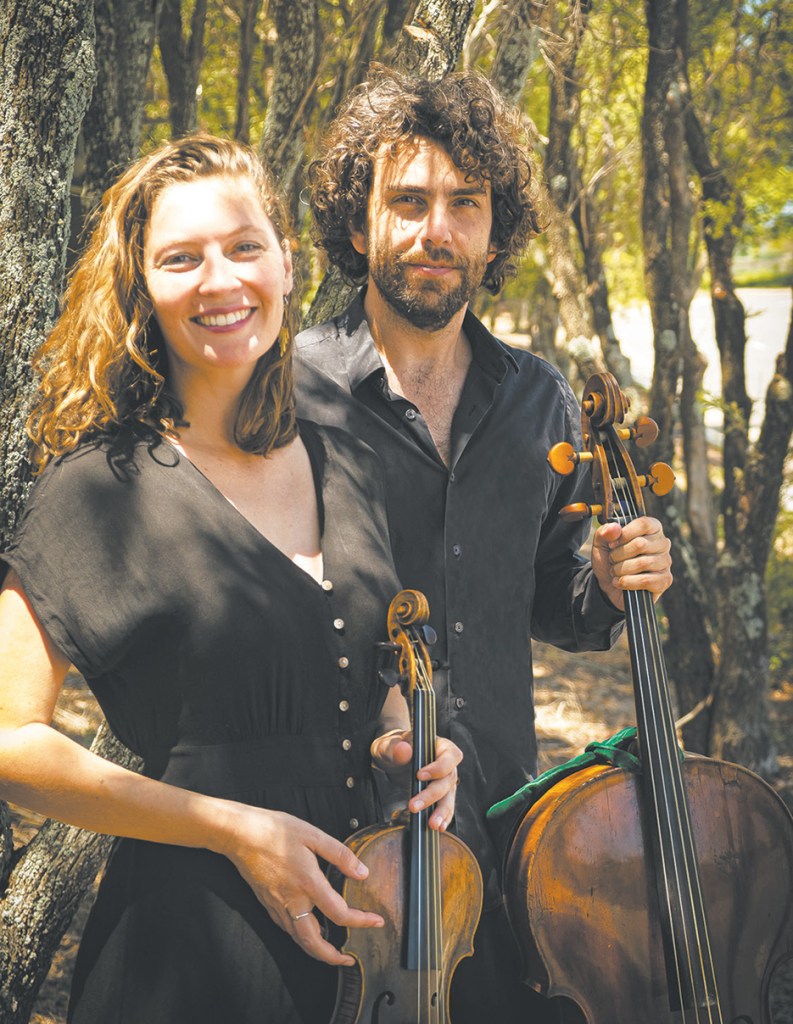
    • Simone Slattery and Anthony Albrecht, aka The Bowerbird Collective.

    IF you’re over turkey leftovers by new year, check out a different species of bird at the unique concert Life on Land’s Edge at Government House in Perth.

    The sublime playing of The Bowerbird Collective – Simone Slattery on violin, Anthony Albrecht on cello – will accompany stunning footage of migratory birds making their way across several continents and cultures.

    It’s the latest project from the Collective, who combine their love of nature with classical music.

    “Life on Land’s Edge features footage from across the whole flyway [broad corridors used by migrating birds] including nest scenes from Alaska and Siberia, birds in beautiful breeding plumage in China, Korea and Thailand, flocks departing on their migration from Broome, as well as beautiful intertidal landscapes from right around Australia,” Albrecht says.

    “While much of the footage was filmed by the Bowerbird Collective on a number of research residencies, including in Broome last year, we have also had contributions from many leading scientists around the world. 

    “The footage is focused on migratory shorebirds that visit Australia, and highlights their beauty and fragility.”

    The Collective describe themselves as making “art for nature”, but aside from their green credentials, they are world class musicians – Albrecht is from NSW and has a master of music from the world-famous Juilliard School in New York, while Slattery completed her PhD at the University of Adelaide and was a 2019 Churchill Fellow.

    They combined their love of nature with music on their 2021 release Songs of Disappearance – Australian Bird Calls and the recent companion album Songs of Disappearance – Australian Frog Calls, with both reaching the top five of the ARIA charts.

    Their music has also featured in the Our Country immersive experience, created by Australian Geographic and currently showing at Darling Harbour in Sydney.

    “Both Simone and I grew up in families that fostered an awareness and love for nature, and in particular birds,” Albrecht says.

    “We cherish the soundscape of Australia and both miss it when overseas. The Bowerbird Collective was founded in 2017 to make art for nature.

    “As freelance classical musicians we often lacked an outlet for our passion for the environment, and we are thrilled now to be able to combine music with nature storytelling, and to collaborate with major conservation organisations.”

    Conservation

    But while the Collective are big on conservation, their top priority is providing a unique concert experience in a great setting (their Perth show will be held in the stunning ballroom at Government House and they will play on period instruments for added authenticity).

    Over the years the pair have performed with the likes of Il Pomo d’Oro, the Australian Haydn Ensemble, Van Diemen’s Band, Pinchgut Opera and the Australian Romantic and Classical Orchestra.

    “While conservation is certainly a motivation for our work, primarily our concerts are designed to give audiences a beautiful experience that will leave them feeling more connected to our planet,” Albrecht says.

    The 60-minute Life on Land’s Edge, followed by a Q&A, is at Government House Ballroom on January 28. Tix and more info at bowerbirdcollective.org

    by STEPHEN POLLOCK

  • The right trees for the future

    GREG ASH is a Mount Lawley resident and member of the members-only Mount Lawley golf club. He says how the club manages the hundreds of trees and shrubs that line its fairways and greens needs to be seen in context after the Voice’s recent stories about how many have been earmarked to be removed.

    I AM one of the 30 volunteers  at the Mount Lawley Golf Club who concentrate on bushland regeneration and a member of over 20 years.

    Your story about the club’s masterplan (“Club keen to tee off on plan,” Voice, December 10, 2022) needs clarification.

    Mount Lawley Golf Club sits on 79 hectares of land equally split on WA state-owned land, vested to the City of Stirling who are the lessees; MLGC is the sub lessee.

    This is a golf course that has won the WA Golf Award for environmental management for 2020 and 2021. That’s the last two awards for all golf clubs in WA, therefore Mount Lawley is clearly a leader in the state.

    For a golf club to survive, it must have decent fairways and greens.

    The club spent considerable money in 2016 to put in new reticulation and a lake that many waterbirds now call home.

    This was to make water use more efficient. 

    In 2028 a 10 per cent cut will come to all water users in Australia as stated by the federal government.

    Arbor Carbon, an organisation whose motto is “creating sustainable ecosystems” prepared a report for the club in 2021 and surveyed 2020 trees, which found that 43 per cent of MLGC golf course are non-endemic.

    The major problem trees are river redgums, broad leaf paperbark (Qld and NSW) maritime pine if diseased or in the middle of native bushland, Tasmanian blue gums and south west peppermint that is not endemic to the Swan Coastal Plain.

    These trees are high water users.

    As Leisha Jack of the Stirling Urban Tree Network states on her website, our mission is to help educate the public about the importance of urban trees, especially in our warming and drying climate.

    Deryn Thorpe, an eminent, award-winning gardener on her website states: “The right tree in the wrong place is a weed.”

    We are trying to redress this warming and drying problem by planting sustainable, site specific trees and understory flora that will use water wisely. 

    MLGC has planted 1740 trees so far in the last three years. 

    We have another four years on our revegetation plan to go. 

    A total of 10,000 plants so far with a success rate of 93 per cent.

    We have about another 14 000 plants to put into this ecosystem.

    We have planted tuart, marri, coastal blackbutt, sheoak plus various banksia species; menzeii, attenuata, grandis, prionotes, ilicifolia being the main.

    If we cut down the river redgums to redevelop the greens it equates to 0.32 per cent of those on the course. 

    We are not cutting down whole swathes of established trees. 

    There are hundreds of non-endemic trees with about nine other species we are not cutting down as they have limited impact on the golf course but 

    do contribute to the ecosystem positively.

    To achieve a successful golf course and also create a sustainable ecosystem, we must cut water use and to do this some water guzzling trees must go and be replaced by the correct flora for this region. 

    MLGC is leading the way.

    As a member of the WA Naturalist Club, originally joining in 1966 but still a member, I know something of environmental ecosystems.

    We hope the detractors of MLGC course can understand science and the co-existing reasons why these certain tree species must be removed.

  • Less is more
    Coolbellup psychotherapist Phil Gatt is launching a new treatment program for stress, addiction and chronic pain.

    LOCAL psychotherapist Phil Gatt is pioneering a ground-breaking new therapy program to treat stress, chronic pain and addiction in WA.

    An evidence-based mental training program developed by American professor Eric Garland, Mindfulness-Oriented Recovery Enhancement (MORE) has undergone more than 12 clinical trials and received $40m (USD) in federal research grants. 

    Mr Gatt will be the first practitioner to use the MORE treatment in WA, holding workshops around Greater Fremantle.

    So what makes it different from the myriad of other treatment programs available?

    “MORE has been shown to be twice as effective as standard therapy for treating addiction and chronic pain,” Mr Gatt says.

    “The eight week group program unites complementary aspects of mindfulness training, ‘third wave’ cognitive-behavioural therapy, and principles from positive psychology into an integrative therapeutic approach.

    “Prof Garland developed MORE by translating fundamental discoveries from neuroscience into therapeutic strategies that reduce addictive behaviour, emotional distress, and pain, while simultaneously increasing healthy pleasure, meaning in life, and self-transcendence.

    “As far as he is aware the MORE program has never been delivered in Australia and I am the first to be trained in the west. Hopefully many more West Australian clinicians can do his programme.”

    Since 2011, Mr Gatt has worked with leading not-for-profits treating hundreds of adults and young people dependent upon nicotine, alcohol, other drugs and with behavioural dependencies.

    He’s also worked with their ‘significant others’ – mums, dads, caregivers, brothers, sisters and children – explaining how best to support their loved ones. 

    “My experiences have taught me that the underlying drivers of dependency are often acknowledged but rarely treated in community healthcare settings,” Mr Gatt says

    “I am talking here about trauma and other effects of adverse childhood experiences on people. Dependency on substances and behaviours is multi-faceted and occurs over many years.” 

    Mr Gatt says MORE involves teaching recovering addicts how to “savour” the natural highs in life again; a crucial element missing from other treatment programs, which can lead to relapse.

    “Use of substances, stress and pain dysregulate the natural reward circuitry in the brain but thanks to neuro-plasticity and this program we are able to restore these functions,” Mr Gatt says.

    “I did one of the meditation exercises with this person around scenes from nature that he wanted to focus on. On completion I asked him to open his eyes and as he did so he burst out laughing. I asked him to share what he was experiencing and he said he had not felt as good as this naturally for as long as he could remember. With some embarrassment he shared that he actually felt ‘high’.”

    Mr Gatt says MORE was also effective in treating one of his patients who had chronic shoulder pain: “On guiding him through a meditation, he self-reported that the pain reduced in intensity from a 7 out of 10 to a 1 out of 10.”

    Motivation

    Originally from Barry, a port in south Wales, Mr Gatt immigrated to WA in 1987, before settling in Greater Fremantle in 2000. He currently lives in Coolbellup.

    After years of working for not-for-profits – treating people with dependency issues in rehab, prisons and the community – Mr Gatt recently opened a private practice and became a trainer for the WA Association for Mental Health.

    “First and foremost the two most important aspects for change are this: the therapeutic relationship between client and therapist and the client’s motivation for change,” he says.

    Mr Gatt is planning to hold a MORE workshop in Hilton in early 2023 and is in talks with Beacon Yoga Centre, Notre Dame University and WA not-for-profits about offering the treatment program. For more 

  • Memory maker

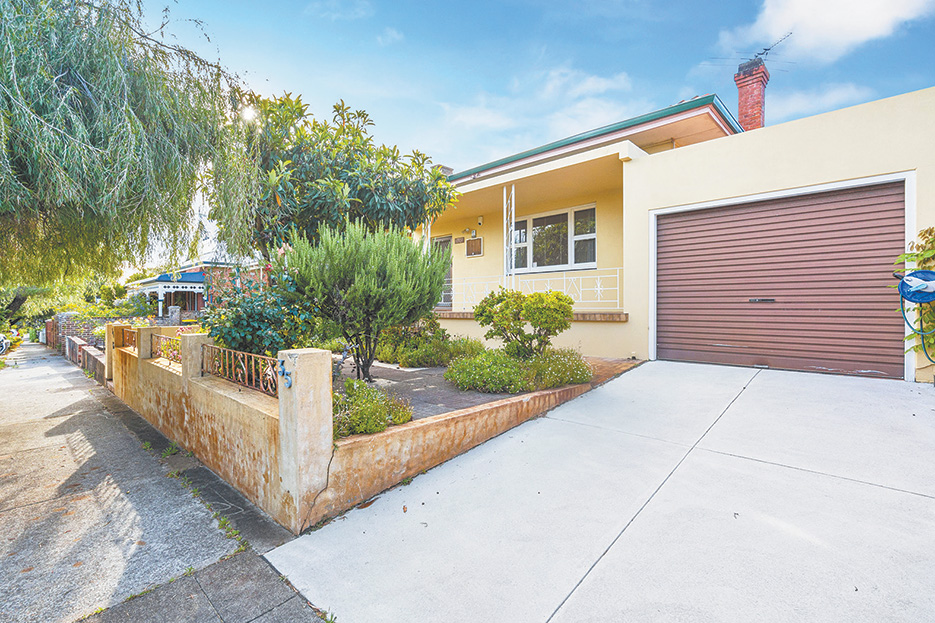
    THIS home has enjoyed a loving past and now it’s time for someone to take it on an amazing new journey in 2023.

    Lived in by the same family for more than 60 years, this three bedroom one bathroom house is full of memories, good times and original features.

    There’s vintage fireplaces, jarrah floorboards hiding under the carpet, an old-school wine cellar, and loads of mature fruit trees in the gardens.

    Situated on a 490sqm block on Ebsworth Street, just a few streets back from the Swan River, it would be a great family home where you could make some new memories down at the foreshore, in the backyard, and hosting festive dinners.

    The front of the home has that lovely Italian-style verandah with a tiled floor and low metal balustrade (nice and cool in the summer months).

    Inside, there are loads of original features including ornate cornicing and an archway connecting the kitchen to the dining room.

    The bones of the house are good and it’s move-in ready, but you’ll be looking to modernise the decor and rooms over time.

    It’s in an R20 zone with the potential to expand and maybe even add a second storey to maximise those river views.

    The home has a large back garden with established trees and a nice patch of lawn, and right down the back is a patio, storeroom, kitchen, WC and carport.

    A great selling point is the rear-lane access to the carport, in addition to the garage at the front of the home.

    It means the storeroom could become a studio flat and an opportunity to earn some passive income or a guest house when family come to stay.

    The home includes a laundry and two car bays.

    Situated close to the Swan River and Banks Reserve, it’s not far to Optus Stadium, Mt Lawley train station, Beaufort St café and shopping precinct and St John of God Hospital.

    If you have kids, there’s loads of great schools nearby including Trinity, Mercedes, Perth College and Mt Lawley High School.

    This is a great home with loads of potential for a family to make another sixty years of memories.

    From $969,000
    35 Ebsworth Street, Mount Lawley
    Abel Property Sales 9208 1999
    Agent Jason Ryan 0412 515 760