• Minister overrules council on Ruah

    PLANNING minister Rita Saffioti has overruled Perth council to allow Ruah to move its drop-in centre in Northbridge.

    The centre is on Shenton Street opposite Russell Square but Ruah wants to build a seven-storey centre for women and children escaping domestic violence.

    To free up the site, the drop-in centre will now move 270 metres to James Street. Perth councillors voted against the relocation in May after neighbours complained Ruah’s clients would be closer to their homes and businesses, given some had past bad encounters. 

    The council’s planning rules say a “community or cultural centre” is a preferred use on James Street site, so Ruah would have had an even chance if it appealed the refusal to the State Administrative Tribunal.

    Rather than see the lengthy SAT process play out Ms Saffioti intervened in late June, as the planning minister can call in a decision in the public interest when “the matter is one of state or regional significance”.

    In her decision Ms Saffioti wrote “homelessness is not an issue that only affects single local government areas. It is a state wide issue” and she said it was in the public interest for these essential services to be available. 

    She said homeless people were a part of the community as well and Ruah’s drop in service could be considered a “community centre”.

    “I think any attempt to exclude the city’s homeless population in this way would not accord with planning objectives, would not be consistent with contemporary community standards and would be contrary to the public interest,” Ms Saffioti wrote.

    There were more than 40 submissions lodged to Ms Saffioti opposing the centre’s reopening and about a dozen in favour.

    Most opponents cited safety, crime and cleanliness, with some describing previous attacks by homeless people. One submission expressed amazement a unanimous council decision could 

    be overturned by a state minister: “We live in a democratic country and these councillors have been democratically elected to represent the City of Perth.

    “We appreciate that you are the planning minister for the whole of WA but these councillors have intimate knowledge of the City of Perth area and what is best for this area.”

    by DAVID BELL

  • In-person vote push killed off

    A PROPOSAL to switch back to in-person elections at Stirling council has been killed off.

    Not a single councillor would back colleague Elizabeth Re’s motion to consider ending their 20-year all-postal voting experiment. 

    Cr Re had argued that after 20 years postal voting hadn’t lived up to the promise of increasing voter turnout, and research pointed to the mail method potentially reducing turnouts.

    Postal voting’s lost some shine in light of ballots going missing or being stolen out of mailboxes, which led to Cambridge council opting for in-person voting at their extraordinary election this year (“Fraud takes polish off postal voting,” Voice, September 3, 2022). 

    Cr Re said the mail method was costing them a huge amount of money. Stirling is a large council by Perth standards, and at the last election it spent $611,000 sending out more than 150,000 ballots; 75 per cent went unused. 

    Cr Re suggested council buildings accept drop-in voting for a few weeks ahead of the poll date, while postal ballots could still be sent out to those who needed them.

    But when Cr Re tried to make her case to investigate the pros and cons of postal versus personal, no one stepped up to second the motion and allow her to continue.

    Cr Re was halfway through introducing her motion, saying “research has shown that now people are more likely to vote if they have to go and vote at a premises, than take a postal vote ballot paper and post it” when mayor Mark Irwin reminded the room she needed a seconder before getting into the substantial debate.

    “I’m always cautious when you say ‘research has shown’ without a quote or some indication of where that research has come from,” Mr Irwin said.

    Cr Re said she had the references to back it up but no one broke ranks to back her up, and without a seconder there was no further debate allowed.  

    That means the upcoming November 25 by-election will be postal as usual. Nominations open October 6 for the by-election. It’s needed a year earlier than the usual election cycle to fill an extraordinary vacancy left by the resignation of former Balga Ward councillor Keith Sargent, who faces court September 29 over allegations of possessing child exploitation material.

    The research

    SINCE mayor Mark Irwin was cautious about councillor Liz Re talking “research” without references, the Voice did a quick literature review of some major studies into the effects of all-mail voting in local elections.

    It looks like Cr Re was onto something; after an initial boost in turnout, the novelty can wear off if the system proves unreliable or too easy to cheat, and some researchers argue the number of ‘new’ voters brought in by the method is hard to distinguish from the increased number of phoney votes.

    1987: US political scientist David Magleby finds a clear effect of mail ballots increasing turnout in local elections. 

    2000: A US study ‘Going Postal: How All-Mail Elections Influence Turnout’ agrees that introducing postal voting does initially increase turnout, but mentions it might be down to the novelty of the method. Some researchers predicted turnouts could dwindle over time.

    2006: A UK article noted there had indeed been an increase in turnout when all-mail voting was introduced in the 2004 Birmingham local elections, however it turned out a significant number of the additional votes had been stolen out of mailboxes and lodged fraudulently. Author John Stewart wrote: “The ballot papers were sent out by ordinary mail in clearly identified envelopes. As the commissioner commented in his executive summary: ‘Short of writing “STEAL ME” on the envelopes, it is hard to see what more could be done to ensure their coming into the wrong hands’.”

    2010: A study titled ‘Postal Voting and Voter Turnout in Local Elections: Lessons from New Zealand and Australia’ argues that after an initial boost “postal voting no longer increases or decreases voter turnout in these countries”. Reasons include fraud concerns, postal voting being less social and less engaging than in-person democracy, and voters feeling rushed by having to mail off a ballot before the campaign’s fully played out.

  • Adult shop pledge for ‘good crowds’

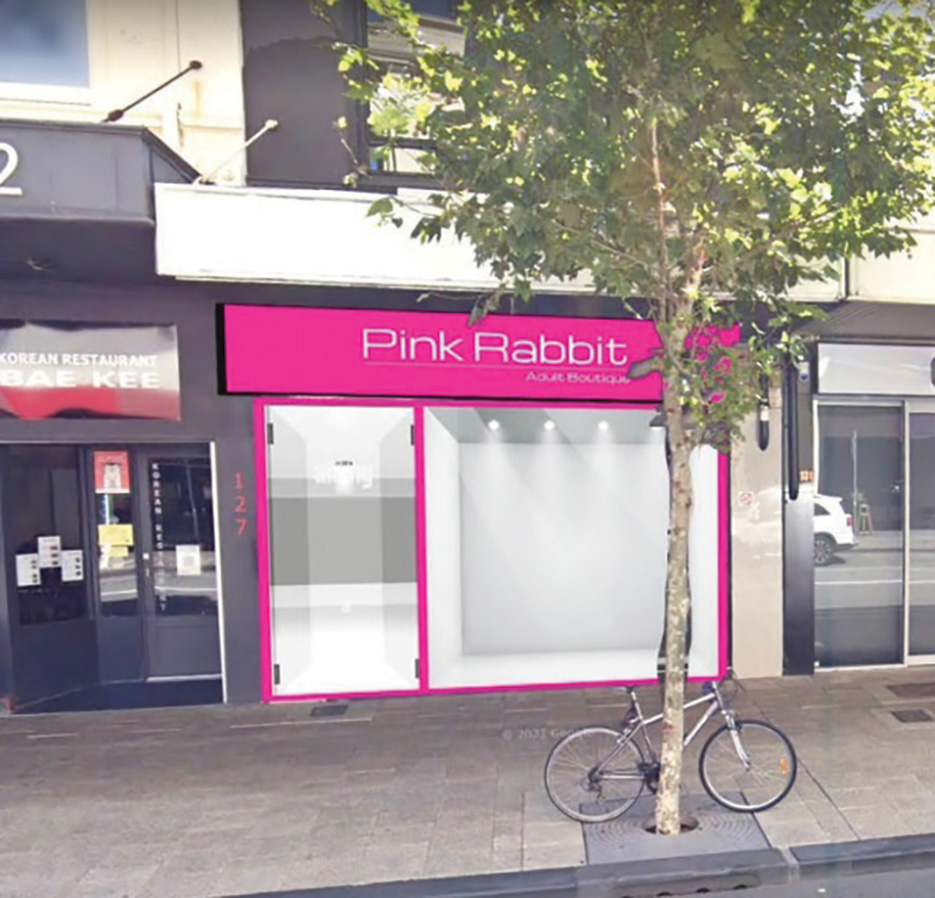
    A PROPOSED adult shop hoping to win Perth city council’s approval is promising “a beautiful, clean and luxurious space” with shop fronts displaying “elegant and tasteful clothing with no adult toys”.

    The owner isn’t named in the application, but the business is registered under “Gape Pty Ltd” and they want to open up “Pink Rabbit Adult Boutique” fronting onto 129 Barrack Street, along with rear access from Grand Lane. The site’s been empty for more than five years following the closure of small bar La Casa Sinti.

    The new operator proposes giving a bright pink paintjob to the shop front, which sits in a building on the local heritage list, but council staff reckon the heritage values won’t be impacted. 

    Under Perth local planning rules the council has discretion over whether to allow a business that primarily sells “publications that are classified as restricted publications under the Censorship Act 1996” or “materials, compounds, preparations or articles which are used or intended to be used primarily in or in connection with any form of sexual behaviour or activity”. 

    They have to be satisfied it’ll be good for the character of the local area and not have any negative social impacts.

    One neighbour has lodged an objection, saying: “This end of Barrack Street has constantly been the rougher side of town,” with “Grand Lane having constant disturbances from people drinking and urinating all over the lane and street.

    “What we need is for the council to help bring in more businesses that helps to boost the tourist and foreign students to come into the city and not a different crowd of people.”

    The applicant has written a response seeking to soothe concerns: “I am a professional businesswoman, with over 20 years in various industries in Australia and the UK. 

    “I am also a disability, welfare and equal opportunity advocate. 

    “Running a successful business is not foreign to me. I have the same interests as the objector, that is ‘attracting good crowds’ to the surrounding area and businesses in order for us all to make a living.”

    The applicant said they want to have a classy and inviting store: “As a disability and equal opportunity advocate, I understand how this industry can be very confronting to people for many reasons including age, gender, culture, and values. 

    “As a result, these people shop online and therefore do not receive the valuable support and education they require. My vision is to change this by creating a safe, inclusive and accessible space for everyone.” 

    Perth council planning staff seem satisfied by Gape Pty Ltd’s response, and wrote in a report to councillors “the proposal is considered to contribute to the mixed commercial character of the Citiplace Precinct” and reckon it will “not detrimentally impact on the amenity of the locality or City as a whole”.

    The decision now lies with councillors at their September 27 meeting.

    by DAVID BELL

  • Shisha bids snuffed

    TWO shisha lounges wanting to operate along Beaufort Street have been rejected by Vincent council under its crackdown on smoking in town centres.

    One of the pair, Petra Lounge at 624 Beaufort Street Mount Lawley, opened in August 2021 without authorisation from Vincent council to operate a shisha bar or build a smoking patio out back.

    Operator Peter Davidson kept the place open some nights until 5am and noise complaints quickly rolled in.

    The council wrote in September requesting Mr Davidson cease operating and submit a development application. But the business kept operating so Vincent staff asked him to limit the hours and turn the sound down. 

    Noise complaints continued and four planning infringement notices followed, so the council ordered Petra shut in January: It closed late February pending the current application for approval.

    Objections were lodged by 25 neighbours. 

    Unliveable

    Benjamin Scalley lives across the rear lane and said at the September 20 council meeting Petra made his home unliveable. 

    “The noise when it was operating has been really very significant,” Dr Scalley said. 

    “Our bedroom faces the outside area of this development. It hasn’t allowed us, when it’s operating, to sleep in our bedroom. We’ve needed to sleep on the floor in the living area on the opposite side of the house.

    “The music has been routinely clearly audible throughout the whole house when in operation even when the windows are closed.” 

    Thousands of dollars spent on shutters still hadn’t kept the noise out.

    Dr Scalley, a public health physician who was previously director of environmental health in New South Wales, said he supported the council’s ongoing moves to reduce smoking and said given this was a tobacco venue it shouldn’t be approved. 

    Vincent council’s been moving towards smoke-free town centres by 2025, starting the rollout at the end of 2022 with a ban on public smoking for the main strips of Leederville, Mount Hawthorn, North Perth, Beaufort Street and William Street.

    They also have a draft policy in the works that heavily restricts new venues where smoking or selling tobacco is the main purpose from opening up next to residences, accommodation venues, schools, offices, and many other uses, and neither of these two shisha lounges would be allowed under those rules.

    While that policy’s not yet formally adopted, councillors are required to give it ‘due regard’ when making any decisions. 

    \Councillors unanimously voted against allowing Petra Lounge to open, heeding staff advice that it’d adversely impact the neighbours with noise and smoke emissions, contrary to rules in their planning scheme.

    Councillors were more sympathetic to the other proposed venue, Marihana Café at 221 Beaufort Street Highgate, whose prospective operators had done everything by the book.

    Applicant Giday Hailu said he’d built a rear patio and had been paying rent and bills on the venue for more than a year through the application process. His friend Sami Berhe told councillors: “Mr Giday and his business partner have done everything in his capacity to do what is required”, and said he’d be stuck with the lease until 2025.

    But all councillors save one – Ashley Wallace – voted against Marihana opening, mainly on grounds neighbours would cop the smoke.

    Marihana’s owners spent a lot of time and money on what was ultimately a doomed application after believing a shisha lounge would be allowed under the building’s approved use as a “café”, and that they’d just need approval to build a patio.

    They applied to build the patio in mid-2021 and Mr Giday was upfront that it was for smoking. That is allowed under Vincent’s rules, but only if it’s for incidental café smoking. A primary use as a shisha bar is a whole other category and requires council to more closely consider impacts on neighbours. 

    Smoke impact

    It wasn’t until December 2021, six months into the application process, when Marihana submitted documents with the full name “Marihana Shisha Café” that Vincent planning officers realised the true nature of the operation.

    They advised Mr Giday he needed council approval to open and there was no guarantee.

    Deputy mayor Susan Gontaszewski said: “It’s very clear in my mind the applicant has tried to do the right thing. I understand the applicant is from Victoria and there are similar cafés there. 

    “From the applicant’s perspective there may appear to be little difference between a café and a shisha lounge, but … from a planning perspective, that’s just not the case.”

    Mayor Emma Cole said: “Just hearing from Sami and Giday, it’s very hard when you hear about the level of investment and belief in a business,” but added “I believe it was incumbent on the applicant to be clear from the outset… to declare up front that they were seeking to open a shisha bar.”

    She said it could operate primarily as a café that had an “element” of smoking, “but it can’t be the predominant land use”.

    by DAVID BELL

  • If halls had ears
    Official opening of the North Perth Town Hall (Lesser Hall), 30 June 1902. Photo from Vincent Local History Centre, COV PHO484

    THIS week’s history corner from the City of Vincent Local History Centre looks at the past lives of the North Perth Town Hall, from its early days as the region’s bureaucratic hub, to its bawdy nights as an RSL venue, and its time as a hub for the Jewish community during World War II.

    IF walls could talk, the North Perth Town Hall could provide enough content to fuel a podcast series multiple times over. 

    No other building in North Perth quite captures the changes and diversity of the community over the last century like the grand hall on the hill in View Street. 

    The North Perth Town Hall is made up of two buildings constructed separately in the early 1900s to serve as the civic heart of the burgeoning new municipality of North Perth. 

    The smaller of the two buildings, the North Perth Lesser Hall, was designed by Henry Prockter and was built in 1902.

    In its heyday as council chambers and offices, it hosted fortnightly meetings where local concerns were thrashed out by councillors and residents. 

    Although not built to his original design, Prockter was involved in the planning of the larger adjoining Town Hall that was built later in 1910. 

    Given its proximity to the local primary school, the North Perth Town Hall was often used for school concerts, meetings and even as overflow classrooms. 

    In 1916, the Education Department proposed to buy the buildings and adjoining land to expand the school. 

    Perth City Council was keen to offload the asset, but the sale was opposed by residents of the North Perth Progress Association (The Daily News, 13 September 1916). 

    In subsequent decades, North Perth Town Hall was hired out for everything from private weddings, dance classes, fancy dress balls, church services, charity events and film screenings to wrestling matches and table tennis tournaments. 

    The Lesser Hall (or Mayor’s Parlour as it was also known), provided a regular meeting place for a wide range of local community groups. 

    The Returned Servicemen’s League was a frequent user with their Saturday night dances sometimes attracting complaints about “cat calling, horse play and unseemly behaviour” in the adjacent park. 

    In October 1939, the North Perth Town Hall was the venue for an afternoon of opera by the coach of the touring national Palestine soccer team, Egon Pollak, who also happened to be a baritone with the Palestine Opera Company. 

    Pollak became stranded with his team in Australia after WWII began and turned to singing to earn a living.

    Shortly after during WWII, the North Perth Town Hall was commandeered by the Civil Defence Council as a First Aid Post. 

    Black out screens were installed in the hall and bunds and slit trenches were dug in the adjacent park. 

    The hall was handed back to the council in 1944 and the park was re-levelled and reopened as a children’s playground. 

    The North Perth Town Hall had special significance for the Jewish community before and after the war. 

    In late 1943, the hall hosted the first meetings of the WA Council of Jewish Affairs which aimed to combat anti-semitism (The Westralian Judean, 1 Jan 1944). In the late 1940s and early 1950s, the State Zionist Council of West Australia and the Maccabean Youth Club of WA held dances and sporting events at the town hall. 

    Although the hall was a little worse for wear after the war, its size and location made it an attractive venue for many, including the Australian Broadcasting Commission’s State Symphony Orchestra (the forerunner to today’s WASO). 

    In 1951, the ABC approached Perth City Council with a proposal to relocate their music library and rehearsal facilities to the North Perth Town Hall, but the proposal was dismissed. 

    Decades later, the North Perth Town Hall became the headquarters for a very different music organisation that reflected the multi-cultural character of the area. 

    Musician Linsey Pollak established the North Perth Ethnic Music Centre in 1982. 

    His vision was for a community arts organisation that reflected and celebrated the music traditions of diverse ethnic groups. ‘Caf√© Folklorico’ performances and dances were held at the Town Hall on Friday nights. 

    The Centre was based at the North Perth Town Hall from 1982 until 1996, when it moved to Fremantle. 

    To learn more about the North Perth Ethnic Music Centre, watch the Music in Vincent series produced by the City of Vincent Local History Centre and the State Library of WA: https://www.youtube. com/watch?v=zv_1JJ8UKfk 

    The City of Vincent Local History Centre has more great images of the North Perth Town Hall at https://cityofvincent.imagegallery.me/

  • Street to honour Indian Anzacs
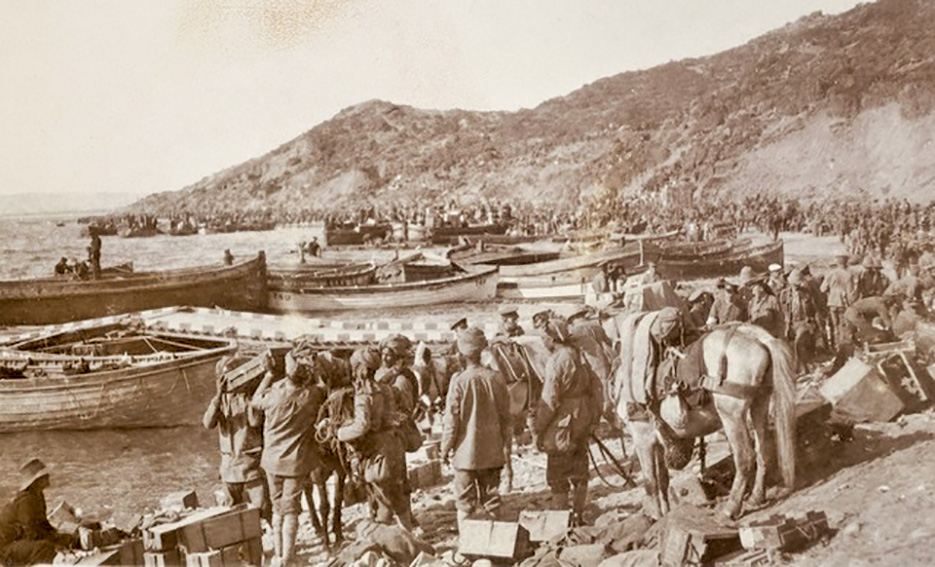
    Anzac Cove, Gallipoli in 1915, with Indian soldiers in the foreground. Photo from the Australian War Memorial, H13745

    THE consulate general of India is seeking to rename a road near Kings Park to honour an Indian private who died serving with the ANZACs in the Great War.

    Nain Singh Sailani was a Hindu Gurkha from Shimla in northern India. He came to Australia in 1895 aged 22 and worked as a builder in Geraldton before enlisting in Perth in 1916, at a time when the Australian Defence Act of 1909 still said those “not substantially of European origin or descent” weren’t allowed. 

    He was one of 12 known Indian Anzacs who served with the Australian Imperial Army during World War I. Pte Sailani was killed in action on the Belgian front in June 1917, age 44, and was buried in Belgium’s Ploegsteert Wood. 

    He was one of two known Indian Anzac casualties, along with Private Sarn Singh who was killed in action nine days later on the same front. A plaque was dedicated to Pte Sailani in Kings Park in 2017. 

    The consulate general of India recently penned letters to the premier’s department and Perth lord mayor Basil Zempilas seeking recognition of Pte Sailani. 

    The letter to Mr Zempilas read: “The consulate general of India in Perth, on the advice of Ministry of External Affairs, New Delhi, requests the naming of a street (in the vicinity of Kings Park) after late Pte Singh Sailani to honour the sacrifices made by Indian soldiers while serving the ANZAC”.

    Perth council staff initially said there weren’t any roads near Kings Park in need of imminent renaming. 

    But then they got a letter from the federal foreign affairs department encouraging them to find a way to make it happen, suggesting renaming either Nelson Crescent or Nelson Avenue just near the WACA.

    Both are named after British admiral Horatio Nelson — though they don’t have any record as to specifically why — so it’s proposed the latter could become Sailani Avenue.

    It’s a long process to rename a street, starting with endorsement from Perth councillors to carry out community consultation, then a proper approval from council, then that recommendation gets sent to Landgate and forwarded on for a final rubber stamp from the WA minister for lands. 

  • Govt not reading room on racing
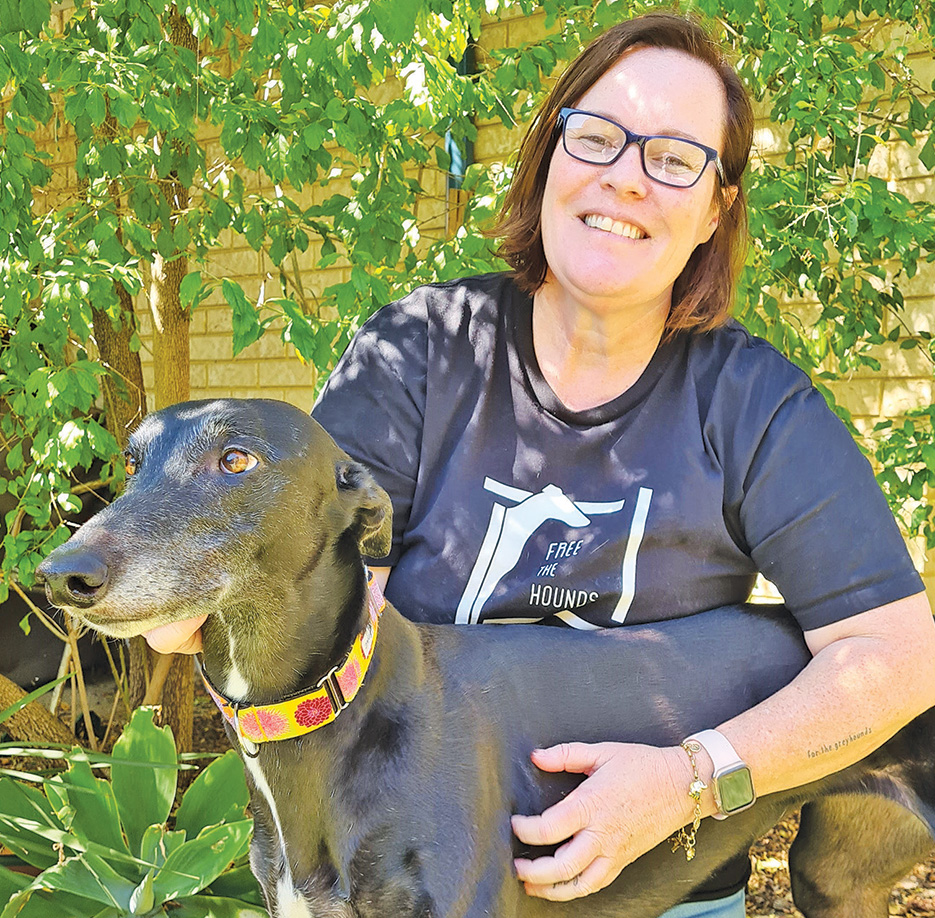
    • Melissa Harrison, president of Free the Hounds

    IN this week’s Speaker’s Corner, greyhound welfare advocate Melissa Harrison from Free the Hounds tells us the Covid-era has seen a surge of betting that’s brought a huge spike in the greyhound racing industry’s turnover, and now the largest e-petition ever signed by WA residents has been lodged to stop greyhound racing.

     THE largest e-petition ever signed by WA residents has just closed, with more than 13,000 people calling upon the government to ban greyhound racing.

    These petitioners have requested WA’s government to:

    • release greyhound racing from the sale of the TAB, and ban greyhound racing;

    • allow a two-year phase out of the industry — there are only 20 West Australians who derive the majority of their income from this blood sport, so phasing it out is very achievable; 

    • assist industry participants in re-skilling; 

    • rehome all greyhounds; and, 

    • approve four breeders to continue as registered breeders for greyhounds as pets only.

    Our state government ‘talks the talk’ about animal welfare, but it’s yet to ‘walk the walk’. Yet this state could lead Australia in getting rid of this cruel activity.

    What our government  needs to understand is how far behind public sentiment it is lagging. All surveys of the general population about public attitudes to greyhound racing show most Australians do not want it to continue. 

    RSPCA WA says: “RSPCA WA does not support greyhound racing due to the numerous animal welfare issues associated with the sport”. 

    Moreover, Australians are not just concerned about greyhounds. 

    The RSPCA canvassed attitudes to animal welfare prior to the 2021 WA election. 

    More than 70 per cent of Western Australians, whether they live in suburbia, on rural properties or in regional towns, say animal welfare is important or extremely important to them.

    So why are our politicians lagging on dog racing reform? 

    There’s one simple answer. 

    They’re addicted to betting revenue. 

    And did you know that they give millions of our taxpayer dollars to prop up a dying industry which kills and injures greyhounds each time they race?

    Can premier Mark McGowan and racing minister Tony Buti wean themselves and their fellow pollies off their ugly need for the next financial ‘fix’? 

    Their response to this e-petition will reveal if they care about more than money.

    Meanwhile, here’s the dirty reality of what’s going on — new research by the Coalition for the Protection of Greyhounds (CPG) has just revealed:

    • the Australian dog racing industry has flat-lined for the last three years on re-homing its dogs, yet the industry’s turnover has spiked due to Covid-era punting; and,

    • meanwhile, Australia’s greyhound racing industry continues to breed six times the dogs it can rehome —this is another good reason for all state governments to divert our dollars to re-homing ex-racers, instead of propping up this ongoing cruelty.

    It’s a national disgrace for an industry with a national turnover of $9.4b for the financial year 2020-21 to fail in re-homing all of its dogs, as well as to breed excessively. 

    They’ve proven they’re irresponsible and out of step with most Australians’ views on animal welfare. 

    It’s time for urgent change.

  • Chook zone

    IMAGINE a fifth dimension, between Nandos and KFC, as tasty as the Milky Way and timeless as roast chicken – you’ve just entered the Oporto Zone.

    Yes, Oporto does seem to exist in the twilight zone between other fast food joints with its flame grilled Portuguese-style chicken, but for me its vastly superior to the rest and something that Rod Serling might have enjoyed in-between cigarettes and Talky Tina.

    Normally the Voice doesn’t review fast food joints, but we’ve made an exception for Oporto.

    Three reasons – they don’t have many outlets in Greater Perth, their food is pretty damn good, and it can be reasonably healthy if you select the right options.

    The nearest Oporto outlet for Voice readers is in South Perth on the Canning Highway, just beside the ubiquitous Golden Arches.

    You can sit in, but I’d get take-away and then make the short drive to the South Perth foreshore car park where you can enjoy lovely views of the Swan River and the city skyline.

    Hopefully there’s no dogging going on in the carpark – it does look that sort of place – but it’s especially pretty at dusk when the lights from the skyscrapers reflect off the dark, glassy water.

    Oporto basically does Portuguese flame-grilled chicken on its own or in a burger, wrap or salad. 

    If you’re going there for the first time I’d skip the burgers and go straight for the half chicken box ($17.25).

    Here’s the fun part – you can choose your own basting from chilli, extremo picante or lemon and herb.

    You can have it with chips or go healthy with a lovely range of two sides including spicy rice, crunchy slaw, Portuguese tomato salad or grilled corn.

    I went for the spicy rice and Portuguese tomato salad.

    The chicken never disappoints at Oporto, it is always perfectly cooked – juicy and succulent in the middle with a lovely flame-grilled skin.

    The chook had a lovely smoky taste, and the lemon and herb basting was spot on with a slightly sweet refrain.

    I don’t know how they do their basting sauces, but they taste amazing and not like the primeordial gunk you get in other fast food places.

    The meal also comes with a choice of dips – garlic, picante, lemon and herb, prego and mayo.

    The chilli dip tasted great when I dunked it in the accompanying pita bread, which was lovely and soft, and the rice was spot on too and not dry.

    Again the pita was really good quality and tasted fresh, and the dips were superior for this type of meal.

    If you’re more of a burger person, there are a good range of doubles and triples (the chicken fillets are quite thinly sliced so get a double). I went for my favourite – the halloumi and chicken burger ($12.45).

    Wow, that tomato and capsicum relish really went well with the slabs of grilled halloumi cheese and chicken fillets.

    A really tasty burger. Again the sauces were good quality and although it is fast food, didn’t taste mass produced, like those squirts of radioactive-looking chilli you get in other places.

    The woman behind the till up-sold me on a side of spicy chicken bolas ($4  basically popcorn chicken).

    They were the only letdown and didn’t taste like much and were a bit rubbery.

    I’d stick to the chicken on its own and the burger/wraps.

    With the weather starting to turn and the windows steaming up on other vehicles in the car park, it was time to make a move and get out of there with my dignity and britches intact.

    So yes, Oporto does lie between the pit of man’s fears and the summit of his tastebuds, and is a good twilight zone option for food during the school holidays.

    Oporto (South Perth)
    Corner of Canning Highway and Beriwck Street, South Perth

    by STEPHEN POLLOCK

  • Cosmic flight
    • Isaac Diamond gets all existential in the play Homeward Bound. Photo by Tashi Hall.

    THE concept of ‘home’ became all-encompassing during covid.

    People trying to get back home, people missing their spiritual home – whether that be the church, pub or gym – people losing their job and home, people unable to work to afford a home…

    So even though the play Homeward Bound is ostensibly about an astronaut stranded in the hinterlands of space, trying to get back to his home planet, it’s just a metaphor for a whole host of things we’re trying to reach or get back to, physically or mentally.

    Written and performed by Isaac Diamond, Homeward Bound was inspired by the parallels between the migratory journey of a bird and the challenges faced by a lonely astronaut traversing space.

    “Last year I read a few books that started to speak to each other in eerie ways,” Diamond says. 

    “One was Piranesi by Susannah Clarke and the other was The Peregrine by JA Baker. These books couldn’t be more different but somehow they gifted me the story of a lone astronaut who is drawn instinctively to birds.

    “The play then began to speak to issues surrounding isolation, home and loss which in a covid-19 world seemed, well, bloody relevant.”

    A self-confessed sci-fi nerd, Diamond says he was also inspired by the Radiolab episode There and Back Again, which looked at where birds go in winter – “Radiolab is a science podcast but always considered with such beautiful story-telling, and there was something about these tiny creatures making these insane journeys every year and then returning home that rocked me.”

    But in general Diamond’s brain is like a Thermomix that crunches all his sub-conscious thoughts into little inspired blobs of dough.

    “As far as creative influences go I think I’m mostly inspired by mushrooms and weird deep sea alien creatures, and birds obviously and shit like that,” Diamond says.

    Homeward Bound has been developed through lots of research…but fun research like movies, TV, podcasts and books – things I already love. After I had consumed lots of material there was so much ‘mulch’ in my brain that I was ready to write. I actually don’t read heaps of ‘plays’ per se but I do remember reading When the Rain Stops Falling by Andrew Bovell during uni and I’ve performed in Cloud Nine by Caryl Churchill and I love both of these texts. They have scarily flawed characters that left me reflecting on empathy and love basically…that’s what gets me going.”

    A graduate of WAAPA’s performance making course, Homeward Bound is Diamond’s writing debut, but he is an award-winning actor and has assembled an experienced team for his show including director Elise Wilson (Elliot’s big nose and the Snot that it Grows) and sound designer Rachel Dease (Hymns for End Times), ensuring this post-modern play is full of interesting visuals and sonic effects.

    But at the heart of the show is Diamond’s love of birds and our concept of home.

    “I’m letting the sci-fi stuff be in the backdrop for a story that is focussing on people and our relationship to the planet,” he says. “Birds become the centre of this show’s universe. When I decided to smash together my love of science fiction with my love of birds, initially it seemed like it was going to be tricky to make these puzzle pieces fit…but I think we’ve done a great job. This show is cool and weird and surprising and emotional and pretty. I’m excited.”

    Presented by award-winning theatre company Lazy Yarns, Homeward Bound is at the Blue Room Theatre in Northbridge from October 4-22. Tix at blueroom. org.au/events/homeward-bound/

    by STEPHEN POLLOCK

  • Authentic advice
    Dementia care specialist Theresa Bates (left) supports people with the dementia and their loved ones who care for them.

    PERTH’S Theresa Bates was so disillusioned with the slow diagnosis of her mother’s dementia and the poor follow-up support, she decided to take the bull by the horns and do a three year degree in dementia care.

    Ms Bates says she was totally in the dark about what to expect and how to prepare for her mother’s dementia, with only a bunch of flyers to go on.

    “When my mum was showing signs of cognitive impairment we battled with her GP to run tests and do an MRI, but he would not enter into the discussion,” Ms Bates says. “It took us two years for her to get a diagnosis.”

    “When we contacted the larger organisations we were sent a lovely young girl with a handful of information flyers and that was it.

    “I don’t know if it is they are limited with the information they can tell or that they do not know the facts. 

    “I saw counsellors, gurus and people employed by ‘expert organisations’ over the years and they all claimed to understand how I was feeling.

    “The wakeup call came for me when I realised none of them had experienced this for themselves.”

    Sadly her mother Maria passed away two years ago, but in a fitting tribute, Ms Bates is now a qualified dementia care specialist, helping people negotiate the minefield of looking after their loved one.

    “I provide correct knowledge about main types of dementia, how to tackle the aged care system or the NDIS, completing paperwork, referrals to Aged Care Assessments and most importantly, the trajectory of the disease and how to input care plans to adapt to behaviours and problems that may arise,” Ms Bates says. 

    “I also offer a longer term consultancy where I handle all the dementia care for families for their loved one. These are one month, six months or 12 months.

    “My philosophy around dementia is ‘Be Proactive, not Re-Active.’”

    Ms Bates says she recently advised the son of a man with dementia.

    “The first two hour appointment we covered the illness he had, the signs and symptoms that accompany that type of dementia, what the likely trajectory was and what further symptoms to expect such as walking difficulties, incontinence and further speech problems,” she says.

    Dementia impacts close to half a million Australians and almost 1.6 million people are involved in their care. The number of people living with dementia is set to double in the next 25 years. 

    As part of Dementia Action Week (September 19 -25) Ms Bates wants people to be aware that the condition is much more than memory loss and does not just affect older people.

    “Dementia is the second highest killer in Australia and the highest for woman, yet everyone thinks it is breast cancer,” she says.

    To find out more go to dementiacarespecialist.com.au and dementia.org.au