
• Stellar rise continues
    James Foley

    FAMED children’s author James Foley has another award label to stick on his latest book Stellarphant, after it was named an ‘honour book’ in the picture book of the year category of the Children’s Book Council of Australia Awards last week. Perhaps even more tellingly, this year the CBCA organised for 2000 kids across the country to do their own ‘shadow judging’ of the CBCA Awards shortlists.  

    After the results were tallied, Stellarphant won Picture Book of the Year in what’s being called the 2022 CBCA Sun Project: Shadowers’ Choice Awards. 

    The Voice caught up with Foley to ask what that all means, how he comes up with his endlessly-inventive titles and what he’s working on.

    What did you feel when Stellarphant was shortlisted?

    I’ve had a couple of books shortlisted in the CBCA Awards before, but this is the first time I’ve had one awarded as an Honour Book; it’s incredible to have that recognition from the Children’s Book Council of Australia. And it’s so wonderful to have Stellarphant win Picture Book of the Year in the Shadowers’ Choice Awards – to have the kids choose it as their favourite is very gratifying. I remember as a kid I always loved Book Week, and would look for the shortlisted books with their shiny stickers. It’s surreal to now have my own books sporting those same stickers.

    What, to you, are the most important elements of good writing?

    I think the most important thing in fiction writing is to suck the reader in and have them forget about the world for a while. If you’re reading something and you find that you’re thinking about the shopping list or the chores that need doing instead of focusing on the story, then there’s probably something lacking in the writing. 

    How many books have you written, and which is your favourite?

    I’ve illustrated 18 books and contributed to one anthology. Of the 18 books, I wrote six. 

    My favourite book is usually the  one I’ve just finished, as I feel like  I’ve (hopefully) improved my work with each story – so my current favourite is Stellarphant. 

    Which part of the book was the most fun to write?

    Picture books aren’t very long, so there’s not really many parts to them as such – the whole thing was fun to write.

    But I did include a non-fiction section at the back of the book; it’s all about animals that have been to space in real life, and that was especially interesting to research and pull together. 

    What is a significant way your book has changed since the first draft?

    Stellarphant is about an elephant called Stella who wants to become an astronaut. The very first draft had her called Matilda, and she still wanted to go to space – but she also wanted to be a motorcycle stunt rider and a bunch of other things. That version didn’t really work! It came together eventually. 

    What inspired the idea for your book?

    I was sitting around a table in a cottage on Rottnest with some illustrator mates, and we were all sketching random things and having a chat. And my page ended up having an elephant and penguin astronaut on it, going on a spacewalk. Sometimes you have to go and find ideas, but sometimes ideas find you. 

    What are the major themes of the book and why did you choose them?

    On the surface the book is about animals in space, persistence and determination. But on a deeper level it’s about discrimination, diversity, equity and feminism. From the earliest drafts of the book, the elephant wanted to become an astronaut but wasn’t allowed for whatever reason.

    Once I started to think through the reasons for that, it became an analogy for the way that women and people of colour were historically treated not only in the aerospace industry but in most industries, and in society in general. 

    In the book, Space Command is run by and for white blokes and they want to keep it that way; Stella is the literal elephant in the room. 

    What is your schedule like when you’re writing a book?

    I try to get to the studio at least 4 days a week, 9am-4pm. I treat it like a normal job, which is hard sometimes when I essentially work for myself. Deadlines are great for keeping me focused; so are bills. I’m really lucky to get to do work that I enjoy. 

    How do you celebrate when you’ve finished and got your book published?

    I take a nap. There’s not usually a huge chance to party and celebrate as my wife and I have two young kids to keep us busy. 

    Usually I’ve got another book to get on with, but I try to leave a gap of at least a week in between books so I can recharge.

    There’s actually a long wait between finishing a book and when it’s released – usually 6-12 months. So when a book is finally out, it’s a bizarre experience for me; I end up looking at it with fresh eyes, almost as if it were made by someone else. 

    What are you working on next?

    I’m working on a new graphic novel series for Scholastic. It’s still secret squirrel for now. The first book will be out in early 2023. 

    By ARIANA ROSENBERG

  • Family delight

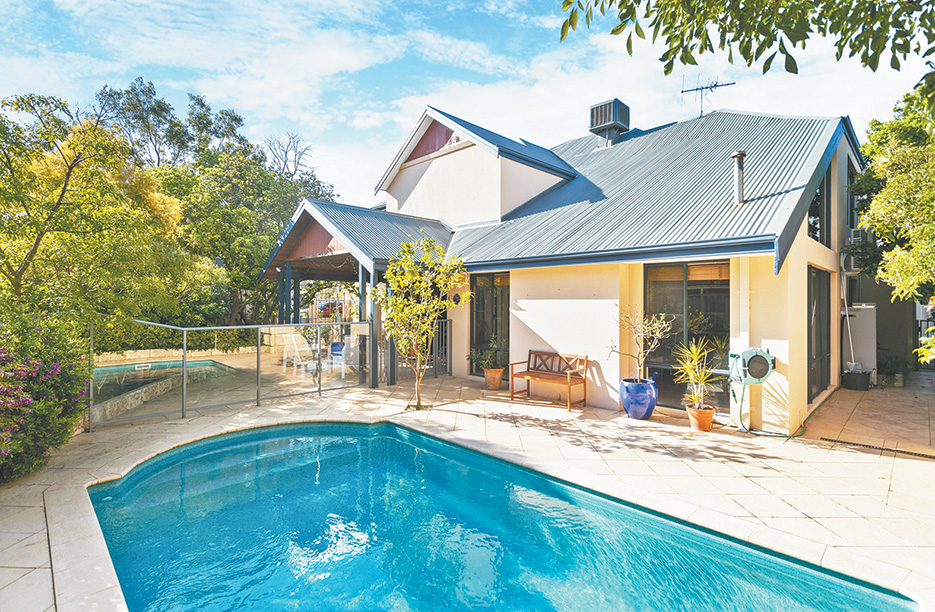
    THIS Maylands property definitely has the wow factor.

    From the stylish facade to the swish bathrooms, everything has been done with a great sense of style.

    But it’s not some cold clinical show home, it’s a family nest that has seen plenty of life and love with a nice feeling of warmth about the place.

    Location is another bonus – it’s situated on the Peninsula, just a few streets away from the Swan River.

    A gorgeous, relaxing spot where you can really enjoy the best Maylands has to offer.

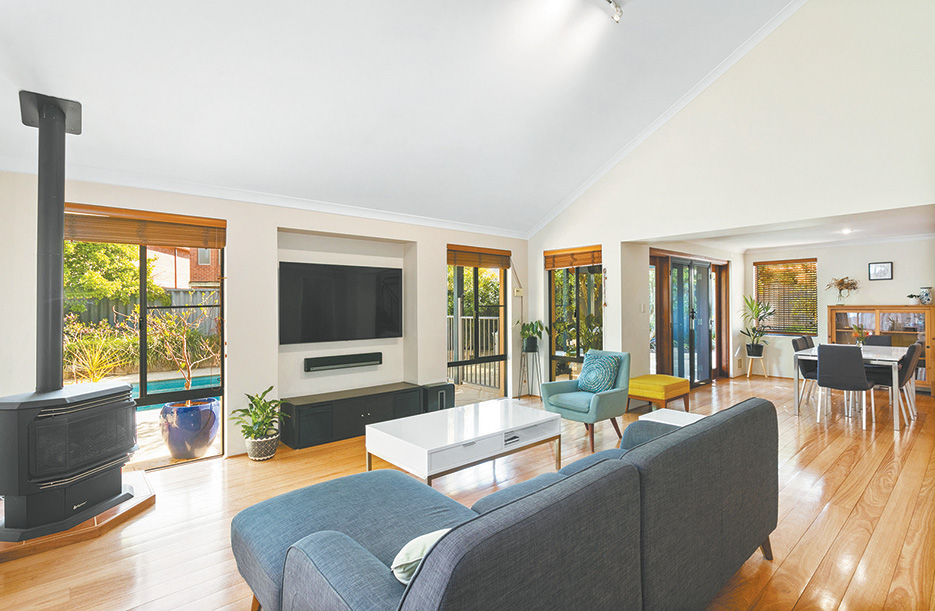
    One of the many highlights of this four bedroom, three bathroom home is the lovely open plan lounge/dining/kitchen area.

    Bright, spacious and airy, it really is the definition of open plan and I imagine it would be incredibly cool and relaxing come summer.

    The two-stories come into play here with the ceiling feeling incredibly high and almost cathedral-like, with the polished wooden floors adding a clean finish.

    The kitchen is a cracker with loads of bench and storage space as well as a pantry. 

    The Voice really likes the outdoor entertaining area – a set of French doors leads to a sheltered alfresco, overlooking a stone courtyard and chic pool.

    Fringed by a lovely assortment of lush bushes, plants and trees, it’s a lovely spot to have a dip and then enjoy a bite to eat.

    Around the corner, towards the front of the home, is a decent patch of lawn where the owners have put in a playground set for their kids.

    The floorpan has been well thought-out with a fourth (guest) bedroom plus bathroom on the ground floor and all the other bedrooms on the top floor, giving you a nice separation if people come to stay.

    There’s also a study on the ground floor, which could be used as a home office.

    The main ensuite bedroom has walk-in robes and there’s also another bathroom and toilet on this level.

    The home includes a laundry, double garage, balcony and side access.

    Situated on a 525sqm block on Aero Drive, Lakes Brearley and Bungana are on your doorstep and it’s a short walk to the local café Noggos for dinner.

    Or why not head down to Eighth Avenue and enjoy all the new cafes, bars and restaurants on the entertainment strip.

    This is a gorgeous family home.

    EOI Welcome
    3 Aero Drive, Maylands
    Beaucott Property 9272 2488
    Agent Paul Owen 0411 601 420

  • Retro Beatty
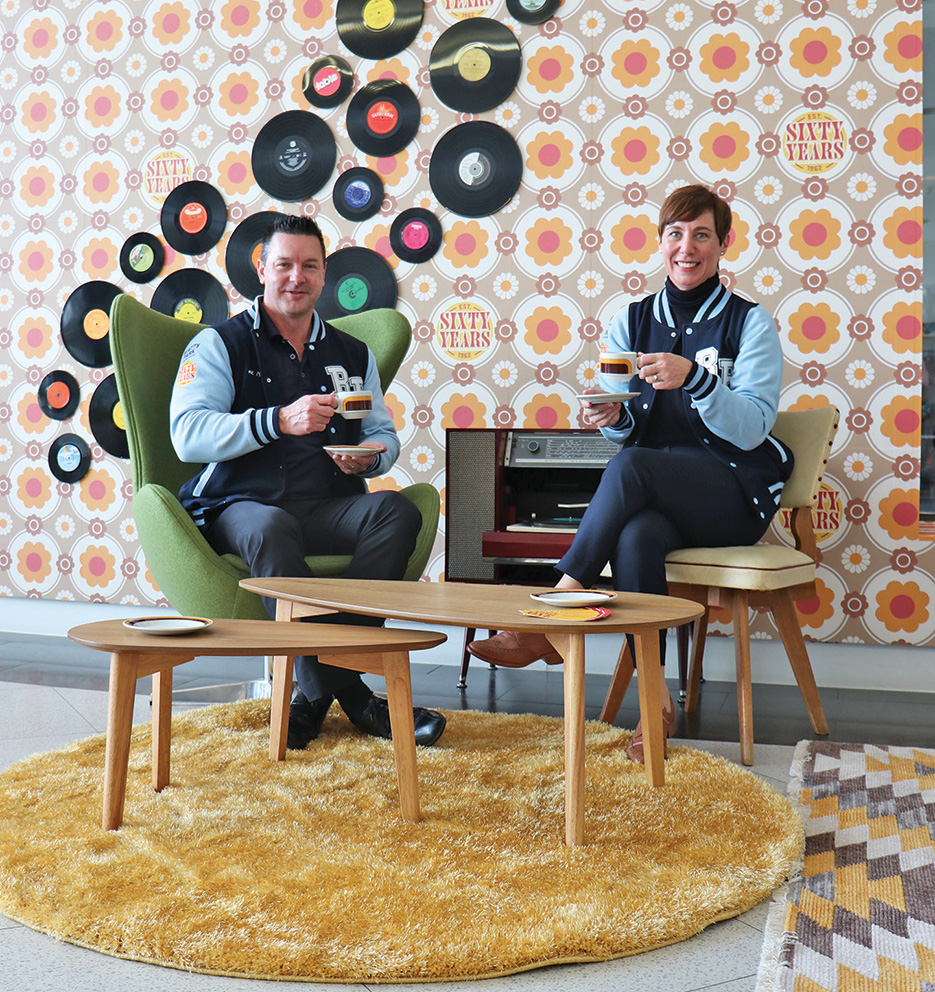
    Beatty Park Leisure Centre manager Dale Morrissy and Vincent mayor Emma Cole in the retro cafe.

    BEATTY Park Leisure Centre has reached its diamond jubilee 60th year, a little creaky and a little leaky, but still working where it counts with nearly a million people a year coming through the gates.

    The centre was purpose-built for the 1962 British Empire and Commonwealth Games, and after three days of events it spent most of the late ‘60s and ‘70s as a concert venue hosting bands like The Bee Gees, Deep Purple and Santana.

    Bee Gees

    The building was later handed to Vincent council to take care of and it officially became a leisure centre in 1994.

    Vincent’s now hosting a celebration of the diamond jubilee by turning the centre’s caf√© retro with memorabilia and a series of 12 videos from Beatty Park patrons sharing their tales, including a confession from a swimmer who claims they snuck in to use the pool a day before the Commonwealth Games.

    November 25 has been set aside to pay homage to the centre’s concert days by bringing back the music with their Sixties Sundowner, and a retro family day on November 26 brings in gogodancers, hula-hoopers and a Kombi photo booth.

    Reflection

    Mayor Emma Cole says the centre is “iconic” and “it has gone from hosting athletes, to rock stars, to people from all around Perth who want to keep fit and healthy and who love the sense of community that comes with being a member.

    “The 60th anniversary celebrations are a time of reflection and celebration, but it’s also a good time for us to talk about what we want the future of Beatty Park to look like.” It hasn’t been cheap for the council to look after the state heritage site: The council’s spent millions so far keeping it chugging along and just last week had to commit another $278,000 to fix water ingress into the original 1962 grandstand, which has been closed to the public for years due to public safety.

    The city’s next step is to try to secure some state or federal government funding to look into refurbing the grandstand’s main entrance so it can be used by the public again.

    Larry Wale.

    Deep memories

    CONCERT-GOER Larry Wale shared his memories of Beatty Park gigs in the 1970s seeing acts like Suzie Quatro, Free, Manfred Man and Deep Purple: “I remember at one concert the girls were jumping in the water to get to the band,” he said.

    “I can’t remember which band it was, whether it was Daddy Cool or Deep Purple, one of those two.

    “The acoustics in the actual arena was great and the setup of the stage was good, everyone had good vision.

    “It was very exciting to be a part of seeing these overseas acts at the time. Everything was happening, here.”

    The Beatty nostalgia series is up at: https://www.beattypark.com.au/about/sixty-years

    By DAVID BELL

  • Sargent steps down

    STIRLING councillor Keith Sargent has stepped down after being charged with possessing child exploitation material.

    Police seized electronic devices during a search of his Mirrabooka house on September 1 and after a preliminary examination of two devices police alleged “material consistent with child exploitation material was located”.

    Mr Sargent fronted Perth Magistrates Court the day of his arrest and was granted bail ahead of a September 29 court appearance.

    The arrest came during a joint operation involving WA Police, federal police and border force that saw 45 people in WA charged, including a City of Stirling employee who has since resigned. 

    Stirling mayor Mark Irwin fronted the media on Friday September 2 and said he’d called on Mr Sargent to resign, and by Saturday Mr Sargent had stood down. 

    “We have initiated the process to hold a by-election for the Balga Ward before the end of the year,” he said.

    The council would not reveal whether the charged employee came into contact with children at work.

    by DAVID BELL

  • Hitting the high notes
    Katherine Azzam is Perth’s only aerial violinist. Photo by Naomi Reed.

    INGLEWOOD local Katherine Azzam holds the distinction of being Perth’s only aerial violinist.

    “There’s a few in the world,” Azzam tells us. “Circus is hard, and violin is really hard as well. But it’s really fun for me. Playing in a classical orchestra, it’s very cut and dry, whereas in circus I can choose the music, I can choose what I play… it’s quirky, high energy, and really fun.”

    Originally a classical orchestra violinist, she took to the air after taking some circus classes and offering to play some violin for their shows. 

    Then came the idea to both play and perform: “One of the performers says, ‘hey, have you seen this chick Janis Martin? She’s this American chick, she’s phenomenal, she’s ex-military, she went to Juilliard… and she plays aerial violin.”

    After studying up, Azzam took to the trapeze, testing out different techniques and timings to play amid the manoeuvres. 

    She says “the hardest thing was designing the harness so the violin doesn’t flap around” when it needs to be stowed for the hands-on stunts, and from there “it’s about figuring out the trickiest moves you can do without the bow going into your eye”.

    Azzam performs in the one night only show Confetti that’s celebrating 10 years of circus company Kinetica, combining aerials, acrobatics, drag and burlesque at the Rechabite on September 16 at 6.30pm.

    by DAVID BELL

  • Blockheads jam loos

    ANYONE needing the toilet in a hurry at Dianella Library has been out of luck with constant blockages and unacceptably long delays to get them fixed, library-goer Adrian Davies says.

    Mr Davies tells us “there’s been an ongoing problem with the fact that the public toilets have been unavailable, caused by backflow of sewage not going through the sewer… that means the toilets don’t work, and if you do flush you get your own back, in a comedic sense.

    “About four or five weeks ago we had a problem that took a week or more to get fixed.”

    The repair seemed to be only temporary, Mr Davies says, and after a brief respite of flushing the toilets last week started showing signs of slow-flowing and were soon closed off again.

    Mr Davies says library visitors have been directed to use the toilets at Dianella Plaza across the road, but that’s not tenable for people who urgently need a loo: “You’ve got elderly people going there and in need of the toilet. How they’re going to run quickly over to the Dianella Plaza eludes me … having to cross the road, you’re just setting yourself up for casualties,” he told the Voice.

    We put his concerns to Stirling council and got a response back from a city spokesperson saying they were aware of the issues and have been working on them since early this year. They blamed sewer saboteurs. 

    “Many of the recent issues have been as a direct result of inappropriate use of the facilities, and the City is disappointed that this amenity has required such frequent attention.

    “Earlier this year the Dianella Library experienced several sewerage blockages, and upon investigation it was found that there was damage to the sewerage infrastructure, including damaged pipes from trees and portions of the pipe needing replacement.”

    In April the council re-lined the damaged sections of pipe which seemed to address sewage overflow, but then:

    “In August, further issues were reported and were found to be caused by the flushing of cloth, bandages, towels, hand towels and nappies down toilets, which has caused significant blockages and required multiple visits to make good.

    “In response, the City has provided nappy and sanitary bins, removed paper towel dispensers and installed hand dryers, and will also install signage to remind users to flush only toilet paper.”

    Mr Davies says more prompt and permanent fixes are required. He points out the library is “a public building that the City of Stirling own and control,” and under the Building Code they’re required to have working toilets.

    “If you’ve got a picture theatre, if [the toilets] don’t work then they close the place down. So why are they treating their own selves differently, or giving themselves a leniency they wouldn’t give to other people?

    “It needs to be properly addressed.”

    by DAVID BELL

  • Street beats
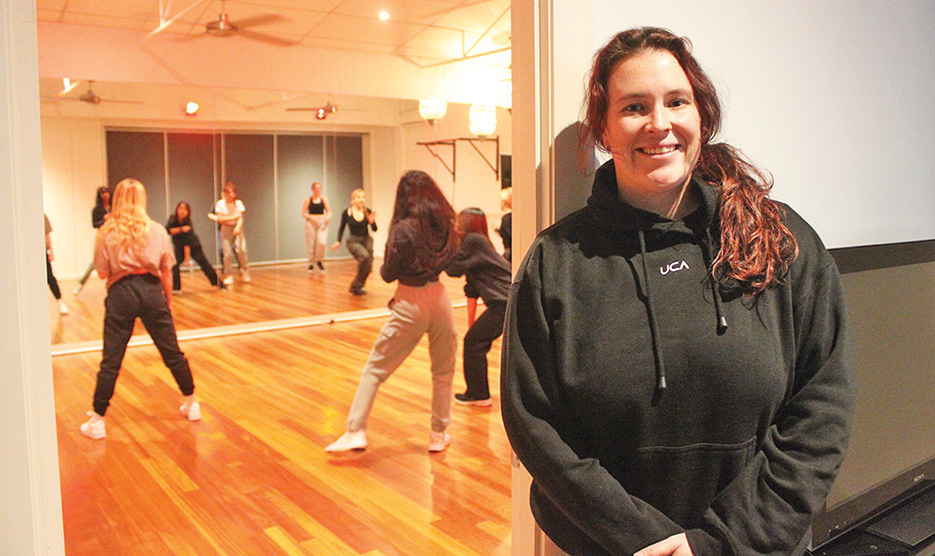
    Heels dance teacher and The Spot director Isabella Boladeras.

    PERTH has its first street dance studio aiming to inject some authenticity back into street styles and pay due respect to the cultures that created them.

    Street styles are often divorced from their cultural context when they’re taught here, so dance teachers Isabella Boladeras and RHung wanted to ensure the teaching was true to the roots at their newly opened Leederville dance studio The Spot. 

    “There’s this whole area of the dance scene, a lot of the styles that came out of the US‚Äîhip hop, popping, locking, waacking, breaking ‚Äî so many styles that no one understands in Perth,” Ms Boladeras says.

    “All the street styles get pushed under the ‘hip hop’ label which is not necessarily correct.

    “There’s a whole genre of dance that’s just not being represented correctly. And it’s not anyone’s fault, we’re just not educated in the history of the styles.”

    The street styles are “the ones that weren’t made in a studio,” Boladeras says, often developed in clubs and dance halls as people shared moves and built off each others’ repertoire. “It’s an organic way of creating a style.”

    Culture and politics

    The styles are often intertwined with culture and politics: Dancehall’s origins have been traced to Jamaica’s urban poor in Kingston, descendants of slaves excluded from high society dances. Waacking, a freeform style marked by intricate arm movements and striking poses, was forged by Black and Latin dancers in gay clubs in 1970s California. It dwindled during the AIDS epidemic, and is now resurging due to prominent performers on TV dance shows and social media. 

    Boladeras says it’s important to “educate people on where it’s come from and pay respect to [the originators], because it wasn’t always easy for those people that created the styles”. 

    The Spot’s instructors go to great lengths to learn styles authentically, travelling or skyping to learn from those in the know and pass it on to students. 

    “A lot of us travel over east and to Asia to train, and me and RHung were thinking ‘why aren’t we a training location? Why isn’t Perth somewhere people want to come and train?’,” Boladeras says.

    “Mentoring that new generation is something we’re really passionate about.”

    The Spot
    2/220 Carr Place, Leederville thespotperth.com
    info@thespotperth.com

  • Life in the pickle
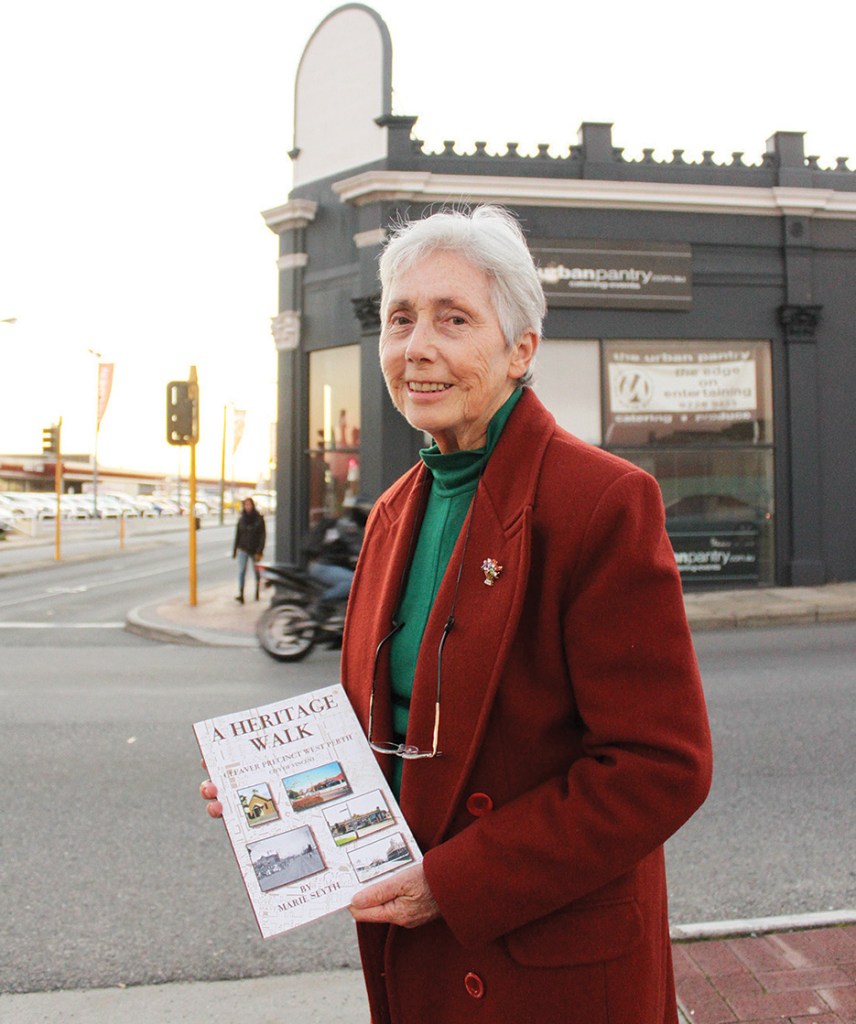
    Marie Slyth and her book A Heritage Walk.

    AFTER reading our recent histories of the Pickle District, Voice reader Marie Slyth got in touch to offer her piece ‘Memories of Golding Street, Newcastle Street and Strathcona Street’ from her book “A Heritage Walk”, reminiscing on how the district got its new name.

    [KIT] Woods mentions Sandovers — the furniture and hardware factory which occupied a number of lots beside the paddock at the top east end of the corner of Golding Street and Newcastle Street. 

    South of the paddock on the east side of Golding Street were four semi-detached houses beside a small vinegar factory up from the corner of Aberdeen Street.

    I seem to recall that the factory was formerly the Best West Pickle factory from which the surrounding residents regularly experienced the pungent odours which it frequently emitted. 

    Kit’s husband Laurie Woods worked there. 

    Tony Waters remembers walking down Golding Street from Florence Steet as a boy to get the vinegar bottle filled up at the Vinegar Factory for his mother and seeing big vats inside.

    Across Aberdeen Street was Hamilton Park. 

    Laurie Woods’ family — the Goldings – actually had some dairy cattle which grazed in Hamilton Park before it was ever a park. It is believed Golding Street was named after that family.

    Mrs Woods owned a house in Golding Street on the west side of the street — again, here were four semi-detached houses on that side of Golding Street. Her house was beside the Old Flour Mill which was on the west corner of Aberdeen and Golding Streets.

    When Mrs Woods was first married she and her husband Laurie lived in one of the houses in Newcastle Street opposite the bottom of Strathcona Street. 

    They sold their house there and moved into 12 Strathcona Street which they bought in approximately 1956/57, next door to the Slyth family at number 10. She has lived at Strathcona Street for nearly 60 years now.

    The Woods’ two boys went to the Newcastle Street Infants School and then later to Leederville State School.

    Mrs Woods remembers the Australian family, the Wignalls, who owned the corner shop on the corner of Strathcona and Carr Streets in the 1940s.

  • Blooming marvellous
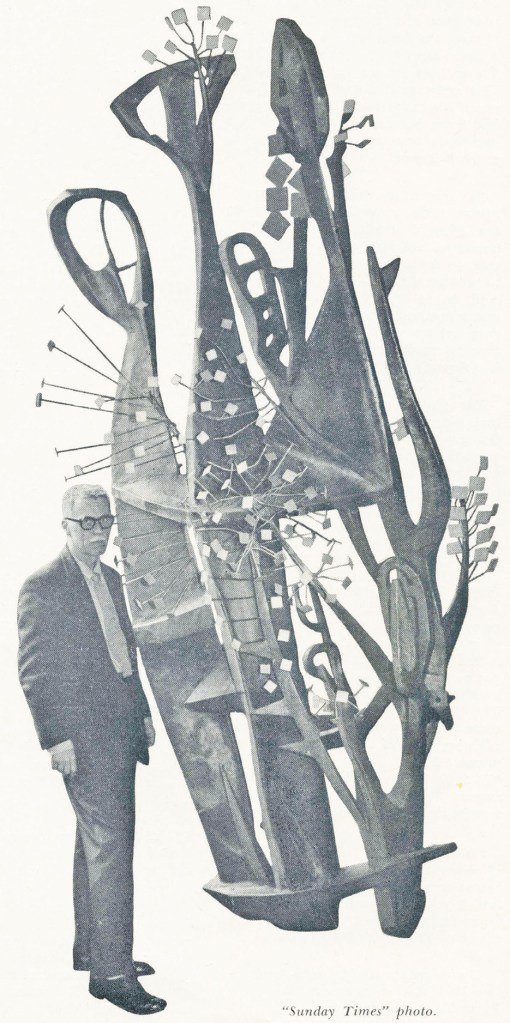
    Lyndon Dadswell and The Wildflower State.

    LYNDON DADSWELL’S sculpture The Wildflower State is coming home after two WA bidders determined to see it return smashed the auction record for the artist’s works.

    The successful bid was $81,000, but with the buyer’s premium and GST the final cost will be $94,365, Lloyds Auctioneers head of fine art and luxury Amanda Benson told the Voice.

    “Importantly it is going back to WA, and that’s something we were hoping for as the vendor is from WA and indicated that was where they believed it should be,” Ms Benson said.

    “The artist record price up until this auction, set at the peak of the Australian art market in 2007, was $34,000, so this has pushed that up by a multiple.”

    Ms Benson said eastern states bidders dropped out around the earlier mark, as their interest was as an investment, but the two local bidders continued – unaware of each other’s desire to secure it for WA – until the record price was hit.

    “As someone that has lived in WA, I know that Western Australians highly value their cultural heritage,” Ms Benson said.

    While The Wildflower State was purchased by a private individual, Ms Benson said they had a prominent company so she has hopes the sculpture will end up on public view.

    It has been at Macquarie University’s sculpture park on loan for around 25 years.

    Dadswell was the first sculptor to be appointed an official Australian war artist. He resigned his commission in 1942 and returned to the East Sydney Technical College, where he’d just started teaching before war broke out.

    The Wildflower State was commissioned by the Commonwealth Bank for the opening of its new building on the corner of Hay and William streets in 1960, and marked a point in the artist’s career when he embraced abstracts.

    Edith Cowan University honorary professor Ted Snell remembers the sculpture while it was on the bank and says he was intrigued because it was contentious.

    “I think there was even a Rigby cartoon in “I think there was even a Rigby cartoon in the Daily News about it,” Prof Snell said.

    “I do bemoan the fact that so much of the public art in our cities has been destroyed, removed or desecrated.

    “Some has been saved and repositioned, such as Howard Taylor’s Cyclops from outside the ANZ Bank building in St George’s Terrace which is now at Curtin University, but it is always a risk when developers see an opportunity.”

    Prof Snell said it would be great to see The Wildflower State back in WA and hopes that an appropriate site can be found.

    by STEVE GRANT

  • RIA silent on permit claim

    THE Rottnest Island Authority refuses to say whether it jumped the gun and gave a developer approval to clear native vegetation before it checked with the state’s environmental watchdog.

    The Prendiville Group has applied to build private accommodation for 211 staff from the Samphire Rottnest hotel (“Outrage over Rotto units,” Voice, August 27, 2022) and its development application explicitly states the RIA “approved … a clearing permit”.

    That’s angered the Rottnest Society, which says the proposed site contains valuable mature vegetation and Prendiville shouldn’t have been given approval before the clearing was run past the state Department of Water and Environment Regulation, nor pre-empted the public consultation period.

    The Voice asked the RIA whether it had approved the clearing, but got a series of non-answers – even when we went back and asked directly: “Is the development application correct in stating that the RIA has ‘approved the area and a clearing permit?’”

    The authority would only sayç it “is applying” to DWER for a clearing permit on behalf of the proponents, which is something of an update from its website which has it in the ‘to do’ list.

    “Permission (a permit) to take flora is also required to be granted by RIA under the Rottnest Island Authority Regulations 1998,” the authority’s response to the Herald continued its dance around the actual question.

    “Required Environmental Protection Act 1986 approvals will need to be obtained prior to development proceeding. The current public consultation process is being undertaken to inform RIA’s determination of the development application.”

    The Voice had more luck with other areas that concern the Rottnest Society, such as whether additional staff living on the island would put more pressure on the authority’s own budget through increased infrastructure needs.

    “The island’s infrastructure has been, and continues to be, enhanced following significant investments by the state and federal governments in recent years to support growing visitor arrivals to the island,” the spokesperson said.

    “The staff housing proposed is largely replacing existing ageing staff accommodation and transferring the responsibility for provision of such housing from RIA to the larger island businesses.

    “This strategic approach is outlined in the Rottnest Island Management Plan and will contribute to the sustainability of the island.”

    The authority has also put the behaviour of staff in Samphire’s court, amidst the society’s concerns they’ll turn the accommodation into a party venue that may disrupt other island visitors.

    “Island businesses (who are the ‘tenants’ under the staff housing leases) are responsible for ensuring their staff (being the occupants of the properties) comply with the terms and conditions of the leases,” the spokesperson said.

    by STEVE GRANT