• IT’S TIME TO GET CREATIVE, TO GET SHOOTING, AND TO GET SMART!
    2022 Best Film Prize winner Alexa Prinno (Couple Goals) 
    and Audience Choice Award Winner Jay Jay Jegathesan (The Saint).

    The WA Made Film Festival has offi cially announced the return of its highly-regarded smartphone filmmaking competition, Get Smart! Presented by Buy West Eat Best.

    Get Smart! Presented by Buy West Eat Best invites established filmmakers, independent filmmakers, students, and the general public to submit a mini-masterpiece to be considered for a special event screening during the next WA Made Film Festival which will run February 17-26, 2023.

    “This year’s Get Smart! Presented by Buy West Eat Best competition was an overwhelming success. Not only did we screen nine incredible locally-made smartphone films, but we also introduced a brand new smartphone filmmaking workshop conducted by esteemed WA filmmakers Kerreen Ely-Harper, David Vincent Smith and Brian Hennings,” says Festival Director Matthew Eeles.

    “We are very passionate about creating new opportunities for WA filmmakers to show off their filmmaking skills without the need for expensive equipment and a big budget.”

    To challenge fi lmmakers even further, this year’s competition includes the exciting theme, ‘Ghost’. Short fi lms submitted to must contain the theme ‘Ghost’ giving filmmakers the option to explore a range of genres. This doesn’t mean that the film has to be a horror film. The film can be a ghost comedy, a documentary about ghosts, the word ghost is mentioned in the film, someone being ghosted on a date, a picture of a ghost in the background. The possibilities are endless and theme ‘Ghost’ can be as subtle or as direct as the filmmaker likes.

    The 2023 Get Smart! Presented by Buy West Eat Best event screening will include a before and after party, drinks, locally-sourced food, networking opportunities and an awards ceremony which will include a major cash prize of $1000 for Best Film chosen by a jury of industry professionals.

    This year’s top prize for Best Film was awarded to Alexa Prinno for her short film, Couple Goals – a raw and honest glimpse into the sometimes suffocating isolation of motherhood.

    “I’m originally from Melbourne and now living in Perth. I didn’t know what to expect from Get Smart! Presented by Buy West Eat Best. I thought it was going to be a small screening – like something you’d find on the indie filmmaking scene in Melbourne. But I found Get Smart! Presented by Buy West Eat Best to be an incredibly well-run and professional event,” says Alexa.

    “I had a really fun time with my friends who came along to support me. Normally I act, but I really enjoyed the challenge of shooting and editing while acting at the same time, and I’m so grateful for the opportunity to expand my skill set. It was so much fun. I learned so much about the fi lmmaking process and it was humbling to win the top prize on the day.”

    The ever-expanding WA Made Film Festival featured 63 WA films over two weekends in 2022 firmly establishing itself as Western Australia’s largest celebration of locally-made screen content. Get Smart! Presented by Buy West Eat Best will again be an exciting addition to the 2023 festival.

    WA filmmakers will have until the end of the year to complete their flms with submissions for Get Smart! Presented by Buy West Eat Best opening along with regular feature film, short film, web series, television and documentary submissions on August 31 and closing December 9, 2022.

    More details about the WA Made Film Festival and Get Smart! Presented by Buy West Eat Best, including terms and conditions and can be found at http://www.wamadefilmfestival.com.au

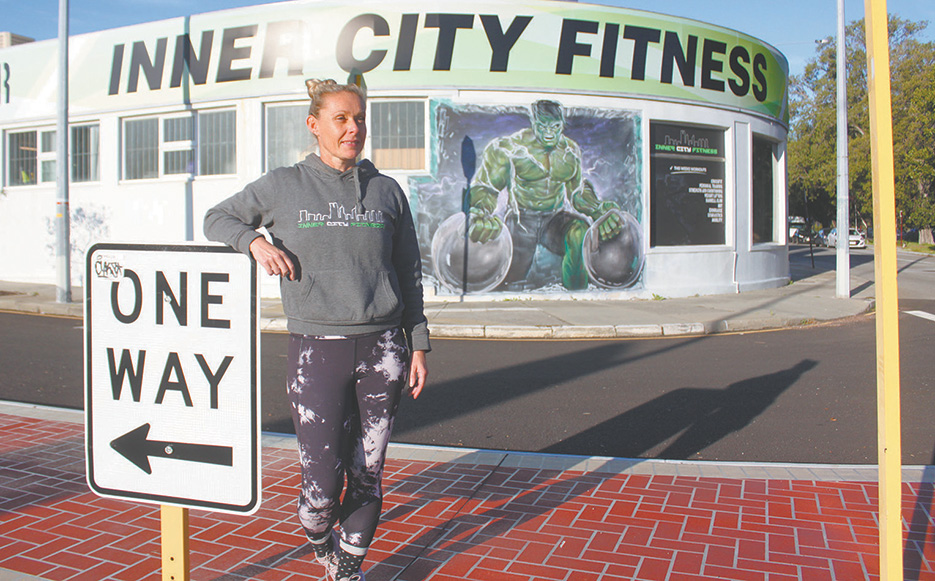
  • In a Pickle
    Nicola Hibbert from Inner City Fitness faces being pushed out of the neighbourhood she helped revitalise.

    Build it and Bunnings will come

    HUGE changes are planned for the former West Perth industrial zone dubbed ‘the Pickle District’, but the existing small businesses who revitalised the neighbourhood face being turfed out by a Bunnings megadevelopment.

    The site takes up half a city block and the private owner is planning to sell to Wesfarmers. They’ve submitted plans to the state’s Joint Development Assessment Panel to build a Bunnings and seven other assorted commercial tenancies including a liquor store, small bar, and fast food outlet. 

    A childcare  centre would be on the second floor and some kind of community studio and outdoor space would go on the rooftop. 

    But the development will unseat a collection of small businesses, arts types and a church who’ve all moved in over the past few years and started transforming the empty warehouses and old factories into an arts hub. 

    Compared to a few years back the area’s now pretty lively on a weekend night amid art gallery openings, weddings, parties, church events, and Fringe performances in festival time. 

    A Hatch RobertsDay report on the state of arts hubs in Perth released in December 2021 called the Pickle District “the most successful” example in Perth of under-utilised land being organically regenerated, and emphasised a need to protect the character if large scale redevelopment occurred.  

    Nicola Hibbert owns Inner City Fitness, one of the businesses that’ll be ousted if the Bunnings is built. 

    The first she’d heard of a plan to redevelop was when signs went up advertising for public comment.

    Ms Hibbert has three years left on her lease but like the other tenants there’s a redevelopment clause to end it with six months’ notice. 

    The uncertainty’s made it trickier.

    She doesn’t know if they’ll be moved out as soon as the sale goes through, or when the development’s approved, or when construction actually properly starts, which can be up to four years after approval. 

    “We’re in limbo at the moment,” Ms Hibbert says.

    She was an early starter in the Pickle District, moving in eight and a half years ago amid a couple of auto shops and finding the old spacious warehouse was the perfect spot for a gym. 

    Jon Denaro is chair of the Pickle District, a not-for-profit town team that incorporated in 2018 to work with the locals and Vincent council to steer the area’s renewal. His art studio Voxlab on Old Aberdeen Place will also have to move out if the Bunnings plan goes ahead. 

    He says “a lot of people are talking about the idea of starting arts hubs – [in] Subiaco, Perth CBD – and here we are with one that is real and happening.

    “This development smashes all that with a set of franchise plonks.

    Destroys

    “This destroys everything we have been building. The community and the whole potential.”

    The development’s hired planners Planning Solutions writes in the application that the project will include a community space and a rooftop event space “to continue to provide art events and ensure the district is not relinquished following the demolition of existing warehouses across the development area”.

    But the not-for-profit is unlikely to be able to afford that space, and the actual businesses that make up the rank and file of the town team aren’t catered for.

    Mr Denaro says “our group, the Pickles, are not opposing development. We just want to influence – to create something smart that is needed, rather than something that is lowest common denominator”.

    For Ms Hibbert’s gym, it’ll be tough to find a new spot.

     A gym needs a lot of space, and other inner-city gyms have had trouble with noise complaints from residential neighbours being too close.

    “It’s a shame,” she says. “It’s a nice little area.”

  • Council floats shelter squeeze

    HOMELESS services will have a harder time moving into Perth council’s demesne if a new motion by councillor Brent Fleeton is approved by colleagues. 

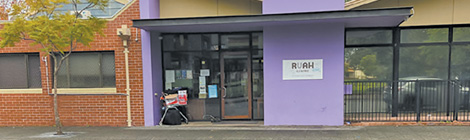
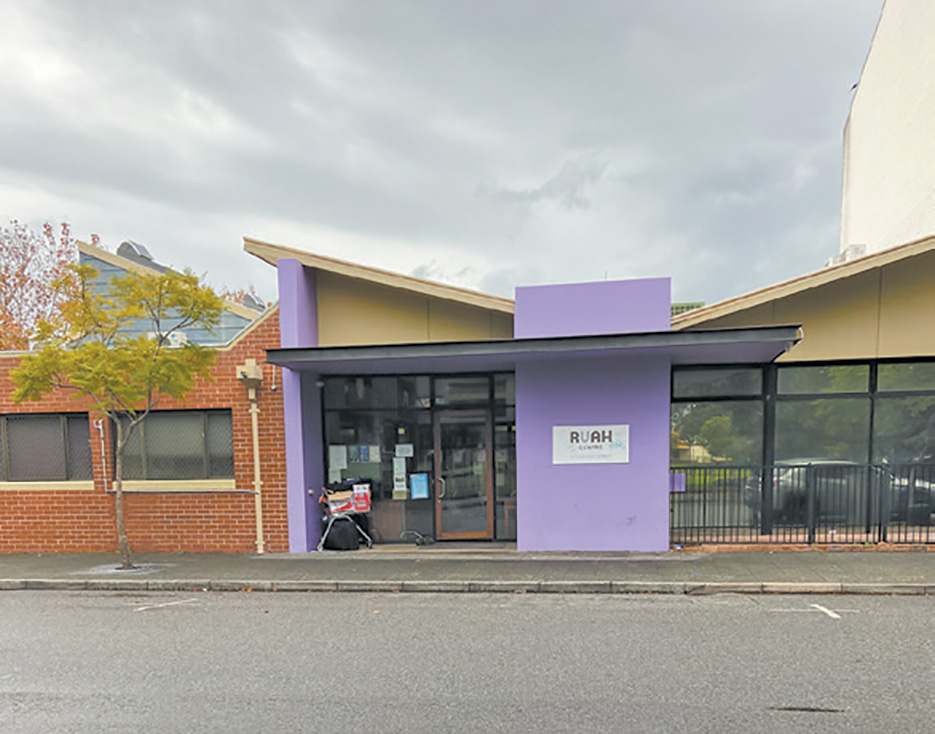
    He’s drawn up a motion to amend the city’s planning scheme to put them on safer ground if they reject applications like the recent instance of Ruah wanting to move a homeless drop-in service into James Street.

    Councillors rejected that proposal last month due to community concerns about safety and amenity,  but Ruah’s now appealed. 

    Council planners reckon Ruah has a good case for appeal: All they needed was for Perth council to change the zoning to ‘community centre’, which their own planning scheme says is a ‘preferred use’ and that usually makes for an automatic approval. 

    Contemplated

    One way for Cr Fleeton’s motion to take effect would be to change community centres to a ‘contemplated use’, which writes into the scheme with more certainty that council has final say over these decisions and doesn’t leave them so wide open to appeal.

    Cr Fleeton’s motion says the change would “avoid future uncertainty/confusion” when dealing with applications like Ruah’s, to let council make decisions on whether homeless services are suitable for an area “taking into account the existing context, amenity and views of the local community”.

    Councillors vote on the idea at the upcoming June 28 meeting, and Cr Fleeton is likely to have colleagues’ support: Several members of the current council along with lord mayor Basil Zempilas have argued that inner Perth has enough homeless centres and any more should be distributed through other suburbs.

    If approved it’d take about 18 months to properly bring into effect, and would still need sign-off by the state government. 

    by DAVID BELL

  • Not a bright idea

    WA TREASURER Mark McGowan’s latest budget was a missed opportunity to deal with climate change, while its centrepiece $400 electricity rebate was a “lazy” way of helping with household costs, says Greens MLC Brad Pettitt.

    The Chook caught up with Dr Pettitt as he was teasing out his budget reply and prepping up for this week’s Budget Estimates committee, where he’ll get to grill his Parliamentary colleagues and their top bureaucrats on what this year’s taxes and mining royalties get spent on.

    Dr Pettitt said the $400 electricity rebate wasn’t targeted at those most in need of financial help, and didn’t encourage consumers to ease up on their power consumption.

    “When you make things free, people don’t value it,” Dr Pettitt said.

    He’d have preferred the money was used to subsidise household heat pumps, which he said could help people reduce their hot water bills by around half and give them long-term savings rather than a “populist” one-off hit.

    Dr Pettitt said the budget did have some positive initiatives, such as a “Rolls Royce” target of 75 per cent renewable energy for Rottnest Island and rebates for electric vehicles, but WA remained on track to increase its carbon emissions – even without its gas extraction taken into account.

    “It feels to me like a lot of promises around big movements, around a lot of hope in things like green hydrogen, but actually the tangible things we can do right now to reduce emissions in this state, I can’t see in this budget.”

    Metronet got a big slice of extra cash, but Dr Pettitt said much of that was gobbled up by inflationary pressures, while the whole concept had a major flaw.

    “Metronet generally is an OK set of projects, but it’s been terribly let down by the fact that all the funding for public transport in this state is … focused towards the urban fringe; again, further enabling sprawl.

    “This is road and freeway building of a scale never before seen in this state, and a lot of this is literally enabling sprawl.

    “So whilst we’ve got a $1.25 billion fund for emissions reduction, we’re enabling new gas projects … but we’re also doing funding other things that actually further undermine a sustainable future for the state.”

    Dr Pettitt said it was great the premier had a $5.7b surplus to play with, but it was also a source of frustration because it gave WA a better opportunity than any other state to undertake game-changing sustainability initiatives.

    “We are in a position to transition quickly and pivot quickly,” he said.

    “And often the pivots that need to happen around renewable energy and better design of your cities, they’re things that save you money in the long term. “

    by STEVE GRANT

  • Ruah appeals drop-in knockback

    A NORTHBRIDGE drop-in centre for people living homeless that was denied an application to move will appeal Perth city council’s rejection. 

    Homeless services operator Ruah wanted to move its Shenton Street drop-in centre 270 metres away – about the distance of a Minjee Lee tee shot – to James Street, as the Shenton Street site’s being turned into a seven-storey women and children’s refuge.

    Perth councillors rejected the move at the May 31 council meeting after complaints from James Street residents and business owners who feared for security and the amenity of their street (“Homeless centre move voted down,” Voice, June 4, 2022).

    Invested

    The ‘no’ vote was unanimous save for Cr Viktor Ko, who abstained due to working as a doctor for Homeless Healthcare which provides medical services to Ruah.

    Lord mayor Basil Zempilas said existing locals had invested a lot in the area and it was fair that homeless services be more spread out, and not all stuck in Northbridge and the CBD.

    Ruah has decided to appeal the rejection and has a hearing listed at the State Administrative Tribunal for June 24. 

    Perth council’s planning experts had recommended councillors approve Ruah’s move, which only required a pretty simple change to the planning use of the new premises to a “cultural and community centre”. 

    The planners warned councillors they might face an appeal if they rejected it despite concerns about amenity, crime, or falling property values as “none of these matters form solid planning grounds upon which the proposal could reasonably be refused”.

    The council’s own town planning scheme said a cultural or community centre was welcome in Northbridge, putting them on shaky ground. 

    The council’s decision was slammed by state homelessness minister John Carey, who said the vote was “deeply saddening, and in effect, may shut down one of only two critical drop-in centres for our city. 

    Worst fears

    “This decision confirms our worst fears about people’s attitudes to social housing and homelessness. Everyone is happy to support social housing or homeless services, so long as it is not located close to their business or home.”

    The previous council, which was suspended due to a state government-initiated inquiry, were sharply criticised for making some populist decisions that were counter to planning rules and that were later overturned by the SAT. Such decisions can prompt a “lengthy and unnecessary SAT process” taking more than six months, the inquiry report said.

    The inquiry final report stated: “Council members do not have the luxury or flexibility to make decisions on legitimate applications just to appease or benefit an interested party, whether it is the developer or a group of objectors. Decisions should be based on the relevant planning framework and sound planning principles.”

    by DAVID BELL

  • Vincent plugs a gap
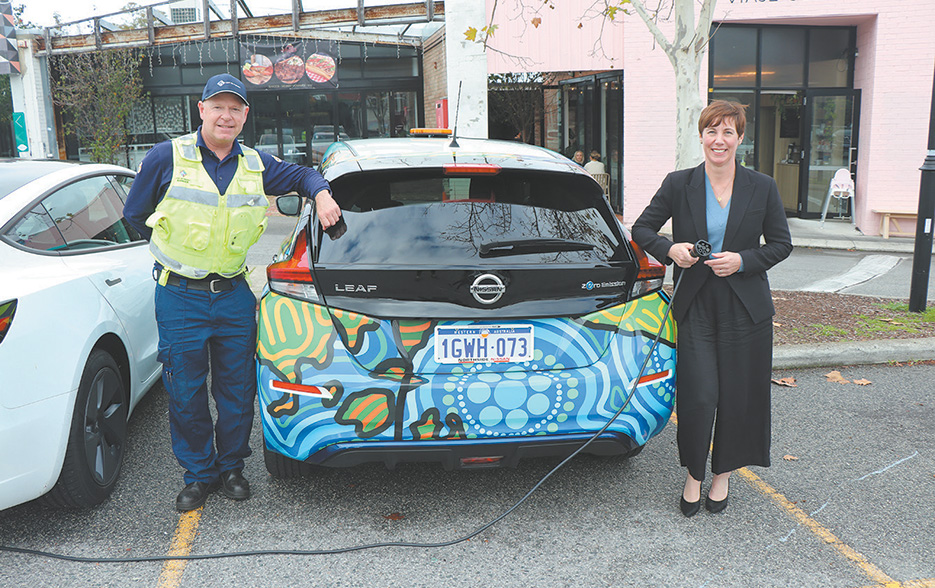
    Plug-in pitstop: City of Vincent ranger Russell Hallberg and mayor Emma Cole ready for a fast charge.

    ELECTRIC cars will soon be able to make a pitstop for a recharge in Vincent.

    The council has agreed to loan Evie Networks two car bays at Chelmsford carpark for two fast electric vehicle chargers.

    A few Vincent locals have been asking for public chargers and some residents wanted to install their own on the verge, but that’s not allowed under Western Power regulations. 

    While there’s been some demand the price of a public charger has been prohibitive: Mayor Emma Cole says the fast chargers would cost up to $100,000 to buy and install and it hadn’t been feasible for Vincent to pay for until Evie’s offer came along. 

    “With electric vehicles becoming more popular across Australia, many residents and visitors have been asking for more charging stations in Vincent,” Ms Cole said in a press release.

    “There is a growing demand to improve access to charging stations as many older apartments in Mount Lawley and Highgate do not have access to fast charging infrastructure and homes without onsite parking can also find it more difficult to charge at home.

    “By supporting Evie Networks‚Äô two fast chargers, we are making it more feasible and accessible for locals to make the switch to electric cars and reduce air pollution in Vincent.”

    The fast chargers are pricy but they’re a lot more useful than the slow chargers: Thrifty Cockburn council spent $8,000 on two slow chargers but in the first year they only accrued 51 minutes of total charging time. Those slow ones only transfer enough juice in one hour to travel about 16km so few drivers were willing to wait around, while Chelmsford’s fast charge cables will be able to transmit 50km of driving range in just 10 minutes. 

  • VR turns dream to reality
    Doolan Leisha Eatts telling her grandmother’s story. Photo by Poppy van Oorde-Grainger

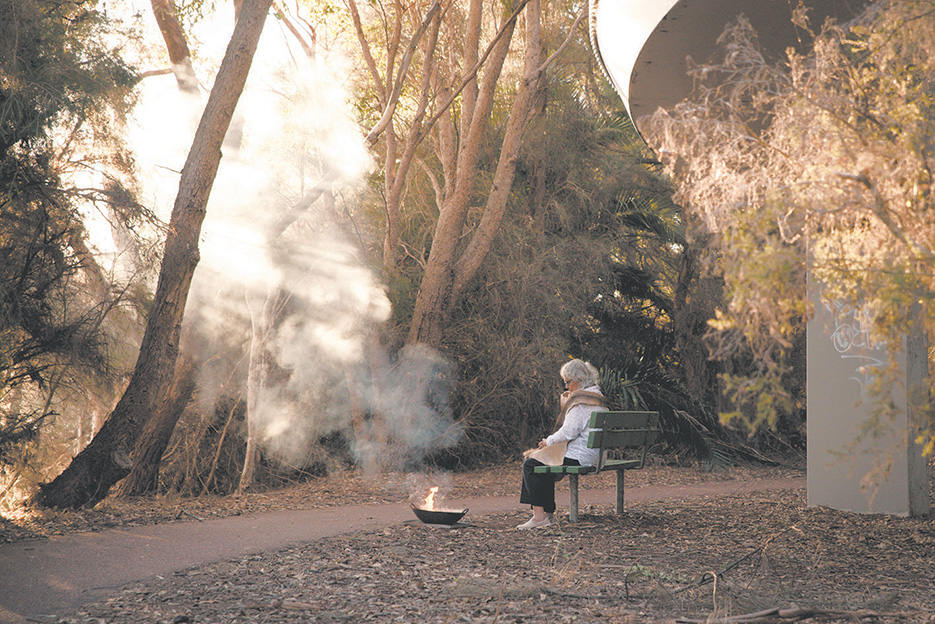
    THE untold stories of Galup (Lake Monger) are rendered into virtual reality to bring the wetland’s history to the present in an upcoming free production.

    The nine-minute VR film was created by Noongar theatre-maker Ian Wilkes and artist and filmmaker Poppy van Oorde-Grainger, with an oral history from elder Doolann Leisha Eatts, based on their lakeside performance ‘Galup’ at the Perth Festival.

    Ms Eatts, who died this year, had recounted a story passed down by her grandmother about colonists massacring Aboriginal people at the lake around 1830. 

    Ian Wilkes telling the lake’s story. Photo by Dan Grant

    “It’s a dream of mine, [for] 71 years… I wanted my story told, wanted it put out,” Ms Eatts had said when recounting the story. 

    This version is a 360-degree VR experience set an hour before sunset, with Wilkes leading the viewer on a tour and relating the hidden story of an ancient wetland as rush-hour traffic passes by in the background.

    Entry to the Galup VR Experience is free at WA Museum Boola Bardip from July 3 to 17 for Naidoc Week. Book a free ticket via galuptruth.com

  • List updated

    HUNDREDS of historical buildings are in line to be added to Perth council’s Local Heritage Survey after being passed over for protection for more than 20 years. 

    More than 700 old houses, shopfronts, inns were reviewed by heritage experts Element back in 2001 and recommended for inclusion on the LHS.

    Having the historical details recorded in the LHS doesn’t stop any redevelopment, but it’s a baby step towards preservation as periodically properties on the survey are considered for entry into the more robust “Heritage List” which does confer protection.

    But the council back in 2000 left off 308 of the recommended places. 

    Under state government guidelines councils are meant to review their LHS every five to eight years, but no one’s had a look at Perth’s since 2000. 

    The plan is to notify property owners and then any place that gets zero submissions during the public notification period will get added to the LHS. Any property that does get a submission will go to council for a vote.

    A separate process is needed for any LHS properties to graduate to the proper protective Heritage List, which also comes with incentives like development bonuses or restoration grants.

    New buildings up for LHS listing include:

    • The state’s first Coca Cola factory which opened in 1944 at 471 Murray Street, considered “very important to the heritage of the locality”. It’s now vacant and graffitied;

    • The 1946 Olympic Tyres building at 581 Murray Street, the first post-WWII building constructed in the city that “represents the recovering economy and the emergence of new business opportunities in Perth after war time rationing”. It’s recommended for the highest listing as it is a “rare or outstanding example” and “essential to the heritage of the locality”;

    • Some more modern entries like the Mt Eliza Apartments near Kings Park, initially disliked when it was built in 1965 but now affectionately known as “The Thermos Flask” for its cylindrical shape with unusual projecting fins.

    Old places lost in the past 20 years

    • The 1890s Victorian cottages at 52, 54 and 56 Bennett Street, East Perth, which were ‘largely intact’ when assessed in 2001 but then demolished in 2003;

    • The 1898 Freemason’s Hall at 122 Brown Street, built as Grand Lodge of WA to house the mason’s headquarters but demolished in 2002;

    • The 1910 Queen Anne cottage at 21 Colin Street that later became a restaurant, then became vacant and burned down suspiciously in 2014;

    • The 1893 Roman-style Read Buildings at 929 Hay Street, highly valued for its luxurious aesthetic representing the affluence of the gold boom era, but demolished in 2003.

    by DAVID BELL

  • ‘Dad was suing me’
    Former Chook turned media star turned author Mimi Kwa.

    ONCE-UPON-A-TIME Herald advertising rep Mimi Kwa went on to make a mark in national television as a journo and news anchor with the ABC and Channel 9.

    She interviewed everyone from prime ministers to sporting stars like Serena Williams; Hollywood heavy hitter Russell Crowe once growled at her to “do something meaningful” with her life during an airport ambush.

    But when it came to telling her own story, Kwa’s utterly astounding and at times confounding family proved far more riveting than any A-listers.

    It’s been a year since her memoir, House of Kwa, announced her debut as an author, and Kwa is returning to Perth this month for an anniversary tour; it’s also where much of the action takes place.

    “Much of the book is set on Blackwall Reach Parade in Bicton, where I grew up reading the Fremantle Herald,” Kwa said.

    Darkly humorous

    It’s a darkly humorous tale which grips the readers’ attention from the opening chapter when Kwa opens a letter from her father, only to read the unthinkable: “Supreme Court of Western Australia, Kwa v Kwa”.

    “Dad was suing me,” she writes.

    To explain how it all came to this, Kwa delves back four generations to the late 19th century when her family were rich Chinese silk merchants and an impatient son fled the family home with his father’s fourth wife. Including concubines, he’d had six to start with.

    From there, this thread of the family tale heads to Hong Kong, where Kwa beautifully details the rivalries and tribulations of her grandfather and his three wives as between them they bear 32 children.

    It’s a time of great change and great tragedy; Britain has annexed Hong Kong, while the Japanese constantly threaten to invade from the east, which they finally do under the cloud of World War II.

    Concubines

    Kwa’s description of the Japanese occupation; mass rape, brutal senseless violence, the starvation and fear, through the eyes of a family trying to survive is evocative and masterly.

    Her own father’s birth is quite extraordinarily; the family pierces his ear and gives him a temporary female name after news arrives of the Japanese killing newborn boys.

    “Hong Kong is in utter chaos, a war zone of mortars and grenades. The deafening sound of high-speed shells sends people running onto the streets. Everyone but the Kwas,” she says of her family who successfully shelter in their own home using trapdoors and hideaways to avoid the marauding troops.

    As Hong Kong rebuilds, one of her aunties scores a job as BOAC’s first Asian air hostess, and she uses the money to send Kwa’s father Francis to Australia to study.

    From there it’s an almost-familiar story about the challenges of adapting to a new culture, and the relentless but seemingly acceptable racism Kwa faces growing up between Scarborough and Bicton is cringeworthy – but important for us to hear. To be reminded of a time when “Scabs” was so down in the dumps it was considered a status symbol to sport scars on your wrists – even if they were made by a rubber – says a lot about how far Perth has come – and sometimes hasn’t.

    Central to all this is her unfathomable father, the notorious litigant who takes on his neighbour for having a stone protruding 20cm onto council land, doesn’t bother to invite her to his last two marriages, but is capable of setting up the southern hemisphere’s biggest backpackers. The section when he uses a tenant’s murder as an opportunity to promote the benefits of the hostel’s swimming pool during an interview is pure comedy; probably not for Kwa who watched on in horror with her colleagues in Sydney, where she was by then working for Channel 9.

    That Kwa would still talk to her father after the embarrassment and the litigation – and then write about him with compassion and humour – says volumes about her own character and perhaps explains why she had what it takes to get to the peak of her career. 

    After all, she is Kwa.

    Mimi Kwa will be giving an author’s talk with fellow journo Gillian O’Shaughnessy at the Chesterfield Lounge at Bar Orient on Thursday June 23 from 6.30pm. Tickets $5 from trybooking.com.

    If you can’t make it, you can still pick up a copy of House of Kwa from New Edition on High Street.

    by STEVE GRANT

  • Maturity… or malaise

    MAYOR Emma Cole’s letter to the Voice dealing with Vincent’s progress in areas of ‘financial maturity, fiscal responsibility and asset management’ is symptomatic of the malaise at Vincent.  

    While the language would suit any MBA course, it reflects Vincent’s focus on plans, strategies and fancy words, without realising that they are just a means to an end, rather than an end in themselves.

    The focus is on producing pretty plans and strategies rather than on outcomes that provide affordable services and facilities. These documents then tend to sit on shelves. 

    An example, and there are many, is the Long Term Financial Plan. This was approved in August 2020 and hasn’t been reviewed since.

    When you compare how the plan stacks up against reality, we can see a certain amount of ‘drift’ in less than two years.

    For example, employee costs for 2022/23 were projected to be $25.6 million. Yet the proposed budget shows employee costs of $28.8 million – some $3.3 million, or 12.5 per cent, more.

    Mayor Cole mentions that the City is annually audited by the Auditor General, and this sets a very high bar on financial and organisational performance.

    What she seems to forget was that the last audit identified a couple of ‘significant adverse trends’ and a number of non-compliances with the Act, one of which had been identified the year before but still had not been fixed.

    She also mentions improved asset management.

    Sadly, a focus seems to be on reducing asset costs by demolishing buildings. So we’ve seen the Banks Reserve Hall, the Beatty Reserve changerooms, and the Birdwood Square toilets all demolished without a replacement.  

    And finally, there is her mention of the once in a generation underground power project. Sadly, Vincent is unprepared. It is proposing to increase rates by 2.1 per cent to cover some of the costs even though the staff claim that they are recommending a user pays system. 

    This means that everybody’s rates go up by 2.1 per cent, even for those with no prospect of underground power in the short to medium term, or without any plan to provide it in the longer term.

    Businesses are being slugged even though only residential areas benefit. And even worse, the ratepayers in the Highgate East area are being asked to contribute even though they paid all the costs when their power was put underground about 15 years ago.

    I’m sorry, but the claim that Vincent has achieved financial maturity is too much of an ‘emperor’s new clothes’ leap of faith.  I think if you look closely, you’ll see an organisation caught with their pants down, displaying unsightly undies, held up with safety pins. And I apologise for leaving you with that image.

    Dudley Maier
    Highgate

    Ed’s note: Mr Maier was a Vincent councillor from 2005-2013.