• Poignant art

    A VIRTUAL REALITY recreation of the Carrolup-Marribank mission gives a heart-breaking glimpse into the lives of the stolen generations.

    Up until the 1970s, many First Nations children were forcibly removed from their families and put into institutional care “for their own good” in camps and missions across WA.

    Part of the government policy of assimilation, it was was based on the misguided assumption that the lives of First Nations people would be improved if they became part of white society.

    In the exhibition Limen – ‘At the Fence’, visitors are taken on a VR tour of Carrolup mission where they experience the sights and sounds of what kids used to see and hear.

    Accompanying the visuals are moving personal stories from stolen generation survivors, including Bibblemun-Kaneang woman Edith De Giambattista (nee Smith), Wilman-Koreng-Kaneang man Tony Hansen and Koreng-Nyungar man Tim Flowers, who were at Carrolup-Marribank.

    “Through this exhibition we aim to make visible some of the loss of language, culture, family and belonging that are at the root of many ongoing issues facing stolen generations survivors and their families today,” says exhibition curator Reena Tiwari.

    According to a report by the Australian Institute of Health and Welfare, about 46 per cent of Aboriginal people in WA are stolen generations survivors and their children, meaning some 40,000 people were affected by the institutionalisation of Aboriginal children.

    WA Stolen Generations Aboriginal Corporation Chair Jim Morrison says the exhibition is a vivid reminder of what these children and their families went through. 

    “It’s about truth,” he says. “The truth is never far away from what we are sharing with you [all] today – we need truth, we want justice, without justice, we can’t heal. We want to heal not just as individuals but as a collective”. 

    Also in the exhibition is a fence art installation – with eerie silhouettes of children – and an interactive portrait.

    The exhibition has been led by the survivors and curated by Professor Tiwari, Dr Chamila Subasinghe and Emeritus Professor John Stephens, from Curtin’s School of Design and the Built Environment. 

    It’s part of the wider Missions Connect project, which aims to transform former missions across WA into healing spaces for stolen generations survivors.

    Limen – ‘At the Fence’ is  in “the nook” on the ground floor of the State Library until February 28.

    by STEPHEN POLLOCK

  • Top locale 

    THE PENINSULA ESTATE in Maylands is a great spot.

    You literally have the Swan River on your doorstep, with all the delights of the foreshore, and it’s in a quiet enclave with not much traffic.

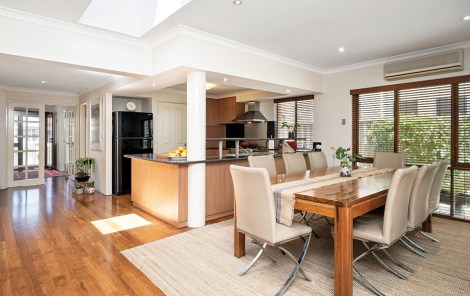
    Situated on Tranby Road, this four bedroom two bathroom home is a classy affair with plenty of space and living areas for the modern family.

    Throughout the two storey home there’s gorgeous wooden floors with a rich darkish hue, adding a stately feel.

    Wooden venetian binds and bi-folds also feature heavily, hinting at a colonial feel and bathing the property in natural light.

    There’s lovely use of wood in all areas of the house, especially the kitchen where light cupboards contrast nicely with the marble-style benchtops and stainless steel appliances.

    It’s part of a stylish open plan dining/lounge with high ceilings and a neutral colour scheme.

    On the ground floor is the main bedroom with its own verandah, walk-in robe and semi-ensuite, which flows into a seperate powder room.

    This is a great area for guests and there is the option to used the extra room downstairs as a fourth bedroom or private lounge.

    There’s another two spacious bedrooms upstairs and a third living area/ study room.

    This makes it a great abode for a multi-generational family who want their own space from time-to-time.

    The rear garden isn’t the biggest, in fact it’s more of a courtyard patio, but there’s enough space for entertaining and some nice raised garden beds flanking the rear wall.

    The translucent patio roof ensures good light and means you can eat outdoors all-year round.

    The two bathrooms are commensurate with the rest of the house, featuring white tiles and neat finishes.

    This Webb Brown and Neaves home includes a double lock-up garage and has plenty of storage.

    EOI welcome
    31 Tranby Road, Maylands
    ACTON Mt Lawley 9272 2488
    Agent Paul Owen 0411 601 420

  • Cut off and cranky

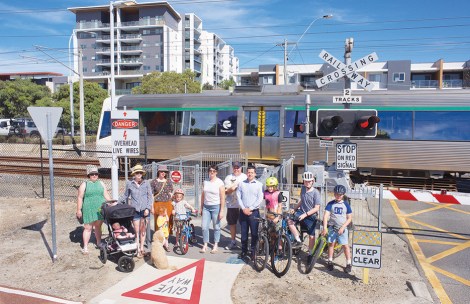
    • Don’t Divide Maylands’ Shannon Leigh (centre), Cr Elli Petersen-Pik and passionate locals who want to keep crossing at Caledonia Avenue. Photo by Tim Burns.

    “DON’T divide Maylands” is the message walkers and bike riders have for the state government ahead of the closure of Caledonia Avenue’s railway crossing. 

    In August transport minister Rita Saffioti announced a $15 million plan to close the constantly-clogged crossing and upgrade surrounding crossroads as part of Metronet upgrades, partially following up on a 2017 election promise. 

    Locals are concerned the plan contained no provision for a pedestrian or bike crossing at Caledonia Avenue, and it’s a long haul to the nearest crossings: It’s 350m to walk to the Maylands train station crossing, and riders have to go an extra 500m each way.

    In 2017 the closure was estimated to cost $50m to $70m, leading locals to speculate that ignoring pedestrians has allowed the government to put up a cheapskate option. Community group Don’t Divide Maylands has formed in response, and spokesperson Shannon Leigh says: “In recent weeks hundreds of people – including seniors, school kids, business owners, parents with prams, retirees on gophers and people with disabilities – have all told us how important this connection is to them.

    “The government’s decision to block pedestrian access at the Caledonian Avenue crossing was just dropped on the Maylands community with no prior consultation whatsoever, while the $15m put forward for modifications to the nearby street network falls significantly short of the $50-$70 million Labor promised for the crossing at the 2017 election. 

    “This is a broken promise from the state government and Maylands is being shortchanged.”

    Ms Leigh says catering for walking and cycling in a growing inner-city area should be a no-brainer, especially as part of a large public transport project like Metronet. 

    “We shouldn’t have to campaign for the right to get around in our own community,” she said.

    Bayswater councillor Elli Petersen-Pik got up a unanimously-supported motion at the last meeting calling on council CEO Andrew Brien to write to Ms Saffioti and Maylands MP Lisa Baker to express “the council’s strong opposition to the state government’s plan to block pedestrian and bike rider access – and request that provision of such access be included in the plans, with a preference for a well-lit and safe underpass”.

    Train network

    Cr Petersen-Pik said overall the expanded train network was a good plan “but the effort to improve train services should not diminish the ability of other groups in our communities, such as pedestrians, cyclists and even car drivers, to be able to move around easily and safely”.

    He said “this is exactly the recipe for discouraging people from walking and cycling, and shift them to use their cars. 

    “If you have ever been at that station at peak time, you would know that it’s definitely not where you would want to direct dozens or hundreds of rushing cyclists. The interaction with passengers is likely to raise safety issues. 

    “Sending cyclists to cross Railway Parade to get onto the Seventh Avenue bridge, and then force them to cross again Whatley Cres, to get to the principal shared path, in peak time, is also a serious safety issue. And don’t forget the amount of hundreds of additional cars that we will have in those two intersections because of the level crossing closure.”

    Cr Petersen-Pik said only after community outcry did Main Roads WA announce it would undertake a high-level study to see if an underpass might work T Caledonia or somewhere nearby. But it’s up in the air until the department figures out if the design is feasible and what the costs might be.

    Cr Petersen-Pik said “this is a positive move, but we wouldn’t want a study to justify the decision that they already made. If they understand the issues, we would need them to commit to keep the access for pedestrians and cyclists and allocate funding for this purpose”.

    There’s still concerns over how long it might take to get that underpass, given the closure’s planned for the first half of 2022 and some of the motor traffic upgrades that were meant to be part of the package aren’t happening for another three years. 

    A community reference group’s been set up to consult with locals.

    Maylands MP Lisa Baker said: “I look forward to hearing the input from the community.”

    By DAVID BELL

  • Mystery eviction bid knocked back

    A PLAN to turf out Bayswater Sports Club from Hillcrest Reserve has been overturned by Bayswater councillors, but mystery still surrounds why they were ever threatened with eviction.

    A farcical situation played out at last week’s council meeting as a city staff recommendation to terminate the club’s lease forbade discussing the reasons behind it because it contained  “information about the business, professional, commercial or financial affairs of a person”.

    BSC is an umbrella body representing Bayswater Football Club and Bayswater Postels Cricket Club.

    The only hiccups in living memory involved a glass door panel being broken, and rangers being called after some rowdy footy club members got on the roof in August. 

    BSC president Mark Thomas led a deputation to council a week ahead of the meeting, saying they thought everything had been smoothed over.

    “If they thought the matter hadn’t been dealt with I would’ve thought a phone call to either club would’ve given us an understanding to what’s going on,” Mr Thomas said.

    Cricket club president John Boyd said they’d been good tenants and “we’ve always paid our way and done the right thing. If the lease was to be terminated it’d be dire for us; it’d probably be the end of cricket at Hillcrest.”

    Money struggles

    The footy club has struggled financially after most of its 2020 season was cancelled by Covid and the council ruled out a rate discount. 

    In the distant past neighbours regularly complained about rowdiness, then the clubrooms burned down in 2011, but football club president Danielle Santoro told the council they’d had a near spotless record since. 

    “For the past 10 years or so we have constantly tried to make positive relationships with the city and it’s never been reciprocated”.

    She acknowledged “we had a couple of young players who did the wrong thing – the ranger was called, the boys admit to saying stuff they probably shouldn’t have, but from what I believe from other witnesses there they had their dressing down from the ranger, they apologised, and moved back into the clubrooms.

    “Apart from that we’ve had one other issue with a member who is now actually not part of our club; we’ve removed him from our club, and that was dealt with as well: There was a broken glass panel in the door and we had that fixed.

    “So apart from that if you look at the past eight or nine years there’s been very little antisocial behaviour at our club and we took full responsibility for the two incidents in those years.”

    She’d only found out about the termination a week before councillors were due to vote.

    At the meeting councillor Steven Ostaszewskyj proposed the city let the clubs stay and set up a new contact arrangement  to stay on top of any lease issues.

    He also moved that a policy be developed outlining a proper process to deal with future breaches or disputes.

    Cr Ostaszewskyj’s motion was unanimously supported. 

    Councillor Elli Petersen-Pik said the process “caused so much angst and frustration and it shouldn’t have occurred, so I’m very happy we have a policy to rectify [this] so it can never happen again to members of our community”. 

    But apart from rumours about rooftop shenanigans the clubs still don’t know why the termination was ever proposed. 

    Cr Giorgia Johnson requested a redacted version of the reasoning be released for the public, but the CEO said they’d need time to come up with a report that could be put to council at a later meeting.

    by DAVID BELL

  • Christmas Lights Trail switches on

    THE Christmas Lights Trail is back on in the CBD with half a million lights and 500 decorations ‚Äì and city visitors are booming. Lord mayor Basil Zempilas says the lights have brought 36 per cent more people in the city compared to 2020. Mr Zempilas said the city’s often held up as a rival to suburban shopping centres, but he said the traffic’s so bad at some of those centres they’re having to give out Uber vouchers to deter people from driving, while he reckons “city centre parking is problem free”.

  • Tech after capital to make Perth top

    Canva started in Perth before being seduced by tech-savvy Sydney.

    TECH heads want Perth to become the “Tech Capital of Australia” and are hoping a new action plan from Perth council will help keep startups here instead of fleeing east. 

    Cullum Ashton from PropTech Hub WA, a CBD collaboration space for property-industry tech types, attended this week’s council meeting to implore councillors to show leadership in the tech sector.

    “There is a line outside this room queueing to help – with a plan for technology and to help Perth be the tech capital of Australia,” he said.

    Incentives

    Following his speech the council narrowly endorsed Sandy Anghie’s notice of motion to investigate ways to keep local tech businesses and attract interstate and overseas techies with a “Tech Action Plan” for incentives and funding.

    She said tech is a critical sector but WA’s losing business to cities like Sydney, which has a global reputation for entrepreneurship and has the highest concentration of startups in Australia.

    “Think of Canva,” Cr Anghie said, referring to the online graphic design and publishing tool, “they started out here in Perth but are now based in Sydney. 

    “According to recent media reports, Canva is now worth an astonishing $55 billion.”

    She said the city had supported the tech industry with $926,000 for events and funding over the past eight years but more support was needed to compete with Sydney, Brisbane, and Melbourne, all of which have some form of tech or startup action plan. 

    “We need people to know that Perth is a tech hub, and we need to support them when they get here.”

    Cr Clyde Bevan supported the motion saying “we don’t have a tech plan; we need one,” and revealed he’d been a long time fan of technology: “Many years ago when I joined the bank, I thought their calculators were sensational.”

    Cr Viktor Ko agreed and said after visiting recent tech events he heard it wasn’t just funding that could support the sector, but also the exposure the capital city council could offer.

    City staff weren’t keen on having something so zoomed in as a Tech Action Plan, recommending against it as they already had a broader Economic Development Strategy that promoted innovation. 

    Lord mayor Basil Zempilas said the whole council seemed to agree it was important to support the tech sector, they just disagreed on whether the plan was the way to go.  

    The vote was 5:4 in favour of the tech plan with councillors Anghie, Bevan, Ko, Di Bain and Liam Gobbert in favour. City staff will now come up with a plan and work out how much will be needed for next year’s budget to cover the actions. 

    by DAVID BELL

  • Straight from the horse’s mouth

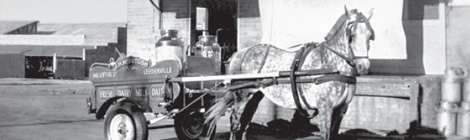
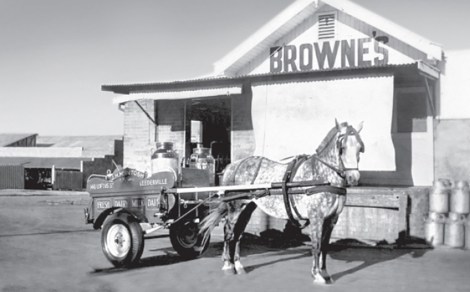
    Browne’s Dairy Horse and Cart, COV PH0 2764

    EVERY week at the Vincent Local History Centre we hear unexpected tales of times past in our area. 

    Last week, long time Leederville business owner Vince Carbone dropped in and told us a story so far-fetched we scarcely believed him until we found newspaper articles confirming the incident which took place on Oxford Street, Leederville.  

    The year was 1952. Vince was working as a young tow truck driver at Master Motors, 359 Oxford Street. 

    The 1950s was an era of burgeoning private car ownership with 70,000 vehicles registered in Western Australia compared to over 2 million today. Business was booming for Master Motors when young Vince got the call to attend a tragic and unexpected accident at the New Oxford Theatre (the present day Luna Cinema).  

    That year, there were 7,510 accidents reported on WA roads between different cars, trams, carts and pedestrians. 

    While Vince had attended all sorts of accidents, he’d never been called to remove a horse and cart from a cinema before.  

    The accident happened on a Sunday before Christmas. 

    Milkman Nick Mostert, a Dutch migrant, was delivering milk with a horse and cart for Masters Dairy when the horse was spooked by a car and bolted, crashing through the window of the New Oxford Theatre (now the Luna Cinema). 

    The milkman was able to jump clear of the cart and escaped unhurt. However the horse smashed through the glass window and impaled itself on a shaft of wood from the cart and died on the scene.  

    Vince, who got the call to remove the horse and cart from the cinema recalls, “It used to be joke that our company was the only one to ever take a dead horse from a theatre after a cowboy movie…” 

    Local reporters put their own spin on events, reporting the first thing police saw when they arrived on the scene was the distraught Dutch milkman and a movie poster for Pandora and the Flying Dutchman.  

    Local dairy companies like Brownes and Masters continued to deliver milk by horse and cart until the 1960s. Many senior residents recall the sight, sounds (and smell) of work horses and occasional catastrophic collisions between horses and vehicles.  

    If you have interesting or unusual tales of times past in our area to share, contact the Vincent Local History Centre in the Vincent Library.

  • Shifting sands

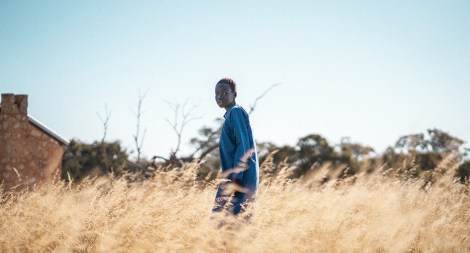
    Garang John Deng plays a character inspired by Kook Manuer’s childhood in ‘Two Sands’. Photo by Drew Kendell

    A LOCAL short film that’s won global acclaim for its portrayal of a young African refugee screens in both Uganda and Perth this week.

    Two Sands tells the story of local writer and actor Kook Manuer fleeing war-torn Sudan, spending years of his childhood in a refugee camp in Uganda before finally making it to Australia. “The Sudan story in Two Sands came from my childhood, my roots,” Manuer says. 

    Fourteen-year-old actor Garang John Deng, whose parents were refugees from South Sudan, portrays the lead character attending his first day of high school and struggling with memories of being lost in Sudan.

    “I’m excited to have the vision of what I went through in front of me on screen, so it will make me and other people from Sudan feel truly welcome in Australia,” Manuer says. “It’s something I survived and learnt from and I want to share with people.”

    Shortly after arriving in Australia as a teenager, Manuer met Leederville-based filmmaker Poppy van Oorde-Grainger at Aranmore Catholic College where she taught at the Intensive English Centre. He shared his story of being lost in the wilderness as a child. 

    Years later when van Oorde-Grainger was living in France and unable to speak French, she thought back to Manuer’s story, and the film was born of melding ideas of being lost in the wilderness with the feeling of being lost in a new country. 

    Audition

    They brought on board producer David Kucha, who grew up in South Sudan, and searched at cultural events and churches seeking a lead actor. Garang did his audition on the grass at a huge community event with many other kids watching, and won them over. 

    Van Oorde-Grainger says: “I hope Two Sands gives some audiences a deeper understanding of the experience of refugees from South Sudan and migrants more generally and makes those who’ve moved countries themselves think ‘ah, this character is like me!’.”

    It was tricky to film some parts: 

    “Finding somewhere in WA that looked like South Sudan, even for quick flashbacks, was challenging,” she says.

    “We spent ages looking for a field with long grass and eventually we secured the perfect location but the day before filming, someone mowed it. 

    “Fortunately they left about 10 square meters so from one angle we managed to still give the impression of being in the grasslands in South Sudan.”

    Two Sands recently won best film at Port Shorts in Queensland and is spreading out to other global festivals. As it screens in Perth, it’ll also be shown in the Ugandan capital of Kampala, where Manuer was in a refugee camp.

    Two Sands screens at UWA’s Somerville Auditorium as part of LotteryWest Films December 6 to 12 alongside Lingui, The Sacred Bonds, the story of a single mother in Chad. Tickets via perthfestival.com.au

  • Epic jam

    THE Beatles: Get Back is a musician’s wet dream, but for others it could be a long and winding slog.

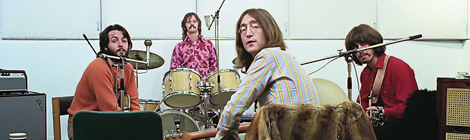
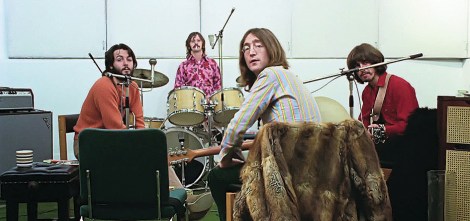
    Just shy of eight hours long, the fly-on-the-wall documentary by director Peter Jackson (Lord of the Rings) follows the band as they write and rehearse material in 1969 for the album Let it Be and a TV special that never happend.

    Chaos reigns as the band can’t agree on a direction for the TV special and struggle to be creative in the cavernous, freezing cold Twickenham film studios in England in January.  

    For the doco, Jackson was given access to 60 hours of mostly unseen footage of the rehearsals from Apple’s vaults. 

    Initially it’s a fascinating glimpse into The Fab Four’s creative process; we are a fly on the wall as they pitch new songs to each other like Get Back, I’ve Got a Feeling and Don’t Let me Down.

    They also try out material that ended up on Abbey Road or their solo albums including All things Must Pass by George Harrison and Child of Nature, which eventually became Jealous Guy on John Lennon’s Imagine.

    A lot of the numbers are in their most rudimentary form as they shout out chord changes and brainstorm ideas for arrangements.

    Some come easy while others are jammed to death, and we begin to share the band’s pain as they rehearse Dig a Pony for the 100th time, proving that sometimes the creative process can be more perspiration than inspiration.

    The footage was originally shot by director Michael Lindsay-Hogg for the 80-minute doco Let It Be, shown in cinemas in 1970.

    That film has hardly ever been released on home video or DVD, mainly because the remaining ex-Beatles were unhappy with the onscreen squabbling and the overriding sense of gloom as the band entered their final days.

    To his credit, Jackson has not shied away from those moments and we still have the infamous argument between Paul McCartney and Harrison over how a guitar part should go, and Harrison walking out and temporarily leaving the group. 

    By this point it was clear The Beatles were four individuals, some with a wife and kids, and the camaraderie of The Cavern and Hamburg days were long gone.

    We still get glimpes, but it feels forced. I was struck by how little input Ringo had in songs; most of the time he’s sitting glumly on his drum stool, awaiting instructions from the Fab Three.

    There was clearly a hierarchy in the band – Lennon, McCartney, Harrison and then poor old Ringo.

    Released on Disney+, thankfully The Beatles: Get Back is no sanctimonious whitewash (according to Jackson, Disney wanted to remove any swearing, but he put his foot down) and we get lots of crude banter from Lennon, profanity, inane jabber as they goof around, and smoking, yes lots of smoking. Remember that?

    It’s a fascinating 1960s time capsule (we hear the original “No Pakistanis” lyrics to Get Back, a satire of Conservative MP Enoch Powell’s anti-immigration stance) and there’s a wonderful array of supporting characters including Peter Sellers, George Martin, producer Glyn Johns, Linda McCartney and the ever-present Yoko Ono, glued to Lennon’s side.

    The doco is split into three episodes with the first covering rehearsals at Twickenham Studios, but by the time we get to episode two and the band has relocated to Apple studios in London to record, I was starting to look at my watch and like them, felt claustrophobic and sick of each other, especially McCartney.

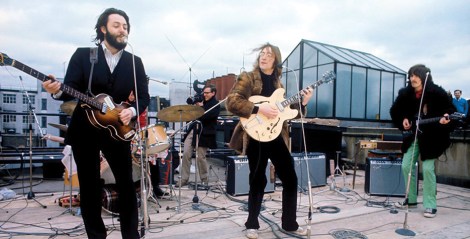
    The doco ends with the band playing a surreal gig on the rooftop of Apple HQ, as they couldn’t really agree on a formal venue or concept for a live show. Ringo didn’t fancy the pyramids.

    Jackson loves epic, but maybe a three-hour version would have been better. He could have still included the eight-hour marathon for Beatles diehards and musos.

    Using the same film restoration technique as Jackson’s World War I doco They Shall Not Grow Old, The Beatles: Get Back looks absolutely stunning, with bright vibrant colours, like it was shot yesterday.

    This gives the footage a slightly eerie and poignant quality as many of the talented people on screen, in their glowing prime in their 20s, full of energy and vim, are no longer with us.

    The Beatles: Get Back is on the streaming service Disney+.

    By Stephen Pollock

  • Not so common

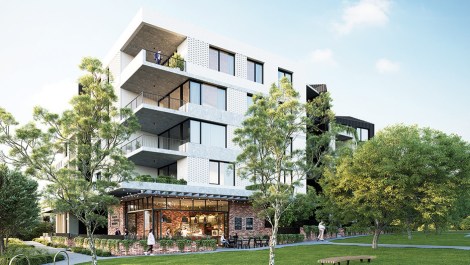
    CONSTRUCTION has begun on one of Australia’s first carbon neutral apartment complexes – Montreal Commons in Fremantle.

    The complex has a developer-funded 75kW solar rooftop system and local battery storage, topped up with 100 per cent green energy from the grid.

    Residents will have access to 100 per cent renewable energy and receive 50 per cent off their strata fees, and won’t have to pay anything towards the rooftop solar.

    With 39 apartments over five storeys next to Fremantle golf course and opposite Boo Park, the development has proved popular with sandgropers with 70 per cent of apartments sold off-plan before the first sod was turned last week.

    The complex takes advantage of Powerledger’s energy trading platform, which allows near-to-real-time, fully-accountable peer-to-peer energy trading.

    “Montreal Commons will use Powerledger’s platform to produce about 240 tonnes less of carbon emissions per year compared to a typical apartment building. This is equivalent to taking fifty cars off the road,” says Powerledger co-founder and CEO Dr Jemma Green.

    Founded in Perth in 2016, the tech company’s energy trading platform is available across more than thirty projects in eleven countries, enabling customers to access and trade cheaper, cleaner electricity. Powerledger’s blockchain-enabled software works alongside the existing infrastructure of energy systems, enabling greater control and ownership for consumers and producers.

    The company recently committed to the 24/7 Carbon-free Energy Compact, a Google initiative in partnership with Sustainable Energy for All and UN-Energy, which sets out to decarbonise the world’s electricity systems.

    As part of this commitment, Powerledger is officially recognised as a solutions provider to businesses that wish to achieve 24/7 carbon-free energy.  Montreal Commons is being built by Northerly Group Australia, with construction to be completed by mid 2023.

    Stakeholders turn the first sod at Montreal Commons (artist’s impression of apartment complex below).