• Elegant number

    THERE is an understated elegance to this family home in North Perth.

    It is largely down to the demure colours, clean lines and tasteful fittings, which ensure this three bedroom two bathroom abode doesn’t feels forced or in a mad rush to impress you.

    It goes about its business with a quiet confidence, never more evident than in the lounge where a jet black fireplace and white wall create a simple yet stunning contrast.

    The darkish wooden floorboards enhances the stately feel in this home, which has that chic inner city feel.

    Don’t worry, there’s still plenty of character like the exposed brick work in the bedrooms and the lush foliage framing the front of the house.

    The kitchen is spacious with sleek stainless steel appliances and a mass of storage, courtesy of the almost floor-to-ceiling cupboards opposite the sink. It is a pleasant and airy space to whip up tasty meals for the family.

    Sometimes inner-city homes can feel a bit cramped, but this abode is situated on a generous 461sqm block and has plenty of living space including a large open plan living room/kitchen with a tiled floor.

    The sense of space is enhanced by the large back garden, which has a covered and uncovered alfresco, a decent strip of lawn, a mini basketball court, a cubby house and shed.

    And if you fill up the shed, there is also a floored attic space. 

    The back garden is framed by lush trees, shrubs and plants and feels like a lovely spot to relax with family and friends.

    There is also a little patio at the front with another patch of grass, and the high screening plants mean you can actually use this area as you have privacy from the street. 

    The home includes ducted reverse cycle air-conditioning, a video door bell system, reticulated landscaped gardens and new electrical wiring and switches. Parking won’t be an issue with two bays accessed via a ROW.

    Situated on Grosvenor Road, you are close to schools, shops, cafes and a few streets away from Hyde Park, which is perfect for relaxing come the weekend or walking the dog the week.

    There are lots of public transport options on your doorstep or you could simply walk to Mount Lawley or Northbridge.

    This is an elegant family home in a top inner-city spot.

    Home open today (Saturday August 7) and tomorrow 1pm-
    1.30pm
    EOI welcome
    145 Grosvenor Road, North Perth
    Bellcourt Property 6141 7848 
    Agent Donna Buckovska
    0419 928 467

  • Grieving family call for vigil
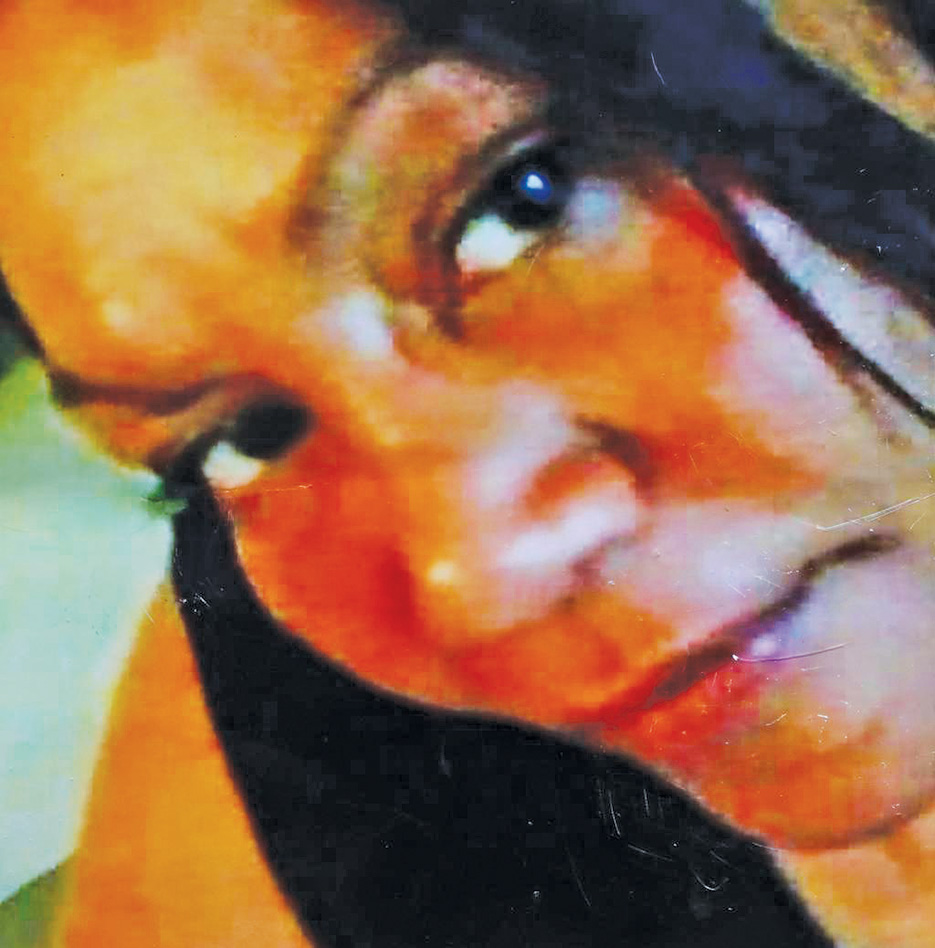
    Alana Garlett’s sisters are calling for a vigil outside Parliament to raise awareness of her death. Photo by Kelly Warden

    THE family of Alana Garlett are calling for a vigil at Parliament House to raise awareness of her death, and the 56 other homeless people who died on Perth’s streets last year.

    Her eldest sister Michelle Garlett said Alana will be remembered for the way she used to dance in the streets to Ed Sheeran’s romantic ballad Thinking Out Loud and for her signature whistling. 

    “[But] we shouldn’t have to have her as a memory, we should have her alive and in housing, with her children around her,” she said.

    Alana Garlett’s funeral was held in Armadale on Friday July 23, following her nine-year battle with homelessness. 

    “Now she’s got a place to call her home,” her grieving mother, Norma Garlett, said. 

    At present, Norma Garlett and her husband, Alan, are in a Homeswest house in Armadale, where at least six of their children, grandchildren or great-grandchildren live with them at any one time. 

    Mr Garlett suffers dementia, but Michelle says he starts crying at mention of Alana’s death; he’s clearly not forgotten. After suffering generations of homelessness, poverty, and overcrowded housing, the family have now been left with unanswered questions about the cause of Alana Garlett’s death.

    Michelle Garlett said the family was told Alana died of cardiac arrest, but officially, the death certificate says her cause of death is subject to a coronial investigation. 

    “We feel like we’ve been kept in the dark, but at the end of the tunnel there should be a light,” she said. 

    The Garlett family are reiterating the demands of First Nations housing advocates, who are calling for a bigger commitment from government to build more housing, before more Aboriginal mothers die on the streets.

    “Unconscious behind a church, that’s how they found her,” Michelle Garlett said. 

    “It’s so sad how the government is treating people. 

    “They slip through your fingers because there’s no housing”.

    by KELLY WARDEN

  • Too many taken too young
     • Noongar mum Alana Garlett: the average age of people who died on the streets last year was just 47-years-old. Photo: FacebookAlana Garlett, who recently passed away while sleeping on the streets. Picture Nic Ellis The West Australian

    NOONGAR mother Alana Garlett was the most recent homeless person to die on Perth’s streets, after new data revealed 56 homeless citizens were lost last year. 

    After a freezing night spent sleeping on the steps of Wesley Church in Perth CBD, Ms Garlett was hurried to Royal Perth Hospital, where she died early in the morning on June 18.

    She was buried by her family last Friday.

    Children

    Ms Garlett left behind six children to be cared for by her father and mother, who suffer from dementia and severe diabetes, respectively. 

    House the Homeless Campaign spokesperson and founder of Day Dawn advocacy centre Betsy Buchanan has known Ms Garlett’s family for many years. 

    “Alana’s parents were homeless over a long period too,” she said.

    “As a result, Mr Garlett’s dementia has become more severe and Mrs Garlett, who is his sole carer, is on kidney dialysis three times a week.”

    In a House the Homeless media release, Dr Buchanan said Ms Garlett wasn’t the only Noongar person to lose their life too young, whilst homeless. 

    “We have supported several other families who have lost children to homelessness in the past few weeks,” she said. 

    Dr Buchanan and other First Nations housing advocates are calling for the McGowan government to fund 10,000 more social housing units, saying they are sitting on a $5 billion surplus.

    In WA the supply of social housing steadily decreased from 44,087 to 42,953 between 2017 and 2020. 

    Up from 15,000 last year, there are now more than 16,000 people languishing on the social housing waitlist, which has a wait time of almost two years. 

    Ngalla Maya Aboriginal Corporation CEO Mervyn Eades said premier Mark McGowan should be following in the footsteps of Victorian premier Dan Andrews and top up WA’s dwindling supply.

    “Victoria did it with their budget, building thousands of public houses for people who need them, especially Aboriginal families and people with mental health issues,” he said.

    Housing crisis  

     Last year, Victoria’s 2020/21 budget included a historic $5.3 billion Big Housing Build, to construct more than 12,000 new homes over four years. 

    This includes 9,300 social housing units, of which 10 per cent would “support Aboriginal housing needs”. 

     Dr Buchanan said: “The state budget in September must include a substantial commitment to public housing to fix WA’s housing crisis before it kills again”.

    Last year, there were 56 known deaths in the Perth homeless population, according to data from UWA’s Home2Health research team, headed up by associate professor Lisa Wood. 

    “The average age of death was a grim 47 years,” she said.

    “Those experiencing homelessness are dying on average over 30 years earlier than the general Australian population.” 

    The team’s research shows the longer people are sleeping rough, the more their health deteriorates. 

    “Basics for good health, such as sleep, good nutrition, protection from the weather, and physical safety are elusive if you are sleeping on the streets,” Dr Wood said. 

    Compounding this “medications are often stolen or lost, and people can find it difficult to book or get transport to health appointments”, she said.

    It is also harder for people experiencing homelessness to access prevention and screening services for illnesses like cancer or diabetes. 

    Recent team research found that three quarters of Homeless Healthcare patients had at least two long-term chronic health conditions. 

    Dr Wood said “deaths of despair” are also causes of fatality amongst rough sleepers. 

    It refers to deaths caused by drug overdoses, suicide, and alcohol-related disease, amongst people who have experienced compounded socio-economic disadvantage. 

    “The COVID-19 pandemic has been reported overseas to have further exacerbated the likelihood of deaths of despair.”

    by KELLY WARDEN

  • Public art loss ‘shame’
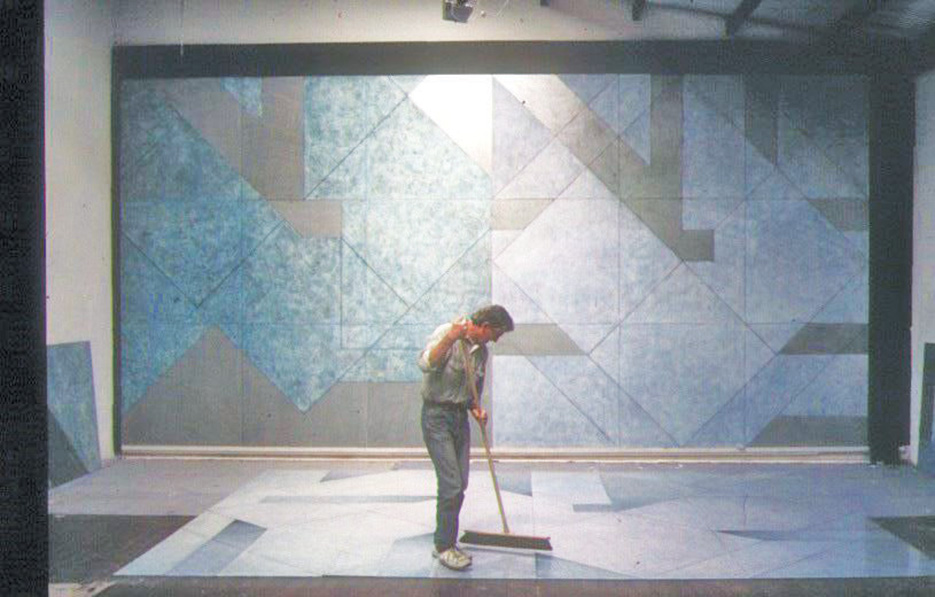
    Gone: Brian McKay’s mural from Central Park.

    TWO pillars of the WA art scene have called on the McGowan government to create an inventory to track and preserve public art, but say there’s so far there’s been little appetite to take it on. 

    Arts patron Janet Holmes a Court and sculptor Tony Jones noted a series of removals of iconic artwork in recent years, with the most recent being Perth council removing the 

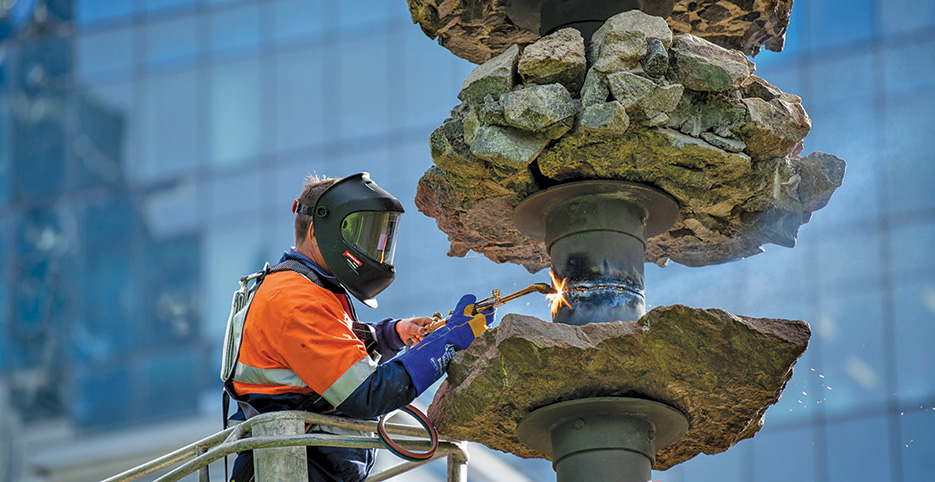
    50-year-old Ore Obelisk on St Georges Terrace due to deterioration. 

    We put the state inventory idea to arts minister David Templeman.

    “A database of all public art across the State would be a complex undertaking,” 

    Mr Templeman said in a response via email.

    “There is an expectation that asset owners, such as local government, maintain their own appropriate records.

    “The WA government has played an active role in the development of public art through the percent for art scheme established in 1989. It is the longest running scheme of its kind in Australia.

    “Based on the success of the scheme many local governments in metropolitan and regional areas have developed public art strategies.

    “Public art is vitally important as it enhances our understanding and appreciation of cultural heritage, built environment and creating more meaningful public spaces.

    “Public art schemes also deliver direct economic benefits by generating employment opportunities for artists, skilled tradespeople, engineers, fabricators and suppliers of materials.”

    Independent

    Museum of Perth executive director Reece Harley, who was dismayed to see the Ore Obelisk removed, responded to the lack of government will to run an inventory. He said an independent not-for-profit like the MoP was well placed to step up. They have experience compiling detailed inventories of heritage buildings in East Perth and Bunbury. 

    “Governments tend to overcomplicate things and are not known for creative thinking,” Mr Harley says.

    “Private institutions, on the other hand, seems to have a much better track record in delivering innovative cultural projects. 

    “Public art holds so much value within our communities. It needs to be better celebrated and understood. Developing a state-wide, publicly accessible and interactive online inventory of public artworks is an important first step to better understand their history, meaning and significance. 

    “Creating greater awareness of public artworks will help to prevent their destruction or disappearance in the future. 

    “Our staff and volunteers are keen to build this online inventory, in partnership with local communities across WA, so that the history of our state’s public art can be better appreciated. 

    “We will look to launch a basic website in the coming weeks where local governments, private organisations and members of the community can submit photos, histories and stories of their local public artworks in a collaborative process.”

    SADLY, the article Ore Mighty Crash (Voice, July 10, 2021) marks another chapter in the destruction of Perth’s catalogue of public artworks.

    Not all artworks are worthy of preservation when, for a number of reasons, they reach their use by date. The Western Australian climate and severe conditions can take their toll.

    However, the investment the state has made through the percent for art scheme, adopted by local government, private developers and entrepreneurs has seen a wide spectrum of works that will all at some time face decisions of deaccession.

    This process could be much better managed than it is currently. 

    We have long been enthusiastic advocates for a state register/ inventory of all public art and, where appropriate, privately held significant works that impact on the public domain.

    Their full history could be documented and recorded so that when issues such as these arise, their ranking and value to our state cultural archive is understood and decisions can be made against a formal background of knowledge.

    Attempts to have this documentation undertaken have largely fallen on deaf ears. 

    Deputations to the minister and National Trust have been politely and positively received but nothing has resulted.

    Masterpiece works by Brian McKay, Robert Juniper, Howard Taylor, to name just a few, have gone missing or been so severely vandalised that they have lost their national significance.

    The Brian McKay Central Park Mural was subject to very public demonstrations of concern, and its destruction by the building owners – a local family company and a Singaporean company, remains a monument to cultural neglect by a city/state leadership that should be eternally ashamed of itself.

    Janet Holmes à Court 
    AC Tony Jones OAM

  • NAVA backs Holmes à Court plan
    In limbo: Paul Ritter’s ore obelisk.

    NATIONAL Association for the Visual Arts executive director Penelope Benton thinks the idea of a public art inventory has merit in protecting works. 

    The organisation campaigns for public artworks to be properly treated in line with federal legislation, the Copyright Act and their code of practice, including informing the artists when works need repairs, or have to be moved or decomissioned. That process isn’t always followed, and Ms Benton says an artwork register could improve compliance.

    “I do think that idea could work, and I think it would not only be really useful when trying to track down the owner of a public artwork, and in some cases, the artist, but it would also be popular from a tourism perspective” as people seek out attractions to visit.

    An inventory with full background details would help with several points in NAVA’s code of practice and compliance with copyright law, including that before an artwork is removed the commissioner should consider the opinions and advice of the artist, and the community or cultural issues surrounding the work.

    “Art in the public space is as old as humanity. While public art is not a new concept, its popularity in Australia has boomed since the 1980s, and even more so in the last two decades alongside a global movement that academically acknowledges the power of art in engaging people and place.”

    “The social and economic benefits of public art are well researched; there’s no doubt that art in the public space can engage communities and neighbourhoods and even draw widespread visitors to a place.

    “Public artwork must be maintained for the duration of its lifespan. Under moral rights legislation, the commissioner or owner has a moral responsibility to uphold the integrity in the work.”

  • Piazza pips pavilion

    A piazza will replace the pavilion

    AFTER two delays Vincent council is to demolish Banks Reserve pavilion, with a last round of petitioners unable to save it. 

    In 2018 the council decided to replace the ageing pavilion with an open plaza as part of a broader reserve revamp, citing its age, cost to get it up to modern standards, ongoing running cost, and usage levels. 

    As the bulldozers were about to roll in earlier this year a community protest sprung up. Artist Leon Pericles pleaded with the council to let local volunteers turn it into an arts hub (“Pavilion given another reprieve,” Voice, July 24, 2021).

    Bulldozers

    Demolition was twice stalled, then cancelled ahead of council considering Mr Pericles’ petition at the July 27 meeting.

    Several residents gave speeches, with Ian Rawlings saying the area’s ring of busy roads made it “completely impractical” for residents, particularly the elderly, to travel elsewhere to find the exercise and community facilities offered at the pavilion.

    “And it is the only facility we have in the neighbourhood, and there is no potential for anything else to put in place to replace it if it is destroyed.

    “It is a valued asset in our community … and one that will be sorely missed.”

    While councillors did not rescind the 2018 decision, mayor Emma Cole said they took on board the community’s desire for an indoor meeting place and would include an indoor component to the new plaza. 

    Ms Cole says she’ll move that funding is set aside in the city’s long-term financial plan for detailed design on the indoor part, at the council’s August meeting.

    “We will consult on the detailed design,” Ms Cole says, with the current concept “including a kiosk, toilet and kayak storage facilities, carpark upgrades, improved lighting and a bridge over Walters Brook connecting the new nature play area to the plaza. 

    Indoor meetings

    We will also now include the indoor meeting space based on community feedback.”

    There’s no date for demolition set as the contracts were cancelled until the petition could be considered, but it’ll probably happen this year and grass will replace the hall until the plaza’s ready to go.

  • Swish away winter
    Val Gonzales fell in love with flamenco when her Argentinian family moved to Perth. Photo supplied

    THE swish of bright skirts and passion-charged clack of castanets will cut through Perth’s drab winter from next weekend as Aire Flamenco Theatre launches its newest event.

    Dancers Maree Laffan and the Herald’s own Val Gonzalez have been dancing together for 25 years. Ms Laffan, who for years travelled the world as a contemporary dancer, eventually fell in love with flamenco and the people it represents. “It’s very passionate, it’s very engaging, and it’s really culturally interesting,” she said.

    Ms Gonzalez was introduced to the vibrant form as a young girl when her Argentinian family moved to Perth and began socialising with other Spanish speakers.

    After starting Aire Flamenco in 2019, it didn’t take long for the dancers to realise their audiences were seeking more ways to get involved. 

    “People are always saying, ‘I feel like I’m back in Spain,’ and asking how they can learn,” says Ms Laffan. The duo’s new extended show offers a flamenco fashion competition and a beginner lesson for those keen to feel the heat for themselves. 

    Ms Laffan says one of the reasons flamenco attracts so many people across cultures is its ability to “convey emotion, and people can hear that in the music even if they can’t understand the lyrics. And they can see it in the dance”.

    Flamenco dancers and musicians tell stories through sound and movement, addressing an endless array of themes from life and culture. “It’s not just the dance, it’s everything. They’ve got this long, deep, rich history of lyrics that often go back to the gypsies, to the whole complexity of the past, with Jewish influence, even Irish influence,” says Ms Laffan. 

    For this show, Ms Gonzalez will be following in the footsteps of revolutionary flamenco bailaora Carmen Amaya and dancing a traditionally male-dominated farruca. She’ll also be dancing a traditional festival song from Seville. 

    Ms Laffan, who has spent time in Seville documenting flamenco performances, describes the aire (Aire means both air and aura) of festivity that abounds at such festivals, when the shop windows are lined with decadent costumes — polka dots, lace, and big, swishy skirts for the women; and vests, cravats and toreador hats for the men. “It’s very colourful. It’s a celebration of life basically,” says Ms Laffan.

    Ms Laffan and Ms Gonzalez hope to bring some of the festivity to Perth with their costume contest. The show will feature some of Ms Laffan’s original photography as well as Spanish wines and treats.

    Music will feature prominent local flamenco guitarist Jose Giraldo, as well as Francesca Lizza on guitar and special guest Stever Richter on percussion. 

    Aire Flamenco Theatre will run August 1, 18, 15, and 29 at Lyric Lane in Maylands. Kids are welcome to attend. You can find tickets at Oztix.com.

    by CARSON BODIE

  • Indoor plants steal the show, theft takes root

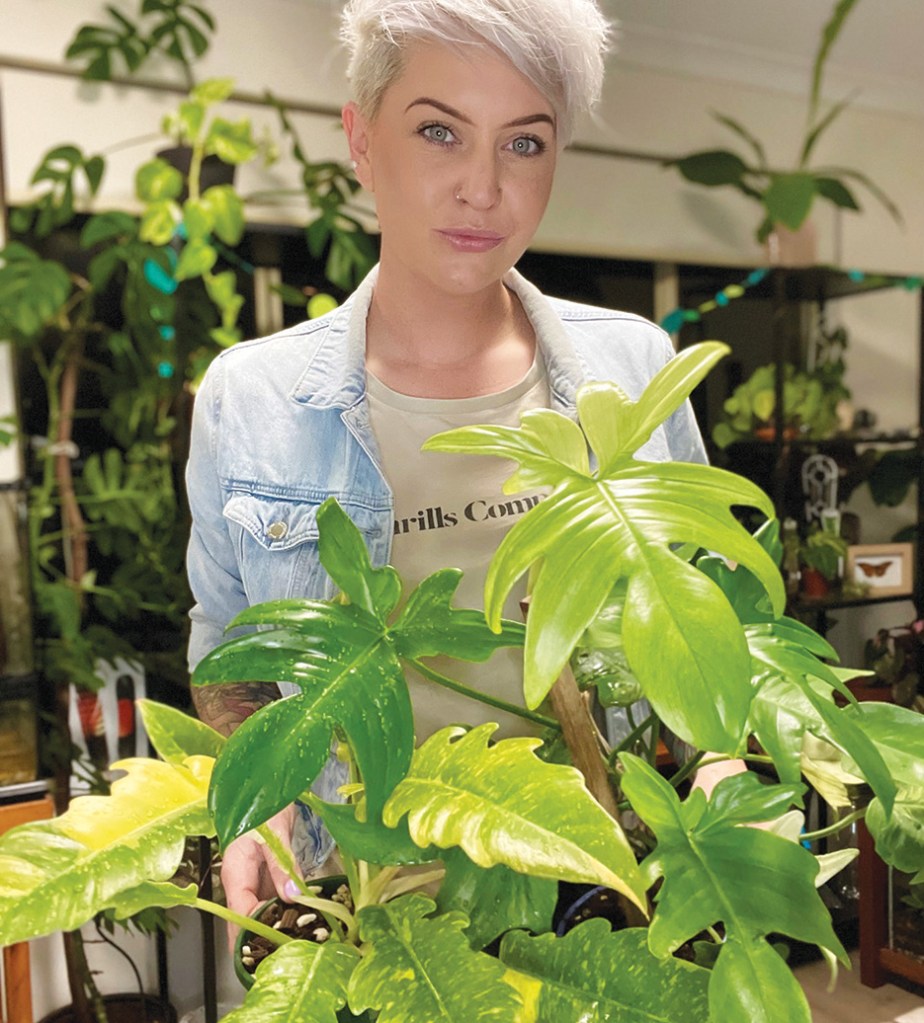
    INDOOR plants have become a hot commodity with people spending more time with their plantbabies during lockdowns, with enthusiasts prepared to fork out thousands for a rare species. 

    Indoor plant lovers are planning to gather for the second Indoor Jungle Festival at Perth City Farm, with rare greeneries expected to be a big attraction this year. 

    For many it’ll be the first time they’ve met in person, having made friends in online plant communities. 

    Horticulturist Kristen Storebaug says: “I’ve definitely noticed in the past two years that indoor plants have ramped up,” with lockdown bringing a noticeable bump in members in the Perth Houseplant Club facebook page. 

    ‘In thing’

    “Everyone needs to have them, they’re the ‘in thing’, and people tend towards being a collector and need to have one of everything.

    “I think the hype is social media driven; you’ve got to have insta-worthy plants” that can be posted on social media, with whole instagram pages devoted to peoples’ plantations.

    Highly sought after plants demand big prices. “A cutting of a plant – not an established plant, a cutting with two leaves, [sold] for $2,000, and that’s not unheard of,” Ms Storebaug says.

    “In Perth, the most I’ve seen is $9,000” for the sale of an adansonii variegated, a multi-tonal species that’s now come down in price but commanded huge sums in the early days when they were scarce. 

    The high prices have prompted a spate of plant thefts in the past year.

    Some Perth Houseplant Club members suspect the thieves do their homework scoping out who’s selling rare species before striking. 

    “They’re definitely targeted attacks,” Ms Storebaug says. “I think people see the price tags on these things and think they can get a quick buck. They’re targeting people who collect them.

    “A friend of mine was broken into and they went for very specific species.”

    Exotic plants are extremely difficult to import because of Australia’s strict biosecurity laws. “It’s basically impossible at the moment: The quarantine facilities in Perth are all but shut down,” Ms Storebaug says. 

    But the allure has led to some unscrupulous collectors flouting quarantine and smuggling them in and threatening everyone’s collection and our agriculture. 

    “There is a real problem with plants coming in illegally,” Ms Storebaug says.

    “We’ve had an outbreak this year with a pest called a chilli thrip,” an invasive bug that damages many plants, first seen in northern WA 20 years ago and being widely reported in Perth gardens since March this year. 

    “It’s affecting agriculture and home gardens. That’s the sort of thing that biosecurity breaches can affect.”

    The rare species tend to be rare because they’re hard to propagate, but when properly looked after the plants can be a lifelong furnishing. Ms Storebaug runs Houseplant Horticulture, a business teaching people how to tend them, and will run a workshop at the festival. 

    “A lot of the plants that we keep as indoor plants have an infinite lifespan or will reproduce babies,” Ms Storebaug says, letting their generations carry 

    on. She has a maidenhair fern passed down from her mother this way, and her grandmother before that: “She grew them in her garden 50 years ago.”

    The Perth Indoor Jungle Festival runs August 6 and 7, tickets and the list of many workshops and specialist stalls are up at perthcityfarm.org.au/events

    by DAVID BELL

  • Zooming into trouble
    Jetski rules: Slow down, wear a life jacket, and be nice.

    DESPITE making up less than 8 per cent of vessels on the river, jetskiers are now accounting for 36 per cent of boating fines. 

    Department of Transport waterways safety management director Chris Mather said there’d been a concerning increase in people on jetskis, aka personal watercraft, attracting infringements in the past five years, going from 19 per cent to 36 per cent. 

    “Data for the past two years shows the two most common infringements issued to PWC operators are failure to wear a lifejacket and speeding, accounting for nearly 60 per cent of infringements issued, while 12 per cent were for freestyle riding in a prohibited area,” Mr Mather said in a statement.

    It’s prompted a new education campaign warning jetskiers to wear lifejackets and adhere to other safety requirements. 

    “Every person on board a PWC must wear a lifejacket at all times to the required standard for the area of operation and adhere to all applicable speed limits, even while operating within dedicated freestyle areas such as the PWC area near the Narrows Bridge on the Swan River.

    “While the majority of users comply, there is an increasing number of PWC operators endangering the lives of other water users by flouting the rules and being complacent about safety which is unacceptable and needs to be addressed.”

    Information will be targeted where jetskis and accessories are sold, and at boat ramps. 

  • Water wise
    A senior attending the Aqua Skills course at Bayswater Waves.

    A FREE swimming course for seniors in Bayswater is making such a splash, the City is looking at offering it on a regular basis.

    Run in conjunction with Royal Life Saving WA, the four-week Aqua Skills at Bayswater Waves gives the over-55s a refresher in swimming, water safety and lifesaving skills.

    Bayswater mayor Dan Bull says the program is invaluable for seniors in the Bayswater community.

    “Sadly, a large percentage of drowning incidents in Australia involve people over the age of 55. As out population ages this is becoming an increasing issue,” he said.

    “With nearly half of residents living in the City born overseas, many may not have grown up around the ocean, rivers or pools so this program is a fantastic introduction to water safety.

    “Also, for those who haven’t dipped their toe in for awhile, the program is a great opportunity for them to boost their confidence in a safe and fun environment.

    “Throughout the four week program, participants will learn how to keep themselves and others safe in and around the water. They will also take home essential lifesaving, CPR and rescue skills so they’ll know what to do in an emergency situation.

    “The program provides flexible options to suit every swimmer, and as the weather is getting a little cooler, Bayswater Waves is the ideal place to brush up on these important skills.

    “This is the first time the City has run the Aqua Skills 55+ program and as places have filled up so fast, the City is looking to offer this to the community on a regular basis, free of charge.

    “This type of initiative forms part of the City’s Public Health and Wellbeing Plan, which aims to create a healthier Bayswater and promote healthy lifestyle choices for the community.”

    To find out more about the Aqua Skills program or express your interest, contact the City’s environmental health team on 9272 0648.