Mr Zempilas launched his pop-up beds plan during his election
LORD MAYOR Basil Zempilas’s plan to set up pop-up beds in council carparks for people experiencing homelessness has been smothered by red tape.
Perth council will now open another bed-less night shelter in July at the Citiplace Community Centre after a report found it would cost $500,000 and take too long to bring it up to the standards required by the National Construction Code to accommodate people.
Mr Zempilas took his “Pop-up Places for Homeless People” policy to the last council election (“Baz’s plan: Let’s park homelessness,” Voice, September 1, 2020) and successfully moved a motion at the April 27 ordinary council meeting calling for locations to be identified.
Citiplace was among five possible venues looked at by staff, including the Pier Street, Cultural Centre and Wellington Street carparks and the old Perth Enterprise Centre on Stirling Street.
“Being located within the Perth Train Station complex, the area around Citiplace Community Centre is heavily trafficked during business hours and at night,” the report noted while recommending it as the preferred option.
“This has potential security advantages by providing passive surveillance during the evening and maintaining a range of positive interactions with the surrounding community.”
But the council backed away at the set-up price tag, going instead with the $27,900 option that would allow up to 15 men to “rest” on comfy chairs, beanbags and mats while watching some telly and engaging in “quiet conversation”.
“The service will be staffed by two support workers and two security personnel,” the report said.
“The safe shelter will be low-barrier for vulnerable rough sleepers and will be accessed by referral only.”
“Support workers will encourage people to attend hubs and appointments at services to access crisis, transitional and long-term housing options.”
The shelter is planned to be opened on July 5, a fortnight after opening a similar facility for women in East Perth.
Local DJs are the hype of Australia thanks to Covid, says one of the city’s stars who’s hit the international big time.
While the rest of the world is left with empty dancefloors and dry bars, Perth’s nightclub scene is thriving. Its best DJs, including the likes on internationally renowned duo Slumberjack, are stuck in town and outsiders haven’t been able to breach its hard borders. In some ways, Perth’s problem is an over-saturation of DJs.
Fremantle DJ Ben Renna is one of those riding a wave of success and his first track release is scheduled for later this year.
Renna says he followed all the typical steps to establishing himself as a professional DJ, and is still behind the decks at a variety of nightclubs and venues in Perth after 10 years; his regular gigs in Melbourne and Sydney are on hold because of Covid-19.
“I’ve been remixing for a number of years … I’ve remixed for Sneaky Sound System and other small labels and people along the way,” Renna says.
Remixing
It was already an impressive CV for an emerging DJ, but Renna wanted more – his own original music.
“I just needed to put some original music out and thought ‘fuck this I’ve been remixing for everyone for so long, it’s basically creating an original from scratch’,” he said.
“People don’t realise that creating a remix is almost the same as making an original track … all you have to start with is the vocals.”
He sent a few original tracks off in the hope of landing a record deal, and his determination paid off last year with a two-track deal with Sydney-based company Central that will lead to this year’s release.
Kayty Smith is resident DJ at The Court Hotel on Beaufort Street and is enjoying the extra exposure as her social media fanbase grows.
Smith said her start in the industry wasn’t the typical path: “I was a club manager for seven years before I learnt to mix.
“The DJs I knew would be making more money over a weekend than I did in a whole week.”
Luckily for Smith, the industry connections she made while running the venue combined with some savvy online engagement to fuel her stage persona.
Her insider’s knowledge meant she was also a hit with management as she was great at generating revenue.
Smith exploited DJing secrets like “sticky fingers”, a term used by DJs to describe purposely playing something crap every five songs. This helps cycle the crowd between the bar and the dance floor, keeping the venue open longer and giving bar staff more hours.
Smith had previously also worked as a “promo girl” at Air nightclub, using her social media profile to encourage punters down.
She decided this line of work, as well as managing, was going to expire at some point in her 20s, so she made the strategic decision to add DJing to event coordination.
Smith knew she would have to work harder and smarter than the male DJs in the Perth scene.
“Back then, if you wanted to be a female DJ, you had to wear makeup, you had to be thin, you had to have platinum blonde hair.”
She had a background as a beautician so found it easy to play the image game, but set clear boundaries and wouldn’t follow the lead of many female colleagues who constantly posted sexually provocative “thirst traps” to grow their profiles.
“I knew I wasn’t as pretty as the other girls that would come and go but I’m funny and that doesn’t fade,” she said.
She even took a screenshot of a troll’s message “you’re ugly” and posted it as a self-promotion.
“Come down tonight and use the codeword ugly to get free entry,” she recalled.
Whatever was thrown her way, Smith weaponised it for her own personal gain: “Work smarter, not harder,” she said.
But there were real dangers to being a female in the event/ venue/DJ industry, and Smith details some horrific acts against her by senior staff.
“I’ve been beaten up and worse for making a mistake or for no reason at all,” Smith said.
She shares many of her problems and openly talks about mental health issues on her social media platforms.
“I make self-deprecating posts all the time… I guess it just connects to others,” Smith said.
“Look, I’m just a girl struggling to pay my rent, just like everybody else.”
Brandon Willington, who performed as Wilco before retiring two years ago, made the observation of Perth being the Australian Las Vegas.
He tasted fame after creating and releasing Literally Fuck Genres in 2017, a mix that went viral and even had the world’s top DJs sharing it on their social media.
Many expected Willington to seize the moment and tour the world, but while he did head to North and South America to test the waters, he wasn’t interested in becoming a globetrotter.
“That’s not what I wanted, I tried the whole tour thing but my place is here in Perth,” he said.
His “musical journey” was more typical of many DJs, playing house parties until a lucky break got his first nightclub set at Dusk in Joondalup, now known as Arcade.
“I met the manager and he liked me, he actually offered me weekly sets on Saturdays that very night,” Willington said.
Impressed by his drawing power, the club’s owners booked him for their other venues, such as Metropolis Fremantle.
“Every single event you would do, you would meet someone who enjoyed the music … one person would lead to another person then another person and so on.”
The young DJ was networking before he even realised it.
“From there it was all luck, or actually chance, that’s a better way to describe it,” he chuckled.
Most local DJs have an expiry date as the next big thing hits the scene, but Willington got to make his own choice and decided to retire and concentrate on marketing and event co-ordination.
He saw it as “the next chronological step … running events and managing venues and club nights”.
Two years after stepping away from the decks, Willington still banks his well-known rebellious streak by posting outlandish status updates on his Facebook page to promote his events.
While some might raise an eyebrow at Willington’s references to heavy drinking, drug use and pretty dark humour, it’s been very successful, resonating with many in the clubbing community who see the darker parts of themselves reflected in his online character.
Nik Thomson was also managing a venue before adding mixing to his CV, but he was already a gifted musician.
Thompson was front man for indi rockers 44th Sunset, who were signed to Sony Productions after winning a schools band competition in 2013 and ended up touring Australia. Listening to Triple J sevenish years ago, you would definitely have heard one of their songs.
After fans decided their music “just wasn’t in anymore,” Thompson said he fell in love with club life and particularly its electronic music.
He soon picked up work as a manager, but his passion for music was still strong and he had the luxury of the venue’s setup to practice mixing after hours.
Mixing came “rather naturally” and his knowledge of song structure and music production, picked up at the WA Academy of Performing Arts, gave him an advantage over other up-and-coming DJs and gigs soon followed.
He also knew the value of social media marketing and alternative ways to engage with the public. While studying marketing at Curtin uni he became the president of the Electronic Music Appreciation Society, two areas that helped his DJing career blossom.
“EMAS is a great way to learn how to properly condone yourself in the industry,” Thomson said.
It was a mutually beneficial relationship, with the society’s membership and prominence getting a good spike during his reign.
Thompson has taken a step back from DJing these days, saying he “finds it hard to be objective” playing events he’s coordinating, but agrees that the industry is in a strong position at the moment.
Jon Sanders arrives in Fremantle after collecting water samples from around the world.
Microplastic clogging the farthest reaches
RESULTS from a groundbreaking research project measuring microplastic pollution in some of Earth’s remotest waters have started to filter in.
The research was linked to famed Australian sailor Jon Sanders 11th solo circumnavigation of the globe earlier this year, as he collected daily water samples while sailing through the Indian, Atlantic, Pacific and Southern Oceans.
The samples were tested for microplastic levels by internationally renowned Curtin University organic geochemist Kliti Grice and her team from WA-Organic and Isotope Geochemistry Centre.
Microplastics are particles from degrading plastic debris, resin pellets and beads. The pellets are used in moulding plastic products and often spill into the ocean during manufacture or transport. Plastic beads are commonly found in cosmetic products such as toothpaste, body washes and facial scrubs and are too small to be filtered out by drainage system.
Prof Grice’s team have found an average of 47 microplastic particles per cubic metre in the Indian Ocean, 32 particles per cubic metre in the Atlantic Ocean, and while the Pacific was at the lowest end of the scale with 21 particles per cubic metre samples are still being analysed and the Southern Ocean samples are yet to be analysed.
The Atlantic threw up the worst sample so far, with a spot 300 nautical miles off Brazil measuring around 300 particles per cubic metre.
“It’s the first time these have been measured in remote parts of the southern oceans around the world,” Prof Grice said.
Toxic
“It’s the first baseline of data for these remote areas, and it really shows that microplastics are present in these very remote regions. There’s been a lot of work done on shipping areas, or highly populated areas, but there’s not really a baseline study for the entire Southern Ocean.”
Microplastics are highly detrimental to marine wildlife. When consumed by plankton, crustaceans and small fish microplastics seep into tissue and accumulate.
They come with toxic chemicals that head up the food chain until they find their way to our dinner plates.
Research also shows plastics can fill a fish’s tummy and leave them feeling full, causing them to stop eating and starve to death.
“The science is there; plastic is becoming a major problem, every effort will contribute to helping to deal with the issue,” Prof Grice said.
She believes people can make a difference through changes in their everyday life, such as reducing their plastic consumption, skill up on the best recycling, and join beach cleanups and campaigns.
“Citizen science, I think is very important actually; if everybody contributed a little effort to that, and maybe some of the things that are happening in Europe where they have these huge almost vacuum cleaner type ships cleaning up plastic.
Awareness
“Implementing something like that around the world would actually help and reduce the problem. I think it’s making awareness, and maybe the governments can change policy in terms of how waste is managed ” Prof Grice said.
“Plastic is very resilient and a lot of it can’t be degraded very easily.
“In future years perhaps it could be a chronological horizon in the sediment that represents our era, like the Anthropocene era, in many thousands or millions of years to come.”
If humanity does not act soon we may go down in history as the polyethylene era.
Mr Sanders said during his voyage that Asiatic waters were amongst the most polluted he sailed through.
• Phoebe Sullivan gives it everything in her debut one-woman show Beginning at the End (of Capitalism), an entertaining mix of live streaming and performance.
FLASH Gordon, haute-couture and mummy issues collide in the mind-boggling Beginning at the End (of Capitalism).
The one-woman show features Phoebe Sullivan performing in a green screen studio, with the audience able to watch her without effects or on huge screens with retro sci-fi backdrops, aliens and laser beams.
“The easiest way to think of it is if you’ve ever been to a footy match, you can either watch the field or get close up action on the players, the ball and instant replay, by watching the big screen,” Sullivan says.
“The performance, or the ‘action’ if you will, will be captured on three separate cameras that will be feeding the footage onto a huge projector, also in the same room.
“The joy for audiences is that they can choose between watching the live action, such as myself, performing on a green screen interacting with practically no one, or turn their heads 45 degrees to watch a live cut complete with fantastic sci-fi effects, evil villains and backdrops à la Flash Gordon.”
Beginning at the End (of Capitalism) is described as a “retro-futurist sci-fi adventure as one astro-navigatrix Earth girl journeys to destroy capitalism,” but at the core of the show, like any good drama, is the relationship we have with other human beings, particularly our mothers.
Sullivan’s mum worked multiple jobs, leaned on credit cards and did everything to give her daughter the best life possible, making huge sacrifices along the way.
In the show, a woman in her mid-twenties on the other side of the universe has a sobering conversation with her mum about debt, and the love that created it.
“The work looks at notions of debt in a myriad of ways. There is, of course, debt in the accounting sense, how much one owes the bank,” Sullivan says
“But a larger, more central question Beginning At The End (of Capitalism) seeks to examine is, what do we owe each other?
“As participants in society, we will always be indebted to the efforts and actions of others – to parents, to previous generations, to our environment.
“A central source of inspiration in the making process has been David Graeber’s book Debt: The First 5,000 Years.
“In it, he concludes, ‘(society) can only operate by continually converting love into debt,’ and I think that’s really getting to the heart of what the show is about.”
Sullivan graduated from WAAPA with a BA in Performance Making in 2016, going on to appear in shows like Beside.
She likes to examine the rabid consumption in modern society, with Beginning at the End (of Capitalism) touching on our consumer-obsessed culture.
“There are nods here and there to various big name designers exhibited via costuming, but beyond that, the work’s themes attack head-on what it is to live in a state of perpetual desire,” Sullivan says.
“Of fervent wanting without ever feeling sated.
“I think that hunger, and the feelings of emptiness left in its wake, are what we are engaging with when we refer to ‘a love of fashion’”.
Transcending the green screen gimmicks, lofty themes and cold interstellar space is Sullivan’s love for her mum.
“I have a beautiful relationship with my mother, I always have,” Sullivan says.
“I’m very privileged to have been raised by someone who exhibited so much resilience as a parent, and in many ways, nurtured my interests in spite of the difficulties that came with it.”
Beginning at the End (of Capitalism) is at The Blue Room Theatre in Northbridge from June 29 – July 10.
HIGHGATE is a great suburb for young couples looking to get onto the property ladder.
You’ve got a huge variety of cafes, pubs and restaurants nearby on Beaufort Street, East Perth train station is around the corner, and Hyde Park and Brigatti Gardens are perfect for relaxing.
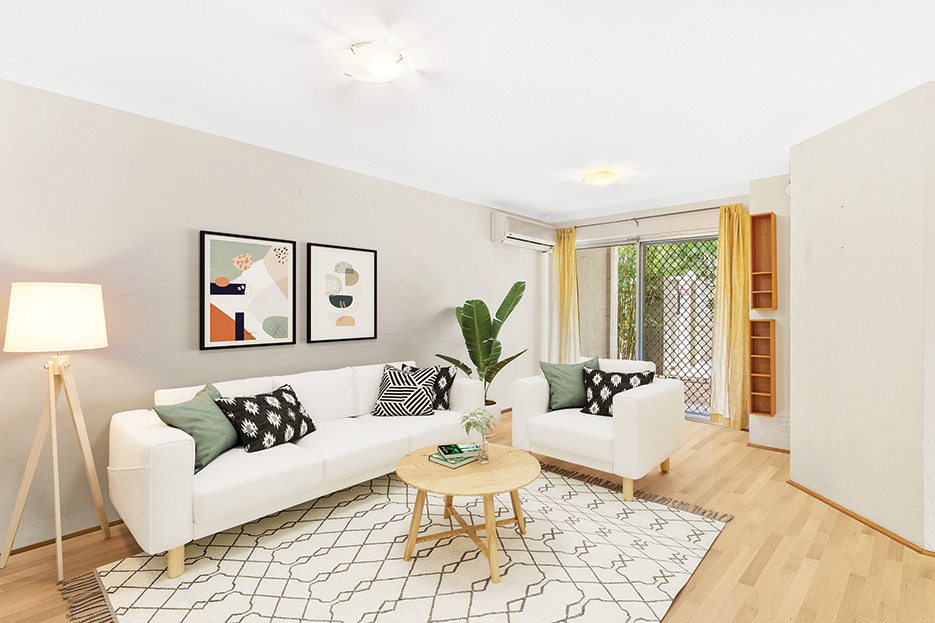
The best way to describe this two bedroom one bathroom apartment in Highgate is bright and airy.
The light wooden floor and neutral colour scheme create a feeling of space with clean, bright lines.
The main living/dining area is relaxing with the neat kitchen, tucked off to the side, having enough room for a small breakfast bar.
Come summer you’ll be nice and cool with air conditioning in the living area and main bedroom.
Inner-city apartments don’t usually have room for washing machines, but this has a large bathroom/laundry with semi-ensuite access from the main bedroom.
Both bedrooms are contemporary and a decent size with built-in wardrobes, so getting a good night’s rest won’t be an issue.
One of the best features of this home is the resort-style facilities in the complex, including a sparkling swimming pool, tennis court and immaculate gardens.
Situated on the ground floor, you won’t have to worry about stairs or lifts, and you have handy access to the lovely grounds and facilities.
Priced from $329,000, this is a great chance to get on the property ladder in a fantastic inner-city suburb.
From $329,000 10/34 Smith Street, Highgate Home open today (Saturday June 19) 10am – 10:30am ACTON Mt Lawley 9272 2488 Carlos Lehn 0478 927 017
A FEARLESS Perth mum has helped raise $16,000 to tackle a cancer that stalks children and teens.
Victoria O’Neill and a team of 11 other skydivers took advantage of some perfect weather recently to jump from a plane over Jurien to raise money for research into Sarcoma.
The cancer affects bone and tissue, and is most common in young people.
Ms O’Neill’s nine-year-old son Harry was diagnosed with osteosarcoma in 2010.
“You can imagine being told ‘your child has cancer’ is every parent’s worst nightmare,” she said.
“He had 18 round of chemo and limb salvage surgery to remove the tumour which was located in his left shoulder and humerus.”
Another of the jumpers, Grace Deluca, was diagnosed with Ewing’s sarcoma while she was still in kindy.
Ms O’Neill said the team paid for their own jumps, so the full $11,000 would go directly to the charity Sock it to Sarcoma, who she’s being rattling tins for (albeit from a great height) for the last decade.
CHANGING the City of Stirling’s name has been shot down as “not a priority” in front of a packed and lively public gallery.
A sometimes fiery public question time stretched out over an hour as people shared opposing, and sometimes confronting, viewpoints.
As Yokine youth worker Lorna Graham-Geraghty pleaded for the council to consider the cost to the Indigenous community of not changing the name, including their high suicide rates, the Voice’s observer was shocked by an aside from a women directly behind that it was “ridiculous” to make such a connection.
What came next underlined how sharply-defined the battle lines have become: if Indigenous people couldn’t handle the status quo, they deserved to die, the woman said soto voice.
The council sits on traditionally Mooro country and is currently named after WA governor and Pinjarra massacre leader James Stirling.
At May’s electors’ general meeting, electors Jeffrey Bullen and Mervyn Eades moved for a renaming to include and recognise the Noongar community.
Mr Bullen said behind the mayor’s seat, “two metres from a flag acknowledging our First Nation people hangs a portrait of a man, governor James Stirling, a man who led the Pinjarra massacre in October 1834, a now-undisputed historical fact where more than 50 unarmed men, women and children were slaughtered in just one day”.
Reconciliation plan
Mr Eades likened it to naming a German suburb after Adolf Hitler.
But at the June 8 Council staff advised councillors to stick with the actions already in the updated Reconciliation Action Plan endorsed a week before the electors’ meeting, which doesn’t involve a name change.
The staff recommendation said “while the potential renaming of the City of Stirling has been a point of discussion amongst the current (and previous) RAP Working Group, it was not identified as a priority action or deliverable with the plan recently adopted by council”.
Cr Adam Spagnolo moved to reaffirm Stirling as the city’s name, getting support from councillors Felicity Farrelly, Suzanne Migdale, Karlo Perkov and Elizabeth Re.
Opposed to Stirling’s reaffirmation were mayor Mark Irwin and councillors David Boothman, Karen Caddy, Joe Ferrante, Chris Hatton, David Lagan, Stephanie Proud, Bianca Sandri, Keith Sargent and Lisa Thornton.
Former councillor Paul Collins has continued to keep an eye on proceedings and was dead against the name change, describing it as “grandstanding nonsense”.
He says they should’ve reaffirmed the Stirling name, and pondered if the majority vote against may signal future changes.
“In the city’s celebratory golden jubilee anniversary since its separation from the Shire of Perth in 1971, why couldn’t these councillors affirm the City of Stirling’s name under which they were elected?,” he queries.
“What are their intentions going forward?”
For now the only name changes scheduled in the RAP are to give council meeting rooms Noongar names in consultation with elders, and to add the traditional country name to the city’s postal address.
That’s in line with recent Australia Post guidelines, with the traditional country name sitting after the recipient’s name and before the street address.
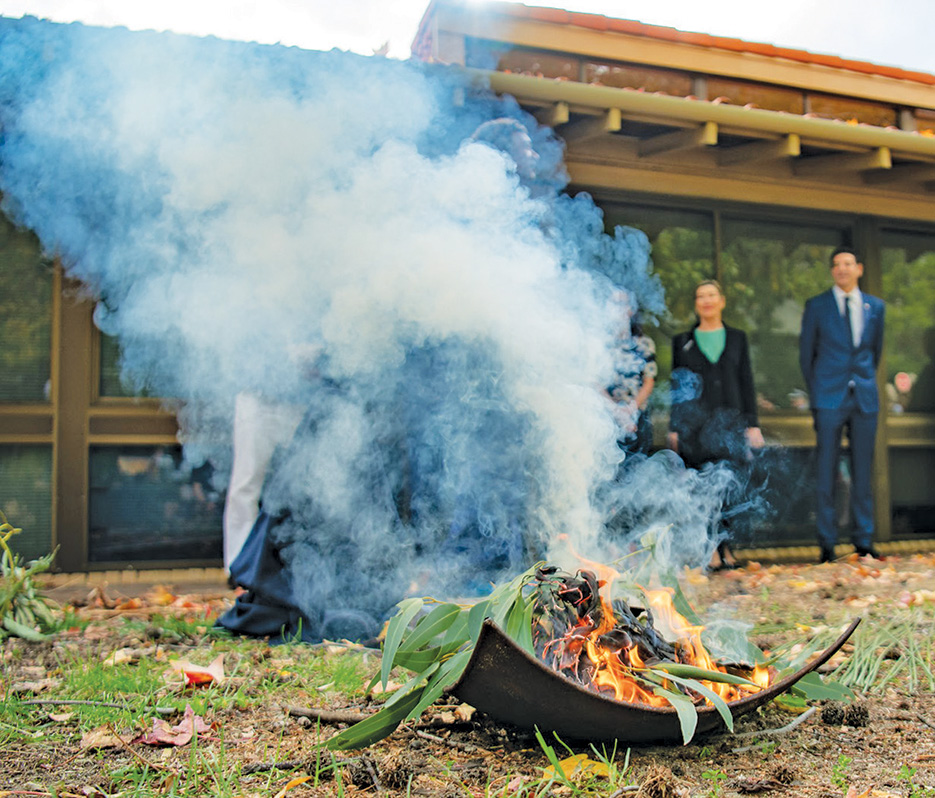
Photo Caption: A smoking ceremony prepares the Safe Night Space ahead of opening day. Photo supplied
THE Safe Night Space for women has opened in the Rod Evans Centre and has seen 53 women take shelter there in its first eight days.
Perth city council originally planned to open the space by late January or early February, but were unable to get state government funding to help cover the $3.1 million cost of a two-year trial.
The Rod Evans Centre had also fallen to bits since the council closed the seniors centre in 2016. It needed far more extensive repairs than planned, adding $250,000 on top of the original $575,000 of fixes.
But it finally opened on May 31 with not-for-profit Ruah providing services on site.
Perth lord mayor Basil Zempilas says: “On 53 occasions, women who would otherwise have slept rough on our streets came in from the cold and spent the night safe and warm with a roof over their head.
“Importantly, they have also been able to make a connection with the wrap around services provided or facilitated by RUAH.
“As lord mayor I am proud the City of Perth is stepping up to help those people who are most vulnerable in our community.”
He said a safe night space for men would open in the next month.
It’s a two-month trial at the at the train station’s Citiplace Centre, costing $80,000 to upgrade the building and $150,000 to staff it with service providers and security.
The safe night spaces are hangout spots with no beds. Installing beds means meeting far higher building regulations that’d cost about $500,000 and take another three months to get Citiplace up to scratch.
Mr Zempilas again said homelessness was a state government responsibility but given their plan is a long-term one, “in the meantime something needs to be done”.
More than 400 people were sleeping rough in Perth according to April’s count, and the council expects state government solutions will take about three years to come online.
Photo Caption: Images of past people like this 1925 photo of Olive Mary Hale (nee Buck, marrying Rupert Hale a year later) have been preserved thanks to 20 years of local history awards.
STORIES and photos of Vincent’s past are sought for the 2021 instalment of the local history awards.
It’s the 21st year they’ve run and past awards have gathered a healthy collection of tales and images in the Local History Centre’s archives, including many of the Voice’s weekly LHC tales.
Some notable landmarks are coming up to milestone anniversaries, with stories about Hyde Park especially sought as next year marks 125 years since “Third Swamp Reserve” was gazetted.
Mayor Emma Cole says:
“We’d especially love to hear from people with personal stories or photos of Beatty Park, which celebrates its 60th anniversary next year.”
It’s open to non-residents as long as the subject matter’s about Vincent, and can include histories of people, groups, businesses, places or events.
Entries close July 30 and there’s cash prizes as an added incentive to preserve the past. Contact the LHC on local. history@vincent.wa.gov.au or 9273 6534 for entry info.
ANOTHER human rights issue raised at Stirling’s electors’ general meeting has also hit a dead end, with councillors voting that helping Julian Assange was “outside the remit of the City of Stirling”.
Journalist Lucy Nicol moved the motion asking that the council endorsed a position that it “does not support the extradition of Julian Assange from the UK to the US”.
Ms Nicol also wanted the council to write to foreign minister Marise Payne asking her to ensure British authorities protected Assange’s human rights.
The motion was carried by electors but councillors heeded staff advice that it was outside local government’s remit.
A similar motion by town planner Greg Smith was shot down at Bayswater’s AGM in 2019 when it didn’t get enough supporting votes.
So far Fremantle council is the only WA municipality to endorse a motion supporting Assange’s rights.