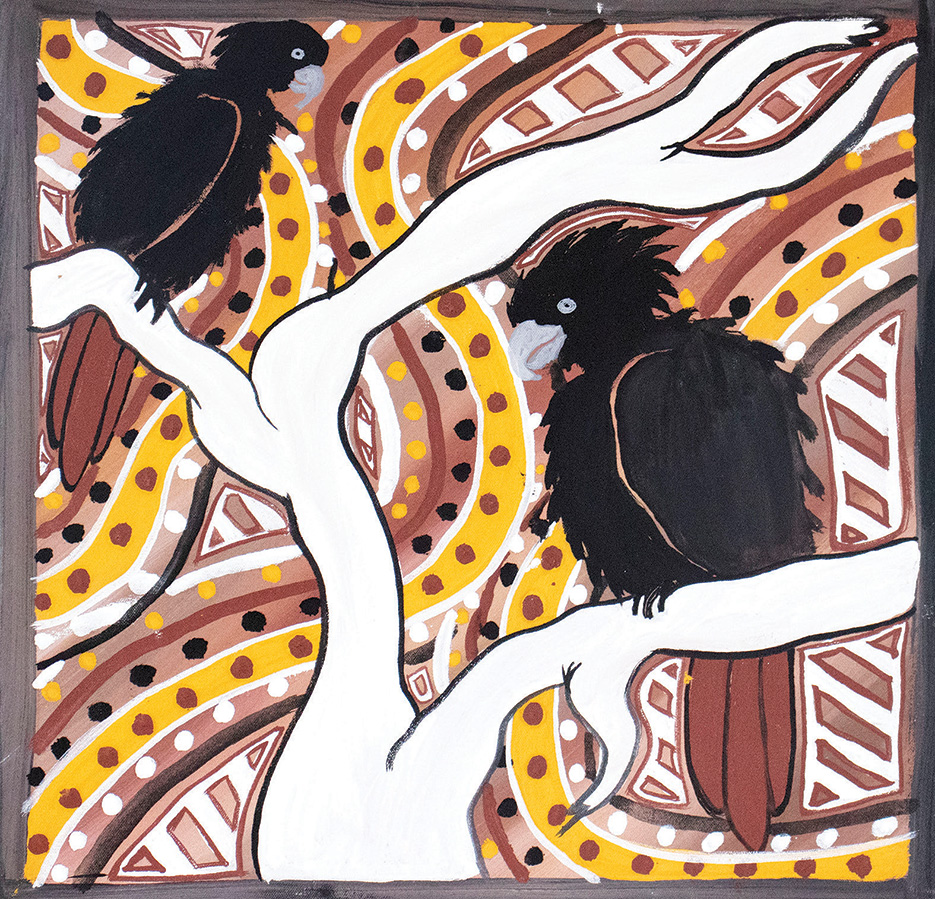
Wandjina the Rainmaker by Jemma Unghango Black Cockatoo by Roger Boona photos courtesy Waringarri Aboriginal Arts
NEW and emerging artists from the Kimberley offer a fresh interpretation of their cultural heritage in the exhibition Boonkaj.
Featuring more than 20 artists from two Aboriginal-owned art centres – Waringarri Aboriginal Arts and Kira Kiro Artists – the exhibition includes a diverse range of paintings, ceramics, engraved boab nuts, textiles and even a digital animation.
The exhibition is being held at Flux Gallery in the Perth CBD, and curator Sandra Murray says it’s a chance to showcase the next generation of talented artists from the Kimberely, who rarely get to exhibit in Perth.
“A number of the artists have close relatives in the exhibition,” Murray says.
“One to note is Delany Griffiths, a young artist, who is learning culture from her grandmother, renowned artist Peggy Griffiths, by re-interpreting Country and cultural knowledge through her ochre paintings and textile printing.
“Delany is one of the rising stars in this exhibition with both her paintings and textiles a highlight.
“Delany began painting in 2008 and has proven herself to be a highly skilled artist.
“Her mother, Dora Griffiths, is also exhibiting her textile work alongside Delany. Dora is the Chair of Waringarri Aboriginal Arts Board and also an accomplished painter.”
Waringarri is the first wholly indigenous-owned art centre established in the Kimberley, and one of Australia’s oldest continuously operating art centres.
It includes Kira Kiro Art Centre in Kalumburu on the north Kimberley coast.
Murray notes that having contributions from two different art centres in the region, highlights the subtle differences in the way culture and land are interpreted.
“Whilst the artists of Waringarri Aboriginal Arts concentrate on the landscape, bush medicine, bush tucker and Ngarrangarni (Dreamtime) law; the Kira Kiro artists often depict the Wandjina – a sacred ‘rain’ spirit and creator, the Gwion Gwion or Kira Kiro spirits, and other ‘cheeky’ spirits found in the rock art of the Kalumburu region,” she says.
“One predominant connecting theme of the two art communities is nature, it is integral to the thinking of the artists in Boonkaj, it is part of their Country.
“There is a deep spiritual and physical relationship with Country evident in these compelling art works. I was so impressed by the vitality of the artists, there is a prodigious amount of talent.
“One striking feature to note is that unlike a number of other art centres, paintings from these two centres are created using traditional ochres to create strong, fresh colours, rather than modern acrylics”.
The exhibition includes the Waringarri Textiles project, a social enterprise where aspiring artists create hand-stamped and screen-printed fabrics, providing a gateway to art through a non-traditional medium.
“Mentored by senior artists, Waringarri Textiles maintains cultural knowledge and enables artists to experiment with the way designs of bush plants and cultural stories are expressed,” Murray says.
“Exploring new media keeps younger artists engaged and cements their relevance in a changing world.“
Boonkaj – emerging: art from the Kimberley is at the King Street Arts Centre, Wednesday – Saturday, from May 15 to June 26.
THIS apartment is perfect for someone who values their privacy and loves the leafy enclaves of East Perth.
Situated on Royal Street, it was designed by Hillam Architects and is part of a building with only eight owner-occupied apartments.
This one has high ceilings and feels bright and airy, but it’s the use of muted tones that gives it a sleek, elegant feel.
The white walls and ceilings contrast with the dark finishes in the kitchen, on the TV feature wall and the window frames.
It shouldn’t work, but it does, complementing the gorgeous blackbutt wooden floors and tan leather couch.
Everything is on one level, including the three bedrooms and two bathrooms.
The kitchen is a cracker with plenty of bench space to prep food and top European appliances like the Miele induction cooktop and double AEG oven.
The kitchen overlooks a nice open plan living/dining area, making it easy to mingle with friends and family while you’re getting the food ready.
The bedrooms are all beautifully finished with the main boasting walk-in robes and a double vanity ensuite with spa bath.
The plush Cavalier Bremworth wool carpets are a nice touch, making the bedrooms feel nice and cosy in winter.
The bathrooms are equally impressive, with the Carrara marble tiles adding a slightly opulent air.
You won’t feel cramped in this apartment with two large balconies dappled with shade from the leafy street trees.
It provides a lovely backdrop for your glass of wine and nibbles at sunset.
Storage won’t be a problem either with a large internal storeroom (big enough to be an office) and loads of cupboard space in a seperate laundry.
The apartment has a host of features including reverse cycle ducted air conditioning, motorised blinds in the living area and a powder room. Plus there’s a gym in the building.
It comes with two secure parking bays, but the train station is a short walk away and the CAT bus service to the CBD is nearby, so there’s plenty of public transport options.
This is a classy apartment that suits its Royal Street location down to a tee.
Offers by June 8 4pm 9/135 Royal Street, East Perth Ray White City Residential 9422 6288 Agent Brent Compton 0410 543 124
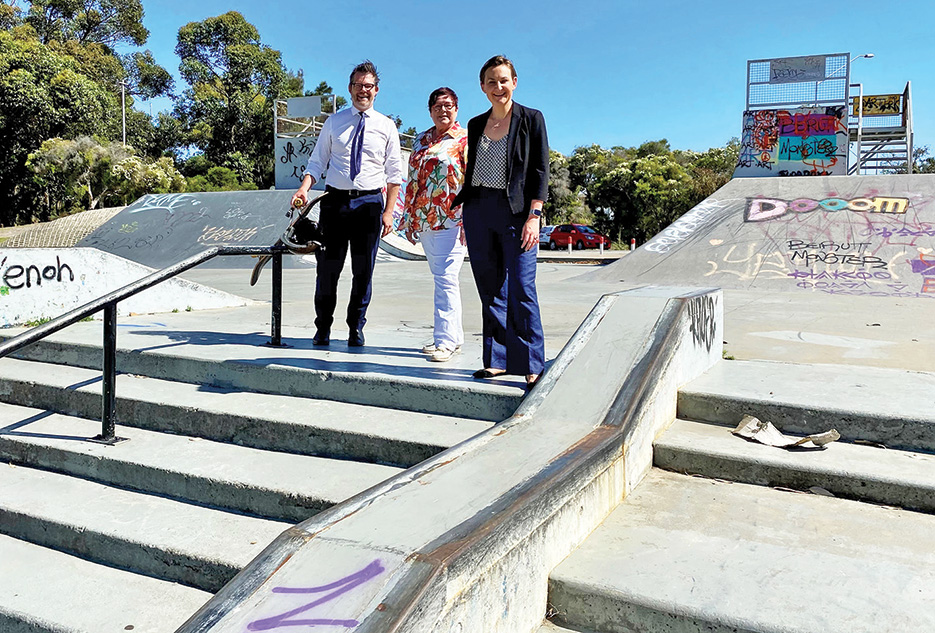
Bayswater mayor Dan Bull with MPs Lisa Baker and Amber-Jade Sanderson celebrating calmer times when the Wotton Park skate park was given a stay of demolition. File photo.
‘We’ll sk8 up your place day and fkn nite’
BAYSWATER councillors have ignored threats and will relocate a skate and BMX park within Wotton Reserve instead of the Broun Park spot most skaters favoured.
BAYSWATER councillors have ignored threats and will relocate a skate and BMX park within Wotton Reserve instead of the Broun Park spot most skaters favoured.
The new Wotton site is further away from Tonkin Highway to make room for the Metronet train station development.
While most skaters favoured Broun Park, its neighbours feared the impact of skate noise and floodlights on their quiet, passive patch of green.
Back on Wotton, the Morley Windmills Soccer Club didn’t want the skaters any closer to their clubhouse either, fearing the club’s viability could be jeopardised if the skating area ate up parking and deterred potential members.
The decision to stick with Wotton came amid physical, electoral and legal threats to councillors urging them to vote Broun Park.
Cr Stephanie Gray, who moved the motion for the Wotton option, had told the February council meeting her son used to be a skate park user but was threatened by other users who discovered her role on council.
Emotional
That was raised during public question time by skatepark user Daniel Ondracek, who queried whether Cr Gray might be biased in voting given what he described as an “emotional recount at February’s meeting regarding alleged threats to both herself and her family by parties unknown or identified by the councillor”.
Cr Gray responded: “They’re not alleged [threats], police have them, they’re in writing, so they’re not alleged. And I have sought advice on whether I have a conflict of interest in voting on this… no, I don’t.”
An anonymous letter was sent to councillors urging them to go for Broun Park, with the author saying they knew where councillors lived and threatening to “sk8 up your place if we have to day and fkn night”.
And Cr Elli Petersen-Pik reported to last week’s council briefing that he’d received a concerning text from a Windmills committee member who didn’t want the skate park closer to them.
“My name is Ali Bektic, I live in Maylands and have done for 30 years. I’m currently serving as a committee member for Morley Windmills Soccer Club for which I’ve played since 1980,” the text said.
“Since you are the councillor for my area I would like to strongly suggest that you follow your own council recommendation on tonight’s vote,” the text said, referring to the original staff recommendation to go with Broun Park.
“Failure to do so will result in a concerted effort from myself and my vast network to remove you from office at the next election.”
Windmills club president John Castrilli was at the briefing and Cr Petersen-Pik asked if he endorsed the text’s sentiment.
Mr Castrilli (who is not the former local government minister) said “he should have consulted us first as a committee”. He said members had their own opinions but “he wrote it on behalf of the committee, which he shouldn’t have done.
On the day of the vote Mr Castrilli sent the council a letter threatening legal action over “a lack of due process to adequately inform decision making”, “an alleged disregard of extensive community engagement” and an allegation of “conduct unbecoming of councillors in offical proceedings and decision-making to deliver a predetermined outcome (apprehended bias)”.
Cr Lorna Clarke said “the debate, particularly online, has been really nasty, and there’s been a lot of misinformation. It’s actually been the most upsetting thing I’ve come across on council and I think we all need to take a deep breath and step back and think about that, how it’s gotten to that”.
She said the legal letter’s claims were incorrect and that they’d weighed up many factors in deciding on Wotton, including that the skate park was already at a nearby spot on Wotton, was close to a train station, and “to move it from where it is now has a huge impact on the public open space that exists in another park”.
“I would much prefer to have noise and lighting near near Tonkin Highway and a railway station and a soccer club that’s probably already got its lights on playing a game at night, than near a residential area.”
In favour of Wotton were councillors Dan Bull, Clark, Gray, Petersen-Pik, Sally Palmer and Barry McKenna, and a minority vote against Wotton came from Crs Catherine Ehrhardt, Steven Ostaszewskyj, Filomena Piffaretti and Michelle Sutherland.
The council will now draw up detailed concept plans.
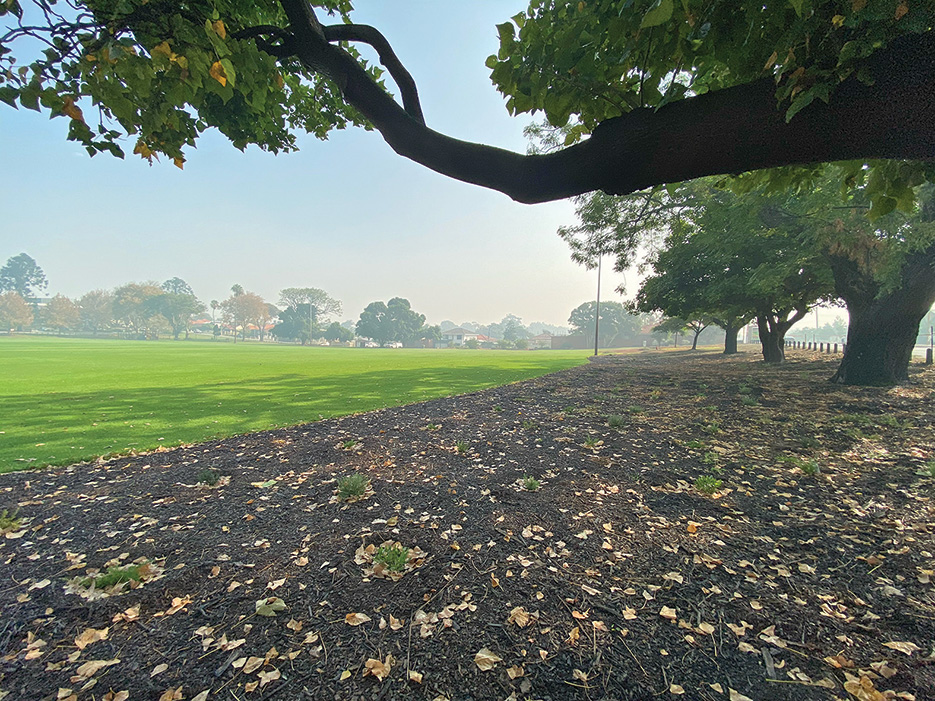
THE city would soon be covered in smoke, but local school teacher Joel Kandiah captured this image at just the right moment early in the morning of April 28 as the sun rose through the haze and rowers cut through the river water. He tells us he saw the
scene in his rearview mirror and had to pull over to take these shots off Mounts Bay Road. More of his creative work including his fascinating and popular numismatic videos (the study of currency) is at @thehistoryofmoney on TikTok.
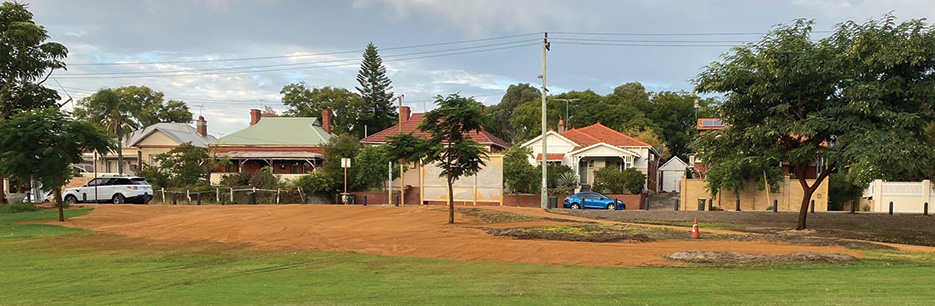
RESIDENTS living around Beatty Park Reserve fear their houses will be flooded in the next big rain because Vincent council broke a longstanding promise not to use woodchips in the park.
When big rains hit the woodchips float to the low points and block drains, and were implicated in bad flooding during the heavy storm of early 2010.
But in January this year a huge patch of grass at the southern end of the park was killed with spray and replaced with woodchips for “ecozoning”, which usually involves putting in native plants that use less water than grass.
Alarmed
Resident Suzanne Burke told this week’s Vincent council meeting the work happened “without prior consultation or engagement with the community.
“When the woodchips arrived at the park we were immediately alarmed as previous administrative staff had made a commitment to us that woodchips would not be used at the park ever again, as they were a direct contributor to blocking drains at the carpark at the rear of our properties.”
Homes damaged
“In 2010 this caused significant damage to our homes… this was not an isolated incident but it was certainly the worst and was very traumatic,” she said.
She’s asked whether these works were approved by council or staff, but has yet to get an answer.
Then there was gravel.
Ms Burke said “undertaking these works without consultation has created great distress for residents”.
They tried to get Vincent to restore the grass but were told the work wasn’t a flood risk and it’ll stay.
Instead a portion of the woodchips nearest those houses has been raked away and replaced with gravel.
“In the view of residents, that still leaves us at risk,” Ms Burke says.
Nearby resident Andrew Main says the gravel is a poor solution to the problem, as “the city has replaced aesthetically pleasing and cooling grass with heat trapping gravel”.
Ecozoning
The unannounced landscaping echoes similar initiatives that caused concerns for locals around Hyde Park when staff started laying down more gravel and ivy to replace grass.
Now Cr Jonathan Hallett has put up a notice of motion calling for the council to boost its public engagement before any more ecozoning goes ahead.
He said while he strongly supports the ecozoning concept, park users and locals should be asked their opinion before it goes ahead, and they should get a say on design and implementation.
A staff report says “future consultation will involve a local letter drop and location signage as a minimum”.
Ms Burke spoke in support of Cr Hallett’s motion, hoping it’d help “avoid others having to go through the lack of engagement and the lack of empathy we’ve encountered”.
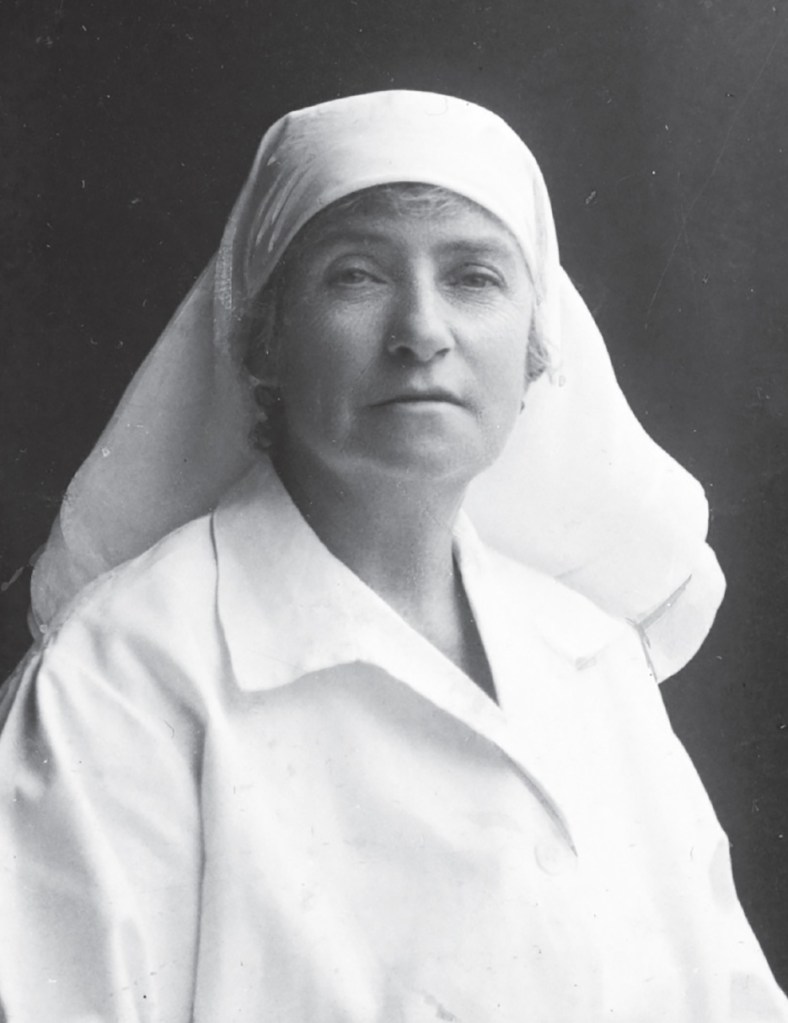
Nurse Alice Maud Stockley, c 1930. CoV LHC: PHO6045
IN this week’s tale from the Vincent Local History Centre we have the story of Newcastle Street’s nurse Alice Stockley, a pioneering midwife and nurse who supported her family solo while building a private hospital.
THE Vincent Local History Centre receives many interesting and curious donations.
In 2019 treasure hunter Kenneth Barber shared a lucky find he salvaged from the Rockingham tip.
Sitting beside a pile of old washing machines, Kenneth found the brass name plate of Nurse Stockley’s Private Hospital, which stood on the corner of Newcastle and Loftus streets in West Perth.
Kenneth soon realised the name plate had historic value and he kindly donated it to the city’s Local History Collection.
The nameplate is currently on loan to the WA Women’s Hall of Fame for a travelling exhibition honouring the 2021 inductees which includes nurse Alice Maud Stockley.
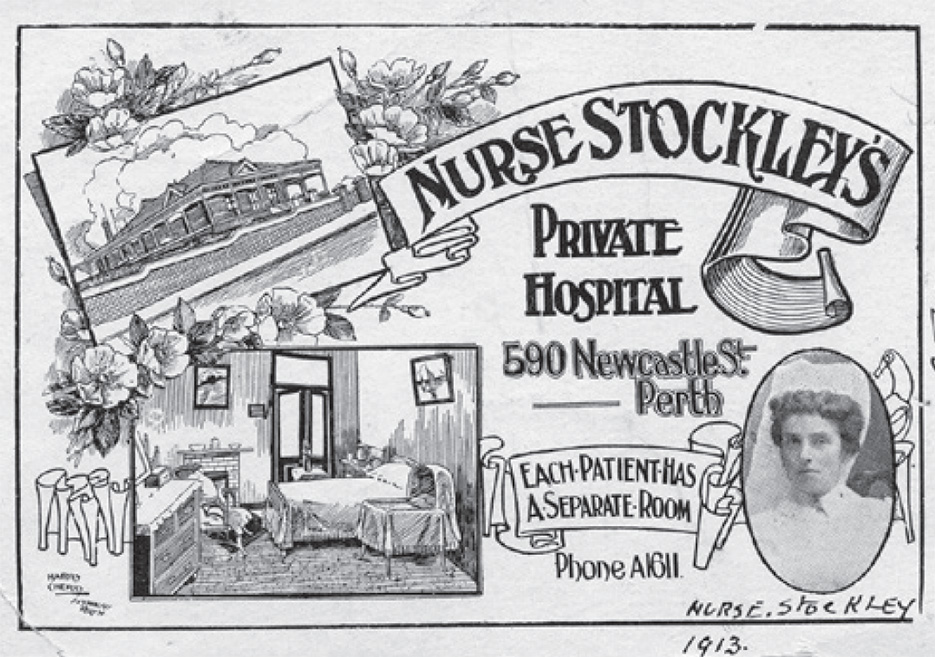
Postcard for Nurse Stockley’s Private Hospital, c 1913. CoV LHC: PHO6046.
Alice Stockley arrived in Perth in 1907 with a family of four children. Soon after their arrival, her husband Joseph deserted her and the children.
She supported her family as a registered midwife with a practice at 47 Newcastle Street in East Perth, which was also the family home.
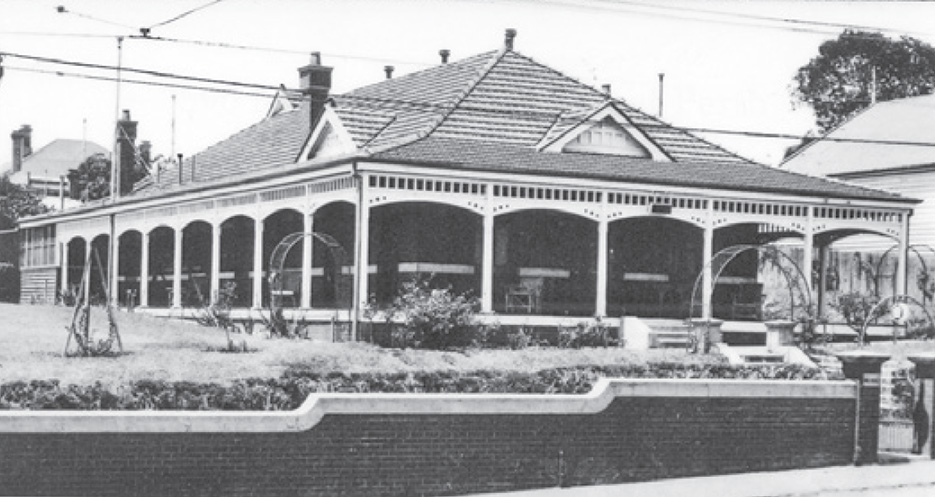
In 1913 she purchased vacant land at 590 Newcastle Street and took out two mortgages to build the hospital, which opened three years before King Edward Maternity Hospital.
The 10-room private maternity hospital employed five doctors on call, which was rare at this time for Perth.
Her three daughters and her granddaughter Viola Smoker were later employed as nurse aids with duties such as cleaning, cooking and attending to the patients.
Alice had a tennis court built next door to the hospital with a clay surface and lights to hire out for added income.
The hospital grounds also included a chicken coop, flowers and fruit trees and a rose-covered archway at the entrance gate.
Nurse Stockley’s Private Hospital, 590 Newcastle Street West Perth, c 1930. City of Vincent Local History Collection: PH03298.
Over the years, Alice opened another hospital at 572 Newcastle Street – Highercrombie Maternity Hospital.
In 1944, she retired aged 78 and died a year later. She was interred at Karrakatta Cemetery and she was honoured in an obituary that praised her fortitude and life’s work as a midwife.
After her death, the hospital at 590 Newcastle Street continued to operate as the Blaich Appin Maternity Hospital.
It was purchased by the Department of Health in 1949 and converted to a child health and welfare clinic.
The property was listed on the city’s Municipal Heritage Inventory in 2009 due it its significance in the development of maternity and obstetrics health services in the area during the first half of the 20th century.
It was removed from the Municipal Heritage Inventory in 2012. The building was sold in 2013 is currently in private ownership.
Nurse Stockley’s descendants Rod Smoker and Brian Christmass have shared photographs and stories about their remarkable ancestor which are available via the Vincent Local History Centre and online at https://cityofvincent.imagegallery.me/
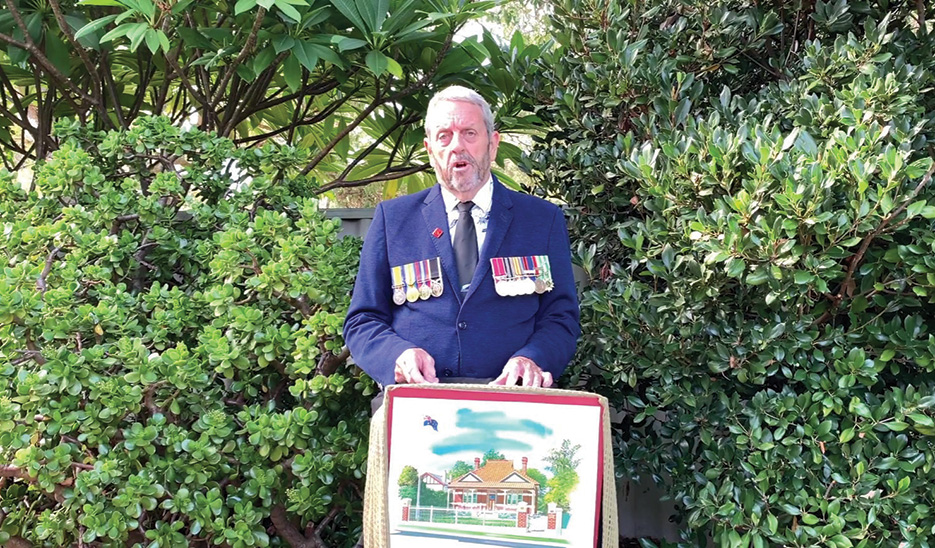
• Vietnam veteran and president of Friends of Anzac Cottage Peter Ramsay addressing a virtual audience across the globe.
WHEN a snap lockdown cancelled Anzac Day commemorations, the Friends of Anzac Cottage had just 27 hours to pull together a replacement virtual service.
The Kalgoorlie Street cottage was all ready for its April 25 service having chosen a theme reflecting 2021 as the International Year of Peace and Trust, when lockdown hit on Friday afternoon.
FoAC secretary Anne Chapple tells us they were slightly daunted by the news, but felt it was their duty to hold a service so the community could pay their respects.
The cottage itself was built in one day back in 1916, and FoAC now had just a few hours more to pull it together.
A flurry of phone calls followed as planned guest speakers were contacted to remotely film speeches from FoAC patron Bob Kucera, federal Perth MP Patrick Gorman, and veteran Ian Healy.
“This format is obviously not as we planned it over the past two weeks,” veteran Peter Ramsay addressed the virtual crowd.
“It is the determination and the commitment to progress exhibited by the community led by the Mount Hawthorn Progress Association back in 1916 when they built the cottage in one day that drives us, the Friends of Anzac Cottage… we meet challenges head on, as I’ve said many times before, if we can’t find a way over around the obstruction, then just blow a hole in it.”
When the sunset service aired people tuned in from the eastern states, UK and New Zealand. The footage is up on the the Friends of Anzac Cottage Facebook page and has been donated to the State Library of WA for archiving.
WHILE some councils are pulling their funds out of fossil fuels, Perth city council’s just handed miner Kerry Stokes’ West Australian Newspapers $30,000 cash for an event celebrating the future technology of major mining, oil and gas companies.
Upgrading from the 2019 Resources Technology Showcase, this year technology from the arms and space industries will be incorporated, and school kids are invited to come along on excursions to learn all about it.
Armoured bulldozers
Along with the cash sponsorship the council will also waive $10,000 in fees, charges and parking costs for the two-day event in June, which will include companies such as Rio Tinto, Chevron, Woodside, BHP and Caterpillar, which manufactures both mining bulldozers and armoured combat-zone bulldozers depending on customers’ preference.
At the April 27 council meeting lord mayor Basil Zempilas had to leave the room during the item since he works for The West.
Cr Brent Fleeton said: “I think it’s a fantastic initiative that’ll see a different type of event that I know a lot of my friends and their little kids would like to come in and see. I think it just utilises a good part of the city and does something different that we haven’t done before.”
The council sponsored the last RTS in 2019 which brought in 900 delegates, 6,000 school kids, and a few thousand other visitors.
In recent years Vincent and Bayswater joined a growing
list of councils divesting funds from the fossil fuel industry, but Perth councillors rejected that stance with staff recommending they “not accept lower quality investments simply to show alignment to an ideological position”.
• Having to contract traffic controllers meant balloons weren’t the only things inflating last Christmas.
VINCENT ratepayers have footed a $5,274 bill for a few dozen people to attend three Christmas street parties.
Vincent council staff approved the “community support grants” in December 2020 after two groups of residents applied to close their roads to hold street parties.
The grants are intended for organisations or individuals with a project that addresses “a key social issue within our local community”.
Former councillor Dudley Maier picked up on the massive bills after noticing they were about 10 times pricier than parties had been in previous years.
The 2020 Dunedin Street Christmas party grant cost ratepayers $2,498 for traffic management fees and $84 to lodge the road closure with police. That’s up from $132 for its 2019 Christmas party, and $181 for 2018.
Another 2020 Christmas party in East Street cost $2,498 for traffic management, $84 for police lodgement fees, and ratepayers also shelled out $193 for a face painter, Christmas decorations and catering.
Mayor Emma Cole said an increase in street party application last year coincided with the city’s rangers being unavailable to provide traffic management, so contractors had to be hired in.
“Contractor costs vary depending on a number of factors, including whether the event takes place on a public holiday or weekend,” Ms Cole said.
“We’re looking at additional measures to keep traffic management costs down next financial year. For example, event timings to happen when rangers are more readily available and more cost effective dates, such as a Saturday event instead of a Sunday.”
Rangers managed traffic at a couple of other 2020 Christmas parties costed at $860 for their time, but the council covers the cost as “in-kind” funding rather than being a separate expense.
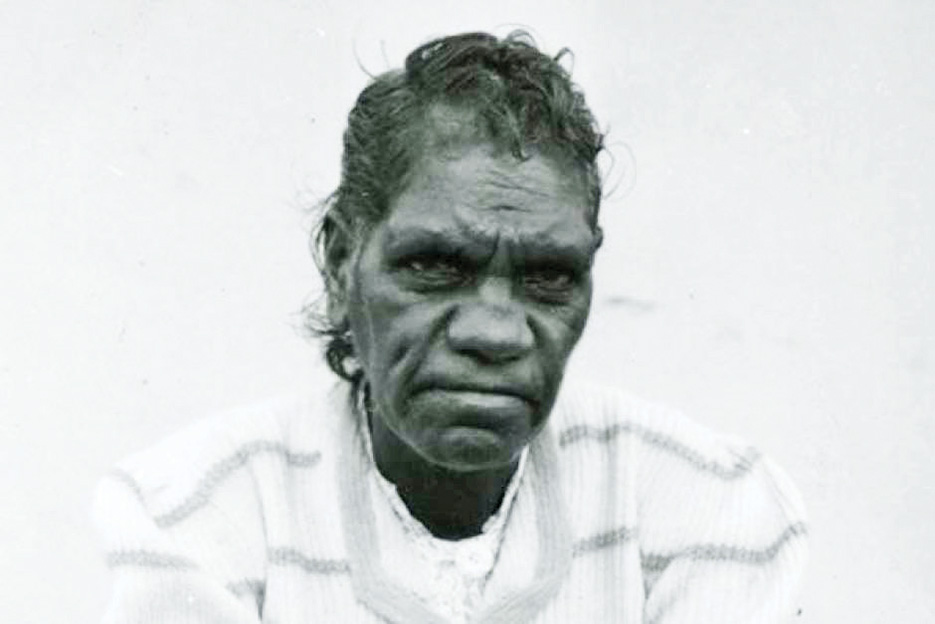
Daisy Bindi, who led the walk off by 90 people from Roy Hill station: “We didn’t live in houses or anything. We had to go down to the creek like kangaroos. We just want to be treated like human beings, not cattle.”
AS an Autumn sun heralded day break across the vast Pilbara on a May morning 75 years ago, dozens of Aboriginal station workers woke to a new dawn.
The day had finally come – May 1, 1946. The day to walk.
The workers and their families had secretly prepared for months, but that did not make it any easier. They were about to embark on an heroic and unparalleled strike against their slavery.
What grew from those first tentative steps was a resistance movement that today remains Australia’s longest-ever strike, and which next week celebrates its 75th anniversary.
Despite great danger on that day and for many months following, around 800 strikers began walking off 27 pastoral stations demanding proper pay and better living conditions in their battle for justice. It was the start of a strike with such far-reaching social and industrial consequences that it became known in some circles as the “Blackfellas’ Eureka”.
However, for the wider community it has remained largely unknown or acknowledged in the nation’s colonial history.
The first squatters and explorers staked their claims over the Pilbara lands in the 1860s; land that for millennia had belonged to 31 traditional language groups living within sophisticated social, religious and cultural systems.
In the next 80 years, Aboriginal people were disinherited of their lands and forced to work on the sheep – and later cattle – stations for meagre rations and little or no wages; their lives subject to the exploitation and whims of the pastoralists, government agents and legislators.
Many strikers said they lived like slaves.
One strike leader, Nyamal lawman, the late Peter Coppin, observed that: “We lived no better than the cattle but we worked all day for the right to do even that! We were skinny people back then and we lived through plenty of starvation times.”
Another leader, legendary Nyangumarta woman, Daisy Bindi, who led the walk-off by 90 people from Roy Hill station said: “We didn’t live in houses or anything. We had to go down to the creek like kangaroos. We just wanted to be treated like human beings, not cattle.”
The discontent festered with the arrival in the region of Don McLeod, a white man with a permit to employ Aboriginal labour for his contract fencing and well digging work. McLeod witnessed the treatment of the Aboriginal workers and became increasingly disturbed by the inequality and exploitation.
He noted they “had no houses, they had no water supply, they had no sanitation or anything of that nature, and they had no minimum standard of wage”.
He made strong connections with the Aboriginal men working for him and paid them good wages, in some cases 11 times more that they were receiving from the station bosses. Dissatisfaction grew as word of the disparity spread across the spinifex plains from station to station.
As a result, McLeod was invited in 1942 to explain the concept of a strike to a large lore meeting at Skull Springs where, he said, it was agreed to hold a mass station walk-off once World War II was over.
May 1 was crucially the start of the shearing season and coincidentally also International Workers’ Day.
An ingenious plan was hatched to spread the strike date to the station workers with it marked with a cross on hand-drawn calendars on food tin labels, and secretly delivered by strike leaders Dooley Bin Bin and Clancy McKenna.
As McKenna told his fellow workers: “We want to better ourselves. We just want better conditions. We’ve been working for the squatters long enough and all we get is a chunk of meat, corned beef, dry bread. We want to walk off all that.”
On the walk-off day, media reported that De Grey station and “at least 11 others” had struck on time.
Many were initially fearful of joining because by law they could be arrested for leaving.
But by August, as word spread, many dozens more workers joined during the annual Port Hedland races meeting after they travelled to the track on the horse trucks and by train.
They refused the squatters’ and police requests to return to the stations after the event finished.
Peter Coppin had a gun pulled on him by a policeman during one standoff. Another strike leader, Ernie Mitchell, was arrested but later released.
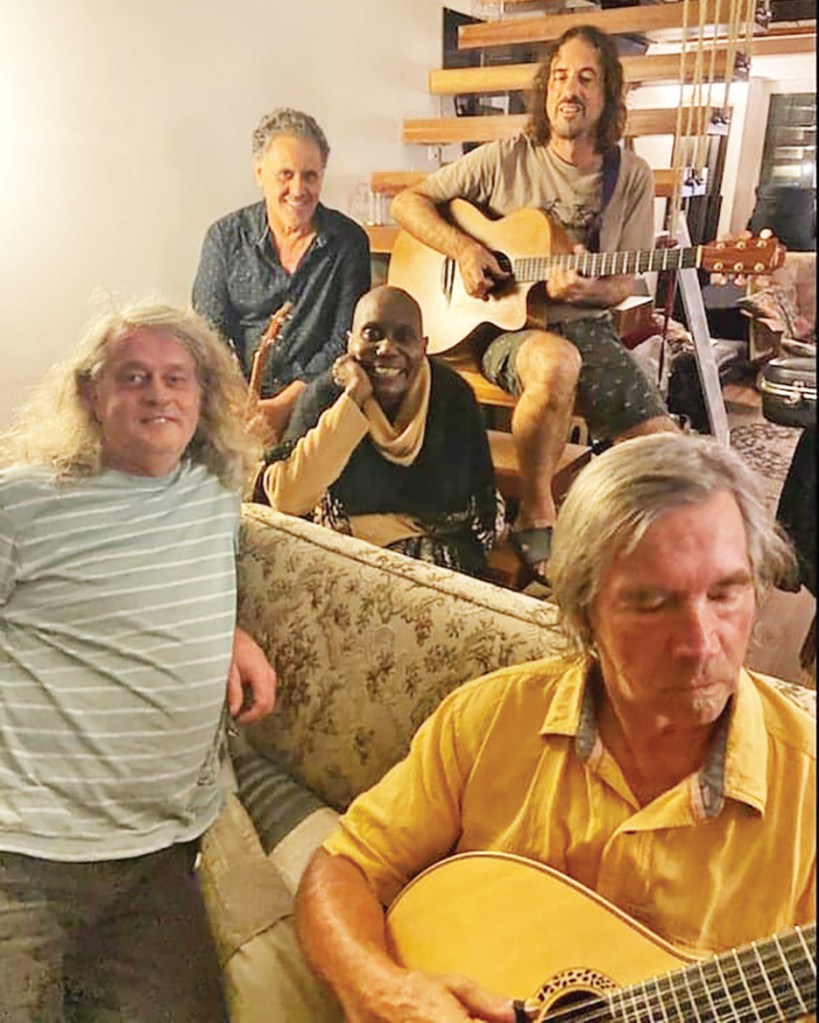
A who’s who of Freo talent have come together to commemorate the strike in music.
Yandied
In the next three years, the strikers set up camps across the Pilbara where families lived and “yandied” for tin and mined minerals such as beryl and tantalite to sell for food and clothing.
They also collected buffel seed, goat skins and oyster shell at coastal camps to earn enough money to survive.
Alongside the strike movement, they were openly questioning the laws that governed their lives; laws that meant they had no right to marry without government permission, no right to demand wages or education, no right to enter towns after dusk, and no right to vote.
They were not counted as citizens of the country, despite being its first peoples.
As McLeod said: “The West Australian blackfellows are virtually slaves…they couldn’t leave the master without permission…they worked on their own land to make an alien person rich and they couldn’t leave. They were as tightly tied as any medieval villain or serf to the lord of the manor.”
As the strike settled into a war of attrition, families endured great hardship, physical danger, violence and threats. Dozens of strikers were chained and gaoled, including McKenna and Bin Bin. McLeod was arrested and fined for “inciting natives” and being within five chains of a “congregation of natives”.
Support for the strikers gathered momentum, however, with financial and ideological backing from the WA Communist Party, some unions, church, student and women’s groups, and it was even raised at the United Nations.
Fremantle played a pivotal role when the port branch of the Seamen’s Union placed a black ban on the loading of Pilbara wool out of Port Hedland in 1949.
The union’s secretary, Ron Hurd, gave the government two months warning before imposing the ban on July 1 in protest at the gaoling of 43 men at Marble Bar.
He told the government that the treatment of Aboriginal workers was “inhuman” and the “working conditions forced upon them by the big squatters” intolerable.
The ban forced the government and pastoralists into negotiations to pay a minimum wage of “30 shillings a week” to their Aboriginal workers for the shearing season.
However, it was a short-lived victory for the strikers.
Soon after shearing was over and the wool clip shipped, the Department of Native Affairs reneged on its earlier assurances that this rate would be applied for Aboriginal workers across the Pilbara. It did, however, begin the move to better wages being paid across the board.
Still on strike
While the strike is recognised as concluding in 1949, there was no official ending. There are some old people today who still claim to be on strike because they never went back to work on the stations.
Instead, for more than a decade, hundreds of people continued their mining operations and intermittent station work.
In 1959, the strikers formed two groups, the Nomads and Mugarinya, with both eventually acquiring their own stations including Strelley, Warralong and Yandeyarra that still run today.
The 1946 Pilbara pastoral strike was a seminal event in WA’s history when Indigenous workers and their families stood strong against their slavery and won freedom. It was a watershed moment that underpinned the modern Aboriginal rights movement.
Senator Pat Dodson, former Chair of the Council for Reconciliation, described it as “an important and inspiring milestone in the national battle for justice, rights, equality and recognition for Indigenous people”.
It was the forerunner to the more famous 1966 Wave Hill walk-off and the beginning of an industrial movement that eventually saw Aboriginal station workers throughout Australia achieve award wages in the 60s.
As Peter Coppin recalled: “It was a big story all right, that strike. We were just blackfellas to be used as slaves on the stations. We got no proper pay, no proper houses – just a bit of tin, a bit of paperbark, a bit of blanket, down in the river.
“That’s how we lived then. Things are different now but that’s because of the fight we had. That bloody big battle.”
















 Perth Voice Interactive