• Warndoolier

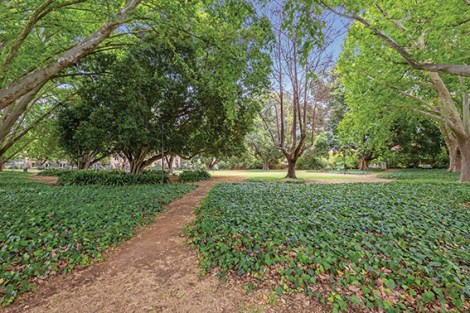
    THE new name of “Warndoolier” for Banks Reserve has been approved by Landgate after a six-year effort.

    The Mount Lawley reserve has long been a culturally significant site for Aboriginal people, and Vincent mayor Alison Xamon describes the renaming as a revival of the Noongar name. 

    “We are proud to acknowledge and preserve the history of the reserve as it has been for many millennia,” Ms Xamon said in a press release this week.

    “This is a major step towards reviving traditional names of Aboriginal areas in Vincent.”
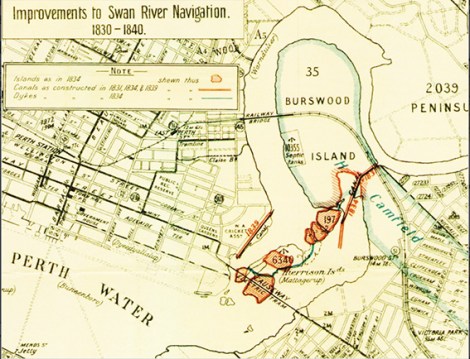
    • Warndooliar as it appeared on old maps (above) and as it is today (below).

    The area was named for former Perth councillor Ronald Frederick Banks in 1963, but earlier maps from the 1900s to 1940s label the area as “Warndulier”. The exact location differs b

    y source, with an early newspaper from 1833 describing the name as applying to “the northern, or main branch of the river.”

    The spelling Warndoolier was endorsed by the Vincent Boordiya Reference group, the Elders who advise the council on these issues, as it led to closer phonetic pronunciation.

    default

    Warndoolier doesn’t have an exact translation to English and the words have multiple meanings in different combinations: ‘Warn’ is a digging stick, ‘dool’ is a spirit or misty fog, and ‘doolya’ means big leaves. Some interpretations see the name as referring to a place related to a woman’s spirit, or a place where spirit mist dwells.

    Vincent council endorsed the name change back in February 2024, but the renaming campaign goes back to 2018 during consultation with local Elders.

    There was some debate in February about whether to dual-name the area and keep the Banks moniker. From 276 responses, 154 favoured Warndoolier alone, 62 supported a dual-naming of Warndoolier/Banks Reserve, and 55 opposed any change. 

    Some of Banks’ descendants were among those requesting his name be retained alongside the Noongar name, but Vincent councillors opted for the full renaming.

    Signs will be updated in the coming months and a community event will be held in early 2025 to celebrate the new name, as well as the recent upgrades to the reserve like the cultural interpretation node and the footbridge across Walter’s Brook that was completed this week.

    by DAVID BELL

  • Exchange sites head for review

    AMID reports of ripoffs and assaults during internet-facilitated trades, Stirling council wants to set up safer exchange sites under CCTV surveillance.

    Stirling deputy mayor Suzanne Migdale got the idea after seeing Victoria Police set up “safer trading zones” outside 24-hour police stations (“Exchange spots stiff the crooks,” Voice, November 9, 2024).

    “The reason that this came about is because many people are now transacting on sites like Marketplace, Gumtree, etcetera,” Cr Migdale said at the November 22 council meeting.

    “On these sites there are many people who are under the age of 18, or who are… [of] advanced years, I guess, and in many instances there is a feeling of being unsafe when someone comes to your home to make a transaction.”

    Just this week a Melbourne man planning to sell his car was stabbed three times by a prospective buyer during a test drive gone awry.  

    “And so for the young, the old, and everybody in between, I would like to create safe places for them to transact,” Cr Migdale said.

    “So whilst over east it’s out the front of police stations, in our city we have very few of them.”

    Instead she proposed they could be in areas covered by Stirling council’s CCTV, envisioning one such safer exchange site in each of Stirling’s seven wards.

    “I was going to suggest maybe Bunnings stores, but it might be too soon,” mayor Mark Irwin proposed, referring to controversy over Bunnings secretly using facial recognition CCTV. 

    While there was a unanimous vote in favour of getting a report from council staff about optimal sites, a couple of councillors had concerns they might be stepping out of local government remit.

    Cr David Lagan asked: “Will the report include a section that explains how the City will be indemnified if it was ultimately seen as a facilitator in the process steps?”

    Mr Irwin said “all of those things will be included in the report,” which council staff will prepare after conferring with WA Police, and which councillors are due to vote on by March 2025.

    by DAVID BELL
  • Rainbow flag to fly after backflip

    A PRIDE flag will soon fly outside Bayswater council HQ in a reversal of the council’s decision earlier this year not to erect a fifth flagpole.

    Councillor Nat Latter first put up a proposal in January to install the extra pole outside the Broun Avenue civic centre to fly the Pride flag and other optional banners alongside the existing four: The Australian flag, WA state flag, Aboriginal flag, and Torres Strait Islander flag.

    The first attempt was voted down 5/5 with mayor Filomena Piffaretti using her casting vote against.

    While one resident last week commented that “there’s a sense of de ja vu about this notice,” the balance of power has shifted at Bayswater following the re-election of Sally Palmer in March (“Pride flag revisited”, Voice, November 16, 2024), and this week councillors voted 6/5 to install the extra pole at an estimated cost of $11,500. 

    Speaking in favour of their revived motion this week, Cr Latter said “whilst I accepted that January council decision it made me really sad to hear the lack of understanding of the issues being faced by marginalised members of our community, and I received many emails from residents who felt dismayed by the decision.”

    Cr Latter referenced the events in Albany in August when a group called “Keeping Children Safe Albany,” backed by the Australian Christian Lobby, urged the council to ban books which they claimed were “sexualising” children. Two of the titles at the focus of the furore were sex education books that depicted same-sex relationships.

    Cr Latter said: “I want to give you a little bit of context for me bringing this back: I spent some time in Albany during the recent special electors’ meeting down there and saw firsthand the impact on the LGBTIQA+ community of groups using public institutions to further their bigotry, discrimination, and hate speech, where local councillors have been using their platform to sow that division. And this is the context that we work in now: An imported politics of division. 

    “It’s important, really important, to demonstrate that the City of Baywater is a welcoming and inclusive place, to fly the flag, and show that hate has no home here…”

    Cr Latter said: “The arguments made in January were largely about cost: It was too costly to do this. 

    “And then some months later council unanimously voted to install a flag pole in Halliday Park to fly the New Zealand flag one day a year, and I supported that because I believe it’s important that people see themselves represented in the ways that are important to them on the occasions that matter to them… no one tut-tutted about the cost for one day, and it’s the same cost that you see before you today.”

    Those in favour of the new pole were councillors Latter, Palmer, Elli Petersen-Pik, Dan Bull, Lorna Clarke, and Giorgia Johnson. Those opposed were Assunta Melecca, Steven Ostaszewskyj, Josh Eveson, Michelle Sutherland, and Ms Piffaretti. The mayor has been a firm supporter of Pride, voted in favour of funding Pride events in Bayswater, and stood up for Drag Queen Storytime at local libraries, but did not speak on the flagpole issue at this week’s meeting.

    by DAVID BELL

  • Chinese pioneers in spotlight

    THE rich and rarely heard history of Chinese people in WA is being uncovered as part of a massive research project being run at UWA.

    Community members are being called on to come forward with their own stories, photos, and recordings for the collection.

    The Two Centuries of Chinese Heritage in WA project was funded by the National Foundation for Australia-China Relations with an aim to better tell these oft-forgotten stories. 

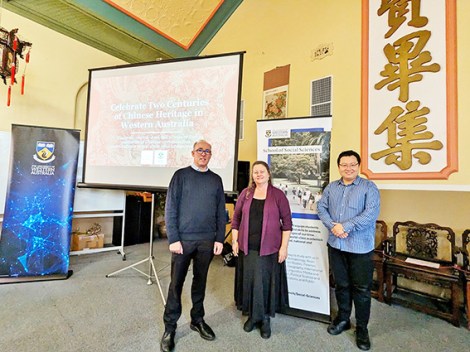
    • The project team Ben Smith, Lucy Hair and Yu Tao

    It’s based on foundational research conducted by historian Anne Atkinson, who collected nearly 10,000 pages of notes, photos, and articles during the 1980s and 1990s. They’ve now been digitised and are publicly available for perusal, and the researchers hope more stories and documents keep coming in to continue building the archive, and a podcast is soon to launch to highlight individual lives. 

    Project officer Lucy Hair says the history of Chinese people in WA goes back far further than most people realise. A Chinese man named Chow Moon (sometimes recorded as Moon Chow, Johnny Chow, or “Chau”) arrived in Fremantle in 1830, and as a carpenter he likely worked on some of the foundational buildings of the early colony. 

    Ms Hair says there’s many common misconceptions about the role Chinese people played in WA in the 1800s and 1900s.

    “Many people think of Chinese people [working] in the goldfields,” she says. “But that’s typically the eastern states, not the goldfields here, because we had all the horrible restrictions keeping them out of the goldfields here.”

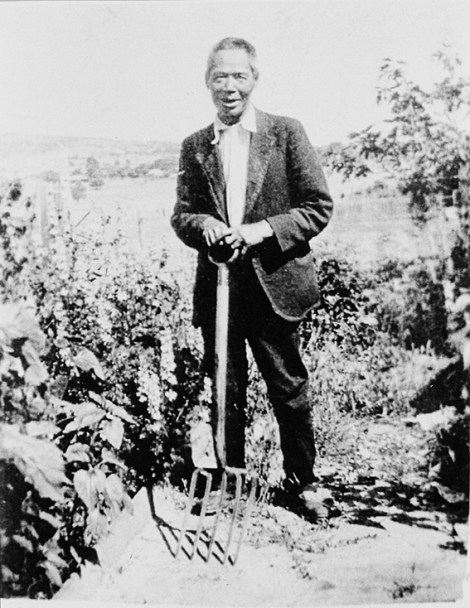
    • Chung Ah Sue in his market garden in York, 1925. Photo courtesy of the State Library, 089826PD

    Many of the prominent professions worked by Chinese people were not due to choice or affinity, but government restrictions. Xenophobia and fear of competition led to Chinese people being banned from working in certain industries, at times leaving them few options aside from working in market gardens, laundries, domestic service, agriculture, or furniture-building. 

    “There’s more than a dozen pieces of legislation that were enacted in the 1800s and 1900s that specifically restricted Chinese people,” Ms Hair says.

    Despite the restrictions, many thrived. “The stories are really unique.” Ms Hair says. “I think there’s a lot of tales of resilience.”

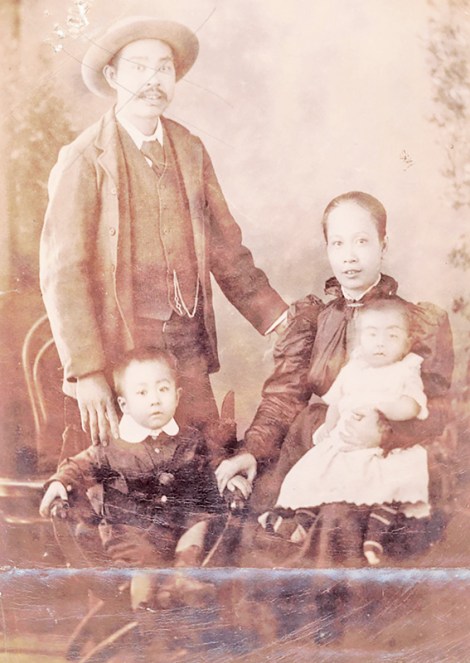
    One effect of the strict government policies on entering Australia at the time is the large number of records that were left: Entry documents, photographs both frontal view and profile, and ink handprints on documents remain to tell their stories.

    • Chew Lun and his family. Photo courtesy of the National Archives: K1145, 1920/152

    “It’s bittersweet,” Ms Hair says. “While it’s harrowing, the level of detail that these people were examined in, it’s a really rich set of records to work from.”

    While the database has many official records, the next step is to gather more personal tales. “A lot of our research is done from records,” Ms Hair says. “I’m very much hoping for family contributions.”

    The podcast series starts December 5, keep an http://www.chinesewa.net for episodes, and the collection of images and documents is at collected.uwa.edu.au/nodes/view/36653 for public viewing. If you have any stories to contribute, contact the researchers at ChineseWA@uwa.edu.au

    by DAVID BELL

  • Christmas light trails

    THE Christmas light trails were switched on this week in Perth and Vincent, and will be on every night through to early January.

    Photo by Matt Biocich supplied by City of Vincent.

    These particularly speccy photo opps are at Braithwaite Park (the walk-through baubles) and the Leederville town centre (the very instagrammable walk-through arch).

  • Stirling latest to go ‘owl friendly

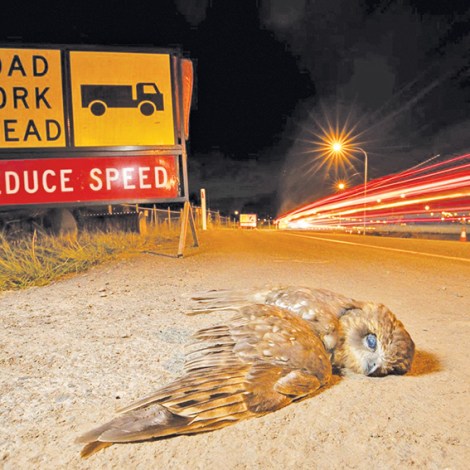
    WITH owls dropping dead across the state after eating poisoned rats, Stirling council is the latest to get on board with an “Owl Friendly” approach to killing rodents. 

    Councillor Tony Krsticevic implored colleagues to become an “Owl Friendly” council at their November meeting. 

    “What people don’t realise is that these supermarkets and Bunnings sell you these pesticides which basically kill our native fauna,” he said, specifically when owls eat a rodent that’s consumed potent ‘second-generation anti-coagulant rodenticides’. 

    “If an owl eats a mouse that’s died of this poison, the owl will die as well, so that’s very concerning. 

    “We don’t have a great amount of fauna out there and we need to protect it.”

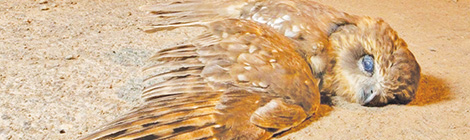
    • More than half of dead boobook owls tested in a 2018 study had dangerous levels of rat poison. Photo from Birdlife Australia’s actforbirds.org

    This year several councils have become “Owl Friendly”, including Vincent, Fremantle, Cockburn, and Melville. A 2018 study found more than 50 per cent of dead southern boobook owls collected around Perth and south-west WA had dangerous levels of rat poison in their systems.

    While owls are the poster-child, other birds like eagles and magpies can also be affected, and some ground-dwelling mammals can also be attracted to the rat baits. 

    Stirling council staff have confirmed they don’t use the second-gen poisons, but Cr Krsticevic wants to go a step further and exclude its indirect use through contracts and to promote more owl friendly products for use in the community. An alternative is ‘first generation’ anti-coagulants, which break down more quickly in the rodents, and would require multiple doses to kill an owl. 

    Cr Krsticevic’s notice of motion does note that even those are still poison, and an ideal approach should involve reducing rodent numbers though “hygiene, blocking access, and use of non-poison traps… while accepting that sometimes there is a need to resort to poison”.

    A report is due back to council in March on how they can ensure indirect use of the second gen poisons, on how they can promote more owl friendly measures, and how they can best work with Birdlife Australia and other councils to promote the owl friendly movement. 

    The Australian Pesticides and Veterinary Authority is currently conducting a “reconsideration” of anti-coagulant rodenticides. This includes re-assessing their risks and considering whether there are adequate instructions on labels.

    by DAVID BELL

  • Suburban saviour

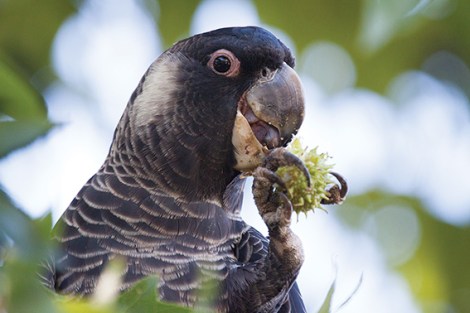
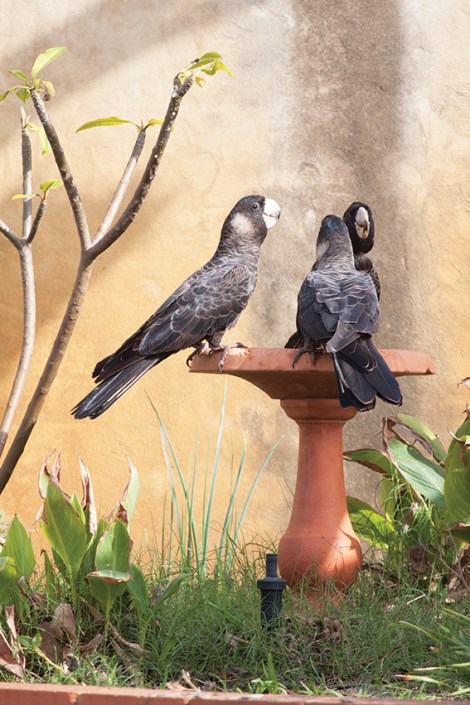
    UNIVERSITY of WA adjunct research fellow Christine Groom is calling on everyone from urban planners to home gardeners to make the suburbs more friendly for under-threat Carnaby’s Cockatoos.

    Historical clearing of native vegetation has decimated their natural habitat, so the suburbs are now a vital lifeline for the endemic WA species.

    Dr Groom says any planning, landscaping and gardening should consider their key needs – foraging, drinking, roosting, breeding and commuting.

    “Planting species that  Carnaby’s cockatoos use for food is the easiest way to attract them to your garden,” she says. 

    “Native banksias and hakeas are great food sources. You can also plants shrubs like grevilleas and bottlebrushes that have colourful flowers that produce nectar that Carnaby’s cockatoos enjoy as well as attracting a lot of smaller birds too. Installing a bird bath is another great way to attract Carnaby’s cockatoos, especially if you live near a night roost.

    “They like to drink in the evening before roosting communally at night. There’s an important night roost site at Manning Lake which may be familiar to readers.”

    Dr Groom says planning, landscaping and gardening with black cockatoos in mind will also create greener, cooler suburbs.

    An adjunct research fellow at UWA, she lives in the Perth hills and Carnaby’s cockatoos regularly visit her garden to feed on the banksias and hakeas she planted.

    She’s a bit of a cockatoo buff – in 2015 she completed a PhD on Carnaby’s in urban Perth using satellite tracking to follow their daily movements.

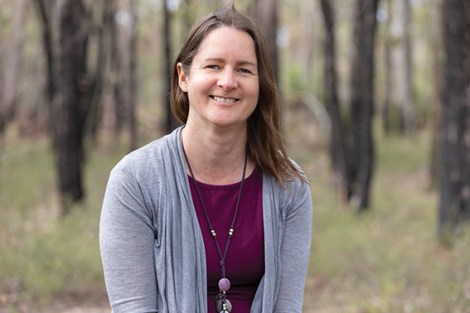
    • Dr Christine Groom says the suburbs can be a vital lifeline for the under-threat Carnaby’s Cockatoo.

    “I was surprised at just how many exotic plants that Carnaby’s cockatoo has learnt to feed on,” she says.

    “A third of the species I observed them feeding on were species not native to WA. Like many parrots they have curious personalities and will often chew on things around them. I think this has helped them try new foods.

    “They are a very adaptable bird and would certainly be even more endangered if they hadn’t learnt to feed on plants found in gardens of urban areas. Their favourite exotic foods include the seeds of liquid amber and tipuana, and also the nuts from macadamia and pecan trees.”

    In recent years, infill and sub-dividing have further reduced the habitat available for Carnaby’s Cockatoo. 

    Dr Groom says urban planners need to ensure green spaces are part of their designs.

    “Infill housing results in less space for gardens and mature trees that provide food for Carnaby’s cockatoos,” she says.

    “Infill is preferred to continuing urban sprawl but we have to get better at ensuring there is also space for trees and gardens.

    “Green spaces are nice places for people too and there are a lot of studies that have shown the value of trees for improved wellbeing, cooling effects and more.”

    Dr Groom has combined her two passions – Carnaby’s cockatoos and landscape design – in her new book Creating Black Cockatoo Friendly Suburbs, published by UWA Publishing.

    It’s an accessible, easy read that will appeal to the casual nature fan as well as planners, policy makers, scientists, home gardeners and naturalists.

    The advice can also be used for other varieties of black cockatoos.

    Dr Groom hopes her book will promote urban biodiversity and help ensure the survival of Carnaby’s cockatoos.

    For more info see uwap.uwa.edu.au.

  • Deluxe bento

    IT went from majesty to travesty in the space of a few metres.

    On one hand you had the imperious Macedonian Orthodox Church of St Nikola, its gold-leafed cupola glinting in the midday sun, and a few doors down the abandoned and rather forlorn Wesco petrol station, a tired postcard from yesteryear.

    Angove Street is a funny beast, and much like Perth, is in a constant state of contradiction and flux.

    I was headed to Ekiben, situated diagonally opposite the church on the other side of the road.

    The Japanese eatery had a lovely facade with a historic federation awning, bay windows and sleek signage.

    It was an eye-catching mix of old and new.

    The interior continued the theme with heritage features rubbing shoulders with Japanese minimalism.

    It felt semi-upmarket without being intimidating or pretentious.

    The menu had a compact range of smalls, sides, ekiben (a type of bento box sold on trains and at train stations in Japan), donburi and desserts.

    In essence it took the humble bento and gave it a sophisticated twist with produce like miso butter steak, akami zuke (marinated tuna), shiromi (white fish used in sashimi), unagi (fresh water eel) and ebi fry (fried shrimp).

    But it you wanted to play it safe and liked the classics, they had all the old favourites like karaage and teriyaki chicken.

    There was also a kids menu, a small range of desserts including Matcha and Hojicha cheesecake, and some mocktails.

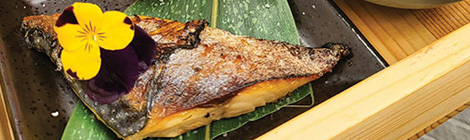
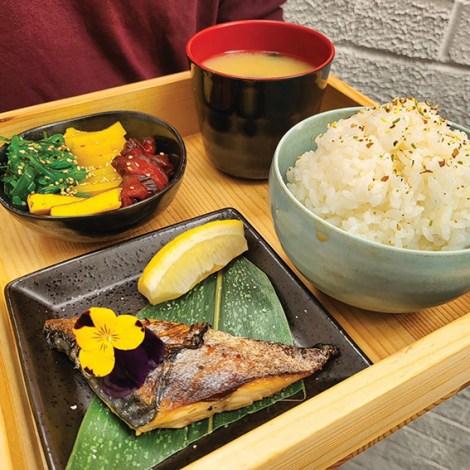
    I love sashimi, so I ordered the akami zuke donburi ($27).

    They didn’t skimp on the marinated tuna – there was several large thick slices – and it tasted divine when combined with some light soy sauce and a dab of wasabi.

    I really enjoyed the medley of pickled veg and fruit, especially the lemon, which added a refreshing citrus burst.

    Another pleasant side was the seaweed salad – so often a drab afterthought – which had a pleasant texture and vibrant colour. 

    The salad had a light mustard marinade which held your interest, and the little scattering of sesame seeds was a nice denouement.

    Completing the dish was a hefty serve of fragrant rice. Very enjoyable.

    Across the table my young kids Bamm-Bamm and Pebbles were wolfing down the crowd-pleasing karaage chicken donburi ($26).

    It was a big serve and there was enough coated chook, rice and salad to satisfy two ravenous kids after a busy day at school.

    I had a sneaky taste and the coating was light, and the chook super tender. 

    They demolished it with no complaints.

    My wife “Special K” brought up the rear with the Teriyaki Steak Ekiben ($32).

    It came in a bento-style box with the meat, rice, salad and potato salad in their own separate fiefdoms.

    I think the only difference between a bento and an ekiben is the disposable chopsticks and recyclable container.

    The star of the show was the steak – big slices of tender meat with a chargrilled tang.

    “It’s a posh bento with delicious slices of thick steak and a gorgeous marinade that’s not too sweet,” my wife said.

    “The sides are all top notch, especially the potato salad which has some bonito flakes on top, adding crunch and a flavour twist.

    “A filling and high quality dish.”

    Ordering at Ekiben is pretty flexible and you can get the meat/veg on its own or as a donburi or ekiben, but it’s still up there price-wise.

    The food is high quality and slightly refined, but some folk may balk at paying $26 for a karaage donburi or $32 for a steak bento box.

    I think it’s worth it, but as a once-a-week place, rather than a regular lunchtime haunt.

    Ekiben
    56-58 Angove St, North Perth
    facebook.com/Ekibenbyerror404

    by STEPHEN POLLOCK

  • Dickens mash-up

    WHAT would have happened if Charles Dickens had met fellow Englishman Henry Cole, the inventor of the modern day Christmas card, while writing A Christmas Carol?

    Perhaps Marley’s ghost would have spent the rest of eternity lugging around a sack of Hallmark cards?

    This fascinating idea was the catalyst for A Dickens of a Christmas, a costumed radio play to be performed at St George’s Cathedral.

    In keeping with the season of goodwill, all proceeds from the performance will be used to buy food hampers for the homeless at Christmas, through the Give A Feed charity.

    A Dickens of a Christmas was written by esteemed playwright Jenny Davis OAM, who likes to take real-life historical events and gave them a fictional twist.

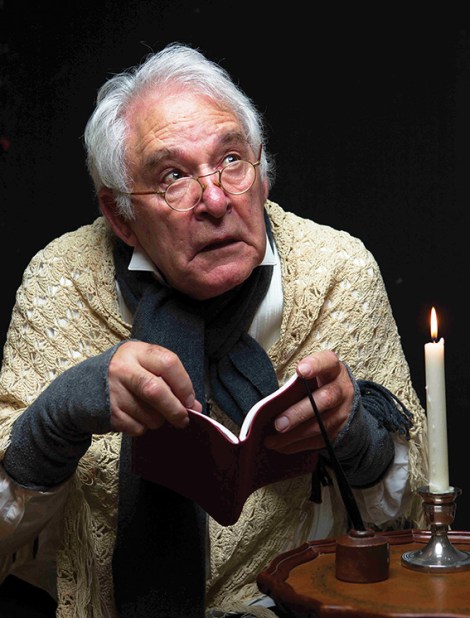
    • Bernie Davis as Scrooge in A Dickens of a Christmas.

    “In this case, I do not know if Charles Dickens and Henry Cole (the first publisher of a Christmas card) actually met in real life, but it’s perfectly possible, given the London of that time and Dickens’ fame and popularity,” Davis says.

    “The fact is that in December 1843, Dickens penned and published A Christmas Carol, which has often been considered as seminal to the spirit of Christmas as we understand it today – a time of giving and sharing and goodwill.

    “At the same time, Henry Cole, designer of stamps for the Royal Mail in Great Britain, created and marketed a Christmas card.

    “I like to think that he was in the habit of already sending messages by post to friends at Christmas and hit on the idea of making it simple for others to do the same, thus also spreading the message of goodwill.”

    This intriguing story will be brought to life by a philanthropic bunch of actors from the Theatre 180 company including Isaac Diamond, Katie Keady, Benj D’Addario and Saskia Haluszkiewicz.

    Davis says the play tries to get inside Dickens’ head and see what made him tick.

    “We meet Charles in conversation with others in his circle and his family. Conversations that shed some light on the ardent desire for social justice that pervades his work, his personality, and the circumstances that appear to have influenced the creation of A Christmas Carol. 

    “Every Christmas after its publication, Dickens would give a dramatic reading of the story in a theatre – a hugely popular event, since he was by all accounts a very effective performer. 

    “And so, in A Dickens of a Christmas, our Charles Dickens then begins to read the tale and other actors join to bring it to life.”

    Adding to the fantastic atmosphere in St George’s Cathedral will be festive music from the Metropolitan Symphony Orchestra, the Ukrainian Choir, and the founder of Freeze Frame Opera, Harriet Marshall.

    There will also be a special performance by the Perth Undergraduate Choral Society, who will debut a new Christmas carol composed by indigenous opera singer Deborah Cheetham-Fraillon.

    The Society was selected by ABC Radio National to perform the new work, which has a Christmas card-theme.

    In keeping with the spirit of Christmas, all actors and musicians in the production are working for free to help raise funds for Give A Feed.

    Founded in 2011, the Perth charity has helped more than 30,000 WA families in need and raised more than $900,000.

    This year it hopes to provide more than 4000 festive hampers to WA families so they can celebrate Xmas with their loved ones.

    Davis, who this week received a State Cultural Treasure Award for her lifelong contribution to the arts, says Christmas should be a time for reflection and humanity, especially with wars raging around the world. 

    “Writing a Christmas play does involve a certain amount of sentiment, but it isn’t necessary when writing it to regard the world through rose tinted glasses, it’s simply an opportunity to look for the humanity in everyone, even the unlikely, and celebrate it.”

    A Dickens of a Christmas is on at 7pm, Friday December 13 at St George’s Cathedral, 38 St Georges Terrace, Perth. Tickets at trybooking.com. 

    by STEPHEN POLLOCK

  • High life

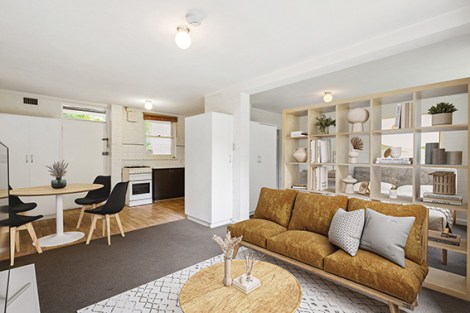
    THERE’S an air of 1960s Mad Men to this Highgate apartment.

    Maybe it’s the slightly retro decor and furniture, especially the low couches, but it reminds the Voice of watching the iconic TV series.

    At offers over $299,000, even Don Draper might be tempted to buy this one bedroom one bathroom flat as an investment.

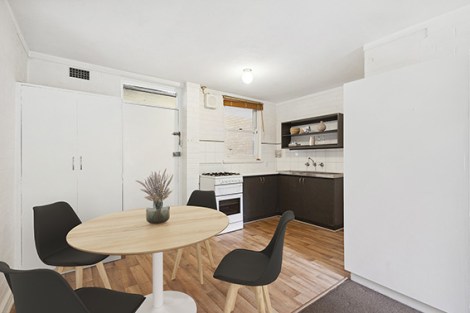
    The layout is great and for a one-bedroom it’s got a surprisingly big open plan living/dining/kitchen area.

    There’s room for a dining table and the lounge doesn’t feel cramped or hemmed-in.

    The kitchen is on the small side, but it has modern fascias and is very presentable.

    It’s also tucked around a corner, giving some noise and smell separation from the main living area.

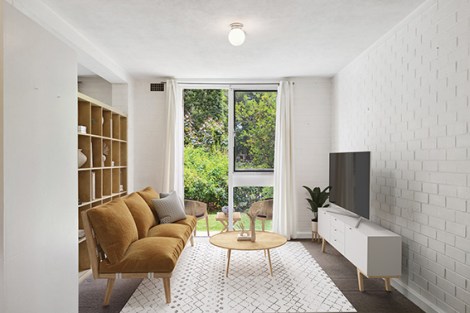
    Enhancing the sense of space is the French doors in the lounge, which open directly onto the complex’s gardens.

    The owners have put in a cafe setting and it’s a lovely spot to relax and enjoy the wide range of mature trees and bushes in the neighbouring Brigatti Gardens, which overlook the complex.

    The cute bedroom is positioned behind the lounge and there is no dividing wall, so the Voice would install a temporary partition or tall cabinets for privacy.

    The small bathroom is functional and has a decent shower and vanity.

    Situated on Wright Street, this 44sqm ground-floor abode is part of a secure complex with 31 apartments.

    There’s parking behind an electric gate on a first-come first-served basis, and East Perth train station is within walking distance.

    Come the weekend, enjoy cycle rides at the nearby Swan River, and at night saunter down to Beaufort Street to enjoy the many bars, restaurants and cafes. 

    This is a cracking little flat which will appeal to first-time buyers and investors.

    Buyers over $299,000
    6/61 Wright Street, Highgate
    Beaucott Property 9272 2488
    Agent Carlos Lehn
    0478 927 017