MAYLANDS café Steam Haus has has given its shopfront a zhush thanks to a $3000 grant from Bayswater council.
Café owner Stephanie Crowe installed a new window display and introduced a coffee grind recycling station for composting to create a fresh, sustainable space that draws in customers.
• Cafe owner Stephanie Crowe.
Ms Crowe, who took over the business a year ago, said getting the placemaking grant had made a noticeable impact.
“Before the renovation, there was a large honeycomb wall display that made it hard to see into the cafe from the street,” Ms Crowe said.
“Now, it’s must easier for people to see if there’s seating available, and we’ve made the back seating area more visible from the entrance.”
Bayswater mayor Filomena Piffaretti said the City was commited to helping local businesses create lively, welcoming spaces that strengthened community ties and boosted the local economy.
“Our Placemaking Grants Program is a key part of our Place Activation Plan. It empowers businesses to transform our town centres into thriving, dynamic hubs that encourage people to shop locally and enjoy the area,” Ms Piffaretti said.
STORIES are sought to flesh out the history of a little-known figure who helped feed Bayswater for decades – market gardener Hu Che-Em.
Hu Che-Em arrived in Australia from China in the 1890s, and was also known as “Hoppy” after the “Hop Chong market garden he ran in Bayswater until the late 1940s or early 1950s.
Locals from the Bayswater Historical Society want to name a street “Hoppy” in honour of Hu Che-em, part of an ongoing push to get some recognition for unsung figures of Bayswater’s past including women, migrant, and Aboriginal names.
But the naming authority Landgate wants more information about Hu Che-Em before agreeing to calling a street “Hoppy”. Part of the reason is that most of the records are about Hu Che-Em’s business links to the locality, rather than social ties.
Bayswater Historical Society member Al Ellis tells us via email: “It’s sad, but due to the very nature of them not having a voice back then, it seems they are at risk of never being included or recognised if we can’t find a ‘non-financial’ aspect of their life.”
Landgate’s request for more information read: “The information provided for Mr He Che-Em [sic] is mostly about contributions that are financially driven. We would also request some information on where he has given back to and contributed to the community outside of the financial ties.”
BHS members are now planning to delve into the State Records Office for more stories, and they’re also holding out hope that a document held at the National Archives of Australia might shed light on Hu Che-Em’s history.
They’re also calling on anyone who’s had stories of Hu Che-Em passed down to get in touch with them. They’re on facebook.com/bayswaterhistoricalsociety or admin@bayswaterhistoricalsociety.org
If they’re successful in convincing Landgate of Hu Che-Em’s social contributions to the suburb, “Hoppy” will be added to a register of ready-to-go names for Bayswater council to choose from whenever a new road or old laneway needs a name.
The BHS’s submission to Bayswater council telling Hu Che-Em’s story, from Catherine May’s book Changes They’ve Seen: The City and People of Bayswater, 1827-2013 (2nd ed).
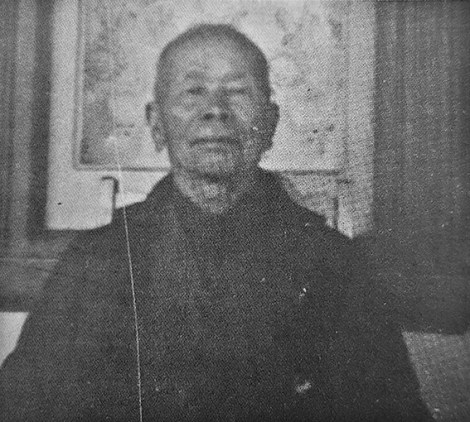
HU CHE-EM was born in 1873 and arrived in Australia in the 1890s.
His daughters, Sylvia Gillespie and Evelyn Wigger, have no doubt that he came to Australia in order to support his family in China, as he continued to send money home for the whole of his working life.
As he was already in his 50s when his daughters were born in Australia, their recollections encompass his later years.
They remember him as a slight, dapper little man whose lack of English did not deter him from managing his own affairs and taking care of the girls after the untimely death from illness of their Australian mother.
• Hu Che-Em
As a father, he was a highly organised disciplinarian but kind and caring at the same time.
Hu’s house was simple but practical, furnished with the bare necessities, much of it made by himself.
Cooking was done on a bricked-in fireplace with rungs across it to hold the heavy iron saucepans.
A chopping block consisting of the cross-section of a large tree stood nearby.
Hu did all the cooking and was an excellent cook.
Evelyn Wigger recalls: “Often, father would go to the market in West Perth to select and purchase fish and poultry. Chicken and ducks were brought home alive in a chaff bag, then placed in a pen and fed up until they were ready for the pot.
“Later in life I became aware of our father’s way of preparing and cooking the poultry. The operation was so meticulous that every part of the chicken was cooked, from the coxcomb to the feet, blood and giblets included. It would have been worth filming.”
Water was carried from a spring-fed well in the garden and his daughters now marvel at how such a slightly built man could tip two huge cans of water simultaneously into a large barrel which was the water supply.
Hu began work at dawn and often went on until dark, except for an afternoon nap, lying on the floor in the breezeway, his head on a wooden pillow.
One of Hu’s few indulgences was the occasional bottle of stout which was kept cool in the spring.
Farming operations are remembered:
“Father grew an abundance of vegetables. I can recall market day when, in the early hours of the morning, a large table-top lorry drawn by a draught horse would arrive to be loaded up with prepared and bagged vegetables.
“Thinking back in time, I can see my father with needle and thread sewing up the bags, particularly the potatoes.
“There was another man called Gooey who helped in the garden. Often my father told him in a loud voice that he was ‘too lazy, too muchee sleep and smoke the water pipe’. Gooey just grinned.”
One of the clearest recollections of the farm itself was the aroma of blood and bone for fertiliser, mingling with that of the tannery directly across Beechboro Road (now the industrial part of Beechboro Road).
Hu left the market garden in the late 1940s or early 50s.
The disappearance of Hop Chong from Beechboro Road and of ‘Hoppy’ himself was the end of an era.
Hu’s working life had continued well into his 70s.
He moved to Maylands and from there to James Street where he was able to have a room in company with some elderly countrymen.
The next move was to Leederville where he lived independently with help from his daughters, still preparing poultry the traditional way.
Hu died in Sunset Home [Dalkeith] at the age of 96.
As was the case with many Chinese migrants to Australia, his story is tinged with sadness.
Having left China at a young age, he was never again to see his native land or the family at home he had so dutifully supported.
On a Tuesday lunchtime, some suburbs resemble a scene from The Living Dead, but the Albany Highway in East Vic Park is always teeming with life.
I’m not saying it’s Beverly Hills, but sometimes the unhinged energy of a place can make it exciting, unpredictable and lots of fun.
Many moons ago I used to live in St James and would enjoy my Friday night stroll down the Albany Highway – a multi-cultural hub of restaurants, cafes and bars.
Today, I was going to Shokudou, after hearing good reports about the Japanese joint from various friends.
It’s part of a group of eateries outside the Park shopping centre, so it’s pretty easy to get parked in the Centre car park (finding a space on the Albany Highway can be a bit of a lottery).
Shokudou is a cute little eatery and looks like what you think a tiny Japanese eatery should look like.
Lots of wooden beams, sliding partitions, pretty bottles of Sake and pretty Japanese decor.
The facsimile was so authentic, I almost removed my shoes and sat cross-legged on the floor.
The display counter had a lovely range of poke salads, sushi, sashimi and rice bowls.
They put in a serious shift at Shokudou and the place is open from 9am-7:30pm with a dinner menu that includes ramen, don, udon and agedashi.
I kicked off with some tuna and katsu chicken sushi (both six for $8.90).
Recently I’ve had poorly-made sushi with too many fillings – the soggy wheel of rice falling apart after the first bite.
Thankfully theses were both tightly wrapped and perfectly made, holding together firmly until the last mouthful.
The highlight was the tender chicken, which was moist and had a nice crispy batter.
Across the table my wife “Special K” was tucking into her teriyaki chicken ($17.90).
“I like the sticky marinade, it’s salty and moreish, but not too over the top,” she said.
“The chicken is really good quality. Sometimes in teriyaki it can be dry or tough thigh meat, but this is tender and succulent.
“It’s a good serve with lots of rice and a nice fresh salad on the side.”
Even though the warmer weather has arrived, I still enjoy a good chicken katsu curry ($18.90).
It’s the ultimate comfort food, fusing Japanese and Indian cuisine.
There was plenty of crispy chicken and the all important sauce – a dark brown murky affair – had just the right level of heat.
There were some carrots lurking in there, but some cubes of potato and a garnish of fresh herbs would have given the dish some extra zing.
It was a tasty katsu curry – the chicken was high quality – without hitting the heights of some others I’ve had.
There was a good buzz to the eatery with people sitting in the alfresco and a steady stream of folk coming in and out for lunchtime treats.
Once the summer really gets going, I’ll be back to try their colourful poke salad bowls, which looked super fresh and vibrant.
Shokudou is a cute addition to the congested dining scene in East Vic Park and great for a takeaway or pitstop.
If you’re shopping at the Park Centre, then definitely give it a go for lunch or dinner.
Shokudou 20/789 Albany Highway, EastVictoria Park facebook.com/shokudouvicpark
A KOREAN grandma buying pot for her grandson, a fair dinkum spoof of Kill Bill, and missionaries coming face-to-face with a sarcastic God are some of the wacky goings-on at this year’s World of Dark Comedy.
Featuring 14 short films from across the globe, the festival specialises in comedy with macabre overtones and ironic twists.
Festival director Greg Coffey says this years’ theme is gangsters, including the good, bad, cool, awkward and downright strange.
• (top to bottom) Keepsake, Autographed by God, Halmoni’s Pot and Kill Mick are some of the great short films at this year’s World of Dark Comedy in Perth.
“My favourite gangster is Robert de Niro, because he is sometimes awkward and goofy and always cool,” Coffey says.
There’s plenty of homegrown talent on show including the WA film Kill Mick, an action-comedy that mashes Crocodile Dundee with John Wick and Kill Bill.
At the other end of the spectrum is the US film Meister der Scheisse (Master of Shit), an animated expressionist story about the origins of an infamous, historic German buffoon.
Featuring innovative animation that combines 2D black-and-white cut-outs of people with eerie CGI backgrounds and German folk music, it’s a visceral and arresting watch with some scatology thrown in for good measure.
Continuing the surreal theme, the Iranian A Story of Theft centres around a classic premise – a burglary gone wrong.
Thankfully the film is no boring cliché and turns into a disorientating fever dream that will leave the audience questioning their own reality.
Coffey says they didn’t have a pre-determined theme for the festival, and it emerged organically after they selected films from around the world.
“There are many great works this year, but two captured me for their difference,” he says.
“In Halmoni’s Pot an elder woman has to deal with drug dealers as her grandson is ill.
“She, of Korean background, knows how to get a damn good deal, and her swagger at the end tells all.
“A Story of Theft from Iran shows these two newbies in the robbery bus. They find themselves robbing the wrong place and then they have to give it all back – the dance at the end is magic.”
This year’s festival showcases films from a wide range of countries including Spain, Lebanon, New Zealand, the Netherlands, Iran and the UK.
If you like spoofs, then the US short Tails from the Wild will be right up your alley.
In the nature mockumentary, we follow an innocuous koala that becomes the most infamous animal in the outback for all the wrong reasons.
If you’re sick of religious folk coming to your door and trying to convert you, you’ll probably get a lot of schadenfreudefrom Autographed by God.
In this short film, two missionaries meet a man claiming to be God, but what should be a joyous, life-affirming encounter takes a dark and fatal turn.
Social embarrassment has always been a popular concept for a short film and the Lebanese-made Condom Hunters takes that premise to the next level.
The plot revolves around an incident in a pharmacy that reveals a conservative daughter, married man and sexually active young adult all have the same goal – to buy a condom.
Now in its fifth year, the World of Dark Comedy is a grass-roots community film festival run by a motley crew of Perth volunteers who report to festival founder and zany svengali Greg Coffey.
It’s on at Luna Leederville on November 15 and Luna on SX in Fremantle on November 22. For tix see lunapalace.com.au.
THIS Maylands behemoth is in a top spot just one street back from the Swan River and 150m from Bardon Park.
With five bedrooms and three bathrooms to play with, you’ll never be short of space in this two-storey cracker.
Its striking facade has an unusual mix of brick work and render, and is sure to get tongues wagging as folk walk up the driveway for the first time.
The hub of the home – the open plan living/dining/kitchen area is gorgeous with the lovely rich tones from the timber floorboards contrasting with the neutral colour scheme and high vaulted ceilings.
In the corner is a gleaming white kitchen with an island/breakfast bar, large pantry and sleek stainless-steel appliances.
The large window above the double sink ensures plenty of natural light and the stylish spotlights on the ceiling complete the pretty picture.
This abode has a great layout with multiple living areas, bedrooms and bathrooms on both levels, providing good separation for a family with lots of kids or a multi-generational setup.
The main bedroom is on the first floor and has a huge walk-in robe and neat ensuite with a large shower.
With so many bedrooms, there’s plenty of space for a man cave, music or theatre room, or whatever takes your fancy.
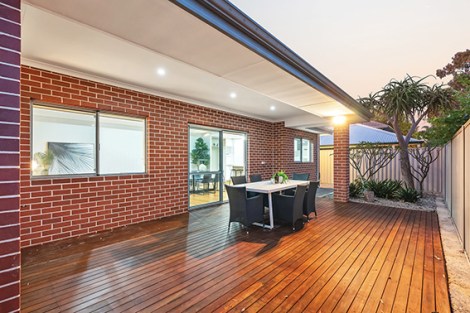
Perhaps the only thing this home lacks is a majestic back garden and pool, although it does have a large alfresco deck with plenty of space for a BBQ, pizza oven and lounge setting.
It’s super low maintenance with just a few shrubs in the corner, which break up the cream Colorbond fence, so you won’t get huge water bills.
The home includes ducted reverse-cycle AC (zoned), security alarm, extensive built-in storage, gourmet kitchen with 900mm oven, and a double garage with additional storage and shoppers’ entry.
Situated on a 384sqm block on View Street, all the joys of the river are on your doorstep, it’s just 1km to Maylands city centre, and it’s in the catchment for Mount Lawley High and Maylands Primary Schools.
BAYSWATER council will make it more difficult for developers to raze trees under a revised policy about to go out for consultation.
On a night dominated by discussion about how to preserve the city’s tree canopy, the council is also proposing to remove the right of neighbours to have a say on significant trees that might affect their property.
The council had been ready to adopt a model planning policy on tree retention provided by the WA Local Government Association before deputy mayor Elli Petersen-Pik argued it didn’t go far enough in discouraging developers from clear-felling sites.
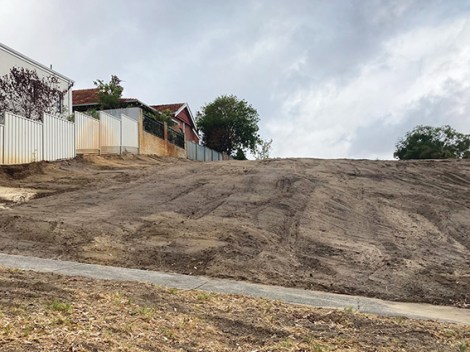
• Cr Petersen-Pik says his amended policy will help prevent leafy properties (above) becoming clearfelled deserts (below) thanks to developers.
“We should tackle the situation, which we see around the city, where developers come and clear the land without any consideration of any of the mature trees – significant trees – on their land,” Cr Petersen-Pik said.
“It’s already happening, especially in the southern part of the city.
“What I am trying to achieve here is to slow down the process of what developers do, because they have no consideration.
Under his proposed amendments, developers would be “discouraged” from removing trees over eight metres with a big canopy cover and a thick trunk.
“The City promotes pre-lodgement discussion on the design and site planning prior to any works to ensure regulated trees are incorporated into the overall design,” his motion read.
“Any subdivision plan should identify regulated trees and note if they are to be retained or removed, and the applicant is to demonstrate how the retained trees will be protected as part of the subdivision process.”
His motion divided the council, but squeezed through 5-4.
But it was his move to tighten up the City’s significant tree register that generated the most passionate debate.
Cr Petersen-Pik said he’d had reservations when the policy was adopted two years ago, and it had been borne out by the lack of any trees making it onto the register.
“I think there were one or two applications and they were rejected; they didn’t meet the criteria,” he said.
Under the proposed new version, adjoining neighbours will lose their appeal rights if a tree makes it onto the register, and while owners will still need to give consent, others are able to nominate their trees.
That prompted a passionate rebuttal from mayor Filomena Piffaretti.
“That means a person from Fremantle or any other area, could drive through the City of Bayswater, spot trees that they like and nominate as many of them as they wish,” she said.
“It also means that if someone doesn’t like you, or a neighbour wants to prevent you from subdividing your block, installing a pool or even putting in a granny flat, they could apply for a tree in your backyard to be put on the register.”
The mayor said under the “fine print” of Cr Petersen-Pik’s proposal, if a landowner objected to a tree on their property being register, the person lodging the application could ask the council to intervene and make a decision.
“This is more erosion of property owner rights. How is this fair?
Despite her concerns, the amended motion got through 5-4 and will now go out for consultation.
Those voting for the policy included Crs Petersen-Pik, Dan Bull, Sally Palmer, Georgia Johnson, Nat Latter and Lorna Clarke.
Those against included Crs Assunta Meleca, Josh Eveson, Steven Ostaszewskj and the mayor.
WHEN 81-year-old professor Neville Bruce told his wife he was planning to ride across the country to take on Australia’s gas giants, he admits she took some convincing.
“She was marvellous, though she was dead against me going at the beginning,” the director of education for world futures at UWA told the Voice.
• Neville Bruce (left) with fellow cyclist Max at Parliament House after their marathon journey.
Octogenarian
His younger Extinction Rebellion colleagues also baulked at the idea of the octogenarian joining fellow Grandparents for Climate Action on the massive ride to Canberra, but after some convincing, the cavalcade set off on the 4200km journey in August.
This week they were back on the steps of WA’s Parliament after completing the journey, which saw them present a petition to independent Curtin MP Kate Chaney calling on the federal government to reduce the country’s reliance on fossil fuels.
Prof Bruce had the same message for WA’s politicians.
“The purpose of our epic journey was to expose the travesty of the Australian gas industry and to call on everyone to help do something about it.
“Western Australia alone accounts for 60 per cent of all Australia liquid natural gas exports that contribute directly to global heating – that’s an astounding 12 per cent of world exports.”
Prof Bruce said fossil fuel emissions were responsible for global heating, leading to more storms, floods and fires around the world.
The bicycle cavalcade was accompanied by support vehicles and was joined by other cyclists along the way.
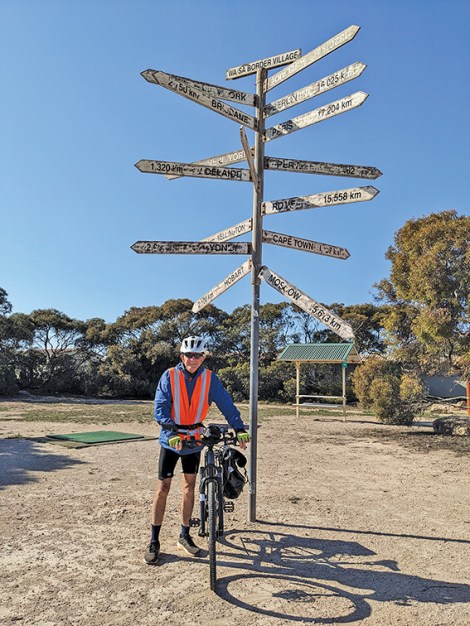
• Prof Bruce at the South Australian border village.
In South Australia, they paid a visit to Santos, which is a major gas producing organisation, accompanied by activists from XR SA, and in Melbourne they rallied with supporters outside the Victorian Parliament.
Prof Bruce said he was encouraged by the support they received along the way.
“We were riding through a lot of countryside, and chatted to people in the pubs or cafes, and 70 per cent thought we are doing the right thing,” he said.
Prof Bruce estimated about 10 per cent we dead against taking climate action, while he reckons he could have convinced the remaining fence-sitters if eight hours of riding hadn’t beckoned.
“It was gruelling, but I am rally glad to have done it; I was pretty keen to do it for a good reason.”
“I walked the Bibbulmun Track a while back, and after two months I was worn out physically.
“But for this one I was physically ok, but was mentally worn out from the strain of staying focussed for eight hours a day, making sure you didn’t run into a pothole, or keeping your eye out for road trains.”
Prof Bruce said he’s taking a break from cycling for a little while and probably won’t tackle the Nullarbor again, but hinted at more in the future.
“A lot of people want more action, and we need more things like this to encourage politicians to take notice,” he said.
SINGAPOREAN journalist, writer and activist Kirsten Han will be presenting the Northbridge-based Centre for Stories’ Human Rights lecture on November 28.
Ms Han will discuss the themes of her award-winning essay Singapore Will Always Be At War, which explores Singapore’s war on drugs, human rights abuses, and the personal stories of those affected by the system.
Han is managing editor of quarterly Asian-focussed journal Mekong Review and her byline has appeared in publications such as the New York Times, Washington Post and The Guardian.
She has won advocate of the year at the Singapore Advocacy Awards and in 2019 won a Human Rights Press Award for her commentaries on “fake news” and freedom of expression in Singapore.
Her first book, The Singapore I Recognise: Essays on home, community and hope was published in 2023.
We are please to share the press release for an upcoming event – the Human Rights Lecture, featuring Kirsten Han, recipient of the 2024 Portside Review Human Rights Essay Prize.
Her talk is being held on November 28 at the Art Gallery of WA from 6.30pm. Tix $20 from the Centre for Stories website.
ACTIVISTS say the University of WA has effectively tried to ban a left-wing Indian intellectual from a public talk by putting up administrative roadblocks.
Renowned Marxist theorist Vijay Prashad was heading to Perth to discuss the crisis in Palestine and modern Indian politics, and was booked to talk at Murdoch University and UWA on November 6.
But organisers at UWA said the uni was clearly making it hard for them to hold the Palestinian-focussed talk.
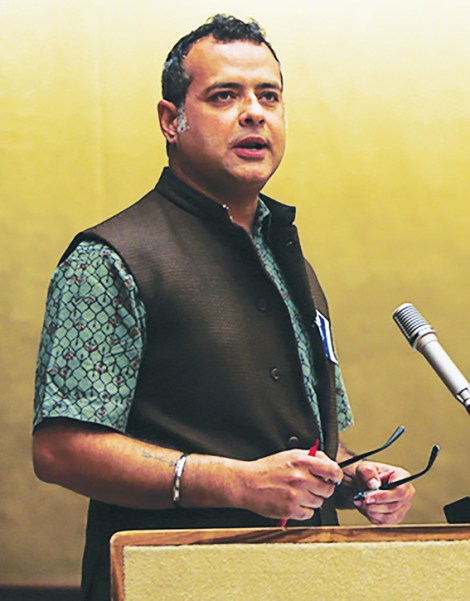
• Vijay Prashad
Booking
Student club Palestinian Cultural Society president Ahmad Alqaisi said when they booked a venue and started publicity, University authorities instructed them to stop until they were given express approval.
That dragged on for weeks, but after pressure from academics and some questions from the Voice, the uni relented and provided the permission.
But Mr Alqaisi said it came with a provision that couldn’t be met.
Citing the fact that examinations would be held that week UWA required the event to be moved from 1pm to 6pm – exactly the same time as Prashad was due to speak at Murdoch.
“The administration tangled us in classic bureaucratic snares,” Mr Alqaisi said.
“They didn’t officially ban the event, which they know would be a scandal.
“They withheld approval for weeks, so their hands are technically clean, but the effect is the same.”
Melbourne University academic Max Lane was one of dozens who emailed UWAvice chancellor Amit Chakma, describing the issue as “disturbing” and “shocking”. He warned that “the news of UWA’s repressive actions is spreading fast”.
“Over 1 million people can read [Dr Prashad’s] weekly newsletter, but UWA students can’t come to hear him,” Dr Lane wrote.
Meanwhile, the Indo-Pacific Studies Centre at Murdoch University is proceeding with its November 6 event, There Will Be No Modi 3.0 in India at 6pm in the Herbert Smith Freehills Lecture Theatre.
The Voice contacted UWA about the scheduling clause, but didn’t hear back before deadline.



















 Perth Voice Interactive