• Sycuans’ chips up
    • The Sycuans’ casino is getting a $300m expansion this year.

    PERTH council is planning to send a delegation of Whadjuk Noongar elders to meet a tribe of casino-owning first nation Americans in 2021 under a new indigenous cultural exchange program.

    The Sycuans are a small band of about 130 people who form part of the Kumeyaay Nation, which straddles the US and Mexico border.

    They own the Sycuan Casino Resort outside San Diego, one of Perth’s eight sister cities.

    Perth council’s new First Nations Cultural Sharing Plan mixes up the usual grip-and-grin cultural exchange between white, suited councillors, sending local elders to Sycuan country after hosting a visiting delegation of the Indians in Perth.

    During the trips it’s intended the elders will share stories and cultural practices, give talks to the public, and act as ambassadors for their respective homes.

    Last week Perth council’s commissioners voted to allocate $20,000 to the WA Indigenous Tourism Operators Council to host the Sycuans on a 12-day visit, timed to coincide with the World Indigenous Tourism Summit held in Perth next April.

    WAITOC CEO Robert Taylor says they’re excited to be hosting the delegates.

    “The event is looking to bring together extraordinary stories of business and Aboriginal cultural success and provides a great opportunity for the Kumeyaay people to share in this rich cultural event,” Mr Taylor said.

    The Sycuans do have an extraordinary business story: in 1972 their chairwoman Anna Preito Sandoval led them to set up a casino on the reservation that had once confined them.

    They used the profits to buy back huge tracts of ancestral land and updated their dilapidated housing, where indoor plumbing was almost unheard of. Sandoval died in 2010, proud of lifting her people from poverty, but sad to see the wealth undermining culture and tradition.

    by DAVID BELL

  • Drive for vibrancy
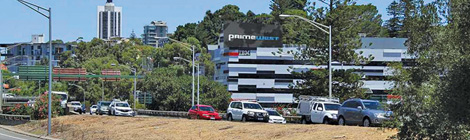
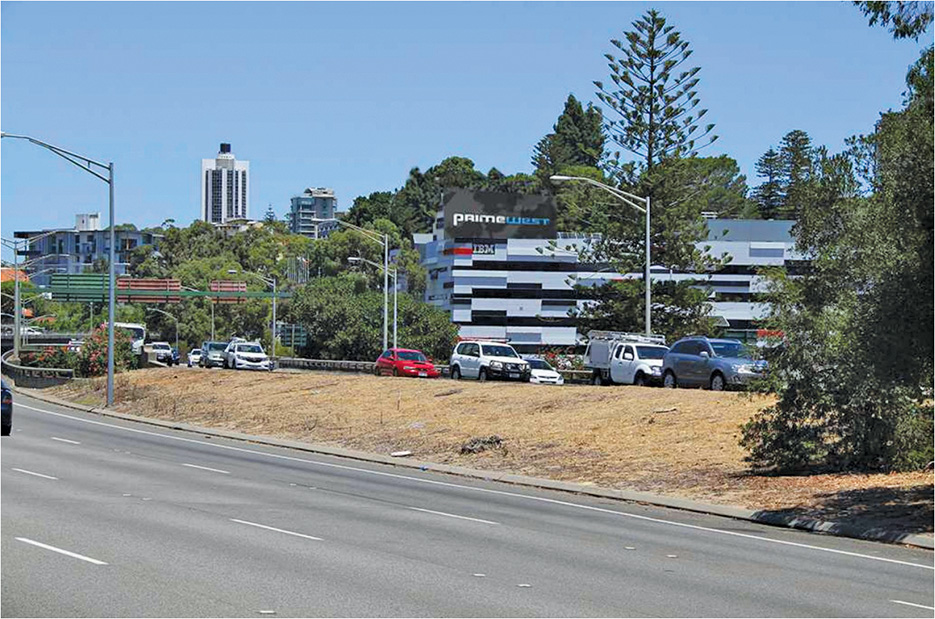
    • Nestled in jungle land, this large PrimeWest sign will bring this fair city light, adding “interest and vibrancy to the city’s night skyline” according to the proponent.

    THE ad-happy commissioners running Perth council have set a precedent allowing more giant billboards in the city.

    On October 29 commissioners Len Kosova and Andrew Hammond approved an 11.5-metre LED sign on Hay Street facing the Mitchell Freeway, ignoring a recommendation from planning staff it would blot views of the Parliament House district, and concerns from Main Roads it might distract drivers.

    Previously, Perth’s elected councillors have been wary about billboards, not wanting to turn the city into an ad-ridden Blade Runner megalopolis (the 1982 film was set in November 2019, so the approval came just in time for us to be living in the future).

    Public space

    The council’s signage policy, updated in 2017, only calls for commercial billboards where they’ll face “public space” with lots of pedestrians and where it will increase “vibrancy”.

    In the lead-up to the vote, AD Billboards shot commissioners a letter from its own planning experts, which said the Hay Street sign would add “interest and vibrancy to the city’s night skyline”. The letter pointed out there were other signs facing the freeway.

    It also cited the precedent of a sign commissioners approved in October last year at 190 Aberdeen Street in Northbridge, which was similarly opposed by planning staff.

    The commissioners had felt the billboard would “add vibrancy and amenity to the city”.

    A list of conditions were attached to the Hay Street approval. The minutes haven’t been released yet, but standard conditions require the ads to stick around for at least 45 seconds so they’re not flickering at drivers, they can’t have anything that’d be confused for a traffic signal or warning, and have to default to an entirely black screen if there’s a malfunction or unauthorised content.

    That’s likely in response to the April 2018 incident where hackers displayed porn on two small screens in Yagan Square.

    by DAVID BELL

    Baysy opts out

    IN less billboard-friendly Bayswater, the encroachment of ads has been staved off with the help of the State Administrative Tribunal.

    It recently affirmed the council’s decision to reject a whopper 18.5m tall LED sign on Wicks Street.

    In February, Bayswater council said no to landowner Bayswater Industrial Estate’s plan to put up the two-sided sign, which would’ve been a big earner since it faced both directions of traffic on Tonkin Freeway.

    The land isn’t zoned for advertising, and in any case the sign was too big; 84sqm on either side was far larger than the 22sqm allowed by council rules.

    BIE appealed to the SAT, but the tribunal sided with the council in a double-whammy smackdown delivered October 31.

    The tribunal found signs weren’t allowed there under council rules, and added that even if they had erred on that point the billboard would have been an eyesore and a risk to traffic safety.

    “This section of Tonkin Highway is a moderately complex road environment which requires decisions about multiple manoeuvres in a high speed environment,” the SAT’s judgement found.

  • Amazon’s arrival no drama for bookstore

    INDEPENDENT bookshops are thriving in Perth and won’t be heavily impacted by internet giant Amazon’s new Perth distribution centre, says Elizabeth’s Bookshops co-owner Harry Schmitz.

    The Amazon “fulfilment centre” in Belmont will open by the end of the year and mean faster book deliveries for WA customers, but Mr Schmitz says it will mostly affect the few remaining High Street chain bookstores like Dymocks.

    “There is a strong revival of independent bookshops in the USA – despite Amazon’s gigantic strength in North America,” he says.

    “This development appears to be related to the ‘retail experience’ which customers enjoy in a traditional bricks-and-mortar local bookshop.

    “Amazon’s biggest negative impact in the last six years has been on the “chain” bookshops (in the USA and Australia), less so the independents.”

    When Amazon launched its online Kindle Store in 2007, market analysts predicted the e-book would kill off High Street bookshops within five years.

    But Mr Schmitz says that since 2014 the e-book market share has plateaued at 15 per cent, and in some cases declined.

    He doesn’t believe Amazon will be be able to slash prices as deeply in Australia as it did in the States.

    “Amazon’s cost structure in Australia will be significantly higher than in the USA, especially in cost of labour, transport and postage. Therefore, I expect that Amazon’s prices in Australia to be closer to recommended retail than their US prices. If Amazon has not killed independent bookshops in America – then there is every reason to believe it will not do so here.”

    Elizabeth’s has outlets in Perth, Fremantle and New South Wales.

    by STEPHEN POLLOCK

  • Bayswater knocks back King William demolitions

    THE demolition of two old buildings on King William Street was refused by Bayswater council on November 5.

    Yolk Property wanted to work with a clean slate at 9 and 11 King William Street, but Bayswater council staff listed four reasons why they thought councillors should refuse the demolition:

    • It would have an “undue impact on the amenity of the area”, leading to a “loss of a continuous streetscape, social and historic values and traditional character of the Bayswater town centre”;

    • The demolition would remove the “heritage contribution” of the two buildings;

    • It was “inconsistent with the orderly and proper planning of the locality,” noting they don’t really want a vacant lot in the strip; and,

      Yolk hadn’t demonstrated that the buildings would prohibit them from building on the rest of the block (the city’s heritage policy allows demolition of lower-priority old buildings if there’s no other way to develop the site, but there’s 578sqm behind these two).

    Councillors debated a bit over which of the four reasons they thought were valid, and some voted for different combinations of the four, but ultimately returned a refusal.

    Deputations

    Nine people gave deputations against the demolition, including Angie Maher of community group “Respect Bayswater’s Heritage Heart” and Lynn Deering, president of the Bayswater Historical Society.

    One of the buildings is a hodge podge of later additions. The council resolved to tell Yolk that demolition of the later, non-heritage parts would be considered in any new development application, and Yolk was “encouraged” to look into a new design that would conserve and incorporate the old parts.

    The Voice contacted Yolk, which said it would consider its next move over the next couple of days.

    The area will soon be under control of the state government, which is taking over planning authority to “maximise development opportunities” during the Metronet-inspired Bayswater train station upgrade.

    by DAVID BELL

  • PM playing possum
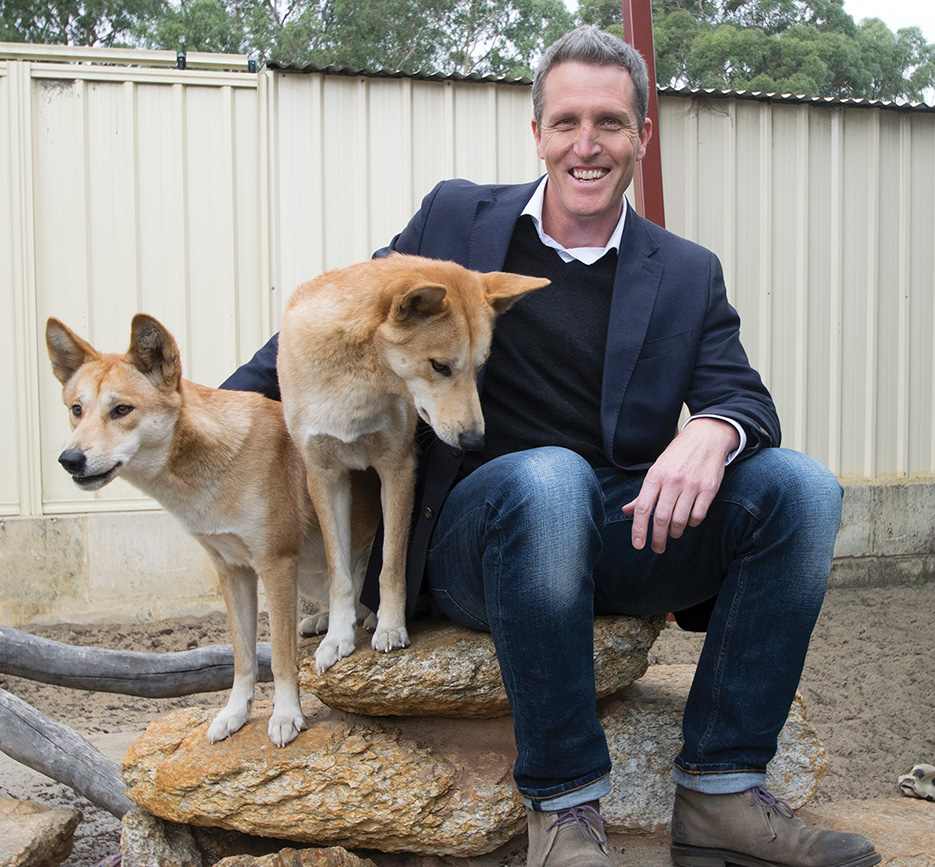
    • Labor MP Josh Wilson with a couple of dingoes – been a while since a wild one wandered the banks of the Swan. Photo supplied.

    WITH the Morrison government announcing a review of Australia’s threatened species legislation in order to reduce “green tape”, a WA Labor MP has warned the greatest threat to our dwindling wildlife is the government itself.

    According to the national environment and energy department, the Perth’s CBD is currently home to 54 listed threatened species, although it’s a complicated picture. Many bird species on the list are only occasional visitors, while the territorial range of other animals has shrunk so much since European occupation that Perth’s no longer considered home.

    For example, early settler George Fletcher Moore wrote in letters to his brother about dingoes accompanying the area’s original Whadjuk inhabitants, but it’s been decades since one was spotted anywhere except the zoo – and that doesn’t count.

    Mammals

    Mammals that have made it onto the list include the woylie, chuditch, Australian sea lion and western ringtail possum, which is registered as critically endangered.

    You’d also be lucky these days to enjoy the bloom of the cinnamon sun orchid, dwarf hammer-orchid or tall donkey orchid, while there’s estimated to be just 550 of the shrub Selena’s synaphea in a handful of fragmented communities.

    Fremantle federal Labor MP Josh Wilson pointed out that when recently confronted by a landmark UN report which found 1 million species around the world were at risk of extinction, prime minister Scott Morrison tried to defend his government’s record by citing non-existent legislation.

    He’s since been churchmouse-quiet about what he might have really meant.

    Other slips under his watch have included an attempt by treasurer Josh Frydenberg’s office, when he was environment minister, to find out if he could override scientific advice and amend the listing of a threatened grassland, which could have benefited a Cabinet colleague involved in a company being investigated for illegal clearing.

    In May this year, SBS reported that the worst destruction of threatened species habitat across the country over the last two decades occurred in 12 mostly Coalition seats, with agriculture minister David Littleproud’s Queensland seat heading the list with a 43 per cent decline.

    The WA seat of Durack, currently held by former environment minister Melissa Price, was seventh on the list.

    Mr Wilson says it’s been tough for threatened species under the Morrison government.

    “Australia is considered to have one of the worst extinction rates in the world,” Mr Wilson said.

    “We have the highest rate of vertebrate mammal extinction, koala populations are declining, and the Morrison government doesn’t have a plan to protect iconic Australian fauna and flora.”

    Current environment minister Sussan Ley says the “green tape” reduction review would deliver greater certainty to business, farmers and environment groups.

    Economy

    Ms Ley says the Environment Protection and Biodiversity Conservation Act had been a world leader in environmental protection, but needed to be adapted to reflect changes in the environment and the economy.

    “This review is not about ideology,” Ms Ley said.

    “The one thing all sides of the environmental debate concede is that the complexities of the act are leading to unnecessary delays in reaching decision and to an increased focus on process rather than outcomes.”

    Last week a new website was launched for the review, giving the public the opportunity to make “brief comments” at any time during the review, though they wouldn’t be considered formal submissions.

    Later this month a discussion paper is due which will invite formal submissions.

    Keep up-to-date at https://epbcactreview.environment.gov.au

    by STEVE GRANT

  • Up for the job?

    ELECTED councillors often aren’t up to the task of choosing a CEO and might need an overseer, Perth chair commissioner Andrew Hammond has suggested.

    At the final day of public hearings for the City of Perth inquiry, Cmmr Hammond said he’d seen examples where the choice of CEO had caused havoc.

    “[It led to] poor performance appraisals, or contracts not being renewed because the person involved just simply wasn’t liked, or that they – in a country context – sent their kids to a private school in Perth instead of the local school,” Cmmr Hammond said.

    Councillors might be biased against a CEO who’d rightly reported their suspected misconduct and could withhold their pay rises or sack them outright.

    “That is a problem,” he told the inquiry.

    Cmmr Hammond, formerly CEO of Rockingham, said councillors should still have the say on the CEO, but with guidance.

    “[Local government] is one of the only industries where your performance is judged and decisions made potentially by people that know absolutely nothing about the industry of which the CEO’s involved with,” Cmmr Hammond said.

    Inquiry commissioner Tony Power, who will be advising the state government on needed reforms, seemed to take particular interest in Cmmr Hammond’s ideas, making a rare interruption to ask if councils would benefit from “experts to assist” and “guidelines” in hiring CEOs.

  • Share your humanity
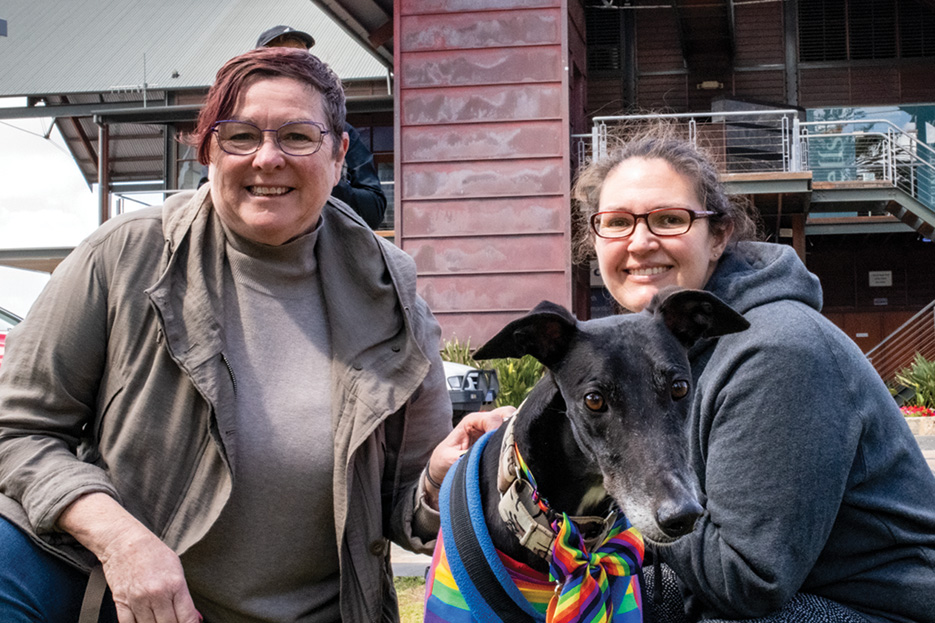
    • Lisa Baker and Andrea Pollard at the the Greys for Gays greyhound walk for Pride on Saturday November 2. Photo by @pixelpetsphotos

    LAST month’s death of Kevin the Kookaburra at a northern suburbs tavern exposed a gap in animal welfare laws that Maylands MP Lisa Baker wants fixed. The swiftness of Kevin’s death (his head was twisted off) may not have met the legal standards to constitute cruelty or suffering. In this week’s Speaker’s Corner Ms Baker urges animal lovers to make a submission to the Animal Welfare Act review, available via agric.wa.gov.au/animalwelfare before November 25.

    LIKE so many Australians, I have always had animals in my life and part of my immediate family.

    I am grateful my parents believed being responsible for the health and happiness of a sentient life was a valuable lesson for a child.

    I learned to get up every morning and see to the health and wellbeing of a friend who relied on me for food, water, cleanliness and exercise. No excuses.

    Caring for and working with dogs, cats, chickens, goats, sheep and horses became and remain central to who I am and how I see this world.

    So when I see irrevocable evidence of the abuse or torture of animals resulting from contact with humans, I understand why calls for increased penalties for animal abuse are escalating into screams of anger.

    Like many, I am sometimes so revolted by what I see that I just want to turn away, not understand and not take action.

    American author Ursula Leguin in her 1973 work of fiction The Ones Who Walk Away from Omelas, depicts a utopian city where the prosperity of all depends on the perpetual misery of one child who is abused and locked away in the dark.

    At adolescence, each person in the city is shown the child’s plight and told the city’s prosperity relies on its suffering.

    Finally one person decides that’s too high a price and walks away from Omelas.

    When we are forced to see suffering, we then have a choice to make.

    Do we pretend not to know and reject the truth? Allow this to continue? Or reject the status quo and find a better way?

    In the most recent revelations of human cruelty we have seen the unacceptable abuse of horses in the racing industry in the east of this country and then the dispassionate and disgraceful killing of a small kookaburra, named Kevin, by a local at a pub in the Perth hills.

    Both of these cases are deplorable, just the scale of the abuse is different. In my view they both reflect a disturbing lack of compassion and humanity.

    I feel gravely concerned when a man or woman lacks the self-awareness to understand why animal torture and cruelty is rejection of acceptable and normal behaviour in this culture.

    Right now the McGowan government is calling for public submissions to our review of the Animal Welfare Act 2002.

    I encourage people in my community to put forward your views on what needs to change in the laws that are meant to protect our animals. Please make your voice heard.

  • Street smart

    LITTLE B is a sassy, modern take on the Bangkok back-lane eatery.

    Its red-and-yellow theme screams fast food and the menu is crammed with pictures, but behind the razzmatazz there are healthy, interesting options like spicy soups, noodles and Thai salads.

    There’s also a whole page devoted to street food classics including barbecue pork sticky rice, pork papaya salad and beef noodle ($17.90 each).

    The D’Angers kicked off with the curry puffs ($8.90), which were hot and tasty but lacked some spicy oomph.

    That wasn’t a problem with the vegetable green curry ($16.90), which packed a hot punch and had traces of basil and coriander in a creamy coconut sauce.

    We’re big fans of pad thai, but stepped out of our comfort zone and ordered the sate noodle ($16.90).

    It turned out to be an excellent choice and the dish was packed with nuts, crisp broccoli and vibrant red capsicum.

    The shiitake mushroom stir-fry ($19.90) sounded like a salutary addition to our groaning table.

    We tucked into the delicious, moist mushrooms and loved the salty, moreish sauce coating the medley of vegetables.

    There’s a small dessert menu with favourites like black sticky rice with egg custard ($9.90) and durian ice cream ($5.90), but we were too full to try them.

    This fun and lively Mt Lawley eatery is definitely worth a visit.

    By JENNY D’ANGER

    Little B Bangkok Dining
    609 Beaufort Street, Mt Lawley
    0436 353 635

  • A frothy bunch
    • Andrew Tait (above) is one of the founding members of Australian Barqoue (below).

    FANCY some Bach and a cold beer?

    New Perth group Australian Baroque hope their informal, fun concerts will attract a wider and younger audience to classical music.

    The innovative orchestra are holding several unique concerts, including one where you can you enjoy 18th century music while cuddling RSPCA kittens up for adoption.

    Helen Kruger (violins), Andrew Tait (violone) and Patricia Alessi (mezzo-soprano) formed the baroque orchestra late last year and recently performed on ABC radio.

    Tait says their Bach and Beer concerts are a throwback to the days of orchestras performing in informal settings.

    “In Bach’s time, playing music wasn’t just reserved for concert halls,” he says.

    “It was played in coffee houses, ale houses…even brothels.

    “This is what can happen if music is not in the hushed environs of a concert hall.

    “It was more a part of people’s lives; playing music in pubs doesn’t have to be loud rock ‘n’ roll.”

    Australian Baroque are set to play the Perth Fringe Festival, and it’s one of the rare times that Perth audiences will get to see an orchestra playing baroque instruments.

    Tait says they have a distinctive sound and are “significantly different” from their classical counterparts.

    “Primarily they use gut strings and different bows,” he says.

    “I play a double bass in the orchestra, but in the baroque orchestra I play the violone, which has six strings”.

    The orchestra’s music taps into the ‘doctrine of affections’ philosophy, which influenced a lot of visual arts, music and creative disciplines during the Baroque era.

    Tait hopes Australian Baroque can forge a niche for themselves in Perth.

    “There’s a lot of people that get put off seeing classical music because of the strict etiquette – that’s why concerts in wineries become so popular.”

    Go to fringeworld.com.au to book tickets for Australian Baroque.

    by ALEX MURFETT

  • Bloom: Your Guide to Gardening in Perth

    Bush tucker revolution

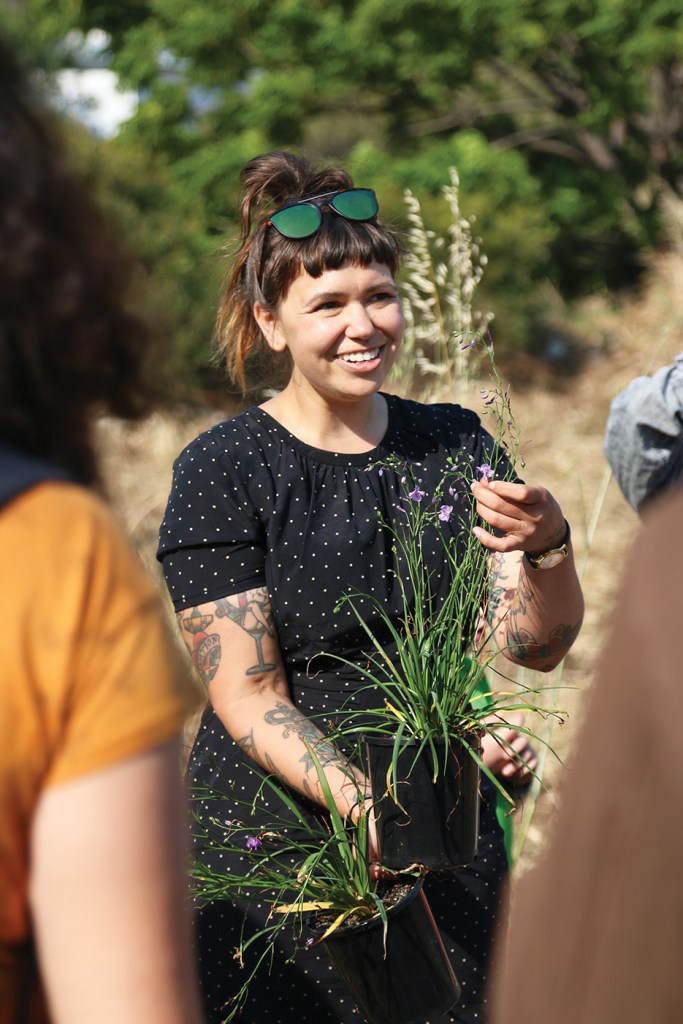
    A WHADJUK Noongar woman’s dreams of leading a sustainability revolution through bush tucker took a big step this week, with her first planting day at a Hamilton Hill community garden.

    Jacinta Taylor says she hopes to preserve Noongar language and culture through promoting edible plants, but there’s big benefits for the whole community.

    “I always remember my dad saying that the bush is nature’s supermarket,” Ms Taylor says.

    “My dad’s generation was a part of the stolen generation – they weren’t allowed to speak their language, they weren’t allowed to do anything that was a part of their culture.

    “It was cultural genocide.

    “I want to bring as much of that back as possible.

    “For our culture to be rich, for my own ancestors and generations to come.”

    About 20 punters gathered on Wednesday afternoon for the first day of planting at the garden, which is tucked behind the historick Randwick Stables – one of the few still operating in the metropolitan area.

    Native tubers (potato-like vegetables), endemic chilli’s and youlk (radish) were a few of the vegetables planted in the garden.

    The seedlings can be found at Bunnings and North Fremantle nursery APACE, then grown in a bucket at home.

    Ms Taylor says she isn’t an expert but isn’t going to let that stop her.

    “Part of me wanted to have all the information before I started this but when I tell people I don’t know everything, they say ‘great, let’s learn together’ and that’s what it’s all about – getting the conversation happening.”

    She says after the release of Bruce Pascoe’s book Dark Emu, people are wanting more information about Aboriginal agriculture and the gardens are a way to help bridge the gap.

    “Linking in with the sustainability aspect has also gotten people interested – this is a really sustainable way of farming because endemic plants thrive in our soils with little water.”

    Ballingup woman Leith Bailey recently moved to the area and says it’s great to have a place where she can learn more about Aboriginal culture and connect with her community.
    “I have an interest in the culture and the plants after reading some books and learning the health benefits of the food,” Ms Bailey said.
    “Community gardens are also a great way to meet new people.”

    Versatile verges

    WITH councils such as Vincent and Bayswater leading the way in Perth’s verge revolution, an environmental group is hoping to convince homeowners that planting native species is the way to go.

    APACE is hosting its third verge design course in North Fremantle today (Saturday November 9) and landscape design assistant Michelle Donnelly says local fauna is perfect because it’s low-maintenance, water-wise and ecologically friendly.

    “We like to encourage the actual species which were endemic to that area, as it supports the birds, insects and lizards that would normally live there,” Ms Donnelly says.

    Soil type

    “Depending where you live and your soil type, different plants will suit, so we give people a guide to help choose the right ones.”

    APACE supplies over 450,000 native plants and more than 400 species through its Swan Coastal Plains revegetation nursery to councils, businesses and community every year from Geraldton to Bunbury.

    Ms Donnelly says the course provides individually tailored assistance to help people select the right plants for their soil type, verge size, style and budget.

    “We are trying to help people develop something that is sustainable but fairly cheap,” she says.

    The course is a part of APACE’s efforts to reestablish its community education programs under newly appointed coordinator Joann Heta, but she says there are still some hurdles.

    Ms Heta says people wanting more education and training, that requires funding.
    “We’ve applied for the Stronger Communities grant which would enable us to assist training for some of the local groups and re-run courses such as weed propagation control, seed collection and the verge design courses,” she says.

    “We are also now competing against the private sector which makes it really hard for us because we don’t have [financial] backing.”

    But Ms Heta says despite the lack of funds, the team at APACE is reinvigorated under the new leadership.

    Stories by INDIANA LYSAGHT

    The inside story

    SPRING is officially in full bloom and the beauty of nature is unfolding.

    To check out the array of florals this season, you might plan a trip to Kings Park or Araluen Botanic Park – or simply pop down to your local garden centre.

    Waldecks Garden Centre manager John Mossop said some of the best selling flowers at this time of the year are potted colours.

    “You can get 130mm pots with annuals to get your petunias, zinnias, begonias, pansies and a lot more,” Mr Mossop says.

    “We have an extensive range of fruiting varieties with dwarf trees, citrus trees, blueberries and natives.”

    Mr Mossop says there’s also been a resurgent of indoor plants.

    “Back in the 70s in my landscaping days, people were throwing the indoor stuff out because it was all too hard and starting to destroy the brickwork.

    “It’s of course now driven by Instagram with the younger generation out there flashing pictures. Bloom envy is driving a lot of sales.

    Mr Mossop, a 15-year veteran of Waldecks, says nurseries haven’t been spared the difficult times facing retail but has hopes the indoor revival can fertilise the economic green shoots.

    “It’s the government incentive to green everything from high rises to rooftop gardens and vertical walls,” he says.

    “There use to be an unwritten rule in the old days where you spend 10 per cent of what you bought your house on for the landscape, but a lot of people don’t do that any more.

    “A lot of the houses are smaller so they’re targeting areas like patios, alfresco areas and obviously the front of their gardens.”

    Mr Mossop says it’s easier to be a green thumb these days, with more on offer than a hopeful bit of sheep poo over the garden.

    “Now we have things like Soil Solver Clay Plus which is a WA product and transforms your sand into soil and you are adding some organics to that and fertiliser,” he says.

    “You still get some oldies that come in and look at you a bit strange when you ask if they used fertiliser.

    “There is still a belief out there that you don’t feed native plants.

    “Everything needs feeding because if you feed regularly, your garden is going to be healthy and it’s going to perform.”

    by CHRISTINE MIN THEIN