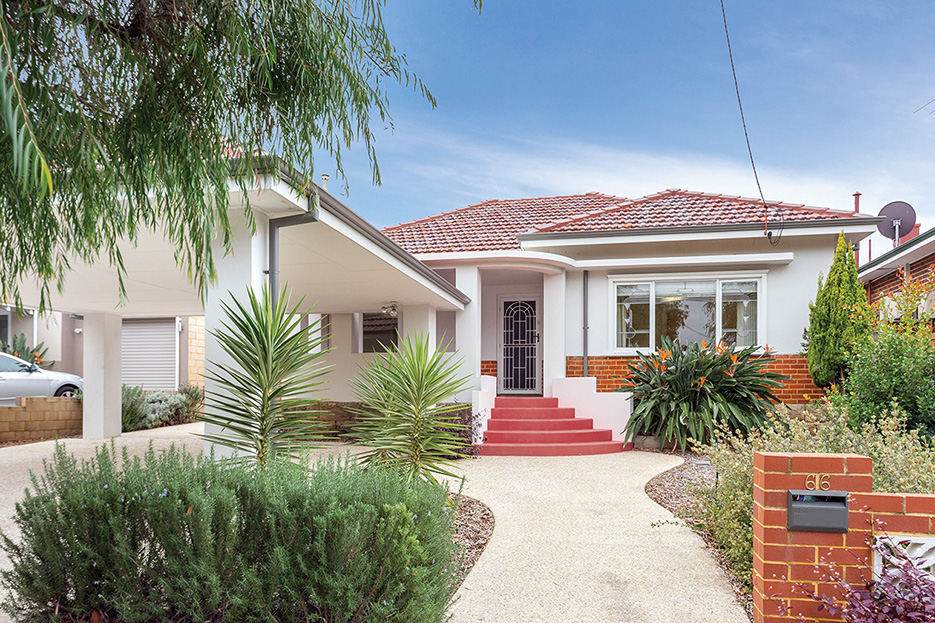
MUST be a South Fremantle supporter,” I thought as I clocked the white walls and bold red stairs in this Inglewood home.
With four-bedrooms and two bathroom there’s room for a junior team, and plenty of grass on this 562sqm block for a kick-about.
Leadlight windows, ornate cornices and and aged chocolate-brown jarrah floorboards reflect this home’s 1950s vintage.
Matching jarrah floors add a touch of class to the sprawling open plan, a modern space with high ceilings and north-facing bifold doors.
In the kitchen, corner windows spill natural light onto the white benchtops.
Whipping up a feast would be a breeze here, with a huge island breakfast bar, a massive double pantry and a gleaming 900mm oven and cooktop.
Peel back the bifold doors to access the covered alfresco and invite the whole team around for a party.
The patio has water and gas plumbing for a barbecue kitchen, and while the snags are cooking there’s the garden to play in.
The bedrooms form a separate “wing”, where the spacious main has a walk-in-robe and ensuite with an antique, marble-topped vanity.
Situated on the leafy Sexton Street, St Peters Primary school is literally around the corner and the Beaufort Street strip is a pleasant 15-minute walk away.
by JENNY D’ANGER
66 Sexton Street, Inglewood EOI over $1.09 million Natalie Hoye 0405 812 273 Bellcourt Property Group 6141 7848
Justin Stahl has been selling heirloom seeds and seedlings at Perth farmers markets for over five years, and loves encouraging people to grow their own food. An admittedly average gardener, his interests lie in promoting food security and a decentralised, resilient food supply, while raising awareness of the fragility of the current system. A graduate of the University of Notre Dame, with degrees in Political Science and Journalism, he is currently a freelance writer for the Herald and Perth Voice. He also sits on the council of the Royal United Services Institute for Security and Defence Studies, and can be contacted at me@justin-stahl.com.
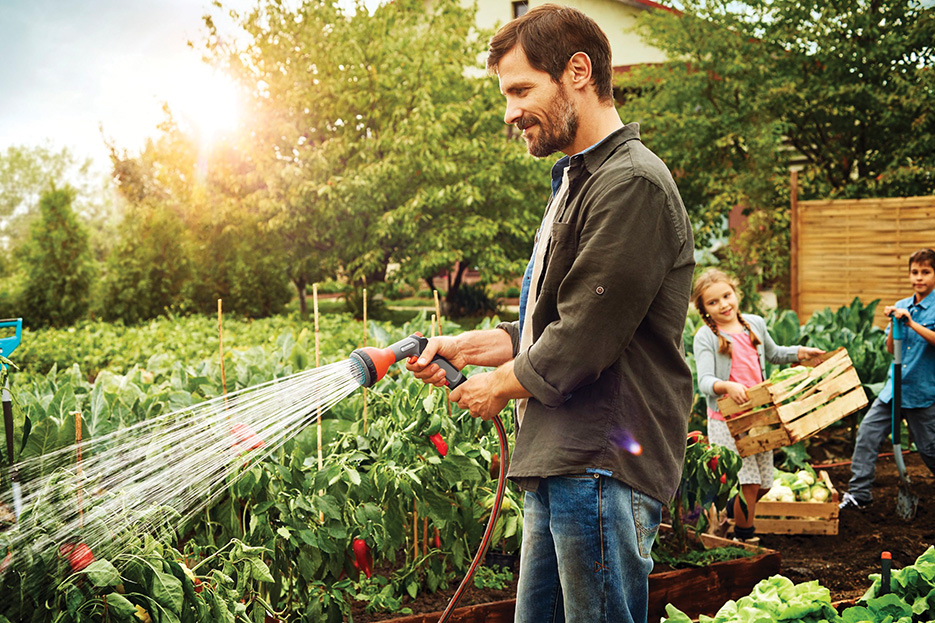
YOUR typical gardening column may include some pretty pictures, some pest removal tips and a handy ‘what-to-plant-when’ guide – but we are not your typical newspaper. We will of course cover these things, but before the What, When and How next month, I would like to briefly discuss the Why. In an era of shrinking block sizes, increasing screen time and less spare time, the concept of establishing a garden might seem quaint and pointless. But it’s not. There has never been a better time to set aside a few hours on the weekend to take a good look at your backyard, balcony or even bathroom, and plan your green mission.
There are good reasons that the world’s palaces and mansions contain extensive gardens. Michelle Obama famously planted a vegie patch on the White House lawn in an effort to demonstrate how easy healthy, organic food can be, to a nation often characterised by ‘McDonaldization’.
We instinctively love to be in and around nature, and our bond with nature couldn’t be demonstrated better than by nourishing a garden. Flowers for the soul, food for the body.
Reason 1:It’s good for you
Food is the building block of our bodies, and the old saying ‘you are what you eat’ has never been truer.
Commercial imperatives have driven greater yield plateaus and bigger fruit, but at the cost of flavour and declining nutrient density.
Ask anyone who has eaten an heirloom tomato what they now think of the supermarket offerings and you may hear some naughty words interspersed with ‘bland’, ‘tasteless’ and ‘doughy’.Organoleptic factors aside, the sheer novelty of having a wider choice of varieties (think large, stripy, hairy, tiny, fleshy or saucy tomatoes…) that can suit your garden and personal tastes is a wonderful thing, and a palette of colourful food will encourage even the pickiest kids to learn about where their food comes.
Not only is home grown food healthier and tastier, but you maintain sovereignty over what you put into your body.
Don’t want to put glyphosate, pesticides or industrial-strength fertilisers on your plate? Then don’t.
Worried about iron deficiencies, but aren’t keen on iron pills? Plant some silverbeet, spinach or beans.
Not convinced about the safety of transgenic (‘GM’) food yet? Then plant your own alternatives.
And let’s not forget the proven mental health benefits of putting down that screen and getting out into the garden. It has been shown to help ease the symptoms of depression and anxiety, it’s good exercise and even something as mundane as weeding can give you respite from the daily hustle.
Reason 2: It’s good for Australia and the world.
Aside from the benefits to your own household, growing your own food helps our fragile planet in a number of ways.
In terms of environmental sustainability, your ‘food miles’ become mere food metres, and all the carbon emissions that come from production, refrigeration, trucking, storage and distribution in commercially grown produce are avoided, let alone the significant chemical usage.
If you choose to use heirloom varieties instead of commercial seeds, you will be safeguarding our precious agricultural heritage for future generations.
Many varieties have already been lost for good, with National Geographic finding 93 per cent of seed varieties previously available in the US are now extinct.
Using open-pollinated seeds means that every year you can save your best performers to plant the next year, gradually adapting it to your own personal ecosystem and tastes.
Best of all, you’re keeping our food production out of corporate control, which has already been linked with farmer impoverishment.
Our society can only benefit from a surplus of food, and by growing your own you take pressure off others.
Simply put, you will not only be feeding yourself but can feed others with your excess produce, and in doing so increase the food security and resilience of not just your neighbourhood but Australia as a whole.
And besides, nothing says ‘I’m a good neighbour’ like sharing a box of fruit or vegies with the family next door.
Reason 3:It’s good for your wallet.
Food is not getting any cheaper, and as we enmesh ourselves in globalised food chains we become far more susceptible to international food supply shocks.
The Chinese outbreak of African Swine Fever (often called ‘Pig Ebola’) and subsequent culling of over a million pigs has already caused Australian pork prices to rise by around 20 per cent, putting pressure on other proteins such as mutton, climbing around ten per cent this year alone.
Rabobank is predicting that approximately half of China’s estimated 440 million pigs will need to be culled by 2020, doubtlessly further increasing the prices of all alternate proteins significantly, as Chinese consumption of chicken, seafood and beef rises.
Assumptions that Australia produces enough to comfortably feed ourselves are questionable when comparing China’s lost production of 20 million tonnes with our 500,000 total.
The laws of global supply and demand will mean a hit to your wallet if nothing else.
Permaculture pioneer David Holmgren noted that “Australians have been living in a dream world of cheap energy, low interest rates and benign climates.”
A passionate advocate of backyard ‘garden farming’, he sees additional social benefits in what he calls “Retrosuburbia”–kickstarting “household and community non-monetary economies of gift, barter and reciprocity”.
John Hartley, from Perth think tank Future Directions International, recently said we are in a “period of transition from food abundance to food scarcity”, with one third of global farmland losing topsoil faster than it can be replenished.
He noted that one billion people are starving, whilst two billion are overweight, and that the effects of climate change will only exacerbate the problem.
China is losing over 600,000 acres a year of soil to desertification, and 25 per cent of Indian soil is threatened with the same fate. Africa now has over 80 dust storms per year, up from less than five in the 1960s.
What to do?
Despite all this doom and gloom, it should be remembered that when our leaders last felt our food supply was threatened during World War II, Australians were encouraged to plant household ‘Victory Gardens’, supplying their own family with much of the nutrition they required, and taking pressure off a strained wartime economy.
Examples abound of people producing huge amounts of food from home gardens, with one inner Melbourne 271sqm block recently producing over 350kg of food annually, while even a 64sqm block has supplied over 234kg.
The concept of planting a garden does not have to be a burden, but rather a way to contribute to the wellbeing of everyone around you.
Don’t worry that you’ve killed plants before, everyone does–they make great compost for your next attempt.
Even if only one tomato plant survives, some varieties will happily produce 20kg of fruit each, which could cost between $60 to $600 from the supermarket duopoly–let alone the simple joy that comes from a backyard that smells of flowers while bees softly buzz in the afternoon sun.
So go on, get ready for spring.
Next month we will bring you a collection of hints and tips for a bumper tomato crop–and we welcome community input too.
Feel free to send your advice, tips and comments to news@perthvoice.com and the best will be featured.
Planting the seeds to success
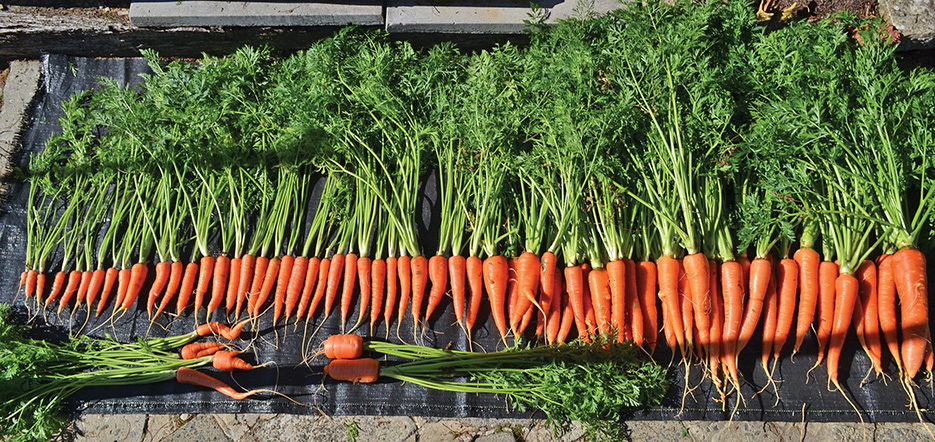
• Just some of the amazing results easily attainable in your own backyard. This bumper crop of heirloom Western Red carrots was grown in Hilton, without any pesticides or fertilisers whatsoever, in a single 60cm x 250cm strip.
What does organic mean?
NO term is perhaps as incorrectly used as ‘organic’.
Many people ask me if the seeds I sell are organic, to which I usually reply that they will be as organic as whatever soil you grow them in.
Many products will spuriously claim to be ‘organic’. The Australian Organic certification body defines it as: “farming in a way which cares for the environment, without relying upon synthetic chemicals and other unnatural interventionist approaches.”
To be sure the product you are buying is indeed organic, look for the distinctive Australian Organic ‘bud’ logo.
Why should I use heirloom/heritage seeds?
Simply put, heirloom seeds are varieties of plants that have been passed down from previous generations of farmers, and prized for their specific qualities.
Open pollinated seeds will reproduce faithfully to their progenitor, meaning that seed saved from the previous crop can be used to produce the next.
I like to compare it to dog breeding–out of a litter of puppies you might choose the biggest or most ‘purebred’ dog to breed further, or you might take the only one with a bushy tail or blue eyes.
This process of selective breeding is how tomatoes with stripes or certain colour markers came to exist.
Hybrid seeds of the sort used in commercial agriculture are a non-reproductive product, and the corporations that sell them make money by selling a consistent product tailored to a farmer’s particular needs each year.
What about GMOs?
Another widely misunderstood phenomenon is genetically modified organisms, which come in many forms.
The selective breeding pressures and random mutations of heirloom varieties have caused genetic modification, but by that logic, the second your mother caught your father’s eye some form of genetic modification to a potential breeding line occurred as he made his choice.
What many people think when they hear the term GMO is more correctly called ‘transgenic’, which means that genes from one organism have been artificially moved into another in a laboratory.
Corn that expresses bacterial proteins from Bacillus thuringiensis (‘BT corn’) is the most widely known of these organisms, forming over 90 per cent of the total corn grown in the US and increasingly in developing countries.
Transgenic salmon, modified to excrete additional growth hormones, has become the first modified animal to enter the food chain.
There have been numerous studies that have found animals fed transgenic feed experienced negative effects, but other well-funded studies have found no health impacts.
At best we can say the transgenic field continues to be controversial, but is steadily gaining acceptance from both governments and consumers, despite vocal and continuing opposition.
PERTH GARDENERS! Here’s your chance to bloom
Are you a gardening guru? Do you consider yourself to be the Costa Georgiadis of Perth? Have you grown a pumpkin the size of an excersise ball? We want to know your gardening stories, hints and tips, achievements and we also want to see your photos. We’re inviting all Perth Voice readers to submit their gardening articles to feature in this brand new feature, so get writing. Submit your articles to news@perthvoice.com and the best will be featured.
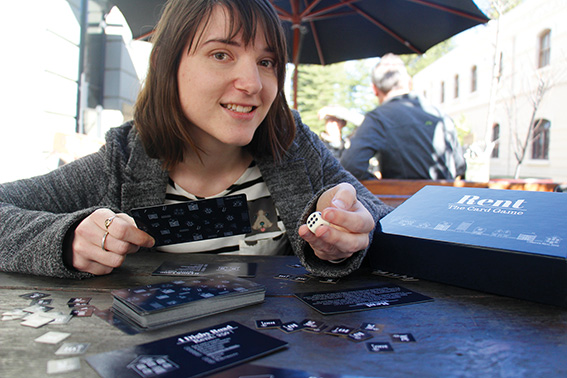
A YOUNG renter has turned her experiences of being screwed by stingy landlords into a game highlighting WA’s unfair tenancy laws.
Megan Neal (24) has been criticised by landlords for breakfast crumbs in an otherwise spotless house or owning too many things, while she’s been sick from mould.
But like most renters she was scared to speak up in case she was evicted or got a rent increase.
At a conference run by Tenancy WA last year, Ms Neal discovered she wasn’t alone and decided she wanted to help others understand what it was like at the pointy end of renting.
“It’s really hard to share that experience if you haven’t lived it,” Ms Neal said.
• Megan Neal turned her renting horrors into an entertaining card game. Photo by Steve Grant
Keys
In Rent: The Card Game, players receive “keys” to rent a house and pay bills, which the inventor said was to show that having a home was more than just paying the rent and included good health and mental wellbeing.
After choosing a home with a range of options such as insulation or electric appliances, players have to deal with unfair requests from the landlord and endless bills. Fall behind and you accrue crisis points – three and you’re out if the landlord hasn’t already kicked you out without reason. It’s surprisingly easy.
Ms Neal’s game is being showcased during Homelessness Week by the Make Renting Fair Alliance, a collaboration of community organisations and renters calling for an overhaul of WA’s tenancy laws. Alliance co-ordinator Rachel Pemberton, a Fremantle councillor, said they want longer leases, unfair evictions banned and the right to make minor alterations like putting in a picture hook or a towel rail.
Cr Pemberton said WA’s tough tenancy laws could actually be contributing to the homelessness problem.
Ms Neal and fellow Tenants Action Group WA campaign co-ordinator Trish Owen will be holding games of Rent at The Nook at the State Library of WA on Francis Street on Wednesday August 7 from 11.30am to 1.30pm. To book go to rent_the_card_game.eventbrite.com.au
A NEW era of tightened purse strings has taken hold at Perth council.
The city’s commissioners have suspended all heritage and business grants until they get a complete picture of the city’s finances.
At Tuesday’s meeting they turned down a staff recommendation to spend $90,000 on six “business improvement grants” to upgrade venues in the city.
The Royal Hotel was to get $20,000 for renovation, Picabar was in line for a $20,000 refurbishment, Mustang Bar was looking at $15,000 for its facade and a new awning, and Bright Tank Brewery wanted $15,000 for a new outdoor dining area.
Universal Bar also wanted $10,000 for outdoor dining on William Street, and Lion Oriental Foods Co on Fitzgerald Street was hoping for $10,000 to renovate its old shopfront.
The fund is intended for projects that’ll have a wide benefit to the city but can’t get across the line without external funding, and city staff estimated the $90,000 would bootstrap about $1.7 million in private investment.
Cmm’r Andrew Hammond said he supported business grants, but was “unsure of the long-term financial position of the city”.
He said the city should continue to sponsor events “because they’re very very important to the vitality and activation of the city”.
In April commissioners deferred a $20,000 heritage grant to the owners of Barrack Street’s Bon Marche Arcade, and Comm’r Hammond was somewhat bemused to see it crop up again this week, given staff had been told to hold off until the grants had been reviewed.
“I’m not convinced it’s good public policy to invest ratepayers’ funds into privately owned properties,” Cmm’r Hammond said at the time.
It was a significant shift in tack from the previous elected councils which had steadily expanded the grants program since 2007.
PERTH lord mayor Lisa Scaffidi has announced she won’t return once her suspension is over, in a roundabout response to a Voice letter writer.
Last week Scaffidi-supporter Winsley Hurst wrote a letter to the editor saying “what’s desperately needed is the return of our cruelly suspended lord mayor”.
On Tuesday July 30 Ms Scaffidi tweeted a pic of the letter titled Where’s Lisa saying; “I’m still here Winsley, watching from the sidelines while paying substantial property rates that look like they’re doing little more than subsiding free parking!
“There’ll be ‘no return,’ I’m moving on. Happy to leave politics to those party apparatchiks.”
In an era of sockpuppet Twitter accounts and fake Facebook profiles sprouting up to sling mud, we did get a query this week as to the authenticity of “Winsley Hurst”.
The Voice can confirm Mr Hurst is a playful pen name for an earnest Lisa-Lover well known to us for a decade or so, with no political connections beyond his fandom of the first female lord mayor.
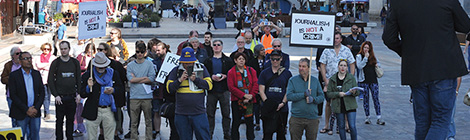
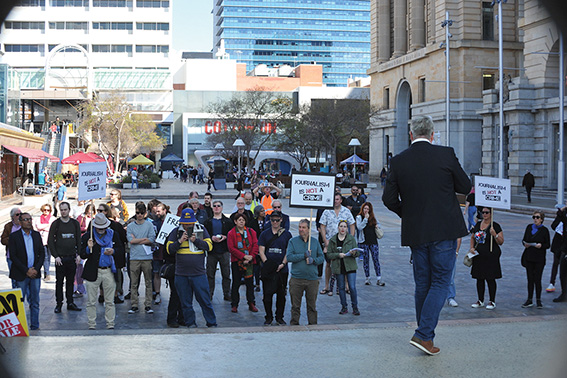
A RALLY in support of press freedom saw fewer than 50 people turn out in Forrest Place last Sunday (July 28).
There are about 300 WA journalists and 150 student journos in WA, but they stayed away in droves.
Organised by the Media Entertainment and Arts Alliance, the rally was protesting against changes to “war on terror” legislation which would make public interest journalism a crime, with the threat of lengthy jail time for journalists and whistleblowers.
Post Newspaper owner Brett Christian told the rally whistleblowers and “brave” journalism played a vital role in a healthy democracy, noting their role in bringing the truth about mesothelioma and thalidomide to public attention.
The rally was also concerned with the erosion of press freedom after June’s federal police raids on the ABC headquarters, and journalist Annika Smethurst’s home.
The News Corp political journo’s “crime” was telling Australians their government is set to change legislation, allowing police to tap into their internet accounts without a warrant or informing them.
• Not a huge turn-out for Perth’s rally for press freedom. Photo by Dave D’Anger
The ABC is being investigated for reporting on alleged atrocities by Australian troops in Afghanistan two years ago.
And two weeks ago French television journalists were arrested for trespass while covering an Adani coal mine protest in Queensland.
The raids and arrests made headlines internationally.
French journalist Hugo Clément told a French newspaper he was shocked at his crew’s arrest.
“It’s a very weird thing for a democratic country.”
MEAA spokeswoman Tiffany Venning said the union had advertised the rally on Facebook, had sent a bulk email to its members, and put posters in main newsrooms and in locations around town.
Ms Venning says last Sunday’s rally was a precursor to “build a greater awareness…as much as anything, coupled with WA having a bit of an apathetic approach to most things in general, and compared to other events we have organised in the past, the committee considered it a good first step”.
Australia is ranked 21st on the index of international press freedoms, below countries like Costa Rica and Uruguay.
New Zealand is seventh and the Scandinavian countries head the list, with Norway number one.
CITY of Perth chair commissioner Eric Lumdsen (pictured) is stepping down August 9 due to ill health.
Cmm’r Lumsden made an emotional announcement at the July 30 council meeting, saying it was in the best interests of his health and the city.
“It’s something I’ve been contemplating for some time as there’s been some conjecture due to my absence from council meetings and in particular some council functions. I have not been able to attend all of the council functions I would have wished to due to ongoing medical treatment.”
He’s been on leave for most of the first half of this year, but revealed he’d continued to be involved in council business during his treatment via text and phone calls.
Cmm’r Lumsden said his health is significantly improving, but his doctors have advised him to stand down.
He was overcome with emotion as he thanked fellow commissioners for their work: “I’d like to acknowledge the extreme efforts and dedication of other commissioners, especially deputy chair commissioner Gaye McMath, and commissioner Andrew Hammond,” who’d stepped outside their portfolios to shoulder the load.
Satisfied
“I leave the commission next Friday satisfied that during my time here, in conjunction with other commissioners, that I leave the city set for the next stage of reform to be carried out by the commission and the CEO.
“I have reluctantly put my health first,” he said, pausing to steel himself, “which I do so with a high degree of sadness. Thank you for your attention.”
Cmm’r Hammond offered “extreme and sincere thanks for your efforts, leadership, humour and knowledge as our chair. You did so not only in difficult personal circumstances with your illness, but also in very very difficult circumstances given the challenges the commissioners had to face in our early time.”
Local government minister David Templeman tweeted his thanks to Cmm’r Lumsden and wished him a speedy recovery. “He took on a huge challenge under difficult circumstances and has achieved significant progress towards restoring confidence in the city,” Mr Templeman said.
His replacement is likely to be announced in the next few weeks.
FOR the third year running there will be no standalone Carols by Candlelight at Langley Park.
Perth council staff said a standalone event was “not viable”, with not enough time to organise it and too many existing commitments.
Like last year, carols will instead be included in the Christmas Symphony at Langley Park.
• The last time the event went ahead was in 2016.
Cost-effective
At Tuesday night’s Perth council meeting, commissioners approved an additional $30,000 sponsorship of the WA Symphony Orchestra event.
Council staff said in a report to commissioners that including carols in the Christmas Symphony was “the most cost effective option”, but would investigate a standalone carols event next year.
Last year CbC organiser Variety announced that due to a shortfall in sponsorship, the long-running and highly popular event could not go ahead. In 2017 it was cancelled due to stormy weather.
by DAVID BELL
———
Austerity measures
THE carols funding was one of many sponsorships approved by Perth commissioners at the July 30 meeting, but outgoing chair commissioner Eric Lumsden foreshadowed a more austere approach in future.
“Whilst individually they are small amounts, they actually add up in excess of half a million dollars. So this is of concern to the commissioners.”
But with the purse still open, Perth council sponsored:
• The men-only ATP Cup tennis tournament ($130,000);
• Pride WA ($65,000);
• STRUT Dance ($25,000) to collaborate with choreographer Hofesh Shechter;
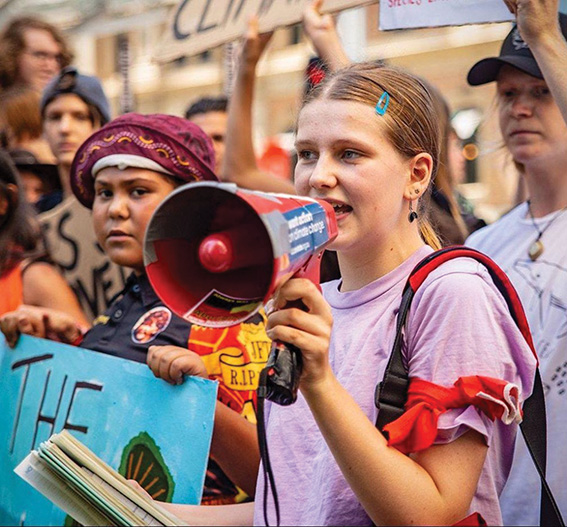
SIXTEEN-year-old climate crisis activist Makaela Rowe-Fox runs a free discussion panel on “How do we save the world?” at the Art Gallery of WA today (Saturday August 3).
Ms Rowe-Fox is one of the organisers behind the national school strike for climate movement, and has protested, marched and chanted at the March 15 and May 3 strikes this year.
• Makaela Rowe-Fox
Next generation
She’ll be leading the panel, offering a perspective on climate change from the next generation who will cop the brunt of it.
Other panel members are Chelsea Andrews from Australian Youth Climate Council and environmental scientist Rachel Rainey.
It’s at the AGWA Theatrette from 2-3pm, and there’s a also kindred exhibition in the gallery The Botanical: Beauty and Peril, running until November 4.
It draws from the Janet Holmes à Court Collection and features pieces celebrating the beauty of landscape and plants, the environmental destruction they face, and Aboriginal land rights.
PERTH’S Belinda Teh is on the last leg of her 3500km walk across Australia inspired by her mum Mareia’s painful death.
After a 70-day walk, the voluntary assisted dying advocate is due to reach parliament house at 1pm on Tuesday August 6.
She hopes to share her story and present white roses – her mum’s favourite flower – to premier Mark McGowan as parliament prepares to consider a bill legalising VAD.
Ms Teh was 23 when she lost her 62-year-old mum, a nurse, to breast cancer in February 2016.
“After the diagnosis, she underwent invasive tests only to be given a few short weeks to live. Blood tests revealed chemo treatment was actually shortening her life.
“When my mum asked doctors for the option to ‘go quicker’ they replied they could only keep her comfortable.”
Ms Teh says her mum’s last weeks were horrific.
“Even constant pain relief did nothing to relieve her suffering.
“Grabbing a glass of water from her bedside was torturous for her.
“The final four to five hours of life for mum involved morphine injections every 15 minutes.
“She was unrecognisable, looking already dead with waxy skin, making raspy choking sounds and twitching.
“It is unacceptable to me that anyone go through that kind of suffering.
“When someone has no options left except painful death, they should be allowed to have a say in how they go.”
• Belinda Teh before she struck out on her walk across the country.
Ms Teh hopes more people will have the courage to talk about this controversial subject.
“I want honest, open discussion amongst MPs, clinicians, nurses and citizens at large.”
She’s had lots of positive feedback from MPs, and says more than 1000 people have shared similar stories to hers.
Speaking of the choices sufferers and families have when faced with immense suffering through terminal illness, Ms Teh says “people shouldn’t have to be doing this alone.
“When community comes together to speak out about things we care about, the topics that seem morbid can become uplifting and hopeful. It can be about compassion and love.”
The Australian Medical Association WA has had many vocal objections to voluntary assisted dying under former president Omar Khorshid, and new president Andrew Miller says they still have concerns about the bill’s impact on “vulnerable people” and want to ensure “that no individual requests VAD simply because they are unable to access [palliative] care”.