• Tiny forests, big difference

    JAPANESE botany could be front and centre of a plan to transform Perth’s verges into mini forests.

    Murdoch University research fellow Grey Coupland is an expert in Miyawaki forest revegetation and will be keynote speaker at an Urban Bushland information night in White Gum Valley next month. 

    The Miyawaki method, which was developed in Japan by botanist Akira Miyawaki, is based on the remnant patches of sacred forest around Japanese temples, and recognised as a solution to urban greening efforts in Australia. 

    An “intensive” revegetation process, it comprises three key components, according to Dr Coupland. 
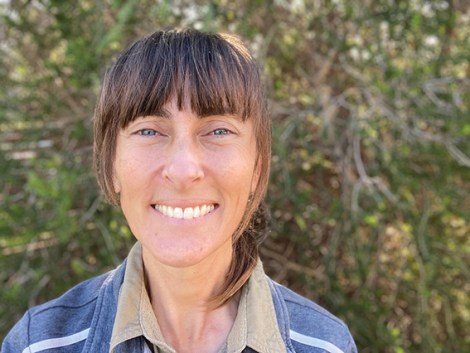
    •Dr Grey Coupland

    Botanical

    The first and “most important” step is to plant native species, tailored specifically by an intensive botanical survey of nearby vegetation to identify which plants are most suitable to the location. 

    “The aim is to identify what would have been growing on the site before the site was cleared.” 

    Secondly, the vegetation’s soil is subject to “intensive remediation” to reinvigorate as it is “often devoid of life” after urban development. 

    Finally, the native shrubs are planted at a high density, with around 30 different locally native species in a space between three and five square metres. 

    It’s an “ideal solution” for the environmental impacts of Perth’s urban sprawl, Dr Coupland says.

    “We have really poor housing development design where we’re clearing vast swathes of landscape putting the houses in at really high density with very little space for green. 

    “All these things are making cities more difficult for humans to live with the organisms we share the planet with.”
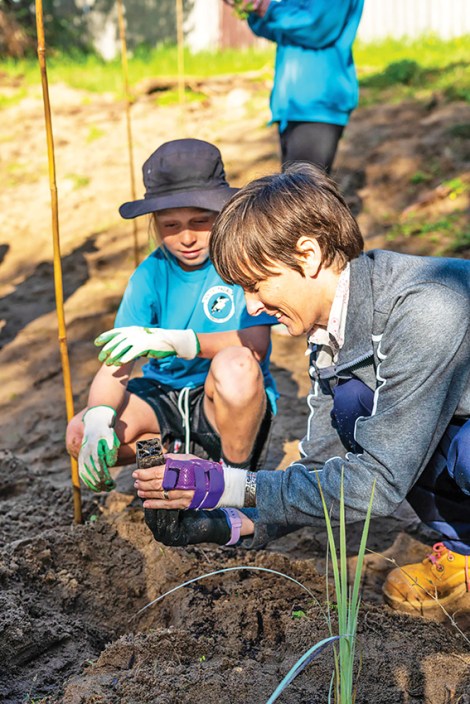
    • Dr Coupland working with students to green up Padbury.

    With a maturation rate of between 10 and 20 years, the Miyawaki method has a “remarkable” capacity to boost Perth’s urban vegetation which is under threat from both climate change, lack of regulation, infill, and the widespread effects of the polyphagous shot-hole borer. 

    “It’s potentially a very good option for urban areas where we need to increase canopy cover quickly,” Dr Coupland said. 

    “If you get a mature forest quickly, you can provide habitat quickly, so the biodiversity in the area can increase as well.

    “We also need to consider not removing the native vegetation that we’ve got in place, and stop clear felling all the areas of land, because keeping the original vegetation should be the first priority.” 

    Valley Verges member David Broun says the Miyawaki method touted by Dr Coupland directly addresses the need for fauna habitat in a city with such a large urban sprawl like Perth. 

    “We have cleared large areas of land to for houses and development and a lot of the species of birds and animals that used to live here have a greatly reduced habitat,” Mr Broun said. 

    “By growing these pocket forests, we’re providing more habitat for those birds and insects to live.” 

    Benefits

    There are a range of additional benefits to increased urban woodland, according to Mr Broun, which will be discussed at the Urban Bushland talk. 

    “In Perth, we have quite a high rate of things like roads, car parks, houses, and buildings attract and retain heat from the sun, which makes our urban environment much hotter than it otherwise would be,” he said. 

    “When we grow these areas of bush, we’re providing shade and reducing what’s called the urban heat island effect, making our suburbs quite dramatically cooler.

    “By increasing areas of bushland and urban areas and having access to nature, we’re also making that easier for everyone as a whole range of social and mental health benefits.” 

    The Urban Bush talk featuring Dr Coupland will be happening at Sullivan Hall in White Gum Valley on Thursday, October 3 at 6.30pm.

    by KATHERINE KRAAYVANGER

  • Fairytale from Persia

    WITH the world’s eyes focused on Iran’s response to Israel’s latest drone attacks on Hezbollah, and memories of Mahsa Amini’s death at the hands of the country’s morality police still lingering, Iranian-Australian playwright and actor Elham Eshraghian-Haakansson’s latest work comes at an opportune time to understand a little more about a most complex culture.

    Eshraghian-Haakansson blends ancient Persian folklore with the fallout for those fleeing the 1979 Iranian revolution in her directorial debut A Love Letter to the Nightingale at The Blue Room Theatre this October. 

    Collaborating with her brother Ashkaan Hadi and longtime friend and fellow actor Danyol Aghaie the trio brings to life “an immersive fairytale” of love, anger and acceptance.

    Eshraghian-Haakansson creates her art with a conscious goal of good social change. 

    “I genuinely believe that art has that power for social impact, positive social impact,” she said.

    “I love things that are quite fantastical but also things that are rooted in reality, all grounded by lived experience.

    “All my work in the past five or plus years has always explored trauma within community.”

    Eshraghian-Haakansson ran art therapy workshops with co-writer Kara Flame to inform the creative process for A Love Letter. 

    “It was relevant to people that have gone through certain traumas, whether this be domestic… gender-based trauma…  different kinds of displacement,” Eshraghian-Haakansson said.

    “It was these different layers, these different communities all coming into this world that I started to sort of immerse myself in.”

    A Love Letter to the Nightingale also draws inspiration from Persian folklore and mythological tales from the epic 11th century poem Shahnameh. 

    Whilst the tragedies in Love Letter convey a universality to all human suffering both director and cast being Iranian-Australian’s sees their experiences of dual-identity explored. 

    “That pull and push of both cultures, you know, how do you find your dual identity within this experience as Iranian-Australian and coming from this really intense background, community-wise,” Eshraghian-Haakansson said. 

    “But then also our experience as second generation living here and not necessarily being able to visit our parents’ home or our grandparents’ home.

    Aghaie also feels this push and pull.

    “You grow up and you’re like, ‘you can’t go back to your country, you don’t know how your country looks like’,” he said. 

    “You know you love Australia, but then growing up in the 90s, Australia doesn’t accept you.

    “It took a while but you have to acclimatise in a weird way.

    “Persians or Iranians, we have no home,” Mr Aghaie said speaking specifically of Bahá’í Iranians who are routinely persecuted by the Iranian government for their religious beliefs.  

    “So it’s weird to talk about like our culture because we know plenty about it, but we’ve never experienced it.”

    Aghaie plays the character Rage who is brought to life when Reason, played by Hadi, faces a traumatic experience.

    “The bottom line with rage is that it’s a lot of pain, it’s a lot of anxiety, a lot of frustration and always looking for an answer that’s never there,” Aghaie said. 

    “Reason is an anchor point of rage in the future, so the wisdoms that is gained over time,” Hadi said.

    Rage and Reason battle towards a point of cohesion where there is space for the two to live without a loss of control. 

    Eshraghian-Haakansson says it’s similar to her journey to find connection to culture. 

    “I’ve never visited Iran before. I would love to, but I found my own way of navigating that connection to my heritage and to my culture and it’s through art, it’s through creativity,” she said. 

    “As an Iranian, as an Australian, it’s always going to be an intermesh of everything. You can’t really split the two.

    “I don’t feel solely Iranian, I don’t feel solely Australian, I’m both. I’m dual identity.”

    Eshraghian-Haakansson hopes her storytelling can help to make the world a better place through facilitating conversations around trauma and creating art that is “an ode to those who hope for a better tomorrow”.

    A Love Letter to the Nightingale
    Blue Room Theatre
    October 10 – 24
    Tix: blueroom.org.au

    by MOLLY ADDIS

  • Finding freedom under fascism

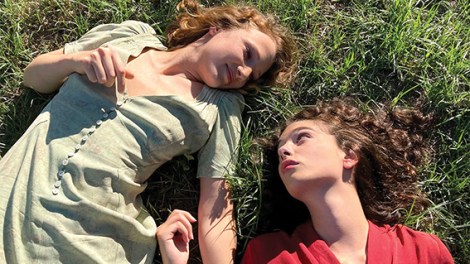
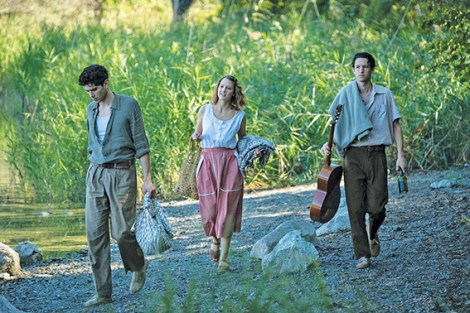
    THE Beautiful Summer is a sensitive portrayal of a lesbian coming-of-age experience in Fascist pre-WWII Italy. 

    “Freely inspired by” the 1949 novel by Cesare Pavese, the story is of a naïve country girl moving to the big city, Turin. 

    Against the vague and undeveloped backdrop of Mussolini’s war preparations, the Penguin teaser says about the book: “Ginia is desperate for adventure. So begins a fateful friendship with Amelia, a stylish and sophisticated artist’s model who envelops her in a dazzling new world of bohemian artists and intoxicating freedom.

    Writer-director Laura Luchetti’s adaptation is beautifully filmed with exquisite art direction. 

    Turin of 1938 is perfectly realised. 

    The architecture alone deserves its own credit and the music (except for one startling, 2008 selection) is era perfect. 

    Also creditable is Luchetti’s choice to steer the film’s same-sex plot line well clear of soft-focus lesbian voyeurism.

    The tough life of working-class Italians under Fascism, where all the workplace power was in the hands of the boss is shown. 

    Ginia (Yile Yara Vianello) is a 17-year-old toiling as a seamstress in a prestigious fashion house under the proprietor’s hawk-like gaze. 

    Her brother similarly experiences the precariousness of the blue-collar existence. 

    They get by with simple meals, modest entertainment and confined living quarters.

    Yile Yara Vianello is meant to portray the ecstasies, agonies and confusion of adolescent love on the cusp of adulthood. 

    Deva Cassel, as the young but worldly-wise Amelia, introduces her to an avant garde artists’ circle where free love and hard drinking are the accepted morality.

    Restrained

    However, given the restrained performances and the absence of background narrative, the audience must accept at face-value that Amelia is intrigued by the unsophisticated Ginia and that they both find each other attractive. 

    Italian male sexual technique is displayed as purely wham-bam-thank-you-mam, pushing and shoving, panting and heaving self-satisfaction. 

    As a cinematic condemnation of sexism, it is excellent. 

    But why would Ginia have ended up in this stinking bed to begin with? 

    We fail to see any “intoxicating freedom” here.

    The IMDb movie information site gives 27 “Plot keywords” for The Beautiful Summer. 

    Among them are “woman poses nude for a painting”, “female full-frontal nudity”, “clothed male, female naked scene”, “female pubic hair”, “sex scene” and “male rear nudity”. 

    In amongst those shards there is a story waiting to be told that does not quite form itself and the viewer must decide if there is enough in the acting, scenery and relationships to sustain interest. 

    The Beautiful Summer
    St ALI Italian Film Festival
    Screenings at Palace Luna
    Leederville, Raine Square,
    Windsor Theatre and LunaSX
    Tix: italianfilmfestival.com.au

    by BARRY HEALY

  • Feditteranea fantastico

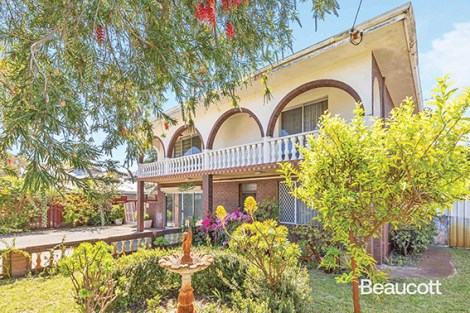
    IT’S been dubbed Fediterranea; the distinctive architectural style that categorised European migration to Australia following World War II.

    And while the ubiquitous columns, arches and concrete lions were once the butt of jokes, Aussies have come to love their ‘wog palaces’ and they now proudly stand alongside their colonial counterparts in many a local council’s heritage register.

    As one Italo-Australian wit recently told the Voice: “We came, we saw, we concreted!”

    Concreted

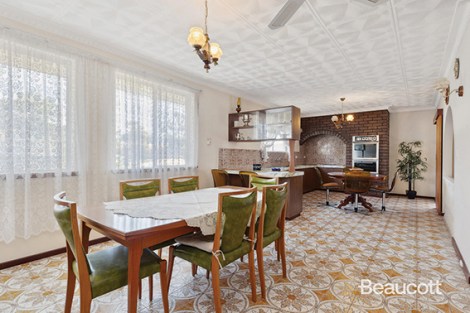
    And when it comes to Fediterranea, this five-bedroom home on Sixth Avenue is the absolute apex; it looks as though barely a skirting has been updated since the vendors moved in five decades ago.

    While that means it is showing a little wear and tear, there’s an authenticity you just can’t fake, and the Chook desperately hopes it finds a new owner with a vision to bring it back to its splendour.

    The folk at Antiques Roadshow would go gaga at the glowing golden wallpaper in the upstairs lounge, while the tiling throughout is just glorious.

    True to the ethos of the Italian migrants, there was plenty of room for a big family, and this home boasts five bedrooms and upstairs/downstairs kitchens, dining areas and lounges – perfect nowadays for a couple of teens who aren’t quite ready to move out.

    The block is also a huge rarity in this area, sitting on 1012sqm – which will make it an attractive investment for someone more interested in sub-dividing and maxing it out to the five new homes it could hold.

    Fiats

    The front yard sets the scene, with a huge concrete pad for a small fleet of Fiats, a big bottlebrush which no doubt symbolised adopting a new country, enough jade trees to bring you good luck till the next millennium and a host of flowering plants.

    Out the back is more a canvas waiting for someone’s grand plans; even with the big shed there’s still enough space to grow a Tuscany-inspired vineyard.

    Nestled perfectly in a whisper quiet cul de sac close to the train, shops, river and situated in the Mount Lawley High School catchment area, it presents a rare opportunity for a worthy buyer.

    46 Sixth Ave, Maylands
    Offers presented Monday
    October 14, 5pm
    Paul Owen
    0411 601 420
    Beaucott Property
    9272 2488

  • New bid to crack childcare crisis

    CHILDCARE operators could be invited to put in bids to build and run an out-of-school-hours facility on Gibbney Reserve in the latest bid to find a solution to a chronic shortage of places in Maylands.

    Councillor Nat Latter has put forward a motion for Bayswater council to support a lease on the reserve for a purpose-built childcare facility, following unsuccessful attempts to wrest an existing pavilion from Football West.

    The issue has been kicked along by the Maylands Peninsula Primary School and its P&C for almost five years, as the school’s growth has far outstripped the number of childcare places available in the suburb.

    Cr Latter says it has become a gender equity issue, as the majority of parents affected by the shortage are mothers whose hopes of returning to the workforce are being dashed.

    “I can’t speak for everyone, but I think we already know that women experience disproportionate disadvantage in the workplace because of career disruption, and this just adds to it,” Cr Latter said.

    “Even for parents who have secured a place, but aren’t able to get every day they need, it’s like the sands are constantly shifting.”

    Council staff have identified two sites on the reserve close to the primary school which currently have no infrastructure on them; directly behind the pavilion and next to the reserve’s practice nets.

    Maylands mother-of-four Star Gianetti is one of the parents affected by the childcare shortage; in a deputation to this week’s council agenda briefing, she outlined the extraordinary efforts she’s been forced into to find a solution.

    “I am looking at work opportunities… but before I can look for an actual job, I need to secure childcare and afterschool care for my children, so I am able to make it compatible with the work I then seek,” the mother-of-four wrote.

    Work

    “This has proven to be very difficult.”

    After speaking to principal Paul Andrijich, she offered to buy a demountable building and run an after-school facility on the school’s grounds herself.

    “The education department have outlined that this is not possible for a variety of ownership and leasing reasons,” she said, adding Mr Andrijich had also indicated he was already squeezed for space because student numbers had grown from 470 to 730 over the last decade or so.

    “I attempted to find a property nearby with the right characteristics for a centre to meet the required indoor and outdoor play areas per child,” Ms Gianetti said.

    “There are no commercial childcare facility-approved locations available in the suburb.

    “The instrumental school on Peninsula Road are also at capacity and are not allowing leasing of their buildings for external parties any more.

    “The only building they can offer is heritage listed, full of white ants and any works done on it would be undertaken under the ownership of the education department anyway – another dead end.

    “I have rung and written to the council about the use of the creche and sporting facilities at The Rise, but I have not been contacted back as yet.

    “I have been unable to lock this down in any way, it is significantly more challenging than I thought it would be or than it should be.

    “No wonder no one does it.”

    According to the Australian Bureau of Statistics, the national average for using out of school facilities is 37 per cent of all school-based students – and it’s even higher for inner-city areas.

    Maylands Peninsula sits at just 6 per cent.

    “On current numbers and basing it on a conservative estimate of 30 per cent of the school population needing out of school care for their children, we would require 219 active places in total,” she said.

    “We have 50 available right now and the waitlists are long.”

    Cr Latter couldn’t put a timeline on when a facility might open if her motion is successful at this week’s full council meeting, saying it might require an amendment to the proposed sites’ zoning because it doesn’t currently support childcare.

    But she’s hopeful the purpose-built facility will get support from her colleagues, as it gets around one of the main objections of handing a sporting facility to a childcare operator.

    by STEVE GRANT

  • Indigenous artwork attacked

    VINCENT council says a public artwork celebrating an important Indigenous institution should be repaired in the “coming weeks” after it was targeted by a graffiti vandal.

    The artwork in Weld Square is based on the little-known story of the Coolbaroo League Social Club, which formed in 1946 and offered Indigenous people an opportunity to gather at a time they were banned from entering Perth without a “native pass”.

    • A vandal attacked the Coolbaroo artwork with a disrespectful tag.

    The club operated in several locations, but its most familiar was on Newcastle Street, right on the border of the forbidden zone.

    While it was a social club, it also had an important role in improving civil rights for Indigenous people who had limited access to health and education.

    The name means magpie, and was chosen because it signified black and white coming together.

    Adding to the artwork’s lack of gleam at the moment is staining from the bore water used to irrigate the square.

    • Bore water has also stained a ceramic surround of the artwork. Photos by Peter Zuvela

    Acting Vincent CEO Peter Varris said they were aware of the graffiti and stains.

    “We are working with contractors to clean the artworks, which will include removing the bore water stains and the graffiti,” Mr Varris said.

    “As part of our graffiti removal service, we will remove tags as soon as they are reported.

    “This work is in progress and should be complete in the coming weeks,” Mr Varris told the Voice.

    by STEVE GRANT

  • New rules out for short-termers

    UNHOSTED short-term rentals will only be able to operate 90 days each year without council approval under new rules introduced by the Cook government.

    The amendments to the regulations are an attempt to sort out the sector following a decade-long debate between those concerned about long-term rental shortages and disrupted neighbourhoods and those who feel owners should have more rights over what they do with their properties.

    Fines

    As far back as 2015 Bayswater council tried to rein in short-termers, but some councillors baulked at the $200,000 fines flagged for operators who didn’t have council approval.

    “Do we have a right to regulate this, and put these onerous requirements on people sub-letting a room,” former Bayswater councillor Brent Fleeton said at the time.

    Then in 2017 Stirling also tried to curb short-term rentals amidst a storm of media stories about thugs who were hiring unhosted homes for raucous parties.

    But it was blocked by the state’s planning department which had plans for an inquiry the following year. The inquiry led to the introduction last November of $5000 incentives for landlords to put properties back on the long-term rental market, and the new rules announced this week.

    Under the new rules, hosted short-term accommodation won’t need planning approval and all operators will have to register with the state government.

    Ultimately that will cost them $250, but a free grace period has been extended to December 1 to encourage more to sign up.

    Planning minister John Carey says the new regulations bring “clarity” to councils on how short-term rental accommodation is defined and how they should be regarded in planning processes.

    “Importantly, these reforms will enable local governments to commence amendments to their local planning schemes,” Mr Carey said.

    “Introducing STRA as a dedicated land use will also provide transparency and certainty to communities on where short-term rental accommodation may be permitted in their neighbourhoods.”

    by STEVE GRANT

  • When partying was all the rave
    • RECOGNISE these two early-morning ravers? Remember back to the Second Summer of Love in 1988? If you weren’t grooving to Lionel Ritchie’s ode to mainstream Dancing on the Ceiling, then perhaps you’d have been heading down to hear the pioneering DJs at Perth’s underground haven Limbo Dance Club to listen to Farley “Jackmaster” Funk’s acid house hit Love Can’t Turn Around. Well, the ravers from Limbos are hoping to relive that summer of love this weekend with a reunion at The Rechabite.

    BACK in 1987 when Limbo Dance Club opened its doors at 232 William Street, few might have predicted the lasting influence the nightclub and its band of small but diehard devotees would have on Perth.

    The bush doofs and raves that to this day get under WA Police’s skin all have their genesis in the underground house scene Limbos introduced to Perth teens; its first resident DJ Roy ‘The Boy’ Jopson is credited with holding the city’s first illegal warehouse party.

    These days the parties come pre-approved, while superannuation nest eggs are more likely occupying the minds of those early ravers than teen angst, but the desire to relive the ‘Second Summer of Love’ still burns hard, says Limbos aficionado Chris Peers.

    He’s organising a Limbos reunion at The Rechabite tomorrow (Sunday September 22) as co-administrator of the Facebook group Limbo Social Club.

    “Well, it’s been 12 years since the last one and we could feel the sense of energy – people were crying out for it,” Mr Peers says.

    “The vibe was there.”

    He says while other nightclubs have been holding more regular reunions, Limbos held a special place in Perth’s nightclub history; it was where everyone ended up after 2.30am when other clubs lost their oomph.

    “We wanted to pay tribute to what the venue meant to people and its importance as a meeting place,” he says.

    Although the first iteration of Limbos followed the formula of many of Perth’s original nightclubs, such as Pinocchios, DCs or the Red Parrot, it was the first to pick up on 1988s ‘Second Summer of Love’ which was roaring out of London on an ecstasy-fuelled jet pack, and soon Limbo’s DJs were pumping out house music in marathon sets.

    Mr Peers says those who were there look back on the times with great regard.

    • The Rechabite party will be part-homage to the late Roy “The Boy” Jopson, a pioneering house DJ at Limbos.

    “The togetherness, the peace and love, and first and foremost – the music.”

    The reunion will feature some of Limbo’s early resident DJs, including Adil Bus, Colin Clark and Dave Jackson, and Mr Peers says it will be a bit of a homage to Jopson, who died in 2004.

    Remarkably, the organisers have tracked down extensive photographs and film clips from inside the club, which they’ll be projecting around The Rechabite to help the ravers relive the glory days.

    The reunion party runs from 5pm to the not-so-underground-sounding midnight, with tickets available from Megaton.

    by STEVE GRANT

  • Baysy residents up tree requests

    MORE Bayswater residents are asking for a verge tree, as the City tries to combat the loss of its green canopy to infill.

    Bayswater council has just finished a bumper winter planting season, with more than 50,000 trees and shrubs finding their way onto verges, parks and reserves.

    Acting mayor Elli Petersen-Pik said the community was passionate about trees and encouraged residents to continue to work with the City to help improve canopy cover.

    • Acting mayor Elli Petersen-Pik with students who are helping to make sure those who follow them will have a cooler walk to school. Photo
    provided

    Winter

    “Of the trees planted on verges this winter, 263 were in response to requests from residents, which is an increase on last year,” he said.

    “I encourage residents who are keen to receive a free street tree on their verge next winter to request one now through the City’s website: bayswater.wa.gov.au/streettrees.”

    Bayswater also introduced mandatory tree planting along key routes to schools as part of the Safe Routes to School program.

    “By providing more shade on our footpaths, this initiative aims to create more walkable and cyclable routes for children and their carers, while also enhancing the aesthetics of our streetscapes and increasing our tree canopy,” Cr Petersen-Pik said.

    “Encouraging more families to choose a healthier way to get to school will also reduce car parking pressures around schools and traffic congestion during drop off and pick up.

    “This planting season, we’ve seen 131 trees planted along identified routes to Bayswater Primary School and Maylands Peninsula Primary School.

    “The City aims to roll out the program across all schools within the City, so we’ll be undertaking the same process, identifying pathways to schools that could benefit from tree planting and other upgrades.”

    Cr Petersen-Pik said the hottest and driest summer on record had undoubtedly

    impacted trees not just in the City but all around Perth.

    “This year, we have increased the watering of mature trees that are struggling due to the conditions being experienced across the state,” he said.

    “The City will also continue to trial more drought-resistant species in an effort to combat the effects of climate change, and look into ways to improve our tree care practices.”

  • A natural revolution

    WA is well-placed to cash in on a renewed interest in getting outdoors, but needs more qualified leaders to help the sector reach its potential, says the peak organisation representing educators, adventure tourism and recreation operators.

    Crawley-based Outdoors WA released a report this week that pulled together decades of research into the benefits of getting people into nature, from making locals happier and healthier through to cashing in on international demand for adventure tourism.

    Outdoors WA CEO Neil Le Febvre said WA’s natural landscape and plentiful parks were the perfect location for people of all ages and abilities to get outdoors and boost their wellbeing.

    “The outdoors helps reduce the risk of chronic disease and plays an important role in positive physical wellbeing and mental health, no matter your age. Spending just two hours a week in nature is the optimum time to significantly improve your mental health and reduce the likelihood of developing chronic disease. 

    “So many people are struggling with their mental health – getting outdoors is a positive, relatively easy and cost-free way to spend time in nature and get a shot of positive.”

    The Outdoors WA report found that the outdoor industry in WA generated almost the same benefits to the state’s economy as fishing, but employed almost three times as many people.

    Following Covid there’d been a big boost in people getting involved in outdoor participation, and with more older Australians keen to improve their wellbeing (and time on the planet), nature-based recreation was actually growing at a faster rate than organised sport.

    There could also be major tourism benefits.

    “Travellers are ready to live life to the fullest once again after having been left feeling frustrated, socially isolated and disconnected from nature during the pandemic,” the report found.

    “Forecasted megatrends include ocean swimming, bushwalking and adventure racing.

    “We’ve already seen it happen with world-wide explosion in mountain biking and the massive jump in bike sales. 

    “Our trails, waters, forests, skies and lands are perfect for outdoor adventures and offer an opportunity to connect with an ancient culture.”

    But Outdoor WA warns WA is lagging behind other states in providing opportunities to study outdoor education and called on the state and federal governments to work with the sector to develop ATAR and VET options through high schools and Tafe.

    by STEVE GRANT