
• The verdict is in!
    Sophia Forrest gives an acting masterclass in Prima Facie.

    AUSTRALIAN playwright Suzie Miller’s one-woman play, Prima Facie has taken world stages by storm from Sydney to London’s West End and to Broadway. 

    The British National Theatre’s video version is its best-selling production and is compulsory viewing for trainee judges in at least one UK jurisdiction. 

    Now, in this new Black Swan Theatre production it allows Perth’s Sophia Forrest to give an acting masterclass. 

    From the moment she comes swishing onto the sparsely ornamented stage as Tessa, a top-notch barrister, Forrest commands the stage. 

    On opening night, she held the audience in the palm of her hand. 

    Tessa is young, tough and brilliant, and Miller’s writing gives entry not only to her inner world but opens up a whole realm of others. 

    Similar to how ancient bards voiced different characters while reciting sagas, through Forrest we hear her working-class mother, police officers, hospital workers and others – and she keeps that up for one and a half hours, alone on stage. 

    Tessa has worked her way up from poor origins to be at the top of her game. 

    She explains to the audience how she revels in defending her clients and lets us know the secrets of her cross examination success. 

    She combines psychological insights into witnesses with subtle manipulation to leave them unprepared for the machine-gun like, rapid fire questions with which she destroys their credibility. 

    She loves winning and her moral universe revolves around the law. 

    If a guilty party walks free because of her skills that is the fault of the prosecutor for failing to mount a sufficient case. 

    An unexpected event forces her to discover where legal morality and human integrity diverge.

    The event is horrible: she is raped.

    Forrest takes the audience through the event adroitly.

    Only she is on the bed on stage, but the viewer goes through the experience with her.

    Suddenly the supremely self-confident lawyer discovers the reality of victimhood, where power lies within the patriarchal system of law, what the burden of proof means for a witness and where morality diverges from legality.

    To make such a shift in characterisation believable the actor must walk a tightrope between over- and under-dramatisation. The audience must be taken on a journey into the interior of Tessa’s emotions and confusions and know it to be authentic.

    Forrest did just that. The standing ovations after the set went dark were well-earned.

    As is typical of Black Swan they connected the audience with the social issue of rape outside of the play.

    Leaflets were distributed on behalf of waconsent.com urging people to get active because WA is one of the only jurisdictions in Australia that does not acknowledge in the Criminal Code how intoxication affects the ability to consent to sexual acts.

    Prima Facie Black Swan Theatre Until July 21 Heath Ledger Theatre Tix: blackswantheatre.com.au/ season-2024/prima-facie 

    by BARRY HEALY

  • Virtuous tweet
    The Bowerbird Collective (Anthony Albrecht and Simone Slattery) at one with nature.

    A UNIQUE concert dedicated to Australia’s birdlife will raise funds for the Kaarakin Black Cockatoo Conservation Centre in Perth.

    Where Song Began is the brainchild of the Bowerbird Collective, a classical duo who perform music inspired by birdlife and raise awareness of conservation and environmental issues.

    At Where Song Began they will play pieces from four different centuries including classics by Johann Heinrich Schmelzer and JS Bach and more contemporary works by Arvo Pärt and a new commission by David Lang called Anthochaera carunculata (Red Wattle Bird).

    One half of the Bowerbird Collective, cellist Anthony Albrecht, says the concert traces the ancient story of Australia and its songbird evolution.

    “One of our favourite musical moments in the show is when we perform Ross Edwards’ Ecstatic Dance No 2 to accompany a vivid green flock of murmurating budgerigars in the Great Sandy Desert,” says Albrecht, who was Australia’s first graduate of The Juilliard School’s Historical Performance program.

    The concert is a bit of a personal affair; raising money for the Kaarakin Black Cockatoo Conservation Centre, where Albrecht’s uncle Tom volunteers.

    Situated in Banyowla Regional Park in the Perth Hills, the Centre is the only dedicated black cockatoo sanctuary in the world.

    As well as looking after the endangered birds, centre volunteers restore the local habit, providing black cockatoos with nesting, foraging and roosting sites that have been lost to urban sprawl in recent decades.  

    Albrecht says he is looking forward to a tour of the Centre with his uncle on Sunday.

    “We have previously supported BirdLife Australia with donations from many of our concerts, tours and digital projects, and have raised more than $120,000 for our conservation partners,” Albrecht says.

    In 2022 the Bowerbird Collective released the album Songs of Disappearance, which featured the calls of threatened birds, frogs and mammals.

    It was a huge success and reached the top of the ARIA album charts ahead of pop megastars Adele, ABBA and Ed Sheeran, prompting an extensive concert tour that helped raise awareness of threatened species in Australia. 

    But the Collective are not resting on their laurels and last year launched two regional festivals – the Moonbird Festival on King Island and the Lyrebird Festival in the Megalong Valley.

    “It brings together art and conservation to celebrate two of the most spectacular places in Australia,” Albrecht says.

    “That same year we also premiered a major new multimedia work in South Australia with Kaurna collaborators telling the story of the seasons from the Kaurna perspective, and earlier this year we toured the USA with a new project about North American bird migration.”

    Right now Albrecht and the other half of Bowerbird Collective, Simone Slattery on violin, are getting ready to perform Where Song Began at Government House Ballroom in Perth on Sunday July 21 at 3pm.

    A collaboration with BirdLife WA, the 50-minute concert is accompanied by stunning projections of nature and birdlife, and is followed by a Q&A. Tix at humanitix.com/au.

    By STEPHEN POLLOCK

  • Lounge lizard


    WEEK two of the school holidays.

    Skies as grey as porridge and biblical rain.

    My two kids needed a break from the screens and I needed a break from them squabbling over the screens, so we decided to jump in the Voice jalopy and head to the Inglewood Hotel for lunch.

    Over the years, the Inglewood has never disappointed and I’ve enjoyed some great meals in their “restaurant”, which has table service and is a bit more upmarket than their lounge.

    But I wanted to give my young kids a little slice of working class life, so we sat at a modest wooden table opposite the bar.

    It was like Sesame Street meets The Block as burly men in hi-vis gave my young kids a sort of bemused look and then continued to grunt to their pals about the price of silicone and Adam Simpson.

    Ah well, it’s character building. 

    Despite the stormy weather, the Hotel lounge was busy with a healthy mix of couples, pensioners, the aforementioned tradies, and the odd bar fly who wanted to get smashed and forget all about Adam Simpson’s reign.

    With lots of TVs strategically hung on the walls, there’s sport at every turn with cricket, soccer and even BMX racing playing in the background.

    The menu has a nice range of pub classics, burgers and sandwiches, share plates, mains, “From the grill” and desserts.

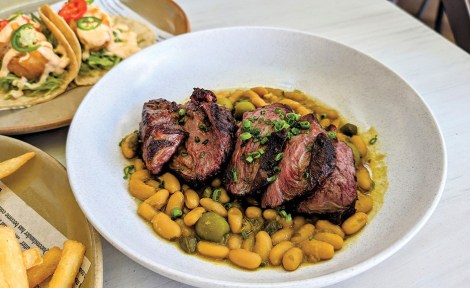
    Some of the mains like the Berkshire pork belly, roasted harrisa cauliflower, and duck ragu pappardelle sounded really good.

    If I had been there with my wife I would have probably gone for some of the share plates like kangaroo skewers, shiitake mushroom parfait and the delicious sounding saffron and mozzarella arancini.

    If you’re more traditional, there’s chicken parmigiana and a beef, Guinness and mushroom pie (I’ve tried it before and it’s delicious).

    While the main menu is pretty static, the Inglewood always had a great range of daily specials and theme nights including ‘Christmas in July’ to keep you coming back.They’re even open at 3am on Sunday to show the Euro 2024 soccer final.

    I was tempted to go for the chicken curry, but couldn’t resist the soup of the day ($14) from the chef’s daily specials menu, which also had pork belly tacos and barramundi with potatoes and seasonal veg.

    It was a wise choice – the Moroccan vegetable soup was piping hot (sounds a given, but serving tepid soup is quite common in winter) and crammed with exotic flavours.

    Heavy on the spice, there was a healthy dose of curry powder with a little swirl of sour cream to soften the blow.

    Thick, murky and comforting, it was almost like a bowl of curry sauce and there was a judicious sprinkle of coriander on top.

    Complementing the soup was some garlic bread.

    I normally stay clear of the ubiquitous garlic bread as it’s often stodgy and boring, but this thin toasted slice was light and had a lovely punch of fresh garlic. 

    It went perfectly with the soup and was some of the best garlic bread I’ve had.

    Across the table, my kids were deathly quiet – that meant they had broken something in the hotel or were busy devouring something from the “12 and under” menu. Thankfully it was the latter.

    My daughter’s cheeseburger ($15) looked especially nice and she said it was one of the best she had tasted.

    A classic burger that didn’t fall apart when you picked it up, it had a lovely mix of dill pickles, mild cheese and tomato sauce.

    The patty was delicious and tasted house-made, so hats off to the Inglewood for not dishing up frozen rubbish to kids to save money.

    The fries were just as nice – they had a satisfying crunch and fluffy innards with no greasy refrain.

    This is how a kid’s meal should be – the same quality as an adult meal but in miniature Lilliput form.

    My son was a bit grumpy after losing the burger coin toss and had to make do with $15 battered fish and chips (ah, first world problems).

    I had a sneaky taste and it was a lovely fillet with a golden, crunchy batter and delicious flaky flesh.

    When you added a little squirt of lemon it tasted even better. Another cracking dish.

    My first time in the Inglewood lounge was a hit and with drinks it came to $67, which isn’t too bad at all.

    My only gripe – our table was super sticky, not dirty, but sticky, like someone had spilled a pint of beer over it.

    Refuelled, refreshed and revitalised we headed for the exit.

    “Dad, why were those men dressed as Bob the Builder and swearing a lot?” asked my son on the way out.

    Inglewood Hotel
    Cnr Fifth Avenue and Beaufort
    Street, Mt Lawley
    inglewoodhotel.com.au 

    By STEPHEN POLLOCK

  •  Maylands gem

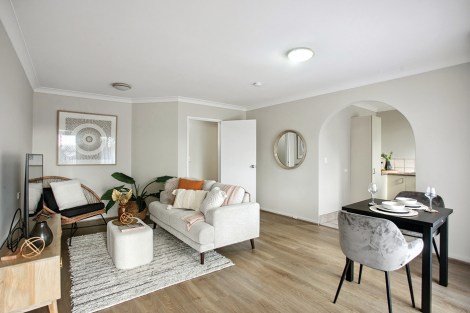
    THERE’S a Mediterranean air to this two-bedroom Maylands villa.

    Situated on the first floor of a well-presented complex on the Inglewood border, you have elevated views of the leafy suburb.

    With new floors and a fresh lick of paint, the apartment looks fresh and inviting.

    The open plan is particularly stylish with the arched doorway leading to the kitchen giving the property a little hint of Italy.

    There’s another stylish archway outside and lots of lush plants and palms, creating a hidden tropical oasis-feel.

    Living in a first-floor apartment can sometimes feel a bit stuffy, but not here, thanks to the balcony.

    It’s a great spot to enjoy a light lunch or a read of the papers and a coffee.

    The olive-coloured decorative tiles in the bathroom will be divisive – the Voice thinks they add a touch of individuality to the property, but others may prefer the blancmange white-on-white. 

    There’s also a laundry in here, meaning no more annoying trips to the local laundrette. 

    The bathroom’s perfectly functional and there’s a large recessed shower accessed through another stylish archway.

    Both bedrooms are carpeted – nice and snug in winter – with the main featuring a large built-in robe.

    It’s quite a big kitchen for a villa and there’s plenty of natural light courtesy of the two windows.

    There’s nice views of the leafy trees, making it a pleasant spot to whip up meals.

    Location is a big plus with this home – it’s situated on Crawford Road and is close to lots of great schools, public transport and the vibrant Eighth Avenue and Inglewood precinct. 

    The property also comes with a designated car bay. 

    Home open today (Saturday July 13) 2pm-2:30pm
    Buyers in the $400,000s
    6/132 Crawford Road, Maylands
    Beaucott Property 9272 2488
    Agent Paul Owen 0411 601 420

  • Nunchucked numbat face of new conservation campaign

    A GROUP of WA-based conservation groups have banded together to launch an AI-generated advertising campaign to push the Cook government into introducing stronger conservation laws. 

    Defend WA’s Nature comprises the Australian Marine Conservation Society, Environs Kimberley, the WA Forest Alliance, and the Conservation Council of WA. 

    The “highly realistic” campaign photos depict native WA species brandishing weapons at digging equipment, including a turtle holding a flail and a numbat wielding a pair of nun chucks. 

    The slogan, “It’s not like they can defend themselves”, pens a satirical commentary on the role government should play in protecting WA’s flora and fauna, according to the group. 

    Australian Marine Conservation Society WA director Paul Gamblin says new, more protective laws are “crucial” for the survival of threatened species in WA, especially given the state’s poor track record when it comes to biodiversity destruction. 

    WA is in an undesirable national spotlight when it comes to biodiversity levels, with 129 species categorised as vulnerable, 140 endangered, 160 critically endangered, and a heartbreaking 15 species made extinct. 

    It puts WA in a tie with New South Wales for the highest extinction rate in the country. 

    “The broad community expects our members of federal and state parliaments to strengthen nature laws, not weaken them at the behest of vested corporate interests,” Mr Gamblin said. 

    “This major new advertising campaign demonstrates our determination to fight for threatened wildlife that can’t defend itself.” 

    According to the Cook government, the 2024-35 budget “delivers major environment and water investment” towards the state’s natural resources, with a “significant” $536 million allocated towards national park conservation and increased water security and infrastructure. 

    However, Conservation Council executive director Jess Beckerling says WA’s nature is “in serious trouble” despite budget promises. 

    “Our state emblem, the numbat, is at risk of extinction, along with many other wildlife species facing similar fates due to increasing threats from climate change, deforestation, land clearing, fossil fuel expansion, industrialisation, and pollution,” Ms Beckerling listed. 

    “In the midst of the climate and biodiversity crisis, there is an attack on nature laws by powerful corporate interests. 

    “We must act now to defend WA’s nature and ensure that our nature laws are protected and strengthened.” 

    Protected 

    The campaign launch comes after the Cook government gave the green light to a wave park in banksia woodland in Jandakot earlier this year and an Alcoa mine in December last year, despite departmental warnings about the impact. 

    Notably, these are the two elements that the budget appears to outline as focus points for the Cook government. 

    According to a press release from Defend WA’s Nature, the advertising campaign is aimed to attract attention from both the state and federal government. 

    It is funded by conservation organisations who have “contributed substantial and in-kind” financial support, and will appear in newspapers, social media, and a mobile billboard. 

    More information can be found at the organisation’s website, DefendWAnature.org.au. 

    by KATHERINE KRAAYVANGER

  • Batchers reprieve 
    • Claisebrook residents have fought a decade-long battle against the concreters. File photo

    TWO controversial Claisebrooke concrete batching plants have been given another extension to operate for 3.5 years, but with a firm timeline from the WA Planning Commission to move out. 

    Holcim and Hanson were read the riot act by WAPC chairman David Caddy, who said they would have to lodge alternative site applications and commence building by 2025 or else would be forced to shut down. 

    “We will be monitoring the condition milestones closely to ensure these are met and the site is remediated ready for redevelopment by the end of 2028,” Mr Caddy said. 

    Claisebrook Collective spokesperson Pauline Holdaway said the community had been through a “rollercoaster” while the two companies lodged a succession of extension applications and believed they had received adequate time previously. 

    “The community has lost faith, confidence and patience that the concrete batching plants will move on voluntarily.” Ms Holdaway said. 

    “It is inconceivable to entertain that corporations of this size and maturity do not have a risk management or succession strategy for these sites. The reality is that they have just not been pushed to enact these succession strategies and have been allowed to extend their operation time on the subject sites at their will.”

    Vincent mayor Alison Xamon said the council was “very disappointed” at the WAPC’s extension.

    Ms Xamon said restaurants, cafes, businesses and apartments had sprung up in the precinct, however the concrete plants had put a pause on further development potential.

    “The existence of these plants prevents the delivery of high density, transit oriented mixed-use development on these sites, which would complement the growth of the area,” Ms Xamon said.

    The approved extension is one of many that Holcim and Hanson have received over the 22 years they have been settled in Claisebrook, and an independent 2024 report by consultants Pracsys found that the immediate closure of the plants could lead to “price shocks” in the concrete market.

    Planning minister John Carey said the Cook government was committed to moving the plants out.

    “The complexities of moving these plants have been extremely challenging to date, with a number of government agencies and the City of Vincent continuing to work with the plant operators to progress relocation,” Mr Carey said.

    Hanson spokesperson Rob Golaszewski told the WAPC’s special development committee meeting their plant couldn’t relocate within the proposed timeframe without affecting concrete supplies to the city and requested the approval be extended until 2031.

    “Hanson are committed to securing land and development approvals to relocate the East Perth concrete batching plant in line with the City of Vincent’s strategic planning objectives for the area,” Mr Golaszewski said.

    by IMOGEN WALSH

  • Review buzzes on

    THE WA Apiarists’ Society wants the City of Stirling to allow people to keep more beehives if they have bigger properties, and do away with a council permit.

    Stirling is currently reviewing a bunch of local laws, including the one regulating beekeeping, which WAAS says should be updated so it is in line with modern practices. 

    WAAS chair Jim McWhirter said the 1500-strong organisation had worked with the state primary industries department and WA Local Government Association to ensure rules for beekeepers aligned with the organisation’s best practise guidelines.

    He says it will help reduce the regulatory burden on governments and beekeepers.

    “There are nearly 5000 registered beekeepers in Western Australia, with the majority of them in urban areas,” Mr McWhirter said.

    Under Stirling’s existing law people can keep just two beehives without a council permit, but WAAS would like to scrap the permit altogether, as long as people stick to its recommendations for property sizes and don’t allow the bees to become a nuisance.

    They’d like to see properties up to 400sqm capped with two hives, rising to four hives for 1000sqm, eight for 2000sqm and up to 40 for 4000sqm properties if they’re zoned rural.

    WAAS also wants the distance hives must be from a neighbouring property reduced from five metres to three.

    It has also suggested the council seek advice from the primary industries department or the society itself if a complaint is lodged about a beekeeper, but retain the right to order the bees to be removed either temporarily or permanently.

    Councillor Elizabeth Re says she would like to see some restrictions on where bees can be kept, as some residents had them in their front yard.

    “So they had beehives in their front yard so that when people walked past, there was swarmings of bees,” Cr Re said.

    “In one street in Woodlands we have four houses that have bees in their front yard.”

    Council staff will now work on an updated local law for bees which will go back to council for approval before being advertised and then sent to a state government oversight committee for its seal of approval.

    by STEVE GRANT

  • Towers to topple
    • Housing minister John Carey outside Stirling Towers.

    A NOTORIOUS Homeswest high-rise tower that’s been vacant for around a decade while homelessness numbers continued to rise, is finally facing the wrecking ball.

    On Wednesday the Cook government announced that Brajkovich Demolition & Salvage had been appointed to demolish Stirling Towers in Smith Street, Highgate.

    The demolition will pave the way for the construction of one and two-bedroom social, affordable and special disability units which will be managed by a community housing provider.

    Dubbed Suicide Towers and Hell Towers by former residents and neighbours, the complex was beset with anti-social behaviour in the years before it was finally sealed off.

    There were a number of development proposals over the years which didn’t see the light of day, while the site needs significant remediation.

    The state government said the development would be considered a public work and come under the authority of the Department of Communities, but Vincent council would be given the opportunity to provide feedback.

    “A development application for the project has also been lodged with the City of Vincent by the consortium comprising of Community Housing Ltd and Tetris Capital, who will manage the site readiness works on behalf of the state government,” it’s release said.

    The application will be advertised by Vincent, but approval will lie with the WA Planning Commission.

    Housing minister John Carey said the first stage would be the demolition and finalising the designs.

    “The Stirling Towers site is in a well-located area, close to a range of amenities including the Perth CBD, shops, public transport and parks, as well as education, sporting and entertainment facilities,” Mr Carey said.

    “Redeveloping the Stirling Towers site as a build-to-rent model will assist tenants through social, affordable and market rental arrangements, supported by on-site tenancy management. 

    “The state government is tackling a number of large-scale redevelopment projects as part of major urban renewal process to boost the state’s housing supply,” he said.

    by STEVE GRANT

  • Budgets guided by cost of living

    STIRLING council has adopted its next budget with a rates increase of 2.95 per cent, aligning it with the City of Perth.

    Stirling mayor Mark Irwin said the current economic climate had played a hand in keeping the rates below the CPI increase.

    “Council discussion did involve a lot of rigour around the cost of living pressures and acknowledged that while this is lower than CPI, the City also in many ways is a business and to take into account wages increases around 4 per cent, the cost of doing business and the inflation across Australia which is quite high at the moment,” Mr Irwin said.

    “We are delivering projects well above previous budgeted amounts and seeing those pressures and expectations of communities still coming through to council.”

    Mr Irwin said significant projects underway included the multi-million upgrades to the Terry Tyzack Aquatic and the Hamersley Golf Course pavilion, while next priority would be $3 million towards a recycling centre in Balcatta. That could end up requiring up to $12 million over several years, Mr Irwin said.

    Other projects in the budget included:

    • $650,000 for CCTV infrastructure and rebates;

    • $500,000 for a study into a contentious boardwalk at Scarborough Beach;

    • $500,000 for solar panels and batteries; and,

    • $1 million for greening projects including tree plantings.

    Bayswater lifted its residential rates by 3.8 per cent when it adopted its budget last week, which mayor Filomena Piffaretti also linked to the cost of living pressures.

    Commercial property owners will have to fork out an extra 7.43 per cent after the city adopted differential rates (“Rates thump to hit land-bankers,” Voice, May 29), a figure that didn’t make it onto the City’s official post-budget press release.

    “Last night, council adopted a budget that delivers the high-quality services our community rely on, and maintains the assets we all use every day,” Ms Piffaretti said.

    “The introduction of differential rates this year has allowed the City to distribute rates based on land use, which is a more fair and equitable way. 

    “It also means council has been able to keep the rate increase for residential property owners to 3.8 per cent which is aligned with CPI. 

    “This was a deliberate decision by council to protect those who are most impacted by the soaring cost of living – families, seniors, young people and those living alone.”

    Bayswater’s budget includes $980,000 to upgrade the Noranda Sporting Complex changerooms to make them more women-friendly, though this includes a large federal grant, while Lightning Park will get a $750,000 sheltered viewing area.

    Other projects include:

    • $1.65m for an urban forest at Riverside Gardens East;

    • $60,000 for a consortium to deal with homelessness; and,

    • an extra $400,000 for tree planting and watering mature trees.

    by STEVE GRANT

  • Integrity centre sets the bar high 

    IT may be not much older than a toddler, but the Centre for Public Integrity is celebrating its fifth birthday this year. 

    The Herald had a chat to CPI board member Michael Barker, a former federal court judge, Freo local and editor of the Fremantle Shipping News. 

    A “pivotal force” of research into democratic integrity, the think tank was founded in 2019 amidst concerns about wobbles in Australia’s democratic processes. 

    “It has some eminent people behind it: judges, retired judges, practicing barristers, political scientists, and others who have been for some time greatly interested in making sure that we cement integrity in government in all our systems,” Mr Barker said. 

    The CPI was a key player in pushiong for the National Anti- Corruption Commission bill which was passed in 2022. 

    “There was a lot of resistance,” Mr Barker said. 

    “It was through bodies like the centre providing the research and answers as to why [the NACC] should work, could work, and would work. 

    “We were keen to talk to people who are keen to see integrity measures put in.” 

    “We consult with state, as well as federal agencies and politicians. 

    The CPI also focuses on money in politics, and looks at the impact political donations have on the health of Australian democracy.

    “We’re been very concerned about money in politics and the corrosive influence that money can have,” Mr Barker said.

    “We’ve been pushing states and the feds to improve their political donations disclosure laws.”

    The CPI has also floated the idea of an independent funding tribunal, which would ensure rigorous surveillance over government spending to avoid pork barrelling and to encourage “evidence-based” decision-making.

    “A tribunal is a good way to ensure that the public interest is emphasised to the maximum extent,” Mr Barker said.

    “We want grants made to all sorts of bodies in the public interest right around the country, not on the basis of whether it’s a marginal seat – not on broad politics.”

    As for the state of the democracy in our own backyard? “It’s most unusual,” Mr Barker said of the unique situation WA finds itself in given Labor’s stronghold over both the Upper and Lower houses of Parliament.

    “It seems like the last election the people of Western Australia were so impressed with the then-premier… but you have to bear in mind, things can change.

    “I’ve never forgotten when I did postgraduate work in Canada in the late 1970s when the conservative Tory party in in Canada held sway at the federal level considerably, and then suddenly, due to a great state of dissatisfaction were almost totally voted out of the Federal Parliament.

    “Politics is politics, at the end of the day.”

    CPI chair and fellow judge Anthony Whealy said the centre’s annual “Hidden Money” campaign had “changed the landscape of political finance reporting. Between 1998/9 and 2022/23, political parties have declared income of $5.7 billion of which almost $1.7 billion is of unexplained origin,” Mr Whealy said.

    “Before we began our analysis, this critical issue was largely neglected, but each year we conduct the research the public outcry leads us closer to a cleaner, more transparent political finance system.”