• NAIDOC a chance for a reset after Referendum loss 

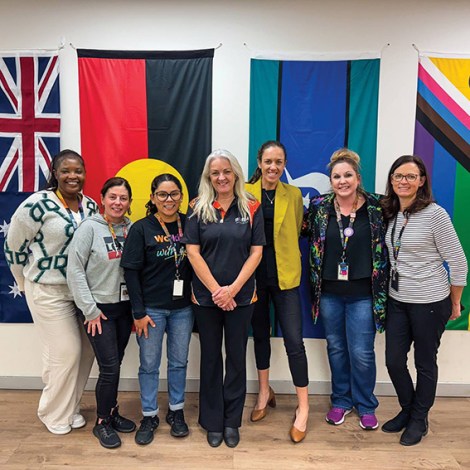
    NAIDOC celebrations this year are more important than ever following a shattering No vote in the recent Referendum on Indigenous constitutional recognition, says a former chair of the South West Aboriginal Land and Sea Council. 

    Brendan Moore, who is also the City of Fremantle’s Aboriginal engagement officer, says NAIDOC Week from July 7 – 14 will be an opportunity to reset the journey towards reconciliation. 

    “Not only is it more important, but fact checking – particularly around the No campaign – has provided an excellent base to begin truth telling,” Mr Moore said. 

    Each year the national NAIDOC committee chooses a theme to represent issues or concerns significant to Indigenous people and have chosen “Keep the Fire Burning! Blak, Loud & Proud” for 2024. 

    According to the official NAIDOC webpage this theme will “honour the enduring strength and vitality of First Nations culture”. 

    Despite nearly 75 per cent of voting Australians rejecting constitutional change, NAIDOC committee co-chair Aunty Lynette Riley was also pushing the reconciliation message. 

    “This year’s theme is a clarion call to continued unity and solidarity for all Australians to come together and celebrate,” Dr Riley said. 

    The City of Bayswater will have a traditional smoking ceremony, rock painting, community planting days and documentary screenings with elder Noel Nannup as part of its NAIDOC activities. 

    The City of Perth is putting on an art exhibition representing the 2024 theme in the Council House foyer with works from renowned Indigenous artists. 

    There will also be a NAIDOC week opening with indigenous customs such as a smoking ceremony, while Trafalgar Bridge, Council House and the Adelaide Street pedestrian bridge will be illuminated with the Aboriginal Flag. 

    For those who like hands-on activities the City of Vincent has several workshops such as making message sticks, as well as Yirra Yaakin performing Boodjar Kaatjin Theatre which introduces Noongar language and cultural stories to younger audiences. 

    For more information head to vincent. wa.gov.au/events/naidoc-week-2024/3073 or perth.wa.gov.au/news-and-updates/all-news/ celebrating-naidoc-week-2024 

    by SIENNA DALY

  • Wild rellies
    • Murdoch University lecturer Dr Vanika Garg.

    RESEARCH by Murdoch Uni scientists to map a plant’s ‘superfamily tree’ will help crop adaptability in the face of climate change. 

    Mapping a crop species’ family tree helps uncover wild relatives who have become accustomed to harsh conditions, and may have some tricks that their cultivated cousins could acquire. 

    The Murdoch scientists offered an example: that if a wild relative of a crop has adapted to conserve water, this can be incorporated into crops in “drought-prone” regions. 

    Murdoch Centre for Crop and Food Innovation lecturer Vanika Garg worked on the super-pangenome research and says mapping the wild relatives of crops is akin to creating a “superfamily album” which can give researchers a “much broader perspective” about crops vital to human survival. 

    “When farmers or scientists are faced with challenges, like a new disease affecting crops or changing weather patterns due to climate change, they can look to these wild relatives for solutions,” Dr Garg said. 

    “In simple terms, crop wild relatives are like the tough and resourceful distant cousins in a family who can teach our regular crops a few survival tricks.” 

    Dr Garg says the identification of a crop’s wild relatives provides “crucial extra context” about a plant’s traits which can be crossbred with their domesticated relatives, making them “stronger and more adaptable”. 

    A computational biologist, Dr Garg is currently looking at the genomics of horticultural, chickpea, and wheat crops, the latter of which is the third-most consumed crop globally. 

    by KATHERINE KRAAYVANGER

  • Wearing two hats
    • Miranda Green’s hats have graced catwalks around the globe.

    FORMER Fremantle milliner and author Miranda Green has launched a new book exploring the interaction between feminine and masculine energies, yin and yang, and how the imbalance between each has had a global impact. 

    Insights from the Big Picture Narrative of a Sewing Machine Activist is Ms Green’s second book and is a meticulously crafted collection of musings, activism, and observations about society through the lens of feminine and masculine energy. 

    Throughout the book, Ms Green analyses the role of feminine and masculine “energetic patterns” that live in everything, including ourselves. 

    “People don’t have a real sense of all the wonderful aspects of feminine energy,” Ms Green said. 

    “My sense with the feminine is that uploading the feminine is about bringing balance and empathy into our society.

    “It’s about bringing all the things that are missing from our business world, and all the things that are missing from our institutions.”

    According to Ms Green, this dynamic does not refer to men and women, “it’s yin and yang” between the left and right hemispheres of our brains. 

    Nervous

    “Some people are nervous about the ‘feminine’ and ‘masculine’,” Ms Green said. 

    “I’m was really keen throughout the book to make sure that people know I’m not taking a side, I was actually talking as a citizen who has both feminine and masculine qualities.”

    Through her title of the “Sewing Machine Activist”, Ms Green addresses the impact patriarchal corporation structure has had on global society, which she labels as “the root cause of global crises” including catastrophic climate change. 

    “The problem is we have very powerful, polar masculine people in charge of our worlds.

    “The ‘corporation’ was once an actually wonderful institution, a wonderful entity in the 1800s it was only the last 100 and 150 years that it’s actually become like a psychopathic entity.”

    Ms Green stresses the book is not intended to ostracise men when writing about the pitfalls of an asymmetrical system, saying feminine traits do not “belong to one gender,” she said. 

    “I don’t want it to be divisive. 

    “The feminine is about the ‘we’, about ‘us’, and I want people to unite and find our commonality and support each other.

    “I want men to step back and take time and let their hearts open, because they’ve been forced to shut them off from feeling emotion,” she said.

    Ms Green, a milliner by trade, says her most “startling” ideas often come while she’s working

    “My pen and paper is ready for me to write it down,” she said. 

    “That’s why I call myself an activist, because, in a way, my writing is my activism.

    “I’ve been writing every day since 1989 and I’ve used that as a tool to help me move through life as well.” 

    Uploaded

    The hope, Ms Green says, is that the feminine energetic patterns are “uploaded into all of our institutions of power” so human-caused catastrophes like climate change can balance and reverse. 

    “Then, the unhealthy masculine will start to dissipate, and the healthy masculine will come and sit beside the feminine and between the two of them and their set of healthy values, will have a much better world in so many ways,” Ms Green said. 

    Insights from the Big Picture is available to purchase from most online portals such as Booktopia and Angus & Robertson.

    by KATHERINE KRAAYVANGER

  • Fiddling the truth
    • Olga Cironis in her studio in 2019. Photo by Rob Frith, Acorn Photo.

    FREMANTLE artist Olga Cironis put the call out on social media for old violins nobody wanted.

    She got a good response and was soon scooting about Perth, picking up the donated instruments from here, there and everywhere.

    Instead of restoring them to their former glory, Cironis decided to tightly wrap them in drab, utilitarian blankets – the kind of thing you would find in soldiers’ barracks in World War II.

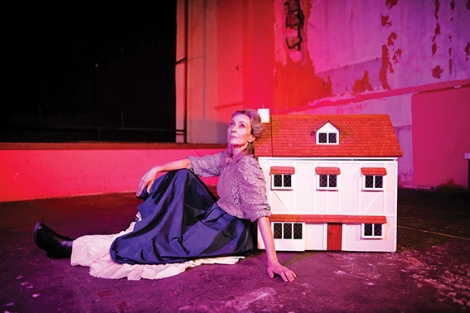
    For her exhibition Noise in This Silence she created 15 of these smothered violins, and the overall effect is unsettling and slightly eerie – like watching an old, distinguished Hollywood actress being waterboarded.

    These vintage instruments no longer have any sound, purpose or future. Or do they?

    “It is not only a metaphor for loss, it is also a reference to survival and the desire to better the world,” Cironis says.

    “The violins are enveloped in protection, like bodies warmed from the cold. It’s about that space between life and death.

    “And yes, the violins reference the looming environmental chaos as well as the conflicts in the Ukraine, Israel/Palestine and Africa. They lament humanity.”

    Cironis is not a musician and says she chose violins because they represent the soulful sound of sorrow and redemption – “their sound is visceral and their history heroic.”

    In an age when we are constantly bombarded by blaring, quick-fire videos on social media, perhaps the most profound thing you can say is nothing. Just silence and some disfigured instruments that once created beautiful music.

    “Covering is exposing the form underneath, exposing the vulnerability of the body or of sound. Remembering the feeling of peace,” Cironis says. 

    The Voice was getting flashbacks to horror movies like Halloween and Scream when it saw the violins, and we couldn’t help asking Cironis if she was a fan of the genre.

    “I really don’t like horror movies. If there is anything I hate, it’s horror. Like wars and human selfishness,” she says.

    Originally hailing from Czechoslovakia, Cironis is a prolific and experienced artist who lives and works in Fremantle.

    She has a BA and Masters in Visual Arts from Sydney College of the Arts, and over the past three decades has held numerous solo and group exhibitions across Australia.

    He visual art often takes everyday objects and displaces them, sending the viewer down a rabbit hole where they question the world around them.

    Rabbit hole

    Her work also explores the themes of identity and belonging, perhaps a sub-conscious nod to her Greek, Czech and Australian heritage.

    Cironis says she isn’t done yet, and is still amassing more violins and cellos.

    “I’m still collecting and covering,” she says.

    “Imagine an empty historic building filled with 80-150 covered violins with the sound of human breathing emanating from surrounding speakers…”

    Noise in This Silence is at Art Collective WA in Cathedral Square, 2/565 Hay Street, Perth until August 3. There is an artists talk with Cironis and fellow exhibiting artist Anne Neil on Saturday July 13 at 2pm at the gallery. For more info and opening hours see artcollectivewa.com.au. 

    By STEPHEN POLLOCK

  •  Vulcan jazz
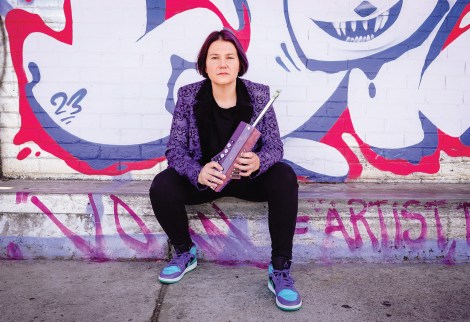
    • No, it’s not a photoshoot for a new Star Trek movie, it’s muso Gemma Farrell with her futuristic-looking EWI.

    IT looks like a prop from a 1950s sci-fi movie and it sounds just as weird.

    I’m talking about the EWI (pronounced EE-wee) an obscure electronic wind instrument that was invented by American Nyle Steiner in the 1980s.

    In lesser hands it could sound like a cheap Bontempi keyboard with flat batteries, but thankfully jazz maestro Gemma Farrell is behind the wheel in her latest album Electronic.

    An accomplished jazz saxophonist, bandleader and composer, she’s already got nine albums under her belt and recently turned her attention to mastering the EWI.

    She dabbled with the instrument while studying her master’s at the Conservatorium van Amsterdam in 2010, but it wasn’t until she did her Phd at WAAPA and learned how to use synths, that she really got into the novel instrument and felt comfortable improvising on it.

    The EWI takes centre stage in Electronic, where she is joined by Perth musicians Sam Hadlow (trombone), Dan Garner (guitar), Ryan Daunt (drums) and Lucy Browning on bass.

    The album is a fun, playful listen with lots of melodic hooks, and is free of the over earnest and trying-to-be-too-clever malaise that can inflict jazz records.

    The title track Aberdeen Street kicks off with some moody John Carpenter-style synth, before 90s dance music kicks in.

    Soaring over the top is the EWI and electric guitar, playing a twisting riff that sounds like the Chick Corea Elektric Band.

    Farrell says the song reminds her of going clubbing in her late teens at The Deen in Perth.

    At the other end of the spectrum is Abigail’s Song, which was the first track Farrell wrote after becoming a mum.

    It’s a real showcase for the EWI, conjuring up lush cosmic soundscapes, and there’s shades of the middle east and cascading, bell-like passages.

    There’s a contemporary air to the album with the EWI giving the fusion tracks a freshness.

    Original EWIs from the 1980s are pretty hard to find these days, but thanks to the wonders of 3D printing, the instrument could be poised for a comeback.

    “My instrument is a NuRAD EWI by Johan Berglund from Sweden,” Farrell says.

    “Berglund is being credited as bringing the Electronic Valve Instrument back to life, as until his recent instrument designs, it was pretty hard to find one.

    “His instruments and my EWI are 3D printed.”

    Berglund’s updated, user-friendly take on the EWI has gone down well with musos, including famous saxophonist Michael Brecker, who used one on tour before sadly passing away in 2007.

    But it’s still quite exclusive: the NuRAD is handmade to order and the base model will set you back about $2500.

    When she’s not busy having fun on the EWI with her quintet, Farrell wears a lot of different jazz hats.

    She writes for the band MFG with Cologne-based guitarist Nico Maas and Zurich-based keyboardist Thomas Goralski, and for the Artemis Orchestra, which promotes Australian jazz musicians of marginalised genders.

    She also leads the WA Youth Jazz Orchestra’s ‘Progressions’ Pathways Program – one of three finalists for the 2022 and 2023 Australian Women in Music Awards in the humanitarian category – and was one of 16 Australian musicians nominated for the Freedman Fellowship Award in the jazz category in 2022.

    But the Voice can’t help feeling she’s got a synth love affair going with the EWI and we could hear a lot more of it in the future.

    “This project has basically ticked a major bucket list item for me and the EWI along with the sax of course will continue to be featured in the Gemma Farrell Quintet moving forward,” she says.

    To find out more about Electronic and listen to tracks, go to gemmafarrell.bandcamp.com/album/electronic. To learn about the NuRAD EWI see berglundinstruments.com 

    By STEPHEN POLLOCK

  • Safe space finally reopens

    PERTH’S Safe Night Space for women finally reopened on Monday evening, ending a month-long stand-off between the City of Perth and the Cook government.

    The SNS is now based in Ruah’s James Street “engagement hub” and will be open 7pm to 7am each night.

    One a social media post, Ruah described the reopening as “a pivotal moment” for its female clients and sector colleagues.

    “We are so grateful to welcome clients into a safe space once again and provide the Ruah singled out planning minister John Carey, his Cabinet colleague Amber-Jade Sanderson and the Department of Communities for their efforts getting the centre re-opened, as well as thanking its team and service leaders and the “entire community and sector who supported us”.

    • Ruah’s Safe Night Space team was celebrating its re-opening this week. Photo via Facebook

    A glaring omission was anyone from the City of Perth, which had forced the closure of the first SNS at the Rod Evans Community Centre after deciding not to extend its funding to cover the service because it said the community wanted the building for other purposes.

    That triggered a war of words between lord mayor Basil Zempilas and the Cook government.

    The letter offered $3.1 million to keep the service running, but the council knocked it back because the centre had already been committed to other groups. It suggested Uniting WA could take over the service but that was rejected by the state.

    That left only Ruah, which applied to use the James Street hub, but the council imposed conditions such as posting a security guard outside the building every night which the service said were too onerous.

    When it appealed the conditions Mr Carey decided to call the decision in, but handed to his colleague Ms Sanderson to avoid any suggestions of a conflict of interest.

    Late last week she sided with Ruah and removed the need for the security guard, while sidelining the council from having much of a say in how the centre runs – it can only advise her if it’s unhappy, but she gets the final say.

    Despite the snub from Ruah and Mr Sanderson’s decision, Mr Zempilas told the council meeting on Tuesday the City was pleased to finally see the service up and running.

    He had another dig at the government over the 118 days it took to reopen, saying it was a long time to sit on a decision to move a security guard.

    “The City of Perth supports the Safe Night Space and despite the 118 days that have elapsed since this council voted unanimously for its reopening, we are very pleased to see the service has begun operating again,” he said.

    by STEVE GRANT

  • CBD streets to go 30kmh

    HAY and Murray Streets are set to become 30kmh zones through West Perth under an updated Bike Plan adopted by Perth council this week.

    The plan also includes an extensive expansion of bike routes through the city, with Thomas Street between Kings Park Road and Wellington Street a priority project; and other measures that will need an extra $200,000 annually to implement.

    The 30kmh limit is in line with a 2021 World Health Organisation campaign to reduce speeds in cities throughout the world, which has already been adopted by London, Paris and Barcelona.

    It was one of the key themes raised by cyclists during consultation last year, while they also wanted more direct routes through the city and separating bikes from cars where possible.

    A report to the council notes there were concerns raised by councillors during the consultation that lowering the speed limit could increase congestion.

    “Perth naturally has many streets that are crucial for efficient traffic flow, and a pedestrian-centric approach could lead to congestion and delays for motorists and that frustration does not lend itself towards safety,” one of the submissions said.

    But the City team behind the plan, who among them have a PhD in urban planning, a couple of masters of urban design or landscape architecture, and a variety of degrees in traffic management, don’t believe that will be the case.

    The majority of delays to motorists in the CBD occur at intersections,” their report said.

    “Reducing speed limits will not have an adverse impact on intersection delays.

    “The City already has a fairly wide 40kmh speed zone in the CBD which was first introduced in 2010 and has since been expanded.

    The council will also continue to implement its Two-way Streets program to reduce the number of one-way streets in the CBD, such as the stretch along Hay Street between Victoria Avenue and Bennet Street which is due to start in the next 12 months.

    The report also noted that several cities including Sydney and Bogota in Columbia have been temporarily closing some of their streets to traffic (Bogota’s is on Saturdays) and hold events that encourage people to cycle, ride and scoot into the city rather than drive.

    by STEVE GRANT

  • The show must go on

    THEATRES across the nation are struggling to put on shows because of a shortage of technical crews; but Perth’s Blue Room Theatre is hoping to close the gap by fundraising $35,000 to train a new generation of technicians.

    Blue Room’s annual Giving Campaign, this year celebrating the theatre’s 35th anniversary, is dedicated to supporting their 2024 Tech Training Program which which will address the critical skills shortage by creating a dedicated in-house training program to prepare students for immediate work through mentorship.

    Blue Room program and engagement manager Joel Evans said mentorship was an informal way of learning by sharing lived experiences and reinforcing ideas.

    “I wouldn’t have a career without mentors,” Mr Evans said.

    Live Performance Australia head of public affairs Matt Francis said that the ‘Giving Campaign’ is such an important and worthwhile initiative, especially in WA, for building a career in the industry.

    “A great percentage of shows cannot be seen or heard without technical staff, they are critically important,” Mr Francis said.

    Mr Evans describes Blue Room as a community hub for local and emerging artists by connecting individuals together to create imaginative presentations.

    “I feel [community], it’s in the bones of the place,” Mr Evans said.

    All works presented at the theatre are created by independent artists and Blue Room allows them to “realise their dream”.

    “With theatre, being passionate is the number one quality for someone to be successful,” Mr Evans said.

    Australia isn’t the only place suffering a technician shortage, with theatres across the US and UK reporting difficulties as well.

    Theatre was one of the industries most affected by the pandemic, with many technicians in its ‘gig economy’ made redundant and subsequently finding jobs in other areas.

    The UK media and entertainment union Bectu surveyed its members and found that when theatres reopened, many technicians had already found work elsewhere, while others were tired of the poor pay and work/life balance prevalent in the industry.

    To donate to Blue Room’s campaign, visit blueroom.org.au/support-us/donate, call the office on 9227 7005 or email info@blueroom.org.au

    by IMOGEN WALSH

  • City adopts walking plan

    WALKING through Perth is about to get a whole lot better following Tuesday night’s council decision to adopt a “Walking in the City 2025-2035” plan.

    According to the plan, “walking is a vital component of city life… [which] allows people to connect with others and to the rich layers of the city environment”.

    A major focus of the plan is how the city intends to limit pedestrian-motorist incidents, particularly on William Street where there have been 382 crashes in the past five years, 8.4 per cent involving pedestrians. 

    The council has looked to the National Road Safety Strategy 2021-2030 for guidance, as it has a “Vision Zero” aim with the intent of having zero deaths or serious injuries by 2050.

    • Too many clashes between pedestrians and cars will see William Street a priority in the City’s walking plan.

    Vision Zero outlines nine priorities to protect pedestrians by implementing safe road environments, promoting alternative transport, developing a national best practice for road speed and education in motorist behaviour.

    The development of the Edith Cowan University city campus as part of the Perth Plan is touched on in the plan however it is not discussed how the increase in commuters will be dealt with.

    ECU city will bring over 10,000 staff and students upon opening adding to the 200,000 commuters the city already has on a daily basis.

    “As we don’t open until 2026 we are still in operational planning,” ECU city director of external communications Carolyn Hamilton said.

    A survey was completed in September 2023 by 330 road users which showed that pedestrians have had negative experiences with e-scooters, the time allocated at pedestrian crossings, motorists not giving way, cyclists and the inconvenience of construction work on footpaths.

    The city is challenged with an ageing population of one in eight Western Australians aged 65 and older which is expected to increase to 18 per cent by 2050.

    “This demographic shift suggests a significant increase in elderly visitors to the city in the coming years,” the plan notes. 

    by IMOGEN WALSH

  • Garden funds

    THREE community gardens in Stirling have received a $10,000 funding boost to enhance their spaces and foster community engagement. 

    The grants are part of the state’s Community Garden Grants Program 2023-2024, aiming to better connect communities with their environment. 

    The Inglewood and Mount Lawley Community Garden will get a weatherproof and sun-safe shelter for its patio activities area with its share of the state government’s Community Garden Grants program.

    The garden has also received an extra $15,000 from Lotterywest and $5,000 from Open Gardens WA to co-fund this project. 

    • Three Stirling community gardens have scored state funding.

    Campion Community Garden (Balcatta) will use its funds to enhance the existing garden to promote community engagement, accessibility and inclusivity for individuals of all ages and abilities. 

    Coastal Community Garden (North Beach) will continue to develop a new community garden, creating a space for residents to meet, learn, share skills and keep active and healthy. 

    The gardens were started with a $20,000 seed funding from the City of Stirling, which also provides the water for the gardens as well as technical support, guidance and education.

    Mayor Mark Irwin said the community gardens were vital green spaces that brought the community together.

    “The funding will help enhance these gardens, making them even more accessible and enjoyable for everyone. Our gardens are thriving hubs where neighbours can connect and learn.

    “The City supports seven active community gardens that promote biodiversity, social connection and  learning, with 239 active members. These gardens have engaged 1,500 participants through various workshops and events,” he said.