• Adoption survivors can’t wait

    SURVIVORS of WA’s forced adoption era are awaiting the outcome of a Cook government inquiry due later this year, but say the state simply needs more support services now.

    Forced adoption survivor Jen McCrae is credited with getting the Upper House Environment and Public Affairs Committee’s inquiry into the practice up and running, but says WA falls short compared to adoption services provided in the eastern states, such as Sydney’s dedicated hub Wattle Place.

    Ms McCrae told the Voice the lack of support contributed further to the lifetime of distress felt by many WA survivors.

    In 2010, WA was the first state to apologise for the trauma caused by forced adoption, but Ms McRae says in the interim the government has only implemented two out of the 20 recommendations from a Senate inquiry held in 2012.

    “The 2018 review of the 1994 Adoption Act remains incomplete and as such no longer holds validity with which to address current issues owing to the six-year delay. Why the delay?” Ms McCrae wrote in her submission to the state inquiry.

    She also criticised the “astonishing apathy and purposeful disinterest” of politicians since she started her crusade.

    • Jen McCrae (left, at the microphone) with MP Mia Davies (centre) and fellow forced adoption survivor Anne Haylock (far left)

    Stolen

    In 2021, Ms McCrae and two supporters wrote to then-health minister Roger Cook requesting an inquiry, but his reply mistook them as members of the Stolen Generation.

    She requested an apology but says the minister never responded.

    Former child protection and women’s rights minister Simone McGurk also rejected an inquiry when asked by then-Opposition leader Mia Davies in November 2022 because she didn’t think “it will do anything” for the survivors.

    Adoption Support WA ARMS coordinator Lynne Devine says there needs to be more community awareness and education about forced adoptions, which she said was a long-running and unethical practice. 

    Trained psychologists and councillors who understood and recognised what the severance did to people were fundamental to survivors’ wellbeing.

    Forced adoption was a common practice – starting in the late 1920s but reaching a peak between the 1940s and 1980s, particularly targeting unwed mothers to sign over their babies through shaming and coercions. 

    A large number were born in WA, illegally separated during the second stage of birth known as “the clean break” which according to Ms Devine “destroyed my life”.

    Australian government statistics puts the number of forced adoptions at 150,000 country-wide, but author Kate Inglis estimated in her  1984 book Living Mistakes: Mothers who Consented to Adoption, that another 100,000 hadn’t made it onto the books.

    Ms Devine said it was no surprise babies were spirited away at the first opportunity, as the aim was to “annihilate a child’s origin”.

    Ms McCrae said institutions such as King Edward Memorial Hospital, Ngala and Hillcrest in North Fremantle where the forced adoptions took place subjected the mothers “institutional coercive control”, which could involve being sedated with Largactil.

    • Nurses and babies at Hillcrest Maternity Hospital in North Fremantle in 1922, just as the forced adoption era started. Many women say they were shamed and coerced by the matrons into signing away their children.

    Straightjacket

    Forced adoption survivor Anne Haylock describes it as a  “chemical straitjacket,” but like many forced adoption survivors, she’s faced years of difficulties getting access to her own medical records to find out what exposure she might have faced.

    Ms Haylock told the Voice forced adoption created “a false identity” which was a common feeling among the survivors, who are subsequently more susceptible to depression and anxiety.

    Apologies from King Edward’s Memorial Hospital and Ngala Kensington were deemed “insensitive” and “inadequate” by many of the survivors.

    A Department of Communities spokesperson said apart from the inquiry where survivors got to tell their stories, there were a number of organisations available in Perth such as Adoption Research and Counselling Services, Adoption Support for Families and Children, Forced Adoption Support Service, and ARMS.

    But Ms McRae says often these services have a focus that’s not relevant to a survivor’s needs; ASFC promotes the adoption of children, FASS is part of Relationships Australia and provides limited information on available help other than noting small grants they could access to start groups.

    The inquiry is set to be released in the second half of 2024 by the Cook government. Its purpose is to examine the lived experiences of forced adoption survivors and the role of the state government, health services and private institutions in the forced adoption era. 

    Distress

    It will also identify what measures are currently available to assist persons experiencing distress, their effectiveness, and how the survivors may be supported further.

    Ms Devine is hoping the Upper House committee won’t try to understate the ongoing impact of forced adoptions and fears that if survivors don’t get genuine answers, it will hold many back from progressing in their lives.

    “I fear they will stay the same,” she said.

    by SIENNA DALY 
  • Temp tizz-up

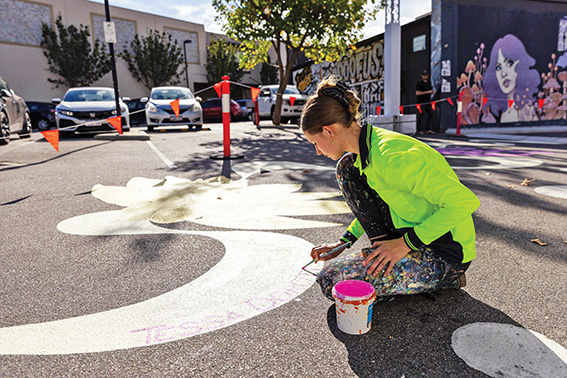
    A MURAL inspired by North Perth’s multicultural community is tizzing up Vincent council’s temporary shared space, Shortcut Lane.

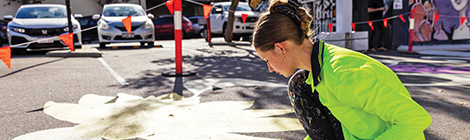
    Local multidisciplinary artist and designer Tessa Dorotich, who has a background in community development, is working on the floor mural as part of Vincent’s Shortcut Lane: Pop-Up Event Series, which runs to May 26.

    • Tessa Dorotich at work on the floor mural. Photo by Grace Sanders courtesy City of Vincent

    The mural starts from North Perth Common and flows into the two carparks.

    “I am delighted to be on board with the City of Vincent’s project, which encourages a safe passageway and use of pedestrian areas in the View Street Car Park,” Dorotich said.

    “My mural celebrates the local residents, many of which are of Australian, Italian and Vietnamese descent.”

  • WA strikes it big in Albanese green economy

    BEING in the heart of the capital city of the state most critical to delivering prime minister Anthony Albanese vision of a green-powered manufacturing Mecca has its advantages when it comes to Budget time, according to Perth Labor MP Patrick Gorman.

    “If you think about the big net zero transformation the world’s going to go through, there’s no country you’d rather be in than Australia, there’s no state you’d rather be in than Western Australia, and there’s no electorate you’d rather be in than Perth,” Mr Gorman told the Voice on Wednesday.

    It followed federal treasurer Jim Chalmers handing down his third Budget on Tuesday, included a $22.7 billion package for Mr Albanese’s centrepiece Future Made in Australia program which aims to crank up local manufacturing and attract green energy investment.

    Mr Gorman said the “entirety” of Future Made was developed after extensive consultation in WA during the PM’s regular trips across the Nullarbor.

    • MP Patrick Gorman and federal treasurer Jim Chalmers are making waves with this year’s budget. File photo

    “We were talking about some of this when the prime minister was over last week; it’s about us saying that we don’t want to be looking back in 10 years time saying ‘why have all the jobs gone somewhere else, why aren’t we manufacturing high-tech electrolysers for creating hydrogen?’

    “We’re saying ‘let’s do it all here’.

    “That means billions of dollars into the new economy that is going to dominate the skyline of Perth,” Mr Gorman said.

    He outlined a future where the headquarters of green energy companies would push the state’s fossil-fuel companies into the background.

    “WA and Perth can be that kind of financial hub, to bring together the capital, bring together the skills and technology, and then soon, I really hope we start to be that exporter of those new energy products that people want to see.”

    Mr Gorman also pointed to $566 million allocated to Geoscience Australia to map Australia’s critical minerals and water resources, but wasn’t going to be drawn on whether that could be leveraged to get better royalties deals out of miners.

    “We’ve got great expertise in extracting critical minerals, but we recognise that when government comes to the party, and we can help invest in value-adding, that means we’ve got high-value products, more jobs here in Australia; that means more tax revenue on the employment side, more tax revenue on the company side, and that’s where we see the future,” he said.

    The Chamber of Minerals and Energy WA welcomed the $22.7 Future Made package and its $7m for processing critical minerals.

    Chamber CEO Rebecca Tomkinson said the budget’s strong position owed a lot to $5.5 billion in additional company tax receipts, with WA’s resources sector leading the way.

    She said the chamber was pleased to see initiatives it had recommended such as tax incentives for critical minerals and support to help hydrogen producers reach commercialisation taken up in the Budget.

    “Recommendations for unlocking investment were at the heart of CME’s federal pre-Budget submission, so it’s positive to see the government has paid attention to exploration’s role in developing the pipeline of resources projects that will support the energy transition,” Ms Tomkinson said.

    Timely

    “We need to ensure that the work being done to improve the identification of resources deposits is complemented by fit-for-purpose policies and frameworks to develop those opportunities in a timely and efficient way.

    “When the WA resources sector is strong and competitive, it has a positive flow-on effect for the Australian economy and community.”

    Mr Gorman was also keen to spruik the government’s $300 energy bill relief and tax cuts, which he said will see 96,000 people in the electorate get a tax cut on July 1.

    “What I’ve been hearing in the electorate, week-on-week-on-week when I’ve been out door knocking, is that people are doing it tough,” he said.

    “The other one that I think is really exciting for Perth is the number of people who are going to see their HECS debt go down, rather than up, and that’s 24,953 people.”

    The budget also extended free TAFE courses, but Mr Gorman doesn’t believe a future workforce will be more motivated to take up quick TAFE qualifications rather than expensive but more critical university qualifications.

    “One of the big ideas in the universities review that underpins all of these pieces we’ve done is that actually, our higher education ecosystem all works together. 

    “Sometimes you’ll have these hard delineations of ‘Tafe is for this and university is that’, but they’re both now in the the high technology age, they’re both fantastic parts of that broader higher education system.”

    “So some people might go and do Tafe first, and then into higher education. We’ve also got people who go into higher education, then go through our Tafe system.”

    by STEVE GRANT

  • A vote for youth

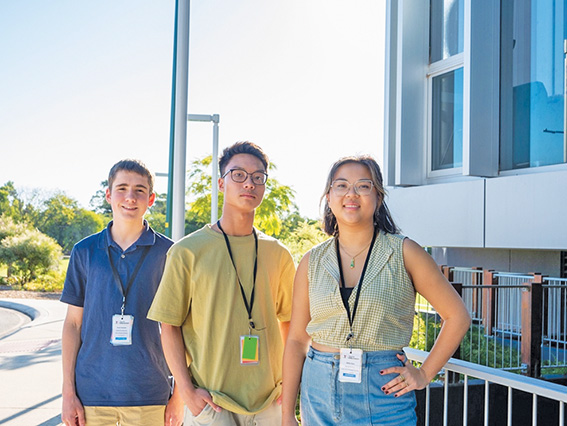
    THE Y WA’s new Youth Parliament has been sworn in for 2024.

    Among the 59 young West Aussies being given a once-in-a-lifetime political experience is Mt Hawthorn’s Drew Davison.

    Mr Davison will be representing the Kalamunda electorate and says his interests as a first-time parliamentarian are the justice system, corrective services and economic management. 

    Mr Davison said it’s important for young people have a voice.

    • Mt Hawthorn’s Drew Davison representing the Kalamunda electorate (left), with Maylands representative Benny Long  and Perth youth MP Nikki Chen.

    “The young people of today have a unique perspective on societal issues and will one day become the leaders of society,” he said.

    “Thus, for young people to have a voice is important, as they can provide policymakers with different ideas, and become involved in a society that they will one day have an instrumental role in guiding into the future.” 

    He’s hoping his young colleagues will pass their  police and justice committee’s latest bill and inspire pollies in the ‘big house’ to effect similar positive changes in the WA community, following a year with the justice system in the spotlight.

    The topics the Youth Parliament will debate over their four-month term cover issues from any state government portfolio. 

    The parliament is run by The Y, formerly known as YMCA, and gives young people an ability to have their voice heard by policy makers, says CEO Tim McDonald.

    “It’s an incredible opportunity for young people to advocate, grow skills and make life-long connections,” Dr McDonald said.

    “The Y WA Youth Parliament program, now in its 29th year, offers young people an insight into the workings of government and policy development.

    “What makes it so special is that it aims to be truly representative of the views and concerns of the state’s next generation of community leaders.”

    by RUBY COLE

  • Amazing Amelia

    SEVEN-YEAR-OLD Amelia Kim is starting to realise her ‘normal’ is different from everyone else’s.

    The Hammond Park youngster has cystic fibrosis and on a bad day has to take up to 40 pills and have two bouts of physio.

    “When Amelia was younger cystic fibrosis made her feel special, however as she gets older, she is beginning to feel like it can be a burden,” says Amelia’s mum, Amanda.

    “…the handfuls of pills she takes each day, the daily physiotherapy, the nebulised treatments, the frequent hospital appointments, the school absences or missed events due to illness.

    “Her daily physiotherapy is often the biggest challenge as, understandably, she wants to be off playing like the other kids instead of sitting down doing her treatments.”

    • Amelia Kim has cystic fibrosis, but lives life to the full.

    Thankfully, Amelia is a plucky, up-beat soul and is naturally “optimistic and happy”.

    She lives life to the full and enjoys gymnastics, swimming, dancing and singing.

    “We try to change up her physio routine when we can, reward her often, and make life as fun as possible in between all the medical stuff to keep her spirits high,” Amanda says.

    Children with cystic fibrosis cannot be in close contact with each other due to the high risk of cross infection, adding to their feeling of isolation and loneliness.

    Thankfully, Cystic Fibrosis WA recently setup CF Kids Connect, a safe online program for children with the condition to socialise and do group activities like lego, clay, craft, origami, potion making and even designing a fundraising tote bag for the CFWA Shop.

    Therapist

    The sessions are for kids aged 5+ and facilitated by CFWA’s child and family therapist.

    “It always made us sad to think Amelia wouldn’t ever be able to hang out with those who understand what she goes through best, so the CF Kids Connect program has been an invaluable initiative,” Amanda says.

    “The sessions are very relaxed, and the kids are welcome to chat and connect about anything they like – sharing the highs and lows of living with cystic fibrosis amongst all the other ‘kid stuff’. 

    “It was very cute hearing them all discussing how many enzymes they should take after their last baking session when it was taste testing time.”

    Having a child with chronic illness can put strain on the entire family, and often younger siblings don’t understand what’s happening and feel they are not getting enough attention.

    Amelia has a five-year-old sister Scarlett, and Amanda says the sibling events organised by CFWA are invaluable.

    “The CF Sibs Camp and CF Sibs Day Out are also great ways CFWA support the siblings of children with cystic fibrosis,” she says.

    “Growing up with a sibling who has a chronic illness isn’t easy, and this allows them to also have some respite from the challenges.”

    It’s been nearly four years since Amelia’s last hospital admission and she is in “relatively good health”.

    She recently participated in a clinical trail of Trikafta, a new drug to treat cystic fibrosis, which she is still taking.

    More than 400 sandgropers have cystic fibrosis and it’s the most common, life-limiting genetic condition affecting Aussies.

    It causes an abnormal amount of sticky mucus within the lungs, airways and the digestive system, which can lead to irreversible  damage. Amanda says the treatment model has shifted over the years.

    “Cystic fibrosis treatments used to be about trying to treat the symptoms and reverse the damage already done, however now it’s about preventative treatments and slowing down the progression of it,” she says.

    “New medications that treat the underlying cause of cystic fibrosis, such as Trikafta, mean our children will now not only live long lives, but also have an increased quality of life.

    “We are still very optimistic that a cure for cystic fibrosis will be found in Amelia’s lifetime.”

    On May 24 CFWA are holding their annual fundraiser, 65 Roses Day, with people ordering red roses to raise money for the not-for-profit.

    There’s also a Virtual Rose Garden if you don’t want to buy a physical bouquet and other options to donate.

    This year Amanda is selling roses on CFWA’s stall at Bunnings Cockburn Central. To donate or find out more see fundraise.cfwa.org.au/65-roses-day.

  • Leighton’s had a lucky break

    PAUL GAMBLIN is a spokesperson for the Leighton Action Coalition. Like many of Perth’s coastal areas, Leighton is under pressure from developers, who probably wouldn’t be satisfied until Perth’s coast resembled the mess of Surfers Paradise. Recently the Coalition had a win – of sorts.

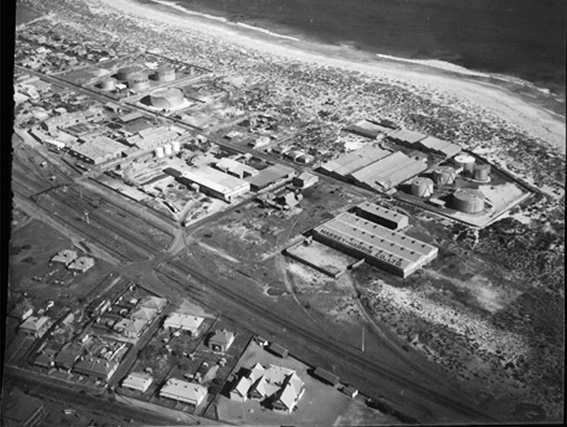
    PLANNING minister John Carey has just made a major decision about the future of the coast behind Port Beach – south Leighton. 

    He has zoned the bulk of the industrial land between Port Beach Road and the railway line, “urban deferred”.

    It’s not the best outcome from our point of view, but depending on the integrity of the next steps, it could be a workable compromise. 

    The owners of most of this coastal land have been pushing for about a decade to squeeze some final profit from their landholdings (for storing oil, among other uses) by seeking to persuade governments to change the zoning from ‘industrial’ to ‘urban’.

    While the Coalition thinks there is ample opportunity for urban development closer to the railway line – designed sympathetically to this unique setting – it would be short-sighted and irresponsible to develop the whole area. 

    By zoning it urban deferred, rather than urban, the minister has kept his, and our, options open. 

    This is important because it’s an eroding coastline and the priority must be on restoring the dunes and vegetation, which is the best and cheapest way to defend the coast. 

    Restoring nature here is also the best gift we can bestow on future generations who are already due to lose a lot of what we’ve largely been able to take for granted: easy, egalitarian access to beautiful natural beaches and foreshore reserves. 

    The value of this coastal environment for the tens of thousands more people who will live in the rejuvenated port land to the south, will likewise be inestimable. 

    We think the foreshore reserve should be extended to Bracks Street to accommodate these needs.

    Contest

    In the contest of ideas for this area over the years, we’ve sought to convince the government that it should to stand up to developer pressure and consider the public needs of this precious area before making any further decisions. 

    After all, this land was allocated to industry in another world, so hardly represents good planning in 2024, nor the community’s needs for the century ahead.

    The City of Fremantle, mayor and councillors, deserve credit for playing a notably constructive role in this discussion, and we have forged a complementary approach, along with many people in the community who’ve taken the time to write submissions, attend our events and stalls, and continue to help. 

    Minister Carey’s decision to endorse deferred urban development means that urban or other zoning cannot happen until a number of conditions are met. 

    If ever the devil was in the detail, it will be here. 

    The WA Planning Commission, which has carriage of zoning processes, has stipulated that the deferred status will be lifted only after a number of criteria are met:

    • finalisation or substantial progression of the Future of Fremantle project;

    • confirmation of regional road and transport requirements in the locality; 

    • confirmation of coastal foreshore reserve requirements; and,  

    • consideration of the Fremantle Port buffer.

    Our confidence in the Future of Fremantle process, which has undertaken some good work on the port land, was somewhat shaken by the publication of scenarios for the Port Beach coast which all feature varying degrees of heavy engineering, like groynes, including off Leighton Beach, and an inadequate reserve. 

    It was clear that there wasn’t enough bandwidth during FoF’s technical meetings to give this area anything like the consideration it needs and deserves.

    Much now rests on Mr Carey’s leadership in supporting a genuine process to determine the future community and environmental foreshore reserve requirements. 

    Transparent

    This must be done transparently, with real community involvement and independent of developer influence. 

    We have a beachhead of sorts, to kick things off for the next stage, in the sliver of land, currently squeezed between Port Beach Road and the industrial area, that some private interests wanted zoned urban back in the day. 

    That’s now going to be parks and recreation, and whilst it’s only the bare minimum for the reserve we need, it’s a start.

    We think Perth’s vast beach-loving community, between the beaches and the hills, will embrace this rare opportunity to shape the future of their coast, for the public good. 

  • Tasty gathering

    IF you have a sweet tooth and attend TAFE in Leederville, you might want to upgrade your dental cover.

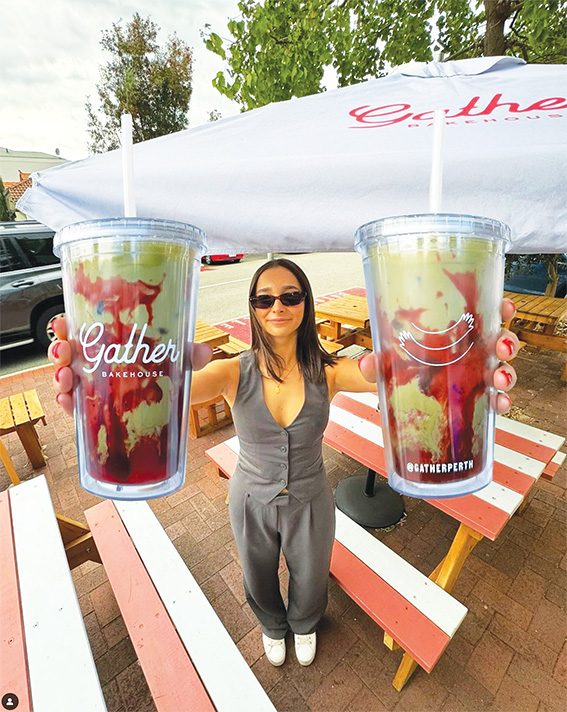
    That’s because it’s situated directly across from the Gather Bakehouse, a new eatery on Oxford Street that specialises in delicious cakes and bite-sized treats.

    I went there for lunch on Tuesday and my internal GPS must have blown a gasket as I walked into the camera shop next door by accident (a strange place to buy cakes and almost like a Monty Python sketch).

    I attempted to save face by looking at a zoom lens for a couple of minutes, before heading back out and discovering that Gather Bakehouse was a hole-in-the-wall job.

    Thankfully there was a stylish parklet out front and sheltered seating around the corner, so plenty of places to sit if you didn’t want take-away.

    On a sunny autumn day, the place was heaving with folk enjoying a casual lunch.

    The display cabinet was crystal clean and uncluttered – a minimalist affair that let the sweet treats (which were like mini works of art) take centre stage. There was a delicious range including cookies, brownies, cakes and crookies (a croissant filled with chocolate chip cookie dough). 

    Gather also do lots of savoury stuff including wraps, bagels, sandwiches, croissants and croque monsieur, as well as a range of hot and cold drinks.

    It’s a good pitstop for lunch or even just a coffee and a slice of cake. I kicked off with a vegan wrap ($12.50).

    It was huge and made from a thickish flat bread you’d normally find on a kebab. But it wasn’t stodgy and the mottled, spinach-infused bread was fresh, light and tasty (especially when toasted).

    I can see why they needed a thickish bread to hold things together as the wrap was bulging at the seams with tofu, kale, carrot, avocado, red onion and thick, conspicuous slices of pumpkin.

    A real veggie treat that held together nicely and wasn’t drenched in sauce with a very light dressing (if any).

    The wraps were big, so if you’re getting a cake as well, get one cut in half to share.

    The chicken katsu wrap ($12.90) was just as good, with lots of tender slices of chook and a refreshing medley of greens. A great savoury start. I don’t have a sweet tooth, but I could tell the baked goods looked freshly-made and were beautifully presented. They were big as well. Thankfully my wife “Special K” can sniff out a Mars bar from 100m, like some demented truffle pig.

    So she and the kids got hoed into the hundred hour brownie and biscoff blondie (both $7.50) and a couple of chunky cookies (biscoff and nutella $7 each).

    “These big New York-style cookies are rich, bold and delicious. A nice mix of white chocolate with the biscoff adding a subtle flavour twist,” my wife noted.

    The hundred hour brownie was beautifully presented with a chocolate swirl on top and a sprinkle of raspberry and sea salt.

    It tasted as good as it looked: “A lovely combination of  ganache, cocoa and melted chocolate in this one. Very decadent and moreish,” Special K said. Last but not least was the biscoff blondie, which was like a sophisticated version of caramel shortcake with a biscoff biscuit nestled precariously on top.

    “It’s got a nice texture,” my wife said.

    The service was good with the pleasant young lady behind the till asking if I wanted a bag to take the cookies home. 

    Gather Bakehouse is a cool little addition to the cafe scene on Oxford Street and well worth a visit.

    Gather Bakehouse Perth
    201B Oxford St, Leederville
    gatherperth.com.au

    by STEPHEN POLLOCK 

  • Jazzy bond

    THE Ellington 15 is a deeply personal exhibition.

    It features some of the best photographs taken at the Perth jazz club since it opened in 2009, and was curated by photographer Angelyne Wolfe.

    She was the partner of jazz pianist Graham Wood when he setup the Ellington, and Wolfe took photos at the club during its tumultuous early years when it was flying by the seat of its pants and making up the rules as it went along.

    Sadly Wood died in 2017 after a long battle with cancer, aged 46. 

    Out of the hundreds of photos Wolfe unearthed for the exhibition, two really tugged at the heart strings.

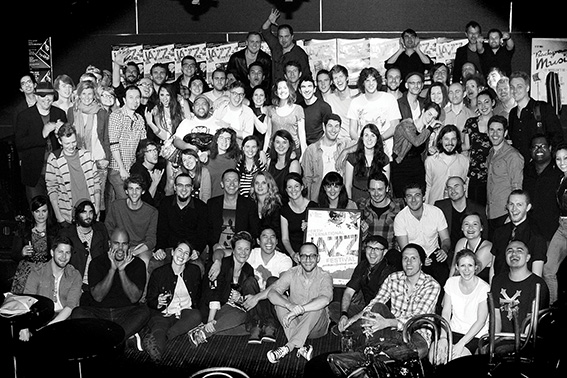
    • Closing night of the 2013 Perth International Jazz Festival at The Ellington. Photo by Angelyne Wolfe

    “One is of Graham playing the piano,” she says.

    “He has always been captivating when in his moments of performance, and it reminds me that you can be born to this earth for a purpose. His purpose, his soul shone through when he played. 

    “Another of my favourites is not a technically brilliant image, but it’s one that captures a moment – the inaugural Perth International Jazz Festival 2013 closing night.

    “Graham was in hospital, and didn’t get to see much of what he worked so hard to put together, so I wanted to send him a photo of all the musicians who performed, as many were at the Ellington for the famous Late Night Jazz Jam sessions. I stupidly didn’t bring my wide angle lens along that night, so when I asked everyone to get in for a group shot, I had to stand on a table right against the wall as far back as I could go to get everyone into the shot.”

    In an era of over-produced concerts in giant stadiums, where most of the audience are busy filming on their phones, the tiny Ellington jazz club is an intimate venue where deep musical and personal friendships are formed. 

    “That group photo reminds me of the family that we all are, the many moments shared together over the years,” Wolfe says.

    “People that I may not see very often, but when I do, I know we have a connection that will never fade, a shared history, and that these people, wherever they are in the world, are my people. The creatives, the dreamers, the doers and the strivers.”

    Over the years the club has showcased hundreds of local jazz performers including Libby Hammer, Ali Bodycoat and Tom O’Halloran, as well as global stars like Kurt Elling, Paul Grabowski and George Garzone, who often did a special show at the Ellington while passing through on tour.

    “Each photographer has their own style, many capturing the same artists throughout the years in very different ways, but together, the images paint a story of intimate settings, special performances just inches away from your seat, international touring artists doing special secret shows, or sitting-in on a jam, in what makes a never to be seen again performance you might just be lucky enough to witness, and mostly, the camaraderie of performers, knowing what it means to grace the stage of this iconic venue…” Wolfe says.

    Her photos span the first eight years at the club, before then-Ellington barman Steven Emmerson took over photographic duties, and around 2014 photographers Nathan Bullivant, Corey James and Ewa Ginal-Cumblige came on-board.

    The exhibition has 17 physical snaps from each photographer and a digital display showing more candid photos of the club.

    “They show backstage scenes and tell more of a story rather than just performance photos,” Wolfe says. “From construction of the venue fit-out, and the reality of running a venue with kids in tow, to moments of happiness between staff backstage, or regular members who have been loyal to the venue since its inception, but likely many of the prints will showcase performers doing what they do best!” 

    After Wood sadly died in 2017, The Ellington was a bit rudderless and lacked direction.

    But in April 2023, Zoe Jay and Travis Simmons took over the club and it’s back on track with a new programme and fresh approach.

    Wolfe says the club is part of Perth’s musical DNA.

    “We have a photographic collection that encompasses 15 years and tells a story of this New York-style jazz club in what could be called one of the most isolated cities in the world,” she says.

    Ellington 15 is on June 7–9 at the Ellington Jazz Club, 193 Beaufort Street. There is an opening night event and you can view the exhibition before a show. Entry is free but you need to register at ellingtonjazz.com.au.

    by STEPHEN POLLOCK

  • Great locale

    If YOU’RE into golf, fishing or cycling or all of the above, you’ll love this townhouse.

    It’s situated on Maylands Peninsula and is literally one street back from Berringa Park, the Swan River foreshore and the local public golf course.

    The nearby Bardon Park is a favourite Voice fishing spot (there’s hardly any blowies because it’s so far upstream).

    And when you feel like a flutter, just drive over the bridge to Belmont Park for the gee-gees.

    The location is superb, but what’s this three bedroom two bathroom townhouse like?

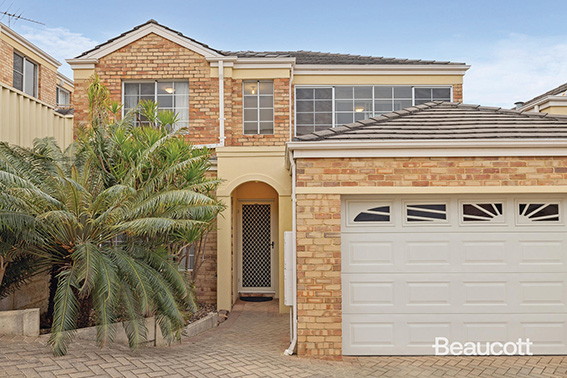
    Well, it’s got a lovely facade with palm trees, stylish windows and a double garage with sunrise motif.

    The pleasant theme continues inside with a nice open plan living/dining/kitchen area with light wooden floorboards and high ceilings.

    Slightly hidden around a corner is the gleaming white kitchen which has double sinks, a small breakfast bar and plenty of cupboards and drawers.

    Storage won’t be an issue with the walk-in pantry, and there’s plenty of light streaming through the double window above the sink.

    From the dining area you can access the rear patio via a set of sliding glass doors.

    It’s a substantial area with a built-in BBQ with storage, and plenty of space for a large dining table and lounge setting.

    This large space is fully enclosed with a fence on one side and cafe blinds on the other, making it an all-year round spot and effectively an extra room.

    The patio overlooks a neat patch of lawn with raised garden beds and there’s some bench seating along the fence.

    This low-maintenance garden has got a bit of everything and will please owners and pets alike.

    The ground floor also includes a large store room, seperate laundry and WC.

    There’s a good layout to this home with all three bedrooms on the first floor.

    The main is spacious and has a walk-in robe and cute ensuite.

    You can access a balcony from the main bedroom too. It’s enclosed as well, so I imagine it must get quite windy on the Peninsula and that’s why the patio and balcony are both sheltered from the elements. 

    There’s a lovely family bathroom up here with a standalone bath and shower, as well as a seperate WC.

    The remaining two bedrooms are pleasing on the eye and have built-in robes.

    This abode is in a great spot, and after you’ve done a spot of fishing, head down to Eighth Avenue to sample all the great cafes, small bars and restaurants.

    The home is near Maylands Peninsula Primary School and is in the zone for Mount Lawley High School. If you fancy a Maylands townhouse beside the river, this is a good shout.

    Buyers in the $700,000s
    3/57 Kirkham Hill Terrace, Maylands
    Beuacott Property 9272 2488
    Paul Owen 0411 601 420

  • Name change Galups along

    RESTORING Lake Monger’s Indigenous name and a memorial to mark an 1830 massacre could be a step closer.

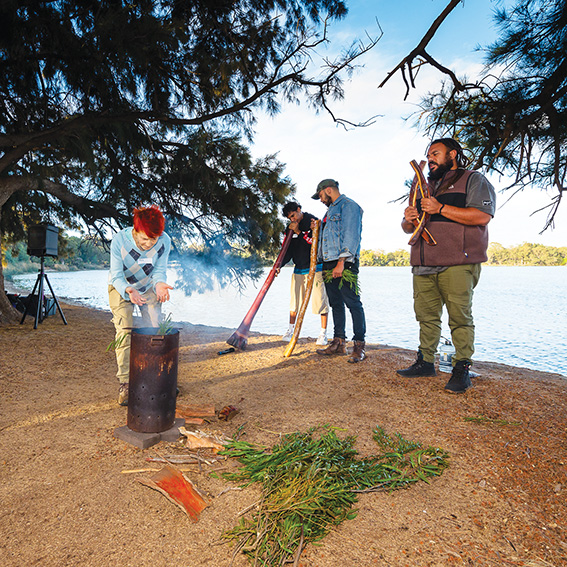
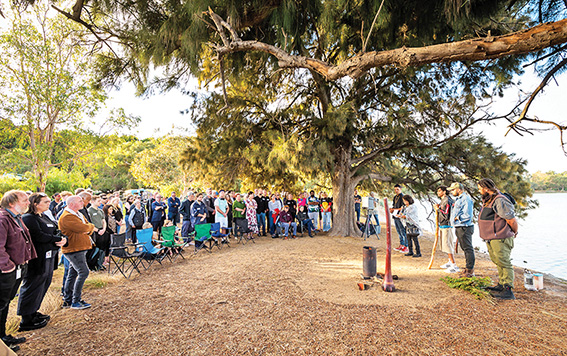
    Last Friday about 80 people attended a smoking ceremony to acknowledge the May 3 massacre and call for more signage around the lake to reflect its cultural significance to Whadjuk Noongars.

    Cambridge mayor Gary Mack was amongst the crowd, which also included his CEO Gary Tuffin and two councillors, while the event also attracted MPs Kate Chaney, Christine Tonkin and Pierre Yang.

    • Traditional Whadjuk Noongar owners Ash Garlett Penfold and Ben Stack play the yidaki (didgeridoo) at a ceremony to mark the anniversary of an 1830 massacre at Lake Monger, with growing calls for the water body to revert back to its Whadjuk Noongar name Galup. Photo by Steve Worner

    Manaagement

    Mr Mack said his council was working on management plan with the traditional owners.

    “We anticipate public consultation on the plan’s recommendations soon, ensuring Galup/Lake Monger is acknowledged as a place of cultural significance and reconciliation,” Mr Mack said.

    Artist Poppy van Oorde-Grainger has been driving the push for the massacre’s recognition with Noongar man Ian Wilkes and told the Voice she was pleased Cambridge seemed to be moving ahead with the Indigenous community’s recommendations.

    • Town of Cambridge resident Peg Davies participating in the smoking ceremony. Photo by Steve Worner

    During the ceremony Mr Wilkes and fellow traditional owner Ash Garlett Penfold guided people through a smoking ceremony aimed at bringing people together for connection and healing. The event featured a song Mr Wilkes wrote to honour the Noongars who’d lost their life at the lake.

    Elder Aunty Glenda Kickett welcomed the crowd.

    • The ceremony attracted a crowd of around 80 people. Photo by Dan Grant

    “Galup is an important site for Whadjuk Noongar people and an area where our people camped,” Ms Kickett said.

    “Not many people know about the massacre that took place there.

    “We are at a point as a nation to really start to acknowledge First Nations peoples and the histories of colonisation and dispossession.

    “That acknowledgement is an important part of healing.”

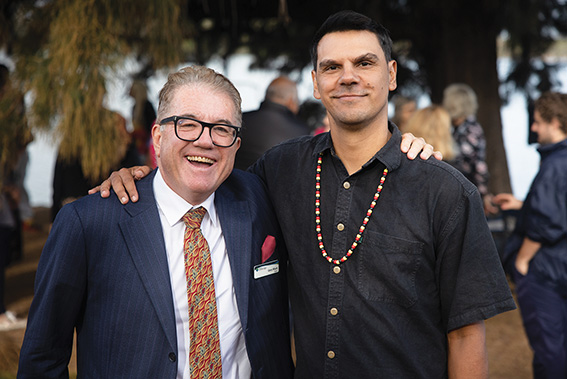
    • Cambridge mayor Gary Mack with artist Ian Wilkes. Photo by Dan Grant

    Home fires

    Speakers called for community support to restore the lake’s traditional Noongar name Galup, meaning ‘place of home fires’ and building a memorial to remember the massacre.

    Mr Wilkes and Ms van Oorde-Grainger have held two major art projects at the lake, including an oral history from Elder Doolann-Leisha Eatts about the massacre.

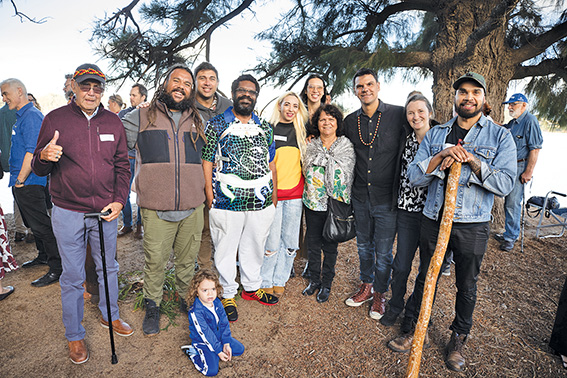
    • (L-R) Ben Taylor, Jayden Boundary, Simon Zuvich, Sam Pilot Kickett, Jade Cameron, Jade Dolman, Glenda Kickett, Ian Wilkes, Poppy van Oorde-Grainger, Ash Garlett Penfold. Photo by Dan Grant
    • Aunty Glenda Kickett giving the Welcome To Country. Photo by Steve Worner
    • Toby Miller from Reconciliation WA and Alan Carter from Bringing Them Home WA. Photo by Dan Grant