EIGHTY cars will be queuing up to turn into East Parade from Guildford Road by 2026 unless a double slip lane is added to the latter – putting more pressure on Vincent council to delist a heritage home that’s in the way.
The traffic queue would result in more rear-end accidents and leave drivers waiting nearly two minutes to get around the corner, according to modelling by Main Roads, which owns the house and has asked the council to take it off the municipal heritage list so it can be demolished.
The application has come through the state’s powerful planning department, which is overseeing a large social housing subdivision on 34 adjoining lots surrounding the cottage.
The issue came up for discussion at Vincent’s briefing forum on Tuesday, with staff recommending the council agree to the department’s request.
WA planning department housing diversity manager Scott McGill told the meeting housing affordability and availability were “critical problems” for all tiers of government.
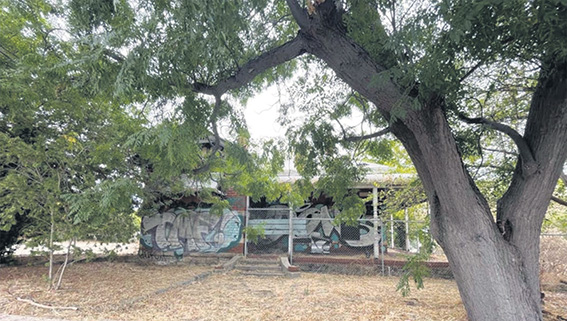
• The Guildford Road cottage is boarded up and in poor condition.
“Vacancy rates are at record lows, sales prices, build times and build costs are at record highs and unfortunately most projections show that this is going to get worse before
it gets better, in Western Australia at least,” Mr McGill said.
“The reason why we are seeking demolition of the property as soon as possible is it will just provide us with certainty about exactly what is the actual developable area of the site, to allow us to remediate the site, ready it for construction and it will also allow us to deliver and better development outcome.”
The department says the cottage is too far gone to make a restoration feasible, though the City’s planning staff say it is possible.
“In general, there is little evidence of any original finishes as the place has been stripped of all architectural details, such as architraves, skirtings and the majority of the floorboards,” a heritage report commissioned by the department found.
“Windows are all broken and some window frames have been completely removed.”
Main Roads first tried to have the 1904 cottage demolished in 2000, but the council ordered it to be retained because of its heritage value while the surrounding homes got the death knock.
Vincent councillor Ashley Wallace noted that the council’s recent deferral of the demolition request was about Main Roads’ plans to create the double slip lane, and he wasn’t sure they’d answered that in a report they’d recently submitted.
“The report kind of compares two options: a single turning lane versus a dual turning lane..
“There’s no dispute two lanes go in closer to the intersection; what is the impact of shortening that dual turning lane by the 20-metre frontage of this building.”
“I don’t think that’s addressed in the report,” Cr Wallace said.
The home was first owned by Alice McColl and her husband Stawell, who was a railways employee.
RESIDENTS along Brisbane Street have just scraped in to get some traffic calming measures from Vincent council.
The residents had submitted a small petition to the council last month and included a survey of neighbours who’d got fed up with the near misses and congestion on the strip between Lake and Palmerston Streets.
The council’s engineers did a couple of weeks of traffic counting and determined that the Brisbane Street scored a 30 on their “traffic warrant” scale – the minimum before they’d consider any action.
Brisbane Street resident Matt Dowell organised the petition and praised the council’s engineering manager Luke McGuirk for coming up with some quick, low-cost solutions but has reservations about whether they’ll be enough.
“The current design of the road, particularly the narrowness, will continue to be a safety issue unless the road is widened or traffic volume is reduced and diverted to the main arterial roads such as Bulwer and Newcastle Streets,” Mr Dowell said.
“Should low-cost options not be enough, we request a longer-term plan be embedded in planning moving forward,” he said.
Council staff have recommended some signs and lines at this stage, with a report noting they’d already been fielding complaints from residents about the lack of parking on Brisbane Street.
“The demand on parking has increased due to the increasing density of developments in the area and with the proximity to the CBD,” a report to the council noted.
“As parking has increased, local residents have found a diminishing availability of parking adjacent to their properties and have contacted the City to address their concerns.
“The introduction of paid parking could be considered pending consultation with residents.
“This would ensure this section of Brisbane Street would be consistent with the current paid parking on Brisbane Street between Lake Street and Beaufort Street.”
Mayor Alison Xamon said it looked like there were a lot of out-of-towners clogging up the parking bays in the area and wanted to know who they were.
“I’m just trying to get an idea of whether they’re there for the pub, or for Sayer Sister, or whether they’re actually doing all-day parking,” Ms Xamon said.
“I’m conscious of wanting to make sure that we don’t make things too difficult for those local businesses.”
GETTING therapeutic benefits might seem an unusual side-effect to forging a weapon of war, but bowyer and archer Lars Richter says there’s a lot more to making your own longbow than whittling a piece of wood into shape.
“A bow can be used not just as a sport or a tool to hunt for food, but as a discipline, meditation or spiritual practice as in the popular 1930’s book on Zen Buddhism, Zen in the Art of Archery,” Mr Richter said.
He’s holding a two-day longbow making workshop at the Perth Waldorf School in Bibra Lake on April 20 – 21, and says participants can expect to come away more grounded and in touch with their inner selves.
“Every tribe on Earth has been walking around with a bow and arrow,” he says, noting that it definitely had a smaller influence in Australia, “but it’s something that we seem to inherently know.”
He says straight off the bat a longbow is a weapon, so people have to learn responsibility, but that also helps strengthen a connection to their craftwork, which is usually something that comes as soon as they choose the raw material.
“You see people have this instant connection when they pick it up; ‘this is my piece of wood’,” he says.
“You are creating something beautiful, but it’s practical as well.”
There’s always the odd ‘casualty’ when a bow cracks under pressure while being bent, but he says this helps build resilience and he’s ready to step in to encourage them to start again.
Mr Richter brings his skills as a life coach and counsellor to the workshops, but says he barely needs to do anything and the groups bond and connect throughout the weekend.
The upcoming workshop is open to anyone of any age (he’s had an 80-year-old participant), and some of the participants have come from the school’s year 7 class, as he says it fits in well with the Steiner curriculum.
“As Steiner might have said, you are putting your energy, or spirit, into the piece,” he says.
Mr Richter started a career as an engineer but eventually decided it wasn’t for the long haul: “I worked in that environment until I realised, hang on, that’s not what I want to do for the next 50 years. I changed. I went to India. I had my own yoga school.”
He also had fond memories of longbows from growing up in East Germany, and when he met master bowyer Peter Yencken a few years ago, he learned the tradition of honing a length of wood and now travels the country passing on his skills.
“I work with rasp and file, but I always invite people to bring their own tools if they have them,” he says.
WA’S most talented cheerleaders will be jet-setting to the United States next week for the International Cheer Union World Cheerleading Championships in Orlando, Florida.
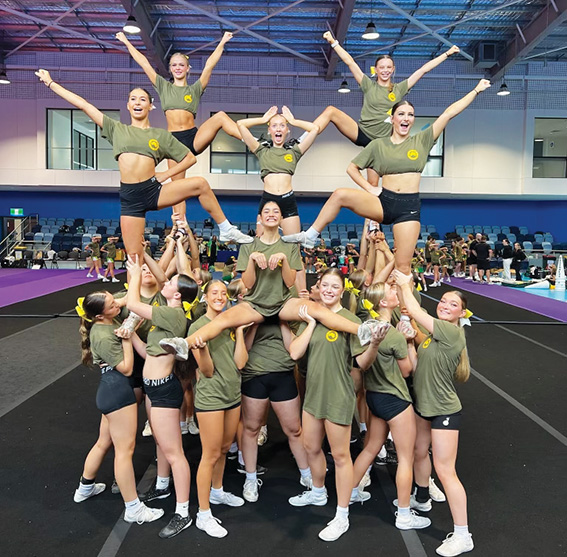
Five teams representing Australia will be competing at the championships, but the junior team is predominantly made up of WA athletes aged between 14 and 18 – just two are from interstate.
Team Australia athlete Bianca Stanes is confident in the squad’s ability to perform in Orlando, saying the work and effort they’ve put into their routines will pay off.
“We’ve scoped out the competition and we’ve got some of the best skills,” Ms Stanes said.
“If we are able to hit the routine, I think we can win.”
• Australia’s junior cheerleading team is pretty WA-heavy.
Ms Stanes says there are misconceptions and stereotypes around cheerleading (the pom-pom and shouting type) which doesn’t take into account the athleticism and skill required for the sport.
“People don’t really think about the training and effort that goes into it, because they think we just put together a routine.
“Really, there’s a lot of true work and conditioning behind every single stunt and tumble.”
Coach and TNT All Stars Cheer owner Stephanie Bateman, campaigned for WA to have its own team and is excited to see so much WA talent represented on the world stage.
“I think it’s really important that WA gets their own team, because it kind of gives emerging athletes from our state the opportunity to step up be able to compete at this level,” Ms Bateman said.
“Most of the camps that we host for Team Australia are over East, and it’s really expensive for athletes from WA to travel for all the camps, and travel to Florida on top of that.
“I presented to them that, and if any athletes from interstate want to come to it they absolutely can, but it would predominantly be made up of athletes from WA.
“It just gives us that opportunity to show what we’ve got over here.”
Tryouts for the Team Australia junior squad were held at Ms Bateman’s Booragoon gym at the end of last year, and via video for interstate hopefuls.
Ms Bateman is also eager for cheerleading to break free from the hyper-feminised, vapid stereotypes it can get lumped with, and have it recognised as “the ultimate team sport”.
“It’s not just doing dancing on a field with pom poms, we’re actually doing routines that get judged for a number of different components,” she said.
“It’s a combination of gymnastics and acrobatics combined into one.
HERE is this month’s question for the Vincent Trivia Quiz: How much do the Vincent Administration think they will spend on traffic management, on average, for each of the next three years? a) $20,000; b) $200,000; or c) $2 million.
For those who don’t know, ‘traffic management’ is basically the people holding the ‘stop’/’go’ signs when there is work on the road.
While most of you would probably have said b) $200,000, those familiar with the goings on at Vincent will correctly have guessed the answer is c) $2 million per annum.
To put that in perspective, that is equivalent to about 5 per cent of the annual rates collected from ratepayers.
I’m only guessing, but I think the reason that the bill is so high is because there is no incentive for Vincent staff to stop over-servicing, so if a company says that they need x number of people to hold the lollipops the Vincent staff take that on face value – yeah, whatever. I personally have seen a job where there were seven people employed for a job that four could easily have done.
Now I expect that Vincent will say that Main Roads pays for some of that, as if over-servicing isn’t so bad if somebody else (i.e. taxpayers) is paying for it.
So next time you see the ‘traffic managers’ out on the road, just remember that the money spent on the lollipops is equivalent to about $1 in every $20 people pay in rates.
And for those of you who want the answer to last month’s question: In which of the following does Vincent follow its policies and consult with the community before taking action: a) installing lights in laneways; b) naming laneways; c) changing the tree species in a street.
The iconic South Perth hotel has had a monopoly on the pub-lunch market for years with locals forced to jump on the ferry into the city to find another casual watering hole.
With the arrival of The Station, that’s all changed.
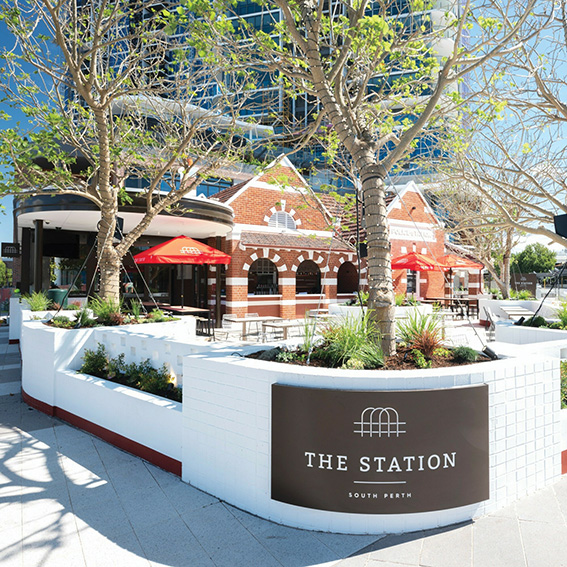
Situated in the old heritage-listed 1908 South Perth Police Station and Quarters, the venue is a stunning mix of period features and sympathetic modern touches (the curved overhang is gorgeous).
Originally a two-cell station with living quarters for the constable and his family – he got around the suburb on his trusty bike – it remained in operation until 2002.
The Station has two venues – the pub/leafy alfresco on the ground floor and the restaurant Ludo in the basement, which specialises in “nouveau European” cuisine.
During the super-hot Easter holidays, I took the family there for a casual lunch.
The gorgeous alfresco was bursting at the seams with a mix of sweaty families exiting the zoo, local business folk (you can spot a realtor a mile off) and nuclear families like us.
There wasn’t a spot to be had in the beer garden, but there was plenty inside and we managed to secure a table in a glass patio just shy of the alfresco, providing the best of both worlds.
The bar menu had a nice mix of share plates, mains, from the grill, burgers, pizzas and salads.
All the bases were covered and if you wanted to go full caveman there was a wagyu burger or rib eye on the bone (350g) or if you fancied something more sophisticated there was Duck Confit and Kingfish Crudo. There was also a kids menu with all the old favourites like fish and chips, Margherita pizza, pasta and chicken strips.
Overall, it was a nicely balanced pub-style menu with some up-market surprises.
I ordered at the outside bar and the service was extremely friendly with plenty of smiles and chat from the young lady behind the beer pumps. Positioned on a corner, there was a lovely breeze sweeping through the alfresco, providing cool relief for punters during an unusually hot Easter.
It wasn’t long before the waiter arrived with my Panko Crusted Pork Cutlet ($30).
It was a huge serve with two giant slices of pork (one still on the bone).
Pork is notoriously hard to cook because of its low fat content (it easily dries out) but this was spot on with tender, succulent meat.
I’m not usually a fan of panko coating, but this was a light and tasty incarnation that didn’t leave a greasy trail on your chin.
The pork was served with sautéed red cabbage, rustic Belgian-style frites and a dainty pot of mushroom gravy.
The cabbage was en pointe and the skin-on fries were delicious.
The mushroom gravy was good quality but it was more of a jus, and when you poured it over the cutlets it got soaked up by the panko breadcrumbs and the flavour seemed to get lost.
A thicker traditional-style gravy might have been better, as towards the end the meal was getting a bit monotonous and I needed more sauce. That aside, it was a top dish and very enjoyable.
Across the table my wife “Special K” was tucking into her Lamb Pappardelle ($32).
I was salivating just looking at this one – mounds of slow cooked lamb mingling with fresh pappardelle and pecorino cheese.
“Wow, I’m getting that full rich flavour you only get with slow-cooked meat,” noted my wife.
“It’s a comfort-food classic but also feels slightly refined with high quality ingredients.
“It’s a huge serve and I’m struggling to finish it. This will be a favourite with locals come winter. Top notch.”
My young kids, Bamm-Bamm and Pebbles, rounded off the meal by sharing an adult Margherita pizza ($22) and a side of Rustic Fries ($11).
Hats off to The Station waiter, who told us the first pizza they made for our kids was burnt, so they offered us some free soft drinks while we waited for another to be made.
It wasn’t long before the new one was on the table – a huge Margherita topped with cherry tomatoes, mozzarella, basil and sugo di pomodoro.
We needn’t have bothered with the fries as the kids struggled to finish the delicious pizza.
It was a great lunch with the venue, service and food all getting top marks.
The Station is owned by the same folk who redeveloped The Old Synagogue in Fremantle into a highly successful multi-venue hospitality site, so they know what they are doing.
THE cello and the synthesiser may seem like odd bedfellows.
In fact, I’m struggling to think of a song where they both heavily feature.
But this makes them the perfect combo for Audible Edge, a three day festival of experimental music held across Fremantle and Perth.
The cello in question will be played by Perth muso Sophia Hansen-Knarhoi and the synthesiser by her young partner-in-crime Liam Downey.
They met while studying Music Composition and Technology at WAAPA, where a musical romance soon blossomed.
• Liam Downey and Sophia Hansen-Knarhoi will be performing at the Audible Edge festival in Perth.
“He ran up to me in the car park to congratulate me on a presentation I was not so proud of. We hit it off instantly,” Hansen-Knarhoi says.
“He is the first person I go to for feedback on my solo work, and we’ve always been on the same page in terms of artistic vision and integrity.
“Liam and I have been great friends for a number of years now.”
In her solo work, Hansen-Knarhoi combines her cello playing and soothing voice, creating a dreamy tapestry of sound, while Downey is known for his harder hitting electronica.
So what will this clash of genres produce at the festival?
“Although I perform and compose regularly on the cello, I still have a vulnerability with it, as if it’s safer when attached to my voice,” Hansen-Knarhoi says.
“In this piece I will be examining and pushing that vulnerability, in conjunction with Liam’s budding exploration in live electronics and electronic ambience within his work. Our piece explores attention – how we use it and what we give it to.
“The fusion of us as artists is an interesting one – me an ambient folk composer working within minimalism. Liam, a maximalist electronic music producer. We have been finding the common ground in this piece but also highlighting our differences through our approach.”
Hansen-Knarhoi, 24, grew up in Mosman Park and completed the last year of her degree studying in London, while Downey, 23, is a Hillarys lad. They both like “boundary-pushing, genre-defying” artists like L’Rain, Jenny Hval, Arca, Julia Holter and Kali Malone, as well as artists on the fringe of the mainstream like Cassandra Jenkins.
“We are also continually inspired by the local artists we are surrounded by, many of which are also performing exciting exploratory works in the festival,” Hansen-Knarhoi says.
The up-and-coming duo are just one of the experimental bands at this year’s Audible Edge, which features a mix of international and local underground performers.
The festival is presented by the label Tone List – who champion Perth artists outwith the mainstream – and was first held in 2017.
Covid played havoc with the format of the artist-run festival, but it’s back with a bang with a great line-up including Anaxios, Nick Ashwood, Rebecca Lloyd-Jones and Ayo Busari.
North of the river, the festival will be held at venues including the State Library of WA, The Bird, Local and Aesthetic, and Astral Weeks.
“It’s a three-day long party where you’re invited to listen, dance, cry, ask questions, be moved, move, meet new people, arrive at new discoveries, get wild and get weird,” says Audible Edge co-curator Annika Moses.
“Instead of party bags you leave with a burgeoning feeling that new ways of listening and being are more than possible; they are probable and within our reach.”
Audible Edge is on April 26-28. Downey & Hansen-Knarhoi will be playing at Local & Aesthetic in Mt Lawley on April 27 at 8pm. For the full program and more info see ae.tonelist.com.au.
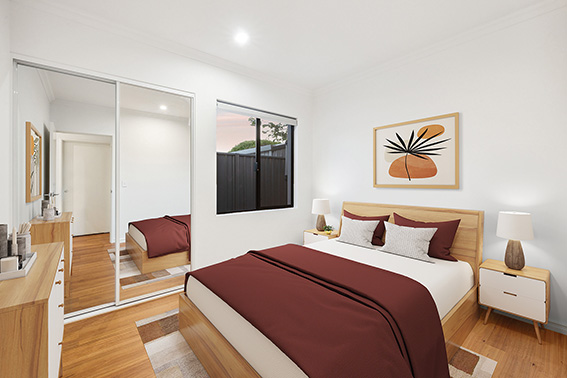
THE open plan area in this Bayswater home is a real stunner.
There’s plenty of room with the owners putting in a large dining table and a swish lounge setting.
The luxury kitchen has dark, sleek cabinets that really pop against the white walls and marble splashback.
Completing the pretty picture are some stylish lights dangling above the breakfast bar.
It really is a show-stopping kitchen that will wow guests as they arrive for dinner.
The entire area is bathed in natural light courtesy of the large floor-to-ceiling glass doors leading to the courtyard.
Continuing the high standard, the rest of this three bedroom two bathroom home is a joy.
It’s the little touches that set it apart from its peers including the gorgeous aquamarine feature tiles in the ensuite and the coffered ceiling in the lounge.
There’s also some stunning marblesque tiling in one of the bathrooms, which includes a large shower cabinet and cute bath tub.
Out the back is a sheltered alfresco with low-care garden beds and a neat grey Colorbond fence.
By adding some blinds you could make this an extra room and enjoy sitting outside all-year round.
It’s a low maintenance and stylish back yard, but not the biggest you’ll ever see.
All the bedrooms are spacious with the main featuring a walk-in robe and beautifully finished ensuite. The other two bedrooms have mirrored built-in robes and share a chic family bathroom.
This 2022 home has no strata fees, a supersized garage, split system A/C to the living area and main bedroom, north-facing courtyard and living space, and stone benchtops throughout.
Situated on a 316sqm block on Cabramatta Street, it’s only a short walk to the Swan River and Claughton Reserve, and it’s walking distance to the local train station and bus stops.
Or hop in the car and make the drive to Bayswater or Bassendean town centres.
This is a lovely family home with plenty of style.
Buyers over $789,000 8B Cabramatta Street, Bayswater Beaucott Property 9272 2488 Agent Carlos Lehn 0478 927 017
A PERTH VOICE PROMOTIONAL FEATURE Want a feature article written about your business? Email matt.eeles@fremantleherald.com for details.
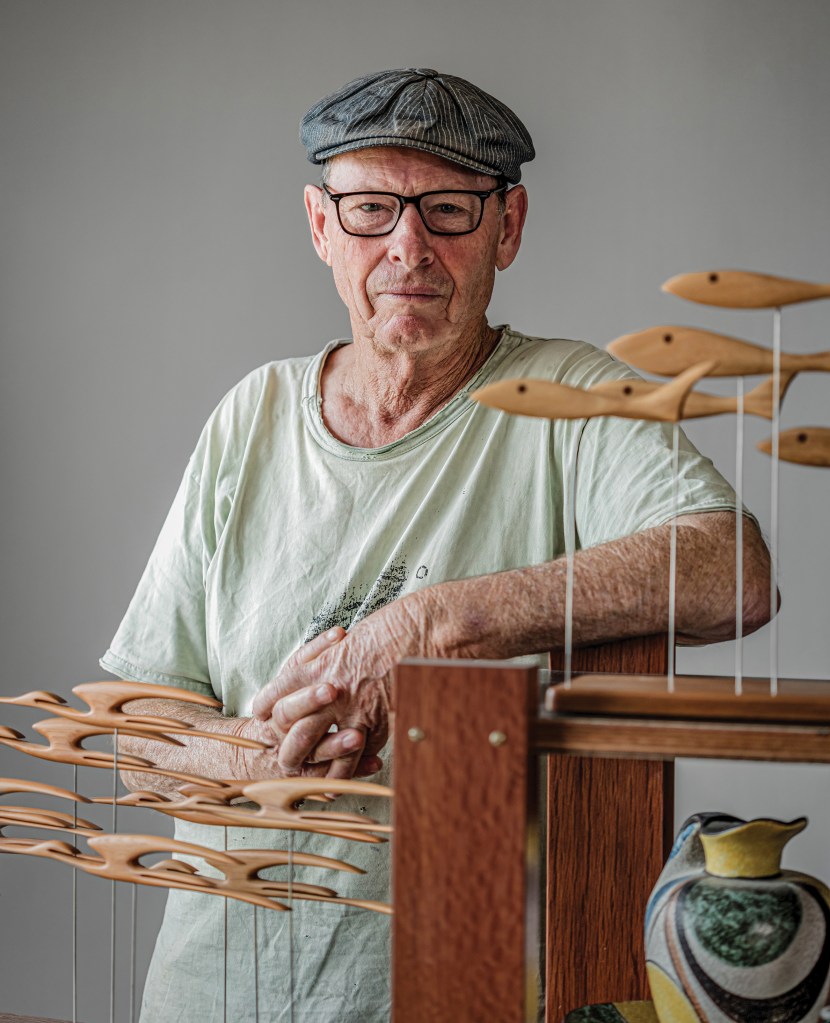
West Australian artist Derek Schapper’s interest in timber began in childhood when he spent hours watching his father and older brother build a succession of timber yachts on which he sailed as crew.Years later Derek began working with timber himself, to craft the seabirds and fish that had captured his imagination.
Derek’s other interest is modern form and design and from there emerged his beautiful and unique timber wall art.
“I adopted, revived and adapted examples of modernist designs into timber wall ornaments with an Australian/European flavour. I began crafting mainly birds and fish, and mounting them off-wall to create depth and shadows.”
Encompassing Art Deco, Bauhaus and Midcentury Modern, Schapper’s modernist style artworks are now sold in art, furniture and design shops in Berlin, Melbourne and Perth.
“There’s been resurgence of interest in midcentury modernism, particularly in décor and my work complements this aesthetic.”
While Perth has always been his home turf, five years ago Derek moved his studio and workshop to Albany where he enjoys another thriving artistic community.
“I’m making new works that reflect the landscape and the botanicals of the south west region.I use mainly local timbers to create birds and fish, and whole scenes that have become 3D timber pictures.
“The choice of timber is part of the design process. I generally use Western
Australia’s unique timbers, especially jarrah. WA has a wide variety of
Eucalyptus with colours ranging from deep red to creamy white. Banksia, casuarina and melaleuca add further possibilities in texture, grain and colour.”
This is Schapper’s first exhibition in Perth, under the curatorship of Future Shelter Gallery owner and resident artist, Jane Coffey.
Derek Schapper ‘Modernist Perspectives’: Future Shelter Gallery 56 Angove Street, North Perth Open 10 – 3pm Thurs April 18 to Sun May 12 Closed Monday and Tuesday
MT LAWLEY Labor MP Simon Millman says he got a bit of pro bono legal advice before this week’s announcement that he’d be stepping down from his seat at the next election.
Mr Millman recently caught up with some old mates who’d risen to become judges and senior barristers while he was on his political “hiatus” and floated the idea that a return to the bar was on the cards.
• Mt Lawley MP Simon Millman ready to bring gavel down on political career after legal mates’ advice
“Politics and law are very similar, they’re both in the same direction, and so they were relatively sanguine about my prospects of returning to practice successfully in the short term,” Mr Millman told the Voice.
“Their counsel was; it’s better to go back to the bar after eight years rather than 12 years.”
Of course that wouldn’t necessarily hold true if he were offered the plum role of WA’s attorney general, which was widely tipped following John Quigley’s announcement of his retirement, but he says a couple of factors pointing him in the other direction.
“I thought it would be a great honour to be the attorney general, but when you run for Mt Lawley you don’t run expecting to be a cabinet minister, because it’s a marginal seat.
“All other things being equal, you want to be focusing diligently on serving your local community.
“And then I thought I didn’t really come with a big legislative agenda the way John Quigley has as attorney general.
“And so when the question becomes ‘am I aspiring to be attorney general so that I can ease the transition back into practice’, maybe it would just be better to go straight back into practice.”
Mr Millman said he also looked into the background of his seat and noticed a trend.
“When I looked at the history of the seat, but also similar seats in the inner north, like Yokine, like Dianella, no previous member for the last 40 years has held that seat for more than two terms.
“You have to all the way back to Ray O’Connor, who was a Liberal premier in the early 1980s, and a member for Mt Lawley, to find somebody who’d held the seat for longer than that.
“So I generally thought that two terms would be the once-in-a-lifetime opportunity to be in Parliament.”
• Mr Millman with “great mate” and former Labor MP Tim Hammond and Mt Lawley mum Jo McIlvenney celebrate the end of traffic snarls as right turns are banned on the Beaufort/Walcott intersection in 2016.
He said it was important to announce his retirement from politics early to give a new candidate a chance to get momentum, but notes the Liberal party had to extend its preselection after it couldn’t find a candidate.
“I would be lying if I didn’t say that the absence of a strong Liberal presence in Mt Lawley didn’t factor into my thinking as well, because I think that my successor will be hitting the ground running.
“I was thinking the margin by which the Labor Party holds Mt Lawley is terrific right now; that’s a function in part of the Covid environment of the 2021 election.
“So some political commentators will say that there’s the potential for a swing back, but there’s about 25 seats between Mt Lawley and the first Liberal seat that they need to win, so in order to reach Mt Lawley, they’ve got to get through those other 34.”
• Mr Millman and Perth MP John Carey after delivering their maiden speeches on the same day in Parliament. He reckons the housing minister is doing a great job tackling the housing crisis with hundreds of new homes being built, but expects some pushback on housing when Edith Cowan University’s Mt Lawley campus is redeveloped.
Mr Millman wouldn’t speculate on who that successor might be, but says he’s hoping for: “Someone under 50, somebody who’s got a bit of youthful energy and enthusiasm, definitely somebody who’s local, and preferably somebody who’s had time in the real world.”
He says election night in 2017 was a highlight of his political career.
“Making Mt Lawley a marginal seat – though I’d like to say that it’s not too marginal now, making your seat where there’s a contest, making your seat where Antony Green’s looking at you on election night, that was a great result.”
From a legislative perspective, he’s proudest of his work during the Covid period when he was parliamentary secretary for then-health minister Roger Cook and says the current premier did a brilliant job under difficult circumstances.
Fixing the debt and deficit left by the previous Barnett government was also a highlight, as he sat on the Public Accounts Committee scrutinising how the Perth Children’s Hospital had descended into a debacle.
“Thirdly, just investing in health, education and infrastructure, looking at game-changing projects like Metronet.
• Mr Millman says he’s thrived on the smiles when he got to hand out grants to groups such as Inglewood Community Gardeners Anthony Ridolfo, Paul Stein and Damian Lukich.
Work health and safety reforms under industrial relations minister Bill Johnston, lifting the statute of limitations for victims of historical child sex abuse with Mr Quigley and sitting on the joint select committee chaired by health minister Amber Jade Sanderson which reformed the state’s euthanasia laws were also career highlights.
He’d been co-opted onto the committee because of his law background to balance the Opposition’s only member Nick Goiran, who also has a legal background.
“It’s no secret that I got married in a church, and so I was raised in a Catholic tradition, but I hadn’t ever really turned my mind to voluntary assisted dying.
“So I was an open slate when I went into this.
“If you look at the speech that I made when the legislation was introduced, I said ‘this is hard, but ultimately it was the right thing to do’.”
Mr Millman says thinking back to his doorknocking before the 2017 election, there was a lot of backlash against the Liberal party for its opaque deal with Pauline Hanson’s One Nation, with many saying the party had abandoned many of its principles – particularly supporting a diverse cohesive community.
He says his other proudest achievement has been getting to know that diverse community “in a way that a middle class, white Anglo Saxon Protestant bloke probably wasn’t exposed to”.
“Supporting our local sports and community clubs, the volunteers, those ordinary bread-and-butter people who are that at Bunnings at a sausage sizzle, day-in, day-out just doing the right thing.
“And so to see the smiles on their faces when you deliver them a $3000 grant – in a budget of billions of dollars – they’re just ecstatic.”
Mr Millman says one of his focuses during his last 12 months will be the relocation of ECU into the CBD, saying he’d like to see the Mt Lawley campus’ artistic heritage retained when it’s redeveloped, and has hopes it can become a creative hub.
He acknowledges there’ll be backlash against the inevitable housing that will come with the redevelopment of the campus, but says the Cook government has to take action to address the state’s housing crisis.















 Perth Voice Interactive