• Refugee advocates: Finish the job

    THE Perth Big Walk 4 Refugees drew about 70 people to Hyde Park last Saturday (March 23).

    The event was part of a national campaign launched on February 13 this year – the one-year anniversary of the Albanese government’s announcement of permanent pathways to permanent residency for 19,000 refugees who have been on temporary visas for a decade or more. 

    Speakers called for the government to expand the program to include another 9,000 refugees who have also spent a decade waiting for a chance to settle in Australia, but were left in limbo by a system advocates say the government knows was unfair.

    Many folks across Australia have been walking to support this call for permanency, and have now collectively walked a distance that spans more than 3 times around Australia.

    Ahwazi refugee Hossein arrived in Australia in 2012 after fleeing Iran and remains on a temporary visa.

    Since then, he has completed a diploma of ICT Networking while learning English, and is a freelance journalist and human rights advocate.

    • Speakers at the walk (below) included surgeon Hessom Razavi and Ahwazi refugee Hossein. Photos supplied

    “As a person who went through the Fast Track process, I can tell you how complicated and confusing it is,” Hossein said.

    “We had no legal representation to complete the 40-page protection claim form because the government would not provide us with a lawyer, and we could not afford to pay one as we were not allowed to work at that time.

    “I was lucky my English was good enough to at least understand the questions, but still the form was so confusing. 

    The “Fast Track” process rejected many people, including my dad and I, and there is no way to get an independent review of our claim.

    “I have been in Australia for over 11 years after my dad and I fled Iran to try to find a safe place to live. 

    “Ever since I got the right to work here, I have been employed and contributing to society. I am helping Australia to fill the skills shortage.”

    Curtin University Centre for Human Rights associate professor Caroline Fleay also spoke at the rally and called on the Labor government to bring 50 men languishing in Papua New Guinea, onto Australian soil.

    “And along with the 1,000 others who are here after enduring years of being locked up on Nauru and Manus Island, a pathway to permanency must be provided for them,” Prof Fleay said.

    “There must be an end to the dreadful uncertainty so that many are forced to live with. 

    “It is time for the Australian government to finish the job and provide a pathway to permanency for all people seeking asylum.”

    Other speakers included eye surgeon and writer Hessom Razavi, who visited Manus Island and Nauru in a professional capacity.

    “Australia only stands to gain by allowing this small number of people to stay,” Dr Razavi said.

    “We’ll gain morally, by ending their unnecessary suffering. 

    “We’ll gain culturally by their enriching our communities. 

    “And we’ll gain financially by allowing them to contribute even more to the economy. 

    “It should be a no-brainer for our government to enact immediately.”

    Centre for Asylum Seekers, Refugees and Detainees general manager Suha Ali urged the crowd to support his organisation with donations so it can continue providing refugees with welfare and advocacy support.

    CARAD’s March appeal can be found at: givenow.com.au/caradmarchappeal

  • Refined brunch

    WHEN I used to take my young kids to the playground on my day off, I would always hold their shoes in my hand as a prop.

    Otherwise I would get strange looks from mums, who wondered who this random guy lingering at the edge of the sandpit was.

    I felt the same odd sensation when I visited Cafe L.A on Tuesday for lunch – I was pretty much the sole male and it was mostly mums, many with prams, catching up for brunch.

    But channeling Barbie, which I watched at the weekend, I put aside my masculine hang-ups and dived head-first into the feminine waters. 

    The interior of the Leederville cafe was scrupulously clean with wood-grain tables, wicker chairs, dried flowers and a shelf with ceramics and pottery.

    Combined with the white-on-white colour scheme and futuristic lighting, it looked a bit like IKEA crossed with an intergalactic spaceship.

    There was some inoffensive dance music playing in the background and the cafe was nicely air-conditioned, making it all very relaxing and bourgeoisie.

    The brunch menu had a small but interesting range of Asian-inspired dishes including soft-shell crab, shokupan brûlée, poke bowl and curry beef Benedict, as well as traditional fare like avocado on toast, bacon, sausage and hash browns.

    They also had a display cabinet with gorgeous-looking cakes, pastries and sandwiches.

    It felt causal but upmarket and I had a gut feeling the food was going to be good.

    I kicked things off with a delightful berry smoothie ($12)

    Beautifully presented in a stylish glass with a dainty raspberry perched on top, it had a lovely vibrant colour and was made with care.

    I was a bit too enthusiastic and took a large slurp from the straw, triggering the worst brain freeze ever (it felt like I was having a mini stroke).

    Super-thick with a delicious mix of berries, banana, yoghurt, orange juice and honey, the smoothie was outstanding and had a lovely tart kick.

    It was also good value – the drink lasted the whole meal.

    It wasn’t long before the polite waiter was back with my Miso Forest ($25).

    Another beautiful presentation with two poached eggs perched precariously on a bed of glistening mushrooms and toasted sourdough bread.

    Completing the pretty picture was some delicate strands of saffron on the summit.

    It tased as good as it looked with the perfectly-poached eggs oozing a thick colourful yolk.

    Most cafes can’t get mushrooms right – they’re either overcooked, undercooked or in some cases shrivelled-up atrocities that look like a geriatric’s privates. 

    These were spot on – miso-infused and pan-fried, they had gnarled edges and were soft and velvety inside.

    When combined with the yolk, toasted sourdough and spinach puree, it was pure heaven.

    Another nice touch was the kale and saffron, adding enough flavour twists to keep you interested until the end.

    With three pieces of sourdough bread, it was filling and good value too.

    The service matched the food – the waiter asked how my food was halfway through the meal and gave me a smiley good-bye and “have a nice day” on my way out.

    Something you might only expect at more expensive full-blown restaurants.

    I thoroughly enjoyed my lunch at Cafe L.A – the ambience, food and service were top notch.

    I’ll be back to try some of their other dishes with the soft-shell crab bao high on my list.

    Cafe L.A
    Unit 2/238 Oxford Street, Leederville
    cafela.com.au
    Open 7 days a week

    by STEPHEN POLLOCK

  • Leaving its mark

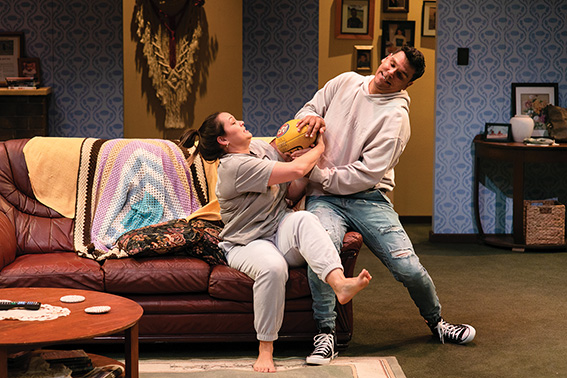
    WITH the new footy season underway, there’s no better time to see the affectionate and at times heart-breaking tribute to over beloved game – Barracking for the Umpire.

    The critically-acclaimed play revolves around Doug Williams – the greatest footballer Donnybrook has ever seen – and his devoted wife Delveen, who has stood by his side through every triumph and every head knock.

    They’re preparing to return to their hometown, where Doug will be honoured with a Lifetime Achievement award, accompanied by their son Ben, a rising AFL star, and daughter Mena, an ambitious sports journalist.

    But something’s not quite right with Doug – he starts to fumble the ball as years of brutal head knocks finally take their toll.

    Barracking for the Umpire writer Andrea Gibbs experienced firsthand the hardknocks of football when her father had to stop playing because of injuries.

    • (left to right) Ebony McGuire and Ian Wilkes in Barracking for the Umpire. photo by Daniel J Grant

    “My Dad, Geoff, played Aussie Rules for Donnybrook between 1967 and 1972,” Gibbs says.

    “Captaining the Under 18’s at just aged 16. At age 17 he’d play Under 18’s on Saturdays and then league on Sundays. 

    “Dad trained as hard as he played, which meant a lot of big knocks. 

    “The safety protocols around concussions back then were virtually non-existent. Come off for a bit. Can you walk? Yep. Well, get back out there. There are things that he can’t remember about many of the games he played.”

    After one big knock-out, Geoff went to the doctor and was advised to stop playing, but he carried on and wore a helmet. Unfortunately it just made him more of a target.

    Following another nasty injury, his wife broke down in tears and he eventually stopped playing and became an umpire in the South West Football League in 1973.

    “Mum would follow him to all his games and cheer him on. She was the only one who’d be out there barracking for the umpire!” Gibbs says.

    “The violence didn’t stop just because he became an umpire though – he copped plenty from the supporters who would get in his face after the games.

    “Footy does that. Stirs up a whole lot of feeling in fans. I know, I’m one of them.

    “When I’m at games, the things that fly out of my mouth are just parrot squawks of what Dad says. And I love that we have that connection. Dad’s knowing so much about the game is what seeded my love for it and if I’d had the chance, I would have tried to play myself.

    “It’s a beautiful complex game. And dangerous – something that can easily be forgotten if we look at it as just entertainment.”

    Like most national sports, footy has transcended its humble origins to become part of the national psyche and is woven into the fabric of our everyday life.

    You don’t need to be a hard-core sports fan to appreciate Barracking for the Umpire; it’s essentially a family drama that tackles the universal themes of identity, love and sacrifice.

    Gibbs is a talented actor and comedian, but is probably best known for her work as an ABC Weekends presenter and co-founding Barefaced Stories, a “storytelling night” where everyday people talk candidly about their lives.

    The award-winning Barracking for the Umpire has a great cast including Michael Abercromby, Pippa Grandison, Joel Jackson, Steve Le Marquand and Ebony McGuire.

    It’s showing at the Subiaco Arts Centre from April 23 to May 5, before undertaking a tour of regional Australia.

    “Not only is Barracking for the Umpire very funny, but it also covers important subject matter like concussion in sport, especially in football,” says Black Swan’s artistic director Kate Champion.

    “I feel it will strike a chord in regional WA, as many of these communities follow the AFL. This makes it the perfect play to tour to the regions.”

    For more info and tix see blackswantheatre.com.au.

    by STEPHEN POLLOCK

  • Damaged reputation

    DAMAGE embodies the essence of Australia’s troubled and complex treatment of refugees. 

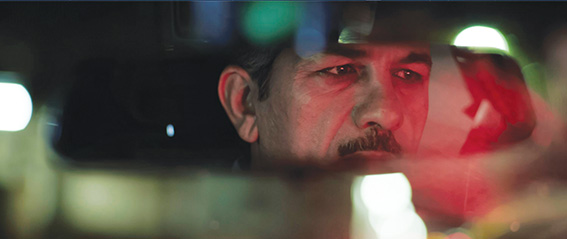
    Its synopsis is deceptively straightforward: on a desolate night, Ali, a refugee prohibited from working by his visa but taxi driving nonetheless with another’s license, picks up an elderly woman with a faltering memory.

    Thus commences a journey into an increasingly alienated urban environment and the slow revelation of their individual stories. 

    Surprisingly, there are laughs hidden along the way for the audience’s relief. 

    • A simple but powerful message in Aussie film Damaged.

    With the tagline “She Can’t Remember, He Can’t Forget,” the film’s characters serve as allegorical representations our recent national history. 

    Ali symbolises all mistreated refugees, while the elderly passenger embodies the Great Australian Forgetting.

    As they journey through the progressively more estranged landscape, the audience grasps their needs and traumas through their hesitant dialogue and poignant facial expressions.

    Writer/director Madeleine Blackwell describes Damage as “a small film with big ideas.”

    It is certainly a quiet film revealing a gaping wound, and employs quietly audacious techniques, such as prolonged focus on the characters’ faces which compels viewers to engage with their genuine humanity.

    Remarkably, neither of the lead actors is a professional. 

    Ali Al Jenabi, an Iraqi refugee, brings his own experiences to the role, as does Imelda Bourke, an 89-year-old first-time actress who also happens to be the director’s mother.

    At a recent preview screening at Luna Leederville, Blackwell said that through workshopping the two actors brought their own lives to the script. 

    She said Ali Al Jenabi in particular changed certain passages of her dialogue into poetry.

    His contribution is marvellous. For example, in a scene where he speaks of the inability to forget trauma he utters one of the most lyrical sentences in Australian cinema.

    All other voices in the film remain disembodied, whether from mobile phone calls, radio snippets, or the omnipresent state surveillance apparatus.

    A pivotal silent sequence involving water serves as a stark commentary on Australia’s history of refugee mistreatment, resonating profoundly with Australian audiences.

    All viewers will feel anguish and shame at that moment.

    For Blackwell, Damage is a labour of love and a testament to perseverance, having faced numerous rejections from producers before embarking on independent production.

    Following successful screenings at international festivals and with Arabic subtitles for immigrant Australian audiences, Blackwell has witnessed the immediate connection many viewers feel with the film’s themes.

    The film’s conclusion defies conventional cinematic endings, aiming for a more contemplative response to its multifaceted narrative layers.

    With the inclusion of Wikileaks footage and a nod to Julian Assange in the credits, Damage provokes ample thought and discussion long after the credits roll.

    Damage is showing at the Luna Leederville until April 3.

    by BARRY HEALY

  • Luxury living

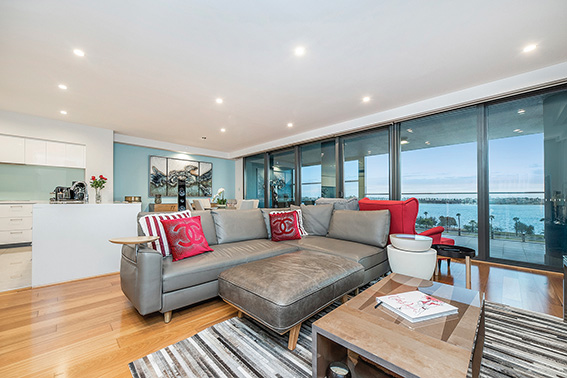
    ARGUABLY Terrace Road’s most sought-after complex, Toccata is home to this stunning three-bedroom two-bathroom apartment.

    Apartment 22 enjoys wide open views of the Swan River and beyond from the living area and master suite.

    It has been crafted to the highest standard with an impressive list of features including double glazed windows, stone benchtops, Miele appliances, timber floors in living area, carpet in bedrooms, and zoned air con.

    The thoughtful design includes three spacious double bedrooms with built-in or walk-in robes and the second and third bedrooms have access to an additional balcony.

    The decadent master suite boasts river views, a walk-in wardrobe and an en-suite with double vanity and spacious spa bath, making it the perfect adult retreat to unwind after a long day.

    The expansive balcony over-looking the Swan River is the most stunning space to enjoy a morning coffee or to entertain friends as the sun goes down.

    Toccata’s Leisure Club includes a heated and illuminated 20-metre wet-edge lap pool with poolside furnishings, BBQ facilities, bar area, cinema room, residents’ lounge, games room with pool table, fully-equipped gym, sauna and boardroom.

    Situated on Terrace Road, it’s close to public transport, within walking distance of food, shopping and nightspots in the heart of the CBD and close to everyday attractions, top educational and sporting facilities, the freeway and Optus Stadium.

    This is inner-city living at its best.

    The 145sqm apartment is current tenanted at $1400 per week (fully furnished and equipped).

    $1.599 Million
    22/88 Terrace Road, East Perth
    Halyn Property 1300 149 116
    Brian Lynn
    0407 932 583

  • Natural connection

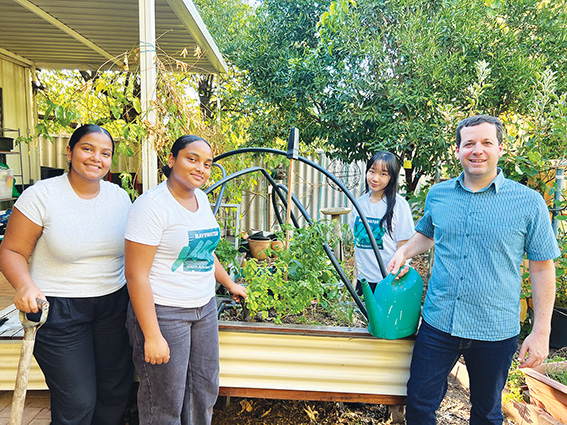
    BAYSWATER council is helping youngsters reconnect with nature in a series of workshops for Youth Week, April 5 – 124. 

    The workshops are being held in the city’s green spaces and are aimed at inspiring young people aged 12 to 25 to express their creativity, learn sustainable life skills and connect with others. 

    Deputy mayor Elli Petersen-Pik said the City’s Youth Week celebrations aimed to create a sense of belonging in local young people. 

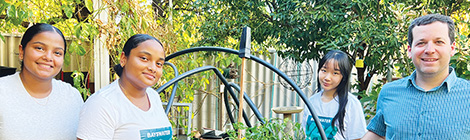
    • Youth Advisory Council members Nilani and Osadhi Muthumuni Arachchige and Angela Le with Deputy Mayor Councillor Elli Petersen-Pik.

    “These workshops are a great way for young people living, studying or working in the City of Bayswater to meet like-minded people and explore the City’s picturesque natural environments,” he said. 

    “Young people can choose to enjoy a photography workshop at Eric Singleton Bird Sanctuary, a birds of prey meet and greet with an after-dark walk through Lightning Swamp Bushland, or learn how to create their very own take-home veggie garden. 

    “By fostering connections with other local young people and the environment, the City is working to encourage mental wellbeing and civic engagement in our younger community members. “

  • Palmer win: ‘Poll tactics worked in my favour’

    BAYSWATER councillor Sally Palmer has won the North Ward by-election comfortably, saying political manoeuvring before the vote probably worked in her favour.

    Friday’s by-election was forced when mayor Filomena Piffaretti resigned from her ward seat just five days before last October’s general election, robbing Cr Palmer of an opportunity to take the vacancy as the runner-up (“Shock resignation,” Voice, October 19, 2023).

    While Ms Piffaretti posted to social media that the move would help her achieve a “clear mandate” and an opportunity to lead in her own right, Cr Palmer said not all voters saw it that way.

    “A lot of people could see through what was going on, and to have an election in January and February was a killer, and that had people offering to help,” she said of her campaign.

    “I was upset because when you are walking the streets in 40 degrees, you start to wonder ‘why am I doing this’.

    “We had people in their 80s walking the streets and they’d come back and they were covered in perspiration, but you’d say they’d done enough and they’d just say ‘no, give me some more pamphlets’ because they believe in working for goodness.”

    Cr Palmer said despite the controversy around the election, she wasn’t harbouring any bitterness and would be happy to work with the mayor and her political allies.

    Dynamic

    “We have a good dynamic and variety, with young people, different genders and different ages, and that should be used for healthy decision-making for the community, not for factions.”

    Cr Palmer said being voted onto council was an honour and she hoped to set a “mature example”.

    “Maybe this nonsense has been like a couple who have a row, but learn from it,” she said.

    Keeping spending down so rate increases could be kept to a minimum was high on her agenda for the next term, saying she’d like to see the end of council-organised mini activities like yoga in the park that attracted only a handful of people, preferring the funding be spent on showstopper festivals that attracted thousands and gave them a good impression of the city.

    by STEVE GRANT

  • Councils call for station overhaul

    THE mayors of Vincent and Cambridge have banded together to try and convince the Cook government to overhaul the Leederville train station.

    Vincent mayor Alison Xamon and Cambridge mayor Gary Mack have written to premier Roger Cook, transport minister Rita Saffioti and planning minister John Carey saying the aged station is holding up the revitalisation of the surrounding precinct.

    Ms Xamon said there had been a big focus on the Leederville town centre after her council’s decision in November last year to sell its Frame Court and The Avenue carparks for a transit oriented development.

    “One of the things we are keen to do is to tap into the state government’s interest in supporting transit oriented developments and ask that key consideration be given to prioritising an upgrade – not just an upgrade, but a complete re-do of the Leederville train station,” Ms Xamon said.

    “People would know that the Leederville train station is pretty old; I would say that the disability access is pretty woeful.

    “At the moment it really doesn’t serve the precinct very well, particularly in terms of providing an attractive option between the Town of Cambridge and connecting up with the City of Vincent.

    “At the moment the pedestrian overpass at Leederville doesn’t have any shelter, it’s not particularly safe, and as I say the lack of disability access is a particular concern.”

    • A decade ago Vincent and Cambridge came up with this plan for a link, but it went nowhere.

    Ms Xamon noted there was another state election in one year’s time, and said she’d love to see “duelling announcements” from Labor and the Opposition about upgrades to the station.

    It’s not the first time the two councils have teamed up to try and improve their linkage, as they’re split by the Mitchell Freeway and only have the spaghetti loop of a footbridge that takes some serious effort to cross.

    Back in 2011 Cambridge produced plans for a $5.5 million pedestrian decking or a $13m viaduct bridge which could later be upgraded to allow traffic to cross as well.

    The plans were rubber-stamped by Vincent councillors despite the concerns of then-councillor, now-state planning minister Carey, who described them as “pie in the sky”.

    by STEVE GRANT

  • Xamon wants state support for canopy

    VINCENT council has called on the Cook government to do more to protect trees on private land.

    Mayor Alison Xamon championed the cause, raising a notice of motion at Tuesday’s council meeting aimed at tackling the City’s low canopy cover.

    “Our inner-city suburbs, and the rest of WA, are literally feeling the heat from very low canopy cover and the increased loss of trees on private land,” Ms Xamon said.

    “Urban canopy contributes significantly towards local biodiversity, visual amenity, community wellbeing and reduces the impact of urban heat island effect.

    “It is also an important contribution to addressing the impacts of climate change.”

    Private land

    While recent changes to the state’s R-Codes recognise the importance of retaining canopy on private land, Ms Xamon said the Cook government hadn’t gone far enough in requiring development approval for removing mature trees.

    “This is contributing significantly to the decline of canopy cover within our suburbs and shows that the current system is failing,” she said.

    “Local governments are facing increased challenges in retaining trees as they tackle the need to accommodate increasing housing density and the infestation of the polyphagous shot-hold borer.

    “The council will be continuing to plant hundreds of trees on public verges, parks and carparks, as part of our annual winter planting season, and will be planning for more replacement trees in areas impacted by the PSHB,” Ms Xamon said.

  • Making history: Prof stepped up in STEM

    MARCH is Women’s History month, and although the women being profiled are not historical, they are certainly making history. Environmental engineer Carolyn Oldham was one of the 2024 inductees to the Western Australian Women’s Hall of Fame this month.

    CAROLYN OLDHAM has been in the environmental engineering field for more than 30 years, witnessing first-hand the changing landscape of gender equality in the scientific and academic world. 

    When Prof Oldham started at UWA, there was one important detail about her that was at risk of derailing her career. 

    “I arrived three months pregnant,” she said with a laugh, “and it was like all of their worst nightmares happened. 

    “They got a woman, and a pregnant woman at that.” 

    At the time, it was common for pregnant women to stop working, so it was a lonely endeavour for Prof Oldham to begin her career, working up until the weekend before she gave birth to her son. 

    “They just weren’t used to having pregnant women in the workplace,” she says. 

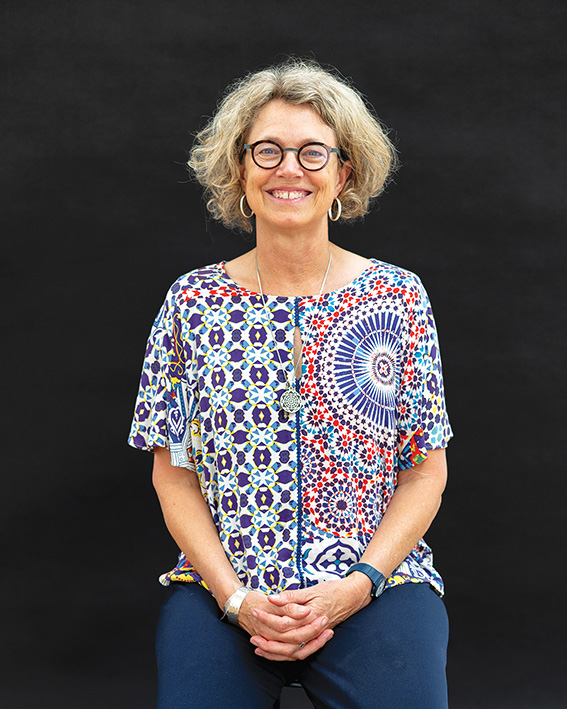
    • Prof Carolyn Oldham. Photo by Karen Wheatland

    Pollution

    Throughout her career, Prof Oldham has focused on the protection of water, and addressing the growing problem of pollution. 

    “Whether it’s groundwater, rivers, streams, estuaries, or coastal water,” she lists. 

    She’s worked on research projects which address major environmental concerns such as mine closures and wetland contamination, adopting a “trans-disciplinary” approach which integrates environment and infrastructure, among many other fields. 

    These include a “pioneering” study into the importance of Western Australian wetlands, and she’s also collaborated in studies on the east coast and Europe. 

    Prof Oldham was the only woman among the 82 who studied engineering in her year, and only one of a small number promoted to Professor of Engineering in the country. 

    The experience of being an anomaly in her studies led her to be a champion of women in engineering and STEM subjects.  

    “It was obvious from the day I started I was what they called an ‘affirmative action appointment’,” she said. 

    “It was also obvious right from the beginning that the gender questions in engineering needed to be worked on.”

    As Chair of a UWA women’s leadership planning group, Prof Oldham acted as a mentor in engineering, stressing the importance of gender equality in the field. 

    “We need women in all forms of engineering so that they bring different eyes to understanding the world’s problems,” she said. “Therefore designing technology that works and meets the needs of all the population, not just half of the population.

    “Engineers make the world we live in, and if everyone who does the design and the thinking around that is a man, we’re not serving half the population.”

    All diversity is key, Prof Oldham says, because each perspective offers a “different way of thinking to design the world’s technology” with a “sensitivity” that more than just one gender, ethnicity, or class can offer. 

    She is all too aware of the lack of gender balance in STEM fields too, which she says applies to anyone in an “extreme minority”. 

    “When you’re the only woman, it puts a huge burden on you,” she said. 

    “It puts a burden on you to not just what you think, but everything you say gets labelled as ‘oh, that’s a woman talking or that to black person talking or that’s a Chinese person talking.’

    “So somehow you take on the identity of your whole gender, in my case.”

    The unnecessary pressure of being in an “acute minority” doesn’t help the experience of women in STEM, which are already often demanding environments. 

    “You take one step wrong, suddenly, that’s just ‘what happens’ when you have women in the workplace,” she said. 

    Changing

    Slowly but surely, Prof Oldham says, this is changing, especially in STEM fields, where gender equality contributes to organisational function. 

    “There’s fewer and fewer places where there’s just a single woman,” she said. 

    “Numbers do matter.”

    Prof Oldham is “very much” proud of her induction into the Hall of Fame, which she says came as a surprise as someone who “likes to work behind the scenes”. 

    “It’s good for young women, particularly, but also young men to see that there’s women doing amazing things in our in our world,” she said.

    “The inductees are faces of the women who have achieved amazing things, so to have those faces recognised when for so long they were in the shadows, is really good.”

    Times have changed since Prof Oldham first walked into UWA three months’ pregnant. 

    “No one blinks now when you see pregnant women in the workplace,” she said. 

    “It’s just so normal.” 

    Now, it is also normal for women to be in STEM professions: something that Prof Oldham is proud to have helped changed over her career. 

    “My grandfather said over his dead body would a daughter of his go to university,” she said. 

    “He was an engineer. 

    “It’s so ironic that his granddaughter is a Professor of Engineering and in the Hall of Fame, so I wonder whether he’s turning in his grave,” she laughed. 

    “We’ve come a long way in two generations.”

    by KATHERINE KRAAYVANGER