• Saving Grace

    THE pull of your childhood is like nothing else.

    Perth artist Jo Darbyshire had not been to her hometown Lake Grace in five decades, but after doing an artist residency there in 2019, she reconnected with her past and all the glowing memories came flooding back.

    “It had been 50 years since I had lived there, but I instantly felt at home again,” Darbyshire says.

    “I remembered all the streets and the lakes on which I had learnt to swim and water ski as a child.

    “It was an amazing experience and I fell in love again with the country and the light in Lake Grace.” 

    • Some of Jo Darbyshire’s abstract paintings in Mirage.

    Situated in the eastern Wheatbelt, the remote town has a population of about 500, but it’s quite well known as Perth holidaymakers often stop there en route to Esperance or when travelling between Albany and the Wheatbelt.

    Known for its vast salt lakes, beautiful sunsets and agricultural setting, in recent years the town has opened a “multi art space” where people can learn and participate in local art projects.

    It has become a breeding ground for talented artists including Kerrie Argent, who won the Cottesloe Sculpture by the Sea People’s Choice Prize in 2010, and the town has become synonymous with artworks made from recycled materials like aluminium cans, plastic bags and plastic bottle tops.

    After reconnecting with her hometown, Darbyshire felt an urge to return and paint the surrounding rural landscape.

    She was particularly drawn to the salt lakes, abstracting the sun and water into huge blobs of colour for her latest exhibition Mirage.

    “I was trying to capture the feeling of being in that landscape at sunset – the glow of the colours and the unique sense of space,” Darbyshire says.

    “Driving in salt lake country with the windows down. The flickering illusion of water on the road, a shimmering mirage, elusive and compelling.”

    Darbyshire says she admires the landscape painting of the late Guy Grey-Smith, who pioneered modernism in Western Australia.

    She’s also a fan of WA photographer Brad Rimmer, who recently held a fascinating exhibition on the desolate  town halls in the Wheatbelt.

    Rimmer would love the history of Lake Grace – in 1926 an Australian Inland Mission hospital was opened there.

    It ceased operating in 1952 and was set for demolition in 1983, but locals successfully campaigned for it to be restored and turned into a hospital museum.

    Hopefully the burgeoning art scene will give Lake Grace a new lease of life.

    Art seems to be pervading the region – about 20km north on the Tin Horse Highway there’s a quirky collection of brightly coloured sculptures in the paddocks of local farms.

    Mirage is at the WA Art Collective gallery in Cathedral Square in the Perth CBD from March 9 – April 13. More info at artcollectivewa.com.au

    by STEPHEN POLLOCK

  • Not quite in the zone, but still worth a watch

    A NEW movie of stark contrast by British film director Johnathon Glaser, The Zone of Interest depicts the lives of a German commandant and his family living next door to Auschwitz. 

    In the shadows of the barbed-wired walls of the horrendous extermination camps, Hedwig and Rudolf Hoss have created a beacon of domesticity and a stunning oasis of a garden for their entertainment and children to play in. 

    Knowing what we know of the terrible holocaust, it was sickening to see how these seemingly ignorant people went about their normal lives while chimney stacks billowing black smoke and gunshots and screams can be heard from the camp.  

    • Domestic bliss just metres from the horrors of Auschwitz in The Zone of Interest.

    Juxtaposition

    The true juxtaposition of these lifestyles is highlighted as Rudolf‚Äôs love for his wife and children is evident, but his involvement in the systematic extermination and plans to build a bigger crematorium ready for trains of Hungarian Jews cast a pall. 

    It casts conflict knowing the horrors of Nazi concentration camps and this family living in ignorance. 

    Hedwig receiving bags from the servants (prisoners) turns out to be belongings like underwear and fur coat from the prisoners, which she divvies among her family and friends.

    I understand these simple treasures of war are converted, but to hear the women talking around the table about the hiding of diamonds by the prisoners in toothpaste evoked such a strong feeling of disgust for me.

    A dream sequence in black and white depicts a girl planting fruit in the side of the hills, but it becomes evident that it is actually a night vision of the girl leaving fruit hidden for the prisoners to find. 

    This was confusing and didn’t really fit with the storyline, as it is not clear whether it’s a daughter who is out at night or one of the prisoners working in the house.

    It is a movie worth seeing, if not for the conflicting emotions but because it tells the story of a different side of family life during the holocaust than we usually see. 

    The closing scenes are the cleaners going through Auschwitz now, vacuuming and cleaning the windows holding the displays of belongings from the victims, ready for visitors, bringing us back to reality.

    3.5/5 chickens

    by PAULA HOLLAND

  • Reno magic

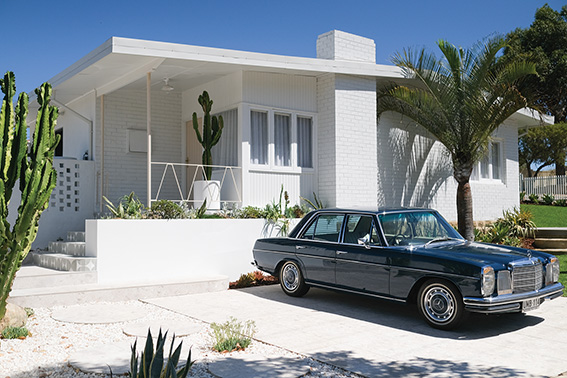
    THE Block’s Ronnie and Georgia have brought a little slice of Palm Springs glamour to Embleton.

    The charismatic duo have turned an ugly duckling into a three bedroom, two bathroom beauty with no stone left unturned, including a brand new roof.

    • The Block’s Ronnie and George (above) have transformed a tired Embleton home into a beautiful new abode.

    The before-and-after transformation is quite astonishing with the facade particularly striking, and the open plan kitchen/dining/living area a joy to behold.

    The designer kitchen has a butler’s pantry and top-of-the-line Westinghouse appliances including an integrated fridge and a 90cm oven/convection cooktop.

    Porcelain-slab benchtops and splashbacks add a touch of luxury to the culinary space, which is complemented by high-end tiles throughout.

    The skylights in the kitchen and bathrooms are a clever touch, providing plenty of natural light, and the relaxing main bedroom has an ensuite, reverse cycle aircon and built-in wardrobes.

    The attention to detail in this renovation is outstanding – one of the highlights is a garden designed by renowned landscape wiz Sam DeVries.

    Featuring a fire pit, courtyard and mature leafy trees, it’s the perfect spot to gather with family and friends.

    Once the colder weather starts to bite, head indoors and snuggle up beside the cozy electric fireplace and enjoy the classy pendant lighting. The home includes fully reticulated gardens, new roof with sound check insulation, driveway parking for two cars and a lovely Palm Springs mid-century look. Situated on a 455sqm block on McKenzie Way, you are close to the Galleria Shopping Centre, Bayswater Waves, tons of lovely parks, and it’s a short drive to Mt Lawley and the CBD.

    This fantastic home has been given a spectacular makeover by The Block’s Ronnie and Georgia.

    Offers in the high $700,000s
    Home open today (Saturday March 9)
    and tomorrow 10am-
    10:30am
    1 McKenzie Way, Embleton
    Beaucott Property 9272 2488
    Aaron Storey
    0417 931 604
    Emma Proud
    0412 499 568

  • Mozzie service creates a buzz

    THE City of Perth has become one of the first councils to sign up for Bayswater’s drone mozzie-busting service.

    Bayswater council’s commercial mosquito control team has been operating since early 2022, using drones to map out the terrain and access hard-to-reach areas such as marshes and thick bush so spraying can be targeted.

    • Bayswater mayor Filomena Piffaretti, Perth lord mayor Basil Zempila and Bassendean mayor Kath Hamilton with one of the mozzie-busting drones. Photo supplied

    The trial was so successful the council offered to other municipalities and Perth has now signed up to give Heirisson Island and Pelican Point’s mozzie swarms a hit, while Bassendean has also been using it in the Ashfield Flats wetland.

    Lord mayor Basil Zempilas said tourists were having a better experience at Heirisson and Pelican Point, while the service was a great example of cooperation.

    “Since engaging the City of Bayswater’s mosquito control service, we’ve seen a reduction in mosquito numbers, allowing tourists and locals to explore these picturesque locations without nuisance,” Mr Zempilas said.

    Bayswater mayor Filomena Piffaretti said the council was proud to share its drones.

    “Mosquitoes are not only a nuisance, they can also carry viruses, so it’s important that we take a proactive approach in protecting both our community neighbouring communities,” Ms Piffaretti said.

  • Grudging ‘yes’ for safe night space

    PERTH council has given its begrudging approval for Ruah to open a Safe Night Space for Women in James Street, Northbridge.

    At this week’s council meeting, mayor Basil Zempilas said he was only putting his hand up to vote for the service because it was inevitable the Cook government would overturn any vote against it.

    “I maintain that the middle of our entertainment precinct on James Street is not the best location for a service of this type,” Mr Zempilas said.

    “It’s a view that is supported by many in our city community and it’s a view that we heard reinforced by some of those who gave deputations in this chamber last week. 

    “But I accept for all of the reasons above; at present, it is the only location that is on the table.”

    Noting that the safe space was originally a City of Perth idea, Mr Zempilas said returning the Rod Evans Centre where it initially opened to the community had been justified by its current use.

    Justified

    He said since being re-opened as a community centre, the centre had been used by dance and theatre groups, singers, magicians, a church, community and writers’ group and for school holiday programs.

    “I read that list out because as is absolutely evident from that, our commitment to return the Rod Evans Centre to the community was genuine and that is exactly what we have done.

    “Only one incident at the Rod Evans Centre in December 2023 was recorded and zero incidents in January 2024. By comparison, in December of 2022, there were 12 recorded CCTV incidents and 12 in November of 2023.”

    Mr Zempilas successfully moved an amendment to ensure a security guard is positioned outside the building at all times.

    Cr Brent Fleeton said he really felt for local residents who’d already complained about behaviour stemming from clients of Ruah, which will operate the safe space.

    He said the council was forced to ignore the pleas of residents who outlined a litany of problems at a council briefing last week and blamed housing minister John Carey.

    Couldn’t listen

    “He’s obviously very close with Ruah,” Cr Fleeting said.

    “We weren’t allowed to listen to those people last week, we could listen to them, but we couldn’t take into account what they were saying.”

    Mr Zempilas revealed he’d suggested an alternative site on Aberdeen Street which didn’t get Mr Carey’s support, which Cr Fleeton said made no sense.

    “We had an option that the lord mayor put forward, which was closer to Royal Perth Hospital, and we heard the applicant say that most of their referrals come from Royal Perth.

    “[The James Street site] is a long way from Royal Perth, and people will get into a taxi and will attend this site.

    “This is just a really ill-thought-out application.”

    by STEVE GRANT

  • Call to boost e-powers

    WA’S Youth Advisory Council has called for Australia’s eSafety commissioner to be given broader powers to help young people tackle the growing problem of image-based abuse.

    YACWA made the recommendation in a submission to the Cook government, which is reviewing the Criminal Law Amendment (Intimate Images) Act, saying current laws do not go far enough to protect young Western Australians.

    YACWA said young people are “disproportionately” affected by image-based abuse because of the volume of intimate images they are sharing online. 

    A federal health department survey of young people in 2021 found that while they were aware of the risks of sending sexy images, that wasn’t deterring them. Of those aged 14-18 who participated in the survey, 78.7 per cent had received a sexual photo, and 58.6 per cent had sent one.

    • Federal eSafety commissioner Julie Inman Grant

    Blackmail

    IBA involves the distribution, or threat of distribution of intimate images without the consent of the person in the image. Revenge porn and blackmail also falls under this category. 

    IBA can also affect people who have not participated in sexting, as fake, altered, or AI-generated images are also prolific.

    It can be used as a weapon for perpetrators of domestic, family, and sexual violence.

    YACWA policy officer Claudia Carles authored the review and says orders to remove intimate images after they had been shared are not effective enough to prevent the proliferation of IBA. 

    Due to the nature of the internet and social media, images can end up “far beyond the reach” of the state government and its current powers to prevent IBA, Ms Carles said. 

    “There is a very scary complexity of images ending up in international servers.” 

    YACWA says the investment in cybersecurity is necessary, allowing the eSafety commissioner to track, locate, and destroy images after they have been shared. 

    National cyber safety educator and Surf Online Safe founder Paul Litherland contributed to the review and says the biggest issue young people face is the removal of images which have been shared by another person to a wider group of people. 

    Mr Litherland says current legislation is “working well”, but social media networks and companies need to be more proactive when removing images from platforms. 

    “What I’m pushing for is for the governments now to introduce an ability to act on networks,” Mr Litherland said.

    “Many of them aren’t working actively enough to remove content on request.”

    A major issue is that some networks consider ownership of an image to be of the person who shares it further, and not necessarily of the victim who originally sent it. 

    Mr Litherland says this removes the responsibility for networks to act, and updates to the legislation needs to incentivise them to do so. 

    “If they don’t remove it, then we can take legal action against them that will have consequences.” 

    The review was conducted as part of YACWA’s Youth Educating Peers project, as part of a push to help young people feel safe when choosing to engage in digital sexual practices. 

    The review also recommended that the Criminal Law Amendment (Intimate Images) Act be updated so children under 16 are not charged with “producing child exploitation material” if they have taken an intimate photograph of themselves which has been sent and forwarded. 

    Recommendations also included the need for peer-led education addressing sexuality, consent, and relationships, especially when it comes to safe digital sexual practices. 

    Intimate

    The review also detailed the need for the definition of ‘intimate’ to include images involving religious and cultural attire as part of a more inclusive and protective approach, as current WA legislation does not specify that IBA can violate cultural and religious boundaries. 

    Ms Carles said state legislation needed to catch up to federal law, which already covers religious and cultural provisions. 

    “At the moment, the definition the Western Australian definition of intimate image is pretty narrow,” she said. 

    “It already exists federally so it shouldn’t be a big ask.”

    The review is available to view on the Policy and Advocacy page on the YACWA website, yacwa.org.au

    by KATHERINE KRAAYVANGER

  • Nashos in good company

    THE organisation representing surviving Nashos – men called up for mandatory national service in the 1960s and 70s – has been forced to restructure as a company in order to keep up the fight to access additional free healthcare.

    Fair Go Nasho had been operating as an incorporated association based in Victoria since 2022, but that put it at odds with Consumer Affairs Victoria’s rules which said it couldn’t receive memberships from people in other states.

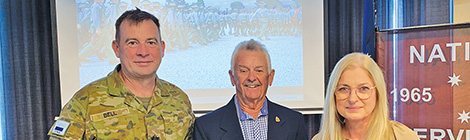
    Fair Go Nasho WA organiser David Butterfield told a gathering of Nashos and their wives at the RAAFA Club in Bull Creek last week that the national body was working furiously to get the paperwork sorted.

    • Royal Western Australian Regiment senior training officer Todd Bell with Nashos Fair Go WA organiser David Butterfield and RSLWA acting CEO Allison Stephens.

    Gold Card

    “So they’re pushing ahead with that and they are also working on their public relations plans; getting interviews on various media outlets to try and gain more support for NFG’s aim of gaining more benefits for us through the DVD gold card,” Mr Butterfield said.

    Despite undergoing rigorous and often demeaning army training, and living under the cloud of being sent to the front lines of the Vietnam War at any time, the Nashos’ lack of active combat denies them a veteran’s “Gold Card” which would cover all their medical expenses.

    Mr Butterfield told the Voice the Nashos were fed up with arbitrary decisions about what qualified under the white card they do receive, and delays in getting applications approved that have in some cases stretched into years.

    He said army training was tough on their bodies and minds, but the Nashos were made to feel like malingerers if they sought help at the base’s medical post and their attempts at self-care are now coming back to haunt them now they’re heading into their 80s and 90s.

    “I remember when I first went in Puckapunyal, we used to a lot of marching and running in the old bloody hobnail boots,” Mr Butterfield said.

    “I don’t know, I might have one foot bigger than the other, but around the achilles area it was just red raw.

    “Now, in city life I’d have maybe not taken a day off, but maybe put on some other footwear of something.

    “But they’d just maybe give you a bandage and that was about it.”

    Mr Butterfield said they’d also like to increase the prominence of National Service Day on February 14, and may hold annual luncheons in future years to get it on the radar.

    During the lunch RSLWA acting CEO Allison Stephens promised to throw the league’s support behind the Nashos’ campaign.

    Ms Stephens outlined the major changes the organisation has undergone in the last couple of years, particularly moving into its newish home at Anzac House, overlooking Government House gardens.

    “The idea of it was to really have that one stop shop, where not only could we deliver our services and support, but other providers could also operate out of there,” she said.

    Support dogs

    “Not only is RSL there, but we have psychiatric and counselling services.”

    Ms Stephens said an on-site dentist was an expert in finding the links between dental problems and defence services, while the Department of Veterans Affairs had support officers.

    RSLWA was also recently successful to expand the new Rockingham Veterans and Families hub to build eco-cabins that can be used by ex-Defence families, who will have access to medical and allied health services.

    The league has also just taken four puppies which are going to be trained up as psychiatric support dogs for a three-year trial.

    Ms Stephens said support dogs had been successfully used with veterans over east, but there had been no capability in WA to train them up, leading former veterans issues minister Paul Papalia to pledge funds towards the $30,000 price tag.

    “The funding for these will never be 100 per cent covered by the government, we will continue to fundraise to find the money as well to support programs like this because they’re really important for contemporary veterans and their needs for mental health,” Ms Stephens said.

    by STEVE GRANT

  • Turn back the tide

    Paul Gamblin has advocated for the WA coast, including Leighton-Port and Ningaloo, since the late 1990s and has campaigned on ocean and coastal issues nationally and internationally. 

    A community meeting on this issue will be held at 6pm on Wednesday, 6 March at the Fremantle Surf Lifesaving Club. More information can be found at saveleighton.org.

    TWENTY FIVE years ago this month, a group of people – mostly strangers to each other then – gathered on the edge of Stirling Highway near the footbridge to Leighton Beach to challenge a proposal that would have seen private beachside properties occupy swathes of precious public foreshore. 

    It was the first action that sparked a community campaign – simply called ‘Save Leighton’ – that became bigger and lasted longer than anyone there could’ve imagined. 

    Much of the core of that volunteer group is still active to this day, and that’s because while we’ve made good progress, the job’s not finished. 

    We managed to stop the overdevelopment of our coast by campaigning intensively across the Court and Gallop governments, and succeeded in substantially increasing the extent of the foreshore reserve, helping consolidate Leighton’s place as one of the best and most accessible beaches along the metro coast, with more space for natural vegetation and dunes, and with enhanced recreation areas.

    It was a tough fight at times, culminating in a massive ‘Leighton Wave’ rally which saw 8000 people gather at the beach more than two decades ago to show government just how much we love our beaches and want our kids to enjoy them too. 

    Unfortunately, the storm clouds are gathering again, and the future of Port Beach and south Leighton is at stake. 

    The WA Government is considering a concerted push by developers to rezone the land behind Port Beach from industrial to urban. 

    Rather than simply listening to these self-interested voices, we need our government to act instead on our collective behalf now, and even more so for future generations. 

    If it doesn’t, the community will have increasing difficulty accessing the coast, and the beach itself will likely need much greater engineering, because in time, the foreshore won’t be wide enough for dunes to rebuild and resist erosion. 

    Erosion

    Climate change-driven erosion, alone, means we should not be shackled to these old development boundaries.

    In a nutshell, we need a much wider foreshore reserve for two reasons:

    • So that people can access the beach and foreshore now and in the future. Already, the area around Leighton and Port is acutely overcrowded, with families from the wider catchment – around 100 suburbs – unable to find parking (noting that public transport to the beach isn’t readily accessible in many areas, particularly for young families and the elderly). 

    • To restore the damaged and narrow dunes at Port Beach so that we maximise the role that natural processes play in responding to erosion.

    To be clear, we have never been opposed to appropriate development along the coast, and have supported, in principle, the apartment and commercial development at Leighton now, as a pragmatic compromise, with a reasonable setback for the time.

    We’ve learned a lot from a quarter century of advocating and campaigning.

    We have learned that the public good, and even adherence to policy, doesn’t always come automatically and that we have to be vigilant, engaged and ready to act.  

    At our community stalls, people tell us again and again that one of the many reasons they cherish Leighton and Port beaches is because they’re beautiful and unblemished by groynes and seawalls.

    We have been reminded that our enviable coastal lifestyle is worth fighting for, and that for so many of us, the physical and mental wellbeing benefits of this coast are of inestimable and growing value. 

    Furthermore, that the spirit of egalitarianism that means anyone, irrespective of wealth or privilege, should be equally able to enjoy the beach – which is not a value held universally of course – is something we need to actively defend. 

    People from across the community care deeply about their coast and will rally to the cause.

    They know that the health and public access to our beaches and foreshore areas cannot be taken for granted.

    It seems that every few years we have to stand up for our beaches, and that moment has arrived again for the Port-Leighton coast.

    The government is poised to decide the future of Port Beach, with major implications for Leighton too, and we need to demonstrate again what governing for the public good, rather than narrow private interest, really means. 

  • Students’ gaza strike

    PERTH students have vowed to walk out of classes this week to protest in Forrest Place against Israel’s harsh retaliation in the Gaza Strip to a terrorist attack.

    High school and university students from Students for Palestine will be walking out of classes nationwide on Thursday and Friday to “protest the ongoing genocide” of Palestinians by the Israeli government and military. 

    The student-led organisation have also called for the Australian government to cut diplomatic ties with Israel. 

    Students for Palestine representative Ella Marchionda says the protest aims to demonstrate the “wholesale destruction of every part of Gazan society”, including the Palestinian education system. 

    “If students in Gaza can’t go to school and university, then neither should we,” Ms Marchionda said in a press statement. 

    The protest organisers say there is a “new urgency” for young people to protest after Israeli Prime Minister Benjamin Netanyahu vowed to push the war into the southern Gazan city of Rafah. 

    Up to 30,000 Palestinians have been killed and 70,000 wounded by Israeli attacks on the Gaza strip since the war started in October last year. 

    The Perth rally will be held this Friday, March 1 at Forrest Place at 11.30am.

    Sacking

    A new group of Friends of Palestine linked to the Media, Entertainment and Arts Alliance members will also be holding a rally at Wellington Square on Friday March 8 in response to the ABC’s sacking of Sydney journalist Antoinette Lattouf. 

    Lattouf was sacked in December, days after she had shared a post from Human Rights Watch regarding the Israeli military’s war in Gaza, including a caption that the the humanitarian organisation was “reporting starvation as a tool of war”.  

    The Sydney-based journalist has sued the ABC for unlawful sacking.

    by KATHERINE KRAAYVANGER

  • Heart to heart

    IF YOU’VE put on a few pounds over the festive period, there’s no better time to start getting fit than RedFeb – Heart Awareness Month.

    “Heart disease affects two in three Australians and still remains our leading cause of death,” says Heart Research Australia CEO Nicci Dent.

    “The financial implications of heart disease are not just limited to medical costs.

    “Recovery from heart attacks often leads to lost wages, reduced work capacity, and hindered career advancement, due to the physical and mental effects of the condition.

    “Furthermore, higher health insurance premiums and the rapid depletion of retirement savings pose long-term financial challenges.”

    • Parenting author Maggie Dent was made aware of a high heart rate by her smartwatch.

    Due to the cost of living crisis, it’s worrying but not surprising that many Aussies have cut back on their health insurance.

    In June 2023 the national average spend on health insurance was down 10 percent from the previous year.

    But there are other low-cost ways to reduce your risk of heart disease.

    You don’t need an expensive gym membership and can simply go for walks, invest in a cheap exercise bike, or do push-ups and sit-ups in the house.

    Australian parenting author Maggie Dent avoided a serious heart episode by buying a smartwatch.

    “My smartwatch alerted me to a high heart rate, leading to a diagnosis of atrial flutter, despite having no symptoms,” Dent says.

    “My journey emphasises the importance of swift action, prioritising heart health, and routine check-ups.

    “In financially challenging times, a heart-healthy lifestyle doesn’t have to be expensive.

    “Embrace simple joys like family walks and connecting with friends to reduce stress. It benefits your whole family’s health and wallet.”

    If you’re unsure about how to start looking after yourself better, then check out Heart Research Australia’s free online Heart Hub, which has a wealth of expert advice.

    “Eight out of ten instances of premature heart disease and stroke can be prevented through healthy lifestyle choices,” says nutritionist Chloe Steele. 

    “The foundation of this prevention lies in health literacy, as knowledge is the key to a healthier heart.”

    Heart Research Australia is asking Australians to wear red this February and donate to vital research to combat heart disease.

    “Cardiovascular disease affects more than four million Australians and is responsible for one in four deaths,” Dent says. 

    “Research is undeniably a life-saving endeavour.

    For info and to donate see heartresearch.com.au. Check the advice on Heart Hub at heartresearch.com.au/heart-hub/

    Top tips for keeping your heart healthy:

     • Eating Heart-Healthy Foods: A heart-healthy diet doesn’t have to be costly. Focus on affordable staples such as beans, lentils, whole grains and vegetables.

    • Staying Active: Four in five Australians don’t do enough exercise, yet physical activity is essential for heart health.

    • Managing Stress: Chronic stress can take a toll on your heart. Finding cost-effective ways to manage stress is vital.

    • Regular Health Check-ups: Preventive care is key to maintaining heart health. Regular check-ups can help detect issues early and save you money in the long run.