• Whopping bill for Waterland

    THE future of an iconic, toddler-friendly waterpark in Maylands is in doubt after a council review revealed potentially lethal safety issues that would require $2.7 million to fix.

    A $20,000 report of Waterland reveals several areas of the park fail to meet legislative standards or need urgent maintenance, including:

    • all metal objects bigger than 100mm need to be earthed to prevent electrocution;

    • chlorine gas is too close to residents and needs to be replaced with liquid chlorine;

    • water treatment does not meet current legislative standards.

    The facility was temporarily shut twice over summer to manage bacteria levels in the pool and to repair an underground pipe.

    Bayswater mayor Sylvan Albert says the 40-year-old facility, located on the Maylands Peninsula, is reaching the end of its usable life: “Council will consider the future strategic direction of Waterland at next week’s ordinary council meeting,” he says, adding the staff working at Waterland from November to April split their time between it and Bayswater Waves.
    04. 882NEWS
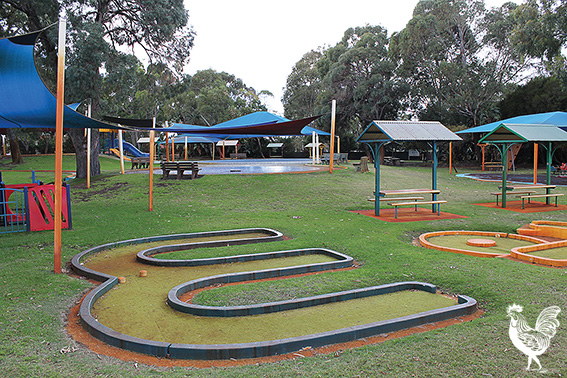
    • Waterland is closed for winter—but will it ever re-open? Photos by Stephen Pollock

    Waterland has five splash pools, up to 60cm deep, a fountain, playgrounds, BBQs and a kiosk.

    Catherine Ehrhardt, who played in the waterpark as a child and till recently took her own kids there, says it is an “icon of Maylands”. “It’s a local gem and fills an important niche for toddlers and young kids who cannot swim yet,” she says.

    “Locals have always taken their children there and it is kind of unknown outside the suburb, so it wasn’t too busy in the summer.

    “It needs some love though: I don’t think the waterfall has ever worked and the fountains are always on the blink.

    “The pools are unheated and I remember kids lips turning blue in the summer,” she laughs, “but you know, with a few tweaks and longer opening hours, it could be back to its former glory.”

    Cr Stephanie Coates, who has taken her three kids to Waterland, says it is “well-loved” in the community and has a quaint old-school charm.

    “It does need updating and some TLC, so hopefully we can thrash out a solution at council.”

    The general consensus on the Waterland Facebook page and various family websites, is that the park is cheap and cheerful, charging just $4.10 for adults and $3.40 for children.

    In 2014-15, 32,296 people visited the park, a whopping 10,228 drop from the year before.

    Council officers say closures for repair and a new water park in Bullsbrook have increased competition. The council has been facing big maintenance bills for various ageing facilities that it owns, including sports clubs and retirement homes.

    The spiralling costs have prompted the council to look at offloading sites or encouraging organisations who hire council premises to become more self-sufficient.

    Cr Albert notes the huge bill for Waterland is not a result of any neglect: “It is noted that council has allocated on average over $150,000 towards the upkeep of the Maylands Waterland facility and its grounds in each of the last three financial years,” he says.

    “From time to time facilities reach the end of their usable life in their current form and require major works to either stay open or provide a different service to the community into the future.”

    by STEPHEN POLLOCK

    BAY003021139x147_P.pdf

  • A question of Country

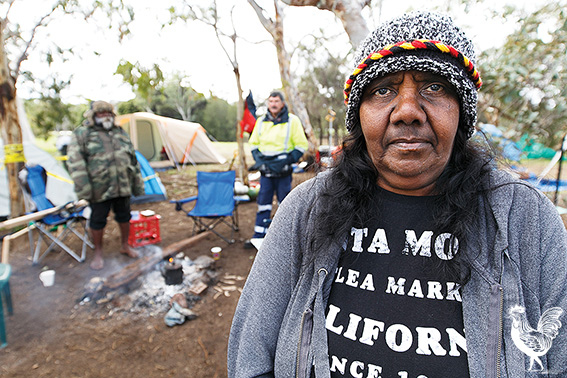
    ABORIGINAL elder and activist Bella Bropho still sleeps out on Heirisson Island despite Perth city council and police repeatedly confiscating tents and bedrolls to stop camping.

    In an open letter sent to the PCC this week, Ms Bropho accuses the council of having “extended the limitations of your authority under the laws of WA and the commonwealth” and describes the confiscations as “criminal actions”. She demands a return of taken property.

    Ms Bropho says under the WA local government act, council by-laws are “overridden by state or federal laws such as the Aboriginal Heritage Act of 1972”.

    She argues people are entitled to camp at the registered Aboriginal site—listed as a camp and meeting place—because the federal law overrides bylaws. It’s a similar argument to that advanced by seasoned barrister Stephen Walker in legal missives directed at the council.

    05. 882NEWS 1
    •Aboriginal elder Bella Bropho still sits at the campfire on Matagarup/Heirisson Island.

    Power

    “You must recognise that we, the Swan Valley Nyungah/War-juk people, are in a process of taking back our power to care for our own communities as we should,” Ms Bropho wrote.

    “We have never been given the opportunity to live in our own ways… since occupation of our lands in 1829, we have been forced, by successive policies, to be a reactive people.

    “Now we are trying to change to be pro-active, but we need time to do that in our own way.

    05. 882NEWS 2
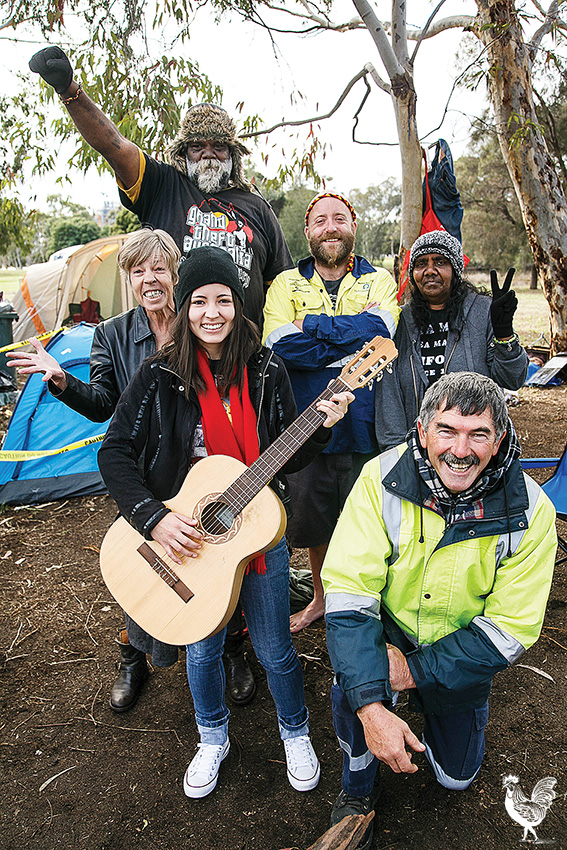
    • HEIRISSON ISLAND will be the site of a Concert for Matargarup on May 30, with musicians heading down for a gig to oppose the closure of homelands in remote areas. About 35 bands are planned, along with food vans and a corroboree. The concert kicks off at 11am. Photos by Matthew Dwyer

    “We are in the process of re-piecing together our community with our own values system, starting here at Heirisson Island. We know our values are the right way to go, because despite all the assaults on our people since the occupation of our lands, our values and our humanity has not led us to despise others or led to a hatred of the whites.

    “We are aware that we represent a threat to the document culture, however it is our obligation to liberate ourselves from this system that is not working for us.

    “We need to make an ideological shift, a first step to a new philosophical ideology. There is room for wadjellas (white people) to move with us, to develop a new system with us.”

    The Voice asked the PCC for a response to Ms Bropho’s letter. Its new media man Michael Holland says CEO Gary Stevenson has met with Ms Bropho but “we respectfully decline to comment on this occasion”.

    Likewise, he says, “the correspondence to Mr Walker is privileged and details will not be released”.

    by DAVID BELL

    5. Bodhi J 20x7

  • Bus stops are back in the USSR

    SOME of Stirling’s concrete bus shelters look like leftovers from Soviet Russia and need upgrading, says Cr David Michael.

    He wants the council to take a leaf out of neighbouring Vincent’s hipster book and upgrade bus stops so they’re modern and offer protection from the elements.

    “There are 17 types of bus stops in Stirling and many of them are a bit dodgy looking,” he says.

    “They remind me of some of the infrastructure I saw on a recent trip to Russia.

    “We have been looking at this since 2008 but unfortunately an on-running dispute with the public transport authority has meant the process has ground to a halt and we have missed out on some potential funding that was available.”

    06. 882NEWS
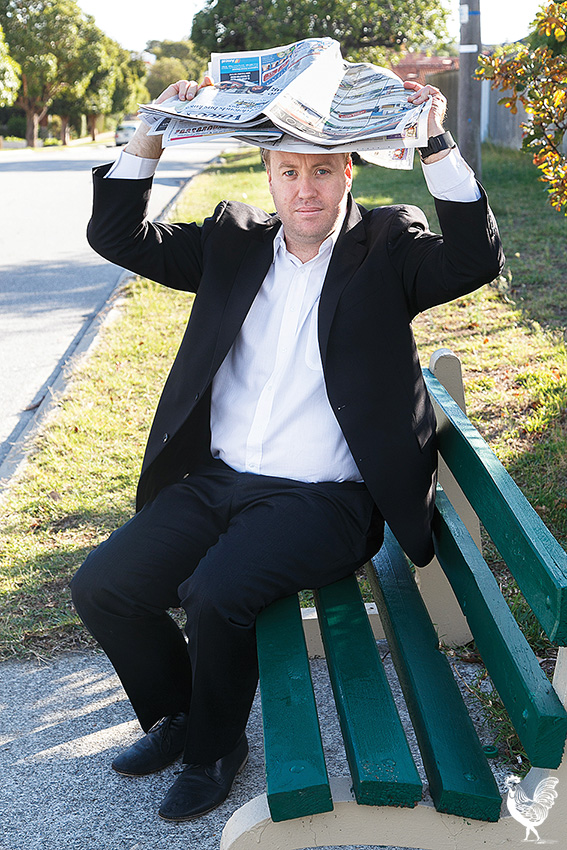
    • While the Perth Voice is so fetch as a substitute shelter, Cr David Michael would prefer something more permanent. Photo by Matthew Dwyer

    Various councils and the PTA have been at loggerheads for years over who pays for new bus shelters and upgrades, but the Voice understands the WA local government association and the PTA have reached an agreement, which will be unveiled by WA transport minister Dean Nalder this week.

    The Voice contacted WALGA president Troy Pickard for comment, but he didn’t want to steal Mr Nalder’s thunder.

    “The minister for transport has postponed the announcement of the bus shelter infrastructure agreement until tomorrow,” WALGA media manager Annaliese Battista said.

    “Therefore, our president is not in a position to offer comment about the agreement prior to your deadline.”

    In light of the pending agreement, Stirling voted to develop a plan to increase the quality and number of bus shelters in the city and agree on a standard design.

    by STEPHEN POLLOCK

    6. Avant Financial Services 10x2

  • Roe Street to get finished bike path

    ONE of the most glaring gaps in Perth’s bike lane network will soon be fixed, with the Barnett government kicking in $2.9 million and Perth city council $200,000 in to install a shared bike path along Roe Street.

    It’ll head west from the train station and be a shared path, even though international walking expert Rodney Tolley recently came to Perth to warn off the things. “It is a uniquely Australian practice,” he says of the shared paths. “No-one else in the world does this.

    “Generally speaking the idea of a shared path in an urban area is just unheard of. Seniors don’t like shared paths, they feel intimidated and scared.”

    Mr Tolley had stopped short of calling for them to be pulled up, but warned there were a lot of baby boomers about to get into the old and shuffly stage and they’re not going to like them.

    by DAVID BELL

    7. FCO June 20x3.5

  • The lore of science

    FOR thousands of years before modern science confirmed the facts, Nyoongar storytellers passed down memories of a time when the mainland was linked with Wadjemup (much, much later to be named Rottnest Island). A new Perth-produced documentary Walking Together—Belonging to Country (Djena Koorliny Danjoo Boodjar-ang) explored the similarities between Aboriginal and western scientific understandings of Nyoongar country. Murdoch uni’s Glen Stasiuk (of the Minang-Wadjari Nyoongars) says he’d been familiar with the Aboriginal side of the story, but directing the film he came across the climatic, geologic and archeological understandings of the history too. “People of the Whadjuk Nyoongar knew that Wadjemup was connected to the mainland,” he says. “Geologically, it’s been proven that was correct.

    08. 882NEWS
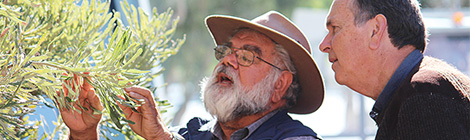
    • Elder Noel Nannup and and local flora and fauna expert Stephen Hopper found a lot of similarity between Nyoongar knowledge and modern science.

    “The story I heard through one family group is within a decade they witnessed literally the ocean levels rising an extraordinary amount, that within their own viewpoint the island disappeared, the former mountain that attached to the mainland then became a distant island. “That’s been carried down for 7000 years.” The old stories also told of a great canyon beneath the water off the west coast, again confirmed by modern science. Francesca Robertson, a senior research fellow at ECU’s Kurongkurl Katitjin Indigenous research centre, says there are many parallels between Nyoongar creation stories, telling of how the south-west corner of WA formed, and the realities of people adapting to what’s now known as climate change happening over thousands of years. Elder Noel Nannup and UWA flora and fauna expert Stephen Hopper likewise found a lot of common ground between the old knowledge and new research. The 40-minute documentary shows June 1 at the state theatre centre of WA along with a Q&A with the filmmakers at 12.45pm and 2.45pm. by DAVID BELL
    8. Kaleidoscope 5x2

  • Accolades for film about awkward love

    A SHORT film about awkward situations in a disabled toilet has seen two filmmakers selected for the Revelations Film festival.

    Miley Tunnecliffe and Jess Black lead a female-strong crew Red Milestone Productions in an industry where it’s still rare to see women working on the technical or directing side of things. With a decade between them they’ve had different experiences.

    Ms Black, the younger at 22, says she doesn’t see a lot of overt sexism (apart from the ever-annoying blokey blokes always falling over themselves to insist a woman shouldn’t carry anything heavy), but a look around the average film set shows very few women outside the acting or producing roles.

    With a focus on logistics and management, women seem to have fallen into the role of producer rather than directing, or more technical roles like editing or cinematography.

    09. 882NEWS
    • Filmmakers Jess Black and Miley Tunnecliffe go over a final cut at Leederville’s Sandbox Studios. Photo by Matthew Dwyer

    Ms Tunnecliffe says the pair hasn’t set out on any concerted plan to only work with women: instead, their number one rule for people they work with is “you can’t be an arsehole” followed by “be talented,”. If there are women who fit both those and just need some encouragement or experience to get going they’ll gladly take them on board.

    Their film Love in a Disabled Toilet, which beat out 14 other filmmaking teams for a $10,000 grant from the Film and Television Institute, recently had its first screening at the FTI.

    Ms Tunnecliffe, who does the writing and directing while Ms Black does the producing and editing, says it’s a nervous experience watching so much work (including months of editing in Ms Black’s bedroom edit suite) in front of so many people. “I was watching the audience, not the film,” Ms Tunnecliffe says.

    Their work’s just been accepted into the Revelation Film Festival for the shorts screening, and they’re putting in applications here and abroad for a slew of other festivals. “We want to get known here, but we want to be known internationally as well, and we’d love to hit America,” Ms Black says.

    Revelations film festival runs at Luna cinema’s various joints as well as at West Perth’s new Backlot Studio, and the screening schedule and info on where you can catch the film is announced June 6.

    by DAVID BELL

    9. OPSM 10x7

  • Saving the world starts at home

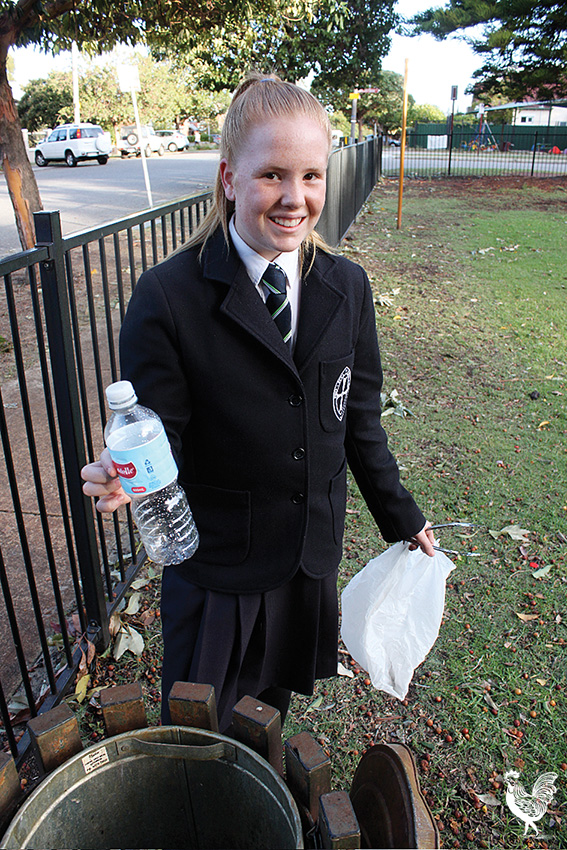
    ELEVEN-YEAR-OLD Lauren Campbell has been doing her bit to clean her local park.

    She reckons smokers tossing butts and coffee-sippers tossing cups are the biggest culprits.

    For a school project she was asked to pick a way to help the world: she started close to home—Mount Hawthorn’s Braithwaite Park, right across the street.

    “We’ve lived here my whole life and the park is a really special place, and it’s not nice to see it being misused,” the Perth College year sixer says.

    10. 882NEWS
    • Lauren Campbell says smoke packs, coffee cups and doggy bags are the most common litter sources in her local park. Photo by David Bell

    On her first day, Lauren filled five bags of rubbish from the small park. When she went back this weekend she packed another three. Cigarette packets, coffee cups and loose doggy bags blowing in the wind were among the most discarded items. She’s even found bottles less than a metre from a bin.

    “Lots of people don’t pick that stuff up because they think ‘gross! It’s not mine’,” she says.

    Most people she’s met while out picking up rubbish have been “lovely: it’s good to know there are nice people around,” (although one time she got chatting to a couple who congratulated her on her hard work, only to leave their coffee cups behind when they left).

    The assignment is due this Friday May 22, but now she’s got the clean-up bug, Lauren says she’s “going to make it an ongoing thing” and hopes her mates pick up the habit too.

    by DAVID BELL

    10. Oxford Hotel 20x3.5

  • Cr sparks recharge action

    SAMANTHA JENKINSON is pushing for more adult change tables and free recharge points for electric wheelchairs in Stirling.

    Currently there is a non-height adjustable change table at the Terry Tyzack Aquatic Centre, and another at the Perth train station. “It’s basically a table that can be moved up and down with a hoist for adults with disabilities, the elderly, or people who are incontinent,” she says. “We should be looking at providing these facilities at major community facilities and partnering with businesses to provide them in major retail precincts.”

    The Stirling councillor—who suffers quadriplegia having broken her neck in a car accident as a teenager—also wants more free recharge points for electric scooters and wheelchair throughout the city. “We have an ageing population and it is not uncommon to get a flat battery when people are out and about on wheelchairs,” she says.

    The recharge scheme has been a big success in neighbouring council Subiaco, which has various recharge sites at Dome cafe and at Earthwise, a non-funded community centre.

    Robert Penny, a volunteer at Earthwise for more than 30 years, says his organisation hosts two recharge points.

    “It’s a fantastic idea and fits in with Earthworks community ethos,” he says.

    A Dome employee says the cafe has around seven recharge points which have been welcomed by regular users with disabilities.

    Subiaco council acting director Karen Quigley says the cost to businesses to recharge an electric mobility scooter or wheelchair is minimal: about 30 cents per hour. Stirling council voted to look into both initiatives.

    by STEPHEN POLLOCK

    11. Prompt Plumbing 5x2

  • LETTERS 23.5.15

    Dungnabbit
    WA police are doing a crappy job in Northbridge on weekends.
    Saturday and Sunday morning as you walk, cycle or jog around James Street, Beaufort Street, near McIver train station there they are—blobs of horse manure. Nobody to clean it up.
    Doesn’t the commissioner have a clean-up squad? Do the manufacturers of disposable baby nappies have a suitable product for horses? I have drawn this matter to the attention of the fuzz previously. As usual they snubbed me.
    Fair dinkum, those horses are manure-making machines of the highest order.
    Raymond Conder
    Central Ave, Inglewood
    The Ed says: An opportunity going begging for all those local community gardens popping up. It’s brown gold, folks. Brown gold!

    Perth not the main game
    ANDREW MAIN (“Bus lanes the better option,” Voice Mail, May 16, 2015) criticises Vincent council for “withholding support” from the state government’s bus lane proposal—apparently on the grounds that something (anything?) is better than nothing—although he admits to severe doubts about light rail anyway.
    Andrew appears to consider the only role of public transport is to get people to and from the City of Perth (“the bus lane proposal on Fitzgerald Street will benefit Vincent residents by making bus trips into and out of the city much quicker”).
    I, for one, would rather see public transport that creates better access to and within the City of Vincent rather than simply speeding up journeys to the central city.
    What Andrew fails to realise is light rail brings benefits beyond pure travel to a place that is already busy. Light rail has been demonstrated time and time again to encourage development, business, employment and appropriate residential density at key points along its route; bus lanes do not do so to anything like the same extent.
    The key reason for this is the sheer permanence of light rail infrastructure, which gives investors reassurance about the future. Bus lanes and bus services are inherently flexible, but this apparent advantage is actually a disadvantage in a metropolitan region that is having to accommodate rapid population growth.
    In the absence of a strategic and selective approach to development and density in Vincent, which is better supported by light rail than by bus, we will be faced with less discriminating pressure to increase density across Vincent as a whole. And even though the public transit authority states its proposed bus lanes are consistent with implementing the MAX light rail at a later date, the danger is that when patronage is sufficient to “justify” this it will all be too difficult—what do you do with that large number of existing passengers, who provide the justification, while you are installing the light rail?
    Bus lanes do have a valuable role to play—but not everywhere. At the very least, we need to be sure the PTA has properly considered all the issues and this is not simply a cheap short-term fix that will make life more difficult and preclude desirable outcomes in the longer term.
    Ian Ker
    Vincent St, Mt Lawley

    Our intention was education
    I REGRET that you stated in your article (“Pet cafe howling,” May 16, 2015) that I had not responded, when I would have been keen to offer my opinion.
    The owners of the Pet Lover’s Cafe listed themselves to purchase a designer “schnoodle” dog via the Trading Post, as shown in a screen capture provided to your paper. This was in direct opposition to their claim they support rescue groups.
    Since the ensuing controversy over this, I understand they decided to purchase a schnauzer from a registered breeder instead. Great news! So why was the article published in your newspaper? Nobody boycotted the cafe. This issue was done and dusted.
    If their business is failing it is because people don’t go there, not because of a couple of puppy farm activists. If all of their supporters coming out of the woodwork now had frequented the cafe, their business would be thriving.
    I hope it does. It has never been our intention to put them out of business.
    Our intention was to educate them about the hypocrisy of their decision to purchase a designer dog online, while claiming to support rescue. And we did.
    Puppy farmers commonly sell online so as to avoid scrutiny and inspection of the breeding parent and the facilities. The price for the original dog is $1850. It’s absurd that a cross breed from an unregistered breeder can attract those sorts of profits (often untaxed), while shelters are overflowing and 250,000 dogs being euthanased each year.
    It’s common knowledge within the pet industry and the owners of the cafe knew this (Australian Animals provides information to spot puppy mills at http://www.animalsaustralia.org/puppy-factories).
    In recent weeks this issue has been highlighted on both Channel 9 and Channel 7. I hope this means the end of puppy farms and unethical breeders, and that pet shops and online puppy traders will be put of our business. Not cafe owners.
    Steffy Forrester
    Perth
    The Ed says: Critics accused the purchasers of supporting puppy farming simply because they’d chosen to purchase a dog online. It was a gross defamation that was both personally and commercially hurtful.

    APO0527_MOS_28x5_TV VIN001020867(23MAY)x260_P.pdf 12. Daly International 10x3

  • Italian Feature

    Benvenuto!

    THE Italo-Australian Welfare and Cultural Centre was established to help Italian migrants settle into their new home, and to maintain their cultural heritage.

    These days the centre also runs a social welfare arm for women and youths, including counseling, along with aged care, support services for people with diabetes and Italian language classes in schools.

    “[We] provide over 80 teachers of Italian who teach in about 70 primary schools throughout the state, involving over 22,000 students,”  managing director Sarina Sirna says.

    The IAWCC’s long-running annual Italian Festival kicked off last Saturday with Italian day at the races, and despite appalling weather there was a good turn-out.

    Monday June 1 is Italian film night with biopic Marina, the life and times of Italian singer/songwriter Rocco Granata, whose 1959 hit Marina was one of the biggest sellers at the time and has been sung by a swag of performers since then.

    Wednesday May 27 the winners of the annual cake and wine competitions will be announced, along with the winners of the school competition and community awards.

    A Mass celebrating the foundation of the Italian Republic at the Sacred Heart Church in Highgate starts at 10.15am on Sunday May 31, and the glittering Italian National Gala Ball is later that evening at the Pan Pacific Perth Hotel.

    EXPO MILANO

    2015 has kicked off in Italy with the theme Feeding the Planet, Energy for Life, and it’s energising the children of Italians worldwide to think about fruit and vegetables.

    The expo’s mascot is a colourful character consisting of fruit and vegetables from around the globe: local kids were invited by the Italo-Australian Welfare and Cultural Centre to take part in its annual student competition, which this year was based on the expo.

    882ITALIAN 4

    “Each [student] was asked to produce some aspect of the theme,” IAWCC director Sarina Sirna says. Students were encouraged to visit the expo via its website to see the pavilions set up by a swag of countries participating.

    “[And] to be mindful of the production of the food we eat including the fact that certain foods come from different countries, their sustainability—and the future of our world,” Ms Sirna says. Winners will be announced at a presentation ceremony Saturday May 30.

    A ring for Re

    DURING the gloomy days of the 1930s’ great depression John and Maria took a gamble, pawning Maria’s engagement ring to get the cash to open The Re Store, in what is now Northbridge.

    It was the sort of go-getter attitude that led to WA’s Italian immigrants stamping a lasting legacy on their adopted home, including an obsession for great coffee.

    When the Re Store opened in 1936, “skips”—British-heritage Australians—were in the main tea drinkers. Coffee was either a nasty instant powder or a bottled “syrup”, both of which were dire. As for Australian food, if veg wasn’t boiled to a bland soft pulp it simply couldn’t be trusted.

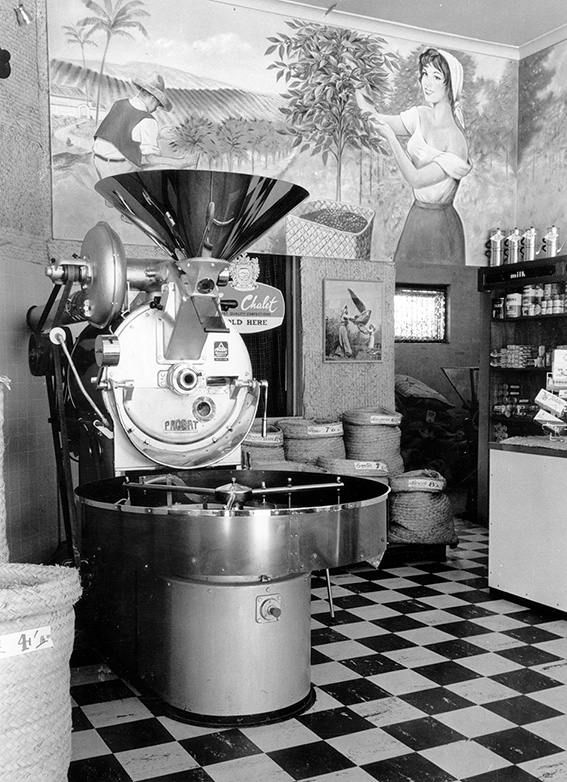
    But a growing migrant population was hungry for the flavours of the old country, so John and Maria began roasting coffee beans under their  own Braziliano Coffee label, putting them 50 years ahead of today’s self-blend-everywhere-you-look cafe society.

    882ITALIAN 2
    • Aurora Berti (nee Re) (left) and, inset, one of the Re Store’s original coffee roasters, back when most Perth people preferred tea.

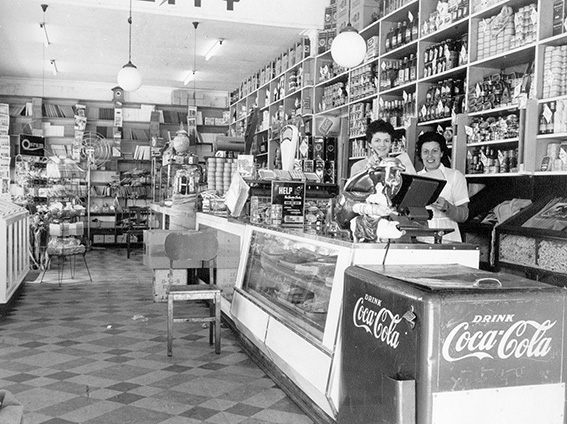
    In the 1960s, with a new generation of the Re family entering the business, the store continued to import victuals still unheard of to most Australians, including a variety of dried sausage and salamis and a huge range of cheeses.

    It’s hard to imagine a time Baci chocolates weren’t on shop shelves, but it was a romantic gesture during young newly-weds Aurora Re and Danilo Berti’s honeymoon cruise that led to its delicious prominence. “My father-in-law brought [Aurora] a chocolate each day, because baci means a kiss,” Fiona Berti told the Voice. “She brought one home to her dad [Mr Re] and he wrote to Baci and got the agency in WA. [We] are now are the Australian agents.”

    The new century’s prominence of TV cooking programs and a plethora of cooking magazines is doing the Re Store no end of good, as wanna-be cooks rush in for the latest in previously unheard of ingredients.

    882ITALIAN 3

    “Food is in trend as much as fashion is these days,” Ms Berti says.

    “We know when something features on TV, the phone starts ringing and people come in.”

    These days there are two Re Stores—Northbridge and Leederville—run by separate branches of the family, while a third clan run European Foods on Aberdeen Street.

    Along with a wide range of gourmet food, the Leederville store focuses on unusual varieties of wine and spirits: “That you can’t get elsewhere,” Ms Berti says.

    “We are driven a lot more by fresh hot meals, home made pasta and salad, and our famous continental rolls.”

    Fifty years ago Perth’s Italian community was viewed askance by an Anglo-skewed lens but, in no small part thanks to food, that’s changed.

    And Maria’s pawned ring? They got it back.

    How’s that for an Italian love story.

    Italian fine bubbly finally finds its place

    “I would like to wet my mouth with the Prosecco with its apple bouquet,” Italian poet Aureliano Acanti wrote in 1754.

    Western Australians have a lot to thank the Italian diaspora for: good coffee, garlic, capsicum, pasta to name a few. Squid was just for bait until it appeared on Italian restaurant menus.

    And 250 years after Acanti waxed lyrical about Italy’s answer to champagne, Prosecco has become the “must-have” drink for hip young things—and their parents.

    882ITALIAN 1
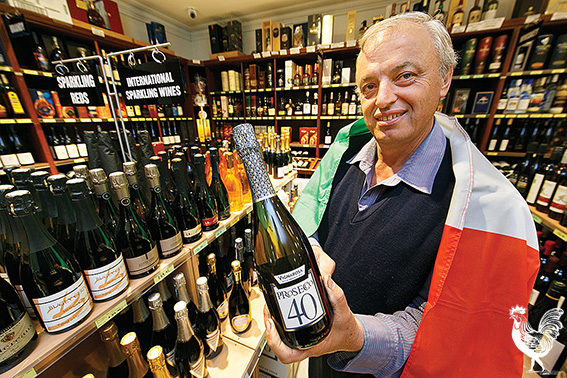
    • Michael Tamburri says Prosecco is making its mark, but keep an eye out for stuff that’s too cheap. Photo by Matthew Dwyer

    At La Vigna wine store on Walcott Street, in Menora the sparkling wine is going gangbusters, says owner Michael Tamburri: “It’s taken over all the sparkling [wines], and is high up there.”

    In the 1960s Prosecco was a sweet beverage, but as technology improved so did the wine,“ [with] brut to extra dry, which is the most popular,” Mr Tamburri says.

    Second fermentation in the bottle means a good drop can be produced cheaper than its French counterpart.

    But Mr Tamburri warns against Prosecco priced too cheaply, which he says is made from grapes from the flats and “is lowering the profile of good quality Prosecco”. True Prosecco comes from the hills of northern Italy, where the town bearing its name can be found.

    by JENNY D’ANGER

    16. Golden Ravioli 12x12 16. Il Pasto 20x12 16. Italo Aust 40x3 16. Mondo Fresco 9x12