• Mt Hawthorn Hawkers Market

    THE Mt Hawthorn Hawkers Market made a lively return to Axford Park on Friday September 29 after a three-year pause.

    Photos courtesy City of Vincent

    Hundreds of foodies attended the first markets of the 23/24 season, with food stalls serving up sweet and savoury dishes from across the globe, plus live music from busker Ari Davis and a Free Kids Zone with face painting and a colouring competition.

    The markets are supported by the City of Vincent, and are held every Friday night from 4.30 – 8.30pm until April 26.

  • Honking good time for Perth

    A FUNKY festival which brings joy and activism to the street is expanding into Leederville and the Perth CBD this weekend.

    WAHonk Fest is a celebration of alternative community street bands and is part of a global movement which had its start in the US city of Somerville, Massachusetts in 2006 when a group of like-minded souls banded together to promote peace, social justice and civic engagement through music.

    It’s previously been run in Fremantle as part of its annual Street Arts Festival, but organiser Ken Allen said the Covid disruption gave it a chance to strike out on its own and expand into more parts of the city.

    The opening party was due to crank up at Cranked Coffee in Leederville on Friday from 6pm (if you’ve got an early Voice), with the venue opening specially for the event with a liquor licence and pop-up bar.

    Mr Allen said on Saturday there’ll be music at Perth City Farm from 8.30am before workshops at 11.30am for anyone keen to get involved.

    “It’s an all-in WAHonk pick-up band workshop, so all those people who haven’t picked up their instrument for a while can participate,” he said.

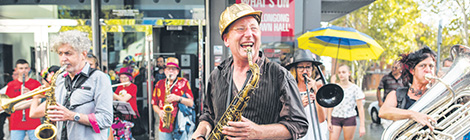
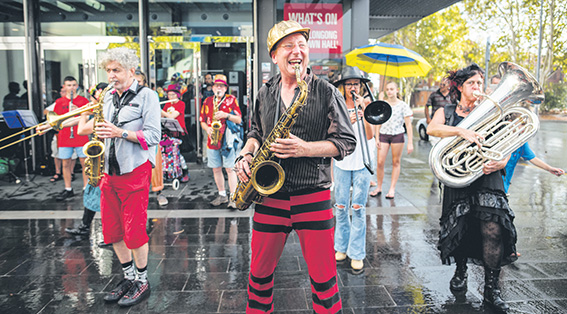
    • The Con Artists are a carnival of percussion, brass and more.

    While there’ll be sheet music for them to follow, he says most would be able to pick up the melody, and one of the characteristics of the Honk! Fest movement is not getting too fusty about skill levels.

    “It’s about joy, and performing and playing, and also breaking down the barrier between the performers and the audience.”

    Mr Allen said while street music doesn’t generate much radio air time, people “come running” when they hear it played live, which helps to create a sense of community. Previous WAHonks have been so much fun, 40 musicians are funding their own plane tickets from the eastern states just to participate in the local event.

    After the City Farm workshops, WAHonk moves to The Perth Culture Centre with a huge line-up of performers spilling inside and out of PICA Bar from 2 – 8pm, and a gig at the Ellington Jazz Bar in Northbridge from 10.30pm – 1am.

    Mr Allen said true to the movement’s roots, WAHonk has its own sense of activism, with a good dose of concern about the environment – one of the bands playing is known as Drummers for Climate Change. 

    The finale in Fremantle on Sunday also features the theme “songs with a message”, which he says means the bands have to perform at least one piece about an issue close to their heart.

    Come with some loose change and a few notes of your own, as the musos are mostly funding their participation by busking.

  • New heights

    THE Eight Mountains is a hymn of praise to deep human friendship and enduring relationship to physical place, the kind of relationship to country that Aboriginal people speak of. 

    Its narrative tells of a man anchored to the Italian Alps into which he was born, and his best friend who wanders the earth searching for his anchor.

    The storyline spans four decades, showing a lifelong relationship between two seemingly very different people, who became fast friends as children. 

    They remain committed to each other as the vicissitudes of life and circumstance drive them apart and bring them back together.

    The film starts with the meeting of two 11-year-old boys in a remote alpine village. 

    Pietro (played by Lupo Barbiero at age 11, Andrea Palma as an adolescent and Luca Marinelli as an adult) is an only child whose family from Turin has rented a mountain summer house, although his workaholic father has stayed in the city. 

    Bruno (Cristiano Sassella, Francesco Palombelli and Alessandro Borghi) lives with his aunt and uncle, working on their farm. 

    Bruno’s father is absent, working as a construction labourer in another European country.

    In the impoverished village he is the only child left as most families have moved away for better prospects. 

    The two boys come from different worlds but in the absence of fathering are thrown together as playmates.

    The Eight Mountains takes its time, not hurrying through its story. It moves slowly and patiently, mirroring the pace of life in the mountains. 

    This story requires time to set the foundation of the characters’ bond and allow the audience to absorb and connect with them.

    The mountains, through impeccable cinematography, reveal their majesty throughout all seasons. 

    These peaks do not cast a foreboding shadow upon the human characters. 

    Instead, they embrace them, offering a perspective on the scale of their challenges and dilemmas.

    There are other mountains than the Italian Alps. 

    In his restless search for the centre of his being, Pietro climbs the Nepalese Himalayas and encounters the Tibetan Buddhist cosmology from which the film’s title comes. 

    But he continually returns to the Alps to his enduring friendship with Bruno.

    Bruno is as solid as the mountain on which he was born. 

    While Pietro yearns for the missing pieces of his emotional being, Bruno is fully self-reliant and at peace in his environment. 

    But can he survive the economic pressures that are bearing down on the simple village life?

    And can the men’s relationship survive their inability to express their emotions formed by their difficult relationships with their fathers?

    Most cinematic depictions of male relationship revolve around sex, violence, conflict or failures of relationship with women. 

    The Eight Mountains is a more insightful film about men; a rare gem.

    The Eight Mountains (Le Otto Montagne) is showing as part of the ST. ALi Italian Film Festival which is on at Luna Leederville and Palace Raine Square until October 25.

    by BARRY HEALY

  • The piece Dvorak almost boycotted

    EMERGING cello star and UWA Conservatorium of Music star Max Wung is set to dazzle audiences again at the Perth Redemptorist Monastery in North Perth on Saturday, November 18, at 2 pm and Fremantle Town Hall on Sunday, 19 November, at 3pm with the Fremantle Chamber Orchestra.

    Under the guidance of associate professor Suzanne Wijsman since July 2019, Wung’s musical journey began in 2010 with mentors Rod McGrath and Xiaole Wu, who guided him to distinctions in the AMEB music exams.

    Wung joined the Churchlands Senior High Symphony Orchestra as principal cellist in 2014 and later assuming the same role in its Chamber Orchestra. 

    His accomplishments includes performances with the Metropolitan Symphony Orchestra, invitations from the Vienna Pop Orchestra, and appearances on ABC3 TV’s BTN Extra. Wung has also honed his skills through masterclasses with renowned cellists like Lynn Harrell, Liwei Chin, and Pablo Ferrández.

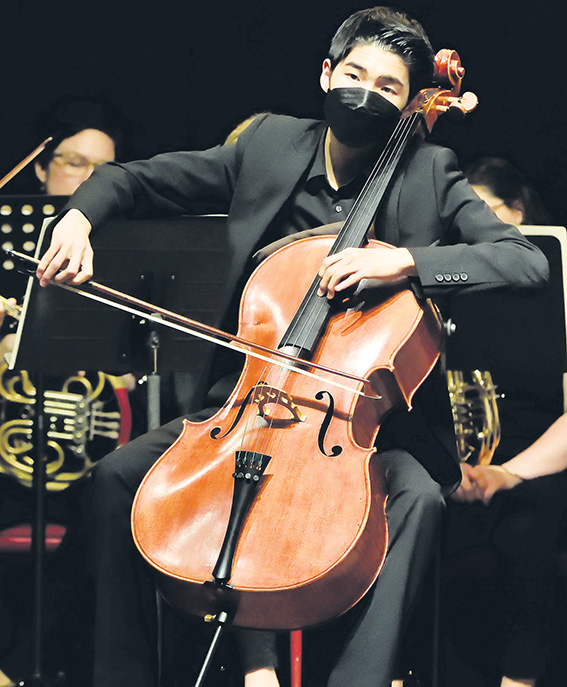
    • Rising cellist Max Wung

    In 2018, Wung participated in the WA Symphony Orchestra international artist masterclass, solidifying his reputation as a rising star. His international experiences include attending the National Arts Centre young artists program in Ottawa, Canada, and competing in the prestigious Ai Qin International Cello Competition, where he secured second prize.

    Wung’s 2020 debut with WASO featured lauded performances of works by David Popper and Ernest Bloch. He also organised a successful fundraising concert to support Australian bushfire victims.

    In 2021 an outstanding performance at the Brisbane International Youth Music Festival took him to  first prize in the strings category.

    Wung will be playing Dvorak’s Cello Concerto, a piece whose public premiere was almost boycotted by the Czech composer.

    Dvorak initially rejected the cello as a solo instrument, complaining it was  too nasally in its high registers and too mumbly in its lower. 

    But on hearing the instrument sing through a concerto in New York, he changed his mind and wrote his own concerto, finishing it in 1895 and promising his good friend Hanus Wihan the opportunity to perform the first public performance.

    But there was a clash of dates and over-eager publicists hired English cellist Leo Stern and started advertising the concert, prompting Dvorak to threaten a walk-out. Nobody knows exactly what happened, but it’s believed Wihan released Dvorak from his promise to allow the performance to go ahead; perhaps Stern playing only one of 60 cellos made by the famed Stradivarius helped mollify him..

    Wihan eventually got his chance to perform under Dvorak’s baton in 1899 and despite the broken promise they remained firm friends for life.

    If you miss the monastery performance, the orchestra will also be playing the concerto at the Fremantle Town Hall the following day.

    Tickets are available from trybooking.com, 0438 933 250 or at the door on the day.

  • The gut microbiome – AKA your second brain

    TAHLIA CRAWFORD is a year 12 student from the Perth Waldorf School, where students’ big assessment for the year is to dive deep into a topic of their own choice. Tahlia picked the emerging science around gut health, which is creating a bit of a buzz because of its implications for so many aspects of our lifestyle, particularly mental health conditions such as depression and anxiety.

    Disclaimer: This information provided is for informational purposes only and should not be taken as/is not a substitute for medical or health advice. Always consult a qualified healthcare practitioner for your specific circumstances.

    THE common saying “you are what you eat” may hold more truth than ever, with research showing the link between diet, gut microbiome and the brain is much stronger than previously thought.

     The gut microbiome is home to trillions of microorganisms known as the gut microbiota. In our intestines alone, there are 100 trillion bacteria; that’s more than there are stars in our galaxy. These tiny companions have evolved alongside us throughout history. 

    All About the Balance

    Ideally, the gut microbiome should be in balance, however this is not always the case. There are two different states the gut microbiome can be in. Eubiosis is when the gut microbiome is in balance, and dysbiosis refers to when it is imbalanced. This state can be influenced by many factors, diet being one of the most significant, as it has been proven to have a prominent impact on the composition of the gut microbiome. But what makes diet so important? And what foods are most beneficial?

    The Secret is Fibre 

    At the end of the day, it all comes down to fibre. Fibre is the unsung hero behind the scenes, so clearly diets high in fibre will be beneficial. Humans cannot digest dietary fibre, so our gut bacteria ferment it instead creating Short Chain Fatty Acids (SCFA’s). These are beneficial products that help to maintain the balance and diversity in the gut microbiome, they even play a role in mental health. SCFA’s have beneficial impacts beyond the gut effecting overall health. Some SCFA’s like acetate and butyrate can influence brain activity, and butyrate specifically has antidepressant effects. Because the SCFA’s play such a crucial role, it is important to remember that foods high in fibre are a key contributor to keeping the gut healthy and strong. 

    • This diagram compares a high fibre diet to a low fibre diet, and the impacts it can have on the gut microbiome and in turn mental health.

    Great gut foods

    Vegetables – such as cauliflower, brussels sprouts, broccoli, spinach, swiss chard, silverbeet, and kale.

    Fruits – such as berries, pears, apples (including skin), oranges, and bananas.

    Legumes – such as black beans, kidney beans, garbanzo beans, and lentils.

    Nuts and Seeds – such as almonds, brazil nuts, pistachios, chestnuts, chai seeds, flax seeds, hemp seeds, and pumpkin seeds.

    Grains (especially wholegrains) – such as barley, quinoa, oats, and brown rice.

    “Variety Variety Variety” – says Natalie Woodman, an internationally recognised specialist in the world of gut health, and the microbiome.

    In an interview with Natalie Woodman, where all things gut were discussed, the prominent message which stood out was that one of the most beneficial things you can do for your gut microbiome is eat a variety of fibre. 

    A variety of predominantly plant-based whole foods supplies you with the fibre that can improve the diversity of your gut microbiome, which can help to make it stronger and more resilient.

    Although much further research is needed to fully understand the complexity of diet and its impact on the gut microbiome, one thing is for sure, and that is that a good diet makes for a happy gut microbiome, which in turn should put a smile on your dial. So, why wait? What better time to nourish your gut microbiome with a variety of fibre and improve your mood at the same time. 

  • Holiday treat

    DURING the October school holidays, Perth can be a desolate, sunny nirvana.

    There’s a mass exodus as families fancy a change of scene, leaving behind an eerie and surreally quiet capital city.

    By the second week of the holidays, Perth was beginning to splutter back into life, and the roads were a bit busier as I drove my family to Leederville for lunch.

    I was going to Pappagallo restaurant, situated about two thirds of the way up Oxford Street on the corner of Bourke.

    With its quirky name (Italian for parrot) and snazzy signage, I always wanted to try the established Italian, but continually got distracted by newer kids on the block.

    The service was warm and friendly with the smiley man behind the counter offering us a range of tables inside or on the pavement alfresco.
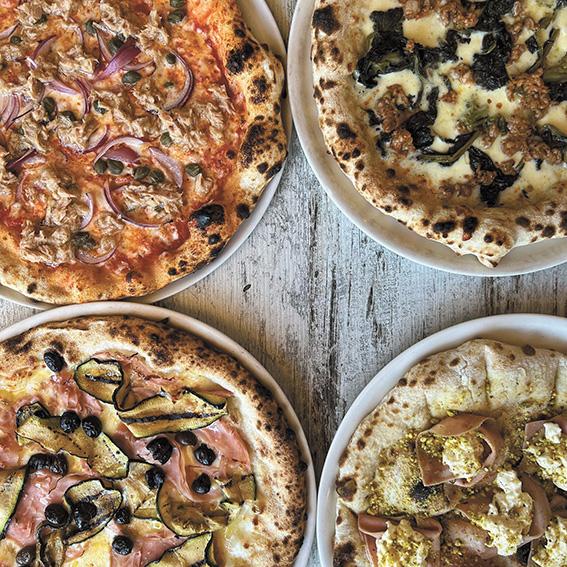
    With spring in full bloom, we opted for a seat in the alfresco where thick bistro blinds created a cosy atmosphere and provided shelter from the wind.

    In these harsh economic times, Pappagallo deserves major brownie points for having a dedicated lunch menu.

    It had the desired effect and the restaurant was busy on a Tuesday lunchtime with a mix of families, businessmen and retirees, discussing their latest ailment over a bottle of limoncello.

    The lunch menu had a small range of traditional panuozzo sandwiches (made from light pizza dough) including beef fillet steak, salami, vegetarian, smoked provola and prosciutto.

    There was also a rice dish – grilled chicken thigh with rice salad – and three pasta dishes including spaghetti with garlic, chilli and parsley.

    You could also order from the full “dinner” menu which had a lovely range of antipasti, pasta, pizza, meat, seafood and kids meals.

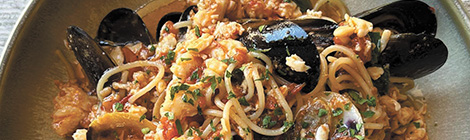
    There was a nice mix of traditional dishes with a modern twist including housemade pappardelle with home-made beef ragú, house made Squid ink Spaghetti Chitarra and Cavatelli served with clams, mussels, calamari, prawns, chilli and garlic in tomato sauce.
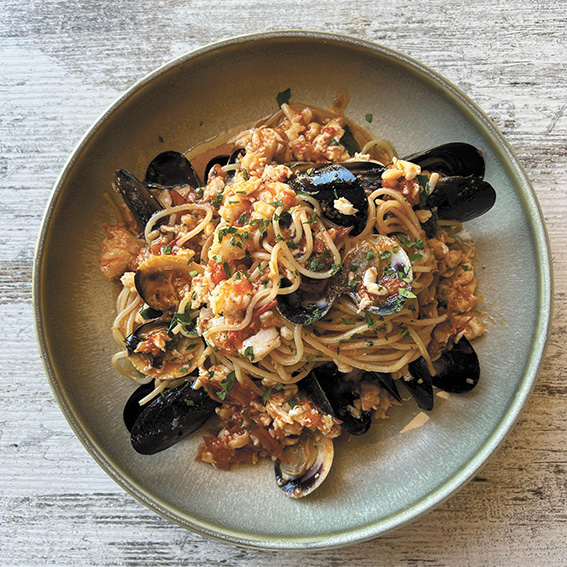
    Service was brisk and super friendly, and it wasn’t long before the affable waiter was back with my tagliatelle con polpette ($24) from the lunch menu.

    Sometimes lunch menus can skimp on portions, but this was a monster serve with several large meatballs sitting proudly on a bed of pasta and thick tomato sauce.

    The house-made meatballs had a lovely blend of pork and veal, giving them a slightly sweet and delicate tang.

    Thick and brimming with flavour, the tomato sauce was absolutely divine and enhanced by the generous topping of Italian cheese (tasted like pecorino romano).

    Rounding things off was a mound of thin and delicate tagliatelle, which didn’t leave you feeling like a constipated Pavarotti.

    A delicious and very filling polpette. Across the table my wife “Special K” was getting stuck into her orecchiette alla pugliese ($24).

    It was a rather curios mix of spicy Italian sausage and broccoli; a combination I had never seen before.

    Apparently it’s the signature pasta dish of Puglia, a southern region in the heel of Italy’s ‘boot’ famous for its superior olive oil.

    “The broccoli is al dente, adding a nice texture to the dish, and goes well with the sausage, which is delicate and not too hot,” my wife said.

    “I’m really enjoying the little ‘ears’ of orecchiette pasta. They’re something I don’t try that often and add a light and authentic touch to the dish.

    “Overall, it’s very enjoyable with a light olive oil sauce and huge portions.”

    My kids shared a Margherita pizza with ham ($24) from the full menu.

    With its well-fired edges, thin base and lovely fresh toppings it looked divine and the kids wolfed it down.

    “One of the best I’ve had,” noted my young daughter.

    The service was great throughout – polite, efficient and lots of smiles – and it was busy on a Tuesday lunchtime.

    The restaurant is deceptively big and includes a function lounge where a large group were enjoying a few Peronis and some finger food.

    Founded by Nino La Verghetta and Sarina Tricoli, who import all the ingredients directly from Italy, I can see why Pappagallo is so popular and has become renowned for its Roman-style pizza and authentic Italian cuisine.

    Pappagallo
    250 Oxford Street, Leederville
    pappagallo.com.au

    by STEPHEN POLLOCK

  • Spooky stuff

    FANCY a bit of David Lynch-style theatre with gothic horror and tales of the afterlife?

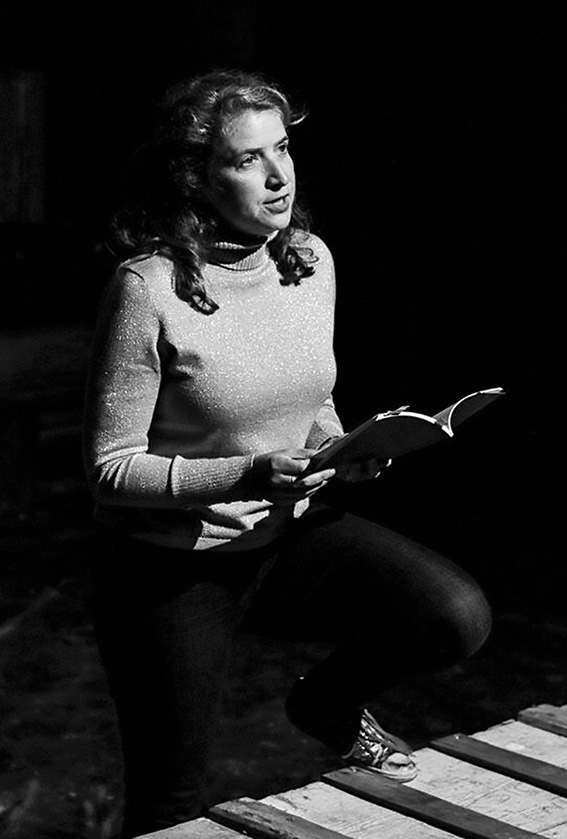
    Then you’ll love the dark and dreamlike At the End of the Land, an absurdist and immersive solo show by award-winning poet and performance maker Talya Rubin.

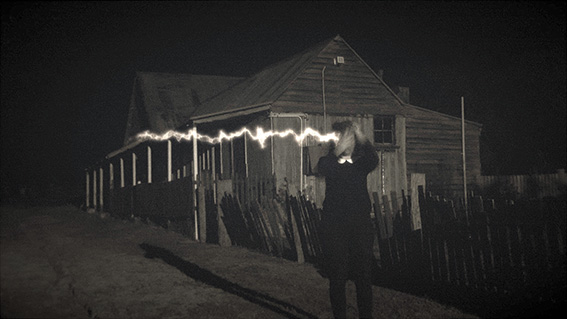
    • At the End of the Land stars Talya Rubin (bottom).  Photos by Samuel James

    Travelling to the afterlife, an unreliable teenage narrator and her demonic Red Monkey sidekick muse over the disappearance of her fellow Victorian-era orphans and what it’s like to be dead. 

    At the End of the Land is about the liminal space between life and death,” Rubin says. 

    “It is an uncanny and unsettling exploration of things that we don’t understand, that we’re trying to grapple and wrestle with in terms of the nature of our existence.” 

    Rubin was psychic as a child, claiming to have seen ghosts and the invisible, and she explores her changing relationship to this mysterious realm in the show.

    Originally from Montreal, as a child actor she appeared in films and TV shows starring Alan Arkin, James Woods, Loretta Switt and Elliot Gould.

    She won a national Canadian poetry award for the most promising poet under the age of 35, and her second collection Iceland is Melting and So Are You was released in 2021.

    A visually arresting production with spirit photography, mediumship and projections, At the End of the Land has a frenzied, non-linear narrative.

    “I’m hoping that audiences come away with an experience of something that is really dark, immersive and unusual,” Rubin says.

    “That alters the nature of their questioning of existence and leaves them with the feeling of more of the mystery of what it means to be alive and human.”

    The show was created by Too Close to the Sun, a WA theatre company known for its immersive productions that blend performance, visual art, video and sound.

    The company was co-founded by Rubin and Nick James, and features video designer Samuel James, award-winning composer Rachael Dease, and Richard Lester Prize Portraiture-winner Tarryn Gill as the Red Monkey maker.

    Part encounter, part gothic horror, At the End of the Land is an uncanny investigation into the things we cannot explain.

    At the End of the Land runs November 28 to December 2 in PICA’s Performance Space in Northbridge. Tix at pica.org.au.

    by STEPHEN POLLOCK
  • 80’s classic

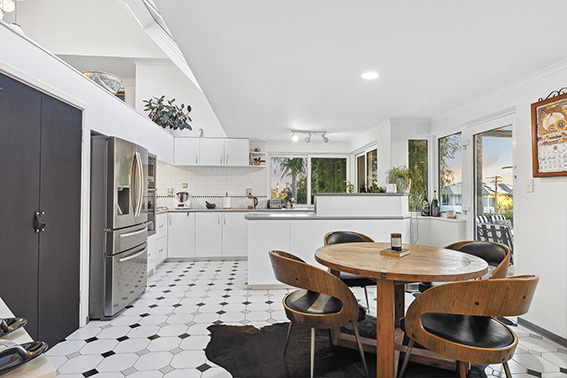
    THIS Maylands abode is like something you would see in a hyper-stylised Michael Mann film from the 1980s.

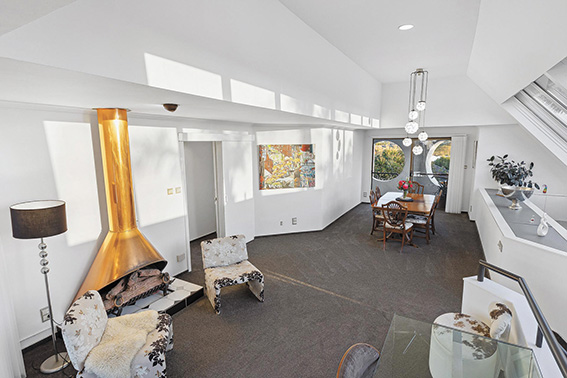
    With a bank of two metre high double-glazed windows and giant lookout holes on the first floor, it’s a 1982 post-modern classic that will turn heads.

    Situated on an elevated position on a whopping near-600sqm block on Hillside Crescent, this three bedroom two bathroom house has stunning views of the Perth Hills, city skyline and Optus Stadium.

    All this style is academic if the home hasn’t been designed well and is impractical, but thankfully like a good Michael Mann movie it delivers the goods.

    The open plan dining/kitchen area is a stunner with the distinctive floor tiles giving the space plenty of character and pizazz.

    The kitchen is a monster with tons of bench space and all the mods cons, plus lovely views of the garden from the windows above the sink.

    Another highlight is the formal dining area and lounge upstairs, all framed by that mammoth bank of double-glazed windows.

    They have electric blinds so you can control the amount of natural light coming in.

    Rounding off this stylish area is a gorgeous fire in the corner with a distinctive copper flue.

    Walk onto the enclosed first floor ‘balcony’ which has those stunning lookout holes, creating the illusion of peering through giant portholes. It’s a stunning piece of architecture.

    The bedrooms continue the high standard with the main marble ensuite featuring a giant, luxurious spa bath. 

    If that wasn’t enough, the home includes a gym/study, games room, double lock-up garage and a stunning landscaped magnesium pool and decked al fresco.

    This home is in a superb spot in Maylands – it’s near De Lacey Reserve, the river and all the cycle paths are 400 metres from your door, and Maylands Golf Course is a short walk away.

    This is a one-of-a-kind postmodern classic.

    Home open today (Saturday October 7) 11am-11:30am
    Low to mid $1 millions
    12 Hillside Crescent, Maylands
    Beaucott Property 9272 2488
    Paul Owen 0411 601 420

  • The temple dancer and the ballerina

    ONE of the pioneers of Perth’s multicultural arts community, whose story has links to famed ballerina Anna Pavlova and the rescue of an entire artform, is celebrating the 40th anniversary of teaching classical Indian dancing in Western Australia.

    Jayalakshimi Raman was a founding member of the North Perth Ethnic Music Centre in 1983, known in later years as Kulcha, and is one of the few remaining exponents of the Bharatanatyam dance form to have been mentored by Indian legend Rukmini Devi Arundale.

    Arundale played a crucial role in rescuing Bharatanatyam after it was banned by British colonisers in 1910; a fateful railway trip sparking a long friendship with the Russian Pavlova, who dissuaded her from taking up ballet and to look into India’s classical dance instead.

    Spiritual

    A centuries-old spiritual dance which had flourished in Hindu temples in the southern Indian state of Tamil Nadu, Bharatanatyam had drifted towards eroticism in the Indian courts, which prompted the British to characterise its female dancers as harlots and ban all temple dancing.

    Arundale and a handful of others resurrected its more traditional form and she founded the Kalakshetra Foundation in Chennai in 1936, now officially recognised as an “Institute of National Importance” for its cultivation of Indian art and culture.

    Singaporean-born Ms Raman had travelled to Chennai in the early 1960s to study under Arundale, becoming the first person from her country to graduate from Kalakshetra.

    She returned home in 1967 and spent a decade teaching classical Indian dance as well as performing it on local radio and television, Arundale having ensured her dancers were also proficient at singing the ancient songs as well.

    By the late 1970s Perth had a small Indian population, which led to her long connection with this state.

    • Ms Raman has spent four decades teaching classical Indian dance in Perth, training up a generation of dancers.

    “There was a small group and they asked me to do a concert for Telethon,” Ms Raman said.

    “So I came down for the concert and did a short piece of the dance on telly.

    “My sister was living here and she said there was not much Indian culture, and they didn’t want to lose any more, so I came here through the Tamil Association of Western Australia.”

    She says the effects of the White Australia Policy were still noticeable when she arrived, while ignorance about Indian culture was rife.

    “A lot of people kept asking me if I was bleeding from the forehead,” she says of her traditional bindi, which in Hinduism represents the opening of the ‘third eye’.

    “People always asked if I was Aboriginal, because the costume confused them,” Ms Raman said.

    There was virtually no funding for multicultural events, but Perth’s immigrant population was growing so Ms Raman and her musician husband Raman Kuppusamy banded together with others they’d met at the odd event and formed the North Perth Ethnic Music Centre.

    • Jayalakshimi Raman performing when she was younger.

    She says it’s fabulous to see so many cultures represented in Perth now, particularly its restaurants, but she still has another misconception about Indian culture to contend with: Bollywood.

    The razzmatazz movies dominate Indian popular culture and are one of its most successful exports, and Ms Raman says when people hear she’s putting on a concert it’s what they’re often expecting.

    But there’s a big difference; classical Indian dance follows strict patterns of movement, usually symmetrical forms of triangles and straight lines, while the dancers tap out rhythms with their feet. Bharatanatyam is also about feeding the soul, while Bollywood is about feeding an audience with… well, almost anything goes.

    Ms Raman established the Kalaivani School of Indian Classical Arts in 1983, the state’s first school of its kind, initially in Willeton but following the death of her husband, her children suggested something closer to home and she now has a small studio in Morley.

    Kalaivani will be celebrating its 40th milestone with the dance and music performance Nritya Mala at Penrhos College. Como on Saturday October 14.

    Ms Raman said it will feature around 30 performers, including some who were lured to the eastern states to pursue their careers but are flying back to perform.

    Another interesting aspect of the performance is that Ms Raman will be reprising her role as a singer, having been forced to train up her own band of musicians when Covid saw the state’s borders shut. She says she was surprised by the depth of talent locally, though many juggle full-time jobs such as their fly-in, fly-out engineering flautist.

    by STEVE GRANT

  • No guts, no Glory

    A FORMER sports writer who covered the early years of Perth Glory fears the club is missing the chance to cash in on the interest generated by the recent World Cup by having it’s women’s team playing out in the boondocks.

    The lack of a permanent home ground has been a long-standing issue for the team, which boasts international soccer sensation Sam Kerr as its hometown hero. 

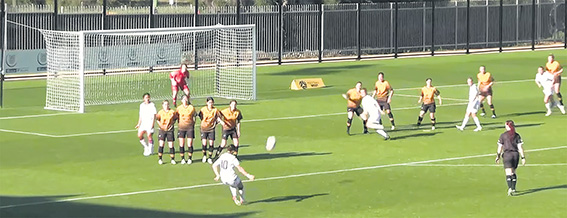
    Perth Glory women are currently forced to play at Macedonia Park in Balcatta, with a capacity of 4000, compared to the 20,500 at HBF Stadium where the men’s team will play all its games this season. 

    • Glory slot home a free kick earlier this year.

    Vivien Langham who wrote for the Voice’s earlier iteration Vincent News back when the Glory were getting off the ground, said she was shocked at the “tiny capacity” of the Macedonia stadium and was confused why the women’s team was “relegated to inferior facilities”.

    Putting her concerns in context, when Glory’s men’s team had to relocate to Macedonia in 2022 while HBF Stadium was being refurbished, its average attendances dropped from more than 8000 to around 3800 per game.

    Bizarre

    Ms Langham contacted Glory about her concerns earlier this week and said the response was “informative but they told me the decision of the oval was beyond their control.”

    The women’s team has also been shunted to a late 7pm kick-off, a situation Ms Langham describe as “bizarre”.

    “7pm starts will prevent many young fans from to being able to attend the vast majority of women’s matches, and the early season ones will be played in the twilight,” she said.

    Ms Langham said Glory told her that was so their matches didn’t clash with A-League games in the eastern states, a decision made by the sport’s governing body.

    “Surely WA can do better,” she says.

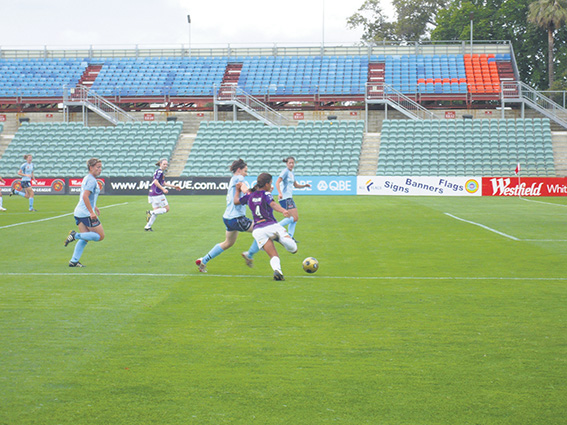
    • Sam Kerry making her mark for Glory back in 2008.

    Ms Langham said Perth Glory’s women should be holding their games at Fremantle Oval with its larger capacity of 10,000 people; it’s already the location of the league’s club rooms, while their training fields aren’t far away in Beaconsfield.

    The Voice contacted Glory but didn’t hear back before deadline.

    by ELLA ROSS