• That sinking feeling

    ON March 6, 2010 Renee Pettitt-Schipp wrote a searing account of the previous day’s activities on Christmas Island, where she was working as a teacher.

    “Yesterday we went to the memorial service for the people involved in the boat tragedy in December,” she wrote.

    Fifty asylum seekers had lost their lives when the boat known as Siev-221 hit the island’s rocky coastline and sank, the event triggering Australia’s much-maligned ‘Pacific Solution’.

    “The first speaker talked about the bravery of the rescue teams,” Pettitt-Schipp continued.

    “Politicians made their speeches.

    “Still no refugee people.

    “Regret and sorrow were expressed.

    “There were no refugee people.”

    She was later told most of those involved had been put on a plane that morning – as officials were busy getting ready to commemorate their rescue with a plaque.

    “If that’s true it means I never got to say goodbye to my students, and the people of Christmas Island missed a unique opportunity to share their sorrow as well as their overcoming in the worst tragedy in the island’s history.”

    • Poet and author Renee Pettitt-Schipp

    Fast-forward five years and Pettitt-Schipp was drawn back to the island, partly by the ghosts of her past and partly by its famed beauty.

    Usually known as a poet, her non-fiction account of that return The Archipelago of Us was published recently by Fremantle Press.

    Schipp said she went back to try and make sense of how she now saw Australia after her experiences.

    “I literally take the reader with me getting onto the plane and going back to the islands, to be as honest as I can possibly be, about what I witnessed and saw,” she says.

    “Teaching on the island gave me this unique insight that most Australians would never have; to have little eight-year-olds in my classroom who had sometimes, just the day before, arrived on a boat from Indonesia, and only just survived their journeys was the most extraordinary and moving experience. 

    “Teaching gave me that gift into a very secretive world.”

    The history of the Indian Ocean Territories is often overshadowed by boat tragedy and stories of asylum seekers trying to make Australia home, by Pettitt-Schipp wants to give readers a taste of that as well.

    “In this story, I was trying to weave through my very personal experiences of the islands with the bigger picture of the historical background of the islands, which many people don’t know about. 

    “They only tend to know the more sensational elements of what took place on the islands, especially the boat tragedy.

    “It was just a joy to be able to research the islands and to understand them deeply and then put my experiences within that bigger context.

    The Archipelago of Us was written as part of Pettitt-Schipp’s PhD at Curtin University, where she studied media, creative arts and social inquiry. 

    “I was grateful to do it as part of the PhD, so I had the support of supervisors and colleagues,” she said.

    While the beauty of the Islands shines through her very personal story, it also reflects deeper issues to make readers think about the connections between history, the environment and what is means to be human. 

    “We are diverse, interesting and fascinating, but we all are so essentially human, and could deeply understand that fact through the sharing of personal story.

    “I really wanted the reader to see how beautiful and biodiversity these islands are but also how incredibly vulnerable they are to climate change and phosphate mining over there.”

    The Archipelago of Us
    Renee Pettitt-Schipp
    Fremantle Press

    by ARIANA ROSENBERG

  • Reel music

    IF you’re driving around York, you might see a bloke quietly sitting in the middle of a field with a 1970s reel-to-reel tape recorder.

    It’s not Mick Molloy filming an Australian version of Mission Impossible, but local musician Simon Charles, who likes to include the sounds of nature in his music.

    An in-demand composer and sound artist, Charles has performed all over the world including festivals and concerts in Los Angeles, Berlin and Oslo.

    Blending traditional instruments, field recordings and other-worldly noises, he creates a beautiful, minimalist and at times eerie palette of sound – imagine the soundtrack to Solaris (2002) meets Philip Glass.

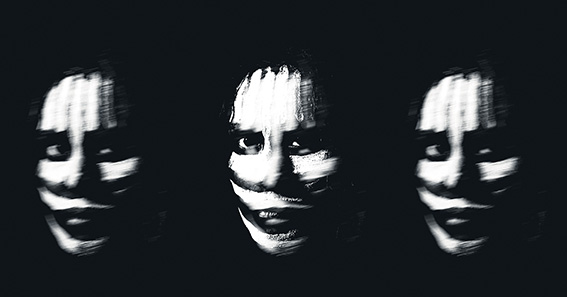
    His 2020 work KISS KISS KISS – sparse, fragile and unsettling – was inspired by a short film by graphic artist Tadanori Yokoo.

    • A Nagra IS recorder

    “I wrote it on Noongar Ballardong country in the townsite of York in Western Australia,” Charles says.

    “York is situated between two small mountains, which can appear like two-dimensional surfaces in certain lights. Walking through the town on sunny days can feel like moving through ukiyo-e imagery.

    “This piece is part of a broader practice that explores relationships between music and place. There are no overt connections between Tadanori Yokoo and the townsite of York. However, there are some connecting threads that may be teased out through comparison.”

    One of his favourite weapons of choice to do field recordings is the Nagra reel-to-reel tape recorder, a portable high-quality analog device that was popular in the 1970s.

    “Although using reel-to-reel tapes is somewhat against the grain, I love the sound of the Nagra in particular because it used to be the industry standard for film and TV, so there’s a kind of uncanny nostalgia and familiarity to it,” Charles says.

    • The York scenery that partly inspired KISS KISS KISS

    “A few years ago, a fledgling artist in Melbourne, I would follow Pauline Oliveros’ practice of deep listening, which basically involves finding ways to become more deeply absorbed in sound and listening. For me, this involved listening to environmental sound, especially in open areas that allowed for a tuning into a sense of distance. It was a little bit like a crude sense of echolocation, attuned not only to sounds, but their resonance across a landscape.”

    Charles says he is inspired by pioneering electro-acoustic artists like Luc Ferrari.

    “Ferrari’s work has such an interesting compositional approach, which allows space for whimsical encounters and is meticulously structured and considered,” he says.

    “I’m interested in artists that can pose questions to your listening – that can pique curiosity.”

    Right now, Charles is busy getting ready for his upcoming electro-acoustic performance at the Kinds of Light concert series in Fremantle.

    • Soundscape artist Simon Charles.

    “For my performance, I’ll be mixing together various recorded media, played from reel-to-reel tapes, cassettes and other sources. If all goes well, I’ll also be playing harmonium live, admist recordings of harmonium, environmental and acousmatic sound (sounds for which the origin is not clear),” Charles says.

    “I’m planning to do something fairly composed. I’ve done many performances as an improviser on saxophone or electronics, however this time I’m thinking about using longer stretches of audio, which are inherently fixed and are leading me to think more about how these materials can be organised in a more linear way.”

    Charles will perform at Kinds of Light at PS Art Space on Pakenham Street in Fremantle on September 8 at 7.30pm. Also on the bill is young Perth-based composer Lara Pollard. Tix at events.humanitix.com/kinds-of-light-7-one-continuous-rhyme.

    by STEPHEN POLLOCK

  • Thanks Duke

    SEVEN-YEAR-OLD Duke Storer is the highest solo fundraiser in this year’s HBF Run for a Reason – raising more than $10,000 for Cystic Fibrosis WA .

    After a three-year covid break, this year’s Run for a Reason attracted 33,100 participants who raised more than $1.2 million for Australian charities.

    Duke’s mum Rebecca says her son was inspired to do the Run after a play date with four-year-old Molly, who has cystic fibrosis.

    “Duke had been on at me for months to enrol him in the HBF run,” Rebecca said.

    “When I explained to him that you run for a cause, he decided he wanted to run for Molly.”

    • (left to right) Madelene Storer, Molly Smith, Jess Willis and Duke Storer at the starting line of the HBF Run for a Reason in May.

    Once he was given the green light from mum, Duke got to work – designing a poster and launching his fundraising campaign.

    Amazingly, in the first four hours he already had $800 in donations.

    Soon family, friends and Facebook friends-of-friends were supporting Duke’s fundraising run, along with staff at his dad’s work, Patrick Terminals in Fremantle, where Molly’s mum Jess Willis also works.

    Sibling rivalry soon kicked in and Duke was quickly joined on the run by his five-year-old sister Madelene.

    Molly cheered on as Duke and his younger sister crossed the finish line at the end of the 4km course with a time of 27 minutes on Sunday May 21.

    As recognition of his fundraising efforts, Rachel Clifton from Cystic Fibrosis WA attended Duke’s school assembly to give a personal thank you.

    But Duke isn’t resting on his laurels and is already planning to set a new personal best in next year’s Run for a Reason.

    Since its launch in 2009, Run for a Reason has raised more than $11 million for 220 health charities.

  • Mad for it!

    THIS Mount Lawley home is reminiscent of a scene from the TV series Mad Men.

    Maybe it’s the 1960s-style furniture and paintings, the textured ceiling, the wood panels in the kitchen, or the archway leading to the lounge.

    Everywhere you look there seems to be a nod to the Swinging Sixties and you wouldn’t be surprised to see Peggy or Don Draper walk through the front door of this two bedroom one bathroom townhouse.

    The carpeted lounge is bright and airy, and I like how the kitchen is semi-separate (there is an archway connecting the two rooms).

    It creates a noise buffer if you are watching TV and don’t want to turn up the volume everytime the kettle is on.

    The kitchen is going to be divisive – I love the retro 60s furniture and the natural grain finish on the cupboards and drawers, while others will crave a more contemporary look.

    There’s plenty of natural light, courtesy of the window above the sink, which has nice views of the leafy back garden.

    The two upstairs bedrooms are carpeted and have a nice colour scheme with white ceilings and grey-blue walls. It adds a bit of character without being idiosyncratic.

    The main bedroom has two built-in robes and the second bedroom is double-sized.

    They share a neat and tidy bathroom with a large shower cabinet and contemporary vanity.

    There’s a spacious courtyard out the back and it’s a bit of a blank canvas, so plenty of scope to add potted plants, outdoor furniture and maybe even a patio to transform it into an all-year round entertaining spot.

    There’s also a nice pergola at the front of the property.

    The home includes a powder room (two WCs in total), laundry, study nook, air con, lots of storage and an undercover carport plus visitor parking nearby.

    Situated in a quiet complex with only 16 townhouses on Sleaford Lane – with access from both Coode Street and Third Avenue – it’s walking distance to all the cafes, bars and restaurants on Beaufort Street and the Maylands Whatley Crescent/Eighth Avenue precinct.

    It’s also in the catchment for Mount Lawley primary and high schools.

    Home open today (Saturday August 26) 11am-11:30am
    Mid $400,000’s
    11/30 Coode Street, Mt Lawley
    Beaucott Property 9272 2488
    Agent Carlos Lehn 0478 927 017

  • Plea for art program

    PUBLIC art advocate Helen Curtis has called on Stirling council not to halt its ‘percent for art’ provision that requires developers to contribute to public artworks.

    Stirling council’s policy came into effect in January 2023. It applies to big developments worth more than $2 million and requires developers set aside 1 per cent of the overall cost for public art to beautify the site, similar to policies from many other councils.

    At the August 1 council meeting mayor Mark Irwin proposed they halt the policy for one year and review whether to keep it at all (‘Not a pretty picture’, Voice, August 12, 2023). Other developer contribution requirements like cash to improve adjacent rights-of-way or for public open space may also be paused for review.

    • Artist Janet Laurence and Apparatus director Helen Curtis at Curtin University’s School of Design and the Built Environment artwork. Photo by Frances Andrijich

    Market conditions

    Mr Irwin’s written reasons stated: “The current market conditions have resulted in a number of developments being placed on hold or cancelled as they are no longer feasible to construct. 

    “This is making the delivery of housing and other development in the City increasingly difficult.”

    Ms Curtis is director of Apparatus, a public art project management company that’s consulted on many public art projects and policies including at Stirling.

    Based on projects around the rest of Perth, Ms Curtis doesn’t think art contributions are standing in the way of development.

    “It is unclear where the concern is,” Ms Curtis says. “Is it the market conditions that are holding up the development or is it the percent for art policy?

    “My understanding is that the City of Stirling’s percent for art policy was adopted in January this year and they have not yet had the opportunity to test the policy. I don’t think it’s possible their policy is holding up any developments from proceeding.

    “The City of Stirling is not an island; it’s operating in the same market as the rest of Perth metro and the development market in Perth is robust and healthy. I can cite numerous developments that are happening right now in areas where planning authorities have public art conditions – I can’t see any evidence that percent for art is hindering development.

    “Percent for art policies in local government have been operating successfully for decades; it’s not a new thing for anyone working in the building and construction sector.”

    Ms Curtis says “percent for art may feel like an unfair tax on developers on commencement, but when it is done well it’s beneficial to developers,” helping build a recognisable brand and promote the project.

    That’s on top of the secondary benefits to the broader economy: “An investment in public art employs WA artists, which is awesome and there’s deep research about that benefit. 

    “Then there’s spend that goes towards specialist documenters, fabricators, installers, photographers and often between the artists and the fabricators they’re finding new ways to use materials, new fabrication techniques. They’re innovating, and so [the benefit] goes on.”

    Ms Curtis says from what she’s seen Stirling has everything it needs to get good quality artworks out of their policy: “The staff at Stirling who work in the arts area are excellent. They’re experienced specialists who know what they’re doing.

    “I think this motion is potentially obstructing what could be incredibly beneficial for developers, and the community. 

    “Maybe give the policy 24 months run and then evaluate how beneficial or not it is.”

    For their part, Stirling’s staff have suggested a “review” of developer contribution requirements.

    by DAVID BELL

  • Pad on the back

    THE City of Vincent is offering a helping hand for local pubs and restaurants wanting to go smoke-free.

    Vincent launched its Fresh Air – You’re Welcome: the Smoke-Free Town Centres project in November 2022 as an initiative of its Public Health Plan.

    As part of the project, parts of Mt Hawthorn, North Perth, Leederville, William Street and Beaufort Street are now smoke-free.

    Mayor Emma Cole encouraged other businesses to follow in the footsteps of The Paddington Ale House and the Queens Tavern in becoming smoke-free.

    “We have been working with local venues to manage the transition of footpath areas becoming part of our smoke-free areas,” said Ms Cole.

    “We want to see more venues to jump on board.

    “Our Public Health team is happy to support business owners who are interested or are already making this transition by providing information and guidance on signage.”

    The Paddo ceased smoking on its Scarborough Beach Road terrace in May 2022 shortly after ARK Group took over the ownership. 

    ARK Group general manager Adam Kapinkoff said the pub supported Vincent’s project and created a raised deck on the eastern side that was completely separate from the venue.

    “(We) politely advise guests they aren’t permitted to smoke on the terrace and to move around to the eastern side of the premises,” he said.

    “This hasn’t been met with any resistance and has been understood by all.

    “There has been lots of positive feedback from guests as they have enjoyed the terrace being more welcoming, family friendly and activated now that smoking is not permitted there.

    “It’s a great spot to sit back, be a part of the town centre and watch the world go by.”

    Mr Kapinkoff said many customers expressed they wanted to book functions and utilise The Paddo’s services because it had a smoke-free area.

    “The occurrence of smoking is obviously on the decline, as it has been for decades now,” he said.

    “Pubs have evolved to become community minded, food focused and family friendly operations. 

    “This is in line with the modern consumer expectations and smoking doesn’t really align with this.”

    Ms Cole welcomed The Paddo’s initiative to create a smoke-free space for its patrons.

  • Garden sale blooms

    MORE than 500 Vincent residents gathered at North Perth Common on August 12 to indulge in their love for native plants. 

    Due to the event’s growing popularity, the council revamped the event and ran two sessions so the shelves could be restocked.

    With 6000 plants available, patrons had a diverse selection to explore, including kangaroo paws, ground covers, banksia, pollinators, and petite trees. As an additional perk, locals had the opportunity to receive complimentary bags of Food Organics and Garden Organics (FOGO) compost.

    Mayor Emma Cole said the new format was a hit.

    • Vincent’s plant sale is so popular they’ve had to split it into two sessions to re-stock.

    “Many people found the new format more relaxed and enjoyable, as they could take their time and shop without feeling rushed,” Ms Cole said.

    “The feedback was to provide a list of plant species online so people can plan for their gardens. We hear this and will look to have this available for our April sale.”

    Ms Cole said the free FOGO compost bags were produced from the food and garden scraps of residents’ lime-green lid FOGO bin.

    “The compost serves as a great soil replacement for your garden,” she said.

    “Ninety-seven per cent of the contents of our FOGO bins is recovered and turned into compost.

    “This is the circular economy in action, right in our own homes.”

    This sale came as Vincent gears up for its Greening Vincent Garden Competition, with entries opening on September 1. Head to vincent.wa.gov.au for more information.

  • Former premier finds family hero

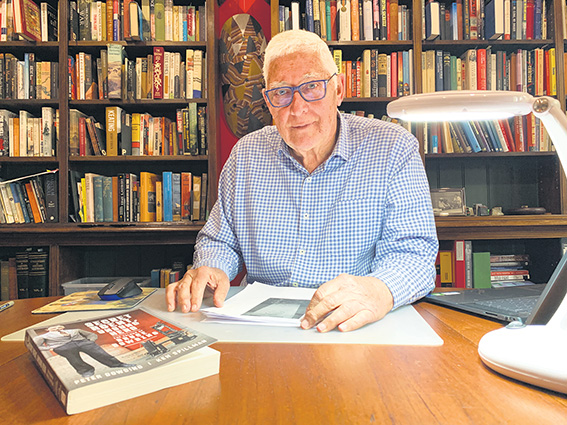
    A 30-YEAR journey to uncover the heroic deeds of his uncle and honour his father’s passionate search for the truth come to fruition for former WA premier Peter Dowding this week. 

    The South Fremantle resident and co-author Ken Spillman officially launch Secret Agent, Unsung Hero: The Valour of Bruce Dowding on Wednesday. The book tells the story of his uncle’s remarkable journey from a carefree Australian teacher to a courageous figure in the French Resistance. His betrayal and secretive death at the hands of the Nazis in 1943 has hung like a black cloud over the family for decades, but Mr Dowding says the book finally brings closure.

    • Former premier Peter Dowding spent hundreds of hours pouring over old archives, trying to unravel the mystery behind his uncle’s short, but eventful life. Photo by Steve Grant

    Adventurous

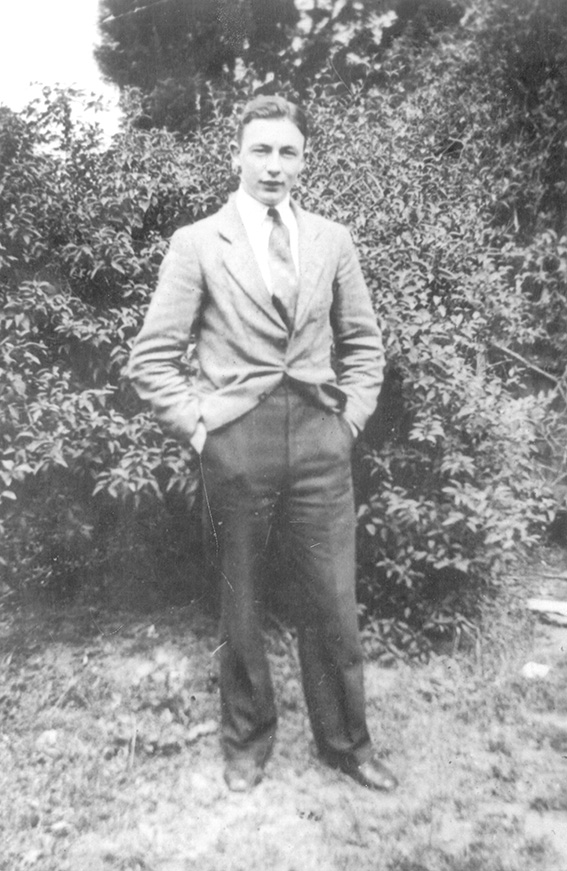
    An adventurous spirit, Bruce Dowding embarked on a life-changing journey to Paris in January 1938, escaping stolid Melbourne for gay Paris’ vibrant art, literature and music, and promising to be back home before the year’s end.

    “He found a lot of friendships, some lovers, and he stayed on after 1938, refusing to come home,” Mr Dowding said, drawing on his uncle’s weekly letters back home which were kept by his father.

    “He was having too much fun, much to his family’s increasing alarm because war was threatening, clearly.”

    • Bruce Dowding had transformed from an Aussie boy to a “sophisticated” European which helped him to blend in with the French and work with the Resistance smuggling serviceman out of occupied territory.

    As the summer of 1939 drew on and the German army massed on France’s borders, Bruce’s parents sent money over for a ticket back to Australia; instead he wrote to say he’d signed up with the British army as an interpreter.

    Mr Dowding believes his grandfather used his Masonic connections to track his son down when the letters then stopped arriving. An order was sent through to write home, but by the time the letter arrived his platoon had been overrun and he was a prisoner of war.

    Silence

    After one letter from the POW camp, there was a silence which lasted until after the war, leaving a legacy of frustration for the family which Mr Dowding hopes the book can now heal.

    “What we now know is that he escaped from the POW camp, made it to Marseille and began helping British and allied servicemen escape from France and over the Pyrenees,” he said.

    Bruce’s immersion in French culture had been so complete he was able to pass himself off as Frenchman André Mason, working for the British intelligence service MI9, organising couriers and often doing the running himself.

    “That involved providing food and clothing and so forth, and money to the people who were looking after them. It was also

    money to pay the the Spanish separatist guides who were helping the guys get over the Pyrenees.”

    Mr Dowding says as part of their research, he and Spillman were able to correct the record about the Spanish, who’d been written off as smugglers by earlier writers but were actually patriots trying to raise funds to return and attack the dictator Franco.

    At the end of 1941 the organisation collapsed after being betrayed by Howard Cole, an habitual criminal who coughed up their names when arrested by the Gestapo, and eventually lent his assistance to the Nazi cause.

    “He was a thief, he was a liar, he was a womaniser,” says Mr Dowding.

    This was where Bruce Dowding’s story became almost impossible to trace, which was a deliberate ploy of the Nazis.

    • It’s a grainy photo, even when digitally enhanced, but it shows Bruce Dowding (second from left) with Resistance heroes Varian Fry (far left) and ‘White Mouse’ Nancy Wake.

    Disappeared

    “All of them disappeared under a Nazi directive called NN – Nacht und Nebel – they no longer had an identity, they were numbers,” Mr Dowding explains.

    He was able to piece together a sketch of Bruce’s life after his deportation to Germany from a couple of survivors’ accounts, but there weren’t many. On June 30, 1943 the Australian and his fellow Resistance members were decapitated. The family didn’t hear about it until 1946, and a year later received a letter from a German priest who’d attended the execution.

    Mr Dowding has made several trips to France while researching the book, including catching up with the late artist Max Bilde, who’d hung out with Bruce in Paris. His sister and the Australian became romantically linked, but she fled home when war broke out and they never saw each other again.

    “He was very emotional about it because he also had lost contact with Bruce and didn’t know what had happened to him,” Mr Dowding says of his visit with Bilde.

    He was also able to find a few precious photographs of Bruce, including one showing him with famed New Zealand/Australian Resistance figure Nancy Wake and American Varian Fry, the subject of a recent Netflix series about his work smuggling thousands of Jews out of Germany. 

    Wake, known as White Mouse by the Gestapo, briefly mentions Bruce in her autobiography, saying that they’d met each other as though long-lost brother and sister and she was impressed the Aussie had reinvented himself as a sophisticated European. 

    While he’s found closure with the book, Mr Dowding said his father was able to put his demons to rest earlier, thanks to the discovery his brother had converted to Catholicism while in the POW camp.

    “My father died in 2008, and before he died I’d organised a memorial service for Bruce. My father got a local Catholic priest to officiate, and that was a big closure for him.”

    Despite that, there is still one outstanding question: “The one thing that Bruce and the family were in the end denied was that the leader of the organisation recommended Bruce for a posthumous Legion d’Honneur, and the Australian government just couldn’t be bothered facilitating it,” Mr Dowding says.

    He says the vague official reason was that the government didn’t know much about him, something he hopes the book can rectify.

    Secret Agent, Unsung Hero: The Valour of  Bruce Dowding
    Peter Dowding and Ken Spillman
    Pen and Sword

    by STEVE GRANT

  • Urban land ‘wars’ about to escalate

    Opinion by ANDREW SMITH, former mayor East Fremantle and democratic town planning expert

    WHEN former WA premier Mark McGowan retired without notice in May, he left a ‘landmine’ behind in WA’s town planning landscape. 

    This scrap of ordinance guarantees full-scale war in Perth and Fremantle ‘burbs, and while it’s the pollies who laid this trap to cause local conflict, hardship and despair, it is they who will suffer the deepest wounds.

    Just before heading into the sunset declaring himself exhausted, the premier and his powerful planning minister Rita Saffioti quietly and without much fuss enshrined the provisions of the 2021 Covid economic recovery legislation into WA’s town planning regime, despite it originally being a temporary fix. 

    In doing so, the government created a monster that is a developer’s wildest dream, but the worst possible nightmare for just about every other property owner threatened by the prospect of a no-holds barred high-density and/or high-rise development goldrush in the ‘burbs. 

    WA now has a three-tiered ‘planning’ system where the top two favour the richest, most powerful developers – read fast track for high density and/or high rise and bugger the rules. Those developers are now cosily parading alongside the WA government and its bureaucrats, while neighbouring land owners are left to watch glumly from the sidelines. 

    The rest of us are herded into the third tier, forced to follow the old democratic ‘please-respect-your-neighbours’ planning rules.

    90 storeys

    Aportent of what’s to come is Brisbane City Council paving the way for 90-storey high-rise apartments in the Kurilpa Precinct in South Brisbane, where residents currently “grow tomatoes and mangoes and vegetables in their backyard”, according to an planning expert who’s recommended they drop their “selfish” nimby opposition.

    Brisbane plans to do it with WA-style fast-track planning controls, pegged only by aviation flight thresholds and with no hint of impact on local residents. 

    This could soon be coming to a suburb near you.

    The original intention of this pandemic recovery legislation, which was to expire recently, was in part to sideline local governments (who’ve long been central and important democratic moderators of excessive planning and development) and their residents. The premier wanted fast-track, large-scale land and property development to provide, in his own words, “jobs, jobs, jobs”. 

    As premier McGowan made this defining call, we at the Chook raised our eyebrows. While we understand the economics of his call, where was the championing of orderly, measured town planning and development? That’s always been much more about keeping neighbourhood peace over land-use decisions.  

    Why? Because every war in history – every one – has been about land, whether between nations or neighbours. 

    With suburban land skirmishes across Perth’s western and southern suburbs, the pages of local papers like ours have endless fodder. These disputes, minor and major have always been about who owns the land, who wants to own it and what they want to do with it. 

    Gone nuclear

    OVER the past 70 years WA and the other states have developed complex and detailed laws and decision making processes to resolve this very difficult arena with its ever-present potential for human conflict.

    The recent decision by premier McGowan and planning minister Saffioti to ‘go nuclear’ and provide the most powerful developers with a guaranteed pathway to success, while small private home owners lag behind, is a recipe for disaster. 

    This dual system, one based on economic potential, the other on proper considerations of land use and impacts, is wrong, destructive for broader communities and disrespectful to the majority of private owners in this state.

    Just look at the ham-fisted introduction of the revised Aboriginal Heritage Act, now withdrawn by new premier Roger Cook. Was this another botch-up by an exhausted premier and an unwary minister?

    Premier McGowan and planning minister Saffioti shouldn’t be saddled with all the blame for the emerging land wars that will scar our landscape and leave communities shell-shocked, but they should wear most of it. 

    They were only picking up on the equally ham-fisted battle former Liberal premier Colin Barnett had with some powerful developers and former political backers and party donors in his time. 

    As a sop to the antagonists it was Barnett who struck the first blow to orderly planning by kowtowing to the painful bleating of the ever-greedy development lobby to curtail the political power of local governments and the legitimate interests of all affected property owners. By the stroke of this pen, Barnryy set up the so-called Joint Development Application Panels (JDAPS) about 10 years ago.

    Skirmishes

    JDAPS were a game changer. While they seemed to be planning instruments for planning decisions they were in fact ‘political’ bodies to make political decisions under the direct control of the WA planning minister, removing decisions for developments over a certain value from local governments. 

    Like cluster bombs on a battlefield, they gave one side an overwhelming advantage.

    Dominated by planning bureaucrats and industry ‘experts’ – that is, pro-industry insiders such as town planners or architects – their minority town councillors were ordered to  not to represent their own council or their residents. How democratic is that?

    The big problem with this structure was that the panels worked out of the office of the minister, who also authorised all their sitting fees; that makes it political. This has changed a little with moves to make the panels part of the WA Planning Commission, but they’ll remain dominated by hand-picked appointments by the government.

    In one fell swoop, then-premier Barnett turned the open, democratic, council-moderated planning process – which was subject to appeal to the State Administrative Tribunal – into largely WA government political decisions. There’s no surprise that by all news accounts it’s largely favoured powerful developers.

    The ensuing land skirmishes that have consumed councils and residents especially in Perth’s richest western and southern suburbs are testimony to the land wars that are about to escalate. 

    Up-coming council elections in October may well see a resurgence of local political acivity as residents and land owners discriminated against in the three-tier planning system rise up to redress the balance.

    Then again, new premier Roger Cook, who days ago withdrew the controversial Aboriginal Heritage Act that has almost certainly finished off the upcoming First Nations Voice Referendum in West Australia at least, may just be moved to sit down with new planning minister and former Vincent mayor John Carey to have a quiet chat over how to avoid the coming suburban land wars.

    With the popularity of the Cook government still very fluid we feel it better for the current government to restore a democratic planning process than be reflecting on the reasons for their return to the Opposition benches sooner than they would like.

  • You’re (Not) Wanjoo

    INDIGENOUS artists Cole Baxter and Ilona McGuire’s thought-provoking exhibition You’re (Not) Wanjoo delves into Noongar protest and resistance and its role in  shaping Perth.

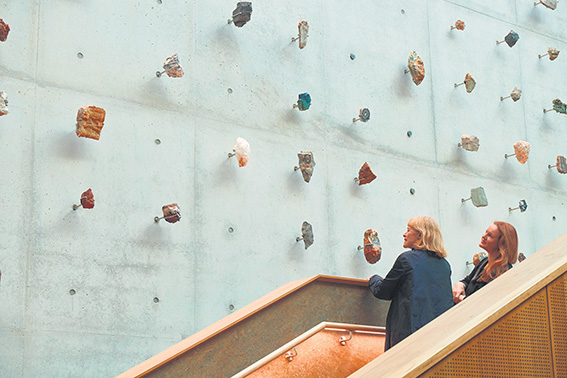
    Part of 10 Nights in Port festival in Fremantle, the exhibition is on display at the Moore’s building until August 20 and delves into the rich tapestry of Noongar resistance, activism, and protest using archival material juxtaposed with existing and adapted works.

    Baxter says despite being a site-specific installation, the exhibition’s scope extends beyond the city limits of Fremantle, encompassing the broader Noongar boodjar (land) and the interconnected stories of resistance across different regions. “Some important stuff has happened here, and depending on how you zoom in, some important stuff has happened in a lot of places close by,” he said. 

    McGuire’s contributions bring personal anecdotes and family histories to the forefront, emphasising a shared history between Indigenous and non-Indigenous communities. 

    “It hasn’t even been that long, it’s been less than 200 years here… and we can count back, only a few generations, that have experienced [colonial oppression],” McGuire said. 

    Research played a pivotal role in shaping the exhibition’s narrative. McGuire delved into resources like the book That Was My Home by Denise Cook, a compilation of stories from Indigenous and non-Indigenous perspectives shedding light on the displacement of Noongar people in Walyalup (Fremantle) and surrounding areas. 

    “It even maps out the Noongar camps at the time and how how they were spreading, being pushed out, and also how non-Indigenous and Indigenous people interacted at the time; working together some times, working against each other,” she said.

    • Ilona McGuire by Cole Baxter

    The pair aim to prompt critical thinking and inspire action, and while they don’t hold their punches, they say it’s a genuine invitation to Wadjelas to engage in some important discussions.

    “Whereas oftentimes, for black fellas, there’s entry barriers for us to not engage with things, we’ve recontextualised that and deliberately made an entry barrier – but also an invite – for people to unlearn, and then to relearn some things,” Baxter says.

    “And if the audience decides to check their fragility at the door, then there can be some tremendous growth to participate in. 

    “We’ve said it a bunch of times; the truth telling has been done, it’s time for truth listening.”

    Both also hope the Noongar “mob” will be empowered to take their own action, but McGuire says it’s often deeply embedded in their identity.

    “Many of us are brought up in families where it’s sort of a given, almost an obligation that you will join in this kind of civil war that we’re all part of, whether you know it or not,” she said.

    Her research revealed the common threads between campaigns over the years, and she says much of the colonial imprint which was so devastating to Noongar culture didn’t do much more than change its name along the way.

    “You see the kind of mentality that people use, and the language that they use to justify these things that have happened, and it’s all about ‘get over it’. 

    “You know, we’re still living in it.  That’s why I call it a sort of silent war, or silent nation, or the Great Australian Silence.

    “It’s a great shame; some people squirm when they even see the word Indigenous.“

    Baxter said once they started exploring the theme, they found enough material to run 10 exhibitions: “We started with a big mountain of what it could be, and then made it really strong with less,” he says, adding much of his was based on photographs he took at rallies and marches in recent years.

    McGuire says You’re (Not) Wanjoo may serve as a stepping stone for larger projects in the future, with even broader impact.

    by STEVE GRANT