
MODULAR homes could be the key to solving Perth’s chronic shortage of affordable inner-city housing, says Curtin University researcher Jemma Green.
Pre-fabricated housing isn’t new but modular construction takes it a step further: entire apartments are created in a factory, then trucked to a site and fit together, including over multiple storeys.
Even though it can take half the time and a fraction of the resources and labour — resulting in cost savings between 20 and 50 per cent — Australia has never taken to it like other countries have, particularly across Scandinavia.
Ms Green is a research fellow at Curtin’s sustainable policy institute and, in looking into low-carbon and low-cost housing, she came across a new wave of modular construction.
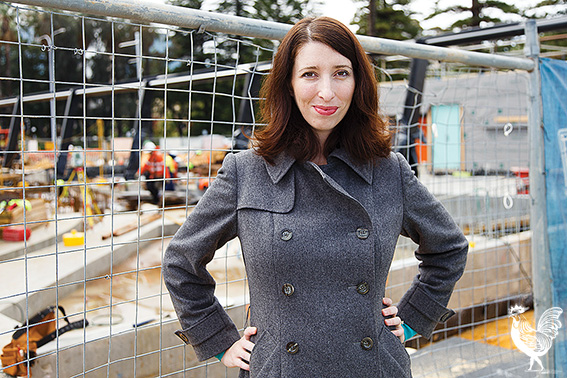
She says it can be the answer to the problem of sticking affordable housing on the suburban fringes, where land is cheaper but where amenities like public transport are relatively poor: it’s long been a problem for low-paid workers whose jobs are in the city and can lead to commutes of more than 90 minutes each way.
“Modular is able to make medium- and high-density housing more affordable so people don’t need to get a house 25km out of the city only to find out they’re spending as much on running their car as they are on their mortgage,” Ms Green says.
Perth city council recognised the need for low-cost housing for city workers and built 48 units on Goderich Street in East Perth. They were swiftly filled but it was a drop in the ocean of what’s required. The project was hugely expensive and unlikely to be repeated with traditional building methods.
Other affordable housing projects have been slow to follow, but Ms Green is confident savings from modular building can make such projects more feasible.
The WA government housing department’s already dipped a toe in the water with the Adara project, comprising 77 modular units in Cockburn. It’s considered such a success it has five or six similar projects in mind.
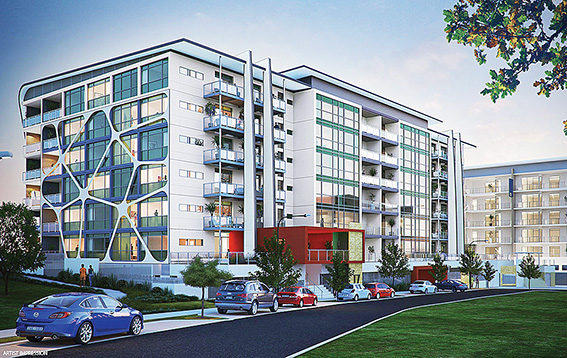
CIMC Modular Building Systems’ Australian chief John Zendler says there are barriers to modular taking off here, not least the attitudes of traditional lenders.
His firm is building the DoubleTree Hilton at Elizabeth Quay and Leighton Beach Hotel and he says banks are wary.
“There’s a perceived risk around modular construction because it’s new,” he says. He estimates Australia is around a decade behind comparable countries.
CIMC is big enough to provide its own debt so it doesn’t need bank cash but few others can match that.
He’s hoping that once banks see the projects up and running — over the next two to three years — they’ll be more open to the sector as a good investment.
Another stumbling block is Perth’s lack of a local factory. Currently everything is shipped from Melbourne or from overseas, adding to cost and inconvenience.
Anthony Pearce hopes to solve that. A director with ApplyInnovation, his firm has been manufacturing units in the UK for 15 years.
He says the local market’s ripe for his company to establish a factory here, and expects to ramp up production by the end of the year.
“I’m somewhat flabbergasted by the amount of product that is brought in either from overseas or the other side of the country,” he says.
Mr Pearce predicts the end of the mining boom will see people reprioritise value for money, and see more turn towards modular construction.
He reckons many associate modular housing with dongas but once they’re shown examples of the possibilities they’re blown away by the designs, structural strength and cost savings.
“We see an opportunity to provide production for medium-rise apartment buildings, hotels, student accommodation and aged care in WA,” he says.
“My experience of working in WA is there’s such a can-do attitude here that it just pulls all blockages out of the road, so we’re making progress here more quickly than we’d originally expected.
“Australians are an innovative bunch and so while they may be starting from a slight delay compared to the rest of the world, I think Australia will get up that curve pretty quickly.”
by DAVID BELL


 Perth Voice Interactive
Leave a reply to Diana Ryan Cancel reply