
AN enrolment boom in Edith Cowan University’s music teaching courses could help get singing and playing back in Perth classrooms, and even go some way to reversing declining academic outcomes.
A doubling of enrolments in ECU’s postgraduate courses has been driven by a one-year graduate diploma in teaching aimed at aspiring school teachers who’ve completed a three-year degree in another field
ECU music education coordinator Jason Goopy said it showed musicians who’d been through the WA Academy of Performing Arts gaining a bachelor of music were busting to get into classrooms.
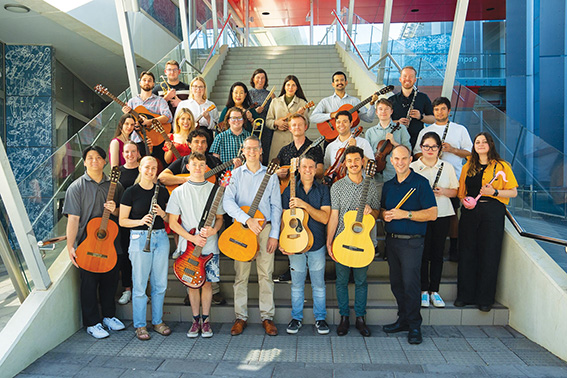
“This year the music education major and instrumental music education minor were the largest single subject areas in ECU’s postgraduate teacher education courses,” Mr Goopy said.
“Our students range from graduates who have recently completed their bachelor degrees, to highly experienced instrumental tutors in schools now looking to gain a formal teaching qualification.”
The uni’s executive dean of education Caroline Mansfield said it was good news for schools.
“As the largest provider of graduates to public schools in WA, we are dedicated to ensuring that future teachers experience quality initial teacher education, developing knowledge and skills to support success in the future.”
The boom in enrolments follows a report from June last year that found the teachers are getting less than half the music education in their degrees than they were 15 years ago.
The Fading Notes report by Rachel Hocking was the latest as part of a partnership between Alberts/The Tony Foundation and award-winning educator Anita Collins.
Worsening
“There are insufficient numbers of trained and/or upskilled teachers of music in all education systems, and this situation is predicted to worsen in the future,” the report found.
It said music was worth just 1 per cent of a primary education degree.

“The inadequate provision of music education in primary teaching degrees, along with indifferent attitudes towards music teaching, is having a detrimental impact on the quality and quantity of music education in Australian schools, ultimately failing school students,” the report found.
And that can have implications for academic results, with a 2019 study by the University of British Columbia finding that music students were scoring “significantly better” exam results than their tone-deaf peers in other subjects.
Study author Peter Gouzouasis noted that North American schools mirrored those in Australia by under-funding music education compared to other areas.
“It is believed that students who spend school time in music classes, rather than in further developing their skills in math, science and English classes, will underperform in those disciplines,” Dr Gouzouasis said.
“Our research suggests that, in fact, the more they study music, the better they do in those subjects.”
Magdela Lisek is a new student in the graduate diploma in teaching course and is majoring in music education, but she is no stranger to ECU.
“I completed my bachelor of music (classical performance) and graduate diploma (opera) at the Western Australian Academy of Performing Arts and know the strong reputation of ECU’s School of Education,” Ms Lisek said.
She currently works as a school music tutor and looks forward to gaining her formal teaching qualification.
“I want to share my passion for the art form and make music and musical knowledge more accessible,” she said.
by STEVE GRANT


Leave a comment