KINGS PARK’S long-serving director of science has added his signature to a letter calling on prime minister Anthony Albanese to protect at least 30 per cent of the South West from further deforestation and development.
Kingsley Dixon, who’s also a professor at Curtin University’s School of Molecular and Life Sciences, said Australia was facing a “catastrophic” decline in flora and fauna which needed to be addressed.
“Australia is facing an extinction crisis unparalleled globally, where the abundance of plants has fallen 71 per cent, birds have been reduced by 55 per cent, and mammals have declined by 46 per cent since 2000.”
Prioritise
Prof Dixon, whose signature joins those of former premier Carmen Lawrence, Australian of the Year Fiona Stanley and Conservation Council of WA president Richard Yin, has urged Mr Albanese to prioritise the 48.9 million hectare Southwest Australia Ecoregion for protection.
The Southwest Australia Ecoregion stretches from Shark Bay to the south coast and according to the World Wildlife Fund has the highest concentration of rare and endangered species in Australia. It’s one of only three acknowledged hotspots in the country.
The signatories want the government to focus its attention on the hotspots rather than trying to fulfil its obligations towards the UN Kunming-Montreal Global Biodiversity framework with less valuable but less contentious arid areas.
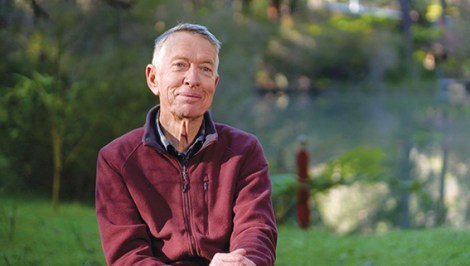
“There is no better place to start than by restoring and protecting our global biodiversity hotspots,” Prof Dixon said.
Prof Stanley said biodiversity loss affected the health and wellbeing of current and future generations.
“The pathways into climate change and biodiversity loss are the same and they are linked to human health,” Prof Stanley said.
“Whist not yet too late to reverse this, we are getting dangerously close to not being able to avoid serious damage.”
Dr Yin said 100,000 hectares of forest had been wiped out through prolonged drought and “heat-making ecological restoration” in the last six months.
“The South-West of WA is one of Australia’s Global Biodiversity Hotspots and home to thousands of plant species found nowhere else in the world,” Dr Yin said.
“It is also a region most vulnerable to climate change impacts.”


Leave a comment