• Game changer?

    The inaugural William Street Long Table Lunch and block party next Saturday (March 11) will hopefully change negative perceptions about Northbridge, say event organisers.

    The plein air lunch is the brainchild of Kabir Ramasary, who is director of William Street venues The Bird, North Bird Wine Store and Ezra Pound.

    He wanted local businesses to join forces in a community event that would help dispel the stigma of Northbridge being dangerous, anti-social and unsuitable for families.

    “I was walking down William Street last year, probably around August when the idea came to me,” Ramasary says.

    “I remember saying how awesome it would be to have a long table lunch on the street paired with live music. I just thought it would be so much fun to do something so different.

    “The concept was to find a way to collaborate with the local businesses and help remove some of the stigma where Northbridge is seen to be dangerous or anti-social.”

    After Ramasary successfully applied for a City of Perth revitalisation grant last December, the ball was well and truly rolling and he began contacting other local businesses to take part.

    Along with Ramasary’s venues, Francoforte, Bivouac, Double Rainbow, Govinda’s, Munchy Monk, Downtown Kebabs, Chicho Gelato and Cafe Pastel have all signed-up to deliver a “family style” communal lunch for 300 people on three long tables in the middle of William Street.

    The event will be held between Roe and James Streets, which will be closed off to traffic, and groups of four diners will share three entrées, three mains and three sides, as well as a dessert each. 

    Playing in the background will be live music from WA jazz artists Daniel Susnjar Afro-Peruvian Jazz Group, Jess Carlton Duo and the Kate Pass Kohesia Ensemble.

    “The theme for the whole event is ‘community and collaboration’,” Ramasary says.

    “So, imagine sitting at a long table potluck dinner in a friend’s backyard where each person invited would bring their favourite dish to show off – the event will be of a similar flavour.

    “The venues have been given free rein to be creative and play to their strengths. 

    “Each venue has been grouped with three others to serve 100 people on the day, and the only restriction was that each dish needed to complement one another to create a beautiful experience for diners.”

    From 4pm onwards there will be a free ticketed block party on William Street with live music from Alter Boy, Gia Como, Project Bexx, Racka Chachi and Odette Mercy & Soul Atomics. The party continues into the night at The Bird and Ezra Pound backyard carpark with sets from Anesu, Ghost Care, Grace Sanders, Joan & The Giants, Odlaw, Sai Galaxy (Digital Afrika) and Siobhan Cotchin. 

    Ramasary says getting permission to close off part of William Street on a Saturday afternoon was a daunting task, but the powers that be were very supportive.

    “The City of Perth team were really on board from day one. We are absolutely thrilled that we are able to make this unique and exciting event, that will be enjoyed by hundreds of people, a reality.” 

    The long table lunch starts at 12pm and the block party at 4pm. For more info and tickets go to moshtix.com.au.

    by STEPHEN POLLOCK

  • Probing art  
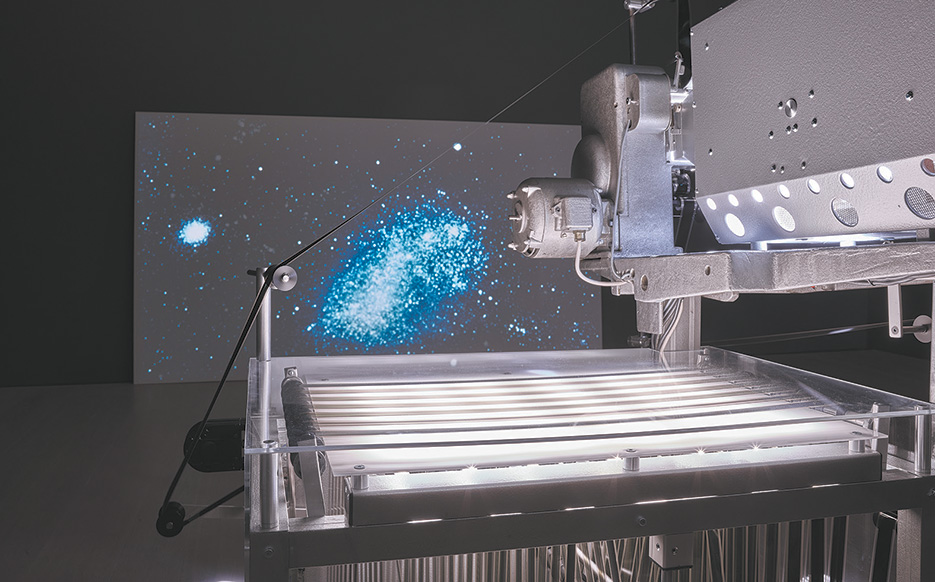
    (Top – Bottom) Drawn by the Pulse photo Marcus Meyer and The Color Out of Space photo Blaine Campbell from Rosa Barba’s Emanations.

    IMAGINE Spock was into basket weaving and landscape painting.

    Well, not really, but the intersection between science and art is explored in spectacular fashion by Italian artist Rosa Barba in her debut solo Aussie exhibition Emanations.

    Barba has exhibited extensively in Europe and her work is currently on show at the famous Tate Modern in London, so there’s a fair bit of excitement about her exhibition at PICA in Northbridge.

    Emanations was developed in response to The Perth Festival theme djinda (Noongar for cosmos or stars) and is a sort of highlights reel of Barba’s works from the past 10 years – exploring the linkbetween film and astronomy andthe related concepts of light, time and distance.

    In the piece Drawn by the Pulse, Barba pays tribute to American astronomer Henrietta Swan Leavitt.

    She was a member of the ‘Harvard computers’, an all-female team tasked with analysing thousands of glass-plate photographs in the collection of the Harvard College Observatory in Massachusetts.

    Studying images of the Magellanic Clouds, the neighbour-galaxies of the Milky Way, Leavitt discovered a rule for measuring stellar distances based on the rhythmic brightening and dimming (or ‘flicker’) of pulsing variable stars. Leavitt’s discovery allowed later astronomers to confirm the existence of galaxies far beyond the boundaries of the known universe.

    Filmed at the Harvard College Observatory, Drawn by the Pulse features photographic plates marked with Leavitt’s annotations. 

    Barba was intrigued by how stars, like projectors, emanate beams of light, and how Leavitt worked like a filmmaker, editing together individual photos just like frames of a film. Presented as an installation using a modified projector fitted with a lightbox, Drawn by the Pulse draws attention to the fleeting frames looping across its surface, image followed by image.

    Another eye-catching work is the 2015 work The Color Out of Space. Featuring five glass filters and a stunning video of the cosmos, it blurs the line between lab experiment and a scene from 2001: A Space Odyssey.

    The piece was developed by Barba in collaboration with the Hirsch Observatory in Troy, New York. Working with video, Barba combined and digitally edited photos taken from the Observatory with images of swirling nebula, planets, comets and moons captured by NASA’s more powerful space telescopes to create a moving image work.

    On the soundtrack, scientists, artists and writers can be heard reflecting on the mysteries of the universe in a fragmentary collage of interviews, field recordings and readings.

    One voiceover explains the importance of coloured glass filters in the imaging of stars unperceivable by the eye through earth-based telescopes. Another reads a passage from horror writer H.P. Lovecraft’s 1927 short story The Colour Out of Space, a tale of ecological collapse triggered by an indescribable colour fallen to earth inside a meteorite.

    “At times indistinguishable from one another, these interlocking narratives – from the scientific to the highly fictionalised – put the present in contact with times and dimensions beyond the scope of human perception,” states the PICA catalogue.

    Alongside film, Emanations includes several sculptural and text-based works where fragments of language are projected, printed and cut into materials such as film, felt and paper.

    Emanations is at PICA in Northbridge until April 23 and there is a free talk Scientific Speculations, a conversation about new developments in science and technology with local artists, astronomers and scientists, on April 1 at 2pm. 

    by STEPHEN POLLOCK

  • Picture perfect 

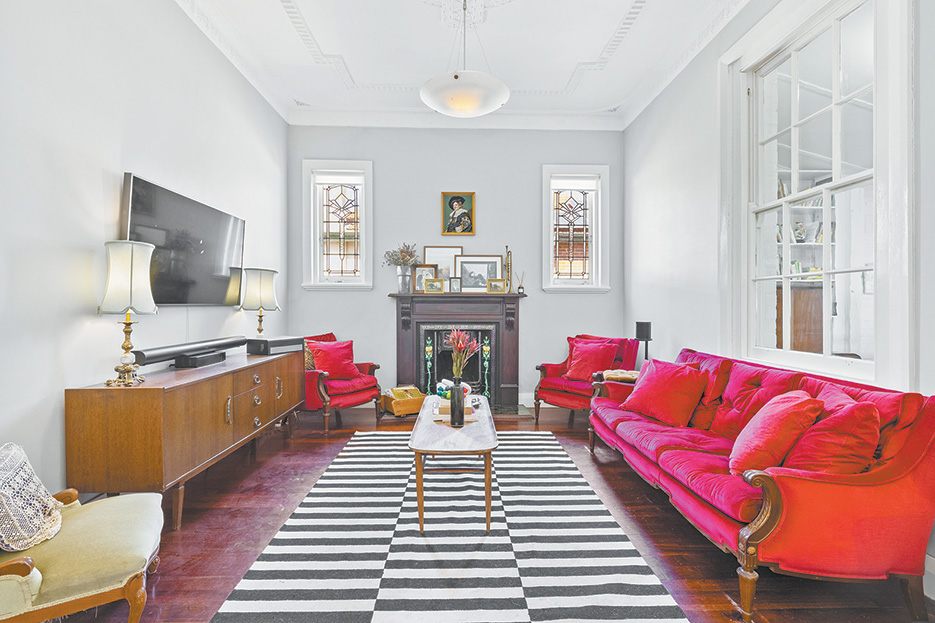
    THE Voice has reviewed a lot of homes over the years, but the formal lounge in this Bayswater property really took our breath away.

    It has a bevy of classic features – vintage fireplace, leadlight windows, ornate cornicing, ceiling medallions – and was perfectly furnished with a flamboyant twist.

    That came courtesy of the period furniture which had arresting pinky red upholstery that really brought the room to life and added a modern swish of colour.

    There’s a lovely symmetry to this room with two leadlight windows either side of the fireplace creating the illusion of a pretty face, and another window on the side wall, ensuring plenty of natural light.

    Situated on Railway Parade, the rest of this two bedroom two bathroom Californian-style bungalow is really impressive.

    There’s a very large, contemporary kitchen with loads of cupboards and drawers and some modern stainless steel appliances.

    I like how virtually everything is white in the kitchen, giving it a very minimalist, almost futuristic look. Another plus point is space – the home is on a whopping 819sqm full block with a humongous back garden.

    There’s an L-shaped alfresco/patio with a huge dinner table that has no doubt seen some special family gatherings over the years. There’s also a big lawn, established trees and even the odd chook galavanting about.

    There’s plenty of nooks and crannies in this garden for kids to play hide-and-seek and a delightful cubby house off to the side. Dad won’t be bored either with a large workshop, shed, garage and wood shed.

    The possibilities are endless for the back garden – you could keep it a rustic delight or put in a monster pool and a whole new entertaining area.

    There’s also a verandah out the front and another patch of lawn, giving you a second area to quietly read a book and get away from things.

    The home includes a 5m-plus driveway with access to the rear, bore reticulated gardens, two renovated bathrooms and three AC split systems.

    Situated in a mixed-use zone (RAC3 density) on Railway Parade, the home is metres from Inglewood and it’s a short walk to all the pubs, cafes and restaurants on Eighth Avenue.

    It’s also in the Inglewood primary catchment and near Meltham train station.

    This is a lovely character home with a fantastic formal lounge and huge back garden.

    Buyers in the $900,000s
    Home open today (Saturday March 4) 1pm-1:30pm
    224 Railway Parade, Bayswater
    Beaucott Property 9272 2488
    Agent Carlos Lehn 0478 927 017

  • Pictures worth a thousand words
    First Nations photographer Maria Maraltadj.

    WITH their experiences often misrepresented or told by non-Aboriginal people, four First Nations photographers will share their stories firsthand in an exhibition of recent works at the Perth Centre of Photography.

    The “Exposure: New Voices in Australian Photography” project was started by PCP board member Glenn Iseger Pilkington, intending to make sure First Nations voices were heard first hand and correctly represented.

    Kimberley artists Mary-Lou Oriyarli Divili, Maria Fredericks, Nuriah Jadai and Maria Maraltadj were mentored and given resources and professional opportunities through Kimberley charity Camera Story to develop a body of work for the exhibition.

    “This exhibition is the culmination of years of work for both PCP and the artists and will provide Boorloo audiences with a unique glimpse into the lives and imaginations of artists and storytellers living and working across this state,” Iseger Pilkinton says.

    Jadai, a Marty and Mangala woman, sought to use photography to show how country and people are one. 

    “This Exposure program respected our time and space to make art,” she said.

    “Making art on my own country, is a feeling that I cannot describe. It’s where I’m from, where I belong. It belongs to me. I could tell my story and be connected with country.”

    The exhibition runs March 11 to May 13 at PCP’s King Street Art Centre, 357 Murray Street Perth, opening times at pcp.org.au

  • Trial cuts speeds by 1kmh

    A 40KMH trial on local roads across southern Vincent only led to a one kilometre-per-hour drop in average speeds.

    Despite the modest impact, the council still wants to roll out 40kmh across all its local roads. 

    The council started the trial in 2019, and consultation with locals in September 2022 found 57 per cent of respondents supported the change and many said they felt safer walking and riding.

    But the stats are pretty modest: The traffic study to council says “mean (average) vehicle speeds have reduced by about 1kmh” after the change from 50kmh to 40kmmh. 

    An independent report recommended Vincent go ahead and just change all local roads (the residential streets that aren’t main arteries) to 30kmh, saying that was the safest option to reduce serious crashes and get more people walking and riding.

    But councillors were reluctant to go that far and instead voted for 40kmh, and the city will now need to petition Main Roads to make the change official. 

    Mayor Emma Cole acknowledged 30kmh is “probably the gold standard, but we are needing to be pragmatic,” and Main Roads weren’t likely to lower the limit that far until actual physical traffic-slowing measures were in place and average speeds had slowed more.

    “I think community appetite sits at 40 for now… we’re looking at this being incremental, and that’s the way, I think, to achieve the support of Main Roads as well.”

    Former councillor Dudley Maier attended the meeting and told the council the trial showed that 40kmh wasn’t enough and they ought go with the expert recommendation of 30.

    “If the intention of the trial was to produce a noticeable reduction in traffic speed, it’s been an abject failure… speeds dropped by about one kilometre. It’s not very much.

    Mr Maier said “overseas experience has shown that the trend is towards 30kmh on local roads. Joondalup implemented a trial to 30kmh and it showed that it had a minimal impact on journey times but offered significant improvements in road safety and pedestrian amenity, so why can’t we?”

    For now the more modest reduction to 40kmh is planned to go Vincent-wide in 2023 or 2024, if Main Roads gives approval. 

    by DAVID BELL

  • Courting outrage

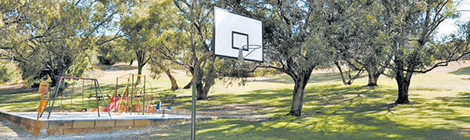
    BASKETBALL would be impossible to play at nearly all outdoor courts if draft state noise guidelines were applied, Stirling mayor Mark Irwin warns.

    The WA Department of Water and Environmental Regulation has drafted guidelines on “minimising noise impact from outdoor community basketball facilities”. 

    The guidelines come after a series of suburban courts being shut down in recent years due to complaints under existing state noise laws, in Victoria Park, Capel, Joondalup, and one in Stirling.

    The current draft doesn’t propose a retroactive ban on existing courts, but recommends small courts are a minimum of 60m from any residence, and full courts should be 100-150m away from residences. 

    While they’re billed as “guidelines” rather than laws, Mr Irwin still warns their presence could loom over councils and “inevitably” influence decision-making, possibly leading to costly modifications or more court closures.

    “If we simply applied the proposed regulations to our existing outdoor courts, 25 out of the City’s 29 outdoor facilities, or over 86 per cent, would be non-compliant,” Mr Irwin said in a media statement. 

    “While the City of Stirling is seeking to increase accessibility to outdoor courts to meet this demand, including through shared-use arrangements with local schools, these draft Guidelines appear to be doing the opposite.”

    DWER is currently taking feedback from councils about the draft until March 3. 

    Earlier this week sport and recreation minister David Templeman watered down fears of a halfcourt fatwa, saying it was “common sense” that young people needed places to throw a hoop, and that residents living near parks needed to be understanding.

    The draft guidelines also earned the ire of Basketball WA; Stirling’s community development director Michael Quirk was appointed to its board last year.

    by DAVID BELL

  • Plea for safe space

    WOMEN living homeless on Perth’s streets fear they’ll have no place to go if funding is cut off for the Safe Night Space in East Perth.

    Perth council is mulling over whether to stretch the budget to keep Safe Night Space going another 6-12 months.

    “We’d be lost without this place,” one woman sleeping in the East Perth SNS said. “They’re going to see more ladies being assaulted and raped” if they’re returned to the streets.

    She said other services were either full or required too many hoops to jump through to be admitted, and many women needing a place to stay urgently would struggle with navigating paperwork or interviews.

    The City opened the SNS for women in the Rod Evans Centre on Hay Street in 2021, contracting homelessness services provider Ruah to run the place. 

    It was originally a stop-gap measure until more state government homeless facilities were opened up, like the Murray Hotel planned to open with 30 beds this year, and the Ruah Centre for Women and Children that’s proposed to open with 14 beds in Northbridge by 2024, but has found an easy-entry niche. 

    Funding ends in May, and the city has to weigh up rising costs if it continues funding. It costs $1.08 million a year to run, but Ruah has been shouldering extra costs from bringing in specialist staff for clients’ complex needs.

    Another year’s funding would cost the council $1.45m (and still leave Ruah, a not-for-profit, to cover $258,000 in additional costs). 

    Ruah’s housing GM Elsie Blay spoke to councillors at a briefing this week, urging them to continue the service.

    “The impact of Safe Nights closing without any similar service will have a profound impact on this growing issue in the city. In January this year we’ve had 112 women who have newly needed our service,” Ms Blay said.

    “Ruah and the City [of Perth] have worked together to support hundreds of women who were rough sleeping and came to Safe Nights, and who are now in permanent housing.

    “There is no alternative to Safe Nights. It’s the only service of its kind… it’s had a significant impact in giving practical solutions for women to turn their lives around, like the woman who’s recently started TAFE and now has a job in hospitality, the woman who’s back with her kids and staying away from drug use, the woman in stable housing now working in a café.”

    A staff report said there’s been an average of two calls to police a week in relation to the trouble at and around the centre, but still recommended a six-month funding extension. 

    The centre runs 7pm to 7am, and a few women stay outside or in the nearby park during the day. A neighbouring playground is now less popular, with parents wary of rough sleepers.

    Lord mayor Basil Zempilas noted there had been some extra beds made available by the state government since the SNS opened, but was frustrated its 112-unit ‘Common Ground’ facility in East Perth had been delayed again.

    by DAVID BELL

  • Fresh life for Oxford icon
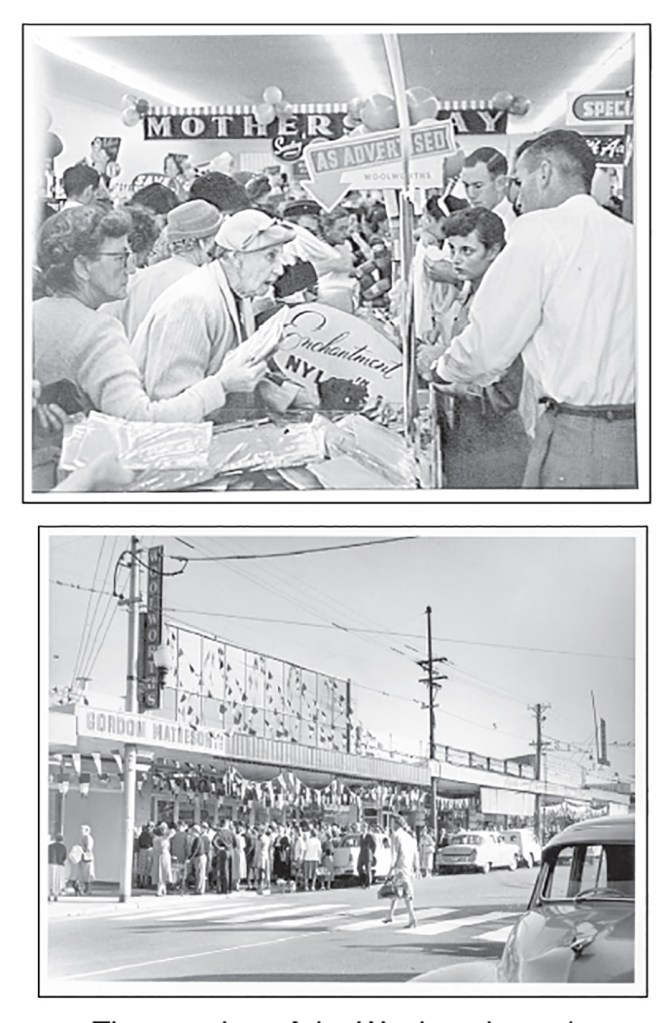
    The opening of the Woolworths at 123 Oxford Street, Leederville 1958.  (City of Vincent Local History Collection (PHO4060-4063) 

    MANY ventures have come and gone on Oxford Street over the years, and this week historians from the Vincent Local History Centre archives delve into the many lives of the iconic 123 Oxford Street: from rowdy whippet club, upmarket makeover, to the colourful Greens & Co and beyond

    OXFORD STREET in Leederville has seen many businesses come and go over the years. 

    From grocers to fishmongers, hardware stores and hairdressers, the street has been home to a vast range of shops and services since it was developed as a commercial hub in the late 19th century. 

    Recently, 123 Oxford Street has featured in local news as the proposed site for a new Indian gastropub. 

    Vincent Council approved a new tavern use for the site this month, paving the way for Jagga Daku to open around mid-year as a tavern and Indian cuisine eatery by night and a cafe and brunch space during the day.

    The site was most recently occupied by Greens & Co cafe, which closed its doors in 2021.  

    Long before it was a cafe, the building was home to Leederville’s first Woolworths variety store which opened in 1958.  

    Woolworths was founded in New 

    South Wales in the 1920s by door-to-door haberdashery salesman Percy Christmas. 

    It began as a variety store modelled on the American FW Woolworth’s ‘five and dime’ shops. The name was not trademarked in Australia and so the Woolworths name was adopted, despite it having no formal affiliation with the American company. 

    Perth’s first Woolworths store opened at 707 Hay Street in 1928. 

    The store eventually branched out into suburbs, including Leederville in the late 1950s.  

    It was not until decades later that the company expanded into a supermarket chain.

    Woolworths was originally a variety store that sold homewares, toys, toiletries, haberdashery and clothing.

    Photos from the Leederville store opening in 1958 showed shoppers clamouring to buy opening day specials such as nylon stockings and sheets. 

    Before it was a Woolworths, 123 Oxford Street was the site of the Metropolitan Whippet Club.  

    Whippet racing began in Leederville in October 1931 and reached peak popularity in the 1930s when up to 100 dogs competed weekly to large crowds.  

    Whippets, known colloquially as the 

    ‘poor man’s greyhound’ or ‘poor man’s racehorse’, were introduced for racing in Western Australia’s goldfields in the early 1900s.  

    Poor man’s greyhound

    During the Depression and war, whippet racing was a popular form of entertainment in many Western Australian towns, including Leederville.  

    In modern times, concerns for animal welfare have shifted attitudes against forms of animal racing.  

    However, in the 1930s, whippet racing attracted controversy not for its potential impact on animals, but because it was seen to attract unsavoury human behaviour such as betting and swearing on the streets of Leederville.  

    “Who was responsible for the establishment of a whippet course at the junction of Newcastle and Oxford Street?” asked a passer-by in The West Australian in January 1932.

    “Women hardly dare wait for a tram on this corner lest their ears be assailed by the curses and vulgarities of men who have backed the wrong dog… betting inside the course is forbidden, so it is obviously carried on outside.”  

    Defending the Leederville races, Bob Shilling and Two Bob argued: “These dogs are well fed and cared for… the dogs are the property of working men who do not keep hangers-on. It is a hobby; why should any exception be taken to them enjoying their sport?” (The West Australian, January 1932).  

    The whippet races took place at one of Leederville’s current carparks.

    If anyone has any photos of the races, or of any other events which took place on the site, contact the City of Vincent Local History Centre at local.history@vincent.wa.gov.au 

  • Letters 25.2.23

    I tawt I taw a puddy tat… 

    ON the morning of November 10, 2022 I was walking in Kings Park with my family.

    On the “Boomerang” pathway in the north-west corner adjacent to Thomas Street, I observed a domestic black cat moving freely around in the park.

    I followed the cat off the path and saw that its owner lived on Rosalie Street, Shenton Park.

    The cat had no bell to warn native animals of its approach. 

    However it did have its name, owner details, a GPS tracker and two bizarre tags stating “Mum’s tracking me, if no tracker please call my mum, thanku!!” and 

    “Not lost just an adventurer”. 

    I called BGPA – Kings Park and was politely told if I’m concerned I should call the City of Subiaco. 

    I called the City of Subiaco and discussed it with a ranger who informed me that although he agreed this was irresponsible of the owner, it was not violating the Cat Act and there was no further action to be taken.

    Kingsley Rudeforth
    West Perth
       

    Show some leadership

    I WAS shocked to read the Letter to the Editor “Not many roaming cats in Kings Park” in the Voice (February 18, 2023). 

    The letter dismisses the impact cats are having on urban wildlife, human health, and the need for responsible pet ownership. 

    Suburban environments, including our remnant bushland, parks and native verges, are important areas for biodiversity, supporting large numbers of threatened species. Yet pet cats are ubiquitously distributed in these environments. 

    A review by leading Australian scientists has estimated that, on average, pet cats kill up to 50 times more animals per square kilometre compared to feral cats living free in the landscape, with each free-roaming pet cat estimated to kill between 110 – 186 reptiles, birds and mammals per year. 

    With around 3.5 million free-roaming pet cats in Australia, the cumulative predator-induced effects on wildlife are alarming! 

    I saw, first hand, the devastating impact a single, free-roaming cat can impose on seabirds. In 2018, incursions by a pre-owned cat over several nights led to the death of six adult Fairy Terns, at least 40 chicks, and ultimately, the abandonment of 111 nests (“New laws to stop domestic cats roaming could save fairy tern population,” ABC news, December 15, 2019). 

    Another study from a suburban Perth property provides evidence of the extermination of an entire population (40-50 individuals) of skinks by a single pet cat within two years of the animal moving into the neighbourhood. 

    The estimated annual cost of treating two cat-dependent diseases (toxoplasmosis and cat-scratch disease) in Australia is $6.1 billion! 

    If keeping cats indoors to enhance wildlife conservation isn’t enough of a motivator, perhaps human health is.

    The evidence is unequivocal and policy makers have an obligation to ensure the protection of our native species and to help reduce the spread of disease. I call on local government minister John Carey to show strong leadership on the issue of free-roaming cats and urgently enable the enforcement of permanent containment for pet cats (much like the rest of Australia does). 

    Dr Claire Greenwell
    Melville
    Editor’s note: Dr Greenwell is convenor of the 500-member WA Fairy Tern Network.

    WA caught catnapping

    Recently there has various publications (including “Kings Park push for cat laws”, Voice, January 28, 2023) and discussion regarding the damage that pet (and stray) cats inflict on the wildlife in the Perth metropolitan area, which I am sure can be expanded to other populated areas.

    It is frustrating that cat owners have so little regard for the environment that they allow their “pets” to roam free at night, killing countless native animals and breeding with stray cats, increasing the problem.

    What I find equally frustrating is that WA councils who see the absolute need to manage cats can’t enact cat containment bylaws (like in other states) because the state government and responsible ministers refuse to act. 

    Brisbane city council have been proactive for over a decade and there are many other councils in SA, Vic and QLD that have had cat containment bylaws for well over a decade.

    The lack of containment laws are also increasing the number of stray cats and feral cats through their offspring.

    The amount of cats that I see roaming at night and early morning in our suburb, particularly in Piney Lakes Reserve alone is amazing, and I am sure if there were similar number of dogs there would be an outcry. 

    However, why is it OK for cats to be allowed too roam, given the significant damage they do to the local fauna populations?

    When is enough enough? 

    When will the government ministers stop playing politics, passing the buck or blaming someone else? 

    When will the state government review and update the current laws? 

    When will councils be permitted to enact cat containment bylaws?

    Greg Stagbouer
    Winthrop

    Disappointed

    I WAS dismayed and incredibly disappointed to read the letter to the editor “Not many cats roaming Kings Park” in the Perth Voice (February 18, 2023).

    Minister Carey completely ignores the bigger picture and fails to realise the unique opportunity he has to leave a significant legacy for Perth communities. 

    The recent UN Biodiversity Conference calls for global action to halt biodiversity loss, and global action requires local effort. 

    An easy win to do our part in the fight for survival of our native species, is a local government cat containment law.

    The scientific and social evidence is clear – there are no downsides to permanent pet cat containment. 

    Pet cats themselves also lead much longer lives, free from the threat of car strike, snake bite and diseases. 

    And, as Minister Carey should know, the terrible impact from cats hunting our threatened urban wildlife will end.

    Minister Carey completely disregards the urgency of the situation, claiming that a review of the legislation in 2024 (with no meaningful change until 2030) is sufficient. 

    Meanwhile local councils are desperate for change, not wanting to be left behind on this issue by more progressive eastern states. 

    Even his constituents want change – the last Cat Act review showed 73 per cent of people want permanent cat containment!

    Solutions to permanent cat containment exist already.

    Policy solutions that could simply be copied are widely implemented in cost-neutral ways across many eastern states councils.

    The RSPCA has helpful guidelines to transition roaming pet cats to being comfortable and entertained inside or in a catio. 

    The centralised registration system that Mr Carey mentioned would be an opportunity to improve the efficiency of implementation.

    Yet even more motivating than the widespread wins for all involved is the counter factual. For every year the minister delays effective cat containment laws in Western Australia, 

    224 million birds, reptiles and mammals will die and countless well-loved pet cats could be maimed or horribly killed on our roads.

    It is time for the City of Perth to catch up to the action already being undertaken by other local governments to control domestic cats and to do its part to help Australia shake off our appalling title of the country that has lost more mammal species to extinction than any other continent in the world. 

    The time for permanent cat containment is now, before we have nothing left to protect.

    Kaylee Prince
    Perth

    An open invitation

    OUR precious native wildlife are under constant pressure from multiple threats, especially in our urban environment. 

    The statistics on predation of native fauna by domestic cats is irrefutable and the numbers are truly staggering!

    Minister Carey, I respectfully offer you an open invitation to visit Lake Claremont, a conservation category wetland.

    I would welcome the opportunity to show you the amazing work that the Town of Claremont and the community have done to restore this highly degraded wetland. 

    The revegetation project at Lake Claremont has been a great success story, so much so that last year we were able to initiate a quenda relocation project. 

    The quenda is a priority 4 threatened species. As a part of this project the Friends of Lake Claremont (FOLC) committed to a monitoring program.

    FOLC won a grant to purchase 11 cameras for fauna monitoring. 

    The Quenda relocation and monitoring has been very successful but we have been shocked by the number of domestic cats that have been picked up on our cameras. 

    Literally, dozens of cats have been captured on camera roaming the reserve on a nightly basis. I welcome the opportunity to share this evidence with you.

    The suggestion that only one cat per year is sighted in Kings Park is merely evidence of a lack of resources or interest? 

    The Town of Claremont is currently in the process of reworking their local cat laws but are restricted by the fact that the Parliamentary Joint Standing Committee has no appetite for cat curfews. 

    Until this position changes our threatened species, and indeed all our native fauna, remain just that, threatened and highly vulnerable to predation.

    I have spoken with land managers across the metropolitan area and I can assure you that cat predation is a major issue in all of our urban bush reserves.

    Nick Cook
    Chair and Coordinator
    Friends of Lake Claremont Claremont

  • Farm fresh

    I HAD high hopes for Farmology.

    After all, a cafe situated in Perth City Farm should be the very essence of paddock-to-plate with access to the freshest and best produce around.

    I had visions of The Good Life meets River Cottage with a Hugh Fearnley-Whittingstall clone serving me some delicious omelette made from eggs freshly laid that morning.

    The anticipation was heightened by the slightly clandestine drive to reach Perth City Farm, tucked away at the end of a winding road at the city-bound stretch of Royal Street.

    Opened in 1994 on a former industrial site in East Perth, the not-for-profit urban farm and nursery has expanded over the years to become a community hub, offering educational workshops and venue hire for events like weddings, gigs and birthdays.

    As I parked outside and walked past the quaint stone boundary wall, people were humphing stuff into a van and busy moving plants in and out.

    It definitely had the feel of a working farm, a bit rough around the edges with lots going on, and not some tourist idyll or picture-perfect xanadu for office workers experiencing weltschmerz.

    The Farmology cafe was off to the side as you walked through the front gates, and a few people were eating there when I arrived on Tuesday lunchtime.

    The main menu was small with just six breakfast items – granola, buttermilk chai pancakes, zucchini fritters, eggs rosti Benedict, big brekky and eggs on toast.

    There was also a display cabinet with some wraps and sandwiches, some baked goods on the counter and a specials board.

    It pays nothing for a smile and I wouldn’t say the girl at the till was the most welcoming (it had the feeling of I’m nearly at the end of my shift) but no big deal and after ordering I took my little metal flag and retreated to a crate-cum-table in the dining area.

    From the cafe you have interesting views of the inner-city farm with stone-walled gardens mingling with warehouses, vans and lush plants and shrubs.

    Peeping through the verdure were some cool frescos on the side of a nearby warehouse with a colourful hawk and pelican rubbing shoulders with some modern urban art.

    The farm had the feel of a commune with a slightly gritty edge, like some distant footnote to 1960s counter-culture.

    Playing away in the cafe were some mellow songs in the vein of Teenage Fanclub and The Byrds, and coupled with the tranquil views, the stress began to fall away and I felt very relaxed.

    The cafe interior was rustic with wooden tables and chairs, and large fans desperately trying to counter the late summer heat, but not making much headway.

    It wasn’t long before the lady from the till was back with my zucchini fritters ($17).

    The two large poached eggs perched on top of the fritters were cooked to perfection – golden yolk oozed out as you pierced them with your folk and they tasted delicious when combined with the heap of wilted spinach.

    I was expecting that trademark crispy exterior from the zucchini, corn and capsicum fritters, but they had the texture of something akin to a pancake and there was no satisfying crunch.

    The taste was okay, but it was slightly bland, and got lost amongst the strong burst of flavour from the accompanying hummus, which was rich, thick and creamy.

    Scattered around the edge of the plate was some housemade Egyptian dukkah, which added an exotic twist, but there needed to be more of it to provide texture.

    Maybe they were having an off day, but my lunch at Farmology was a bit hit and miss.

    It feels like it has untapped potential and could be making more of its location and access to fresh produce.

    Farmology
    1 City Farm Place
    facebook.com/farmologycafe

    by STEPHEN POLLOCK