• All at sea

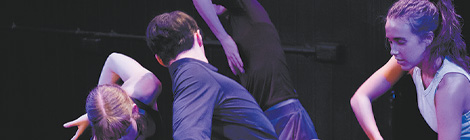
    IF you’re walking through the Perth Cultural Centre at night, you might see a giant projection of folk doing strange things inside a sea container.

    Don’t worry, it’s not a dodgy stream from Fremantle Ports, but a performance by The Blue Room Theatre. 

    Throughout late February and early March they will be performing five shows inside a sea container at The Rechabite’s Birdbath beer garden. The venue opened in December, activating a previously unused concourse beside the State Library. 

    The live shows from the Birdbath will be simultaneously projected onto the side of the library, so passers-by can get a sneaky peek.

    It’s all part of the Screen to the Dream project, with each institution at the Perth Cultural Centre projecting works onto the library’s brutalist facade.

    “The Blue Room Theatre’s collaboration is the only one that will feature live performance,” says BRT performer Briannah Davis.

    “A total of 16 artists from The Blue Room Theatre’s 600 Seconds Program (recently performed in Summer Nights Festival) will share five nights of live performances within the sea container at the Birdbath.

    “Audiences can grab a drink and pick up their silent disco headphones from the bar to tune into the soundscapes of the performances.” 

    The shows kick off with The Golden Rules, a two-hander dance piece about fashion and body image that riffs on noughties icons Trinny and Susannah, starring Davis and Tom Mullane.

    If The Thick of It is more your thing you’ll enjoy The State, a camp political satire that sends up Aussie nationalism with kings and puppets.

    Or get trapped deep inside your head in the psychological mind bender Imaginary Sounds, a performance piece and original soundwork by Portia Rose andDavid Mitchell.

    Another claustrophobic-inspired show 1.5 metres squaredby Brent Rollins, looks at what happens when “five people are confined to an impossible amount of space? Are there limits to limitation? Or could it be limitless?”

    Last but not least is Splice by Xin Hui Ong. The ambitious hour-long show examines if there is such a thing as free will in a seemingly deterministic world in a multidimensional universe of infinite possibilities…

    All the shows at The Rechabite Birdbath are 10 minutes long and are repeated between 7.30pm-8.30pm, apart from Splice which is an hour-long performance.

    The Golden Rules is on February 24, The State on March 1, Imaginary Sounds on March 2, 1.5 metres squared on March 3 and Splice on March 4. 

    BY STEPHEN POLLOCK

  • Bohemian pad

    WHO hasn’t entertained the romantic notion of living in a converted warehouse apartment?

    Like some artist in an indie movie struggling to make ends meet while enjoying a chaotic, bohemian lifestyle in New York.

    Well the Voice can’t guarantee all that stuff, but this apartment in the Old Boans warehouse in East Perth certainly has a ton of cool history behind it.

    The 5000sqm warehouse was built in the early 1900s and used by Boans, the former West Australian department store chain.

    Brothers Harry and Benjamin Boan opened their first shop on Wellington Street selling drapery and dry goods in 1895, and started punting furniture around 1912.

    After World War I, as demand for new homes increased, they built the factory in East Perth.

    Eventually Myer Emporium (now Coles Group) purchased Boans in 1985 and closed its flagship Wellington St store a year later to make way for the Forrest Chase Myer complex.

    In 1994 the old Boans warehouse was sold as part of the East Perth Redevelopment Authority’s plan to kick-start commercial activity in the area.

    Today it is a trendy and very desirable inner-city complex on Little Saunders Street.

    This split-level apartment is currently tenanted until March, so you have some time to get everything ready to move in or you could possibly extend the lease and be a landlord (very attractive right now with low rental stock and unprecedented demand).

    The spiral staircase is a real winner and it adds to the authentic air in this one bedroom one bathroom apartment.

    There’s 63sqm of living space with the bedroom and bathroom on the top floor.

    The downstairs open plan living/dining/kitchen area has that classic warehouse conversion-look.

    There’s lovely exposed beams on the ceilings, split system air con, new tiling and built-in wardrobes in the bedroom.

    Another great feature is the 13sqm courtyard where you’ll no doubt be hanging out with your libertine friends or writing the next great Aussie novel.

    The home includes a secure under-cover parking bay, secured gated grounds and you can apply for an additional street car bay from the City of Perth.

    Situated on Little Saunders Street, you are a short walk from Optus Stadium and the Crown Casino. This is a very cool apartment with a great backstory.

    Offers in the $400,000’s Boans Warehouse
    6 Little Saunders Street, East Perth
    RealEstate88 9200 6168
    Agent Chris O’Brien 0452 581 831

  • Market freeze
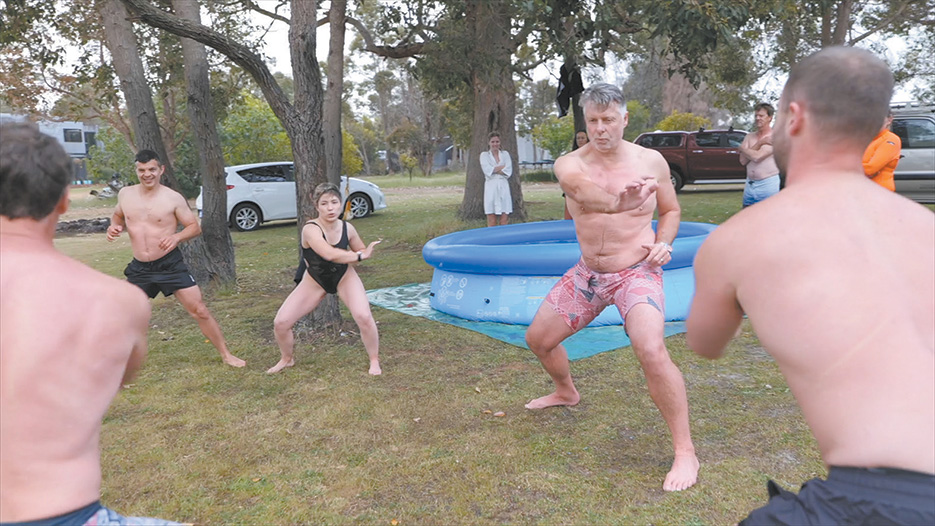
    Wax on: People prepare to get in Mark Hughes’ ice bath (right).

    MARK HUGHES hasn’t had a hot shower in three years.

    Don’t worry, he doesn’t stink, and has been taking daily cold showers and weekly ice baths instead.

    It’s all part of his self-confessed “nerdy” obsession with cold water immersion, which is apparently beneficial for your physical and mental health.

    A White Gum Valley resident, Hughes says ice baths are particularly useful for building up mental resilience.

    “Ice baths and cold water exposure generally provide a powerful combination of physical and mental benefits by putting our body into hormetic stress,” he says.

    “We deliberately stress the body and mind with the cold, which triggers a cascade of hormonal, immune and neurotransmitter effects that has a positive impact both immediately and in the long term if done regularly. 

    “These responses ‘train’ us to deal with general stressors in life, thus managing them and our stress levels better.”

    Physical health benefits include better blood circulation, reduced inflammation, improved sleep and a more robust immune system.

    Hughes, 53, may be needing all the physical help he can get as he just had a baby girl Maya with his wife Carola, and no doubt some sleepless nights beckon. 

    Originally from the UK, he’s been in Australia for 23 years and runs his own business Barefoot Renovations, a small building company focusing on renovations and consulting.

    He credits his journey of self-development to his wife and first started ice baths about seven years ago.

    Hughes says it grew out of his love of free-diving and teaching surf survival breath-holding.

    “My inspiration was seeing first hand the profound benefits of the cold and in studying more of the research and studies in this area, my fascination became a passion,” he says.

    Now he’s setup One Life Live It, running coaching programs, mindset bootcamps, breathing workshops and breathing for survival courses.

    For those wanting to literally dip their toe into the ice bath world, you can try one of Hughe’s ice baths for a gold coin donation at the Fremantle Farmers Markets in Beaconsfield.

    “For those that haven’t done an ice bath before, firstly we make it clear they don’t have to get in if they don’t want to and if they do, we will guide them in slowly and at their pace,” Hughes says.

    “Some people may only feel comfortable with their feet in the water although most of the time we enable people to stay in for at least couple of minutes.”

    The ice baths are held every second Sunday at Beacy Farmers Market (next one February 19) and you can find out more at onelifeliveit.com.au 

    By STEPHEN POLLOCK

  • Deadly borer digs into Hyde Park
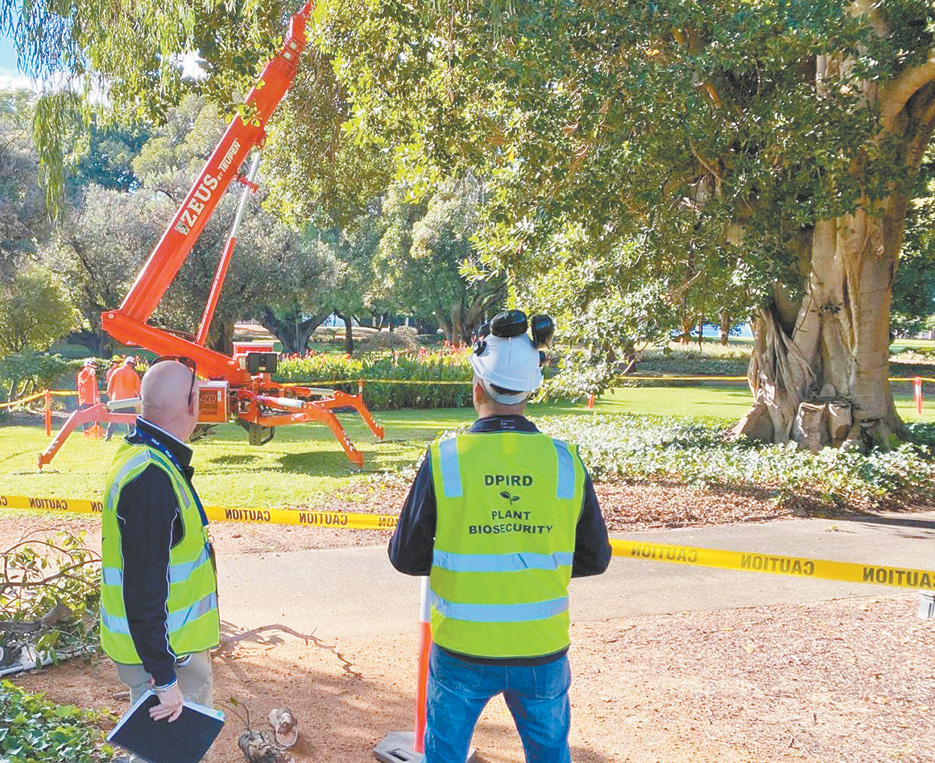
    • DPIRD’s biosecurity team oversee the tree’s removal. Photo by Pia Scanlan, DPIRD

    City forced to cut down infected plane tree

    THE pernicious polyphagous shot hole borer has infested a Hyde Park plane tree so badly it’s been cut down. 

    As a result of the killer bug’s discovery, the iconic treeline of adjacent Mary Street is being closely monitored for fear of spread. 

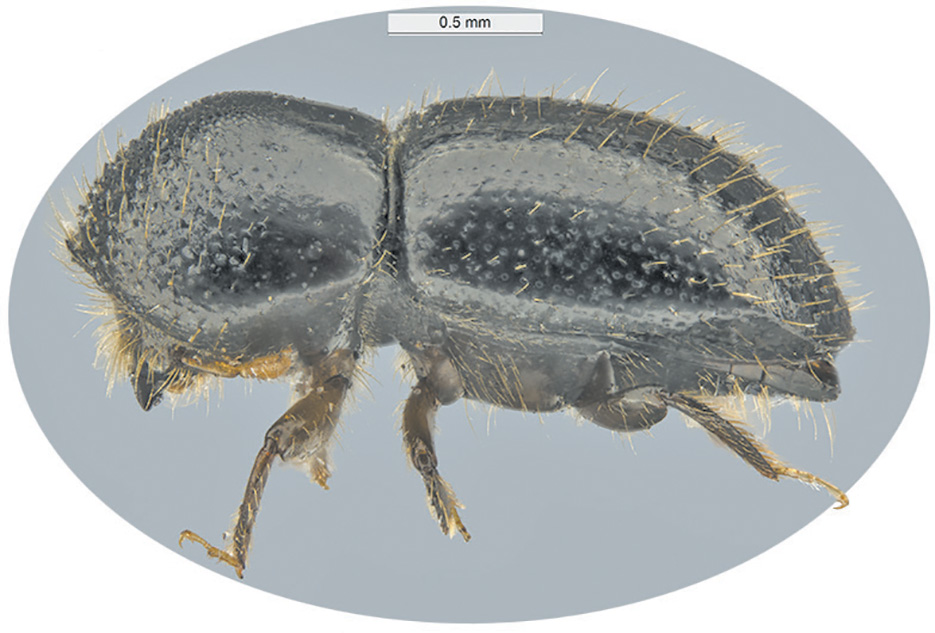
    Less than a year ago the tiny 2mm exotic insect was spotted in five Hyde Park trees. 

    They chew into trees to make little farms to grow their food, a fungus called fusarium which causes dieback and tree death in suscectible species. 

    Hyde Park is a haven of high risk trees like planes, oaks and jacarandas. The trees initially infested had to be severely pruned in efforts to stop the spread, and now one plane tree has had to be cut down entirely. 

    Vincent mayor Emma Cole said at the February 14 council meeting “we have had the unfortunate situation where the shot hole borer has made it to Vincent”, hitting Hyde Park particularly hard. 

    “We have been working really closely with [the Department of Primary Industries and Regional Development] on that matter. 

    • The tiny shot hole borer can do big damage. The Californian Society for Ecological Restoration says it can kill hundreds of species.

    “We’ve been trying to get communications out to our residents about what to look for, which exotic species in particular are at risk, and we’ve also asked them to be very mindful of our trees of significance on Mary Street. 

    “There’s been some quite significant pruning of our exotic species at Hyde Park – the only way, unfortunately, to treat the shot-hole borer.” There’s no known effective chemical that treats them. 

    DPIRB is asking anyone who spots the tiny beetle call 9368 3080 or use the MyPestGuide phone app, likewise any sightings of its signature holes the size of a ballpoint pen that are sometimes surrounded by a “sugar volcano” of crystalised foam. 

    They’re also asking the public to report the locations of any box elder trees, a favourite hiding place of the borer, in order to create a map of these “sentinel trees” and monitor the beetle’s spread. 

    The borer has been active around the world, with the Californian Society for Ecological Restoration saying the borer has the ability to kill “hundreds of tree species” and is causing millions of dollars of damage. 

    by DAVID BELL 

  • Museum scores
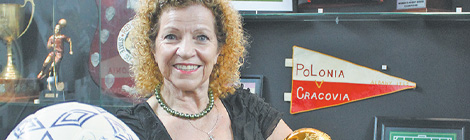
    FHOFWA president Elizabeth Re with some of the football exhibits collected so far and (right) the first red card used in a WA game. Referee Brian Haffendet recalled “On one side the red card reads ‘Send Off’ in English and on the other side it’s in Chinese.” Photo from FHOFWA

    AFTER a decades-long search the Football Hall of Fame WA has found a home for a museum, nestled in Fitzgerald Street’s WA Italian Club.

    Until now there’s been nowhere to safely house memorabilia from the state’s 127 years of football (the ‘soccer’ type) together.

    FHOFWA president Elizabeth Re says she’s heard some tragic tales of important football artefacts like trophies being thrown out by family members after the death of a footballing loved-one.

    “We hope that when people can see we have a secure museum, they’ll donate their items,” Ms Re says.

    The search for a home for a museum started pretty much from day one after the first inductions to the hall of fame took place in 1996.

    Many plans for a standalone museum came and went, some attracting whispers of government support or funding promises but never quite making it to fruition. 

    Ms Re said it became clear that running their own building, which would’ve needed them to fund their own security and staff or volunteers, was out of their reach.

    So they set out to find somewhere to co-locate it, and after 12 months’ work the museum opened inside the Italian Club WA this week. 

    ICWA president Sal Valelonga tells us it’s a good fit: Football’s the most connected sport to Italian culture by far, and they were glad to have their lounge lined with cabinets to house some round ball history.

    This makes WA the first state to set up a museum for its football hall of fame.

    Among the artefacts collected so far is the first ever red card that made it to WA, and it’s likely one of the oldest red cards in the world.

    It was donated by former referee Brian Haffenden, who was issued it in Hong Kong in 1970. He was there serving in the British army and refereed both civilian and military games. Hong Kong was one  of the first referee associations to adopt the red and yellow card system.

    The first game he carried it at here in Perth was the 1971 D’Orsognia Cup between Gosnells City and North Perth Croatia. 

    But it stayed holstered.

    “I didn’t need either card that day,” he told HOFWA. 

    “There were no cautions and no sendings off.”

    Ms Re says they’re hoping more items like that make their way out of boxes and drawers and over to the museum.

    Photos, balls, old boots, team clothing, trophies; “Please don’t put it in the bin!” she urges. 

    “Give us a call first!”

  • A gaggle of Googlers

    BEWARE the naming of laneways if Google finds out about it: Suburban backalleys have been turned into thoroughfares after the tech giant’s map app decided they were now fair game for its routing algorithm.

    Resident Sue Graham Taylor attended Perth council electors’ AGM on January 31 to report to councillors that “the laneways behind our homes in Hollywood have been ‘improved’ and given names.

    “Google Maps now recognises them as thoroughfares for all types of traffic. So people leave home, type in where they’re going, it tells them to go down the nearest lane.

    “Ferdinand Lane is now, for instance, a much-used shortcut between Monash Avenue and Park Road.”

    She said “Speed limiting devices are ineffective and in many cases entrances and exits are blind – a danger for pedestrians. The lack of lighting is also a problem. 

    “Does someone have to be killed before the City of Perth does something?”

    In response the council is planning traffic surveys to figure out how big the problem is and what might help, but laneway lighting hasn’t been flagged.

    The impact of Google maps and similar apps routing people down ill-suited lanes and quiet residential roads has been an issue across the globe. A 2017 study by US transport researchers said the navigation technology has “led to new congestion patterns that never existed before”.

    The problem is even worse in cities like San Francisco that have allowed artificially intelligent self-driving cars: With no driver to judge whether a route is a good idea, some previously quiet streets get mobbed by parades of self-driving cars whose identical algorithms have all decided to clog up the same street at the same time. 

    by DAVID BELL

  • Locale on the up

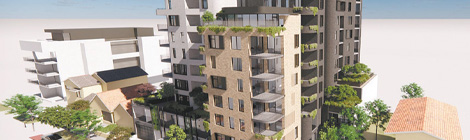
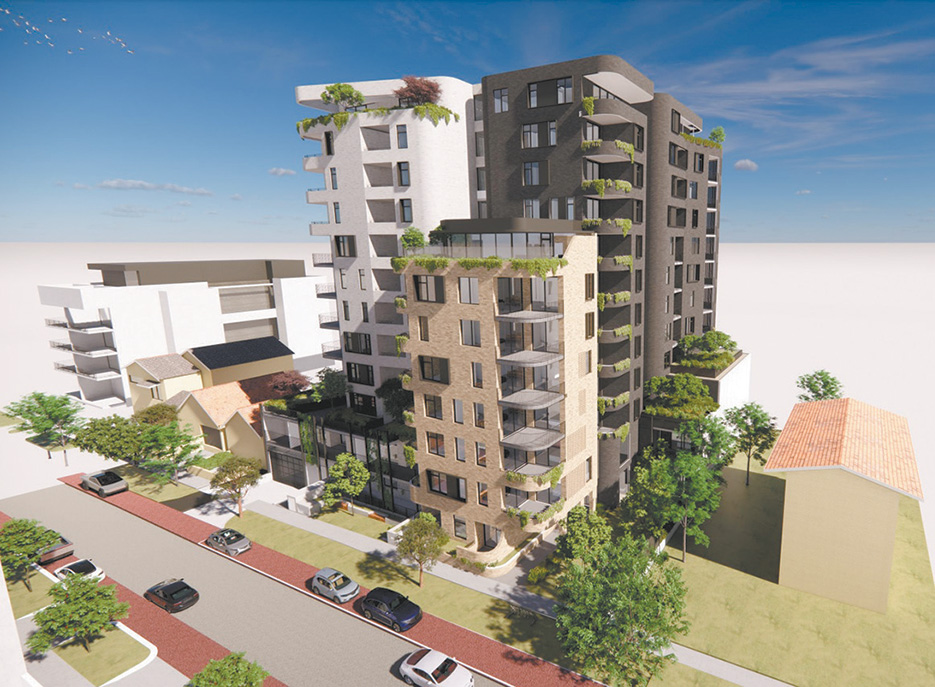
    A DORMANT apartment development planned Carr Place in Leederville has been revived, with the 12 storeys now proposed making it the biggest planned build on the strip. 

    In 2020 Hanrise Pty Ltd won approval to build the eight-storey, 52-unit, $17 million 

    “Locale” project on a conjoined block stretching across 194-200 Carr Place. It requiring demolition of two old workers’ cottages.

    But development never started. Locals fed up with the dusty block eventually graffitied “hurry up and build it then” on the fence out front. 

    Presales were pretty slow and in the years since that first approval even larger buildings have been allowed in Leederville, which the owner’s hired developer has cited as a good reason to give this redesigned project more height.

    There were some objections from locals about the height last time but eight storeys was deemed allowable by the development assessment panel.

    The developer reckons the 12-storey, 76-unit version should also be approved, given those heights will eventually be allowed under Vincent council’s draft vision for the area. 

    Public comment is up at imagine.vincent.wa.gov.au until February 24.

    by DAVID BELL

  • Parking levy fury

    PERTH lord mayor Basil Zempilas is fuming after being blindsided by a state government plan to spend parking tax funds outside the city. 

    The Perth Parking Policy started out as a joint venture between the state government and Perth city council in 1999 to limit car bays in the city and cut down on congestion. 

    The policy restricted parking bays in new buildings and brought in a levy for every commercial parking bay in and around the CBD. 

    The money collected has always been restricted to public transport projects within the taxed area, like CAT buses and bike lanes.

    WA Labor’s transport minister Rita Saffioti announced this week the McGowan government would change the rules to allow the money to be spent on “a range of projects and initiatives that deliver positive economic and social outcomes for the community”.

    Ms Saffioti’s media statement flung a barb at the council by suggesting one project that could use some parking money: “It will also allow us to deal with situations where significant cultural assets like the Perth Concert Hall, which has been under the management of the City of Perth, have been allowed to be run down and forced 

    the closure of some sections of the car park, despite the city collecting millions of dollars in revenue from the car park itself.”

    Ms Saffioti said the government planned to expand the area where the levy could be applied. Currently it just affects commercial bays in Perth and an adjoining slice of Vincent, where each bay costs the owner $1300 in tax per year.

    Many of those bays are operated by Perth council.

    Successive lord mayors have often criticised the levy over hefty annual price increases and the slow pace with which the money’s spent.

    Lord mayor Basil Zempilas said Perth council currently pays about $20m of the roughly $60m the state collects per year in parking levies, and the accumulated fund is up to $190m.

    “The announcement from the state government today can only really be interpreted as holding the city in contempt,” Mr Zempilas said at a press conference Tuesday February 14.

    “It shows a lack of respect for the Perth property owners whose money from the parking levy has been accumulating, now at $190m a year, and suddenly with the wave of a magic wand the Perth Parking Fund money can now be spent on any project anywhere with no consultation with the City of Perth, with very little transparency, and no inclusion or discussion of the sorts of projects that that money could be spent on.”

    He said the council had told the state government of several projects that’d encourage people to choose alternatives to driving.

    “I’ll give you one example: for around $7.5m, every dark corner in the City of Perth could be properly lit, so there are no dark or unsafe corners of our city anymore. 

    “How many times have we heard people say it would be great if some for the darker corners of our city had more light?”

    Expert: Get spending

    COURTNEY BABB, senior lecturer in urban and regional planning at Curtin University, has closely studied the Perth Parking Policy. 

    Dr Babb is a fan of the policy and says it has contributed to capping congestion in the city over the years, but says there’s a broad view the levy money should be spent more regularly.

    “It could provide a great resource for improving facilities in the city for cycling, pedestrians, and public transport,” he said.

    Dr Babb is wary of Ms Saffioti’s plan to spend the cash on projects “that deliver positive economic and social outcomes for the community”.

    “That’s pretty vague,” he said. 

    Dr Babb says the strength of the current legislation is the clear connection between collecting levy money to deter cars, and then spending it “providing those alternatives for travelling around the city or getting to the city; bike lockers, bike parking, bike lanes, and things like this.

    “At the moment we have a council who is pro-parking I suppose, in terms of offering free night time parking and things like that. So if for example we’re looking at [funding] events, maybe a festival or something like that, and at the same time there’s a promotion of free parking in the city, it weakens that link” between collecting money to deter cars and spending it on alternative transport.

    by DAVID BELL

  • Foodies up with the tradies

    A MEAL kit business has beaten Bayswater council’s “pernickety” case against it by proving it’s “industrial” enough to keep operating alongside Maylands’ factories. 

    My Foodie Box operates on Foundry Road on land zoned “general industry”, packing and sending out vans to deliver ready-to-cook meal kits to customers.

    Bayswater council has been trying to keep non-industrial uses out of those zones, because there’s so little land available for vital industries like building supplies and factory units.

    Retail or restaurants aren’t allowed because because of the  traffic they bring and conflict via noise or emissions complaints.

    After complaints from nearby residents, Bayswater staff directed MFB to lodge an application with council as it believed the business wasn’t compliant with the zoning.

    The case hinged on MFB making “sales” from its Foundry Road warehouse, making it more characteristic of a shop or restaurant. 

    State Administrative Tribunal senior member Stephen Willey wrote in his decision: “The respondent’s [Bayswater’s] case appears to be that this use is, in effect, not ‘industrial’ enough… With respect, I am of the view that the City has taken an overly narrow and pernickety approach” to deciding what counts as an industrial business.

    “The business does not attract retail traffic and customers which, I accept, would not be an industry use” and would be against the council’s planning rules. 

    The SAT heard the sales actually take place online via a server located in Sydney, and vans then deliver the food boxes. 

    Dr Willey wrote: “If the term ‘sale’ was applied too broadly, as the respondent urges, it is arguable that everything produced or manufactured in an industrial area is ultimately ‘sold’.”

    Bayswater’s acting CEO Luke Botica said the action came after a hefty pile of complaints; Bayswater’s solicitors advised it required a development approval under the town planning scheme.

    “Since 2020 the City received 80 formal noise complaints along with numerous complaints in relation to the operation of My Foodie Box from nearby residents,” Mr Botica replied.

    “Residents also reported 47 incidents regarding the loading and unloading of trucks. 

    “The City continues to receive complaints.” 

    We asked My Foodie Box for comment but didn’t hear back before deadline.

    by DAVID BELL

  • Stringing along

    SPARE PARTS Puppet Theatre is back with a new program for younger kids and a season launch in the wings, including a massive performance with

    Puppet Playtime is something of a rarity for Spare Parts, being targeted at kids aged just three to five. Publicist John Michael Swinbank says they’ve tried to program for littlies before, but older siblings inevitably want to join in the fun.

    Running from February to November, the sessions start with a reading of a popular kids’ book with accompanying puppets 

    (February’s is Maurice Sendak’s classic Where the Wild Things Are) before participants get some hands-on activities and puppet-making.

    Program director Bec Bradley said it was designed to encourage curiosity and imagination as well as a range of developmental, social and creative skills based on the lastest Telethon Kids Institute research.

    “Puppet Playtime is designed to develop key skills in young children such as language and communication, fine motor skills and social-emotional intelligence,” Ms Bradley said.

    The program is being run 

    at Spare Parts’ home on Short Street, with the admin area and the Creative Learning Centre not affected by a state government decision to close the main theatre in August over safety concerns.

    Mr Swinbank said they were still in talks with the McGowan government about their future, and hoped an announcement might be as early as this month.

    The first Puppet Playtime sessions are being held February 21 and 23, with sessions at 9.30am, 1pm and 3.30pm. Tix at http://www.sppt.asn.au or 9335 5044.