• Push for vax clinic return

    FORMER Bayswater mayor Dan Bull wants to bring back the infant immunisation service which was cut in 2022 as part of a hotly contested money-saving measure.

    For more than 30 years the council funded free immunisation days for infants at local clinics covering diseases like whooping cough, polio, measles and diphtheria. 

    It immunised about 750 to 1000 children per year and cost the council $120,000 to run.

    A split council narrowly voted 6 to 5 to end the spending to save money during their 2022 budget discussions (“Doctor slams kids vax clinic closure,” Voice, July 30, 2022).

    Cr Bull, who remains as a councillor after serving as mayor from 2017- 2021, has penned a notice of motion for next week’s meeting calling for the council CEO to include funding for the infant immunisation clinics in the draft 2023/24 budget due mid-year.

    “This was a highly valued service in the community, that was utilised by residents from a diverse range of socio-economic backgrounds (including those that are most vulnerable), and is worthy of further consideration by council as part of the 2023/24 business planning and budgeting process,” Cr Bull wrote.

    Council staff have prepared a report on the idea, and advised that if councillors do vote to restore the service there’ll still be a delay between budget time and the services getting back up and running. This is mainly because the nurses and doctors who ran the program “have either been re-deployed or have left the city”, and it’ll take time to hire replacements.

    Only Joondalup council runs its own immunisation clinics directly, while a few other councils fund programs at arms-length.

    Last year a GP involved in running the clinics, Leanne Hosking, said Bayswater’s service was able to immunise a high proportion of people in the district who wouldn’t otherwise get vaccinations.

    “We would certainly get under-vaccinated children or clients from overseas, including refugees, who may not have access to Medicare which is needed to see a GP,” Dr Hosking said.

    Cr Bull says: “I think every local government has to provide services that reflect the needs of the local community that it represents,” and the free clinics made sense given Bayswater’s demographics. 

    “That’s where the power of local government is really awesome, because you can actually provide those services to people who might not be able to access them either because of their socioeconomic position, or their ability to otherwise access bulk bulling services or medicare.

    “Particularly refugees here living in the City of Bayswater may not be able to afford immunising children [or] being able to get to a state-run clinic, and that’s where these kinds of services are needed.”

    by DAVID BELL

  • Local doco fest back
    • Director Jennifer ‘JP’ Piper, Vincent mayor Emma Cole, and filmmakers Leslie Hornung, Carter Kirklan (front), Tim Fitzgerald (back), Susie Conte, Alicia Keenan, Dawn Farnham and Zoe Baxter.

    FOUR new short docos delving into local stories are in the works as the City of Vincent Film Project reprises its sixth year. 

    Usually three film ideas are chosen every year for the festival, a collaboration between the council and Revelation Film Festival, but 2023’s bounty of quality entries has seen a fourth commissioned. 

    This year’s films which won $7000 funding and mentorship from a seasoned producer are:

    • Care to Dance, by Matthew Adams and Mason Fleming, following a group of local seniors rediscovering the joys of dancing;

    • What we do for Family, by Lesley Hornung and Jennifer ‘JP’ Piper, a hybrid performative/observational documentary about the lengths queer people go to to create a nuclear family;

    • Home not a House, from Alicia Keenan and Carter Kirkland, investigating the housing crisis and the impact on local young people trying to survive.

    • The Private Life of a War Memorial by Susie Conte, Dawn Farnham and Jenny Crab is 

    the special fourth commission. It tells the story of the local landmark Anzac Cottage and three generations of women who were its guardians over the years, including Voice regular Anne Chapple from Friends of Anzac Cottage. 

    Vincent mayor Emma Cole said the project had been a success over the years, with films such as Pacing the Pool and The Throwback (about the last days of Mt Hawthorn’s holdout video rental store) winning international awards.

    “It provides a great opportunity for emerging filmmakers to get their projects off-the-ground and make their mark in the screen industry,” Ms Cole said. 

    “Every year, we see absolute gems about life in Vincent.”

    Revelation Film Festival director Richard Sowada said the 2023 project “has yielded another fantastic year for WA filmmakers with the selection of these excellent concepts”.

    At 18 short documentaries and counting, he says “this trove of contemporary work not only lives on the international film festival scene but in the City of Vincent collection and it’s incredibly rewarding to be a part of it”.

    The docos are scheduled for screening during the RPIFF running July 12 to 16.

  • Spending some pennies
    “Without plumbing, there is no civilisation,” – Karl Kruszelnicki, on the importance of infrastructure like the no. 2 station. Photo by City of Perth.

    A PRESERVATION project for an important part of Perth’s plumbing past kicks off soon.

    Officially titled the “Low-Level Sewage Pumping Station No 2”, the Langley Park Pumping Station was designed by architect RL Wright and built in 1914, incorporating a since-defunct public toilet in its elaborately-decorated masonry.

    With a cottage-like design, it commonly provokes “what is this building?” queries.

    The station marked an important step in the public health effort to reduce sickness stemming from open sewers.

    In the latter 1800s when other cities had proper plumbing systems, Perth’s outhouses and open drains were an embarrassment. 

    The No 2 station and its partner, the No 1 station over near the Causeway, served Perth’s sewer system for 75 years and were added to the WA Heritage Council’s permanent register of heritage places in 2006.

    Their entry states: “The pumping stations are the survivors of the first three such buildings built in Perth to provide sewage pumping facilities and men’s public toilets and are excellent examples of industrial architecture specifically designed to be aesthetically pleasing in their prominent locations.

    “The pumping stations are notable for the particular attention paid to their design and the high standards demonstrated in their execution and fine examples of the Federation Free Classical style applied to utility buildings”.

    The stations weren’t always appreciated for their aesthethic contribution: In 1923 while Perth councillors were debating the best spot for a new town hall, a potential location was rejected because, as Cr Watts put it: “From the point of view of a beauty spot there is a septic pumping station at the bottom of the block”.

    The station was decommissioned in 1989 when the new central sewage station was built, and ownership of the stately No 2 was handed over to Perth council.

    The council’s works start January 27, aiming to protect and maintain the heritage fabric and improve security to keep it pristine, and it’ll be fenced off for about six weeks. 

    by DAVID BELL

  • LETTERS 28.1.23

    Facts please

    NOT pleased with failure of the last 25 years to use Australia Day to push for a republic or change the Australian flag, the rally from the usual crowd has moved on to now change the day itself.

    The problem is our schools don’t teach ‘historical fact’ anymore.

    The decision to settle a penal colony was made on 18 August 1786 by Lord Sydney, Secretary of the Treasury.

    Does one therefore think the City of Sydney or the University of Sydney should change its name? I think not.

    The First Fleet actually arrived in Botany Bay on 18 January 1788 but considered the location unsuitable for settlement. Whilst anchored in the Bay, the First Fleet were astonished to see two ships under French colours, later confirmed to be a French expedition under the command of La Perouse.

    This observation would have increased the anxiety of the First Fleet arrivals to settle and so on 25 January 1788 (not 26 January) Captain Arthur Phillip sailed into Port Jackson and ordered the rest of the fleet to follow.

    Australia Day simply recognises, 8 days after arrival, the foundation of the penal colony.

    This is like WA Day recognising the Foundation of WA.

    Had Lord Sydney not made the decision to settle, we could all be speaking French.

    Paul Collins
    Dianella

    Nasho gold

    I AGREE with the article quoting Sid Breeden (“Older Nashos feel left behind,” Voice, January 14 2023) as I was one of these Nashos, and now in my 80s.

    We had basic training in the arms (the .303 Enfield, Bren machine gun, mortars etc and all explosives) by the returned regulars from the Korean conflict who were hard but fair, always saying if conflict did break out again in Asia we would be first in line to be deployed. 

    We were regular army, paid and on call 24 hours a day, no different than those that went overseas.

    Healthwise now the Gold card would be greatly appreciated for all of us surviving Nashos.

    Don Clatworthy
    Mandurah

  • Bush needs funding, enforcement   

    IN this week’s Speakers’ Corner environmental scientist MARY GRAY responds to recent coverage of the state government’s lack of a plan to protect native vegetation. Ms Gray was awarded an OAM for service to conservation and the environment in 2022. 

    THE article “No plan for bushland” (Perth Voice, January 14, 2023) does not tell the whole story about protecting native vegetation in the Perth region.  

    There is a conservation reserve system for the Swan Coastal Plain portion of the Perth Metropolitan Region called Bush Forever.

    It is about “Keeping the Bush in the City”.

    It was introduced as a whole of government plan and program in December 2000 with 287 Bush Forever Areas to be secured and protected for conservation in a representative system of protected areas.  

    It was/is to protect an additional 17,800 hectares of bushland, and this is in addition to the 33,400 hectares which, in the year 2000, already had some protection through existing reservation and/or tenure arrangements.  

    Thus Bush Forever identifies 51,000 hectares of regionally significant bushland for protection, covering 26 vegetation complexes.  Our Perth Bushland and wetlands are inherently rich in species of flora and fauna.

    As stated in the Government’s Vision for Bush Forever (December 2000): “A general duty of care for future generations, partnerships and a sense of shared responsibility are essential ingredients of Bush Forever.  

    The vision is the creation of a conservation estate of which Perth can be justly proud, so that everyone has their own ‘Kings Park’ within easy reach for present enjoyment and, as a legacy of our unique quality of life, to hand on to our children.”  

    Now after more than 21 years of implementing Bush Forever, nearly all of these Bush Forever Areas are in government/public ownership as Crown reserves. Indeed in October 2022, a Bush Forever 21st Celebration event was held at the Herdsman’s Lake Wildlife Centre.  It was well-attended by many from government agencies and community bushcare groups. 

    In addition, the WA Government has a Native Vegetation Policy which aims to increase the area of native vegetation. Also there are many listed endangered species and listed threatened ecological communities which are supposed to be protected with no further clearing of their habitat.  This however, is not being enforced by the government’s regulators and clearing of these habitats is continuing, patch by patch. 

    Our iconic endangered species such as Carnaby’s cockatoo and our state fauna emblem the numbat are under increasing threat from clearing and burning of their habitat. 

    Indeed most of the native vegetation (ie ‘bushland’) remaining on the Swan Coastal Plain is already part of this habitat for endangered species and vegetation communities. Thus there should be no more clearing in this already over-cleared region.

    As Dr Brad Pettitt said in the January 14 article, our Swan Coastal Plain is within a global biodiversity hotspot. 

    It is so listed “for conservation priority because it is under threat”, but it continues to be cleared. 

    The state government is failing to enforce clearing controls to prevent loss of bushland that is supposed to be protected.

    Also lacking is adequate capacity of conservation land managers, especially the Department of Biodiversity Conservation and Attractions, to manage Perth’s conservation estate.

  • Food detour  

    MONDAY lunchtime.

    Sun hotter than the inside of a party pie.

    Inglewood quieter than Michael Clarke’s endorsement team.

    My strange experiment in psychogeography – wandering around Perth suburbs to get a true feel for their history, culture and social origins – ended at Mori Japanese Kitchen.

    Tucked away in the corner of Inglewood Town Square, it’s off the main drag and easy to miss, but thanks to my pretentious ramble, which led to a nearby oriental statue, it appeared on my radar.

    This was a no-frills Japanese joint with basic wooden tables, exposed brickwork and order at the counter.

    Playing in the background was canned piano music – like something you’d hear if you pressed the demo button on a Clavinova – and it reminded me a bit of the comedy pianist Victor Borge. 

    Accompanying the music was the clatter of pots and pans from the kitchen, situated behind a thin bamboo screen, and the crackle of the deep fat fryer, which was so loud it threatened to drown out the muzak.

    Then an American tourist couple walked in, dripping in sweat, and made a big fuss about sitting directly under the air con and perusing the menu like they were at The Savoy in London.

    It all made for a very surreal and slightly bizarre backdrop.

    It got even more Fawlty Towers when the lady behind the till knocked over a glass from a high counter and it smashed into smithereens on the floor.

    I felt sorry for her as it can happen to anyone, but it was enough for the American couple who asked her something about the menu, then quietly walked out, preferring to brave the desert-like heat instead.

    With all this going on, I was hastily re-assessing my dabblings in psychogeography, but thankfully when my chicken katsu curry ($18.90) arrived it was very decent.

    Nice curry sauce with a slightly peppery heat, moist tender chicken with crispy batter, and a refreshing little green salad on the side. There was also a tub of sticky rice which went well with the sauce and crispy chook.

    It was nothing spectacular but the chicken was good quality, not greasy and it was well executed. I thought the size was just about right, but some might have wanted a bit more on the plate for the price.

    The basic menu had all the old favourites covered including inside out sushi roll, sashimi, udon soup, bento, salad, and sides including takoyaki, gyoza, karaage and edamame.

    Mori also did some Korean dishes like bibimbap, a rice bowl topped with seasoned sautéed vegetables, marinated meat (usually beef), a fried egg sunny side-up, and finished with a sprinkle of sesame and a dollop of a sweet-spicy-savoury bibimbap sauce.

    I took home some cooked tuna and avocado ($14.50) and teriyaki chicken ($14.90) sushi for dinner and they were very enjoyable – some nice sesame seeds on the outside of the rice wheels and good quality tuna and chicken with just the right seasoning. The chicken had a pleasant sweet tang to it.

    So despite all the surreal goings-on, the food was actually pretty decent.

    My only gripe would be the price point. If you’re going for a no-frills eatery then the prices should reflect that, but a chicken katsu bento was $23.90 and the teriyaki chicken sushi only seemed to come in one size at ($14.90) which was too much for one person, although there was a kids version.

    As a fleet of mums with prams flooded out the nearby Bob Daniels Community Centre, it was time to hit the streets again and see what other kooky diversions psychogeography had in store.

    Mori Japanese Kitchen
    895b Beaufort St, Inglewood

    by STEPHEN POLLOCK

  • Strong signal  
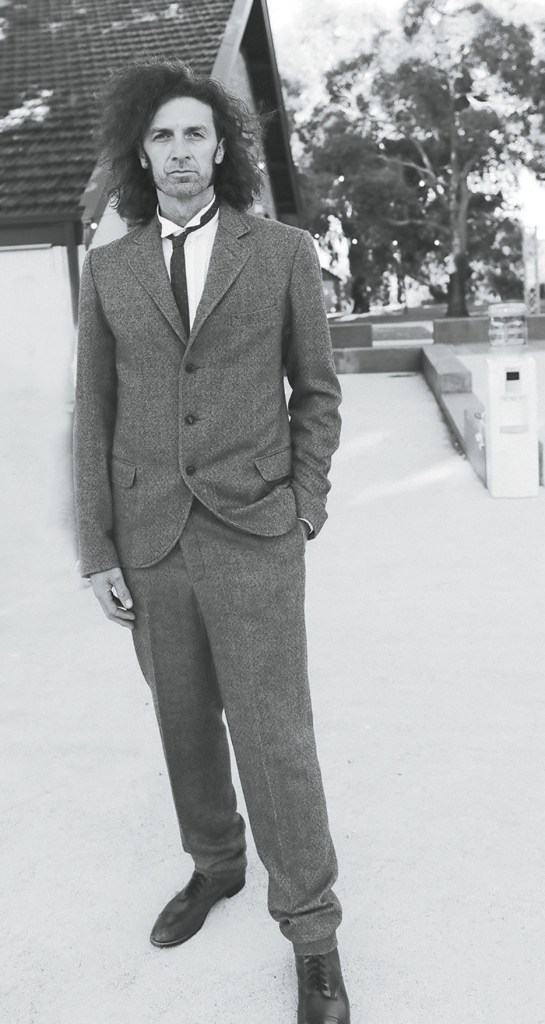
    • Actor Paul Rowe plays Walter Coxon in Ghost in the Machine.
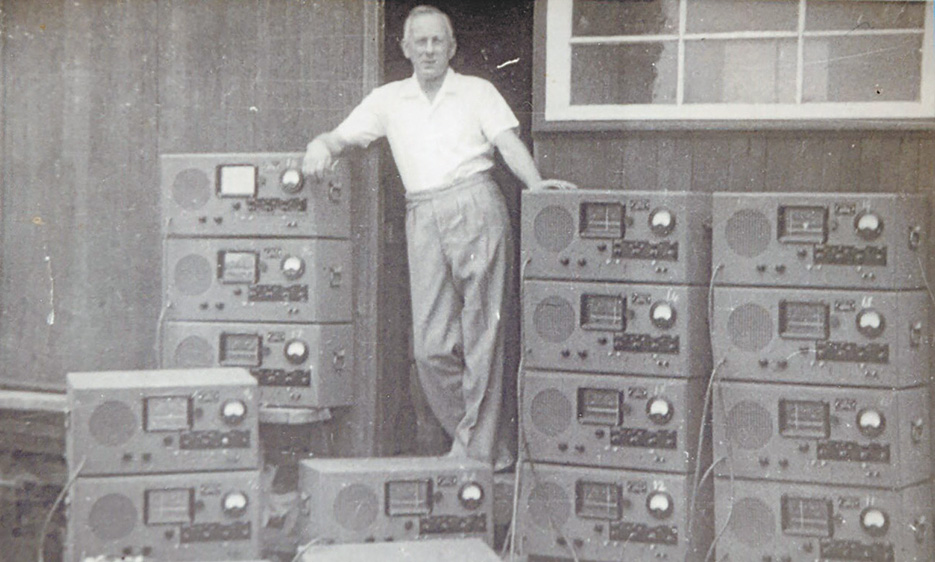
    • Walter “Wally” Coxon with his radios for the Flying Doctor Service in Darlington about 1947.

    HE started WA’S first experimental radio station 100 years ago, played a key role in creating Perth’s first commercial radio station 6WF and The Royal Flying Doctor radio service, and had many technical firsts in his field, but most sandgropers will have never heard of Walter “Wally” Coxon.

    Well now the “Godfather of Perth radio” is finally getting the recognition he deserves in the unique Fringe show Ghost in the Machine, dedicated to the life of the trailblazing and eccentric radio engineer.

    Set in the historic Wireless Hill Park – where in 1912 the first wireless communication took place between the east and west coasts of Australia – the event is part theatrical walking tour and part interactive fun with attendees getting to play with some vintage electronic goodies at the Wireless Hill Museum, including some very cool proto-synthesisers.

    The tour is hosted by a theatrical version of Coxon, played by comedy actor Paul Rowe from Genrefonix, a Perth based arts/music collective.

    “Rowe is loud, funny, confident and larger than life, and perfectly suits the portrayal of iconic figures from yesterday who broke new ground through their force of personality,” says Will Axten, who came up with the idea for Ghost in the Machine.

    “Rowe has embraced the character and conducted extensive research into Wally’s life and exploits.”

    Coxon was the first person in WA to communicate with South Africa, Java, Holland, England and America using morse code, and in 1918 he was the first in Australia to demonstrate music and speech broadcasts, transmitting from one side of the Perth Agricultural Show to the other. 

    Unlike other Aussie states, WA never had a strong amateur broadcasting scene, but Coxon was granted WA’s first broadcast licence and began transmitting from Highgate in 1921 (call sign 6AG).

    He played a key role in establishing Perth’s first commercial radio station 6WF, which eventually became ABC’s 720 AM, becoming its chief engineer in 1923. Along with Bert Stevens, Coxon was the only regular Perth broadcaster at the time – transmitting a Sunday evening concert from his lounge that established an audience for 6WF – and is touted as the first person to identify the need for a high power radio station in WA.

    If that wasn’t enough, he also pioneered technical work for the Royal Flying Doctor radio service in WA, and manufactured and sold his own radio – the futuristic-sounding ‘Coxon Communicator’.

    “We were looking for a format to tell the the story of radio in Perth and the history of the Wireless Hill site, and to place it all in context with the amazing array of old and new sound laboratory technology that is currently installed in the Wireless Hill Museum,” Axten says.

    • Walter Coxon cut a peppy figure in his younger days.

    “Wally jumped out of the history books as a uniquely talented individual and a pivotal innovator that helped create the sounds of WA for so many people.”

    Ghost in the Machine is the brainchild of Axten, a vintage electronics and synthesiser enthusiast from Greater Fremantle.

    During the height of lockdown he created the Signals Sound Laboratory, part educational workshop, part music studio, crammed with old vintage synthesisers, analogue recording equipment and electronic gear.

    Ghost in the Machine provides the audience with extra special access to the Signals Sound Laboratory currently inside the Wireless Hill Museum. There are many interactive exhibits and music synthesisers to play with,”  Axten says.

    “The Lab has been set up for the ‘Cold War to Dance Floor’ exhibition, which explores the amazing history of sound technology.”

    So far Signals Sound Laboratory has been a bit of a nomad flitting between venues in metropolitan Perth, but from late 2023 they will be based permanently at the Old Custom’s House in Fremantle in collaboration with Artsource.

    “Our goal is to offer members and the community with ongoing access to a unique sound laboratory suited to a wide variety of applications. We welcome interested artists, young or old, to get in touch with us,” Axten says.

    Ghost in the Machine is on February 17 as part of Fringe World with three evening shows at Wireless Hill Park in Ardross. For tix go to fringeworld.com.au/whats_on/ghost-in-the-machine-fw2023.

    by STEPHEN POLLOCK

  • Luxury living

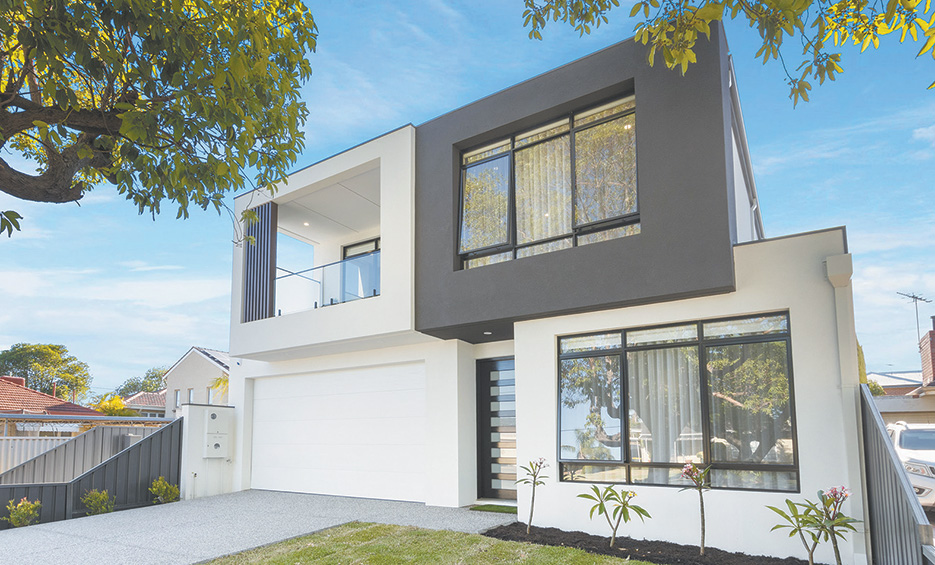
    THIS might be one of the most luxurious properties the Voice has reviewed in Yokine.

    Featuring a contemporary facade, huge entertainer’s kitchen, gorgeous ensuite and high-end finishes, this four bedroom three bathroom home is going to turn heads in the suburb.

    The ground floor has a spacious open plan living/dining/kitchen area with a pristine white colour scheme.

    The kitchen is a real cracker with white subway tiles, ASKO appliances and black matt finishes on the cupboards and drawers.

    The cooker also has a black finish, seamlessly blending in with the rest of the units, giving the kitchen a minimalist and very chic air.

    The use of sheer curtains on the windows helps to soften the architectural lines and diffuse the harsh Aussie sun, giving the large living area a more cosy feel.

    There’s plenty of room for a dining table, and roomy lounge setting in the far corner, which is slightly out of sight of the kitchen.

    The dinner table is fine but during summer you’ll want to slide back the large glass doors and enjoy some meals in the alfresco, which has stylish downlights in the ceiling.

    It looks fully insulated as opposed to a patio, so you should be able to eat out here all-year round. The back garden isn’t the biggest but it has a patch of grass for young kids to play on or for doggies to stretch their legs.

    The plus side – it’s super low maintenance, so you can spend your time on hobbies and hitting the beach rather than gardening and costly, problematic retic.

    There’s a nice ensuite guest bedroom on the ground floor, which is ideal if you have family coming to stay, giving them a bit of space from the other three bedrooms and extra living area upstairs.

    There’s also a kitchenette upstairs, so in theory each storey of the house is self-contained, giving you good separation.

    The Chook really likes the upstairs living area – it just feels like a nice space for adults to relax with a guitar or book and have a little break from the kids during the summer holidays .

    The plush dark carpets really give the bedrooms a luxurious feel and contrast nicely with the white colour scheme. The main includes a large walk-in robe.

    The main ensuite is really smart with double vanities and a large, deep standalone bath.

    The distressed-style finish on the wall adds a nice bit of texture to this bathroom. From the main bedroom you have access to a decent-sized balcony with enough room for a cafe setting. 

    I never see anyone sitting on these street-facing balconies, but at the very least it gives the feeling of more space and light, and it’s there if you need it. I would definitely use it.

    The home includes a laundry, scullery, double garage, ducted reverse cycle air conditioning (zoned), genuine oak flooring installed on the staircase and upper living area, and aggregate paving on the driveway, entrance and alfresco.

    Situated on a 269sqm front survey strata lot (no common property) on Bourke Street, you are very close to lots of lovely parks, as well as loads of shops and cafes at Flinders Square, and the city is only a short drive away.

    Offers from $1,150,000
    11A Bourke Street, Yokine
    Bellcourt Property Group 6141 7848
    Agent Jody Missell 0401 770 782

  • Port to pub
    Since immigrating to Australia, Simone Blaser has fell in love with open water swimming.

    HAVING grown up in Switzerland, you wouldn’t think Simone Blaser would be a natural in the ocean.

    But since immigrating to Australia and settling in Hamilton Hill, she can’t get enough of open water swimming.

    “In 2000 my boyfriend and I traveled around Australia in an old ambulance and fell in love with the country,” Blaser says.

    “In 2008 we emigrated to Fremantle and have since become a family of four. Freo is such a great place to live.”

    Blaser was busy training for the Port to Pub 25km ultra-marathon swim in 2022, when Covid struck and the race was cancelled.

    It’s one of the longest open water swims in Australia, beginning with a 6km loop from Leighton beach to Cottesloe and back before making the crossing to Rottnest Island. 

    “I did a 25km swim in the Swan River instead and it was just beautiful,” Blaser said.

    She didn’t rest on her laurels and in August 2022 completed the Lake Zurich Marathon Swim, a 26km crossing from Rapperswil to Zurich in Switzerland.

    Blaser says fresh water is less buoyant than salt water, so it’s often more tiring swimming in a lake than the ocean. 

    “It took me 10 hours and 46 minutes to complete and was by far the hardest challenge I’ve achieved so far,” she says.

    “It was very tough due to the freshwater and headwinds but at the same time very beautiful.

    “Swimming towards my home city and being able to finish the swim has been a long-time dream – and I did it.”

    Now all her attention is on the rescheduled Port to Pub 25km ultra-marathon on March 18.

    It’s one of three prestigious swims in the Australia Triple Crown of open water swimming.

    “I started ramping up the training in October and slowly increase every week, peaking at four weeks before the event,” Blaser says.

    “The distance of 25km is a long way to go.

    “You never know what the conditions will be like and that’s a bit nerve racking.”

    When she’s not busy training, Blaser works part time at Fremantle Pool and also started her own business Swimwild Escape, running swimming retreats in places like Karri Valley, Rottnest and Margaret River.

    “It’s my absolute passion and doesn’t seem like work as I’m always thinking about new adventures and locations to swim in,” she says.

    For more info or to register for the 2023 Euroz Hartleys Port to Pub with Hotel Rottnest, see porttopub.com.au

  • Parents slam report
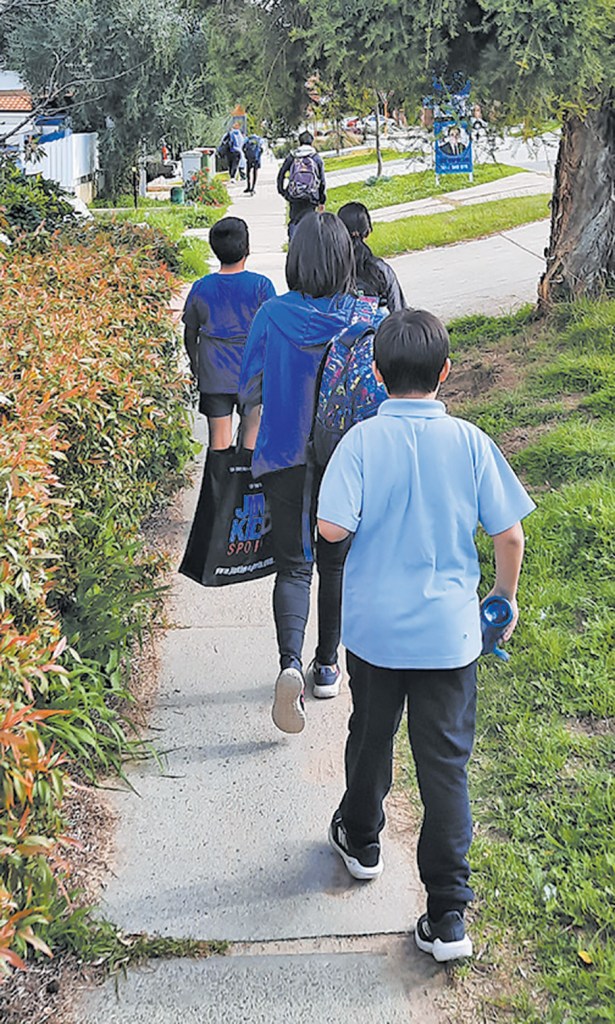
    Currently only a few kids brave the streets and walk to school in Maylands.

    A DO-LITTLE council report on improving safety for kids walking to school has been slammed by parents at Maylands Peninsula Primary School.

    In mid-2022 Bayswater council’s  Safe Routes to School pilot project surveyed Maylands residents to identify the problems deterring kids from walking to school.

    It raised issues such as intersections which prioritised cars over kids, sun-scorched stretches lacking street trees, and broken, uneven or absent footpaths (“Scary streets scuttle walk to school dreams,” Voice, May 21, 2022).

    The survey got 281 responses, with 105 identifying specific hazards. 

    The boldly titled “Outcomes Report” for the project was released last month, but it fails to live up to the name, say critics.  

    Maylands resident Charlotte Dudley’s kids go to Maylands Peninsula and says “unfortunately the final outcomes report delivered by the City of Bayswater isn’t what the community was promised.

    “It’s more of a summary report than a proper action plan and it doesn’t adequately address the safety concerns that the community identified.”

    The report says five tree pruning requests have been completed, as have 19 path maintenance requests. But those routine fixes are a sliver of the actions requested, with the balance remaining under consideration and subject to future funding. 

    Ms Dudley wants a more detailed plan that sets out specific actions and a timeline of when they would be be delivered.

    “Children really want to be able to walk and bike to school and a lot of parents would welcome not having to chauffeur their kids everywhere by car, but they need to feel confident that the local streets are safe enough,” she said 

    “The City of Bayswater needs to step up and take kids’ safety concerns seriously.”

    So far 185 people have signed an online petition calling for more action, and supporters are planning to make deputations to the January 24 council briefing.

    Safe Routes stemmed from a motion raised by councillor Elli Petersen-Pik in 2019 (“Kids safety push,” Voice, August 17, 2019), and he is likewise unimpressed by the Outcomes Report.

    Cr Petersen-Pik said this week: “Parents from the school have recently raised concerns with me about the quality of the final report and that it is not the long-term plan that was expected to be delivered as per the previous council decision. 

    “There are no specific actions for implementation, despite the fact that the city received dozens of comments from parents about specific locations requiring attention, including dangerous intersections and crossings, the lack of shade along various streets and the need for some additional footpaths.”

    He’s planned a followup notice-of-motion for the January meeting requesting the council CEO “convert the recently published ‘Outcomes Report’… into an ‘Implementation Plan’ by providing a list of detailed actions at specific locations along with estimated timeframes for implementation”. 

    He has requested the implementation plan be presented to council by May 2023. 

    The pilot project for Maylands has been followed up with other Safe Routes surveys at Camboon, Bayswater, Embleton and Noranda primary schools which are still in the works.

    by DAVID BELL