• Vincent to test Labor on Oz Day
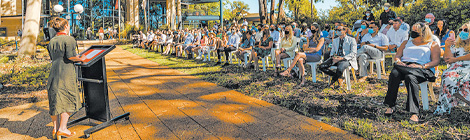
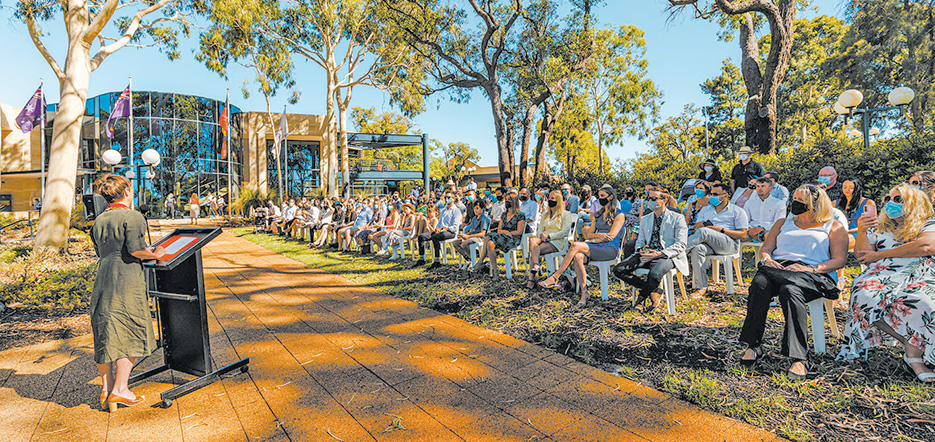
    Vincent mayor Emma Cole at the January 26 2022 citizenship ceremony – a difficult date for local Indigenous elders. Photo by Danica Zuks

    AFTER five years of being forced by the former federal Liberal government to hold citizenship ceremonies on Australia Day, Vincent council will ask the new Labor government if it can welcome new citizens on a “less disrespectful date”.

    Some Indigenous representatives have ceased attending January 26 citizenship ceremonies, and those that do seem increasingly uncomfortable and distressed by celebrations on that date, Vincent mayor Emma Cole said this week. 

    In 2017 the federal Liberal government told all councils they must hold a citizenship ceremony on Australia Day or they’d lose the right to confer citizenship altogether, an edict prompted by Fremantle council wanting to change its regular celebrations to January 28 in 2017.

    Disrespectful

    Councils are still allowed to hold ceremonies on other significant days (the federal code suggests Australian Citizenship Day on September 17 as appropriately august), provided they also have one on the mandatory January 26 date.

    At the December 13 meeting Vincent councillor Dan Loden moved that they write to the new federal government and request that rule be rescinded.

    “Australia Day establishes the first permanent European settlement, and this effectively is the point at which white settlers dispossessed Aboriginal people … what we do is have a celebration on that day every year,” Cr Loden said.

    “It’s kind of the equivalent of kicking someone out of their house and then having everyone over for a barbeque to celebrate, which is a little bit offensive I think.”

    Ms Cole spoke out against the federal government order at the time but faced heavy backlash and “a lot of hate mail from a lot of older white men living in Western Sydney”, but remained resolute that councils should get to decide. 

    “For me this is really about how our Aboriginal community and leaders feel about this, and I have actually seen the discomfort of Aboriginal representatives who come to the citizenship ceremony on Australia Day to give a welcome to country, and it does make me feel deeply uncomfortable that they feel that way,” Ms Cole said.

    “Not everyone will come. I know that the Noongar Choir chooses not to come to our citizenship ceremonies if they are on Australia Day.

    “But we still do manage to have an Aboriginal representative there and I can tell that it does cause distress.”

    Some have been reported to bring a support person along.  

    The council asked its Aboriginal elder’s advisory group, the Vincent Boordiyas, if they wanted citizenship ceremonies moved away from January 26. 

    “They were very resounding in their support for this,” Ms Cole said. 

    The council unanimously backed the motion and Ms Cole will now write to the federal Labor minister for citizenship and request the rule be rescinded.

  • Celsius decision due
    Celsius’ design was not loved by local residents or Vincent council planners, but it only has to win over three members of a state planning panel to go ahead.

    THE future face of North Perth is to be decided this week with the Development Assessment Panel to rule on a proposed $80 million, 13-storey apartment block on Fitzgerald Street.

    Developer Celsius’ plan for two towers, 13 and 11 storeys, would occupy the block stretching from Raglan to Alma Road.

    Along with a huge number of locals who are vehemently against the plan, Vincent council planning staff have recommended the assessment panel refuse the design.

    The council’s usual maximum height for the area is six storeys and a report by Vincent planners slams the design as 

    “incompatible within its setting … the height, bulk, scale and setbacks of the towers is not consistent with the existing or future character of the immediate or wider locality”.

    The block backs on to single-storey homes, which would suffer “a significant negative impact” in amenity according to the extensive 58-page recommendation against the project. 

    The proposal goes before the DAP on December 16. 

    Vincent council has two representatives on the DAP, with the remaining three members appointed by the state government. 

    In October Celsius’ managing director Richard Pappas told us the 13-storey design would be better than other designs which might be closer to the planning rules, as a tall, slender building would avoid a wide box covering more of the block. 

    Most nearby residents still didn’t like the towers according to the community consultation: Two thirds of submissions were against the project, and the closer people lived to the site the more passionate their objections.

    by DAVID BELL

  • Rules toned down

    BARS and clubs in the Northbridge will be allowed to keep rocking at a “common-sense” noise level of 95 decibels, staving off a proposed rule that’d limit them to emitting a much-meeker 90 decibels. 

    The decibel scale is quirky and there’s a big difference between just five decibels, with 90dB being about as loud as a shouting match and 95dB being more in motorbike territory.

    As part of a long-running state government-led effort to protect music venues from potential noise complaints once more residents move into the city, Perth council staff had suggested 90db as a fair compromise between bands continuing to rock out at acceptable levels and future residents not being blasted into ill-health en masse.

    But 90dB was deemed unworkable by the bar-owning members of the Australian Hotels Association WA. Sixty per cent of their members are already pumping out sounds above 90dB and would have to immediately invest in expensive soundproofing if that limit went through. 

    AHAWA also pointed out that in recent years noise complaints were actually pretty rare in Northbridge compared to other suburbs and other cities.

    At the December 13 council meeting lord mayor Basil Zempilas moved the council bump the limit up to 95dB and got unanimous support from councillors.

    “We heard consistently… 90dB is too low for the venues,” Mr Zempilas said. “Ninety five decibels is a workable compromise.”

    AHAWA CEO Bradley Woods welcomed the decision, issuing a statement saying “we now have a solution that recognises the importance of protecting the hospitality industry, which has long played a critical role in Northbridge.

    “Residents who live or move into Northbridge do so with the knowledge that it is a vibrant entertainment precinct and that there will inevitably be noise. This is evidenced by the very low number of noise complaints in Northbridge that the City of Perth receives each year.”

    The council’s new policy now has to be sent off to the state government for final approval. As part of the proposed changes new residential buildings will have to be stuffed with noise-cancelling technology. 

    by DAVID BELL

  • Policy to limit service stations
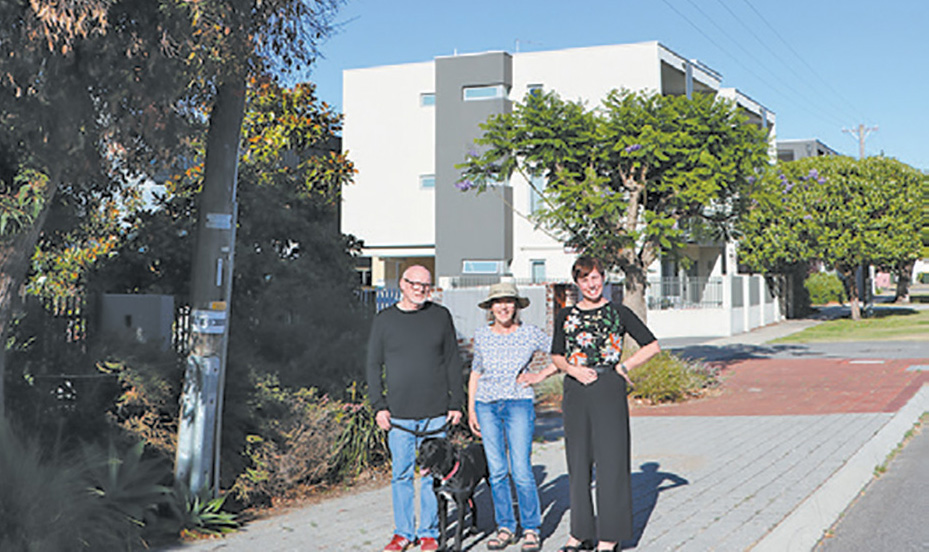
    Don Barba is leading a group of residents and medical experts opposing the Angove Street petrol station. Photo from Stop the Station, Save North Perth facebook page

    NEW petrol stations woiuld be banned from opening in the vast majority of Vincent under proposed rules intended to safeguard public health. 

    Petrol stations aren’t allowed in residential areas and the proposal would ban new ones from ‘mixed use’ zones and town centres. New ones could only open on land zoned commercial, and only then if it’s not adjacent to other zones.

    The new ban was moved by Vincent councillor Ashley Wallace and was prompted by community opposition to a proposed petrol station on Angove Street, abutting housing and across the road from the cafe strip (“Cafe fans fume over 24-hour servo,” Voice, November 19, 2022).

    The planned station by petrol giant OTR has raised concerns among locals and medical experts who’ve penned a paper on the health effects of benzene, a common petrol station emission linked to increased cancer risk.

    While the new policy is too late to stop that proposal, Cr Wallace said “the next best available option is to be reactive. I think it’s clear since the last time the local planning scheme was updated… there’s been a change in attitude in the community around the appropriate locations for service stations.

    “Fossil fuel use and the internal combustion engine are in decline,” he said, so it didn’t make sense to keep building infrastructure to support them in sensitive areas.

    “Service stations are also a leading cause of soil, groundwater and air contamination in the city, and on a number of occasions have resulted in human and environmental health impacts outside of their respective lots.”

    The rule still needs state government approval.

    Mayor Emma Cole said while the rule couldn’t apply retrospectively, it’d head off future applications expected to roll in now that large companies are eyeing off even small suburban blocks as a good spot for a servo.

    “Whilst we haven’t had a flurry of petrol station applications, we have been seeing more of them,” Ms Cole said, so it was smart to get the new ban in place. 

    “I think we are potentially going to see more of these.

    “This is obviously something causing great concern … I think this will give the community some comfort knowing where the council sits on this.”

    Resident Don Barba has organised a local group, Stop the Station opposing OTR’s plans. While it would’ve been ideal for this rule to be in before the Angove Street proposal he still welcomed the move.

    “Our group is glad at least that something has been done for town centres in the City of Vincent,” he says.

    They’re now gathering their efforts to try to convince the state government’s Development Assessment Panel to reject OTR’s plan, a decision likely to come early 2022.

    The Stop the Station group ran a fundraiser with a target of $4,000 to pay for a town planning expert to help them state their case.

    “I’ve just been so amazed by the support and feedback we’ve had from people,” Mr Barba says.

    “The contribution from our locals has just been phenomenal. Within three days we reached our goal of $4,000.”

    OTR’s application to open the station addressed “the possible risk to human health or safety” with a one line reply: “This matter is not relevant to this proposal.”

  • Care decades ahead of its time
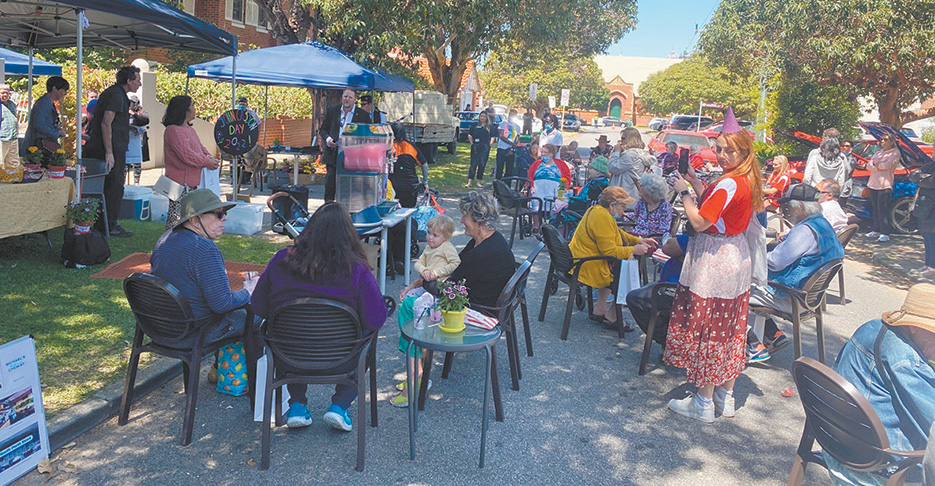
    Woodville Street hosting a celebration of John Casson’s life on October 13 2022.

    THIS week the Vincent Local History Centre brings us the story of Susan Adelaide Casson, who 100 years ago founded an organisation to provide community care for psychiatric patients. After sitting on a government Board of Visitors to Claremont Hospital, Susan Casson became convinced there was a need for discharge and community rehabilitation of patients, and would later found the iconic Casson House in North Perth in 1935.

    MANY locals would have walked past Casson House on Woodville Street, or St Rita’s Nursing Home on View Street, without knowing the story of this family-run organisation and its long-standing connection to North Perth.

    This year, Casson Communities celebrates 100 years of providing residential mental health services in North Perth.

    In 1922, Susan Adelaide Casson founded the Mental Hospitals After Care and Comforts Fund Association to try to meet an urgent need for ongoing community care for people discharged from mental institutions.

    Susan’s interest in the welfare of people suffering from psychiatric illness was developed during her time as a member of the Board of Visitors at the then Claremont Mental Health Hospital.

    Since its inception, Casson Homes has continued to operate under the guidance of a member of the Casson family.

    In 2016, the late John Casson, grandson of founder Susan Casson, commissioned local historian Cate Pattison to write a history of the Casson Family and Casson Homes.

    The following is an extract from Cate’s work, which was published in 2017 and shared with the Vincent Local History Centre:

    “Susan had started life torn from her family home in Ireland and grew up in a Melbourne orphanage, with limited formal education and certainly no social privilege.

    “Widowed as a young woman with four small children, her disadvantages in life had been many, however she went on to become one of Western Australia’s leading female social reformers in the first half of the twentieth century with strong personal connections to many of the state’s leading political and medical men and women of the day.

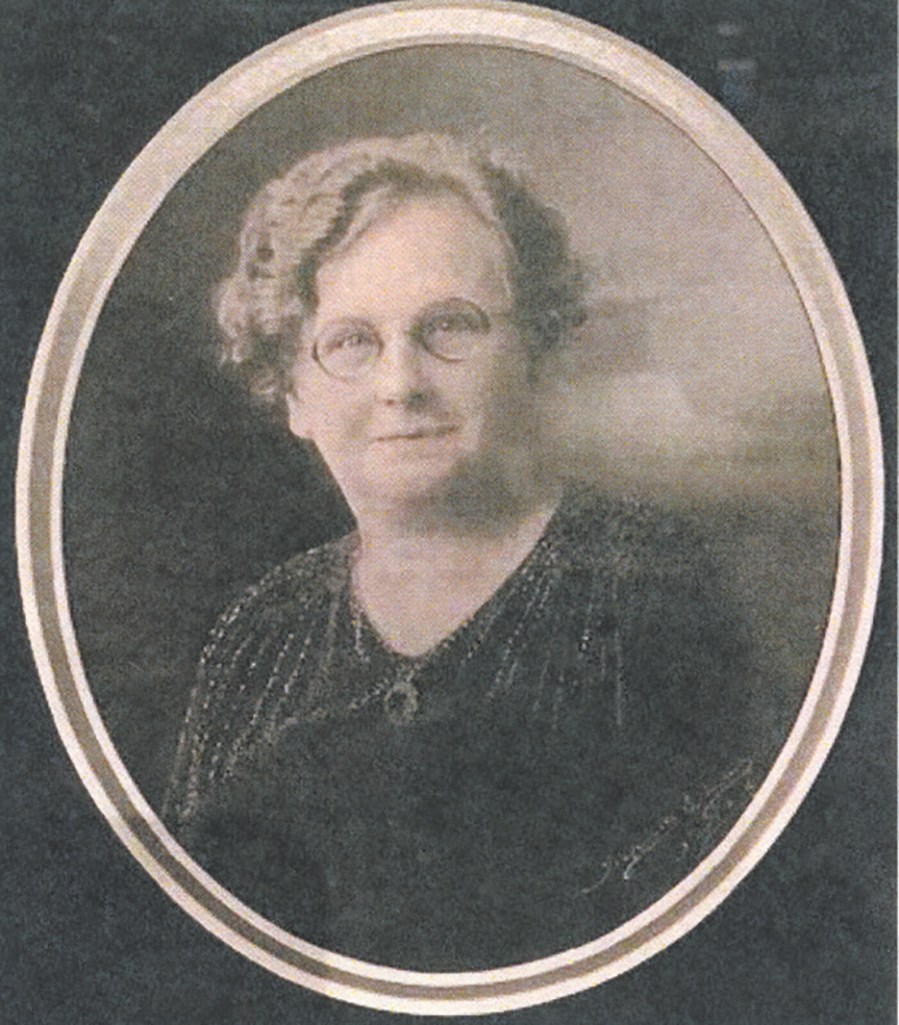
    A portrait of Susan Casson, 1929.  Photo from the State Library of WA, 9267B Vol 142

    “Susan’s work has been continued by her daughter Matilda Gard, grandson John Casson and now great-grandson Nick Casson, who have all quietly devoted their lives to the objective of providing 

    a welcoming home and daily dignity for people struggling to live with long-term mental illnesses such as schizophrenia, bipolar disorder, depression, anxiety and other conditions. Many people who have passed through this organisation have spent the majority of their lives at Casson House, and been nursed through their final years at St Rita’s Nursing Home. 

    “Over nearly 100 years, the Cassons have developed their own style of residential mental health care, resisting the dominant drivers of commercialism and excessive governance, in order to provide the sort of service that experience has taught them is in the best interests of their resident.”

    Grandson John Casson, who was active in the management of Casson Homes from the 1970s, was awarded a Member of the Order of Australia Medal for service to the community in 2003.

    The award was a fitting recognition of his work in providing residential mental health services for people living with mental illness.

    John Casson passed away on August 24, 2020. His contribution to the community, and the contribution of Casson Homes over the past 100 years, was celebrated at the organisation’s annual street party in October 2022.

    John Casson was interviewed by the Vincent Local History Centre in 2009 and a transcript of his interview is available in the Local History Collection, along with Cate Pattison’s written history of the Casson family and their works.

  • Pride Piazza falls short
    Perth council and its LGBTQIA+ advisory group members welcomed Pride to Northbridge Piazza in August 2022, but a permanent Pride Piazza name change won’t go ahead.

    A BID to rename Northbridge Piazza as “Pride Piazza” has been shot down by a majority of Perth councillors.

    Pride WA, which has organised Pride rallies and festivals since 1990, moved its headquarters into the building by the piazza in November this year just in time for Pride Month festivities.

    The area was temporarily dubbed “Pride Piazza” for the month, and now Perth councillor Sandy Anghie reckons the rebrand should be made permanent.

    Pride WA president Choon Tan led a deputation to the December 13 council meeting in support.

    He said it would recognise the “historical significance of many in the LGBTQIA+ community. 

    “For many in our community, including myself who as a young queer man in the ‘80s sought 

    a place where we could find safety in numbers to express who we were and to live out as our authentic selves, Northbridge was that refuge, that safe space that we visited or lived in.

    “It was, and still is, our Castro in San Francisco, our Soho in London, our Marais in Paris, and our Darlinghurst in Sydney.

    “The cultural significance of Northbridge to the queer community could not be more significant, and its history with the community is just as notable as that of European and Asian migrant communities, if not just a tad more colourful as you would expect. 

    Mr Tan said he appreciated the council supporting Pride and giving them the peppercorn piazza office tenancy, but added “Pride Piazza needs to be more than the token renaming or marketing opportunity each November in conjunction with Pride Fest”.

    Cr Anghie said across the world “from Brooklyn to Bristol, streets, buildings, landmarks, laneways are being renamed in celebration of modern values. It’s important… because it shows who society chooses to honour”.

    If her motion had made it past the vote they still would’ve needed to consult with the community and ask the state government authorities to approve the change, but it didn’t get out of the starting blocks with only two other councillors supporting the plan 

    (Liam Gobbert and Viktor Ko).

    Cr Brent Fleeton said: “If we’re trying to hint to ratepayers that we may have lost sight of what really matters, this is an awesome way of going about it.

    “This is completely and utterly unnecessary and it’s also counter to the theme of being inclusive… with Northbridge being a community of many stories and many meanings to many people the most inclusive thing you can do is keep it as Northbridge.”

    Mr Zempilas agreed, saying Northbridge “is a name for every member of the community … including our rainbow community who we value very much.” 

  • More suburbs going under

    FOUR more suburbs in Vincent will get underground power, marking the complete undergrounding of power lines in residential streets and town centres by 2028.

    In May the council signed a memorandum of understanding with Western Power to partly cover the cost to sink power lines in three areas where tired out power poles needed replacing anyway. 

    That covered a third of households but even with Western Power chipping in, those areas still cost ratepayers an average of $100 extra per year and there were some grumbles at budget time for those left out of the first round of the rollout.

    Now the council’s signed a second deal with Western Power for power to go underground in Leederville, Mount Hawthorn, West Perth and North Perth, where the infrastructure is also pretty old. 

    Streets will also get upgraded LED street lighting once the poles are pulled out, and about $800,000 per year will be saved from not having to chop trees back to keep them away from power lines. 

    Ratepayers will continue to pay for a rolling reserve to pay for the rollout, and while the project is pricey at $104 million, the deal means Western Power covers about 53 per cent cost.

    Affordable

    “This is the most affordable option for underground power that has been offered to the city and property owners,” mayor Emma Cole said in a statement after the December 13 council meeting where the project was unanimously approved.

    “Our dream of flourishing tree canopies is being brought to life thanks to this once-in-a-generation opportunity.”

    If the council said no, the current power poles would be replaced with like-for-like infrastructure that’d have an expected lifespan of 50-60 years.

    The council ran a survey this year and reported that 80 per cent of respondents rated undergrounding power as a “very high priority”. 

    If the schedule goes as planned, works start in Leederville early 2024, then continuing through Mount Hawthorn in mid-2024, West Perth in 2025, and North Perth then Mount Hawthorn in 2026.

  • Culinary force

    DID Darth Vader have to remove his helmet every time he wanted to eat a snack?

    Maybe there was a little flap on his visor he could lift up and shovel in the Brussels sprouts on Christmas Day.

    That was one of the many questions I fielded from my young son “Bamm-Bamm” while driving up to Mt Lawley, after we had watched Star Wars.

    Thankfully our destination wasn’t Hoth Cafe on planet “Get a Life”, but the New Place Japanese Kitchen.

    Tucked away in a little group of shops on the corner of Beaufort Street and Second Avenue, you could easily miss it driving by, and I only knew about it because I bought a guitar from Rock Inn across the road a while back.

    On a hot day, a week out from Christmas, it seemed like the perfect destination for a low key not-too-expensive lunch.

    The outside was pretty innocuous with one of those flashing LED open lights.

    Inside it was simple, clean and uncluttered with a few tables and chairs, some bench seating and a wall-mounted TV showing highlights of the World Cup.

    The compact menu played to the gallery with all the old favourites including bentos boxes, sushi, donburi, curries, sides and salads.

    It was a small menu but there was a little bit of everything on there and would satisfy a lot of tastes. They also did sushi and nigiri platters for parties.

    You ordered at the till and the smiley girl behind the counter was friendly and pleasant while taking my order.

    It was well air-conditioned on a hot Wednesday lunchtime with lots of office workers coming and going for their lunch time hit of sushi and bento.

    After explaining to my son that Chewbacca was probably just a recovering drug addict in a hairy suit, the lady arrived with our food. First off: the portions are really big and good value for money; my bowl was piled high with that bogan classic – chicken katsu curry ($15.90).

    It was good quality chook with a nice crispy batter and tasted great when dunked in the mild curry sauce.

    The rice was perfectly cooked and punctuating the sauce were small cubes of potato and carrot, with a perfunctory stem of watercress on top.

    It was a hearty bowl of comfort food that would appease any V8 mullet-wearing bogan and I thoroughly enjoyed this guilty pleasure.

    The large wheels of sushi – prawn and avocado ($8.50 for five) and tuna ($6.90 for five) were equally as good – fresh, vibrant and packed with flavour, they went down a treat with Bamm-Bamm.

    “I like the carrot in the tuna one he added.”

    It was overkill, but we rounded things off with a side of karaage chicken ($10.50).

    This was a delightful mound of thinly battered chook with a sweet plum sauce drizzled over the top and a little salad and mayo off to the side. Again the chicken was good quality and the batter nice and light.

    We had ordered too much, but the lady was happy to box the leftovers, which were duly devoured by my wife “Special K” and daughter Pebbles at home.

    New Place Japanese Kitchen is a handy little pitstop if you’re in Inglewood and fancy a good quality low-cost lunch while running some Christmas errands.

    Stomachs full and all set to make the jump to hyperspace in my Holden Barina, we left the restaurant and I did my best ever Chewbacca impression in the car park.

    New Place Japanese Kitchen
    5/755 Beaufort Street, Mount Lawley
    newplacejapanesekitchen.com.au

    by STEPHEN POLLOCK

  • Ghost whisperer 
    Joanna Morrison

    JOANNA MORRISON says her first novel The Ghost of Gracie Flynn is proof that “writing is actually writing”. 

    Gracie, the novel’s ghostly narrator, didn’t appear in the first two drafts and only took her central role in the final rewrite before Morrison posted the manuscript off to be judged in the Hungerford Award. It was shortlisted. 

    “I’m glad she tapped me on the shoulder demanding to drive, because her omniscient voice pulled all the different elements of the story together in a more compelling way,” Morrison said. 

    “The inspiration was a scene I wrote as part a different novel, in which a woman discovers the lifeless body of man on a boat. 

    “I shelved that novel for various reasons, but my mind kept returning to that scene. 

    “Did the woman know the man? What happened to him? Why and how? It took hold of me as an intriguing mystery around which to build a story.” 

    The Ghost of Gracie Flynn is set in Perth and features journalist Robyn (no doubt influenced by Morrison’s former career as a Chook journo), financier Cohen and bestselling author Sam. 

    Close university friends, they drift apart after their friend Gracie dies in mysterious circumstances. 

    They reconnect as adults, but before long, Sam is found dead, all alone on his boat on the river. 

    Apart from drawing on her experience as a journo, Morrison was also in a band in the noughties and channeled some of that experience into one of the novel’s characters. 

    “I enjoyed revisiting some muso memories when writing the band scenes, though I must point out that I was never a mesmerising frontwoman the way Skye Culhane is in the novel; she is complete fiction,” Morrison said. 

    “Similarly, our drummers were exceptional human beings, unlike Jethro in the novel.” 

    • Published by Fremantle Press 

    What are the most important elements of good writing? 

    ‘Emotional impact is the holy grail, plus I really appreciate an engaging voice, pared-back clarity, authentic dialogue, savvy use of tenses and gripping narrative tension.’ 

    What advice would you give to a first-time writer? 

    ‘My first tip is, read a lot. It’s motivating and it helps you to soak up the language of imagery and narrative. Secondly, build up your resilience; see rejections as mere setbacks and cherish feedback — that stuff is gold! Thirdly, build a community of fellow writers, be it an in-person writing group or an online network. If you can do those things, you’ll have the tools and friendships to inspire and sustain you.’ 

    What are the major themes of the book and why did you choose them? 

    ‘Love, grief, and seizing happiness where you find it. Because it’s a mystery novel involving a couple of deaths, the love and grief themes emerged organically. Seizing happiness (and supporting others to do the same) is a personal philosophy of mine, so it managed to weave its way in there too.’ 

    What is your schedule like when you’re writing a book? 

    When the stars align, I write during school hours and can get around 2000 to 3000 words down each day. But the schedule is always in flux because my life is a kaleidoscopic juggle of bookshop work, writing, parenting and trying to stay fit, because sitting at a desk all the time is good for no one’s back! Luckily, some important writing work can happen in your head while you’re walking the dog.’ 

    How do you celebrate when you’ve finished? 

    ‘My family and I have celebrated various writing milestones by going out to dinner or having takeaways delivered, but we will step it up and celebrate the release of The Ghost of Gracie Flynn with a hearty launch party.’ 

    What are you working on next? 

    ‘I’m working on my second novel — a nested narrative set in London and Fremantle. It’s a quest novel about motherhood, abandonment and feminism, but it’s also a mystery novel about a decades-old secret crime. There’s a hidden diary and a stolen manuscript woven through it, and there’s a gorgeous old house, high on the ridge near Monument Hill, where all three narratives converge.’ 

    By ARIANA ROSENBERG

  • Dramatic high
    • Director Frances O’Connor and actress Emma Mackey on the Yorkshire Moors during the making of Emily.

    DIRECTOR Frances O’Connor knew she had created a moving film about Emily Brontë when The Brontë Society were moved to tears during a private screening in England.

    “They all absolutely loved it and thought it really captured the essence of Emily,” O’Connor says.

    The former Mercedes College girl has come a long way since her days growing up in Perth, going on to star in several Hollywood films including Steven Spielberg’s A.I. Artificial Intelligence in 2001.

    Now 55, the actress is moving behind the camera, making her directorial debut with Emily, which she also wrote.

    The film is an account of Emily Brontë’s short but eventful life in rural Yorkshire in the early 1800s, revealing all the tumultuous family and romantic events that may have inspired her to write the literary classic Wuthering Heights, released a year before her death, aged 30, in 1848. 

    “I’ve always loved Wuthering Heights and read it when I was a teenager,” O’Connor says.

    “I guess I was really interested in exploring female voice and what it is to be a young woman at that particular point in history.

    “I felt there was a story to tell about that through Emily – how can you be authentic to yourself, if who you are is different as a woman?”

    Emily (Emma Mackey) is portrayed as a shy, socially-awkward woman with a steely core, losing herself in fantasy stories as a child.

    As a young woman she doesn’t fit in at school and returns home where she is taught French by local curate William Weightman (Oliver Jackson-Cohen).

    Initially they hate each other – maybe it’s sexual tension – but eventually they get jiggy with it in a derelict cottage on the wind-swept Yorkshire moors and embark on a secret passionate romance, only for Weightman to abruptly call it off, fearing Emily is the devil’s work and he has committed a sacrilegious act.

    A heart-broken Emily goes with her sister to Belgium to get away from it all, not knowing that her bitter, alcoholic brother Branwell (Fionn Whitehead) deliberately didn’t pass on a note from Weightman saying he made a mistake and wanted her back.

    This is all set against the backdrop of illness, death and family tension – her sister Charlotte, who went on to write Jane Eyre, wants Emily to be more conventional and morally upright, while her brother is an opium-addled, failed artist leading Emily on an experimental, libertine path.

    Emily is a subtle mix of old and new – it’s deliberately paced and there’s no Baz Luhrmann-style razzmatazz to convert a younger audience to an older story, but there’s a dark gothic air to the movie and little touches of modernism here and there.

    This mix of old and new is really evident in the classical score by Abel Korzeniowski, which complements the breathtaking panoramas of the bleak Yorkshire moors, especially in the scene where the sisters are running through the pouring rain in slow motion.

    O’Connor does a fine job on her directorial debut, creating a character-driven piece with the odd cinematic flourish – an eerie scene with a sinister mask is very well constructed – and the tone is consistent throughout.

    O’Connor admits being a director was all-consuming.

    “It was everything really – magical, stressful, joyous, emotional,” she says.

    “The actors all kept saying ‘You’re so emotional behind the camera’. I joked, ‘I won’t be on my next one!’.”

    Mackey (Sex Education, Death on the Nile) really anchors the film, giving an utterly convincing performance as Emily – combining a simmering sexuality with a sort of repressed sadness. 

    The film is a slow burn with some fine performances and really gets going when the love affair kicks in.

    It’s a mix of fact and fiction, combining what we know about Emily’s short dramatic life with O’Connor’s love of Wuthering Heights in a sort of meta-fictional soup.

    “I’m combining Wuthering Heights with Emily’s life and things from my own life,” O’Connor says.

    “There’s a triangle between Branwell, Weightman and Emily in the film, in the same way Wuthering Heights had Heathcliff, Edgar and Cathy. So it’s kind of emulating that in a way.”

    There will be a special screening of Emily with a Q&A with O’Connor at Luna Leederville tonight (Saturday December 17) and the film is on general release from January 12. For details see lunapalace.com.au.

    by STEPHEN POLLOCK