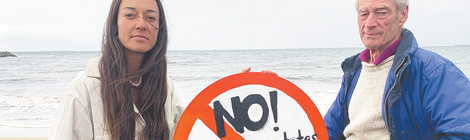
MAYLANDS Peninsula Primary School parents have been in the national vanguard of a push to allow schools to hire secular welfare workers amidst concerns chaplaincy funding is discriminatory.
The school’s P&C surveyed parents in April and found71 out of 80 supported “equal opportunity employment in public schools for every position, regardless of a person’s faith”.
Chaplaincy funding can be a mix of federal, state, and local government cash.
Federal Labor’s changes cleared one hurdle for MPPS to have the option of hiringa secular worker, but top-up funding from Bayswater council for an extra day a week is still tied up through Christian provider Youthcare.
Other schools on state funding can only access a chaplain through one of three state-approved providers: Youthcare, Scripture Union WA, and the sole secular provider OnPsych.
The peninsula P&C are now taking a motion to the WA Council of State School Organisations annual conference in September to seek fairer hiring at all schools.
They’ll ask WACSSO to lobby for public schools to directly employ professional non-clinical student welfare officers.
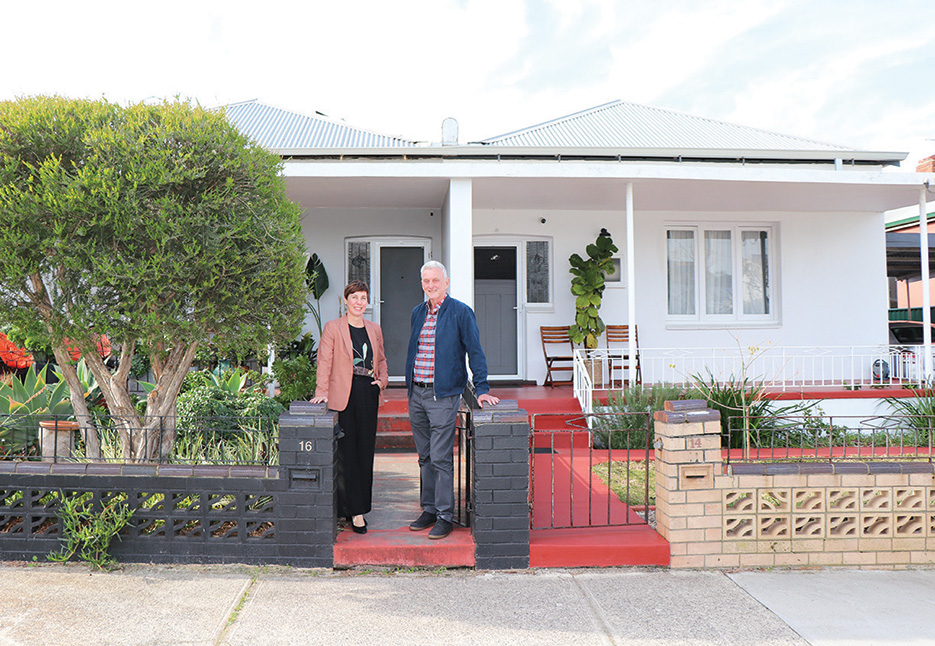
Mayor Emma Cole and local resident Peter Holcz on Hope Street.
A GROUP of Orange Avenue and Hope Street residents in inner Perth are hoping to have their neighbourhood’s historic streetscape preserved.
So far 16 landowners out of 29 lots have called on Vincent council to apply a “Character Area” classification over their streets.
It’s not as strict as a heritage listing and would still allow development as long as it fits in with the general streetscape aesthetics and scale.
Mayor Emma Cole said:
“Orange Avenue and Hope Street is a beautiful connecting streetscape with many terraced houses being lovingly cared for by their owners.
“It’s right in the heart of the suburb of Perth, but has a really close, neighbourly feel and the pattern of smaller early 1900 homes is really special.”
Some of these character area nominations have led to disagreements in streets where some of the neighbourhood wants to keep the streetscapes’ style and others don’t want any kind of planning controls on what style they can build (“Fierce debate,” Voice, August 28, 2021).
The whole street will get their say and then council has the final vote on whether to make it a character area.
Resident Peter Holcz submitted the nomination, which says it’s an opportunity to preserve the streets’ history.
Terraces
“The streets of Orange Avenue and Hope Street form a short dog-leg where both sides of the streets are lined with predominantly double fronted terraces dating back to the early 1900s,” he wrote.
“As well as other original character stand-alone houses from the same era, this L-shaped neighbourhood is a unique inner-city example of original semi-detached worker houses located around the corner from the more notable ‘baker’s dozen’ on Lake Street.”
But it’s never been set in stone, and there’s stories inthe changes too: “Additions and alterations to some of the dwellings include the removal of original Federation verandas that have been replaced with concrete porches, which reflect the influence of mid-century immigration patterns.
“The residents want to retain the character of our two streets, especially the front facade of our houses.
“We desire more contemporary additions, including second storeys, that generally preserve the historic character and are in keeping with policy recommendations.
“We love our two streets and we really want to ensure we can enjoy what we have now and into the future.”
Eight character areas have been adopted since the policy was adopted in 2015.
Cr Dan Bull says dinners aren’t a “core service” so council could cut down on them to help get seniors to a podiatrist.
BAYSWATER councillors have opted not to cut back on free pre-meeting dinners in order to fund subsidised podiatry treatments for seniors.
In July a divided council narrowly approved a budget sprinkled with contentious moneysaving cuts likeaxing a $120,000 childhood immunisation clinic, while$20,000 was also saved by cutting funding to subsidised podiatry services at the Bayswater and Morley community centres.
The podiatry sessions were free for seniors, adults 50 and over, and disability or health care card holders, as the council funding covered a $15 gap above the Medicare rebate.
Cr Dan Bull, who voted against the budget, has now pored over it and reckons cutting $18,000 from the council’s$125,000 yearly catering bill, and snipping $2,000 off the $33,000 reserved for councillors to attend conferences and training, would allow the podiatry rebate to be reinstated.
Cr Bull said there was a lotof talk about returning to “core services” during the budget debates, from those who wanted to save money.
“What isn’t a core service? Our dinners,” he said this week.
“This service is something that has supported our older community. This service helps to improve older peoples’ quality of life … and most particularly those who can’t afford private, and those who can’t access bulk billing services which have been diminishing since the Medicare rebate freeze.”
Cr Bull also sought to redirect money earmarked for upcoming road resurfacing to restore the free immunisation clinics, but the majority opposed both his motions.
Mayor Filomena Piffaretti said the time and place to debate the funding was during the budget talks.
“There was a budget process over four months, including five workshops. That process put together a complete budget for the whole of the City of Bayswater … it’s disappointing to see Notices of Motion now coming back only one month later pulling out individual items within our budget trying to unpick the budget line by line.”
Cr Bull said: “I would utterly disagree that the budget process is the appropriate process to deal with cutting a social service such as this”, given those budget talks were in secret and no community consultation was carried out before the cuts were made.
The clinic funding was cut so swiftly staff only found out the same week it ended, and still had up to six months’ worth of bookings.
PRIDE WA is to relocate its headquarters to Northbridge Piazza.
As the Voice foreshadowed after the cat was inadvertently let out of the bag duringrecent council discussions,the organisation has been negotiating a move into the city (“Wounded Pride forgives Perth,” Voice, July 30, 2022).
It’s now been confirmed Pride’s moving out of its long-time HQ in gay-friendly Vincent council after successfully bidding to be the primary tenant at the Northbridge Piazza, which is currently vacant.
Pride will use the spaceas offices and an event and meeting hub for the LGBTQIA+ community, and will now hold public consultation on what events people want to see with suggestions of market days and film airings on the Piazza screen.
Last month the council changed the piazza to a“community” use classification, meaning it’s eligible for a peppercorn lease and the council covers the rates, maintenance and renewal costs. There used to be a commercial tenant in there but it’s been vacant since they went out of business, and with the current vacancy rate in Northbridge and the site’s tricky positioning set so far back from the street, the council was unlikely to find someone to pay commercial rent.
Lord mayor Basil Zempilas said in a media statement: “The City’s Pride Piazza reaffirms Perth as a national leader for celebrating and championing diversity and inclusion ‚Äì and I can’t think of a better, more vibrant neighbourhood for Pride WA to call home.”
“The Piazza is the heart and soul of Northbridge and we’re excited to see rainbow events and activities lighting up the Piazza throughout the year. This is a wonderful opportunity for businesses, locals and visitors to enjoy more activations throughout the year.”
Pride WA CEO Choon Tan said: “Pride WA is thrilled to have the generous support of the City of Perth in making Pride Piazza a safe space for the LGBTQIA+ and wider Northbridge Community to meet in what we hope will become a globally-recognised LGBTQIA+ landmark.
“Having a ‘home’ for Perth’s queer community is a significant milestone as it means Pride WA and LGBTQIA+ groups and start-ups can access facilities and thrive together.”
Sean Cowan and Ian Hale revive WAFL’s wildest days.
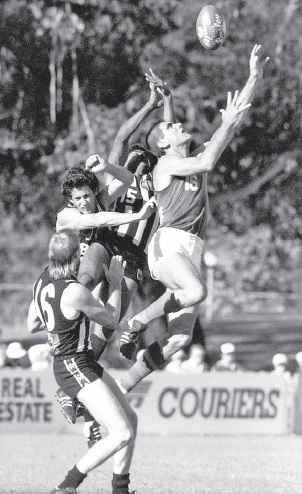
A LONGING for the rough and tumble of the WAFL’s wild days has seen crowds pack out a West Perth microcinema to watch highlights of classic local footy games recovered from decades-old VHS tapes.
Two dedicated WAFL afficionados – Sean Cowan who has an impressive collection of memorabilia and game footage, and Ian Hale who owns The Backlot Perth microcinema – have teamed up to run the Wayback WAFL events and the first two sold out with the third quickly filling.
Mr Cowan, a journalist and WA footy historian, went to his first game in 1985 and has been collecting memorabilia ever since. Many games are lost to history but enthusiasts trade old VHS tapes that’ve survived the years.
“The games themselves were so different,” he says.
“It was not the highly regimented, planned games that we see today. The style of footy was far more slap dash,” a series of man-on-man contests to get the ball to the goals.
“Whereas now it’s all about structure and planning and tactics and athleticism, and running, running, running all through the day,” with the rise of defensively-minded coaches making for much lower scores than in those old wild games.
Mr Hale says: “It used to be like a war of attrition … the first quarter it’d be haymakers going on and all that kind of stuff, and by the last quarter everyone would be knackered.”
Beyond just the love of the game, a nostalgia for the era in general is bringing in a lot of the old-time fans.
When people gather to chat at the screenings, it’s not just memories of the game they share, but recollections of “the noise and the atmosphere and the smells of the grounds”, Mr Hale says.
“The hotdogs and the hamburgers and the instant coffee.”
It was a time when WAFL players were local kings, playing for the teams in the suburbs they grew up in rather than the modern practice of being drafted from all over. It made for an electric atmosphere among the crowd, as there’d often be an even mix of opposing fans interwoven in the stand.
“It was tribalism,” Mr Hale remembers. “East Perth vs West Perth, you’d get 15 or 20,000 people at the suburban ground.
It was as big as the AFL, and these players were heroes … when you’re from their area you actually idolise these players. They were rockstars.”
Phil Bradmore was a West Perth king when WAFL was at its height.
Supporters were so eager the matches were often sold out and desperate measures were taken just to get a glimpse of the game.
Mr Hale says he remembers at one sold out game in Fremantle: “There were people sitting in the trees where the prison is, actually sitting in trees so they could watch the game from outside the ground. That’s how packed it used to get.”
Mr Cowan says picking a team to support was “not like now, where you pick the Eagles because your family follows them, or because they’re winning, or whatever… it was because you grew up in that suburb, and in that suburb everyone supports this team. And the best players that you played alongside with in junior footy would graduate to play in that team.”
The WAFL’s ride at the top of the game came to a sudden end in 1987.
That year the West Coast Eagles and the Brisbane Bears entered the Victorian Football League, elevating VFL to the undisputed pinnacle of the game which would soon see it renamed the AFL. The best games were no longer played at the state level.
That era of the WAFL was over on “basically day one,” Mr Cowan says, when the first AFL match was played here with a WAFL match afterwards.
“It was a double header. The first game was Eagles/Richmond at Subi oval, and afterwards
was West Perth/East Perth. And after Eagles/Richmond, you just watched the crowd walk out, because the WAFL was pretty much gone. Right then, from day one.”
These days there’s more than just memorabilia and old VHS tapes to keep the memories alive, with Mr Cowan bringing in some living legends to chat about the old days like Jim Krakauer and former South Fremantle premiership captain Noel Carter.
They’ve got a Facebook page at “Wayback WAFL at The Backlot” to keep an eye out for the next events, and their third screening is on November 6 at 1pm, with a focus on the Swans’ hat trick run in the early 1980s.
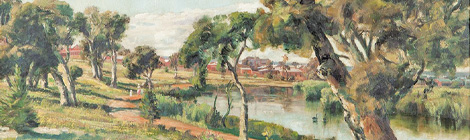
Walter Patterson Meston (1870-1936). Hyde Park 1904, oil on canvas.
IT’S been 125 years since Hyde Park was gazetted, and this week Vincent Local History Centre brings us this tale of the park’s long history from significant site, to ‘eyesore’ of a swamp, to ornamental public garden. The LHC is currently hosting a display on the history of the park, including a LEGO model built by the WA Brick Society, photographs and artwork, including a Walter Meston painting of Hyde Park on loan from Perth council until the end of August.
HYDE PARK has delighted locals and visitors for 125 years.
Known to Noongar people as Boodjamooling (meaning “place of the nose”), and later to European colonisers as ‘Third Swamp Reserve’, the wetland was made a public park in 1897.
Boodjamooling was a significant place for camping, food gathering and ceremonies noted in Noongar oral histories and by early colonists.
It remains an important place for Noongar people and is one of nine registered Aboriginal sites of significance in the City of Vincent.
There are reports of Noongar people camping and catching turtles in Hyde Park as late as the 1970s.
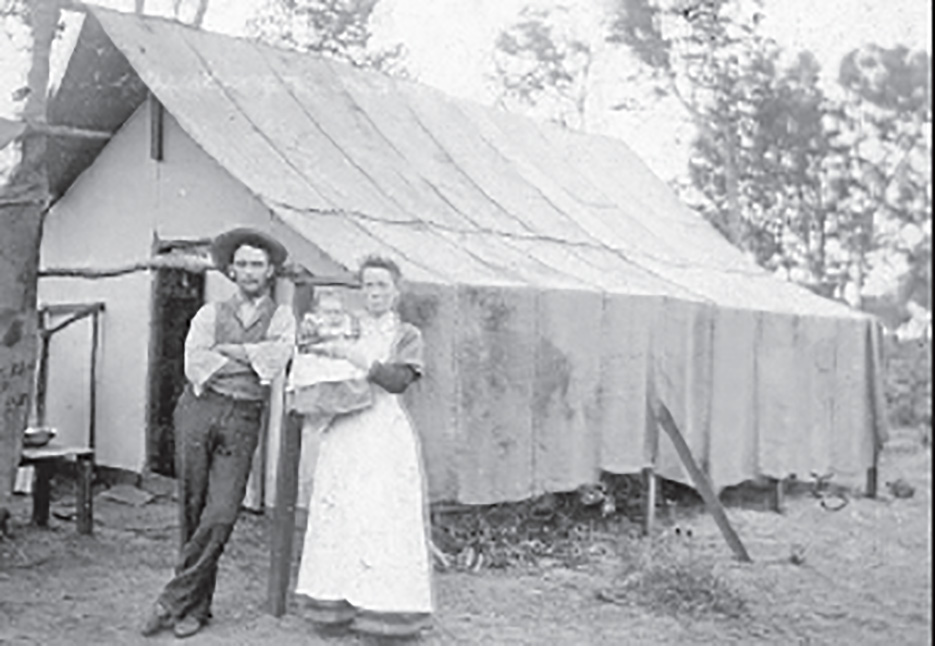
Deering family camped at Third Swamp Reserve, 1897. City of Vincent PH06504
From the 1850s – 1890s, the area known as Third Swamp Reserve was often used as a camp by drovers, cameleers and travellers.
When the gold rush brought an influx of newcomers in the late 1890s, as many as 200 people were camping on the reserve in tents and humpies. Locals complained the reserve had become “an eyesore and a menace” and lobbied to turn it into a public garden.
The WA government gazetted Third Swamp Reserve as a public garden in 1897.
In 1899 it was renamed Hyde Park, likely after London’s Hyde Park.
The City of Perth tasked gardener John Braithwaite with turning the swamp into a park. Early actions included clearing the water body of reeds, erecting timber fencing and gates around the lake and planting many hundreds of exotic trees.
In 1904, WA artist Walter Patterson Meston painted an early landscape of Hyde Park showing the view across the lake to the north west with one of the original paperbark trees in the foreground.
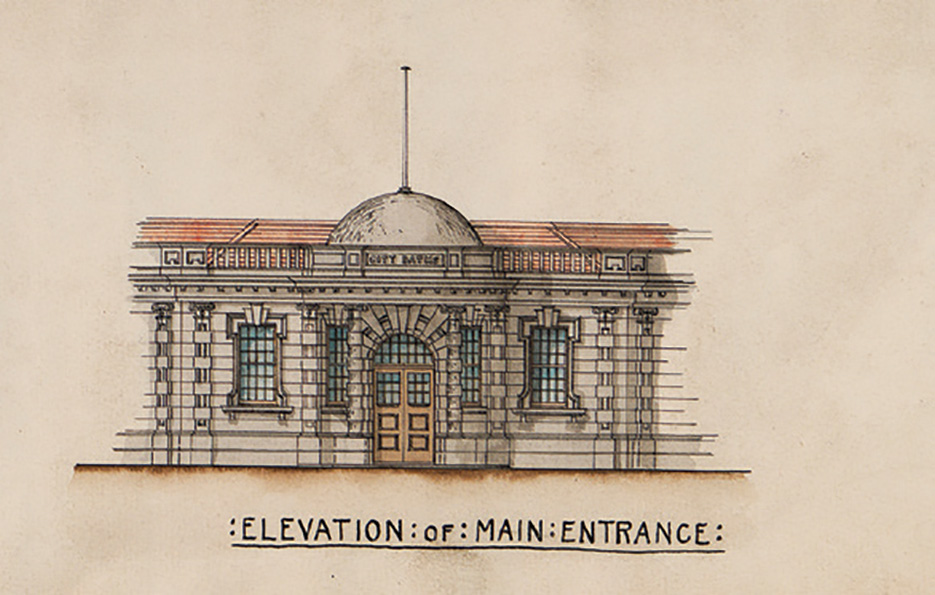
Plans relating to proposed baths to be erected at Hyde Park. State Records Office: Cons 1644.
The same tree is depicted in a 1905 photograph of Frank Horgan and son Grattan in Hyde Park. The photograph is in the City of Vincent’s Local History Collection.
Some may have heard about the three-tiered fountain that stood near the Glendower and Lake Street entrance to the park from 1900, and was removed after repeated vandalism in 1918.
Few would know of the proposed plan to build public swimming baths in Hyde Park in 1912.
The ambitious plan, which included “gentlemen’s and ladies” swimming pools, a bar and tea rooms, was knocked back by the Perth City Council in part due to its exorbitant cost.
Another structure that never came to pass was a proposed road through the park connecting Norfolk and Lake streets.
A causeway was built across the lake in 1914, effectively splitting it in two.
After intense public opposition, the road was converted intoa pedestrian causeway which remains to this day.
Another missing piece of Hyde Park history is the ornate rotunda which stood on the north side of the park from 1914 – 1956.
The rotunda housed various brass bands that played to promenading locals and visitors on weekends.
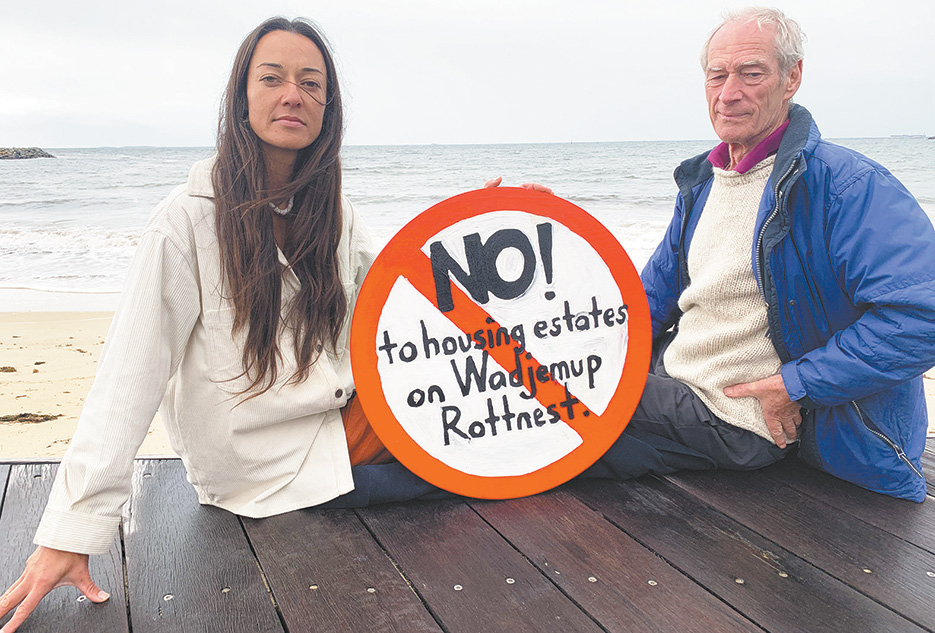
Marine scientist Tania Douthwait and Rottnest Society acting president Ian MacRae. Photo by Steve Grant.
THE Rottnest Society has condemned an “outrageous” proposal to build private accommodation for 211 hotel staff on the island.
The Prendiville Group, through its offshoot Garrett Hospitality, wants to build 60 dorm-like rooms housing two workers each, 28 units for supervisors who might have to share, 14 managers’ units with two bedrooms, and five mini homes for executives who’ll get a couple of bedrooms and their own lounge and kitchen, as well as views across Government House Lake from a verandah.
The accommodation will be for the company’s Samphire Rottnest hotel, while the plans show a slightly smaller area nearby has been earmarked for Rottnest Lodge staff in the future.
Describing the proposed flat-pack modules as more Pilbara “mining camp” than Rotto flavour, Rottnest Society acting president Ian MacRae said one of their biggest concerns was that it would involve flattening 1.35 hectares of bushland.
Mr MacRae was angry Prendiville’s development application says the Rottnest Island Authority has already given a permit to clear the site, but the RIA’s own website says it is yet to put in an application to the Department of Water and Environmental Regulation.
“[The society] objects to the RIA acting in a cavalier fashion to sign away 1.3ha of mature Rottnest vegetation,” Mr MacRae said.
“It demonstrates that the RIA is not taking consultation seriously as it treats the development as a fait accompli.”
Mr MacRae said the development threatened to send the island back to the ‘70s when partying staff were responsible for anti-social behaviour and rowdy behaviour that was disruptive to other visitors.
“This proposal is absolutely against what the Rottnest Society was told when the extension to the Rottnest hotel was proposed over two years ago,” he said.
“The Samphire Rottnest hotel has 80 rooms, yet it now requires 108 units to accommodate 211 staff. This ratio of staff to room of 2.64:1 is excessive and nowhere justified. Are we to assume that the operation is that inefficient, or have the developers another motive for seeking more staff housing than they need?”
Mr MacRae said the society was also concerned that the development would set a precedent for the island’s other commercial operators to start claiming their own spaces for staff accommodation.
The RIA’s management plan for the island does flag on-site staff accommodation, but Mr MacRae said the proposed Samphire development was not what the society had imagined would eventuate from that document.
Fremantle free-diver, marine scientist and artist Tania Douthwaite has been volunteering with the society for more thana decade and says any further destruction of the island’s natural beauty was “soul-destroying”.
“The only Samphire community that should exist on the shores of Government House Lake is the native one,” Ms Douthwaite said.
“The proposed site of the housing estate is already home to a range of flora and fauna iconic to Wadjemup – Rottnest Island.
“This natural vegetation is quietly enjoyed by the native plants and animals that abide there as well as the numerous locals – passing cyclists and naturalists – who take time out from their busy schedules to unwind in a natural setting on this low-key holiday island. It should not be bulldozed to make way for private accommodation that is only accessible to the few.”
The authority wouldn’t directly answer whether it had given the developer its approval to clear vegetation, despite a couple of attempts.
“RIA is applying to DWERfor a clearing permit under the Environment Protection Act 1986 for the proposed development area as owner of the land, on behalf of the proponents,” a spokesperson said.
“Permission (a permit) to take flora is also required to be granted by RIA under the Rottnest Island Authority Regulations 1998.
“Required Environment Protection Act 1986 approvals will need to be obtained prior to development proceeding.
“The current public consultation process is being undertaken to inform RIA’s determination of the Development Application.”
Consultation’s open until Wednesday, August 31; send comments to consultation.rottnest@ dbca.wa.gov.au or sign the Rottnest Society’s petition at: https://chng.it/hBWRWYbJjC
MY wife gave me a strange look as I parked outside “Play and Pleasure” on Bulwer Street in Perth.
Glancing at the purple panties in the window, I quickly confirmed we were going for lunch at Panda & Co a few doors down and not buying some toys for the weekend.
After weeks of biblical rain, the sun was finally out and it was a glorious crisp winter’s day as we walked past the stylish alfresco at Panda & Co and ventured inside.
We were greeted by a smiley lady at the till, who gave us menus and told us to take a seat in the small cafe, which specialises in Asian fusion brunch dishes and mains.
So nice to get a warm welcome, as some cafe staff are like extras from The Walking Dead and barely look up from the coffee machine to acknowledge your existence.
The menu was unashamedly fusion – in fact they joke about being “proudly inauthentic” on their website – with a small range of bao, rice dishes, burgers, noodles and some miscellaneous dishes like pork broth congee, Reubens rolly mollies, and Marty’s keto bowl.
I love the decor in Panda &Co – it’s like like a cross between Chinatown and a Pokemon cartoon with lanterns rubbing shoulders with panda soft toys and cushions, and straws designed like stalks of bamboo.
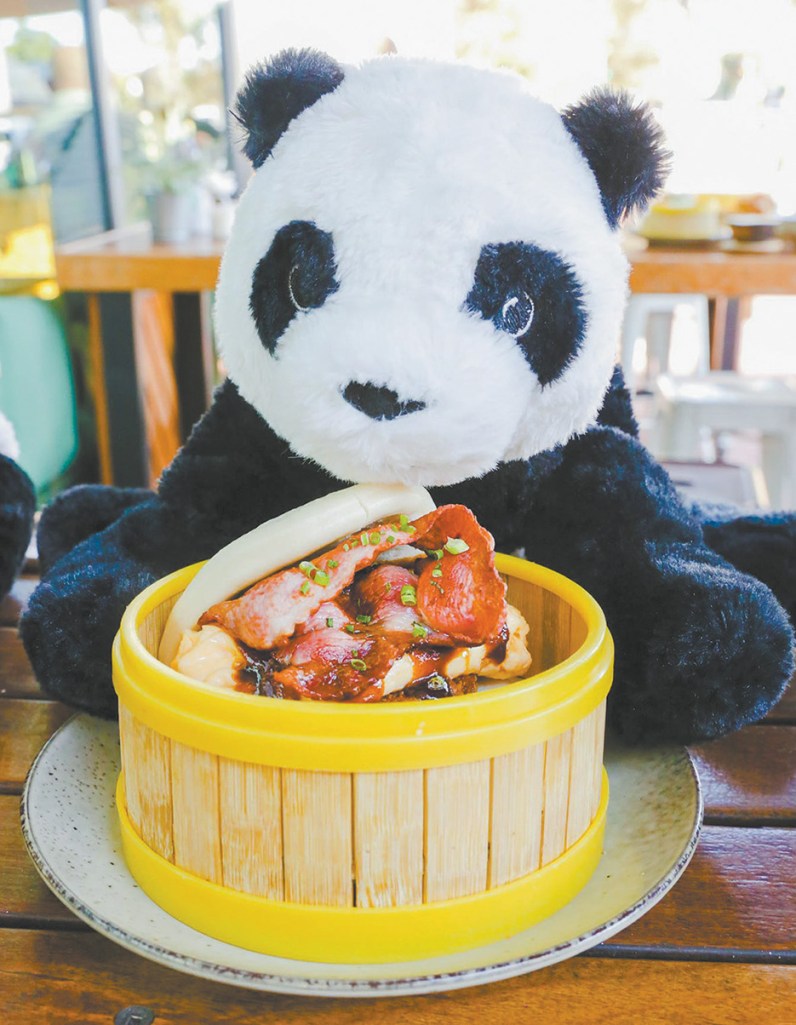
It created a kitsch vibe anda nice atmosphere even when the place was half full on a Monday lunchtime, so hats off for successfully establishing a theme that didn’t feel cheesy or ham-fisted. After ordering at the till, the waitress was quickly back with my wife’s Grandpa’s 12 hour pork belly bao ($9).
“There’s a big old slab of pork belly in there and it just melts in your mouth,” she said.
“It’s got a lovely sticky sweet sauce with crunchy nuts, subtle onion, cucumber and plenty of coriander.
“The bun is lovely and soft, and very filling.”
My wife washed her bao down with a Green Operator smoothie ($8.50).
“It’s not bitter and a nice mix of kale, spinach, avocado, banana and almond milk,” she said.
“This and the bao are plenty for lunch.”
I went for the more substantial beef rendang quesadilla ($24) which combined three cooking cultures into a gooey, delicious tower of food.
The light and deliciously flaky scallion pancakes were crammed with yummy slow-cooked brisket and layers of melted cheese.
A delicious combo that tasted even better when dipped in the little bowl of sour cream, scattered with spring onion.
It was a moreish and very filling dish, and I struggled to finish the cheesy skyscraper.
Perhaps there could have been a few more ingredients in the filling to maintain your interest throughout the dish, but that aside it was top notch.
I really enjoyed my lunchat Pando & Co– the food was delicious and well presented,the staff friendly and the decor original.
What more could you ask for?
Panda & Co 87 Bulwer Street, Perth pandaandco.com.au
• George Lazenby at the Big Apple Comic Con in 2008.
GEORGE LAZENBY’S appearance at The Music of James Bond in Perth will be a poignant affair with his daughter Jennifer directing a dance number at the show.
The WA Symphony Orchestra will perform all the Bond hits with special guest singers Bonnie Anderson and Luke Kennedy, and the only Aussie ever to play 007, George Lazenby, will appear live on-stage.
Jennifer was raised in Perth by her grandparents and didn’t meet her famous dad until she was in her twenties, but over the past three decades they have bonded and now have a close father/daughter relationship.
“My father keeps in regular contact with myself and his grand children,” she says.
Jennifer is artistic director of Footwork Dance Australia in Port Kennedy, whose students will be dancing to No Time to Die – the Billie Eilish theme from Daniel Craig’s final Bond film.
“I started learning dance at the age of two and took over my dance teacher’s school when she asked me at the age of 24,” Jennifer says.
“Since then I’ve spent 36 years of my life building up my Footwork studio and helping my aspiring students achieve their dreams.”
Jennifer says she gets emotional when she hears the theme from the 1969 Bond film On Her Majesty’s Secret Service, starring her father as 007.
“My favourite bond theme would be We have all the time in the World, because it touches me,” she says. “When I see my dad on screen with that music playing, It makes me sad. There is never enough time.”
George Lazenby famously quit Bond after just one movieto pursue more relevant and meaningful film work, but his career stalled and then petered out at the end of the 1970s, when he moved into business and invested in real estate.
In the decades that followed he mostly appeared in low-profile TV shows and films.
Prior to Bond, the Aussie model had only acted in commercials, leading some to criticise his performance in On Her Majesty’s Secret Service as wooden, but others praised his brooding masculinity and the physical presence he brought to the role.
In recent years there has been a critical reappraisal of On Her Majesty’s Secret Service, with many praising Lazenby’s acting and the innovative direction of Peter Hunt.
In the 1970s, Lazenby rejected the whole premise of Bond saying it was out of touch with society and didn’t reflect the counter-culture and peace movement, but in recent years he has mellowed and become more affectionate towards the franchise, appearing at Bond-related conventions and events.
So at the age of 82 is George Lazenby finally at peace with 007 and how it turned his life upside down?
“I can’t speak for my dad or anyone else however, I would imagine he has mixed feelings,” Jennifer says.
“Becoming Bond changed his life forever. Of course there are all the benefits that everyone would easily recognise, however it would be human nature to imagine what your life would have been if you didn’t become Bond.”
The Music of James Bond with George Lazenby Live on Stage is at The Perth Concert Hall 7.30pm on September 10. Tix at tickets.perthconcerthall.com. au/12581/12582
HAS dad just watched Top Gun: Maverick and is itching to fly a high powered jet?
The safest option might be to take him to Flight Experience in Northbridge, where he can get behind the controls of a commercial airliner.
It’s actually a Boeing 737 simulator and is so realistic it’s used by real life pilots for training and was extremely popular in lockdown, when they used it to keep their skills sharp.
No aviation experience is necessary and you will be given a lesson based on your skill level, usually with a take-off and landing at an airport of your choice.
“Our instructors will guide you and ensure a great learning experience loaded with fun,” says Flight Experience Perth managing director Peter Chin.
“People enjoy picking their own airports and experiencing what it’s like to take-off and land, and the most favourite airport is Hong Kong Kai Tak.”
Hong Kong’s international airport until 1998, Kai Takhas water on three sides andis surrounded by residential apartment complexes and 2000-plus foot mountains, so pilots had to do a low altitude right-hand turn over the city and a short final descent, making it one of the most challenging airports to land at.
The History Channel’s Most Extreme Airports ranked it as the 6th most dangerous airport in the world.
Flight Experience’s737 simulators use genuine instrumentation and controls, and are so authentic they are recognised by the Civil Aviation Safety Authority for active commercial pilots to train in.
“We have Qantas and Virgin pilots come to practice priorto their recurrent simulator sessions,” Mr Chin says.
All FE instructors are certified, commercial pilots – so you learn from professionals who tailor the lesson to your skill level and knowledge.
The experience is a one-to-one, pilot-guided flight simulation, where you are the captain and the instructor is your co-pilot.
Flight Experience also cater for kids aged eight and above.
And now and again they get some local celebs booking in for a flight.
“I’ve had the MIX radio crew – Kymba and Captain Paul – as well as 6PR’s Steve Mills come down,” Mr Chin says.
Flight Experience are also planning famous flight scenarios you have to overcome, including Captain “Sully” safely ditching US Airways Flight 1549 in the Hudson River in 2009 after both engines were disabled by a bird strike. All 155 people aboard survived.
So if you’re strugglingto think of a cool, uniquegift for Father’s Day, check out flightexperience.com on Newcastle Street in Northbridge.









 Perth Voice Interactive